Friday, June 30, 2023

Penang launches own telecommunications satellite into space


theVibes.com:

Penang launches own telecommunications satellite into space


CM witnesses historic launch of PG-1 from Russia broadcast live to USM
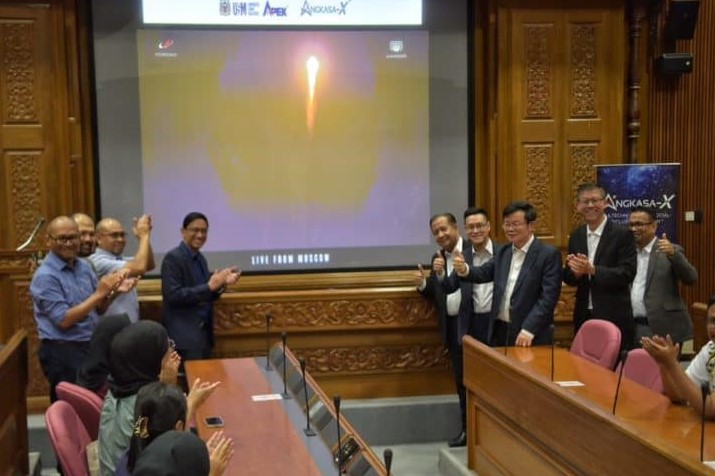


Penang Chief Minister Chow Kon Yeow witnesses the historic launching of PG-1 with the countdown broadcasted live from the launch site in Russia to Dewan Persidangan at Universiti Sains Malaysia. – Pic courtesy of Buletin Mutiara, June 29, 2023


GEORGE TOWN – Penang’s reputation as the “Silicon Valley of the East” has been reinforced following the launch of a mini-telecommunications satellite named PG-1 after the state into outer space recently.


With it, Penang now has its own satellite feed orbiting outer space with the capacity to provide faster internet connectivity to the broadband networks here.

It will also bridge the digital access gap between rural and urban localities.

Chief Minister Chow Kon Yeow witnessed the historic launching of the satellite with the countdown broadcasted live from the launch site in Russia to Dewan Persidangan at Universiti Sains Malaysia (USM).

USM will host PG-1’s earth station through a proficient team of designers, ICT specialists, academicians, and space engineering students.

PG-1 can also monitor the state’s landscape and in the future may offer warnings of natural calamities in the event of how severe the weather patterns have become due to climate change.

PG-1 was designed solely by Malaysians under the management of Angkasa-X.


Officially named Seansat- PG1, the homegrown satellite propels space technology development in Malaysia and Southeast Asia. – Pic courtesy of Buletin Mutiara, June 29, 2023


The homegrown satellite – officially named Seansat- PG1 – propels space technology development in Malaysia and Southeast Asia.

Chow spoke of how important this milestone is to Penang’s quest to be a global-class intelligent city by 2030 in line with its Vision 2030.

The launch was broadcasted live across four locations in Malaysia – USM in Penang, Malaysian Space Agency (Mysa) headquarters and GreenPro Capital office in Kuala Lumpur, as well as Sarawak Digital Economy Corporation Bhd in Kuching, Sarawak.

The live broadcast was streamed from the Russian Vostochny Cosmodrome – witnessed by Chow and Mysa director-general Azlikamil Napiah.

In a statement, Angkasa-X said that the team leading this maiden satellite launch are group executive director and chief operating officer William Lim and group chief technology officer Norhizam Hamzah along with the engineering team.

With the launch of the PG-1 satellite, Angkasa-X will leverage its technological know-how to lead the way as part of its innovative satellite-as-a-service (SaaS) offering to create constellations of low-earth-orbit (LEO) satellites along the equator, designed in Malaysia by locals.

These LEO satellites will work together to achieve the company’s visionary initiatives by providing affordable remote-sensing services and revolutionising internet-connectivity services to millions in the region, particularly within the rural areas in Asia and bridging the digital divide.
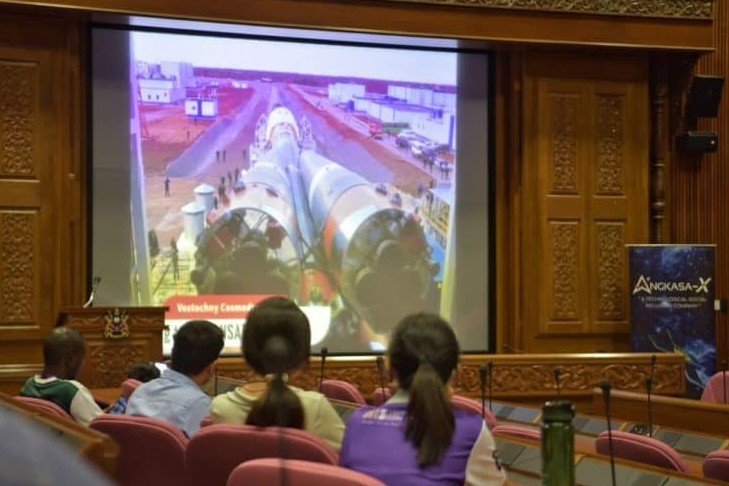

USM students watch the live broadcast of PG-1’s official launch from its launch site in Russia. – Pic courtesy of Buletin Mutiara, June 29, 2023


“The launch of PG-1 or Penang-1 satellite is a momentous occasion for Malaysia, propelling us towards a new era of technological advancement and establishing our position in the global SpaceTech ecosystem.

“I’m pleased to say that Malaysia is the first country in Southeast Asia to design, assemble and launch homegrown LEO satellites,” said Chow.

Meanwhile, Angkasa-X group executive chairman and chief executive officer Sean Seah said, “It marks an extraordinary milestone for Angkasa X and our dedicated team of Malaysian engineers.

“It exemplifies the incredible talent and their brilliant engineering skills coupled with their relentless pursuit of innovation to propel the space economy in the Asean context.”

He further emphasised the importance of this maiden launch, stating, “Connectivity is a necessity for the betterment of mankind.

Chow also lauded the collaborative efforts between Angkasa-X, USM, the Malaysian Industry-Government Group for High Technology, state and federal government agencies, academia, and industry partners in realising the project.

Among the dignitaries present were state executive councillors Zairil Khir Johari, Datuk Abdul Halim Hussein and USM vice-chancellor Datuk Abdul Rahman Mohamed. – The Vibes, June 29, 2023


The ‘corrupt’ are conspiring against me, says Anwar


FMT:

The ‘corrupt’ are conspiring against me, says Anwar


Prime Minister Anwar Ibrahim says his fight against corruption has been met by resistance from those who have plundered ‘billions’ from the country.


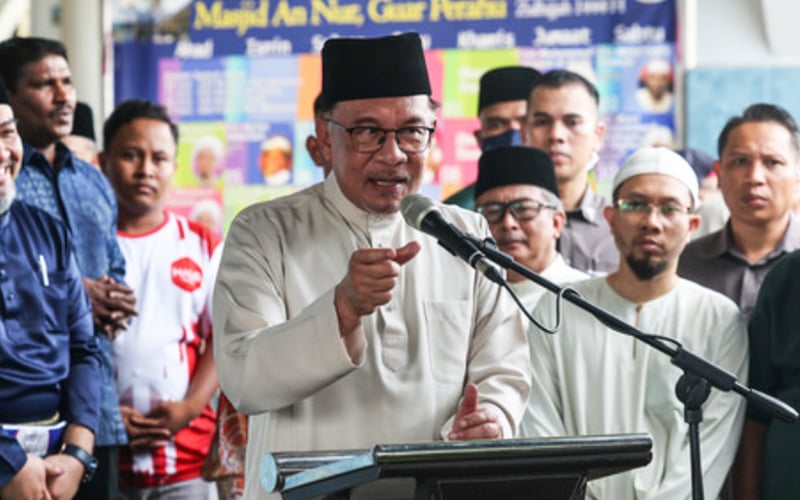
Anwar Ibrahim said he has received ‘all sorts of threats’ over his efforts to rid the country of corruption. (Bernama pic)


BUKIT MERTAJAM: Prime Minister Anwar Ibrahim claims “wealthy people” who have plundered billions of ringgit from the country are conspiring against him as he intensifies his battle against corruption.

“Times are tough and we need to rid our country of corruption,” he said in a speech at the Guar Perahu Mosque here.

“I have received all sorts of threats. These rich people who have stolen billions (of ringgit) are now ganging up (on me). (But) I will carry on fighting (corruption).”

Anwar also said he was willing to be investigated by the relevant authorities if he was suspected to be involved in corruption.

“If I’m suspected of being involved in corruption, amassing money to enrich Wan Azizah (his wife), Nurul Izzah and my other children, report it (to the authorities).”

Anwar said he had never directed the Malaysian Anti-Corruption Commission (MACC) to investigate individuals involved in corruption.

“If anyone is being investigated by MACC, that’s MACC doing its job. I did not order it,” he said.

On the various claims that have been made about his administration, he called on the public to understand the difference between slander and political attacks.

He said among the false allegations he has faced include Islam being affected under his administration, a lack of foreign direct investments and that the government had signed off the country’s interests in a resource-rich maritime area in the Sulawesi Sea known as Ambalat.

“There are all sorts of slander being spewed. The people can listen to them, but they must analyse them fairly,” Anwar said.

“I may have my weaknesses, but (people) should not resort to slander.”


Voting Perikatan in Penang polls akin to backing state's return to Kedah, Guan Eng claims


Voting Perikatan in Penang polls akin to backing state's return to Kedah, Guan Eng claims


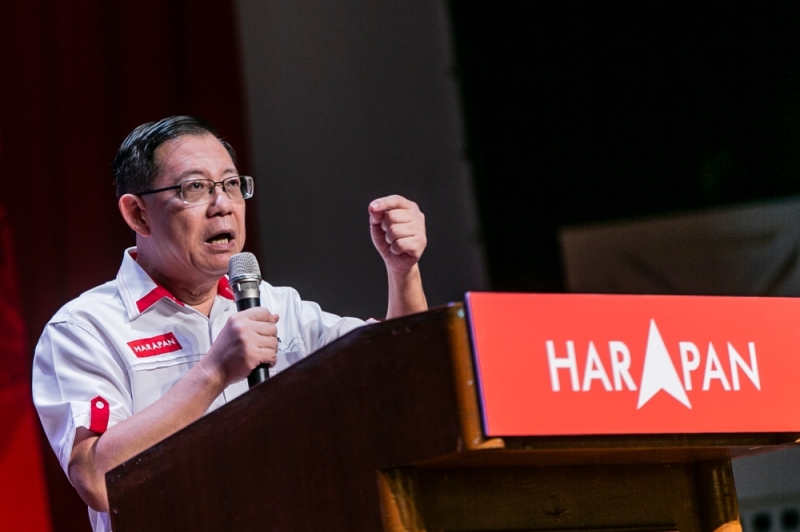
DAP chairman Lim Guan Eng says any votes for Opposition Perikatan Nasional in the upcoming Penang state elections would amount to voting in support of Penang being given back to Kedah against the wishes of Penangites. ― Picture by Hari Anggara

Friday, 30 Jun 2023 3:44 PM MYT


KUALA LUMPUR, June 30 — Any votes for Opposition Perikatan Nasional (PN) in the upcoming Penang state elections would amount to voting in support of Penang being given back to Kedah against the wishes of Penangites, DAP chairman Lim Guan Eng claimed today.

Lim, who is also a former Penang chief minister, cited caretaker Kedah menteri besar Datuk Seri Muhammad Sanusi Md Nor's alleged remarks on wanting Penang to “return” to Kedah.


Lim, who is Bagan MP, stressed that Penang is now a sovereign state and no longer part of Kedah.

“Whilst no one questions Penang’s history that was once part of Kedah, historians and constitutional experts reaffirm that the Conference of Rulers, including the Kedah Sultan, and the Federal Constitution both validates and verifies Penang as a sovereign state in Malaysia,” he said in a statement today.


Lim claimed that Sanusi's alleged suggestion to amend the Federal Constitution to return Penang to Kedah was inflammatory, illegal and seditious.


Lim claimed that Sanusi's alleged push for Penang to be returned was not in Kedah's interests as the latter politician knows that Penang's sovereign status is “already a constitutional fact and actual reality that cannot be altered or varied”.

Lim accused Sanusi of using the Penang issue as a tactic to distract Kedah residents' attention from alleged governance failures such as uninterrupted clean water supply, and the providing of business and work opportunities for a better life for them.

“For this reason, Penangites must turn up fully to vote in the coming state elections for good governance and to live a better life as well as defend, protect and preserve the sovereignty of Penang,” Lim said, urging them to support the unity government and vote against PN in Penang's state polls.

“A vote for PN in Penang is a vote to extinguish Penang and forcibly return to Kedah against the wishes of Penangites,” Lim claimed.

Sanusi, who is also PN's election director, had earlier this month denied wanting to reclaim Penang for Kedah and claimed that he merely wanted to negotiate with the federal government for more payment to Kedah over the alleged lease of the state’s land to Penang.

National news agency Bernama had in 2015 previously reported that the Kedah sultanate had leased Penang island to the British in 1791 for 6,000 Spanish Dollars and Seberang Perai in 1800 for 4,000 Spanish Dollars, and that the federal government had continued to pay RM10,000 annually to Kedah after the states of then Malaya gained independence.

In 2018, the Cabinet agreed that the federal government would continue the RM10,000 annual payment to Kedah, but would also make an additional special contribution of RM10 million annually — starting from 2018 and with the additional amount to be reviewed once every 10 years or within a suitable timeframe.

In October 2021, Sanusi was reported demanding that Kedah be paid RM100 million every year for the alleged “lease” of its land to Penang, instead of the RM10 million that the federal government has been paying since 2018.


After Sivaraj, another leader quits MIC


FMT:

After Sivaraj, another leader quits MIC


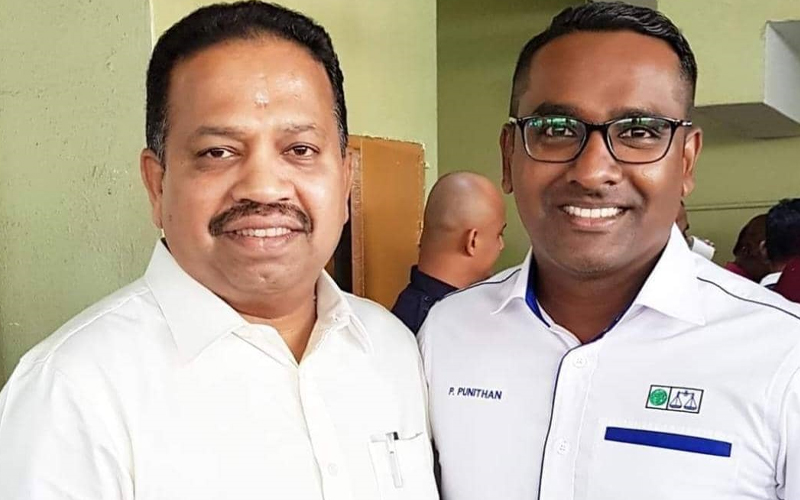
Selangor MIC Youth chief P Punithan cited ‘personal reasons’ for leaving the Indian-based party.


P Punithan (right) handed in his resignation letter to MIC president SA Vigneswaran today.


PETALING JAYA: Another MIC leader has quit, just three days after former MIC vice-president C Sivaraj left the Indian-based party.

Selangor MIC Youth chief P Punithan handed in his resignation letter to party president SA Vigneswaran today.

In his letter, he thanked the top leadership for giving him the chance to serve in various positions in MIC for the last 15 years.

Punithan was also the party’s Batang Berjuntai youth chief.

When contacted, Punithan cited “personal reasons” for quitting MIC.

“Resigning from MIC is not an end to my political career,” he told FMT.

Sivaraj had earlier this week quit MIC saying he wanted to continue serving the Indian community as a senator and a leader without any hindrance, “especially from the MIC leadership”.

Sivaraj said several “incidents” had occurred under Vigneswaran’s leadership that forced him to relinquish his membership.


HRW reports new evidence of Ukrainian use of banned landmines


al Jazeera:

HRW reports new evidence of Ukrainian use of banned landmines


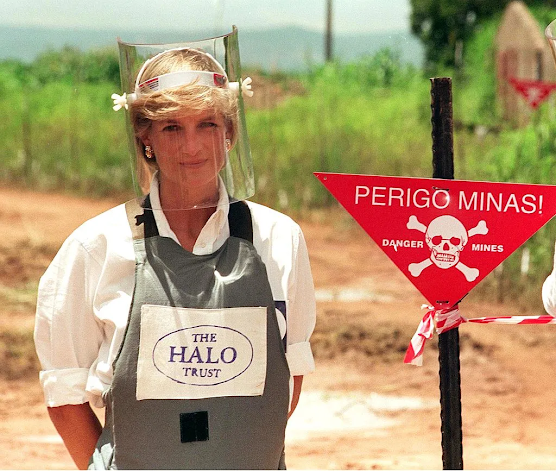
Princess Diana must be rolling in her grave


Human Rights Watch has said it uncovered new evidence of indiscriminate use of banned antipersonnel landmines by Ukrainian forces against Russian troops who invaded Ukraine in 2022.

The group called on Ukraine’s government to follow through with a commitment made earlier this month not to employ such weapons, investigate their suspected use and hold accountable those responsible.

“The Ukrainian government’s pledge to investigate its military’s apparent use of banned [antipersonnel] mines is an important recognition of its duty to protect civilians,” Steve Goose, Human Rights Watch’s arms director, said in a statement.

HRW said it shared its findings with the Ukrainian government in a May letter, to which it received no response.


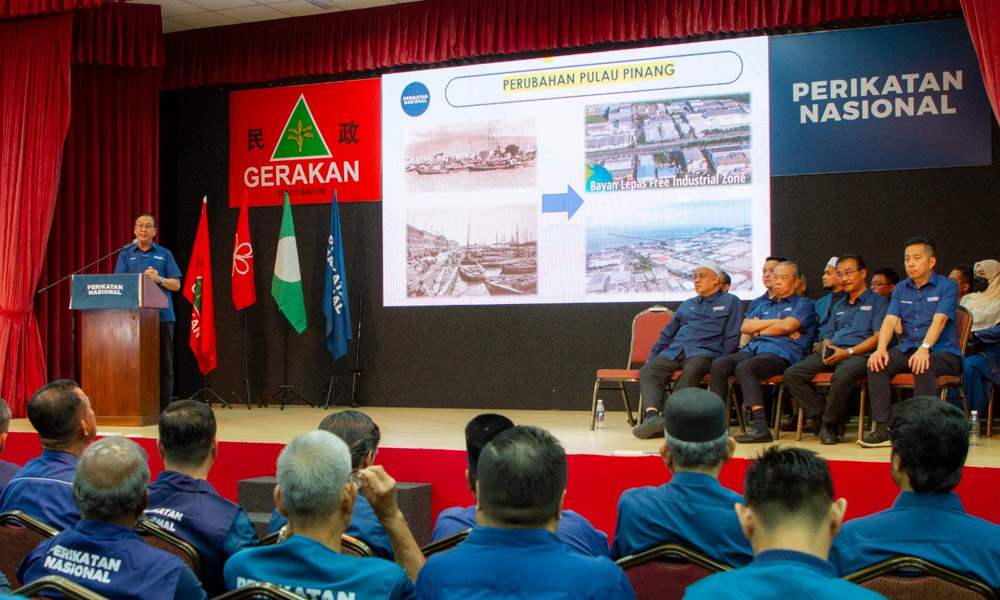
Before state polls, Lau must overcome challenge for Gerakan No 1


Before state polls, Lau must overcome challenge for Gerakan No 1


Before facing the upcoming elections in six states, Gerakan will first have to undergo an important leadership election which will see its incumbent president Dominic Lau being challenged.

The results of this election will likely have far-reaching consequences on how the party approaches the state elections.

Nominations will take place on July 8 and voting will be held a week later. This means the new leadership will only have weeks to prepare for the state polls.

Gerakan’s leadership elections were originally scheduled for November 2021. Under the party’s rules, it must now be held within eight months after the last general election.

Malaysiakini understood that the Gerakan leadership initially anticipated state elections to be held in April or May this year.

When it was clear that the state polls were going to be held later, Gerakan’s central delegates conference passed a resolution on March 26 requesting another postponement of the party election.

Sources told Malaysiakini that the request was relayed to the Registrar of Societies but was unsuccessful, hence the party’s leadership election must be held no later than July 18.


The challengers

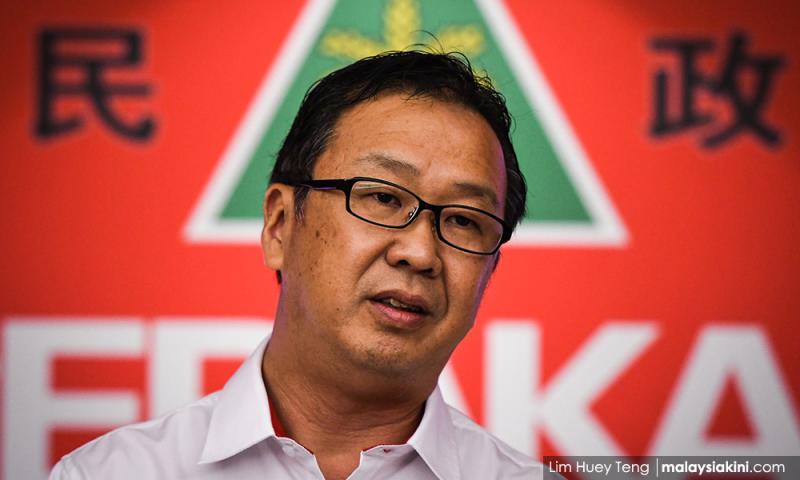
Dominic (above) will be seeking a second term in the party president’s post that he won in 2018. At the time, his opponent was Andy Yong, who has since retired from the party.

It is understood there are three potential challengers - Federal Territories Gerakan head Lau Hoi Keong, Malacca Gerakan chief Michael Gan, and Simpang Renggam division chief Liang Teck Meng.


(From left to right) Michael Gan, Dominic Lau, Lau Hoi Keong, and Liang Teck Meng


When contacted by Malaysiakini, Liang confirmed he will be running for the party presidency.

Liang, a former Gerakan secretary-general and two-term Simpang Renggam MP, said his campaign theme will be “dignity and conscience”.

He refused to confirm if he was forming a team with any of the potential challengers.

“There will definitely be a team. I can’t say much for now,” he said.

Hoi Keong told Sin Chew Daily in a recent interview that he was keen on running for the party presidency and was seeking advice from the grassroots and leaders.

“I will make an announcement soon. I will introduce my team. We will offer a different plan that can adapt to the ever-changing political situation of today,” said Hoi Keong.

Gan did not respond to Malaysiakini’s request for comments.


‘Anything but Dominic’

Since Dominic became Gerakan president in November 2018, the party has gone from supporting Pakatan Harapan to eventually joining Perikatan Nasional (PN).


Dominic’s tenure also saw the party participating in the Tanjung Piai by-election, the 2021 Malacca election, the 2022 Johor election, and the 15th general election. In all those elections, Gerakan did not win a single seat.

Several Gerakan sources told Malaysiakini that this string of failures has generated discontent among party members but it is unclear if there is enough dissent to dislodge Dominic.

Sources who oppose Dominic conceded there was no clear single faction that can pose a legitimate threat to the incumbent. This was because Gerakan’s rank and file has been decimated over the past 15 years, five of which were under Dominic’s leadership.

“Look at our state-level party elections. Many positions were won uncontested because there are not many of us left. No one wants these jobs,” a source said.

Aside from Kelantan, Terengganu, Sabah, and Selangor, there were no contests for the Gerakan state chairperson’s position in other states when elections were held in June.

Sources told Malaysiakini that those who remain and are loyal to the party are upset with Dominic’s leadership, often citing a lack of direction, vision, and strategy.

“Where are we heading? What sort of Malaysia is Gerakan supposed to build with PN? If we don’t have answers, how are we going to canvass for votes?” a source said.


Sources said those who oppose Dominic are motivated to unite under the “Anything but Dominic” banner and would ensure the presidential contest will be a straight fight.


Staying the course

Sources supportive of Dominic told Malaysiakini it was unwise to change the party leadership now because of its negative effect on preparation for the state elections.

It is understood that the party’s central working committee, whose members are determined by the party president, will have the final say on the party’s candidate list.

Therefore, sources told Malaysiakini, if there was a change in president, then the candidates must change at the last minute as well.

Moreover, if a new president emerges after the July 15 party polls, there is a possibility that the new leadership will affect Gerakan’s relationship with PN.

Therefore, the fate of the 55-year-old party could very well rest on the outcome of the upcoming party elections.

***

kt comments:

I suspect Gerakan join the PN coalition, believing or fearing it'll be marginalised in a DAP-dominated PH, as could be the case for MCA now. Nonetheless, PN has been a piss-poor choice for Gerakan - better to have gone it alone.


Proposed amendments on citizenship laws in Malaysia: One step forward, several steps back — Shad Saleem Faruqi


Proposed amendments on citizenship laws in Malaysia: One step forward, several steps back — Shad Saleem Faruqi


Wednesday, 28 Jun 2023 12:58 PM MYT


Prof. Datuk Shad Saleem Faruqi


JUNE 28 — The government must be congratulated for agreeing to amend the law to grant citizenship to children born overseas to Malaysian mothers. The proposed amendment will consign to the dustbin of history the intolerable gender discrimination between Malaysian men and women if their children are born abroad.

As the law stands, if a child is born overseas to a Malaysian father and a foreign wife, the child is eligible to inherit the father’s Malaysian citizenship. But if a Malaysian mother, in a lawful marriage with a foreigner, gives birth overseas to a child from the foreign father, our law disowns the child and he/she has to follow the foreign father’s citizenship.


While celebrating the proposed, positive constitutional evolution, we must nevertheless express alarm at some accompanying regressive proposals that allegedly seek to tighten the law on nationality. Some of these proposals are inhuman, cruel, heartless and in violation of our international obligations under the UN Convention on the Rights of the Child.

These alleged proposals will augment the suffering and deprivation of many helpless, dehumanised and victimised persons and groups, namely: abandoned children, children born out of wedlock (even if the parents then marry), adopted children, children of generational undocumented families and stateless persons and their offspring whose statelessness will spiral down the generations. It is alleged that a constitutional safeguard protecting individuals from becoming stateless, instead of being augmented, is quietly going to be removed. This may create a large new class of stateless persons.


Such regressive proposals may reach the decisive point because the Malaysian system of enacting and amending laws lacks transparency and consultative processes. There is a top-down approach to all decision-making. There is the unbelievable practice of misusing the Official Secrets Act to keep all legislative proposals under wraps till the Bill is laid before Parliament.


It is alleged that a constitutional safeguard protecting individuals from becoming stateless, instead of being augmented, is quietly going to be removed. This may create a large new class of stateless persons. — File picture by Farhan Najib


In some democratic countries, the Government publishes and publicises White Papers to outline its legislative proposals to invite public feedback. Parliamentary Committees indulge in thorough consultation with those who are likely to be affected. Civic-minded citizens and experts are invited to render advice.

Democracy is not mere periodic elections. Discussion before a decision is the essential condition of a democratic polity. It is time for our nascent democracy to evolve in this direction.

It is also humbly submitted that when the Amendment Bill is submitted to the Conference of Rulers for royal assent under Article 159(5), Their Majesties should not allow this controversial Bill with provisions that were hidden from the public to get by without thorough royal scrutiny.

Besides gender inequality, the cruel treatment of illegitimate but innocent children should end. Illegitimate children derive descent solely from the mother and the Malaysian father’s status (even if confirmed biologically) does not matter. There are structural issues that prevent poor or uneducated families from meeting their kids’ registration requirements.

The Yang di-Pertuan Agong and the Conference of Rulers are our constitutional auditors and Their Majesties must remain informed of the dark underbelly of this legislation.


* Prof. Datuk Shad Saleem Faruqi is Tunku Abdul Rahman Chair at Universiti Malaya's Faculty of Law.


Australia scraps billion-dollar satellite programme


FMT:

Australia scraps billion-dollar satellite programme


Critics see the cost-cutting measures as undermining climate, defence, and tech job creation goals.


The Earth observation project was to design, construct, and launch four satellites between 2028 and 2033. (Freepik pic)


SYDNEY: Australia on Friday said it was axing a billion-dollar plan to develop a series of space satellites, as it tries to cut costs amid an economic slowdown and cost-of-living crisis.

The A$1.2 billion (USUS$770 million) National Space Mission for Earth Observation was unveiled just last year and hailed as a key plank in developing the Australian space industry.

The programme’s aim was to design, build and operate four satellites to be launched between 2028 and 2033 to gather Earth observation data.

The data helps authorities forecast the weather, respond to natural disasters and manage the environment.

But the country’s centre-left government said the plan will be scrapped for “budget repair” reasons, leaving Australia reliant on earth data from overseas partners.

Industry and science minister Ed Husic told public broadcaster ABC on Friday that prioritising “broader environmental things” while fighting inflation had meant “making tough calls”.

“If I don’t cut a billion there, I’ve got to find it somewhere else in the portfolio,” he said.

“There are other ways we can build capability – we’re certainly interested in doing that. We just have to make the call on this.”

Australia’s government has promised to balance the budget this year, despite slow growth and a steady increase in defence spending.

The Space Industry Association of Australia said the decision to cancel the satellite programme was “shortsighted”.

“It will undermine the Albanese government’s agenda on climate, defence, STEM, advanced manufacturing and building tech jobs,” the lobby group for Australia’s space industry said.

***

kt comments:

Abandon the useless AUKUS project and Australia will have $368 billions left for other worthy projects.


We’re not revamping Subang airport to replace KLIA, assures Loke


FMT:

We’re not revamping Subang airport to replace KLIA, assures Loke


Transport minister Loke Siew Fook says the Sultan Abdul Aziz Shah Airport will never replace KLIA given their respective sizes and passenger capacities.


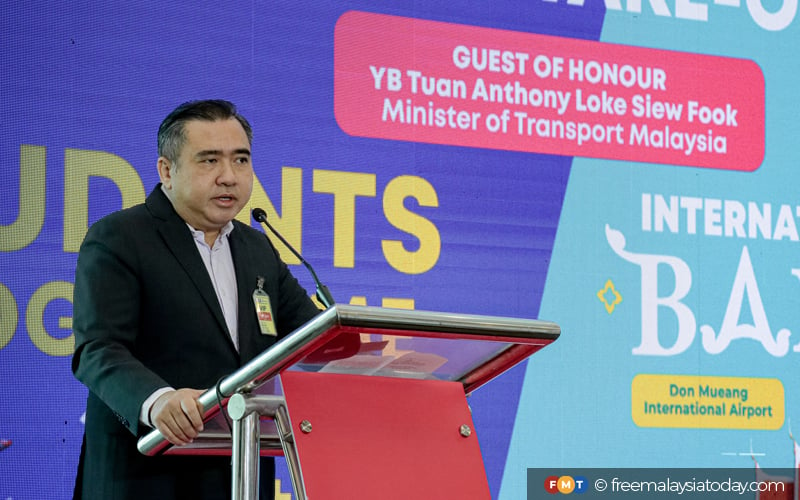
Loke Siew Fook speaking at the launch of MYAirline’s student discount programme at KLIA Terminal 2 in Sepang.


SEPANG: The government’s move to revamp Subang Airport as a premium city airport is not to have it replace Kuala Lumpur International Airport (KLIA), says transport minister Loke Siew Fook.

He said there was “no way” the airport, also called the Sultan Abdul Aziz Shah Airport (SAAS), could replace KLIA given their respective sizes and passenger capacities.

“(In) Subang airport, our plan is to go up to eight million passengers per annum, but in KLIA, we’re talking about 50 million (passengers per annum) or more,” he said.

“Subang is meant to be a premium city airport. That is a market niche we’re hoping to build.

“It’s more to attract business passengers and will include a hub for private jets,” he said at the launch of the MYAirline student discount programme at KLIA Terminal 2 here.

In February, Loke announced plans to turn the airport into a premium city airport and aviation hub as part of the new Subang Airport Rejuvenation Plan (SARP).

He was reported to have said that the SARP, proposed by Malaysia Airports Holdings (MAHB), was presented to the Cabinet on Jan 31 prior to its approval.

Loke said the plan would focus on business aviation, regional commercial flight operations, and other commercial flights.

He added that the government had several policy tools to help make SAAS a premium city airport.

“Firstly, we will limit the types of aircraft. Then, we will limit the type of destinations, and finally, in terms of which particular airport and which slot to be given, all that is within the control of the government through airport authorities,” he said.

“And it’s not just about the airport. We also want to build a maintenance, repair, and overhaul (MRO) hub in Subang so the aviation industry (in Malaysia) can grow to not just being an operator but also a hub for maintenance and repairs.”

Making Subang an MRO hub would create many high-income job opportunities, Loke said.

Last Monday, Malaysia Aviation Group (MAG) managing director Izham Ismail was reported to have said that upgrading SAAS would inevitably draw some flights away from KLIA.

Izham claimed that changes in flight traffic could weaken KLIA’s position as the country’s main airport hub and called for appropriate measures to manage that possibility.


Kelantan’s indecent attire fine for non-Muslims could hurt state tourism, says minister


Kelantan’s indecent attire fine for non-Muslims could hurt state tourism, says minister


Tourism, Arts, and Culture Minister Datuk Seri Tiong King Sing said the enforcement action against the woman in Kota Baru went against the religious freedom guaranteed by the Federal Constitution. — Picture by Raymond Manuel

Thursday, 29 Jun 2023 6:27 PM MYT


KUALA LUMPUR, June 29 — Kelantan would discourage visitors to the state if its local authorities persist with fining non-Muslims over their attire, said Tourism, Arts, and Culture Minister Datuk Seri Tiong King Sing.

While emphasising that he was not challenging any religion in the country, the minister said the enforcement action against the woman in Kota Baru went against the religious freedom guaranteed by the Federal Constitution.

“If the incident in which a non-Muslim woman was fined for indecent attire were to repeat, then it will create anxiety and severely impact local residents and tourists, thereby jeopardising the state’s tourism,” he said in a statement today.

The minister then said Malaysia was a plural country with diverse races and religions.

Tiong also said that while Article 3(1) of the Federal Constitution states that “Islam is the religion of the Federation,” other religions may be practised peacefully in the country.

“Therefore, I would like to invite all PAS leaders to learn from Islamic countries that are also internationally powerful such as Saudi Arabia which is developed and growing in their tourism sector, without denying the rights of others of different faiths,” he said.

On Monday, the New Straits Times reported that Kota Baru Municipal Council enforcement officers issued a fine to a 35-year-old woman who operates a clothing business during their inspection of the outlet in the city.

Council president Rosnazli Amin said that the woman had violated the Business and Industrial Trade By-Laws 2019.


We don't need fashion advice from Hadi


We don't need fashion advice from Hadi


YOURSAY | ’I don’t need your criticism and I certainly don’t want your compliment.’

Hadi lauds non-Muslims who dress with ‘dignity’


Mazilamani: Going back to the 20th century, how were our ancestors attired then? Were they not decently dressed then?

I come from a village where the women in the 1950s tied or knotted the upper end of their sarongs just above their chest, exposing a greater part of their legs.

We felt they were decently dressed. There was no room for foul thoughts because that is how much we respected them as ladies.

I once saw a disoriented lady parading naked on the main road at Kepong. I saw a driver stopping his heavy-laden lorry, taking off his long-sleeved shirt, and buttoning it up for her.

That was a human being who felt for another fellow human being.

PAS president Abdul Hadi Awang should fight his political war with his opponents based on matters relating to the national interest, along with progress, development, stability, unity, and prosperity.

He should not talk about dress codes and dignity while condemning another party.

Leave the polemics to the ordinary citizens. We picked you and your party members to deliver good services for the rakyat.

The people will remember you for your service and not your judgements.

Man on the Silver Mountain: Hadi is talking rubbish. There are bad Muslims as there are good Muslims regardless of what they are wearing, which is external.


This applies to all people of different religions too. There are always the good ones and the bad ones.

If you arrest people based on the clothes they wear, of course, they will wear what you force them to wear. That nevertheless does not reflect the purity of their hearts.

You can have your personal clothing preferences, but how are you going to enforce your preference on others?

When Hadi talks about this, it only tells us what PAS will do if they form the federal government. People can expect no freedom in religion or even the way they dress.

Vijay47: Hadi, I find it extremely offensive and repulsive that a person of your mentality would dare comment on the way I dress.

I don’t need your criticism and I certainly don’t want your compliment.

You do not have any quality whatsoever to pass any judgements on the teachings of my religion.

If this is an attempt by you to enjoy some damage control and conceal your years of disgusting comments, especially in a multi-religious country, you may earn some small measure of acceptance if you crawled and begged forgiveness from every single non-Muslim in Malaysia and many of the Muslims also.

Siva1967: First, the definition of dignity differs from one to another. First and foremost, your attire is not Malay attire, to begin with.

It is not Islamic attire as well. It’s an attire mainly worn in the sandy desert regions in the Middle East and worn by both Muslims and non-Muslims there.

And when Malaysians do not complain about your attire, who are you to comment about what others wear, especially non-Muslims in this country?

For one to comment on these things only goes to show that you are not able to control your wandering eyes and only interpret one’s attire with a sexual connotation.

These are very worrying traits, especially coming from someone who claims he is a religious leader.

Gerard Lourdesamy: So everybody in the West is indecent because of what they wear? What about the Muslims in those countries who dress similarly? Are they murtad (apostates) now?

Please issue a manual. There is nothing wrong if non-Muslims want to wear shorts in their own homes, offices, or business premises.

How does that affect Muslims? We are not yet a Taliban state.

Perhaps Hadi wants us to become one. That is why Perikatan Nasional must be rejected in the state elections. They are racists and religious fanatics.

Plain Old Malaysian: Please be humane. It’s torture for some people to see the skin of a lady. The mental anguish they suffer from controlling their dignity is sometimes beyond their control.

Any skin exposed above the knees drives their imagination into overdrive. This may force them to show their level, or absence, of dignity. So do dress “humanely” and with “dignity” to help these people suffer less.

Let us normal people be sympathetic to these hopeless people. Oops, I mean helpless people.

Picture: Malaysia is a multi-racial, multi-religious society. Tolerance is key. Empathy is key. Respect for each other is key. Understanding each other is key.

Give and take is the key. Promoting peace and harmony is super key! We all have to ensure we progress together. Stop all divisive rhetoric.

PurpleHawk0187: Why is he so fixated on other religions? Who gives him the right to dictate to those not under his purview?

His comments are always negative and controversial. It is time the authorities take action against his disharmonious “preaching”.

IndigoKiwi9570: What the non-Muslims wear is none of your business. You just make sure you don't ‘ponteng’ Parliament sittings as my tax money is used to pay your salary!

While you are at it, put your brain to good use to think of policies that will benefit the rakyat.

We don’t need your fashion ideas and we are sick of the DAP bashings. For once, enough of your bigoted statements, it’s just sickening!


Pseudo-Lebai Lil' Napoleon in Pennag


Moral policing: Socso suspends Rela personnel pending probe


The Social Security Organisation (Socso) has suspended a People’s Volunteer Corps (Rela) personnel who stopped a woman from entering its Penang office due to the skirt she was wearing.

Socso CEO Mohammed Azman said they viewed the “unforeseen” act by the Rela personnel seriously.

“Socso would like to emphasise that what happened was beyond the knowledge of management and that the Rela staff acted outside their scope of duty.

“Socso took immediate action against the personnel involved by demanding an explanation, and the person has been suspended from duty effective June 29, until an investigation into this case is completed,” Mohammed said in a statement today.

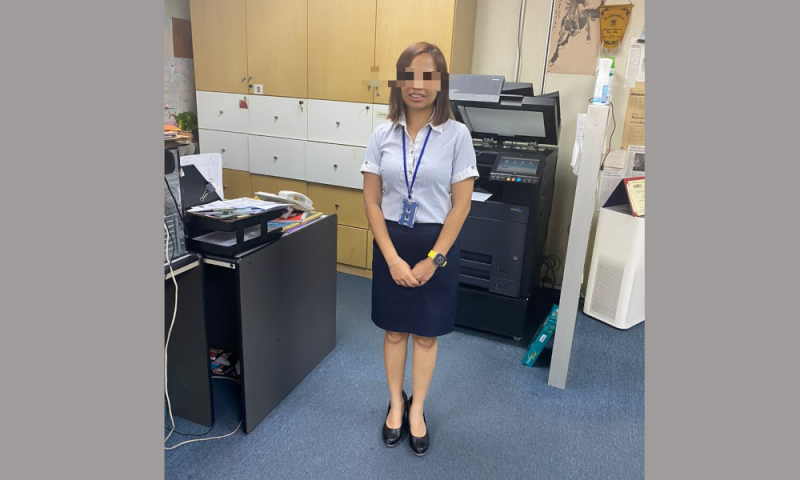
The matter was brought to light by Penang-based lawyer Ajit Singh Jessy, who said his female colleague was stopped by a guard from entering the Socso office along Jalan Burma on Wednesday.

His colleague, identified only as May, was accompanying him to register his maid under Socso.

He said May was wearing a knee-length skirt but the guard told her she should wear a skirt that reaches down to her feet.

“We asked him what was wrong since her skirt was up to her knees. He said that was the rule.

“After we persisted to know what was wrong with her skirt, he replied, ‘Ini kali ok. Lain kali tak boleh.’ (This time it’s okay, next time cannot),” Ajit said.

He added that no one took issue with May’s dressing once the pair entered the building.

“Since when do we have security guards being given the authority to enforce dress codes? I always thought their job was to guard the building.

“Please put a stop to this harassment of the public at government departments,” he said in a statement.


Google to block local news in Canada


FMT:

Google to block local news in Canada


This comes after Ottawa passed a bill requiring tech companies to pay for such content.


Google will be removing links to Canadian news from its Search, News and Discover products. (File pic)


OTTAWA: Google on Thursday became the latest Silicon Valley giant to block Canadian users from seeing local news on its platform after Ottawa passed a bill requiring tech companies to pay for such content.

The Online News Act became law last week, aiming to support a struggling Canadian news sector that has seen hundreds of publications close in the last decade.

It requires digital giants to make fair commercial deals with Canadian outlets for the news and information that is shared on their platforms, or face binding arbitration.

In a statement, Google said the new law is “unworkable” and that the government has not given it reason to believe “structural issues with the legislation” would be resolved during its implementation.

In a blog post, Google added that it will be “harder for Canadians to find news online” and “for journalists to reach their audiences.”

People in the country will, however, still be able to access news from Canadian sites by typing their respective web address directly into a browser or through apps.

Google’s announcement comes after the failure of last-ditch talks with the government aimed at bringing the company onboard.

Tech giant Meta announced last Thursday that it too would block Canadian news on Facebook and Instagram.

The two companies, who dominate online advertising, have been accused of draining cash away from traditional news organizations while using their content for free.

“We have informed the government that we have made the difficult decision that … we will be removing links to Canadian news from our Search, News and Discover products and will no longer be able to operate Google News Showcase in Canada,” Google said.

Deputy prime minister Chrystia Freeland, a former journalist, said “the loss of revenues flowing out of newsrooms in Canada is not just a problem for the journalists who are affected, it’s a problem for the whole country.”

“To have a strong culture, to have a healthy society, to have healthy politics, we need great, well-paid journalists,” she said.

An October 2022 report by Canada’s parliamentary budget watchdog estimated the Online News Act would see Canadian newspapers receive about Can$330 million per year from digital platforms.

Canada’s measure builds on Australia’s New Media Bargaining Code, a world first, that made Google and Meta pay for news content on their platforms.

AFP signed a five-year agreement on neighbouring rights with Google at the end of 2021 for the internet giant to pay for content from the news agency.

It also signed two commercial deals with the platform.


‘Invisible’ in Malaysia: Why are people born here stateless and will the govt’s citizenship proposals fix or worsen the problem?


‘Invisible’ in Malaysia: Why are people born here stateless and will the govt’s citizenship proposals fix or worsen the problem?


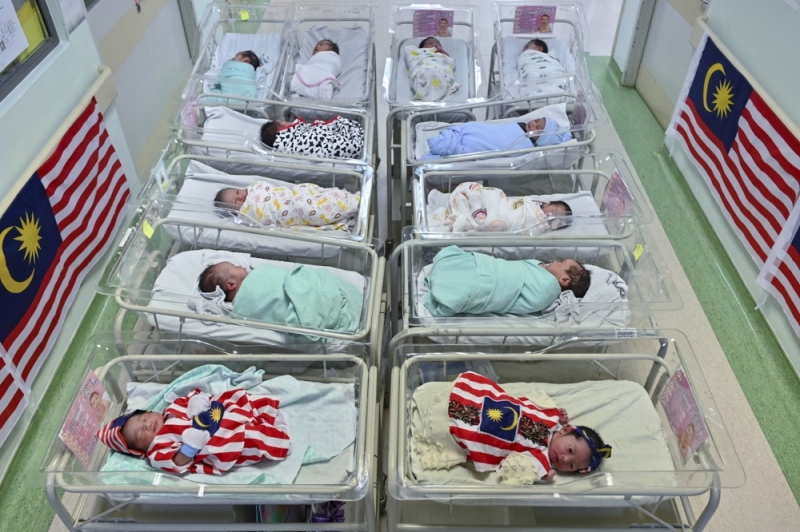
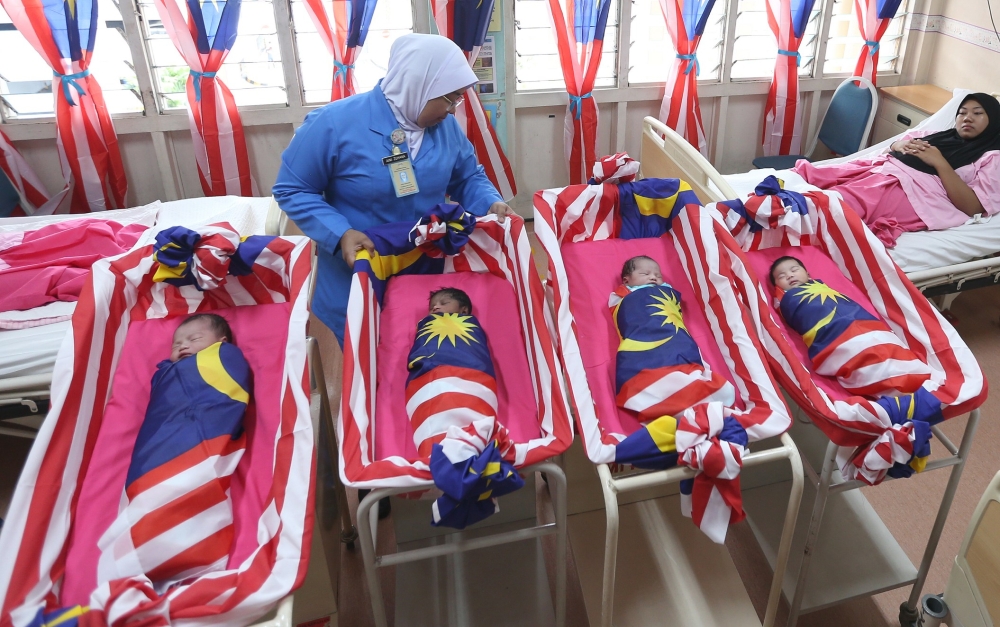
Merdeka babies born on August 31, 2022 are pictured at Hospital Sultanah Nur Zahirah in Kuala Terengganu. — Bernama pic

Friday, 30 Jun 2023 7:00 AM MYT


KUALA LUMPUR, June 30 — Being stateless in Malaysia is like being “invisible” as Malaysian authorities do not even collect official data on how many such people are here.

And what does “stateless” even mean? It quite simply means someone who is not a citizen of any country in the world.


They can be born in Malaysia but are not recognised by the government as Malaysians, and are also not recognised as citizens by other country.

How do people end up being stateless in Malaysia? What is the Malaysian government planning to do and will their proposed changes to Malaysia’s citizenship laws make it better or worse for stateless children?


Here’s what Malay Mail was told by three experts on cases involving stateless children:


1. Born in Malaysia, but stateless ... and more

Lawyer Jasmine Wong, who has represented stateless clients and parents of stateless children in court, said those who become stateless in Malaysia are “largely due to gender inequality in our laws and the lack of legal identification documents such as birth certificates or marriage certificates from their parents”.

Wong said some parents lack awareness of the importance of registering their child’s birth, which would result in the child not having a birth certificate or an identity document.

“Without a birth certificate, it would be very difficult to show that the child was born in Malaysia or the identity of the child’s parents, and that the child is entitled to citizenship,” the vice president of the Association of Women Lawyers told Malay Mail.

Wong said that even if the child’s birth is registered and he/she has a birth certificate, the National Registration Department (NRD) can still label him/her as non-Malaysian.

“The NRD will issue a red birth certificate stating ‘Bukan Warganegara’ (Non Citizen) to several categories of children despite their birth in Malaysia: 1) Foundlings or abandoned children with no information on their parents; 2) Children born out of wedlock to a Malaysian father and non-citizen mother; 3) Children born to stateless parents; 4) Children who were born to non-citizen mother and unknown father but were subsequently adopted by Malaysian citizens.


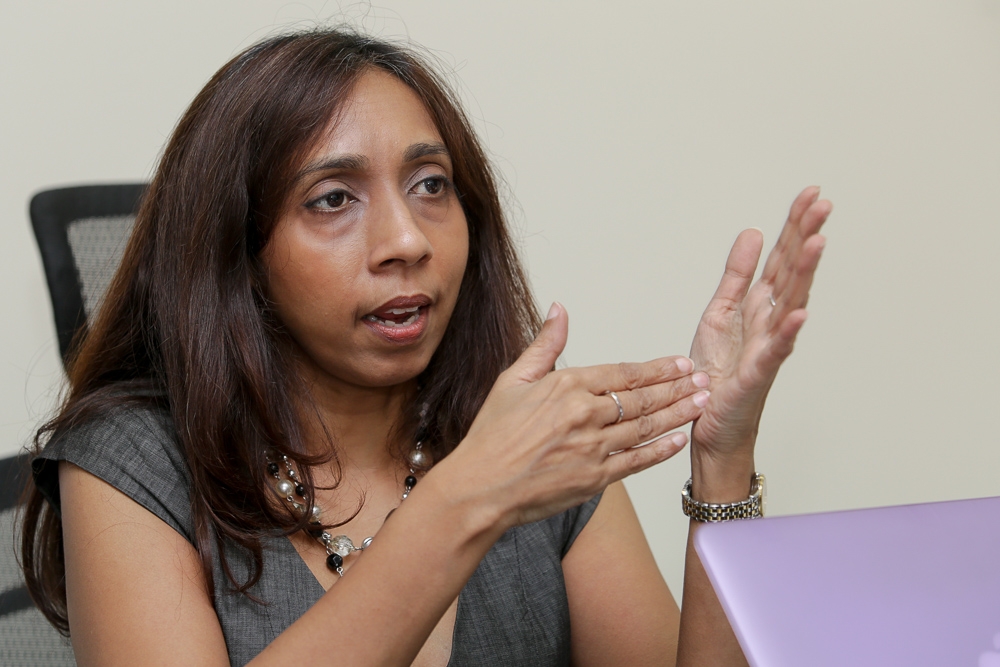
Lawyer Jasmine Wong said that even if the child’s birth is registered and he/she has a birth certificate, the National Registration Department (NRD) can still label him/her as non-Malaysian. — Picture courtesy of Jasmine Wong


“The NRD will also not recognise a child as a Malaysian citizen if the child was 1) born overseas and out of wedlock to a Malaysian father; and 2) born overseas to a Malaysian mother,” she said.

Lawyer Sharmila Sekaran, who chairs child rights’ group Voice of Children (VoC), said stateless persons should not be lumped together with refugees, as not all stateless persons are necessarily refugees.

“People need to take time to learn and understand the difference between a stateless person, an undocumented person, a migrant and a refugee. They are not the same at all, and it is ignorant and dishonest to categorise them as one,” she said.

Refugees generally refers to those who fled their country of origin due to conflict or persecution, while migrants are generally foreigners or citizens of another country who moved to Malaysia to live and work.

Sharmila said undocumented persons are not necessarily migrants who may lack legal papers for entry or to remain, but could also be Malaysian children born in Malaysia to Malaysian parents.

For example, some Orang Asli or Orang Asal or those living in poverty who failed to inform the NRD of their child’s birth will result in the child not having a birth certificate and becoming undocumented, and this child would then risk being stateless — such as when the child is unable to prove Malaysian parentage when both parents die before the child’s birth could be registered, she said.

A stateless person is not a citizen of any country and this means that a stateless person will remain in Malaysia if they live here, with Sharmila saying: “They have no country that we can send them to, and no country will receive them.”

For Rohingya refugees who are already stateless before coming to Malaysia due to a possible combination of laws, “policy, racism, misplaced nationalism, xenophobia or conflict”, Sharmila said Malaysia cannot be expected to find a solution on its own and that there needs to be at least an Asean or international response to their statelessness.

But Sharmila said there are “low-hanging fruits” or other categories of statelessness which Malaysia can more easily resolve by recognising them as Malaysians, such as children with at least one Malaysian parent, children adopted by parents (at least one of whom is Malaysian), foundlings and abandoned babies, children without citizenship under the Department of Social Welfare or registered children homes.

“Stateless children who are born in Malaysia do not know anything else or any place else. It is not a choice for them; circumstances have been foisted upon them. They are not choosing to be in Malaysia over another country. The fact is, they are stateless by virtue of not being a citizen of any other country,” Sharmila said.


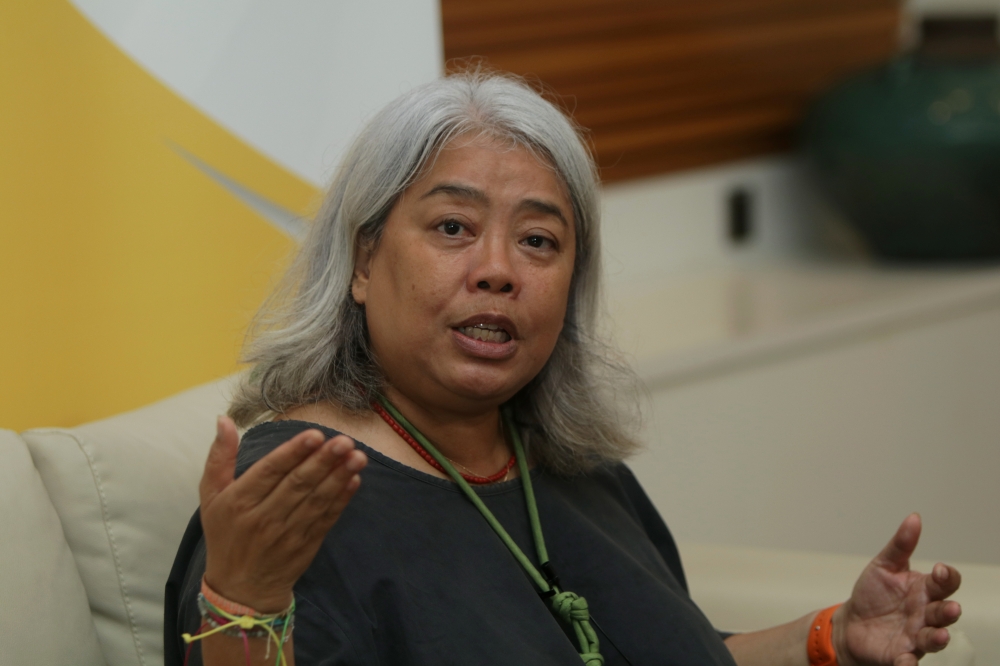
Lawyer Sharmila Sekaran, who chairs child rights’ group Voice of Children (VoC), said stateless persons should not be lumped together with refugees, as not all stateless persons are necessarily refugees. — Picture by Choo Choy May


Child rights activist Datuk Hartini Zainudin, co-founder of Yayasan Chow Kit (YCK), said she has come across thousands of stateless cases in the course of her work, and added that stateless children have been wrongly viewed and statelessness is not something that they chose.

“Stateless children have no choice. They’re not recognised as being citizens of Malaysia. Assuming wrongly that they’re foreigners and some devious phantom evil adults and foreigners are planting babies and children in Malaysia so adults can get citizenship — that’s not how it works,” she said.

Hartini cited around 10 different categories of statelessness in Malaysia including Orang Asli and Orang Asal who were born in Malaysia but undocumented or never registered at birth and Malaysia-born children who were abandoned by their biological parents or adopted by Malaysians, saying the assumption that all stateless children are foreigners are “not true”.

“Only Rohingyans are both refugees and stateless because they’re not recognised as citizens of their own country,” she said, saying that the other types of stateless persons in Malaysia are those born here with either no or incomplete documents, internally displaced, have never left the country and will most probably die here.

Hartini said the impact of being stateless — which she described as akin to being “invisible” — is “horrific”, noting as a guardian to stateless children with disabilities that they are not able to even get access to rehabilitation programmes.

Development of Human Resources for Rural Areas (DHRRA), a group which has been helping stateless persons for years, has resources on its website listing stateless categories (those who arrived or were born locally before Malaysia’s formation, children born out of wedlock to Malaysian fathers here, children born overseas to Malaysian mothers, abandoned children and foundlings, stateless adopted children, the nomadic Bajau Laut) and those at high risk of statelessness (the Orang Asli and Orang Asal, multigenerational migrants and refugees).

In short: The children did not choose to be stateless, they were born but not recognised as Malaysians, due to various reasons.

2. What are the government’s proposed citizenship amendments and how will they affect stateless children in Malaysia?

Last Friday, the Home Ministry in a briefing told civil society organisations of its plans to make changes to citizenship rules in the Federal Constitution, including to finally enable Malaysian mothers to pass on their citizenship to their overseas-born children, just as Malaysian fathers are already able to do.

But the civil society groups immediately expressed concern over the government’s other proposed amendments to the Federal Constitution to remove existing constitutional protections that were meant to prevent children from becoming stateless.

Wong, who was present at the briefing, said the intention to prevent statelessness has been present since 1948 at the formation of the Federation of Malaya (now Peninsular Malaysia). But the Home Ministry now is suggesting abolishing a protection against statelessness in Malaysia.

“One of the biggest proposed amendments is the removal of Section 1(e) in Part II of the Second Schedule of the Federal Constitution. Section 1(e) has been the safeguard against statelessness since Malaya was formed.

“It has benefited various categories of impacted children such as children separated from parents with no proof of parentage, children born out of wedlock, adopted children, and children who were born to stateless parents,” she said.

Under Section 1(e), every person born within Malaysia and who is not born a citizen of any country is entitled to be a Malaysian citizen because of the law. In other words, Section 1(e) states they have the right to be Malaysians.

Citizenship lawyers have often argued in court that such Malaysia-born persons are stateless, if they have not acquired the citizenship of any other country within a year of their birth (based on Section 2(3)) and if the government still refuses to recognise them as Malaysians.

Wong also highlighted that another proposed amendment will have a huge impact on babies found abandoned at birth, where the Home Ministry proposed changing the law to make them entitled to citizenship by registration instead of citizenship as of right.

“This proposal will effectively subject the foundlings and abandoned children to the absolute discretion of the Home Minister,” she said.

She said such a proposal is contrary to the Federal Court’s decision in the case of CCH & Anor v Pendaftar Besar Bagi Kelahiran dan Kematian, Malaysia [2022] 1 MLJ 71, where the court decided that a child born and abandoned in Malaysia and whose biological parents are unknown will be entitled to Malaysian citizenship.

“The Federal Court explained that the Constitution places the burden on the government to investigate the child’s birth, and if the NRD is not able to find any evidence as to who the child’s biological parents are, the NRD should register the child as a citizen by operation of law,” Wong said.


Child rights activist Datuk Hartini Zainudin said Malaysia should not treat children as a threat to national security, cautioning that the government’s proposed amendments to remove the protection against statelessness would be ‘most cruel’, ‘ill-advised’ and counter-productive. — Bernama pic


Instead of trying to stop births out of wedlock — which would include teenage pregnancies — by amending the Federal Constitution to make it harder for such children to be citizens, Hartini said the government should directly tackle the root causes such as why baby dumping happens or related social issues such as baby selling.

“Think you need to look at root causes. Go promote sex education. And stop baby dumping. The babies are foundlings,” she said. Police recorded 789 babies being dumped in Malaysia from 2015 to 2021.

Hartini said Malaysia should not treat children as a threat to national security, cautioning that the government’s proposed amendments to remove the protection against statelessness would be “most cruel”, “ill-advised” and counter-productive.

“The children aren’t a national security threat, the amendments are. These amendments will deny children basic rights to health, education, jobs, a way to earn a decent living.

“The children aren’t foreigners. These horrible amendments will guarantee they remain stateless and foreigners in their own country, when they’re really — under the Federal Constitution — Malaysians,” she said, adding that these children will become “invisible” as well as becoming “no country’s citizens.”

“That’s the importance of Section 1(e). You remove Section 1(e), which is one of the proposed amendments, the children have nothing. No protection. No guarantee of citizenship.

“You think you’re deterring statelessness? These amendments if passed will guarantee more statelessness,” Hartini, whose YCK organisation was present at the briefing, said.

Removing the guaranteed right to citizenship under Section 1(e) will result in stateless children having to apply for citizenship and be at the mercy of the Home Minister’s discretionary power, Hartini said.

Sharmila, whose organisation VoC was also present in the briefing, said: “Not only will the proposals not address many categories of childhood statelessness and make it more difficult for children in the above categories to obtain citizenship, it will create further categories and exacerbate the problem. More children will become stateless.

“The proposed amendments reveal a lack of foresight and seem rather myopic. Let us not, by our lack of knowledge and understanding, create serious economic problems and social ills in our society and nation at large.”

Sharmila said stateless children denied access to basic healthcare means they will not receive the usual immunisation upon birth and even as adults unlike Malaysians, leaving them more exposed to communicable diseases.


For stateless children denied access to formal education, they may end up facing literacy issues and being low-skilled and having to join the informal work sector which may expose them to being abused, violated and exploited. — Picture by Razak Ghazali


This could also result in the rest of society becoming more exposed as the illnesses mutate and ultimately lead to a greater economic problem.

For stateless children denied access to formal education, they may end up facing literacy issues and being low-skilled and having to join the informal work sector which may expose them to being abused, violated and exploited.

Their children may then be stuck in the same cycle of statelessness, low skills and poverty, she said.

Former women, family and community development minister Tan Sri Shahrizat Abdul Jalil had in a June 25 statement said children are innocent and should not be blamed for the situation they find themselves in, adding that making it more difficult for abandoned babies to become Malaysians will not discourage their parents from abandoning them out of desperation and that removing protections against statelessness for them will only create more challenges.

Last Saturday, civil society groups said it is understood that the government is planning to finalise these proposals before presenting them to the Conference of Rulers on July 12.

In short: The proposed amendments may cause more children in Malaysia to be denied Malaysian citizenship and to be stateless. The problem will become worse.

3. More consultation needed; streamlining SOPs a quick, temporary fix

Wong said Malaysia’s citizenship laws are “not entirely perfect”, and some need amendments such as to remove the illegitimate clause under Section 17 (which the government has interpreted to say children born out of wedlock to a Malaysian father and non-Malaysian mother should follow the mother’s nationality) and to perhaps consider inserting a clause for stateless adopted children.

Apart from helping Malaysian mothers with overseas-born children, Wong said the government should not rush into amending the other citizenship provisions in the Federal Constitution which will affect childhood statelessness without seeking further feedback and consultation with all relevant stakeholders.

But at the same time, the government should for now make the standard operating procedures (SOPs) and process for stateless persons to apply for citizenship easier first as a temporary measure, she said.

Urging the government to streamline the SOPs for citizenship applications at the NRD, Home Ministry and embassies, Wong said: “The government should register children as citizens so long as they are able to show that one parent is a Malaysian citizen, without looking at the parents’ marital status.”

She said there are times when citizenship applicants are not able to even get the necessary forms from the NRD, as NRD officers act as “gatekeepers”.

“When they do a preliminary check of the applicant’s documents and are of the view that the applicants have insufficient documents, they will refuse to give the application forms to the applicants. So essentially, the applicants are denied their right to even submit and have their application considered,” she said.

Even when the citizenship applicants were able to submit their applications, they faced a long waiting time for a response and their citizenship applications would most of the time “be rejected without any reasons given”, she said.

“This current practice is affecting our children because for each day their citizenship status is not solved, that is one more day for them not being able to access their right to health, education and social services,” Wong said.

Sharmila said the current proposed amendments have the effect of “penalising the child”, and said the government should instead propose amendments that are “child-centred and with the desire to resolve childhood statelessness”.

“This does not mean giving citizenship to all and sundry; but to ensure that children within our borders have safeguards and can obtain citizenship if they have none,” she said.

While some changes to the Federal Constitution or laws may be necessary, Sharmila said a lot of the issues can actually be resolved administratively, with the right regulations, systems and processes.

“In fact, the Federal Constitution as it is, already offers safeguards which is why much of the problem is administrative and needs clear regulations and guidelines with clear timelines, and not ad-hoc application of policies,” she said.


File picture of a person filling up an application form for MyKad before going to the NRD in Kuala Lumpur, July 21, 2014. — Picture by Choo Choy May


4. It’s not a package deal

While the Malaysian government is working on updating the Federal Constitution to stop gender discrimination against Malaysian women who give birth overseas, these long-awaited changes can be made separately without having to package them together with the proposed amendments which could remove protections from becoming stateless.

Currently Section 1(b) and Section 1(c) of Part II of the Second Schedule of the Federal Constitution states that every person born outside Malaysia to a Malaysian “father” will be a Malaysian by operation of law.

The Malaysian government has interpreted this to mean that only Malaysian men can confer citizenship to their overseas-born children.

Wong said the government’s “intention in wanting to amend the unequal gender provisions in Sections 1(b) and 1(c) to allow Malaysian mothers to confer citizenship to their overseas-born children is commendable.

“However, the amendment of replacing the word ‘father’ to ‘at least one of the parents’, is a standalone amendment. This amendment should not be grouped together with the proposed amendments which will affect individuals born in Malaysia or those concerning childhood statelessness, to the detriment of Malaysian mothers.

“The Bill for automatic citizenship of children born overseas to Malaysian women should be tabled in Parliament as soon as possible and should not be delayed any further,” she said.

Similarly, Hartini said the current proposed amendments — including the removal of the Section 1(e) protection — affect children born out of wedlock and children adopted by Malaysian parents which make up the bulk of applications for Malaysian citizenship, stressing that the government can instead just go on with the amendments for Malaysian mothers with overseas-born children.

“Do not remove Section 1(e) ... just push through agreed amendments affecting Malaysian mothers whose children are born abroad to foreign fathers,” Hartini said.

The earliest that the proposed constitutional law changes (for Malaysian mothers to pass on their citizenship to their overseas-born children) can reach Parliament would be October, with the Dewan Rakyat’s next meeting scheduled from October 9 to November 30, while the Dewan Negara is set to meet on November 27 to December 14.

In short: The proposed law changes for Malaysian mothers’ overseas-born children to automatically have Malaysian citizenship can and should just move on ahead first.


Thursday, June 29, 2023

Non-Malays only want progress, Lau tells Dr M


FMT:

Non-Malays only want progress, Lau tells Dr M


Gerakan president Dominic Lau says Dr Mahathir Mohamad is trying to use racial issues to incite people.


Gerakan president Dominic Lau has urged Malaysians to reject Dr Mahathir Mohamad’s negative statements.


PETALING JAYA: Gerakan has criticised Dr Mahathir Mohamad for claiming there are non-Malays who want to change Malaysia’s “name and ownership”.

Speaking to FMT, Gerakan president Dominic Lau called on Malaysians to reject such statements as they could affect the country’s harmony, going on to describe the former prime minister’s remarks as “irresponsible and distorting history”.

“He (Mahathir) is trying to use racial issues to incite people and (create tension) between Malays and other communities,” he said.

“Non-Malays have never made such demands.

“Instead, they only want to participate in the country’s development,” he said.

The Perikatan Nasional deputy president went on to characterise Mahathir as “self-centred”, adding that the veteran politician did not seem to consider the consequences of his words.

At a press conference yesterday, Mahathir claimed that there were attempts by people “from other countries” to change Malaysia from being a “Tanah Melayu” (land of the Malays) into a multiracial country.

The former Bersatu chairman also claimed that these people refused to recognise Malays as the “founders, locals and builders of the country”.


Ex-Gerakan sec-gen running for president’s post


FMT:

Ex-Gerakan sec-gen running for president’s post


Liang Teck Meng wants to ‘restore the party’s dignity and revive its conscience’.


Former Gerakan secretary-general Liang Teck Meng was Simpang Renggam MP for two terms from 2008 to 2018. (Facebook pic)


PETALING JAYA: Former Gerakan secretary-general Liang Teck Meng has announced his candidacy for the party president’s post in Gerakan’s party elections.

Liang was Simpang Renggam MP for two terms from 2008 to 2018 and was Gerakan secretary-general when the party was still a component of Barisan Nasional.

He lost the Simpang Renggam seat to Maszlee Malik in 2018, who was then with Bersatu.

“If elected, I am confident that my track record and experience as a former Gerakan secretary-general, former two-term MP and former National Water Services Commission (SPAN) chairman will help me restore the party’s dignity and revive its conscience,” he said in a Facebook post.

The current Gerakan president is senator Dominic Lau, who took over the post in November 2018 from Mah Siew Keong, after the party failed to win any seat in the 14th general election.

The party joined Muhyiddin Yassin’s Perikatan Nasional but has yet to win any parliamentary or state seat in an election.

South Korea shoppers buy up salt before Japan’s Fukushima water dump


South Korea shoppers buy up salt before Japan’s Fukushima water dump


Activists protest against the planned release of water from the Fukushima power plant in Japan, in Seoul. — AFP pic

Thursday, 29 Jun 2023 3:45 PM MYT


SEOUL, June 29 — South Korean shoppers are snapping up sea salt and other items as worry grows about their safety with Japan due to dump more than 1 million metric tons of treated radioactive water from a wrecked nuclear power plant into the sea.

The water was mainly used to cool damaged reactors at the Fukushima power plant north of Tokyo, after it was hit by an earthquake and tsunami in 2011.


The release of the water from huge storage tanks into the Pacific is expected soon though no date has been set.

Japan has given repeated assurances that the water is safe, saying it has been filtered to remove most isotopes though it does contain traces of tritium, an isotope of hydrogen hard to separate from water.


But fishermen and shoppers in Japan and across the region are afraid.


“I recently bought 5 kilogrammes of salt,” Lee Young-min, a 38-year-old mother of two children, said as she made seaweed soup in her kitchen in Seongnam, just south of the South Korean capital, Seoul.

She said she had never bought so much salt before but felt she had to do what she could to protect her family.

“As a mother raising two children, I can’t just sit back and do nothing. I want to feed them safely.”

The rush to stock up contributed to a nearly 27 per cent rise in the price of salt in South Korea in June from two months ago, though officials say the weather and lower production were also to blame.

In response, the government is releasing about 50 metric tons of salt a day from stocks, at a 20 per cent discount from market prices, until July 11, Vice Fisheries Minister Song Sang-keun said yesterday.

South Korean fisheries authorities say they will keep a close eye on salt farms for any rise in radioactivity. South Korea has banned seafood from the waters near Fukushima, on Japan’s east coast.

China has also criticised Japan’s plan to release the water, accusing it of a lack of transparency and saying it poses a threat to the marine environment and the health of people around the world.

Japan says it has provided detailed and science-backed explanations of its plan to neighbours.

Japanese Chief Cabinet Secretary Hirokazu Matsuno said last week Japan was seeing increasing understanding on the issue though that was not so apparent in Seoul shops this week.

“I came to buy salt but there’s none left,” said 73-year-old Kim Myung-ok standing by empty supermarket shelves. “There was none the last time I came too.”

“The release of water is worrying. We’re old and have lived enough but I worry about the children.” — Reuters