
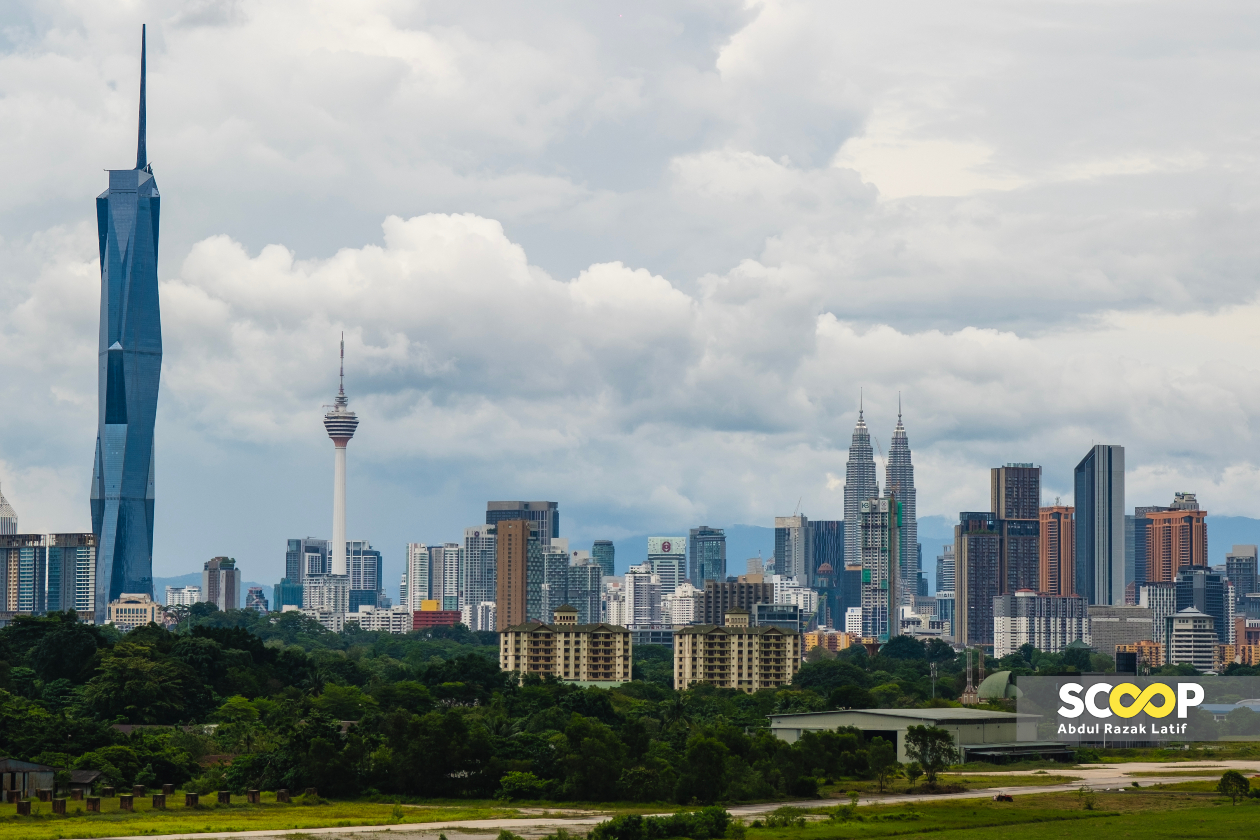
Historian Dr Ranjit Singh Malhi calls for an independent review of the Kuala Lumpur Structure Plan 2040, accusing DBKL of misrepresenting the capital’s early history by omitting key figures like Hiu Siew and Ah Sze. - Scoop file pic, September, 2026
Was Kuala Lumpur’s history rewritten? Historian challenges DBKL’s official account
Ranjit Singh Malhi says KLSP 2040 overlooks key traders and mixes up the roles of Sutan Puasa, Raja Abdullah and Yap Ah Loy
Was Kuala Lumpur’s history rewritten? Historian challenges DBKL’s official account
Ranjit Singh Malhi says KLSP 2040 overlooks key traders and mixes up the roles of Sutan Puasa, Raja Abdullah and Yap Ah Loy
Keran Raj
Updated 58 minutes ago
6 September, 2026
3:00 PM MYT
KUALA LUMPUR – Kuala Lumpur City Hall (DBKL) has been accused of presenting a disputed version of the capital’s history as fact, with historian Dr Ranjit Singh Malhi claiming the Kuala Lumpur Structure Plan 2040 (KLSP 2040) contains “misinformation” about the city’s origins.
Ranjit said the planning document incorrectly combines different stages of Kuala Lumpur’s early development involving Sutan Puasa, Raja Abdullah and Yap Ah Loy, while omitting two traders whom he believes were instrumental in establishing the original settlement.
“This is not a minor disagreement over wording. It concerns the integrity of the historical record of our national capital,” he said in a statement.
“When an official document rewrites the origins of Kuala Lumpur, factual accuracy is not optional. It is a public duty,” he added.
The controversy centres on the historical narrative outlined in KLSP 2040, which states that Kuala Lumpur’s growth began in the 1850s, with early urban activity concentrated around the downtown area between the Klang and Gombak rivers, now known as Medan Pasar.
The document’s historical timeline attributes Kuala Lumpur’s early development to Sutan Puasa, citing his construction of irrigation canals, provision of amenities, and efforts to clear jungle areas and prepare irrigated paddy fields, particularly in Setapak.
Updated 58 minutes ago
6 September, 2026
3:00 PM MYT
KUALA LUMPUR – Kuala Lumpur City Hall (DBKL) has been accused of presenting a disputed version of the capital’s history as fact, with historian Dr Ranjit Singh Malhi claiming the Kuala Lumpur Structure Plan 2040 (KLSP 2040) contains “misinformation” about the city’s origins.
Ranjit said the planning document incorrectly combines different stages of Kuala Lumpur’s early development involving Sutan Puasa, Raja Abdullah and Yap Ah Loy, while omitting two traders whom he believes were instrumental in establishing the original settlement.
“This is not a minor disagreement over wording. It concerns the integrity of the historical record of our national capital,” he said in a statement.
“When an official document rewrites the origins of Kuala Lumpur, factual accuracy is not optional. It is a public duty,” he added.
The controversy centres on the historical narrative outlined in KLSP 2040, which states that Kuala Lumpur’s growth began in the 1850s, with early urban activity concentrated around the downtown area between the Klang and Gombak rivers, now known as Medan Pasar.
The document’s historical timeline attributes Kuala Lumpur’s early development to Sutan Puasa, citing his construction of irrigation canals, provision of amenities, and efforts to clear jungle areas and prepare irrigated paddy fields, particularly in Setapak.
Prominent historian Dr Ranjit Singh Malhi challenges DBKL’s latest development masterplan, demanding a factual correction over the erased contributions of early Chinese and Mandailing pioneers in Kuala Lumpur’s founding story. – Social media pic, September 6, 2026
It also states that Kuala Lumpur became a tin-mining centre in 1857, following efforts by Raja Abdullah, then the Klang district chief, before being further developed under Yap Ah Loy.
However, Ranjit argued that the account merges separate settlements and economic activities that took place in different locations.
“Kuala Lumpur grew from the trading post established by Hiu Siew and Ah Sze, also known as Ah Sze Keledek, near the confluence of the Klang and Gombak rivers. Ampang and Setapak were separate settlements serving different economic functions,” he said.
According to Ranjit, the expansion of tin mining in Ampang created the need for a landing point, supply centre and marketplace, prompting traders Hiu Siew and Ah Sze from Lukut to establish a commercial settlement near the river junction in collaboration with Sutan Puasa.
He cited SM Middlebrook’s 1951 study, Yap Ah Loy (1837–1885), published in the Journal of the Malayan Branch of the Royal Asiatic Society and later completed by historian JM Gullick.
Ranjit said Gullick’s work described the trading settlement as “the origin of Kuala Lumpur itself”.
He questioned why the two traders were not included in DBKL’s historical account.
“If Sutan Puasa initiated Kuala Lumpur’s development, what precisely did Hiu Siew and Ah Sze do?” he asked.
Ranjit said Raja Abdullah’s contribution in promoting tin mining in Ampang should also be distinguished from the founding of Kuala Lumpur itself.
“The two places were economically connected but geographically distinct,” he said.
He also challenged the way KLSP 2040 described Yap Ah Loy’s role in the city’s development.
While acknowledging Yap’s significant contribution in rebuilding Kuala Lumpur after the Selangor Civil War, Ranjit said portraying him as merely continuing an earlier process failed to reflect his influence in shaping the city.
“His role was not merely to ‘continue’ a development process begun by someone else. He was the principal force behind Kuala Lumpur’s recovery and transformation during its formative years,” he said.
Ranjit added that the plan’s own description of Medan Pasar as the centre of early urban growth raised questions about its historical interpretation.
“If Kuala Lumpur’s growth was concentrated there, its urban nucleus cannot simultaneously be identified with the Ampang mines or Sutan Puasa’s activities elsewhere,” he explained.
However, Ranjit acknowledged that the debate over Kuala Lumpur’s origins remains contested among historians.
He pointed to Abdur-Razzaq Lubis’ 2018 book, Sutan Puasa: Founder of Kuala Lumpur, which argues that Sutan Puasa and the Mandailing community had established a presence in the area before Hiu Siew and Ah Sze, and that Sutan should be recognised as the city’s founder.
Ranjit said such views should be considered through academic debate, but argued that early presence in the wider area did not necessarily determine the founder of the specific settlement that developed into Kuala Lumpur.
“If DBKL has adopted this newer interpretation, it must say so openly, cite the evidence and explain why it rejects or departs from the Middlebrook-Gullick account and the Municipal Council’s own centenary history,” he said.
He called for the establishment of an independent panel of historians to review competing accounts of Kuala Lumpur’s origins, including the contributions of Hiu Siew, Ah Sze, Sutan Puasa, Raja Abdullah and Yap Ah Loy.
“Malaysia must put an end to the rewriting of its history by ethno-nationalist historians,” he said, adding that the objective should not be to replace one ethnic narrative with another, but to reject the idea that history belongs to any particular group.
“History is not raw material to be reshaped for political convenience. Kuala Lumpur deserves an account that is accurate, balanced and worthy of a great capital city.”- September 6, 2026
***
We all know why "some" want Malaysian history to be "revised" - do we call this "revisionism" as the Japs have been doing to their WWII history?


No comments:
Post a Comment