
ALSO REPORTED IN REUTERS
North Korean Missile Brigade with 120 Advanced Ballistic Missiles Deploying to Ukraine War Frontlines
Asia-Pacific , Missile and Space
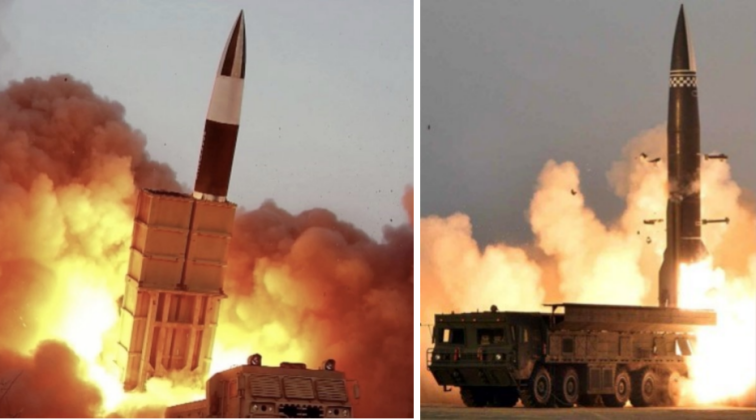
A senior official from Ukraine’s military intelligence agency (GUR) has reported that the Korean People’s Army is deploying a ballistic missile brigade to the Voronezh region in Western Russia to support strike operations against Ukrainian targets. Ukrainian intelligence assesses that the initial deployment will include six missile launchers and as many as 120 ballistic missiles. The official, Andrii Cherniak, added that North Korea has already delivered an initial batch of 40 KN-23 and KN-24 short-range ballistic missiles to Russia and deployed associated personnel.
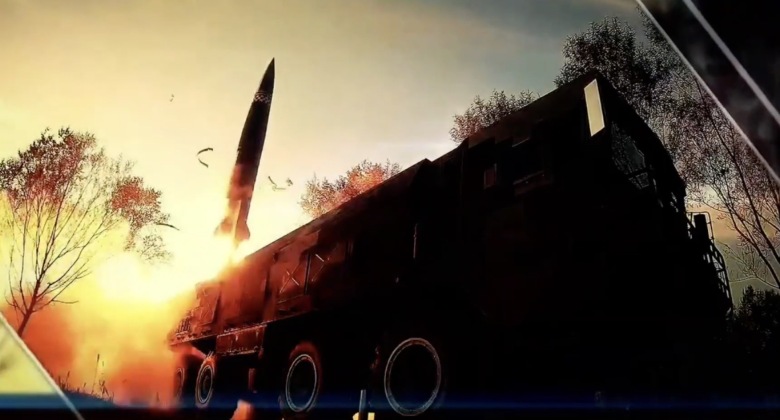
Cherniak’s claims were made after Ukrainian sources reported in late July that North Korea had resumed shipments of tactical ballistic missiles to equip frontline Russian Armed Forces units, marking the latest phase in an expanding military partnership between the two neighbours. Russia first began procurements in late 2023 after its own stocks of precision-guided ballistic missiles came under increasing strain due to ongoing hostilities. Russian forces have become heavily reliant on procuring defence equipment from North Korea, and while Russian industry has achieved considerable successes in increasing tactical ballistic missile production, imports from North Korea are increasingly vital to keep Russian ground forces equipped.
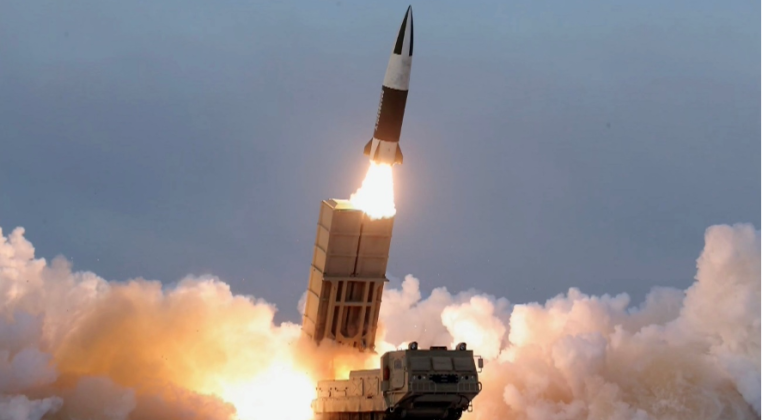
In late July Ukrainian President Volodymyr Zelensky claimed that North Korea was preparing to dispatch as many as 30,000 additional personnel to Russia, which would represent by far the largest foreign deployment in the history of the Korean People's Army. Zelensky stated that Russia was preparing to receive the additional personnel in the Voronezh region, with preparations reportedly underway since June, and that further ballistic missile supplies were expected. The North Korean KN-24 provides a low cost short range capability that Russia currently has no equivalent to, while the KN-23B provides a much longer range and larger warhead size than its Russian counterpart the Iskander-M, and highly comparable flight characteristics.
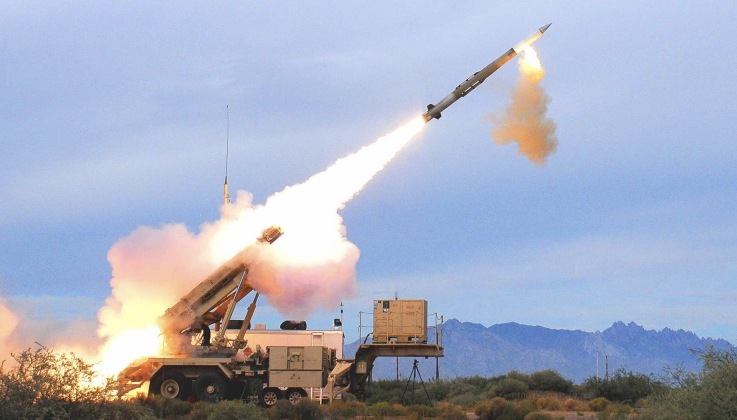
As the Ukrainian government continues to lobby for greater funding and support, including a license and support to produce interceptors for U.S. Patriot air defence systems domestically, questions have been raised regarding the extent to which it may be exaggerating the extent of the challenge new North Korean missiles could pose to its defences. Cherniak specifically stated that North Korean missile transfers were intended to exploit severe shortages of air defence systems capable of intercepting ballistic missile attacks. The plausibility of this remains in question, however, with Ukraine’s missile defences having been highly constrained throughout the war, while Ukrainian and Western sources have both attested to an interception rate of just 6 percent for the country’s Patriot systems against Russian ballistic missile attacks.
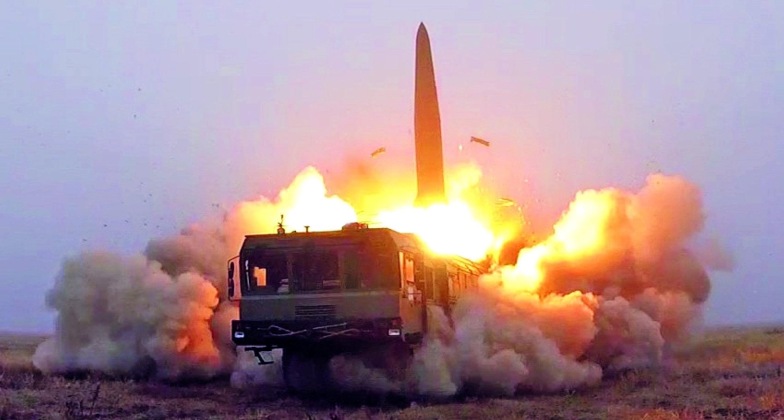
The KN-23 has many significant similarities to the Iskander-M, with the program having produced a much wider range of variants than its Russian counterparts, and having seen the missiles deployed from a much more diverse range of launch vehicles. Commenting on the KN-23’s capabilities, a U.S. Congressional Research Service report highlighted that it “exemplifies the most notable advance” for North Korea in the field of tactical weapons, with the missile observed conducting a complex “pull-up” manoeuvres intended to confuse enemy air defence systems. Regarding its lighter counterpart, the KN-24, the report noted that it “demonstrates the guidance system and in-flight manoeuvrability to achieve precision strikes.”


No comments:
Post a Comment