
OPINION | What Actually Happens If Muslims Are Caught Eating During Ramadan in Malaysia
11 Mar 2026 • 5:00 PM MYT
.png)
Fa Abdul
FA ABDUL is a former columnist of Malaysiakini & Free Malaysia Today (FMT)
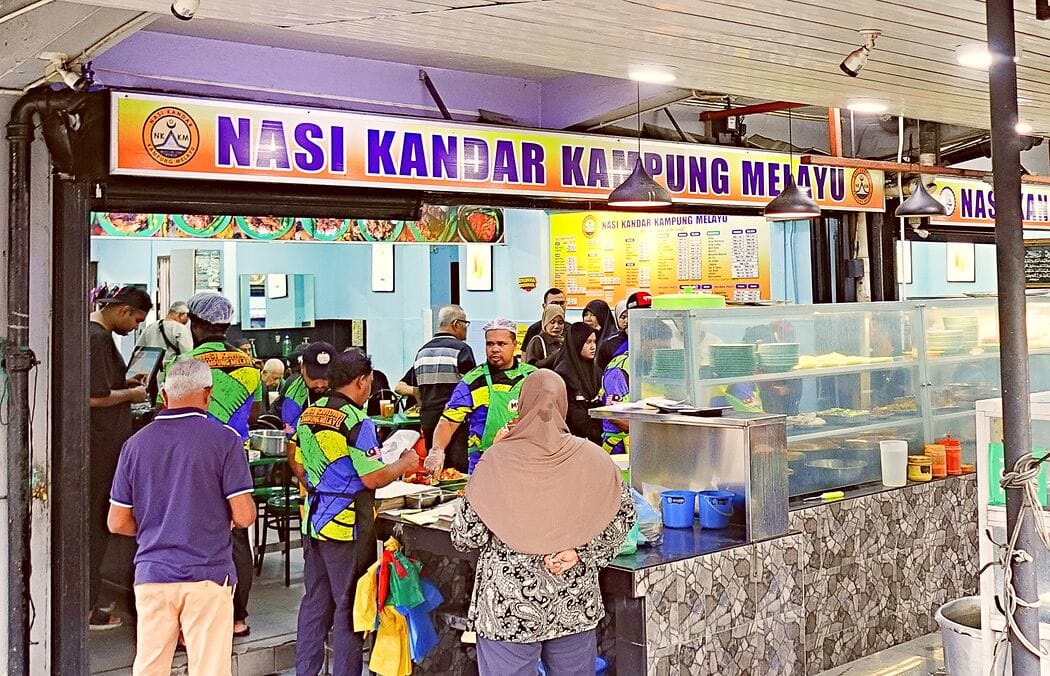
Photo credit: Hungry Onion
I went for a lunch meeting the other day with two non-Muslim friends.
The plan was simple. Eat, chat, discuss work.
But the moment we sat down, one of them leaned in and whispered, “Eh… are you sure it’s okay for you to be here? What if people from Jabatan Agama come?”
I laughed.
“There’s food on the table, yes,” I told her. “But I’m not the one eating it. Relax.”
The other friend looked at both of us like we were speaking Martian.
“Jabatan Agama? Why are you worried about them?”
So we explained about how Muslims in Malaysia can technically get into trouble for eating in public during fasting hours in Ramadan.
Her eyes widened. “You’re serious ah?”
Apparently she had been living under a tempurung kelapa. And to be fair, she’s not alone.
Every year during Ramadan, the topic pops up. People whisper about “raids”, “getting caught”, “summonses”. But there are still some non-Muslim Malaysians who are so blur about the whole ordeal.
And to be fair, even most of us who do, don't really know what happens when someone is caught.
So for those who are curious, here’s the general process.
First, enforcement officers from the state religious department may conduct monitoring during fasting hours. Sometimes they patrol . Sometimes they sit quietly in eateries. Sometimes they act on complaints.
If they see someone eating or drinking, the first thing they do is check the person’s identity card. This is because the rule only applies to Muslims. If the person turns out to be non-Muslim, that’s the end of the story. No offence committed.
If the person is Muslim, the officers may ask a few questions: Why are you not fasting? Are you sick? Are you travelling? Are you on your period? Why are you eating in public space?
Islam does allow exemptions from fasting under certain circumstances. If there is a valid reason, the matter usually ends there. But if the person is a healthy Muslim with no valid reason, the officers may issue a summon.
Contrary to what some people imagine, there’s usually no dramatic arrest scene. No handcuffs. No police cars.
The officers simply record the person’s details and issue a notice asking them to report to the religious department later.
When the person goes to the office, the officers may take a statement and decide whether to offer a compound. A compound is basically a fine to settle the matter without going to court. Typically, it is lower than the maximum penalty of RM1,000 allowed under the law. If the person pays the compound, the case is considered closed.
If they refuse or ignore it, the case may then proceed to the Syariah court under laws such as the Syariah Criminal Offences (Penang) Enactment 1996. The maximum penalty allowed under these laws can be a fine of up to RM1,000, up to six months jail, or both - though jail for this offence is extremely rare.
And that, in a nutshell, is how the process generally works.
No, officers don’t drag people away while they’re halfway through a plate of nasi kandar.
No, they don’t storm every restaurant at lunchtime.
And no, you don’t instantly get thrown into jail for taking a bite of roti canai.
But yes - there is a system in place.
Whether people agree with that system or not is another conversation entirely.
For now, at least you know what actually happens.
Because clearly, not everyone does.
I went for a lunch meeting the other day with two non-Muslim friends.
The plan was simple. Eat, chat, discuss work.
But the moment we sat down, one of them leaned in and whispered, “Eh… are you sure it’s okay for you to be here? What if people from Jabatan Agama come?”
I laughed.
“There’s food on the table, yes,” I told her. “But I’m not the one eating it. Relax.”
The other friend looked at both of us like we were speaking Martian.
“Jabatan Agama? Why are you worried about them?”
So we explained about how Muslims in Malaysia can technically get into trouble for eating in public during fasting hours in Ramadan.
Her eyes widened. “You’re serious ah?”
Apparently she had been living under a tempurung kelapa. And to be fair, she’s not alone.
Every year during Ramadan, the topic pops up. People whisper about “raids”, “getting caught”, “summonses”. But there are still some non-Muslim Malaysians who are so blur about the whole ordeal.
And to be fair, even most of us who do, don't really know what happens when someone is caught.
So for those who are curious, here’s the general process.
First, enforcement officers from the state religious department may conduct monitoring during fasting hours. Sometimes they patrol . Sometimes they sit quietly in eateries. Sometimes they act on complaints.
If they see someone eating or drinking, the first thing they do is check the person’s identity card. This is because the rule only applies to Muslims. If the person turns out to be non-Muslim, that’s the end of the story. No offence committed.
If the person is Muslim, the officers may ask a few questions: Why are you not fasting? Are you sick? Are you travelling? Are you on your period? Why are you eating in public space?
Islam does allow exemptions from fasting under certain circumstances. If there is a valid reason, the matter usually ends there. But if the person is a healthy Muslim with no valid reason, the officers may issue a summon.
Contrary to what some people imagine, there’s usually no dramatic arrest scene. No handcuffs. No police cars.
The officers simply record the person’s details and issue a notice asking them to report to the religious department later.
When the person goes to the office, the officers may take a statement and decide whether to offer a compound. A compound is basically a fine to settle the matter without going to court. Typically, it is lower than the maximum penalty of RM1,000 allowed under the law. If the person pays the compound, the case is considered closed.
If they refuse or ignore it, the case may then proceed to the Syariah court under laws such as the Syariah Criminal Offences (Penang) Enactment 1996. The maximum penalty allowed under these laws can be a fine of up to RM1,000, up to six months jail, or both - though jail for this offence is extremely rare.
And that, in a nutshell, is how the process generally works.
No, officers don’t drag people away while they’re halfway through a plate of nasi kandar.
No, they don’t storm every restaurant at lunchtime.
And no, you don’t instantly get thrown into jail for taking a bite of roti canai.
But yes - there is a system in place.
Whether people agree with that system or not is another conversation entirely.
For now, at least you know what actually happens.
Because clearly, not everyone does.
***
Recall when I was in school (Form 1) my Muslim-Malay classmate would carry a bottle with him during fasting month. He was so pious he wouldn't even swallow his own saliva but spit it out into the bottle. I knew coz I was sitting next to him. Bless him - wonder where is he now?


In Islamic theocracies like Indonesian Aceh and the whole of Iran, Muslims who are caught not fasting can be physically dragged off the street and shamed and physically punished.
ReplyDeleteFear is only a Phobia if it is not regarding a real danger.
In the case of most Islamic theocracies , it is not a phobia but real danger..so it is NOT Islamophobia.