Murray Hunter
Apr 14, 2026
What Russia Can Learn from the Iranian War
Strategic lessons from a six-week conflict
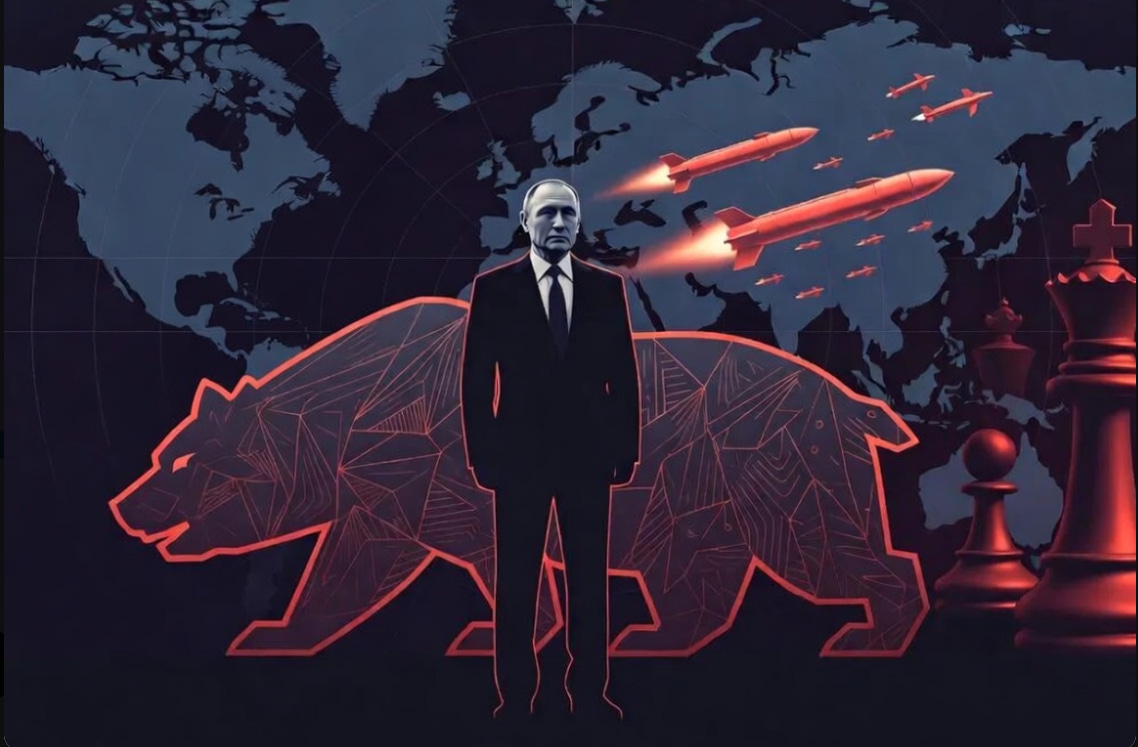
The intense conflict between the United States, Israel, and Iran is unfolding against a backdrop of a broader erosion in Western strategic hegemony. The United States is losing its alliances around the world, and thus becoming diplomatically weaker.
Strains in traditional partnerships over the last year have been driven by tariff disputes, skepticism over the effectiveness of NATO, and a more transactional diplomatic approaches under the second Trump administration. This has prompted allies in Europe, the Indo-Pacific, and the Middle East to hedge their bets or pursue greater autonomy in their foreign policy thinking.
Major institutions like NATO have only endured because of shared concerns over Russia and China, but prolonged friction with the United States is risking the erosion of trust and coordinated action between the US and its allies.
The European Community (EU) itself is becoming divided and weaker as a single unit. Internal fractures over migration, energy, defense spending, fiscal policy, and relations with Russia and China have intensified, with populist shifts in several member states complicating unified responses. The recent loss of Victor Orban to Peter Magyar in Hungary will certainly exacerbate this.
Transatlantic tensions are accelerating calls for “strategic autonomy,” yet uneven capabilities and national priorities continue to limit the bloc’s geopolitical cohesion.
Militarily, U.S. military hardware which cover naval ships, aircraft carriers, and attack aircraft now appear much less effective in modern warfare. Advances in anti-access/area-denial systems, hypersonic weapons, drone swarms, and precision munitions make large surface assets and manned platforms vulnerable to saturation attacks and long-range strikes in contested environments.
Lessons from recent operations underscore the high costs and finite nature of these systems against determined adversaries with effective weaponry that have been indigenously developed and manufactured at just a small percentage of the costs relative to the United States.
In contrast, Russia demonstrates superiority in land warfare through troop numbers, logistics, and tactics. Russia also now has military technologies the US does not have. In Ukraine, Russian forces have leveraged massed artillery, glide bombs, cheap FPV and Lancet drones, electronic warfare, and adaptive “thousand cuts” tactics to sustain attritional advances despite high losses. This ground-domain edge contrasts sharply with Western emphasis on expensive precision systems.
Compounding the shifts above are the personal differences between the Russian President Vladimir Putin and US President Donald Trump. Putin, shaped by a KGB culture and discipline and decades of centralized state control, embodies calculated, long-term strategic patience and methodical risk management. Trump on the other hand, is a deal-making businessman and media-savvy populist, who favors intuitive, transactional diplomacy, public branding of “wins,” with an aversion to prolonged U.S. troop commitments.
These contrasting styles and methodical application of Putin versus the spontaneous assertiveness of Trump create both potential for direct negotiations and risks of mismatched expectations in great-power relations. We have seen this paradox as a major reason the Russo-Ukrainian war has not been ended yet.
Within this environment, the six-week US-Iranian conflict has provided Moscow with several glimpses of US and European vulnerability.
In the space of just six weeks, the brief but intense conflict between Iran, the United States, and Israel has rewritten several long-standing assumptions about how great-power confrontations can unfold in the 21st century.
On 28 February 2026, U.S. and Israeli forces struck Iranian targets in what is best described as an unprovoked escalation. What followed was a calibrated cycle of attack and retaliation of missile barrages, drone swarms, and strikes on proxy assets, until Washington quietly opened channels for ceasefire talks.
Russia’s own “special military operation” in Ukraine, now in its fourth year, has been defined by strategic patience: a grinding war of attrition designed to exhaust Ukrainian manpower, strain Western treasuries, and keep energy markets uncomfortable. Yet inside Russia, a vocal segment of the security establishment and nationalist commentariat has grown restless with what it sees as excessive restraint.
The events offer Moscow a timely view of the US directly in a theatre of war.
The Iranian precedent suggests that limited, demonstrative escalation against the external enablers of an adversary shows up a number of potential strategies that Russia could incorporate into its Ukraine campaign.
Hitting Forward Bases Without Crossing the Nuclear Threshold
Iran repeatedly struck U.S. bases located in third countries. These facilities in third countries were actively supporting operations against it. These Iranian attacks managed to avoid the kind of spiraling retaliation that many Western analysts had predicted. The strikes were precise enough to degrade US base capabilities and send a message, but carefully scoped to remain below the level that would compel Washington to treat them as acts of war against the American homeland.
For Russia, the analogy is uncomfortably direct. NATO countries have hosted training missions, provided deep-strike weapons, and allowed their territory to serve as logistics hubs for Ukrainian operations. Deep missile and UAV strikes originating from Ukrainian soil and launched with Western-supplied systems have already reached deep inside Russia.
The Iranian model implies that Moscow could respond in kind, targeting command nodes, airfields, or logistics depots on NATO soil that are unambiguously part of the war effort.
These actions may be taken by Russia without necessarily inviting a full Article 5 response. Trump calling on NATO allies to assist in the Strait of Hormuz signals the impotence of Article 5 in the contemporary today. The key, as Iran has demonstrated, is calibration, striking the enabler, but not the sovereign heartland. This for Iran demonstrated resolve, without escalation.
Exposing the Limits of Western Military Superiority
Iran’s performance in the six-week exchange revealed something that satellite imagery and leaked assessments have since confirmed. Even a mid-tier power armed with relatively low-cost drones, ballistic missiles, and layered air defenses can impose painful costs on the world’s most advanced military.
U.S. and Israeli systems were not rendered impotent, but they were shown to be expensive, finite, and vulnerable to saturation attacks. Tehran’s ability to keep launching after absorbing the first waves of strikes turned the conflict into a costly war of expenditure rather than a quick demonstration of dominance.
Russia has already made similar calculations in Ukraine relying on massed artillery, glide bombs, and cheap Lancet drones to offset Western precision munitions. The Iranian case reinforces the logic. A continued restraint may prolong the conflict by allowing NATO to replenish stocks on its own timeline.
Consequently, a more assertive posture that forces the West to expend high-end interceptors and expose forward bases could accelerate the very economic and political fatigue Putin has sought to create, especially given the vulnerabilities already evident in U.S. naval and air assets. Iran has undertaken this strategy very well.
Punishing Allies to Discipline the Adversary
Perhaps the most politically astute element of Iran’s campaign was its willingness to strike U.S. allies in the Gulf, the facilities and assets linked to the anti-Iran coalition while calibrating the blows so that Washington felt pressure to restrain its partners rather than escalate directly. Retribution was limited, but the message was received.
Applied to the Russian context, this suggests that selective strikes against the most forward-leaning NATO states such as Poland’s airfields and logistics centers have been cited most frequently in Russian discourse. This based upon the Iran experience not automatically trigger a collective NATO response.
Instead, they could have the opposite effect. Nervous European capitals, already divided internally, might begin pressing Washington and Kyiv for de-escalation rather than further escalation.
The goal would not be conquest or permanent occupation but to make the cost of proxy war visible on allied territory, thereby fracturing the coalition’s political will.
The Domestic Calculus in Moscow
Putin’s restraint has so far been Russia’s strength. This has preserved Russia’s economy, kept nuclear risks contained, and allowed time for sanctions evasion and military-industrial expansion.
Yet the Iranian precedent arrives at a moment when patience is being questioned inside the Kremlin’s corridors and on Russian state television. Hardliners argue that the West has interpreted restraint as weakness. The six-week Iran conflict offers them an empirical example. Limited escalation produced talks, not Armageddon.
Of course, the risks are real. NATO’s nuclear umbrella, the presence of supporting U.S. personnel inside Ukraine, and the integrated intelligence-sharing networks mean that any Russian strike on allied soil would be a step into uncharted territory.
Iran operated with the tacit understanding that neither side wanted a wider regional war. Russia enjoys no such luxury. Any miscalculation could still cascade, particularly when interacting with a U.S. leader who’s intuitive, deal-oriented style differs markedly from Putin’s methodical long-termism.
It must be remembered there are ‘jokers’ on both sides Israeli prime minister Netanyahu in Israel and President Zelensky in Ukraine, who would be willing to sabotage any move which attempts to bring an end to either war.
Nevertheless, the Iranian war has supplied Moscow with a new mental model. It is no longer necessary to choose between total restraint and all-out confrontation. There exists a middle path which is demonstrative, limited, and politically potent. Iran as a regional power can bleed its adversaries’ willingness to fight without inviting the end of the world.
Whether Putin chooses to walk that path will likely define the next phase of the Ukraine conflict. The six weeks in February–March 2026 have shown that patience has limits, and that calibrated audacity can sometimes shorten them.


Lebanon was living in peace and tranquility in 1975, and then came the Palestinians.
ReplyDeletehttps://x.com/realmaalouf/status/2044459988832178230?s=46&t=8K6fzabO3g6uaj4KxwSSjg
mfer, how many bloody atrocities in the land of Levant happened after the arrival of the zionist state?
DeleteHungary’s election is Orban playing 5D chess. Wanting to get rid of the corruption in his own gomen but he himself couldn’t do it, he allowed Magyar win. Magyar will clean up but retain 90% of Orban’s policies. 16 years is kinda enough.
ReplyDeleteAnd with Ellison/Paramount taking over Warner Bros/CNN soon the MSM biggies will be brought to heel.
ReplyDelete🚨 BREAKING: The BBC, which defamed President Trump, is now carrying out its BIGGEST downsizing of staff in 15 YEARS
They're officially cutting ~10% PERCENT of jobs.
And Trump's lawsuit is full-steam ahead 🔥
GOOD! Bankrupt the BBC, they deserve it for being fraud news!
https://x.com/ericldaugh/status/2044422016892014643?s=46&t=8K6fzabO3g6uaj4KxwSSjg
Leftie Wankers like Murray Hunter are way too easily impressed by the likes of Russia and Iran.
ReplyDeleteIn fact the Russian invasion and attempted occupation of Ukraine has exposed serious weakness in Russian equipment, war fighting strategies, as well as the resilience of its economy.
The non-war economy of Russia is Dead or Dying.
Iran is fast being reduced to an economic basket case. All Iran can do now is throw a fast diminishing supply of ballistic missiles, basic drones and small boats.
The fuck Blockade of a Blockade will bite deeply into the Iranian economy, hence the reason for Iran's loud threats against everybody
mfer, do a similar mfering analysis of yr kind on pommieland, yank & EU lab!
DeleteHari Ini Dalam Sejarah...and Why Falastinos are Not Welcome Anywhere..
ReplyDeleteLebanon really was the “Jewel of the Levant" - cosmopolitan Beirut, a banking hub, Christian-plurality society & a tourism paradise.
Then came Black September 1970 when Jordan kicked the PLO out after a failed coup attempt. Arafat's PLO set up a state-within-a-state in south Lebanon (“Fatahland”). From there, Palestinian terror groups launched thousands of attacks on Israel, hijackings, and engaged in a broad international terror campaign all while arming Lebanese Muslim/leftist militias. That ignited the 1975 civil war and turned the country into a battlefield.
Israel had to invade in 1978 and 1982 to finally push the PLO out. But the vacuum was immediately filled by Hezbollah - Iran’s Shia proxy that has been terrorizing Lebanon and its neighbors ever since.
Hezbollah gave us suicide bombings (e.g., 1983 U.S. Marine barracks, 241 killed), endless rocket fire, the 2006 war, and a parallel army stronger than the Lebanese state (hopefully a now-weakened Hezbollah may finally be drawing closer to parity with the Lebanese military, but we're not there yet).
Hezbollah also dragged Lebanon into the Syrian civil war, ran narco-trafficking and money-laundering networks, and blocked every reform that might have saved the economy.
The once-thriving nation of Lebanon was indeed destroyed by the PLO and reduced to a failed Iranian outpost by Hezbollah.
Here's hoping change is finally in the air.
r the zionists welcomed ANYWHERE else, mfer?
DeleteIt's like RTM display Isaac Flag on the 8.00pm Berita Bernama.
ReplyDeletePapa, ignore the Politiks.....useless to Debate with Idiots....
ReplyDeleteThe Yazidi are amongst the worst affected by war, Please Pray For Them.
Not just UN watched 10K Yezidis being killed, 7K being kidnapped and raped,500K escaped without acting, but also lCC refused to act
1700 people of Kocho village were killed or kidnapped for refusing to convert.
11 yrs and still UN ignore Yezidi Genocide!
https://x.com/AzatAlsalim/status/2044350680702349314?s=20
& how many yrs have the people of Levant suffered under the atrocities of the zionist state, while UN is been hijacked & happened, mfer?
Delete