Murray Hunter
Apr 14, 2026
US seeking military overflight rights to Indonesian skies
This will dramatically change the regional power balance
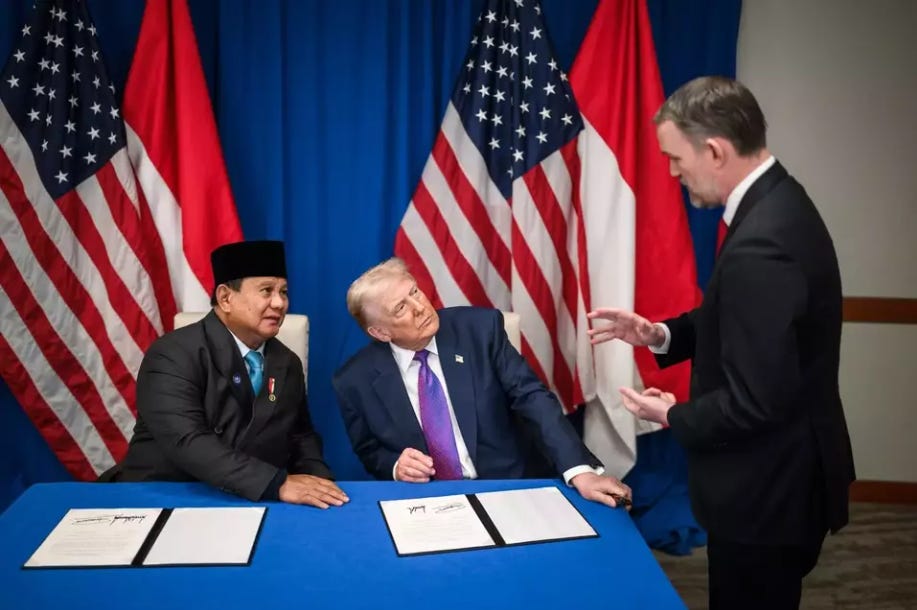
President Prabowo Subianto and his American counterpart Donald Trump listen to US Trade Representative Jamieson Greer in Washington on Feb. 19, 2026. (Jakarta Globe)
Indonesian President Prabowo Subianto is reported to have agreed with US President Donald Trump to allow US military aircraft to overfly and transit Indonesian airspace without case-by-case approval. The issue has now become public with the recent visit of the Indonesian Defense Minister General (Ret.) Dr. Sjafrie Sjamsoeddin to the Pentagon. US Secretary of Defense Pete Hegseth in a tweet on X said that the US and Indonesia are elevating their relationship to a major Defense Cooperation Partnership, which presumably incorporates the US military flyover privileges.
For countless decades Indonesian airspace has been strictly regulated. Even civilian aircraft require forward permission to fly into and/or across Indonesian airspace. However, Indonesia may be preparing to grant the United States its most important new military access arrangement in Southeast Asia since Washington expanded rotational deployments through the Philippines and northern Australia.
Such an agreement will grant US military aircraft free and unobscured access to the South China Sea and Malacca Strait. According to a document titled “Operationalizing U.S. Overflight” transmitted from US Department of Defense and to Indonesian Ministry of Defense the blanket overflight access US aircraft would be free to conduct contingency operations, crisis-response missions anywhere in Indonesian airspace. This replaces Indonesia’s case by case approval system.
There is criticism inside Indonesia that such an agreement would compromise Indonesian sovereignty, and reflect a pivot towards the US by President Prabowo.
Implications for the Malacca Strait and South China Sea
The new agreement now means that the US military now has direct access to the Malacca Strait and South China Sea from Australia. Aircraft such as the KC-46A Pegasus, P-8A Poseidon, RC-135 Rivet Joint and B-1B Lancer could potentially patrol the Strait of Malacca anytime. This could potentially allow US forces to build up a presence in the strait which is one of the world’s busiest shipping passages.
In the context of the Iranian war, the US would now have access to the Strait of Malacca and run operations against any shipping it believes are operating against US interests.
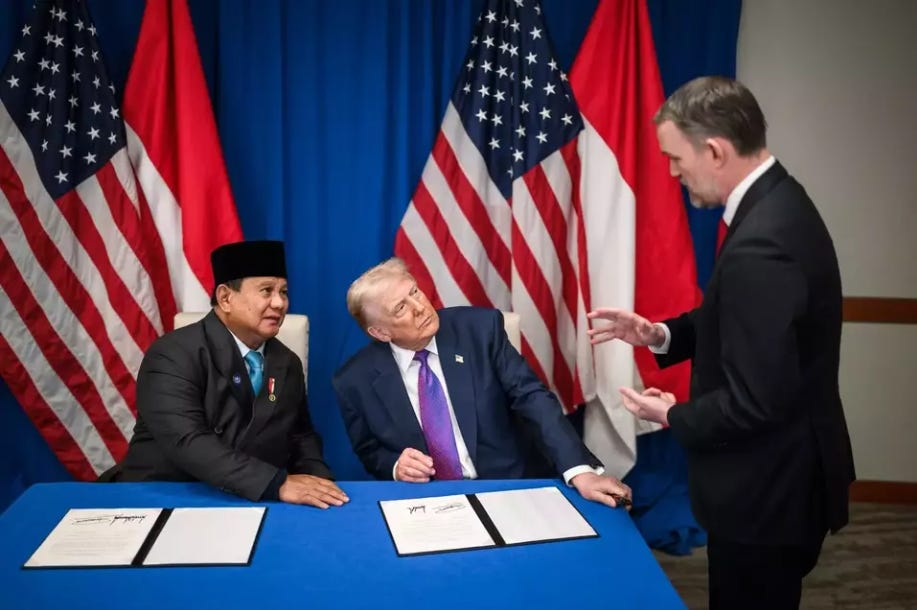
President Prabowo Subianto and his American counterpart Donald Trump listen to US Trade Representative Jamieson Greer in Washington on Feb. 19, 2026. (Jakarta Globe)
Indonesian President Prabowo Subianto is reported to have agreed with US President Donald Trump to allow US military aircraft to overfly and transit Indonesian airspace without case-by-case approval. The issue has now become public with the recent visit of the Indonesian Defense Minister General (Ret.) Dr. Sjafrie Sjamsoeddin to the Pentagon. US Secretary of Defense Pete Hegseth in a tweet on X said that the US and Indonesia are elevating their relationship to a major Defense Cooperation Partnership, which presumably incorporates the US military flyover privileges.
For countless decades Indonesian airspace has been strictly regulated. Even civilian aircraft require forward permission to fly into and/or across Indonesian airspace. However, Indonesia may be preparing to grant the United States its most important new military access arrangement in Southeast Asia since Washington expanded rotational deployments through the Philippines and northern Australia.
Such an agreement will grant US military aircraft free and unobscured access to the South China Sea and Malacca Strait. According to a document titled “Operationalizing U.S. Overflight” transmitted from US Department of Defense and to Indonesian Ministry of Defense the blanket overflight access US aircraft would be free to conduct contingency operations, crisis-response missions anywhere in Indonesian airspace. This replaces Indonesia’s case by case approval system.
There is criticism inside Indonesia that such an agreement would compromise Indonesian sovereignty, and reflect a pivot towards the US by President Prabowo.
Implications for the Malacca Strait and South China Sea
The new agreement now means that the US military now has direct access to the Malacca Strait and South China Sea from Australia. Aircraft such as the KC-46A Pegasus, P-8A Poseidon, RC-135 Rivet Joint and B-1B Lancer could potentially patrol the Strait of Malacca anytime. This could potentially allow US forces to build up a presence in the strait which is one of the world’s busiest shipping passages.
In the context of the Iranian war, the US would now have access to the Strait of Malacca and run operations against any shipping it believes are operating against US interests.
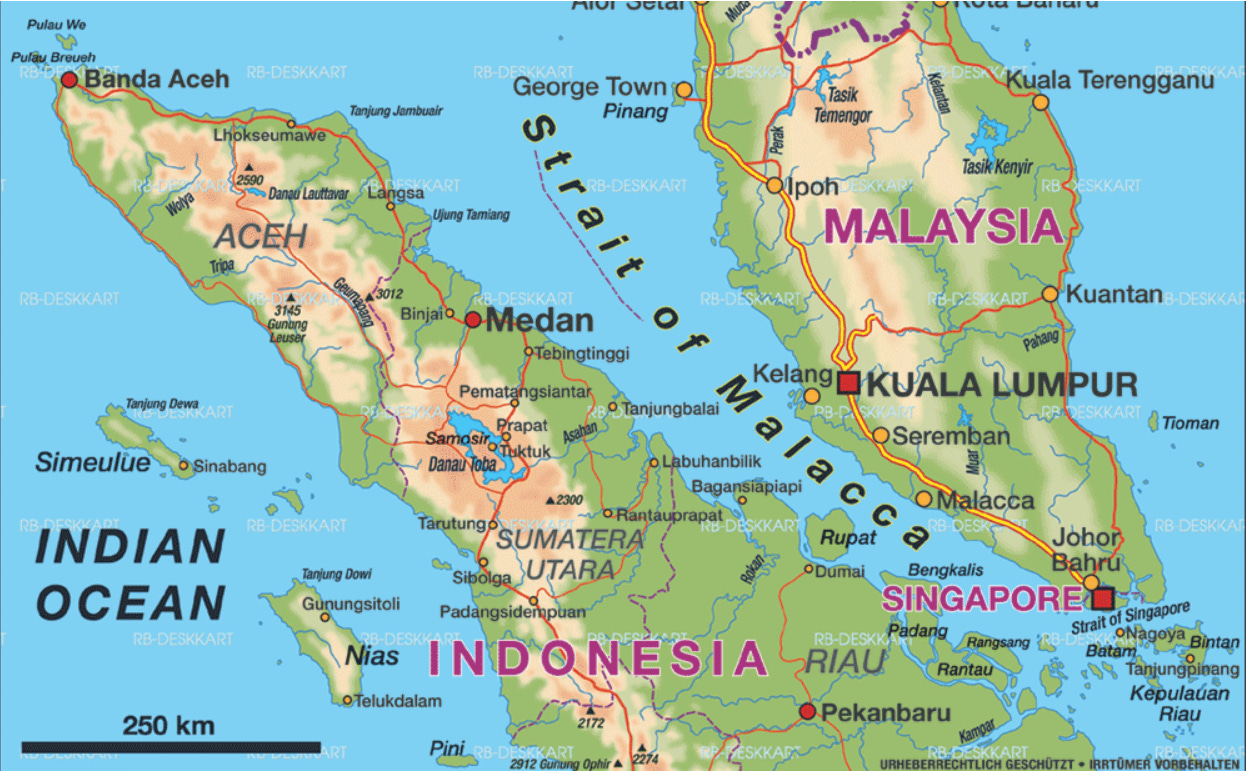
The Strait of Malacca would be much more militarised under the agreement.
From China’s perspective this is bad news as a large volume of China’s oil from the gulf transits both the Strait of Malacca and South China Sea.
ASEAN through Indonesian President Prabowo is potentially changing the super-power balance of power in the Strait of Malacca, running a risk that the strait could become a centre of military friction under certain circumstances.
With Indonesia becoming a much closer US military collaborator, the state of détente within the ASEAN region has drastically changed bringing the Strait of Malacca into much heavier focus. This differs greatly from the traditional Indonesian “Bekas Aktif” doctrine began under the former president Susilo Bambang Yudhoyono where Indonesia maintained a formal non-alignment while engaging multiple competing great powers.
ASEAN now must sit back and wait to see what the Chinese reaction will be to such a dramatic policy realignment. China is a major trading partner with Indonesia, where China has made massive infrastructure investment. China accordingly could react with trade sanctions as what it did a decade ago to Australia, diplomatic pressure, or decide to raise military activity in the region.
The region is yet to see how the new Indonesian agreement with Washington will be implemented. If this agreement brings in greater command and logistic collaboration between the US and Indonesia, the next step could be to integrate Australia into the relationship. Such a move would be strongly supported in Canberra. The new agreement could also lead to a political backlash from groups inside Indonesia who may see it infringing sovereignty.
The latest news from Jakarta is that the government says the agreement is not yet final. Jakarta may be having second thoughts about the potential consequences.
***
For aeons the wanks have been overflying Malaysia, Indonesia, the Philippines, Far East and their Diego Garcia hideout without permission.


Ktemoc, please don't insult your readers...
ReplyDeleteYankee military flights NEVER get to overfly Malaysia, Indonesia, the Philippines without permission. What they have previously is case-by-case requests for permission.
Sometimes states have complained the requests don't give sufficient notice, and on the other hand Yankees sometimes complaint permission is delayed a long time.
what you don't know doesn't mean it's not true. Wanks flyboys believe the SE Asian World is largely ignorant and far below their standard
DeleteBolehland dun even know their own civilian planes flying over their own airspace. MH370 proves it.
ReplyDeletethat's incorrect. RMAF radar did track MH370 but did not pursue further actions; only informed Chief the next day
Delete