
A Perfect Storm – Something Else Causing Bond Market Havoc
September 24th, 2026 by financetwitter
In a rare move, Donald Trump personally welcomed Xi Jinping’s entourage at Andrews Air Force Base as the U.S. Air Force band marched on the tarmac and U.S. and Chinese flags flew. The last American president to welcome a foreign leader at Andrews John F. Kennedy in 1962, although Trump welcomed Russian President Vladimir Putin off his plane in Alaska last year.
After officials literally rolled out the 100ft (30m) red carpet, Trump and First Lady Melania shook hands with Xi and his wife Peng Liyuan once the Chinese president descended from his plane at Joint Base Andrews, a US military airfield outside Washington. Trump, wearing a long coat and gloves, and Xi then stood side by side on the tarmac as a military band played national anthems.
Ahead of Xi’s arrival, U.S. Treasury Secretary Scott Bessent announced that the U.S. and China will extend their trade truce, which was set to expire 10 November 2026 to January 2027. Even though the three-day summit is expected to be more about spectacle than substance, it shows desperation on the American side to smooth tensions on everything from AI (Artificial Intelligence) and trade to Iran.
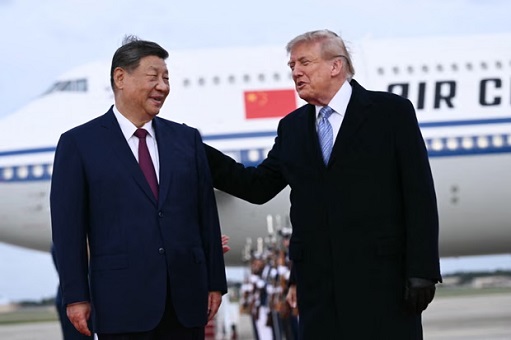
The unusual ceremony at the airport demonstrated how much the U.S. leader is seeking to impress his counterpart. In a normal protocol, Trump would wait for Xi to drive up to the White House. In comparison, Chinese President Xi Jinping did not receive U.S. President Donald Trump as he arrived at Beijing International Airport on May 13. Chinese Vice President Han Zheng was there instead.
It’s not hard to understand why Trump has made it clear he wants to wow Xi, and has very interest in flexing muscles. He has enough on his plate to pick up another round of fights with China. A perfect storm is forming in the financial market – selloff in the U.S. bond market, fighting words from an Iranian official at the U.N., hawkish comments from a Federal Reserve governor and a weak auction of government bonds.
The 10-year Treasury yield closed at 5.113% on Wednesday (September 23), blowing past the recent highs at levels unseen since 2007. The 30-year U.S. Treasury yield has topped 5.43%, putting it on track for its highest close since 2004. Borrowing costs are surging in Asia and continue to rise in Europe. Oil prices are rising, with the most actively traded Brent contract, for December delivery, trading right around US$100 a barrel.
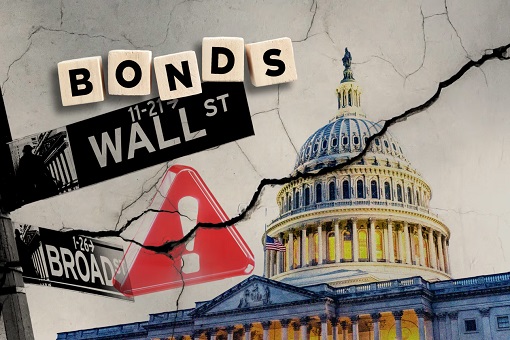
From an intractable conflict in Iran to a seemingly indestructible U.S. economy, it just “doesn’t make sense to a lot of people to own bonds here,” – said Christopher Sullivan, chief investment officer at the United Nations Federal Credit Union. Even Japan’s 10-year bond yield jumps to highest since August 1996.
Government bond yields, which rise when bond prices fall, have been climbing for months, and their rise is already rippling throughout the economy, impacting everything from mortgage and credit card rates to private-equity firms’ willingness to make debt-fueled acquisitions. At the same time, the uptick in yields still doesn’t seem like it has done enough to broadly slow the economy.
That has only caused yields to rise further, as investors bet that the Fed will have to raise rates even higher than previously anticipated to have any real success in bringing down inflation. Investors now see a 73% chance that the Fed will lift interest rates again next month, according to CME Group data – up from 55% last week and 11% last month.
Looking further out, investors expect hikes to keep coming. Traders see a roughly 50% chance that interest rates will be at least one full percentage point higher around this time next year – a scenario that was barely on their radars just a month ago, thanks to strong economic data, higher oil prices and comments from a Fed governor backing further rate increases.
The bad news for bonds started early on Wednesday, when oil prices spiked in European trading. Traders who had hoped for U.S.-Iran diplomacy during the ongoing United Nations General Assembly in New York were less than thrilled with comments from Iran’s president, who said his country won’t fully open the Strait of Hormuz as long as sanctions remain in place.
The U.S. 10-year yield drifted higher early. Then, at 9:45 a.m. in New York, a monthly business survey that is rarely known for moving markets turned heads. Izaac Brook, U.S. rates strategist at RBC Capital Markets, was on a plane about to leave from New York to Minnesota when the headlines broke about the survey, known as the S&P Global Flash U.S. Composite PMI.

The report, based on a survey of services and manufacturing firms, showed businesses growing at the quickest pace in more than five years and the fastest job growth in more than four years. Brook got a quick glimpse of the market’s reaction – a sharp jump in yields on short and longer-duration bonds – before turning his phone onto airplane mode.
When he arrived at his destination a few hours later, the strategist said he had “a million” messages from people asking what was happening. “It just is so hard for people to be constructive right now,” – Brook said. “You can look at the levels and say these are really attractive. But we’ve been playing that game for the past six months, and every time we’ve tried to draw a line in the sand somewhere, it just keeps going.”
The Fed last week raised interest rates for the first time in three years, and the market is anticipating further hikes. That sentiment got further fuel just after 10 a.m. when remarks by Fed governor Michael Barr hit the newswires. “Inflation is above our 2% target and not clearly trending toward target in a timely way,” Barr said in a speech in Chicago.
He noted that risks that could prevent the Fed from achieving its inflation target have risen. The concern among investors is that “the Fed is willing to hike to constrain inflation despite a lot of the pressures coming from supply shocks, which could mean unrelenting hawkishness,” said Dhiraj Narula, U.S. rates strategist at HSBC.
Meanwhile, traders were waiting for the Treasury Department to announce the size of its planned bond buyback operation set for Thursday. That announcement came – US$6 billion – but had little effect on the selloff. Then at 1 p.m., the federal government’s auction of fresh 5-year Treasury notes was met with weak demand.
The notes were sold at a yield well above what traders had anticipated, and bond dealers that are required to bid at auctions were forced to take down an unusually large share, pointing to a lack of interest from other potential buyers. Investors had little interest in buying bonds right when their prices were tumbling. The poor result only caused more alarm, driving yields still higher.
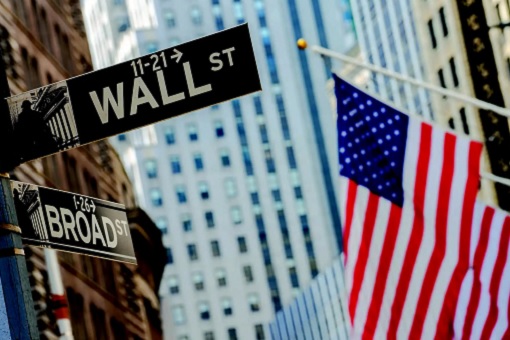
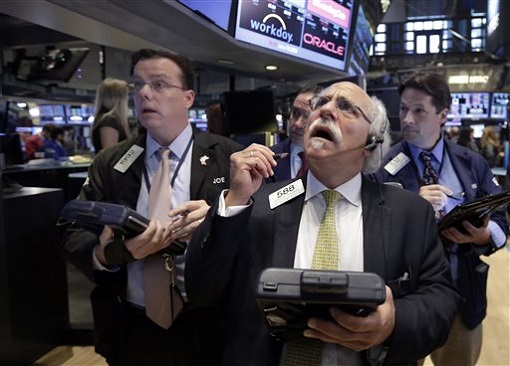
All in, it was the worst day in nearly 18 months for U.S. government bonds. Major stock indexes also slipped, but not as far as some traders might have expected on a day when debt benchmarks that affect rates on everything from corporate bonds to mortgages soared.
Few are denying those were contributing factors. But there was also something else behind the scenes, according to market watchers – traders being forced out of their positions. “The move has the hallmarks of a pain trade and forced selling by investors at these more elevated levels and could have further to run,” – said MUFG Bank’s Derek Halpenny in a note today.
Mohit Kumar, chief European economist at Jefferies, had the same assessment – “The main driver was likely stop outs and position unwinds. There appears to be a lot of pain on the street in fixed income.” In recent weeks, many traders had been making a popular fixed-income bet known as a “steepener”, betting that the gap between short- and long-dated bond yields would widen.
Instead, that gap has narrowed as traders have rapidly adjusted their interest-rate expectations. Active traders “either had steepeners or outright longs at the front end of the curve. Some of the positions had been cleared in the last two weeks, but yesterday saw another round of washouts,” – Kumar said. A new round of U.S.-China tariff war would push up inflation even higher.


I thot BRICS was Saposed To Take Over The World…..and Relegate Western Bully and Their Dollar to the Rubbish Bin.
ReplyDeleteThis Report from The Guardian of The Truth a While Back…,,
ReplyDeleteWhy lah Britain Still So Degil…..like Eastern Bully on the ASEAN Seas….
Falkland Islands lie in Argentinian waters, UN commission rules
This article is more than 10 years old
Argentina welcomes decision to expand its maritime territory, despite unresolved dispute with Britain over islands
Associated Press
Tue 29 Mar 2016 07.17 BST
Argentina’s government is celebrating a decision by a UN commission to expand its maritime territory in the South Atlantic Ocean by 35% to include the disputed Falkland islands and beyond.
The Argentine foreign ministry said its waters had increased by 1.7 million square km (0.66 million square miles) and the decision will be key in its dispute with Britain over the islands. Argentina lost a brief, bloody 1982 war with Britain after Argentinian troops seized the South Atlantic archipelago that Latin Americans call the Malvinas.
The UN commission on the limits of the continental shelf sided with Argentina, ratifying the country’s 2009 report fixing the limit of its territory at 200 to 350 miles from its coast.
“This is a historic occasion for Argentina because we’ve made a huge leap in the demarcation of the exterior limit of our continental shelf,” foreign minister Susana Malcorra said. “This reaffirms our sovereignty rights over the resources of our continental shelf.”
Oil exploration is already pumping millions of dollars into the Falkland Islands economy. Many islanders remain concerned about Argentina’s claim as well as the potential for problems from rapid change brought by the new industry.
The UN commission’s finding included the caveat that there is an unresolved diplomatic dispute between Argentina and Britain over the islands.
The Falklands are internally self-governing, but Britain is responsible for its defence and foreign affairs. The British government says islanders cannot be forced to accept Argentinian sovereignty against their will.
The Falkland Islands government said on Monday it was seeking clarification from the British government on “what, if any, decisions have been made, and what implications there may be” for the territory in relation to the UN ruling.
“As soon as we have any firm information we will make it available,” Mike Summers, chairman of the legislative assembly of the Falkland Islands, said in an emailed statement. “Our understanding has always been that the UN would not make any determination on applications for continental shelf extension in areas where there are competing claims.”
There was no immediate comment from the British government.
https://www.theguardian.com/uk-news/2016/mar/29/falkland-islands-argentina-waters-rules-un-commission