
Najib’s pardon should be open to judicial scrutiny, says Bar
2 hours ago
V Anbalagan
Lawyers argue the pardons board must be accountable, while the AG says exercise of royal prerogative is beyond judicial review
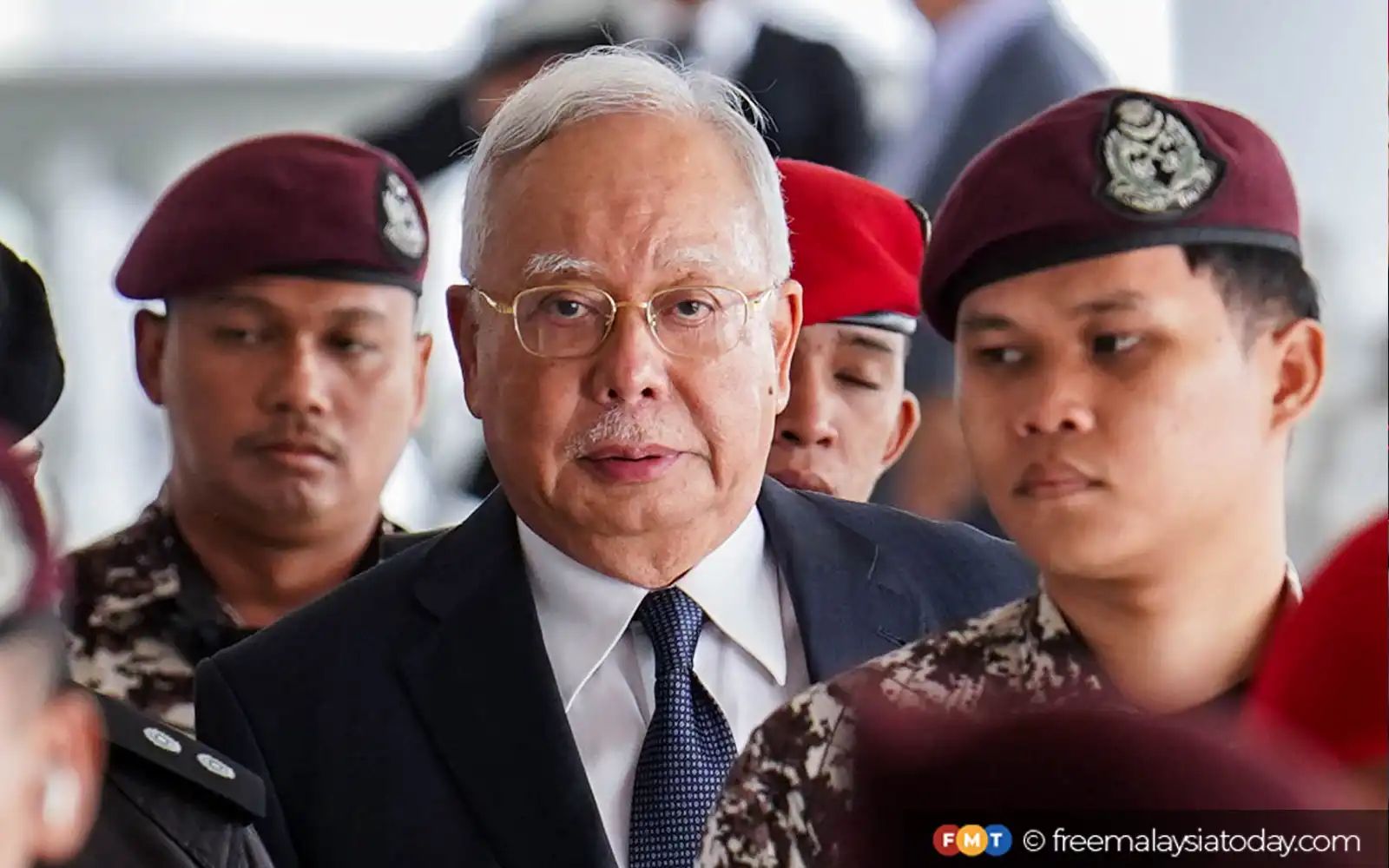
Former prime minister Najib Razak is currently serving his SRC International jail sentence which will end on Aug 23, 2028.
PUTRAJAYA: The Malaysian Bar argues that it should be allowed to challenge the merits of the Federal Territories Pardons Board’s (FTPB) decision to halve former prime minister Najib Razak’s prison sentence and reduce his fine in his SRC International Sdn Bhd case.
Lawyer Yeo Yang Poh told a three-member Court of Appeal bench that accountability was a fundamental pillar of the justice system and that the board’s functions should be subject to judicial scrutiny.
“The FTPB must be held accountable to the people. As such, its decisions must be susceptible to judicial review, and the doors of the court must not be shut,” he said.
The Bar wants the appellate court to overturn a High Court decision in November 2024 refusing leave to commence judicial review proceedings to quash the FTPB’s reduction of Najib’s 12-year prison sentence to six years and his RM210 million fine to RM50 million.
The appeal is being heard by Justices Lim Chong Fong, Azhahari Kamal Ramli and Leonard David Shim.
The Bar is seeking a declaration that the board’s decision was unlawful, unconstitutional and void.
The FTPB and Najib are named as respondents, while the attorney-general is opposing the Bar’s application for leave.
Yeo submitted that the threshold for obtaining leave for judicial review was low and that the Bar has an arguable case which was neither frivolous nor vexatious.
He said the law, including constitutional law, should not be allowed to stagnate, and that it was appropriate for the superior courts to develop the law in an evolving society.
Another counsel for the Bar, Zainur Zakaria, argued that amendments to the Federal Constitution in 1994 had removed the Yang di-Pertuan Agong’s absolute discretion in granting pardons.
He said Article 40(1A) now requires the Agong to accept and act on advice in exercising his constitutional functions.
“Before the amendment, the king had absolute discretion to accept or reject a pardon,” said the former Bar president.
Zainur said the Agong may only act at his discretion in appointing a prime minister, withholding consent to a request to dissolve Parliament, and convening a Conference of Rulers meeting concerned solely with the privileges, position, honours, and dignities of the monarchs.
Lawyers Rajpal Singh Ghai, Amir Mahmood and Shahrul Aiman Zamzami also appeared for the Bar.
Opposing the appeal, senior federal counsel Ahmad Hanir Hambaly submitted that the High Court had correctly refused leave because the subject matter was non-justiciable.
He said the Bar’s application centred on the Agong’s prerogative under Article 42 of the Federal Constitution, which was not amenable to judicial review.
He also argued that the prohibition order sought by the Bar was akin to an injunction or stay order.
“If granted, it would prevent the FTPB from carrying out its constitutional functions as a public authority,” said Hanir, who appeared with senior federal counsel Nurhafizza Azizan and federal counsel Saffiyoah Omar.
Representing Najib, lawyer Shafee Abdullah adopted the attorney-general’s submissions and argued that the Agong, not the FTPB, makes the final decision on pardons.
“As provided by the constitution, the king presides over the FTPB but is not its chairman. The board members merely offer their opinions, while the final decision rests with the monarch,” he said.
Shafee also said the Agong has the sole prerogative to grant pardons, reprieves and respites for offences tried in the Federal Territories of Kuala Lumpur, Putrajaya and Labuan.
The court reserved judgment.
Lawyer Yeo Yang Poh told a three-member Court of Appeal bench that accountability was a fundamental pillar of the justice system and that the board’s functions should be subject to judicial scrutiny.
“The FTPB must be held accountable to the people. As such, its decisions must be susceptible to judicial review, and the doors of the court must not be shut,” he said.
The Bar wants the appellate court to overturn a High Court decision in November 2024 refusing leave to commence judicial review proceedings to quash the FTPB’s reduction of Najib’s 12-year prison sentence to six years and his RM210 million fine to RM50 million.
The appeal is being heard by Justices Lim Chong Fong, Azhahari Kamal Ramli and Leonard David Shim.
The Bar is seeking a declaration that the board’s decision was unlawful, unconstitutional and void.
The FTPB and Najib are named as respondents, while the attorney-general is opposing the Bar’s application for leave.
Yeo submitted that the threshold for obtaining leave for judicial review was low and that the Bar has an arguable case which was neither frivolous nor vexatious.
He said the law, including constitutional law, should not be allowed to stagnate, and that it was appropriate for the superior courts to develop the law in an evolving society.
Another counsel for the Bar, Zainur Zakaria, argued that amendments to the Federal Constitution in 1994 had removed the Yang di-Pertuan Agong’s absolute discretion in granting pardons.
He said Article 40(1A) now requires the Agong to accept and act on advice in exercising his constitutional functions.
“Before the amendment, the king had absolute discretion to accept or reject a pardon,” said the former Bar president.
Zainur said the Agong may only act at his discretion in appointing a prime minister, withholding consent to a request to dissolve Parliament, and convening a Conference of Rulers meeting concerned solely with the privileges, position, honours, and dignities of the monarchs.
Lawyers Rajpal Singh Ghai, Amir Mahmood and Shahrul Aiman Zamzami also appeared for the Bar.
Opposing the appeal, senior federal counsel Ahmad Hanir Hambaly submitted that the High Court had correctly refused leave because the subject matter was non-justiciable.
He said the Bar’s application centred on the Agong’s prerogative under Article 42 of the Federal Constitution, which was not amenable to judicial review.
He also argued that the prohibition order sought by the Bar was akin to an injunction or stay order.
“If granted, it would prevent the FTPB from carrying out its constitutional functions as a public authority,” said Hanir, who appeared with senior federal counsel Nurhafizza Azizan and federal counsel Saffiyoah Omar.
Representing Najib, lawyer Shafee Abdullah adopted the attorney-general’s submissions and argued that the Agong, not the FTPB, makes the final decision on pardons.
“As provided by the constitution, the king presides over the FTPB but is not its chairman. The board members merely offer their opinions, while the final decision rests with the monarch,” he said.
Shafee also said the Agong has the sole prerogative to grant pardons, reprieves and respites for offences tried in the Federal Territories of Kuala Lumpur, Putrajaya and Labuan.
The court reserved judgment.
***
When Anwar was pardoned, some challenged the pardon as not being complaint with the full correct procedures - and they were quite right as the 'pardon' process was a wee rushed - but fortunately for Anwar, he had the general public's FULL favour, so in the end, it's who the 'pardoned' was/is.
Ask Lim Kit Siang who knows a bit about 'royal pardon' as he too was once a fortunate recipient of such a royal grace. Google informs us that:
Salute to the late Tun Razak who had the graciousness to seek a 'royal pardon' for his parliamentary opposition.


NAJIB = TABUNG HAJI = SUE TAN -AH LONG AMPUN - CASE CLOSE NO PROBLEM TO $30 BILLION LOSS $100 BILLION LOSS ASALKAN YOU SEMUA HAFAL/MEMORIZE RUKUN BANGSAT NEGARA!!
ReplyDelete