 | |
 | ||
July 21st, 2026 by financetwitter |


Just when you thought Donald Trump was too busy with the Iran War, getting ready to bomb the Pickaxe Mountain believed to have been stashed with thousands of uranium-enrichment centrifuges, the U.S. president suddenly dropped started a new round of war. He announced an additional 50% tariff on certain goods from Canada, including wine, hockey sticks, cement, electrical equipment and machinery.
The White House said that the tariffs were a response to Canada’s “discriminatory treatment of American products.” Some sectors and goods, including energy, potash and fish or critical minerals, will be exempt from the new tariffs, the White House said. The tariffs will take effect 30 days after they are signed and affect about US$20 billion worth of Canadian goods.
Apparently, the Trump administration was upset about Canada’s discrimination of U.S. goods, including cars, dairy products, and alcohol. The White House said the U.S. opposed Canadian policies that require companies to invest in auto production in Canada, rather than the U.S., as well as bans some Canadian provinces have imposed on U.S. liquor products.
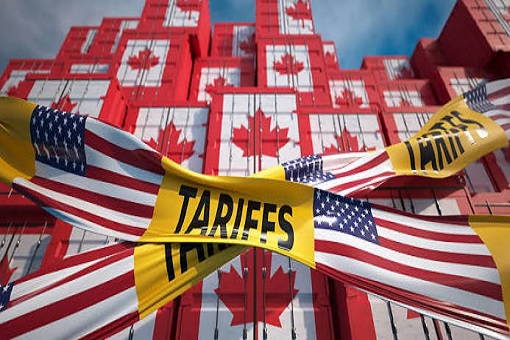
However, the good news is the U.S. imported a whopping US$383 billion of goods from Canada in 2025. Therefore, the newly announced tariffs would only affect a small slice of that total. According to research firm Capital Economics, only about 5% of Canadian imports would be affected by the new tariffs – or about 0.6% of total U.S. imports.
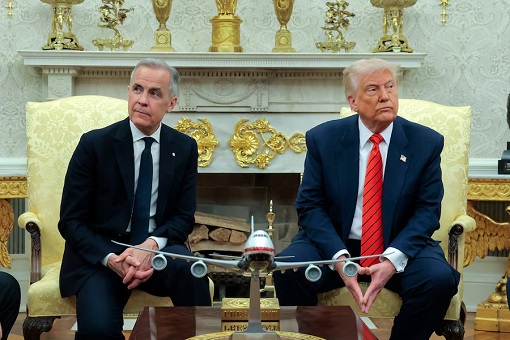
Still, Trump’s move would worsen the already tense relationship between the U.S. and Canada amid the struggle to renegotiate the U.S.-Mexico-Canada Agreement, the trade pact Trump signed in his first term and which is under renegotiation this year. Canadian Prime Minister Mark Carney said the new tariffs represented “the latest in a series of unilateral U.S. trade actions” to violate the USMCA.
“This trade dispute has raised costs for families, particularly in the U.S.” – Carney said. “Canada stands ready to engage intensively to address outstanding issues with the U.S. to the mutual benefit of our citizens.” But Ontario Premier Doug Ford went further, immediately encouraging Canada to retaliate. “If these tariffs proceed, Canada should respond tariff for tariff, dollar for dollar,” Ford said in a post on X.
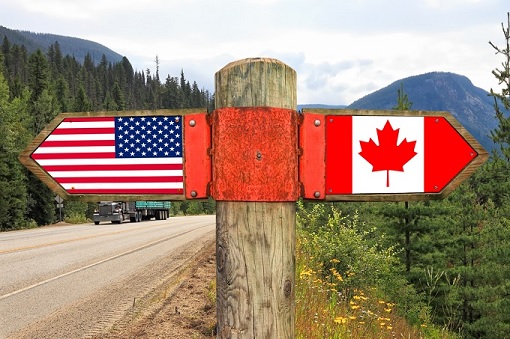
Trump has publicly threatened to terminate the USMCA, which the U.S. negotiated to replace the North American Free Trade Agreement, known as NAFTA. U.S. Trade Representative Jamieson Greer has floated the idea of separating the three-nation agreement into two separate pacts – one with Mexico and one with Canada.
Trump last year imposed emergency levies on Canada over its alleged role in the fentanyl trade before the Supreme Court ruled in February that those tariffs were illegal. He has also levied so-called national security tariffs on steel, aluminum, auto parts and lumber from Canada, though the White House said that products covered by those earlier levies won’t be hit by this latest round.
Carney last year rolled back many of the counter-tariffs that Canada imposed on U.S. goods, but several provinces such as Ontario have kept their retaliatory bans on U.S. wine and spirits in place, drawing repeated complaints from U.S. officials. After the latest 50% tariffs, Prime Minister Mark Carney responded by saying Canada stood ready to “intensify” trade talks with the US in the coming weeks.
The US has been maintaining active tariffs ranging from 15% to 50% on Canadian steel, aluminium, and copper. It also charges a 35% tariff on Canadian softwood lumber, alongside a 25% tax on non-U.S. parts in cars. Meanwhile, Canada has its own 25% counter-tariff on selected imports of American steel, aluminium and vehicles.
The new tariffs come after smoke from wildfires in Canada drifted into the U.S., blanketing cities including New York, Chicago and Washington. Trump threatened to impose steeper duties on America’s northern neighbour to compensate for the smoke’s impact. Days later, the president was seen speaking with Carney at Sunday’s World Cup Final. Trump told reporters that Canada needed to stop the wildfires.
Jeff Guignard, president and CEO of Wine Growers British Columbia, is calling on Canadians to support domestic producers after Trump’s latest tariff announcement. Guignard says he doesn’t understand the logic of the U.S. making Canadian alcohol more expensive and difficult for Americans to purchase, but says the move could hurt small producers in Canada.

President Trump is testing a new method to impose tariffs – Section 338 of the Trade Act of 1930. The law grants the president the power to impose levies on countries that discriminate against U.S. companies, but it “hasn’t been used before” to impose tariffs and could attract legal challenges. If Trump’s use of Section 338 is upheld by the courts, it could become a useful weapon in future trade negotiations.
After the Supreme Court ruled in February that the president could not use the International Emergency Economic Powers Act, or IEEPA, to implement sweeping tariffs globally, Trump imposed temporary, across-the-board 10% tariffs under Section 122 of the Trade Act of 1974, which are set to expire later this week. Last week, the US announced a new 25% tariff on many Brazilian imports under Section 301.
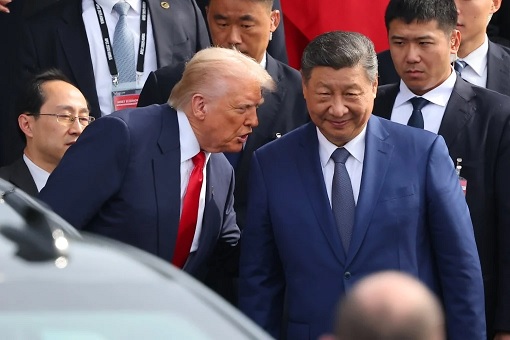
There’s another reason why Trump is targeting Canada. The White House said Canada was one of two countries that had chosen to retaliate against US tariffs rather than negotiate – the other country being China. And like Canada and China, Brazil has vowed to retaliate. Surprisingly, Trump told reporters that he and Chinese President Xi Jinping did not discuss tariffs at all during his visit to Beijing in May.
The first Trump administration’s trade war with China in 2018 – when the U.S.-China trade deficit hit its highest point of more than US$377 billion – marked a new decline in relations between the world’s two biggest economies. In his second term, Trump escalated his tariff threats as China imposed export controls on rare-earth minerals, which created a global supply shortage for the materials necessary to build most technologies.
Trump’s second administration began its trade war with China by slapping a 10% tariff on Chinese goods. Over the following months, China retaliated, resulting in the two countries rapidly escalating their tariffs on imported goods from each other. By April 2025, this reached a height of 145% tariffs on Chinese goods entering the United States, and a 125% tariff on U.S. imports to China.
President Donald Trump eventually reduced specific tariff rates on Chinese goods in late 2025 by halving the 20% “fentanyl” tariff down to 10%. This brought the overall average U.S. tariff rate on Chinese imports down from about 57% to roughly 47% in exchange for Chinese trade and law enforcement commitments.

Even though the U.S. Supreme Court overruled some of Trump’s proposed tariffs in February 2026, the bulk of the tariffs against China remain in place. After being delayed by the Iran war, Trump and Xi met in May 2026 – which marked the first visit to Beijing by a sitting U.S. president in nearly a decade. Trump was also the last president to make the trip, traveling there during his first term in 2017.
The use of a 1930 trade war now could be a tactical move to test the water – to see if the U.S. president has finally found his Holy Grail in tariff war with the world again. As a start, Trump wanted to use that Section 338 as a bargaining chip – to get some leverage over Canada.


No comments:
Post a Comment