Murray Hunter
MISSILES ON THE MENU: Guns, Not Butter in Prabowo’s Indonesia
Murray Hunter
Jul 13, 2026
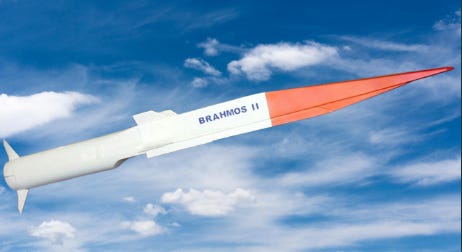
No country is more important to Australia than Indonesia, said the former Australian prime minister Paul Keating once. Today, that neighbour is quietly arming itself with supersonic cruise missiles capable of reaching deep into regional flashpoints. The latest catalyst? Indian Prime Minister Narendra Modi’s recent visit to Jakarta, where deals were signed that prioritise things that go bang over broader human development.
President Prabowo Subianto, with his military background, proved an eager customer. Among the agreements inked was a roughly US$630 million package for BrahMos supersonic cruise missiles and Astra air-to-air missiles. Developed jointly by India and Russia, the BrahMos is one of the world’s fastest operational supersonic cruise missiles, hitting speeds up to Mach 2.8, with a range of around 450 km and the ability to carry a 300 kg conventional warhead. It can be launched from land, sea, submarine, or air platforms.
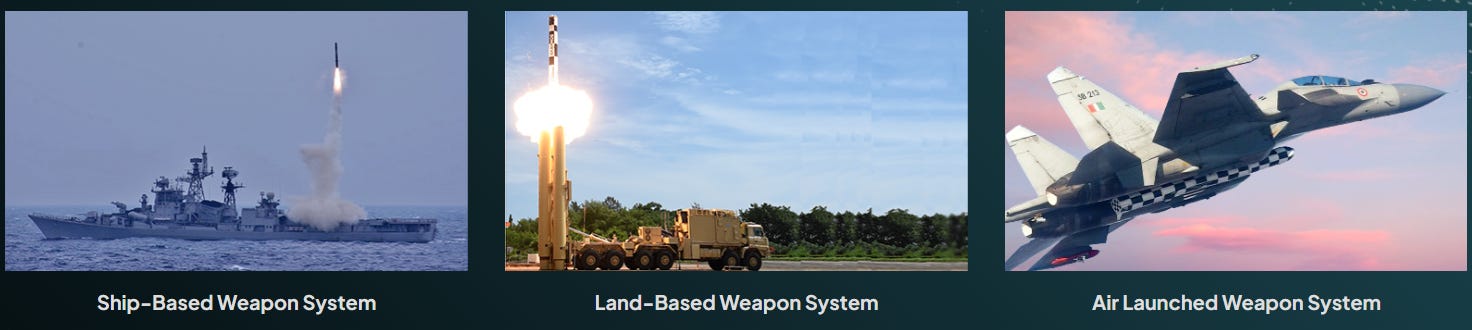
For Indonesia, this acquisition adds real strategic reach. Deployed along its vast archipelago, including existing missile capabilities near the Strait of Malacca, these systems could target key points in Singapore and Kuala Lumpur. From ships or aircraft, they extend concern toward northern Australia. Indonesia becomes the third Southeast Asian operator after Vietnam and the Philippines, a clear signal of an accelerating arms dynamic in ASEAN.
This is not happening in a vacuum. Prabowo’s Indonesia is in an active phase of military modernisation at a time when economic headwinds are mounting. Economist Dr Titik Anas, formerly a special advisor to the Finance Minister under Jokowi, has warned of capital outflows, a weakening rupiah, rising borrowing costs, and policy misalignment since Prabowo took office in late 2024. Investor confidence has taken a hit.
Meanwhile, the flagship free nutritious food programme (Makan Bergizi Gratis) has faced a reported 20% budget cut amid allegations of mismanagement and corruption. Each BrahMos missile carries a price tag reportedly up to US$5 million. The math is uncomfortable: resources diverted from feeding children and tackling health challenges toward hardware that feeds threat perceptions.
The “guns versus butter” trade-off is as old as economics itself. Indonesia subconsciously perceives real security concerns, not least an uneven potential rivalry with a much larger and better-armed China across the region. Yet critics quietly note that heavy spending on prestige weaponry risks amplifying vulnerabilities rather than resolving them, especially when basic services strain and economic fundamentals wobble.
Modi’s visit also included cultural gestures, such as support for the Prambanan temple complex, nodding to deep historical Hindu-Buddhist ties between India and Indonesia. These are welcome. Yet the headline outcome remains defence-heavy. Little public emphasis fell on medical technology, where India has growing strengths, innovations that could genuinely improve lives rather than prepare for their potential end.
Indonesia’s strategic caution in the past is giving way to more assertive balancing. Acquiring BrahMos strengthens its hand in protecting vital sea lanes and projecting power. But it also contributes to a regional arms dynamic where neighbours watch each other’s inventories with growing interest. For Australia, sitting just across the Timor and Arafura Seas, this evolution in its most important neighbour demands careful diplomacy and clear-eyed assessment rather than reflexive alarm or complacency.
Can Indonesia afford both guns and butter? History suggests choices have consequences. In Prabowo’s Indonesia, the menu currently favours missiles. Whether this brings lasting security or simply higher stakes in an already tense region remains the open question


No comments:
Post a Comment