
Manipulating tradition as a tool for power
Negeri Sembilan has entered a highly charged political environment following the collapse of the state government’s majority and the calling of fresh elections
Updated 2 hours ago · Published on 24 Jun 2026
There are moments in a nation’s history when the issue before us is not merely legal, political, or constitutional. It is moral. - June 24, 2026

by Vinod Sekhar
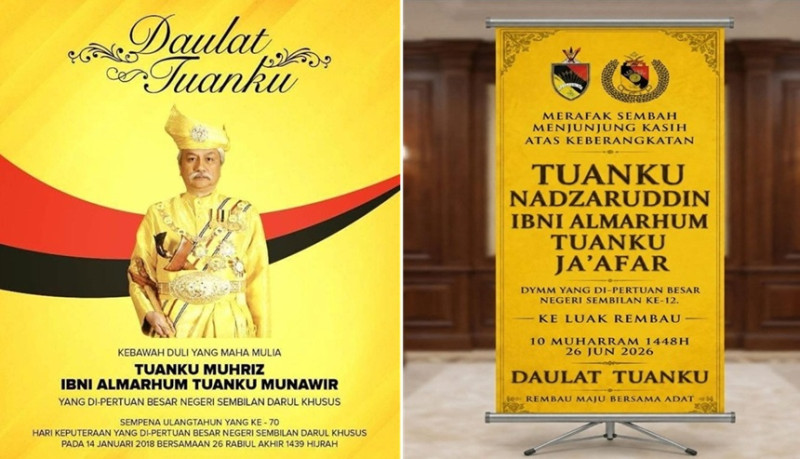
LET’S first get one thing straight. There is only ONE recognised constitutional Ruler of Negeri Sembilan - Tuanku Muhriz Tuanku Munawir. Recognised by the state and federal government.
There are moments in a nation’s history when the issue before us is not merely legal, political, or constitutional. It is moral.
Negeri Sembilan now finds itself at such a moment.
For months, Malaysians have watched a deeply troubling spectacle unfold: competing claims to the throne, competing interpretations of Adat Perpatih, competing declarations of legitimacy, and increasingly, competing political interests seeking advantage from a crisis that should never have become political in the first place.
The latest episode—the continued promotion of a purported proclamation of a new Yang di-Pertuan Besar despite ongoing legal and constitutional disputes—raises a simple question.
Who truly benefits from keeping this crisis alive?
Certainly not the people of Negeri Sembilan.
Certainly not the institution of monarchy.
And certainly not the dignity of Adat Perpatih itself.
The defenders of this movement have repeatedly sought refuge behind the language of tradition and custom. Yet tradition loses its moral authority when it becomes indistinguishable from political manoeuvring.
Consider the role played by Tan Sri Rais Yatim.
For months, he presented himself publicly as a scholar of Negeri Sembilan customs and a defender of Adat Perpatih. Yet he has also emerged as an active participant in the movement supporting the purported installation of Tunku Nadzaruddin and has publicly championed that position.
Public reports have also highlighted his new role as Chairman of a political party of ex-Bersatu members, many of whom played a role in the collapse of the state government coalition.
That does not invalidate his views
But it does raise legitimate questions as to his bias. And his motivations.
When political actors become deeply involved in royal disputes, the public has every right to ask whether the motivation is preservation of tradition or acquisition of influence.
The timing is difficult to ignore.
Negeri Sembilan has entered a highly charged political environment following the collapse of the state government’s majority and the calling of fresh elections.
The continuation of a narrative that there is already a “new ruler” inevitably carries political implications.
If a future state administration were sympathetic to that position, it could seek to alter the state’s recognition of the existing ruler and reshape the entire dispute.
Perhaps intended, the royal crisis has become intertwined with political calculations.
That alone should concern every Malaysian.
Monarchies survive not because they possess power.
They survive because they possess legitimacy.
The moment a monarchy becomes perceived as merely another arena for political contestation, everyone loses. History teaches us that institutions are rarely destroyed by external enemies. More often, they are weakened from within by those claiming to defend them.
The greatest threat to Negeri Sembilan’s unique constitutional and customary heritage is not disagreement. It is the appearance that custom can be selectively interpreted whenever it serves a particular faction.
Equally important are the questions surrounding leadership itself. If an individual seeks to be recognised as the ruler of a state, then scrutiny is not an insult.
It is a necessity.
The office of Yang di-Pertuan Besar is not merely ceremonial. It represents the highest moral and constitutional authority within the state.
The holder of that office should be subject to the highest standards of public examination.
That examination should include experience.
It should include judgment.It should include public service.
And yes, it should include a careful examination of one’s record in business, public life, and leadership. It is time, Tunku Nadzaruddin, who now seems to be promoting himself as the "new Ruler" of Negeri Sembilan, to undergo that scrutiny.
These are not attacks.
They are responsibilities.
A throne is not an inheritance alone
It is a trust.
The people of Negeri Sembilan deserve transparency. They deserve answers. They deserve confidence that anyone seeking to occupy the state’s highest institution can withstand the most rigorous public scrutiny.
Above all, they deserve leaders—whether elected or hereditary—who place the interests of the state above personal ambition.
The tragedy of this entire episode is that Negeri Sembilan has long been a model of moderation, stability, and constitutional evolution.
Its unique system of governance survived colonialism, independence, and modernisation because generations before us understood a simple truth:
Power must always serve the institution.
The institution must never serve power.
Today, that principle is being tested.
The question before Negeri Sembilan is no longer who sits on a throne.
The question is whether the throne itself will emerge stronger or weaker from this ordeal.
For the sake of the state, for the sake of Adat Perpatih, and for the sake of future generations, one hopes wisdom prevails over ambition.
History is watching.
And history is rarely kind to those who mistake personal victory for public service. – June 24, 2026
Datuk Dr Vinod Sekhar is the publisher of The Vibes and Chairman of the Petra Group
by Vinod Sekhar
LET’S first get one thing straight. There is only ONE recognised constitutional Ruler of Negeri Sembilan - Tuanku Muhriz Tuanku Munawir. Recognised by the state and federal government.
There are moments in a nation’s history when the issue before us is not merely legal, political, or constitutional. It is moral.
Negeri Sembilan now finds itself at such a moment.
For months, Malaysians have watched a deeply troubling spectacle unfold: competing claims to the throne, competing interpretations of Adat Perpatih, competing declarations of legitimacy, and increasingly, competing political interests seeking advantage from a crisis that should never have become political in the first place.
The latest episode—the continued promotion of a purported proclamation of a new Yang di-Pertuan Besar despite ongoing legal and constitutional disputes—raises a simple question.
Who truly benefits from keeping this crisis alive?
Certainly not the people of Negeri Sembilan.
Certainly not the institution of monarchy.
And certainly not the dignity of Adat Perpatih itself.
The defenders of this movement have repeatedly sought refuge behind the language of tradition and custom. Yet tradition loses its moral authority when it becomes indistinguishable from political manoeuvring.
Consider the role played by Tan Sri Rais Yatim.
For months, he presented himself publicly as a scholar of Negeri Sembilan customs and a defender of Adat Perpatih. Yet he has also emerged as an active participant in the movement supporting the purported installation of Tunku Nadzaruddin and has publicly championed that position.
Public reports have also highlighted his new role as Chairman of a political party of ex-Bersatu members, many of whom played a role in the collapse of the state government coalition.
That does not invalidate his views
But it does raise legitimate questions as to his bias. And his motivations.
When political actors become deeply involved in royal disputes, the public has every right to ask whether the motivation is preservation of tradition or acquisition of influence.
The timing is difficult to ignore.
Negeri Sembilan has entered a highly charged political environment following the collapse of the state government’s majority and the calling of fresh elections.
The continuation of a narrative that there is already a “new ruler” inevitably carries political implications.
If a future state administration were sympathetic to that position, it could seek to alter the state’s recognition of the existing ruler and reshape the entire dispute.
Perhaps intended, the royal crisis has become intertwined with political calculations.
That alone should concern every Malaysian.
Monarchies survive not because they possess power.
They survive because they possess legitimacy.
The moment a monarchy becomes perceived as merely another arena for political contestation, everyone loses. History teaches us that institutions are rarely destroyed by external enemies. More often, they are weakened from within by those claiming to defend them.
The greatest threat to Negeri Sembilan’s unique constitutional and customary heritage is not disagreement. It is the appearance that custom can be selectively interpreted whenever it serves a particular faction.
Equally important are the questions surrounding leadership itself. If an individual seeks to be recognised as the ruler of a state, then scrutiny is not an insult.
It is a necessity.
The office of Yang di-Pertuan Besar is not merely ceremonial. It represents the highest moral and constitutional authority within the state.
The holder of that office should be subject to the highest standards of public examination.
That examination should include experience.
It should include judgment.It should include public service.
And yes, it should include a careful examination of one’s record in business, public life, and leadership. It is time, Tunku Nadzaruddin, who now seems to be promoting himself as the "new Ruler" of Negeri Sembilan, to undergo that scrutiny.
These are not attacks.
They are responsibilities.
A throne is not an inheritance alone
It is a trust.
The people of Negeri Sembilan deserve transparency. They deserve answers. They deserve confidence that anyone seeking to occupy the state’s highest institution can withstand the most rigorous public scrutiny.
Above all, they deserve leaders—whether elected or hereditary—who place the interests of the state above personal ambition.
The tragedy of this entire episode is that Negeri Sembilan has long been a model of moderation, stability, and constitutional evolution.
Its unique system of governance survived colonialism, independence, and modernisation because generations before us understood a simple truth:
Power must always serve the institution.
The institution must never serve power.
Today, that principle is being tested.
The question before Negeri Sembilan is no longer who sits on a throne.
The question is whether the throne itself will emerge stronger or weaker from this ordeal.
For the sake of the state, for the sake of Adat Perpatih, and for the sake of future generations, one hopes wisdom prevails over ambition.
History is watching.
And history is rarely kind to those who mistake personal victory for public service. – June 24, 2026
Datuk Dr Vinod Sekhar is the publisher of The Vibes and Chairman of the Petra Group


No comments:
Post a Comment