Murray Hunter
Jun 28, 2026
The Disappearance of Amri Che Mat and the Ongoing Persecution of Shia Muslims in Malaysia
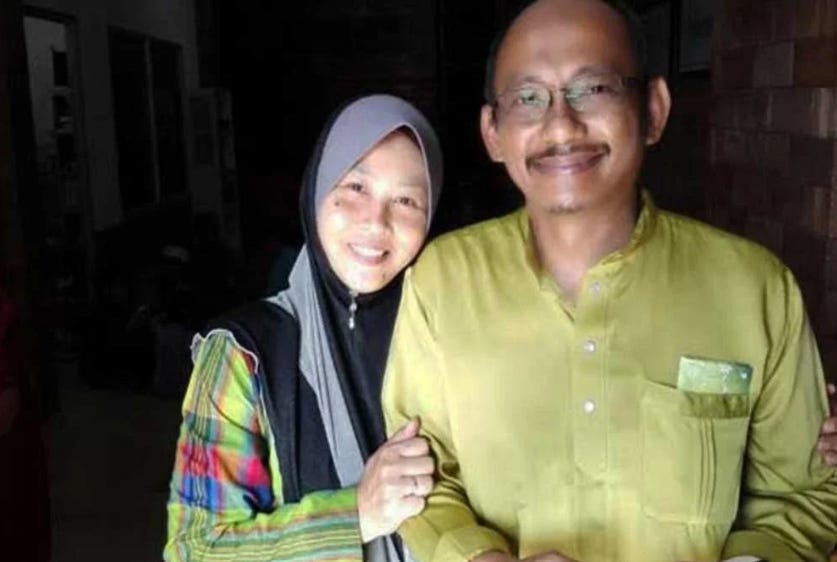
In November 2016, Malaysian Shia activist Amri Che Mat vanished while driving to visit a friend in Perlis. Eyewitnesses described his car being surrounded by multiple vehicles and more than a dozen men, some armed. Amri, a Shia convert known for his humanitarian work and religious activities, has not been seen since. Malaysia’s Human Rights Commission (SUHAKAM) later concluded that state agents carried out his enforced disappearance. Recent court rulings have held authorities accountable for failing to investigate thoroughly, noting that his Shia identity and activities likely played a role.
Amri’s case stands as a stark symbol of the dangers faced by Shia Muslims in Malaysia. It highlights how accusations of “deviant” beliefs can lead to severe consequences in a country where Sunni Islam, particularly the Shafi’i school, holds official dominance.
Current Persecution in Selangor
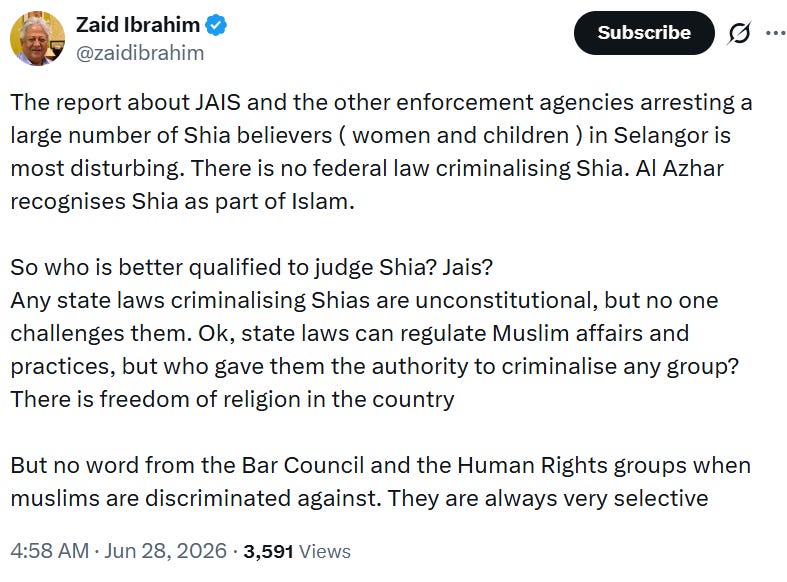
Years later, the situation remains tense. Prominent lawyer and former minister Zaid Ibrahim has publicly condemned recent actions by the Selangor Islamic Religious Department (JAIS) and other enforcement agencies. Reports of raids on Shia gatherings in Selangor, including arrests involving women and children, have disturbed many observers. Zaid highlighted these incidents as deeply troubling, questioning the heavy-handed approach toward a minority community simply practicing their faith.
Years later, the situation remains tense. Prominent lawyer and former minister Zaid Ibrahim has publicly condemned recent actions by the Selangor Islamic Religious Department (JAIS) and other enforcement agencies. Reports of raids on Shia gatherings in Selangor, including arrests involving women and children, have disturbed many observers. Zaid highlighted these incidents as deeply troubling, questioning the heavy-handed approach toward a minority community simply practicing their faith.
Such operations stem from the 1996 national fatwa that branded Shia teachings as deviant and banned their propagation. State religious authorities use this, along with Sharia enactments, to justify raids on private homes and functions, especially during commemorations like Ashura, seizures of religious materials, and charges against participants. Shia Malaysians often face surveillance, social stigma, media demonization, and barriers to open worship, with no recognized public Shia mosques or institutions.
Internal Power Struggles Fueling Intolerance?
This discrimination occurs against a backdrop of broader ideological contests within Malaysian Islam. A power struggle has been unfolding between Wahhabi-Salafist influences (often linked to Saudi funding and education) and Muslim Brotherhood-inspired groups.
Wahhabi-Salafist networks have gained ground through scholarships, social media outreach to youth, and placement of alumni in key institutions such as JAKIM, fatwa councils, and the civil service. This has contributed to a more rigid interpretation of Islam, sidelining traditional “Nusantara” practices and fostering suspicion toward any perceived deviations, including Shia beliefs. Salafi-oriented figures and groups have promoted narratives that frame Shia Islam as a threat to Sunni unity and national security.
Meanwhile, political actors sometimes exploit sectarian sentiments for gain, accusing rivals of Shia links or using anti-Shia rhetoric in sermons and media. The result is a divided ummah, where religious minorities within Islam bear the brunt, and traditional Malay cultural and religious freedoms erode under pressure for orthodoxy.
Is Malaysia Part of the International Split Between Sunni and Shia Playing Out?
Malaysia has historically positioned itself as a moderate Muslim-majority nation. Yet its treatment of Shia citizens raises a deeper question: Is Malaysia becoming an arena where the broader geopolitical and theological Sunni-Shia divide exacerbated by rivalries involving Saudi Arabia, Iran, and others, seen playing out domestically?
The 1996 fatwa and subsequent policies aligned Malaysia more closely with anti-Shia stances prevalent in some Sunni-majority countries. Saudi influences through education and funding have amplified conservative currents, while events like the Syrian conflict have imported sectarian framing into local discourse. At the same time, domestic political and institutional rivalries between different Islamist streams intensify scrutiny on any group seen as outside the Sunni mainstream.
Amri Che Mat’s unresolved disappearance and the repeated raids in states like Selangor suggest that sectarian dynamics are not abstract foreign issues but active forces shaping lives within Malaysia. Without greater protection for religious freedom and a pushback against intolerance, regardless of its theological or political sources, the country risks deepening internal divisions that undermine its social harmony and pluralistic identity.
The experiences of Shia Malaysians call for some reflection. Can Malaysia uphold its constitutional principles and multicultural ethos while allowing such targeted restrictions to persist? The answer will define not just the future of its Shia community, but the character of Malaysian Islam itself.
***
It frightens me that such religious discriminatory attitudes and practices exist in Malaysia.


No comments:
Post a Comment