
Republic of China Army’s Costly New U.S. Abrams Tanks ‘Dead Weights’ with Little Wartime Value - Analysts Warn
Asia-Pacific , Ground
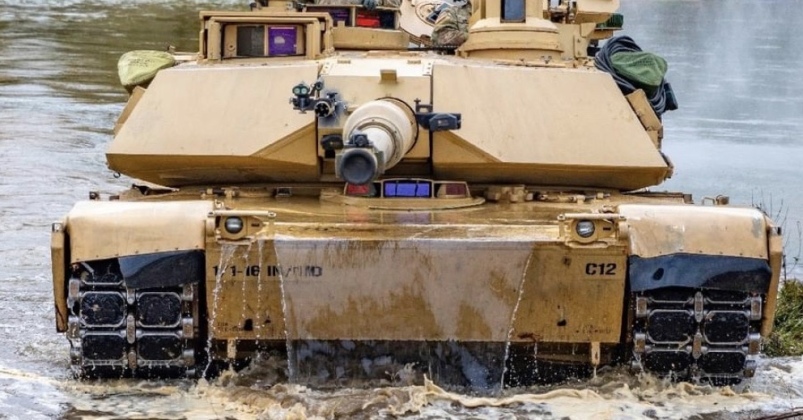
Following the delivery of the last of 108 M1A2 Abrams main battle tanks ordered to equip the Republic of China Army, analysts at the Australian Strategic Policy Institute (ASPI) have recently assessed the vehicles are prime examples of “dead weight” procurements because they are optimised for a kind of conventional land warfare that is far removed from the Army’s likely conflict scenarios. Rather than investing heavily in heavy and expensive armoured vehicles like the Abrams, the institute’s analysts have contended, the Republic of China Defence Ministry should prioritise asymmetric capabilities that are cheaper, more survivable, and capable of imposing disproportionate costs on advancing forces. This has echoed criticisms widely made by both Chinese and Western analysts, many of them Taiwan-based, regarding the prioritisation of procurement funding.
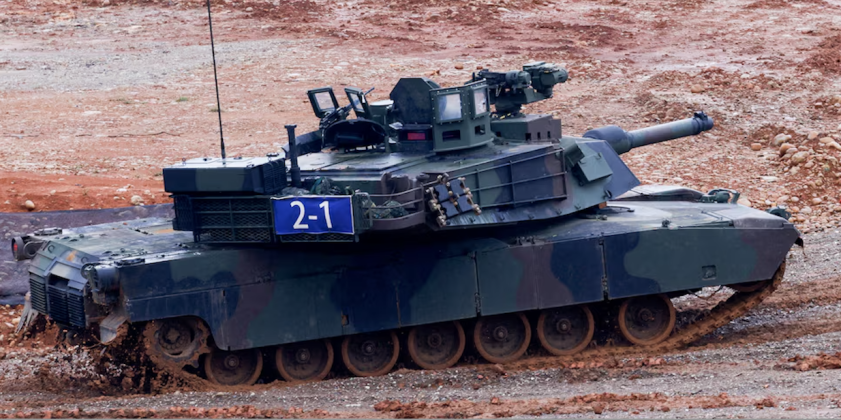
According to the ASPI report, one of the Abrams’ greatest shortcomings is that the geography of Taiwan Island, where Republic of China forces are based, offers few opportunities for large-scale armoured manoeuvre warfare. Much of the island is mountainous and heavily urbanised, while any invasion would initially focus on securing beaches, ports, and airfields. Abrams tanks will thus have limited room to exploit their mobility and firepower, reducing many of the advantages for which they were designed. “The 74-ton, four-person M1A2 was designed for a kind of warfare that is rapidly becoming a thing of the past. As the wars in Ukraine and Iran have proved, the future belongs to small, light, autonomous weapons that can be continuously upgraded and built quickly in huge quantities,” the report observed.
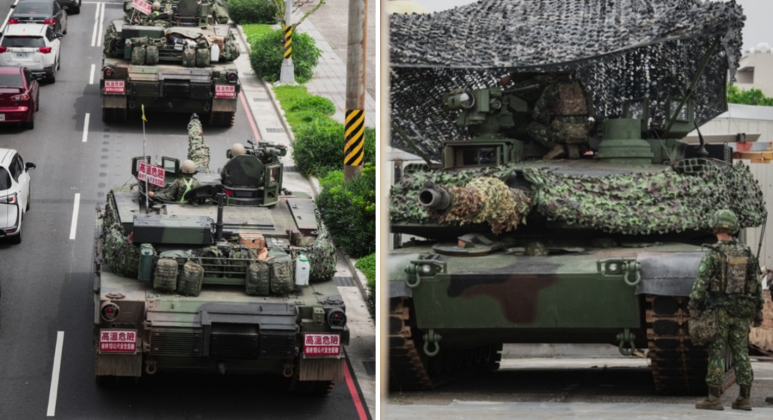
The ASPI report argues that the proliferation of inexpensive drones and precision-guided munitions has made heavy armour increasingly vulnerable to strikes by low cost loitering munitions, FPV drones, top-attack anti-tank missiles, and precision artillery. This undermines the cost-effectiveness of investing billions of dollars in modern main battle tanks. Another criticism concerns logistics. The Abrams is the heaviest tank type in service worldwide, with the M1A2T variant procured by the Republic of China Army weighing approximately 74 tons. The vehicles are require substantial fuel, maintenance, recovery vehicles, transporters, and spare parts. In a Taiwan Strait conflict where missile strikes could disrupt local infrastructure and logistics networks, keeping heavy armoured units supplied and operational could be difficult.
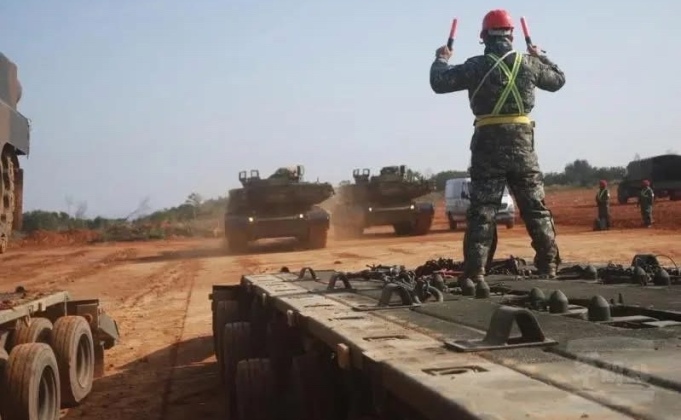
Among the local analysts echoed in the ASPI report, former Republic of China Armed Forces chief of general staff Lee Hsiang-chou described the procurement as one the most questionable made in recent years. He argued that many bridges across Taiwan were not originally designed to accommodate 70 ton vehicles, potentially limiting operational mobility, while also questioning the sustainability of fuel consumption during prolonged combat. Such criticisms have been responded to with assertions that the Republic of China Ministry of Defence has had no other options to procure main battle tanks, with it’s almost total lack of international recognition making arms sales highly controversial. The United States, which only produces the Abrams, has been the only country willing to supply tanks. Nevertheless, the possibility of abandoning fielding tanks entirely has also been raised in the past.
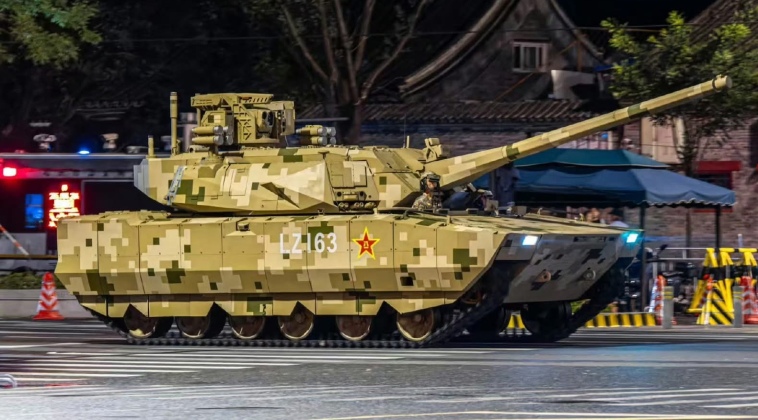
The U.S. Army has itself responded to prevailing trends in armoured warfare by cancelling plans to further update the M1A2 design, and instead deeply redesigning the Abrams tank under the M1E3 program. The program has evolved the design in the same direction as the new Chinese Type 100 next generation main battle tank, albeit with greater constraints as it is not a clean sheet design but rather a deep adaptation of a Cold War era vehicle. The M1E3 similarly moved away from the Cold War emphasis on maximising armour and firepower, and towards prioritising reduced weight, digital integration, active protection, and survivability against modern precision threats. With the Russian-Ukrainian War having highlighted the severe limitations of traditional Western main tanks in modern warfare, tanks like the Abrams are increasingly widely considered obsolete, and quickly suffered extreme losses in the theatre while having relatively little impact. While the M1E3 program appears to have potential to change this, this next generation variant is not expected to be available for service until the early-mid 2030s, and may not be available for export for more than a decade.


Military Watch should focus it's writing in its own backyard, where Ukraine has turned more than 70% of Russia's pre -2022 tank reserve into scrap metal coffins for Russian troopers.
ReplyDelete& where r those Ukrainian military armories, NATO donated & homegrown, mfer?
DeleteUkraine was provided with extremely modest numbers of Western tanks. In practical terms it was an experimental deployment, and unfortunately the casualty rate was high.
Delete- USA 31
- UK 14
- Germany 18 Leopard 2, 72 obsolete Leopard 1 tanks dating from the 1960s
Ukraine has made very effective use of its old tank inventory.
Nothing matches the slaughter of Russian tanks in Ukraine in post WW2 history.
You have to reach back to the destruction of the Nazi Panzer divisions in late 1944 - early 1945 on the Eastern Front and also Western Front to equal the scale of the carnage of Russian tanks in Ukraine.