Murray Hunter
Jun 11, 2026
Indonesia's planned missile deployment along the Strait of Melaka will shift regional power dynamics
Malaysia is about to be militarily encircled by Indonesia
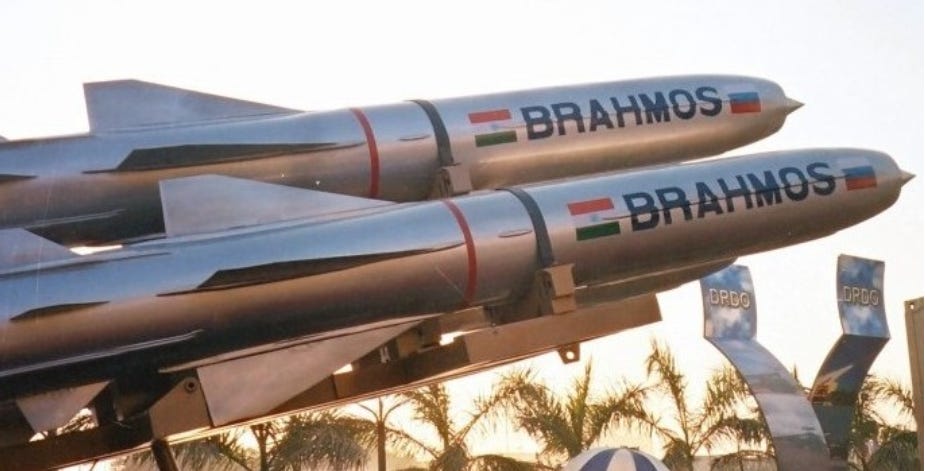
In a development that has raised eyebrows across Southeast Asia, reports indicate that Indonesia is preparing to deploy advanced Indian-made BrahMos supersonic missiles along its side of the Strait of Malacca. According to a June 8, 2026, report by MalaysiaNow, citing anonymous Jakarta sources, the plan was discussed during a high-level inter-agency meeting on May 20. The move aligns with broader efforts by President Prabowo Subianto’s administration to bolster Indonesia’s maritime defense capabilities in one of the world’s most critical chokepoints.
The BrahMos, a joint India-Russia supersonic cruise missile system, is renowned for its speed of up to Mach 3, a range of approximately 300 km, and its ability to carry significant payloads. If deployed at strategic points along the Sumatran coastline facing the Strait, these missiles could provide Indonesia with potent anti-ship and land-attack capabilities, enabling rapid response to potential threats in the narrow waterway. The timing coincides with anticipated formalization during Indian Prime Minister Narendra Modi’s visit to Indonesia in July 2026. Indonesia would join the Philippines and Vietnam as Southeast Asian operators of the system.
This latest development is part of a larger pattern of Indonesian military modernization over the past several years. Under successive administrations, and accelerating under Prabowo, Jakarta has pursued an ambitious procurement drive to upgrade its armed forces (TNI). Indonesia has acquired advanced fighter jets from multiple suppliers, including French Rafales, American F-15EX variants, Turkish KAAN fighters, and ongoing involvement in the South Korean KF-21 program. Naval capabilities have also expanded with new frigates from the UK (Arrowhead 140 design), Italy, and Turkey, alongside submarines and other assets. Defense budgets have seen nominal increases, with plans discussed to raise spending toward 1.5% of GDP, reflecting a push for greater self-reliance and deterrence amid regional tensions.
Additional procurements include Turkish KHAN ballistic missiles, making Indonesia the first in Southeast Asia with such systems, and interest in various drones and maritime technologies. This “retail approach” to acquisitions—from diverse suppliers like France, the US, Turkey, India, and others—aims to fill capability gaps quickly but has drawn criticism for potential logistical and interoperability challenges. Nevertheless, it signals Jakarta’s determination to transform its military from a primarily defensive force into one with greater power projection, particularly in its vast archipelagic waters.
The Strait of Malacca, a 900-km waterway separating Sumatra from Peninsular Malaysia, is a vital artery for global trade. It carries a massive portion of East Asia’s energy imports and commercial shipping between the Indian and Pacific Oceans. Indonesia’s push to assert greater influence here draws parallels to Iran’s role in the Strait of Hormuz. In April 2026, Prabowo reportedly emphasized Indonesia’s strategic position, noting that significant shares of regional trade and energy pass through its waters. Subsequent comments by officials about potential levies on shipping, though later walked back, unsettled neighbors like Malaysia and Singapore, who have long cooperated with Indonesia on joint patrols against piracy and other threats.
Some analysts suggest that deploying BrahMos missiles would markedly shift the balance of power in the Strait toward Indonesia. Currently, the waterway operates under principles of international navigation with collaborative security arrangements among littoral states. Supersonic missiles on the southern shore could introduce new deterrence dynamics, allowing Indonesia to monitor and potentially influence passage more assertively. This might enhance Jakarta’s leverage in maritime governance and economic negotiations but could also heighten tensions, complicate freedom of navigation, and prompt responses from Malaysia, Singapore, or external powers like the US and China, who have interests in secure sea lanes.
The US-Indonesia Major Defense Cooperation Partnership, signed in April 2026, adds another layer. It expands potential US access to Indonesian airspace and capabilities, possibly for surveillance over the Strait, even as Indonesia diversifies partners including India.
Critics warn that militarizing the Strait risks disrupting cooperative mechanisms, increasing uncertainties for energy supplies and global trade, and sparking an arms race dynamic in Southeast Asia. Proponents in Jakarta view it as necessary modernization in an era of great-power competition, where control over chokepoints translates into strategic relevance.
Kalimantan Military Build-up
Indonesia’s military build-up is not just restricted to the Strait of Melaka. Indonesia has also been strengthening its military footprint in Kalimantan, the Indonesian portion of Borneo that shares a long land border with Malaysia’s states of Sabah and Sarawak.
In recent years, Jakarta has expanded army border posts, increased troop presence, and modernized capabilities in the region, including the reported stationing of Turkish-made KHAN ballistic missiles in East Kalimantan near disputed maritime areas like Ambalat. The relocation of Indonesia’s new capital to Nusantara in East Kalimantan is further driving infrastructure development that supports greater logistical and military sustainment across the island.
Combined with the planned deployment of advanced supersonic missiles along its Sumatran coastline facing the Strait of Malacca, these developments position Indonesia with significant strategic leverage on both the western maritime approaches and the eastern land border of Peninsular and East Malaysia. Analysts note that this dual posture effectively creates a pincer-like strategic encirclement around Malaysia, enhancing Indonesia’s ability to project power and influence in key chokepoints and border areas, potentially altering longstanding regional power balances in Southeast Asia.
As the region watches developments ahead of Modi’s visit, Indonesia’s actions underscore its evolving role as a more assertive maritime player. While enhancing its own security, the missile deployments could reshape longstanding assumptions about stability in the Malacca Strait, with implications extending far beyond Southeast Asia. The coming months will reveal whether this contributes to a more secure or a more contested maritime domain.


Ganyang Malaysia.
ReplyDelete