
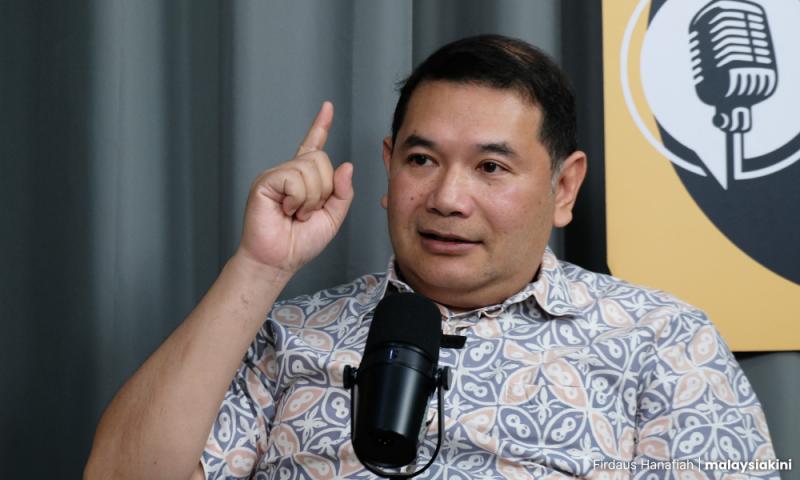

Rafizi: Rising racial tension due to Anwar tiptoeing around Umno
Published: May 24, 2026 7:00 AM
Updated: 11:38 AM
Prime Minister Anwar Ibrahim is to blame for the government's failure to ease racial and religious tensions in the country, said Rafizi Ramli.
The former economy minister claimed Anwar was more concerned with incurring Umno's wrath than nipping racial issues in the bud.
"Why Anwar failed to handle these issues was because of (Umno Youth chief) Dr Akmal Saleh. Because he was tiptoeing around Umno.
"From what I remember from the socks controversy, it took him a while before meeting Umno leaders (to discuss the matter)," Rafizi said on a podcast aired last night.
He was one of the two guest speakers in the latest episode of KiniTV's “Explain Sikit”, co-hosted by Mastura Malak and Zikri Kamarulzaman.
The other guest was Rafizi's co-leader in Parti Bersama Malaysia (Bersama), Nik Nazmi Nik Ahmad.
Rafizi was referring to the 2024 controversy involving socks bearing the word “Allah” found in a KK Mart convenience store.
Akmal, among others, had been pushing hard on the issue, including calling Muslims to boycott the retail chain.

The Umno Youth wing also called its members nationwide to lodge police reports against KK Mart.
‘Govt can do better’
Rafizi believed the government could do better in addressing racial issues if it had an effective mechanism to counter the narrative peddled by extremists.
He mooted setting up a platform involving leaders from across society, political and religious backgrounds.
"So when you have a cross-sectional structure like that, you will eventually be able to bring everyone to a common ground.
"A joint statement from leaders across society, politics and religion would prevent these fringe groups from gaining traction - they would remain on the fringes," the former Pandan MP said.
As an example, Rafizi said the country used to have an effective mechanism called the National Goodwill Council, or Majlis Muhibbah Negara, which played an important role and succeeded in healing racial relations.

KiniTV’s Explain Sikit podcast interview with Rafizi Ramli (second right) and Nik Nazmi Nik Ahmad (right)
The government established the council in 1969 following the deadly May 13 racial riot. It was led by the then prime minister Tunku Abdul Rahman.
Rafizi pointed out that a lack of narrative leadership has also contributed to the tension seen now.
Speaking from his experience as a cabinet member, he said the majority of Malaysians are on the middle ground and more interested in bread-and-butter issues, including cost of living and the economy.
However, the absence of an agenda that can truly capture the attention of ordinary citizens has created a vacuum that allowed racial and religious issues to take centre stage.
"That is why, in my view on economic reform and improvements, I have always told the government that we cannot continue with business as usual, because business as usual offers nothing that truly engages the people.
"When there is nothing to engage them, it creates a vacuum, and that vacuum is what causes racial issues to emerge and eventually take centre stage."
Prioritise national interests
Nik Nazmi said racial and religious issues are among the challenges Malaysia has to face as it inherits race-based political parties that continue fighting along racial and religious lines to be popular.
The government established the council in 1969 following the deadly May 13 racial riot. It was led by the then prime minister Tunku Abdul Rahman.
Rafizi pointed out that a lack of narrative leadership has also contributed to the tension seen now.
Speaking from his experience as a cabinet member, he said the majority of Malaysians are on the middle ground and more interested in bread-and-butter issues, including cost of living and the economy.
However, the absence of an agenda that can truly capture the attention of ordinary citizens has created a vacuum that allowed racial and religious issues to take centre stage.
"That is why, in my view on economic reform and improvements, I have always told the government that we cannot continue with business as usual, because business as usual offers nothing that truly engages the people.
"When there is nothing to engage them, it creates a vacuum, and that vacuum is what causes racial issues to emerge and eventually take centre stage."
Prioritise national interests
Nik Nazmi said racial and religious issues are among the challenges Malaysia has to face as it inherits race-based political parties that continue fighting along racial and religious lines to be popular.
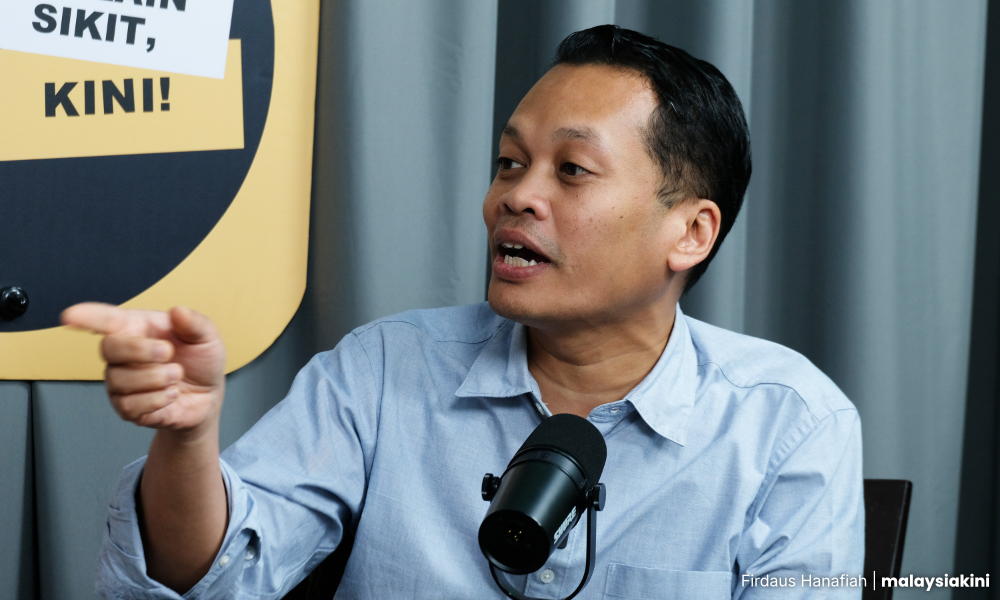
Nik Nazmi Nik Ahmad
He urged government leaders to prioritise national interests instead of succumbing to extremist demands.
"These parties have to show they are championing (these issues), and while we can understand it to a certain extent, such an approach is not benefiting the country.
"So I think we need to really look and discuss as Malaysians, while the leaders have to have leadership qualities and not bow down to the people who like to fan the fire," he said.
He urged government leaders to prioritise national interests instead of succumbing to extremist demands.
"These parties have to show they are championing (these issues), and while we can understand it to a certain extent, such an approach is not benefiting the country.
"So I think we need to really look and discuss as Malaysians, while the leaders have to have leadership qualities and not bow down to the people who like to fan the fire," he said.


No comments:
Post a Comment