
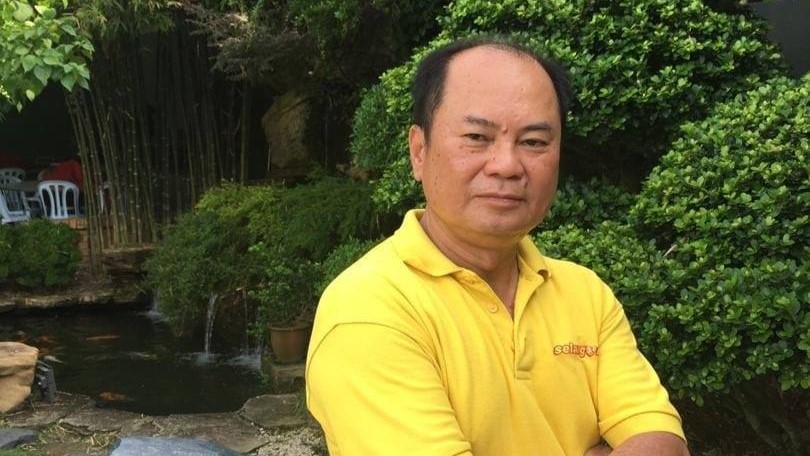
Former Selangor executive councillor Ronnie Liu has questioned the alleged silence of senior DAP leaders over the state’s pig farming issue, following the Sultan of Selangor’s decree on the relocation and restructuring of the industry. — Facebook pic, April 24, 2026
Ronnie Liu questions DAP silence over Selangor pig farming issue after Sultan’s decree
Former exco urges state to clarify legal basis, compensation and relocation plan amid crackdown on licences and farm sites
Scoop Reporters
Updated 2 minutes ago
24 April, 2026
11:57 AM MYT
KUALA LUMPUR — Former Selangor executive councillor Ronnie Liu has questioned the alleged silence of senior DAP leaders over the state’s pig farming issue, following the Sultan of Selangor’s decree on the relocation and restructuring of the industry.
“The questions many people now want to ask are very simple: why do the top DAP leaders not dare to formally seek an audience with the Sultan of Selangor? Why do they not dare to formally negotiate with the Menteri Besar of Selangor? Why do they not bring this matter into the Cabinet and press the prime minister and the Federal Government to address it directly?” he said in a statement.
His remarks come after the Selangor government directed that no new pig farming licences be issued in the state, and ordered the clearance of existing farm sites in Tanjong Sepat in line with the Sultan’s decree, which states that pig farming is not to be carried out in any district in Selangor.
Liu said the lack of visible engagement from political leaders was becoming increasingly difficult to ignore, given the scale of impact on farmers and downstream industries.
“This is not a small matter. It concerns law-abiding farmers who have operated for years, the supply chain, consumer prices, and public confidence in the government,” he said.
He stressed that the decree had fundamentally changed the situation and required clear explanation rather than silence.
“The decree changes the context entirely, and it demands clarity, not silence,” he added.
Liu said any policy shift affecting an established industry must be handled transparently and with due process, rather than abrupt enforcement.
“If an industry has been operating lawfully under an existing system, but a policy suddenly changes and it is now being shut down and forced to exit, then the most basic form of justice is not to label people or accuse those asking questions of being troublemakers,” he said.
He added that governance must be guided by clear accountability rather than political deflection.
Ronnie Liu questions DAP silence over Selangor pig farming issue after Sultan’s decree
Former exco urges state to clarify legal basis, compensation and relocation plan amid crackdown on licences and farm sites
Scoop Reporters
Updated 2 minutes ago
24 April, 2026
11:57 AM MYT
KUALA LUMPUR — Former Selangor executive councillor Ronnie Liu has questioned the alleged silence of senior DAP leaders over the state’s pig farming issue, following the Sultan of Selangor’s decree on the relocation and restructuring of the industry.
“The questions many people now want to ask are very simple: why do the top DAP leaders not dare to formally seek an audience with the Sultan of Selangor? Why do they not dare to formally negotiate with the Menteri Besar of Selangor? Why do they not bring this matter into the Cabinet and press the prime minister and the Federal Government to address it directly?” he said in a statement.
His remarks come after the Selangor government directed that no new pig farming licences be issued in the state, and ordered the clearance of existing farm sites in Tanjong Sepat in line with the Sultan’s decree, which states that pig farming is not to be carried out in any district in Selangor.
Liu said the lack of visible engagement from political leaders was becoming increasingly difficult to ignore, given the scale of impact on farmers and downstream industries.
“This is not a small matter. It concerns law-abiding farmers who have operated for years, the supply chain, consumer prices, and public confidence in the government,” he said.
He stressed that the decree had fundamentally changed the situation and required clear explanation rather than silence.
“The decree changes the context entirely, and it demands clarity, not silence,” he added.
Liu said any policy shift affecting an established industry must be handled transparently and with due process, rather than abrupt enforcement.
“If an industry has been operating lawfully under an existing system, but a policy suddenly changes and it is now being shut down and forced to exit, then the most basic form of justice is not to label people or accuse those asking questions of being troublemakers,” he said.
He added that governance must be guided by clear accountability rather than political deflection.

Bernama pic. — April 24, 2026
“We are not trying to create division or stir emotions. We are simply saying that when a decision of this scale is made, it must be explained, implemented properly, and its consequences addressed according to law,” he said.
Liu said the state government must address several key issues, including the legal basis for the policy change, whether proper procedures and consultations were carried out, and whether environmental and social impact assessments had been completed.
He also called for clarity on compensation mechanisms and transition plans for affected farmers, as well as an update on alternative sites following the shelving of the Bukit Tagar proposal.
“The most basic justice is to make four things clear: the legal basis, the procedure, the compensation, and the transition pathway,” he said.
He warned that continued avoidance of these questions would deepen uncertainty among stakeholders.
“If this is truly about the environment, public health and the wellbeing of the people, then these questions should not be avoided. Real governance does not fear questions,” he said.
Liu also urged that pressure not be directed at farmers, but instead focused on ensuring the state government provides a clear and structured roadmap for implementation. — April 24, 2026
“We are not trying to create division or stir emotions. We are simply saying that when a decision of this scale is made, it must be explained, implemented properly, and its consequences addressed according to law,” he said.
Liu said the state government must address several key issues, including the legal basis for the policy change, whether proper procedures and consultations were carried out, and whether environmental and social impact assessments had been completed.
He also called for clarity on compensation mechanisms and transition plans for affected farmers, as well as an update on alternative sites following the shelving of the Bukit Tagar proposal.
“The most basic justice is to make four things clear: the legal basis, the procedure, the compensation, and the transition pathway,” he said.
He warned that continued avoidance of these questions would deepen uncertainty among stakeholders.
“If this is truly about the environment, public health and the wellbeing of the people, then these questions should not be avoided. Real governance does not fear questions,” he said.
Liu also urged that pressure not be directed at farmers, but instead focused on ensuring the state government provides a clear and structured roadmap for implementation. — April 24, 2026


No comments:
Post a Comment