
Pearls and Irritations
May 1, 2026
Australia has again joined a US-led conflict with little transparency or debate, raising the risk of mission creep, economic costs and another drawn-out military failure.
Another military disaster looms, showing how little Australia has learned in in two decades. Mission creep is likely.
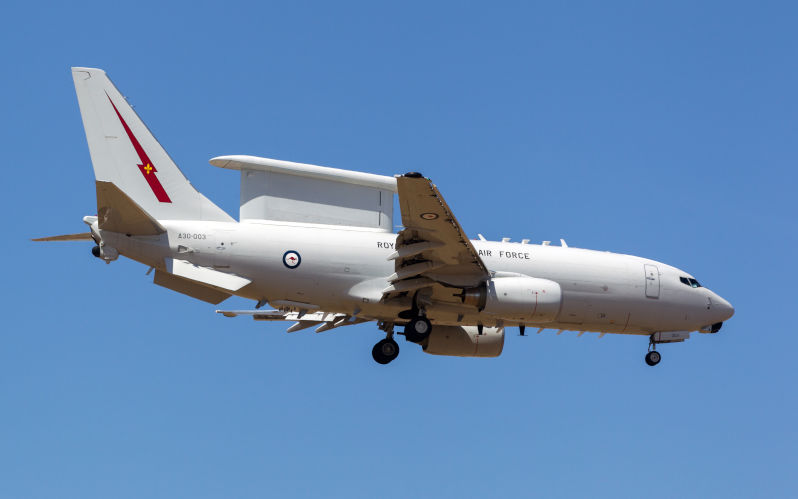
Australia prided itself on getting into Iraq ahead of other US allies in the 2003 invasion. We have now done it again with a military deployment to the United Arab Emirates (UAE). In mid-March, Australia sent a RAAF Boeing E7A Wedgetail surveillance and targeting aircraft, and 85 personnel, to the United Arab Emirates for an ‘initial deployment of four weeks’. That’s been extended, indefinitely.
This deployment, says Defence, is ‘at the request of the Gulf nations…to help protect and defend Australians and other civilians’. Australia doesn’t admit we are at war. But the Wedgetail has been sent also ‘to assist in the defence of Gulf nations and support the UAE’s air defence capabilities’, AeroTime reports.
Defence of which Gulf nations against what neighbouring country? The UAE, Bahrain and Kuwait against Iran, obviously. At whose request? The Americans’ is what we know: President Trump’s overnight call to Prime Minister Albanese on 12 March produced a commitment from Australia within hours. The decision to enter the war was made by the Prime Minister and a few hastily woken ministers. The public and our parliamentary representatives heard nothing about it until the morning. We have been told nothing about what our Australian forces are doing, but we’re assured their deployment is purely ‘defensive’.
Yet a mere fortnight later, when Australia’s Wedgetail and armed forces were already operating in collaboration with the US in the UAE, Trump began complaining that America’s allies, specifically including Australia, had betrayed him by failing to support the war. This despite offers from France and Britain, Japan and South Korea of help to open the Strait of Hormuz.
The US has two large bases in the UAE: Al Dhafra and Al Minhab. It has support facilities at Jebel Ali Container Port, in Ras Al Khaima, and in Fujaira. The UAE has maritime borders with Qatar and Iran in the Persian Gulf, and it hosts Australian and several NATO nations forces at the Al Minhab base. From there the Wedgetail, Albanese said, would “protect both Australians in the region” – some 24,000 – “and allies in the UAE” – meaning the US.
The real reason Australia always backs its American ally is to guarantee the US doing the same for us in the future. Bur our minor contribution to this war is already forgotten. Trump has repeated his demand for Britain and Australia to join the war of aggression that the US and Israel started. They are running short of weapons, and have achieved none of their illegal aims:to change Iran’s leadership in their favour
to enforce Israel’s control of the region
to seize Iran’s oil, and
to destroy Iran’s capacity to build nuclear weapons.
Yet still Australia offers more. Secretly, Australia has deployed around 90 Special Air Service troops to Al Minhad. Their reported mission is said to be securing diplomats and preparing for potential evacuations, which makes sense. But we – the public – don’t know if these are in fact the 86 personnel sent with the Wedgetail, or a separate deployment.
Nor do we know what else they are doing. On 3 April, Defence Minister Richard Marles denied that they are there.
With Australian air power already operating in the Gulf, and possibly ground forces too, the senior service also put up its hand. Admiral David Johnston, Head of the ADF, said on 9 April just before his retirement that the RAN could “absolutely deploy” a ship to patrol the Strait of Hormuz. Responding, the opposition’s Andrew Hastie, shadow spokesman for sovereign capability, said the Navy lacks capacity to defend the area against Iranian drones and missiles. In other words, if he becomes minister for ‘sovereign capability’ he will have a lot of catching up to do.
This makes Australian forces look less like defenders of the Gulf and more like defenceless targets. Australian forces can’t ensure that ships bound for our ports with cargoes including oil, diesel and urea fertiliser can pass through the Strait. In the other direction, our exports of grains and live sheep can’t reach Gulf states. Pharmaceuticals are held up in both directions. Many cargo ships are anchored in the Gulf, going nowhere and costing Australia and the world millions in higher prices, lost trade and insurance. Others are taking much longer and more expensive routes.
Let’s remember: Iran didn’t start the war. It doesn’t have nuclear weapons. The Strait of Hormuz was open and Iran charged no toll. Iran targeted American bases in the Gulf only after the US and Israel unilaterally attacked Tehran on 28 February, killing Ayatollah Khamenei and many other leading Iranians. It closed the Strait in response to the US and Israel assassinating its leaders, bombing its cities and infrastructure, and killing thousands of its civilians, including some 160 schoolgirls. Iran’s measured response to the bombing of its cities and civilian population has been restrained by its capacity, while the US hasn’t yet deployed one of its aircraft carriers and has held back from sending in marines. Cards are still up sleeves.
Iran is not Gaza, most of which Israel has fenced off and reduced to rubble. Nor is Iran the West Bank, facing Israelis’ creeping encroachment, nor Lebanon which Israel wants to divide at the Litani river. Iranians are not Arabs, whom Israelis despise. After fifty years of Israel’s attacks, Iran will not give in now. The war is illegal and Australia should have stayed out of it. But we didn’t, and the longer we stay, and the more forces we commit, the more we can expect mission creep, just as in Vietnam, Afghanistan, and Iraq. And with the same disastrous result.
This is the first US war opposed by allied and domestic opinion so soon after it began. Many in Australia are against the war, and some mainstream media are joining them. Already seeking a way out of the war on US terms, Trump is caught between an obdurate Iran and an Israel determined to dominate the Middle East, even by using its nuclear weapons. If Congress agrees to enforce the 1973 war powers law, it could cut off funds for Trump’s deployments in the Gulf and for his support of Israel. If it moves to declare him unfit for office, every other government in the world, besides Israel’s, will be greatly relieved and will start picking up the pieces of their shattered economies.
Australia has no such war powers legislation, despite a revived recent attempt by Greens Senator Jordan Steele-John to introduce it. So our leaders can go on committing us at will and in secret to backing the wrong side in illegal, doomed wars. We are in the Gulf for no clear reason, with no exit date, even without appreciation of our contribution from the US or Israel. We face an economic cost even greater than what we’re now paying for petrol, diesel, gas and fertiliser.
The views expressed in this article may or may not reflect those of Pearls and Irritations.

Alison Broinowski
Dr Alison Broinowski AM is a former Australian diplomat and a member of Australians fr War Powers Reform
Australia has again joined a US-led conflict with little transparency or debate, raising the risk of mission creep, economic costs and another drawn-out military failure.
Another military disaster looms, showing how little Australia has learned in in two decades. Mission creep is likely.
Australia prided itself on getting into Iraq ahead of other US allies in the 2003 invasion. We have now done it again with a military deployment to the United Arab Emirates (UAE). In mid-March, Australia sent a RAAF Boeing E7A Wedgetail surveillance and targeting aircraft, and 85 personnel, to the United Arab Emirates for an ‘initial deployment of four weeks’. That’s been extended, indefinitely.
This deployment, says Defence, is ‘at the request of the Gulf nations…to help protect and defend Australians and other civilians’. Australia doesn’t admit we are at war. But the Wedgetail has been sent also ‘to assist in the defence of Gulf nations and support the UAE’s air defence capabilities’, AeroTime reports.
Defence of which Gulf nations against what neighbouring country? The UAE, Bahrain and Kuwait against Iran, obviously. At whose request? The Americans’ is what we know: President Trump’s overnight call to Prime Minister Albanese on 12 March produced a commitment from Australia within hours. The decision to enter the war was made by the Prime Minister and a few hastily woken ministers. The public and our parliamentary representatives heard nothing about it until the morning. We have been told nothing about what our Australian forces are doing, but we’re assured their deployment is purely ‘defensive’.
Yet a mere fortnight later, when Australia’s Wedgetail and armed forces were already operating in collaboration with the US in the UAE, Trump began complaining that America’s allies, specifically including Australia, had betrayed him by failing to support the war. This despite offers from France and Britain, Japan and South Korea of help to open the Strait of Hormuz.
The US has two large bases in the UAE: Al Dhafra and Al Minhab. It has support facilities at Jebel Ali Container Port, in Ras Al Khaima, and in Fujaira. The UAE has maritime borders with Qatar and Iran in the Persian Gulf, and it hosts Australian and several NATO nations forces at the Al Minhab base. From there the Wedgetail, Albanese said, would “protect both Australians in the region” – some 24,000 – “and allies in the UAE” – meaning the US.
The real reason Australia always backs its American ally is to guarantee the US doing the same for us in the future. Bur our minor contribution to this war is already forgotten. Trump has repeated his demand for Britain and Australia to join the war of aggression that the US and Israel started. They are running short of weapons, and have achieved none of their illegal aims:to change Iran’s leadership in their favour
to enforce Israel’s control of the region
to seize Iran’s oil, and
to destroy Iran’s capacity to build nuclear weapons.
Yet still Australia offers more. Secretly, Australia has deployed around 90 Special Air Service troops to Al Minhad. Their reported mission is said to be securing diplomats and preparing for potential evacuations, which makes sense. But we – the public – don’t know if these are in fact the 86 personnel sent with the Wedgetail, or a separate deployment.
Nor do we know what else they are doing. On 3 April, Defence Minister Richard Marles denied that they are there.
With Australian air power already operating in the Gulf, and possibly ground forces too, the senior service also put up its hand. Admiral David Johnston, Head of the ADF, said on 9 April just before his retirement that the RAN could “absolutely deploy” a ship to patrol the Strait of Hormuz. Responding, the opposition’s Andrew Hastie, shadow spokesman for sovereign capability, said the Navy lacks capacity to defend the area against Iranian drones and missiles. In other words, if he becomes minister for ‘sovereign capability’ he will have a lot of catching up to do.
This makes Australian forces look less like defenders of the Gulf and more like defenceless targets. Australian forces can’t ensure that ships bound for our ports with cargoes including oil, diesel and urea fertiliser can pass through the Strait. In the other direction, our exports of grains and live sheep can’t reach Gulf states. Pharmaceuticals are held up in both directions. Many cargo ships are anchored in the Gulf, going nowhere and costing Australia and the world millions in higher prices, lost trade and insurance. Others are taking much longer and more expensive routes.
Let’s remember: Iran didn’t start the war. It doesn’t have nuclear weapons. The Strait of Hormuz was open and Iran charged no toll. Iran targeted American bases in the Gulf only after the US and Israel unilaterally attacked Tehran on 28 February, killing Ayatollah Khamenei and many other leading Iranians. It closed the Strait in response to the US and Israel assassinating its leaders, bombing its cities and infrastructure, and killing thousands of its civilians, including some 160 schoolgirls. Iran’s measured response to the bombing of its cities and civilian population has been restrained by its capacity, while the US hasn’t yet deployed one of its aircraft carriers and has held back from sending in marines. Cards are still up sleeves.
Iran is not Gaza, most of which Israel has fenced off and reduced to rubble. Nor is Iran the West Bank, facing Israelis’ creeping encroachment, nor Lebanon which Israel wants to divide at the Litani river. Iranians are not Arabs, whom Israelis despise. After fifty years of Israel’s attacks, Iran will not give in now. The war is illegal and Australia should have stayed out of it. But we didn’t, and the longer we stay, and the more forces we commit, the more we can expect mission creep, just as in Vietnam, Afghanistan, and Iraq. And with the same disastrous result.
This is the first US war opposed by allied and domestic opinion so soon after it began. Many in Australia are against the war, and some mainstream media are joining them. Already seeking a way out of the war on US terms, Trump is caught between an obdurate Iran and an Israel determined to dominate the Middle East, even by using its nuclear weapons. If Congress agrees to enforce the 1973 war powers law, it could cut off funds for Trump’s deployments in the Gulf and for his support of Israel. If it moves to declare him unfit for office, every other government in the world, besides Israel’s, will be greatly relieved and will start picking up the pieces of their shattered economies.
Australia has no such war powers legislation, despite a revived recent attempt by Greens Senator Jordan Steele-John to introduce it. So our leaders can go on committing us at will and in secret to backing the wrong side in illegal, doomed wars. We are in the Gulf for no clear reason, with no exit date, even without appreciation of our contribution from the US or Israel. We face an economic cost even greater than what we’re now paying for petrol, diesel, gas and fertiliser.
The views expressed in this article may or may not reflect those of Pearls and Irritations.
Alison Broinowski
Dr Alison Broinowski AM is a former Australian diplomat and a member of Australians fr War Powers Reform


She is Still Sleeping. There is no Mission Creep. Aussie is already at war today. IRGC, which Aussie has proscribed as a terror group, has openly sponsored attacks within Aussie.
ReplyDeleteYr proof, mfer?
DeleteWanker Needs To Wake Up too and Proscribe IRGC a Terrorist Group.
ReplyDeleteJust a couple of days ago we were alerted that the Iranian embassy had sent a request for “martyrs”.
The government didn’t act, they summoned the ambassador.
Today Iranian islamist terrorist group Harakat Ashab al-Yamin al-Islamia (HAYI), has claimed responsibility for the stabbing attack in North London.
Still this Labour government has NOT proscribed the IRGC as a terrorist organisation.
https://x.com/alexarmstrong/status/2049517329210294644?s=46
so?
DeleteThis Lady is Still in Slumber.
ReplyDeleteThe “Kill All The Yahud” ideology is already in Aussie, preached in their places of worship.
Proof? Bondi Massacre just recently.
Maybe if the Harbour Bridge or Opera House is blown up then she will wake up. Or Maybe Not Even Then.
so?
DeleteWhat happened to BRICS currency?
ReplyDeleteGood news for the United Arab Emirates' currency!
The United States and the UAE have agreed to swap the US dollar for the UAE dirham instead of demanding US Treasury bonds, gold, and securities.
The UAE dirham will become the fourth strongest international currency in the world after the US dollar, the euro, and the British pound 🇦🇪💪
https://x.com/m_alhameli_uae/status/2049805329442169221?s=46
wakakakaka… know-nothing fired fart of inconsequential!
Delete