
Why the UAE is leaving Opec: The US$150b conflict with Saudi Arabia that will reshape energy markets

Opec Secretary-General Haitham Al Ghais attends the United Nations climate change conference COP29 in Baku on November 20, 2024. — Reuters pic
Wednesday, 29 Apr 2026 10:31 AM MYT
LONDON, April 29 — Opec and its allies will lose some of their power over the oil market when the United Arab Emirates leaves the group on May 1, but the rest of the producer alliance is likely to stick together and continue to coordinate on oil supply policy, Opec+ delegates and analysts said on Tuesday.
The UAE is the fourth-largest producer in the Organization of the Petroleum Exporting Countries and said it would quit the group on Tuesday after nearly 60 years as a member. That will free Abu Dhabi from the oil production targets imposed by Opec and its allies to balance supply and demand.
The UAE’s exit came as a shock, said five Opec+ sources, who asked not to be named as they are not allowed to speak to the press.
The exit would complicate Opec+’s efforts to balance the market through adjustments to supply because the group would have control over less of global production, four of the five sources said.
The UAE will become the largest oil producer to depart Opec, a heavy blow to the organisation and its de facto leader Saudi Arabia. Abu Dhabi pumped around 3.4 million barrels per day (bpd) or about 3 per cent of the world’s crude supply before the US-Israeli war on Iran forced it and other Middle East Gulf producers to curb shipments and shut down some production.
Opec and the Saudi government communication office did not immediately reply to a request for comment.
Once outside Opec, the UAE will join the ranks of independent oil producers that pump at will, such as the United States and Brazil. For now, there is not much the UAE can do to increase production or exports due to the effective closure of shipping through the Strait of Hormuz. If and when shipping recovers to pre-war levels, the UAE could increase output to the country’s capacity of 5 million bpd of crude oil and liquids.
There has been tension between the UAE and Saudi Arabia over the Emiratis’ production quota, which stands at 3.5 million bpd. The UAE has asked for a bigger quota to reflect the fact that it had expanded capacity as part of a $150 billion investment program.
“For years, Abu Dhabi has been looking to monetise its investment in expanding capacity,” said Helima Croft from RBC Capital Markets. The US-Israeli war on Iran would, however, slow those plans down after drones and rockets damaged the UAE’s production facilities, she said.
The war has resulted in the biggest-ever global energy supply disruption in terms of outright daily oil production, according to the International Energy Agency. The conflict has also exposed discord among Gulf nations, including between the UAE and Saudi Arabia.
Rumours of the UAE’s exit from Opec+ have circulated for years amid worsening relations with Riyadh over conflicts in Sudan, Somalia and Yemen. The UAE has also grown increasingly close to the United States and Israel.
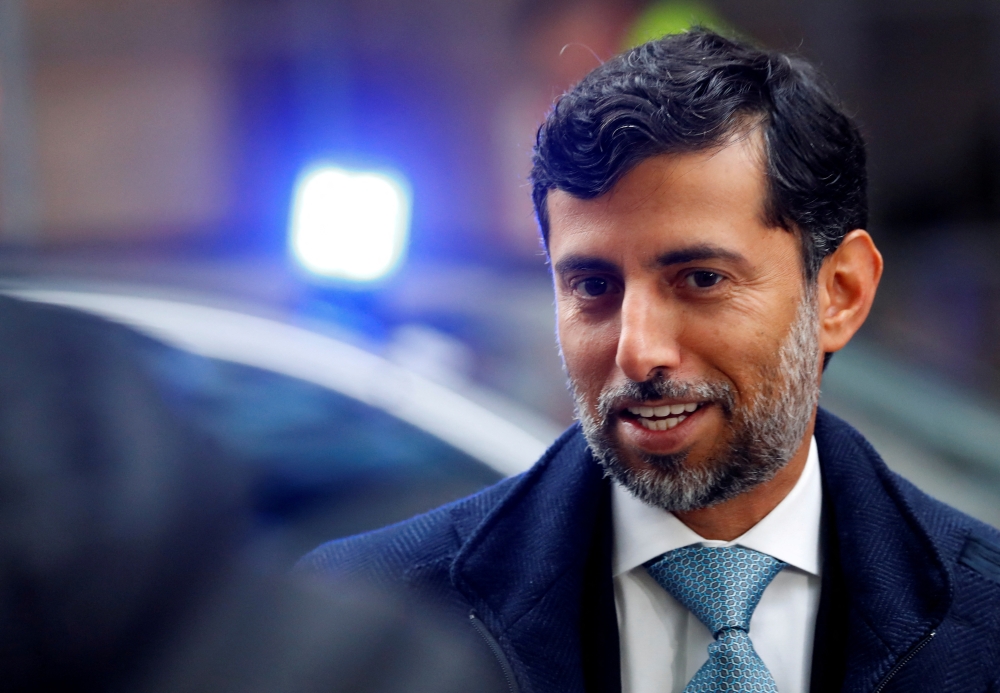
UAE Oil Minister Suhail Mohamed Al Mazrouei arrives at the Opec headquarters in Vienna on December 6, 2019. — Reuters pic
Iraq stays in
The UAE is the fourth producer to quit Opec+ in recent years, and by far the biggest. Angola quit the bloc in 2024, citing disagreements over production levels. Ecuador quit Opec in 2020 and Qatar in 2019.
Iraq, the third-largest producer in Opec+ after Saudi Arabia and Russia, has no plan to leave Opec+ as it wants stable and acceptable oil prices, two Iraqi oil officials said on Tuesday.
Opec+ will not collapse as Saudi Arabia will still want to manage the market with the help of the group, said Gary Ross, a veteran Opec watcher and CEO of Black Gold Investors.
“At the end of the day, Saudi Arabia was essentially Opec – the only country with spare capacity,” said Ross. Saudi Arabia can produce 12.5 million bpd, but has in recent years kept production under 10 million.
Opec+ membership gives countries more diplomatic and international weight – one of the reasons cited by analysts behind Iran’s decision to stay in Opec even at the peak of its fight with Gulf countries.
US President Donald Trump has accused Opec of “ripping off the rest of the world” by inflating oil prices. Trump has said the US may reconsider military support to the Gulf because of Opec oil policies.
It was, however, Trump who helped convince Opec+ to cut output in 2020 during the COVID pandemic as oil prices slumped and US producers suffered.
“The UAE withdrawal marks a significant shift for Opec... the longer-term implication is a structurally weaker Opec,” said Jorge Leon, a former Opec official who now works at Rystad Energy.
Opec+ members will be more focused on rebuilding facilities hit by the war rather than on embarking on production cuts in the near future, said Croft. Hence, the broader Opec+ breakup is not on the cards for now, she added.
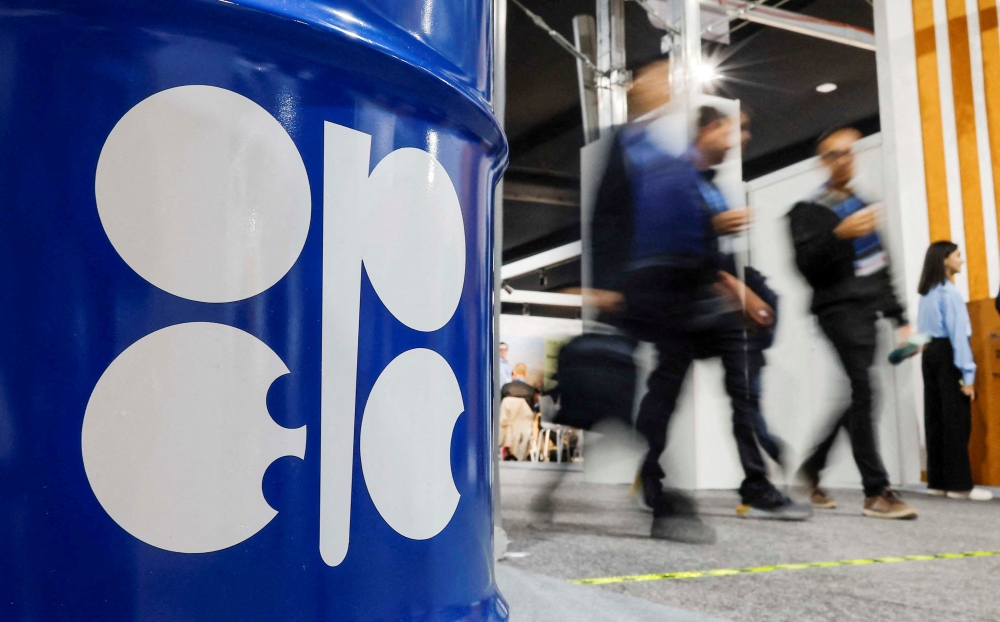
People walk past an installation depicting a barrel of oil with the Opec logo during the COP29 United Nations climate change conference in Baku on November 19, 2024. — Reuters pic
Declining power
Opec’s sway over the market has been declining for decades.
Formed in 1960, Opec once controlled over 50 per cent of global output. As rivals’ production grew, the group’s share has declined to around 30 per cent of the world’s total oil and oil liquids output of 105 million barrels per day last year.
The United States, which used to rely on imports from Opec members, has become its biggest rival over the past 15 years. The US has raised production to as much as 20 per cent of the world’s total on the back of its shale oil boom.
The US production spike prompted Opec to team up in 2016 with several non-Opec producers to form Opec+, a group led by Russia – previously one of Saudi Arabia’s top rivals in the oil industry.
The alliance gave the group control over around 50 per cent of the world’s total oil production in 2025, according to the International Energy Agency. The loss of the UAE means it will decline to around 45 per cent. — Reuters


After leaving OPEC, the UAE can now freely increase its oil production, thanks to the Fujairah Pipeline that bypasses the Strait of Hormuz.
ReplyDeleteThe Emirates had planned and developed this independent export route for years, enabling it to add up to 2 million barrels per day.
A strategic game-changer in global oil markets that could help break the grip of high prices 😎
https://x.com/saif_aldareei/status/2049218172264554649?s=20
BYD's "Zero Mileage New Car" Scam Is Exposed.....
ReplyDeleteChina’s Electric Vehicle Industry Is Imploding | BYD Caught in Massive Fraud Scheme.
In this video, I expose the shocking truth behind China’s new energy vehicle (NEV) industry collapse — and how BYD, once hailed as the "China Tesla," is now caught in a web of fake sales, financial manipulation, and systemic fraud. This is even worse than Evergrande.
(0:00) The Scam No One Saw Coming
(0:57) The “Zero-Kilometer Used Car” Mirage
(2:35) BYD’s Price Cuts & Stock Crash
(5:08) Industry-Wide Profit Collapse
(7:05) Supply Chain Suffocation & Dealer Death Spiral (8:15) BYD’s Export Dreams Are Dying
(9:02) Debt Bomb: BYD’s Financial Red Flags
(9:36) The Evergrande Blueprint Repeats
(10:21) The Real Victims: Consumers & Workers
(11:09) A Trust Crisis in “Made in China”
(12:00) Final Warning: The EV Crash Has Begun
https://x.com/Ken_LoveTW/status/2007089626281115831?s=20
wakakakaka… lies leaking out from the fart chamber & the gullible gullies take in as fragrance
DeleteBYD’s near-term borrowings soar to record as earnings slump
ReplyDelete1 hour ago
Bloomberg
Short-term borrowings jumped 72% in three months, reaching US$9.7 billion by the end of March, according to the Shenzhen-based carmaker’s financial results.
SHENZHEN: BYD Co is borrowing a lot of money to get through its prolonged earnings slump.
Short-term borrowings jumped 72% within three months to ¥66.3 billion (US$9.7 billion) by the end of March, according to the Shenzhen-based carmaker’s financial results released Tuesday.
That’s as quarterly profit tumbled 55% to its lowest level in more than three years.
The spike signals that BYD’s cash needs have become increasingly urgent as China’s years-long price war takes its toll on the country’s automakers – even its global champion.
It also suggests that old habits of dragging out payments to suppliers are catching up with the world’s largest EV maker.
BYD shares rose as much as 3.6% to HK$107.40 in early Hong Kong trading today as analysts at brokerages from Morgan Stanley to JPMorgan Chase & Co wrote BYD’s earnings may have bottomed in the first quarter.
The surge in the borrowings occurred “mainly due to the increase in group financing needs,” BYD said in its report, without explaining further.
The company didn’t immediately respond to a request for elaboration on its report, which was released after regular office hours.
BYD also saw a surge in bills payable, which doubled to ¥48.6 billion as of the end of March.
Like the short-term borrowings, those rose to all-time highs for the company, according to public data compiled by Bloomberg.
For years, BYD used an IOU-based system that allowed it to delay invoice fulfillments for months at a time.
However, after the government clamped down on the practice, the company has been forced to pay parts makers faster, leading to an increase in interest-bearing debt, people familiar with the matter have said.
Still, overall liabilities only rose 2.4% to ¥640 billion during the quarter as the company saw large drops in trade payables – unpaid invoices – and unspecified “other payables,” according to BYD’s financial statements.
Meanwhile, inventory piled up despite company efforts to clear stock, with the value of the company’s unsold products climbing 16% to ¥160.4 billion within three months, according to the results.
As for earnings, net income fell for the fourth consecutive quarter, though the ¥4.08 billion generated in the three months ended March was roughly in line with the average of five analyst estimates compiled by Bloomberg.
Revenue fell 12% from a year earlier to ¥150.2 billion, topping estimates.
Profits have continued to fall as the company faced intensifying competition from the likes of Xiaomi Corp and Geely Automobile Holdings Ltd.
That’s prompted the industry leader to slash prices to stay ahead, with discounts in March climbing to the highest level in two years, and eroding profits that BYD generates from each car.
At the root of the relentless price cuts is overcapacity. China’s car factories are capable of producing 55.5 million vehicles a year, but domestic sales reached only about 23 million in 2025, according to the China Automotive Technology and Research Center.
That puts average capacity utilisation in Chinese auto factories at just around 50%, an unsustainable figure over the long term.
Still, analysts such as Eugene Hsiao at Macquarie Capital Ltd have said that the squeeze on margins could ease in the coming quarters – a view shared by other analysts such as Joanna Chen at Bloomberg Intelligence.
There were some green shoots. Overseas sales jumped more than 50% in the first quarter as surging oil prices boosted demand for electric cars. Exports accounted for about 45% of BYD’s deliveries in the first quarter, putting it on track to reach its target of selling 1.5 million cars outside China this year”.
https://www.freemalaysiatoday.com/category/business/2026/04/29/byds-near-term-borrowings-soar-to-record-as-earnings-slump
c&p from another propagandistic c&p generated by twisting financial numerics. Typically western financial tricky play.
DeleteKeys - borrowings to finance R&D to expand market what is as common as using chopstick by the Chinese. & Chinese plannings r ALWAYS long long term, unlike those real estate developments catering for the domestic market.
Every one of KT's blog is a propagandistic C&P. Why pick on me?
Delete