India to Begin Formal Talks on Procuring Russian S-500 Space Warfare Missile Systems
South Asia , Missile and Space

Indian media outlets have confirmed that the country’s defence ministry is scheduled to begin formal discussions with Russia regarding the procurement of the S-500 long range air defence system. Talks will begin during a meeting in New Delhi between India's defence minister Rajnath Singh and his Russian counterpart Andrey Belousov December 4. The meeting will also see both sides also review delivery schedules for the S-400 long range air defence system, and further ongoing talks on the possible sale of Su-57 fifth generation fighter aircraft. Russia is scheduled to complete the deliveries of the last of ten battalions’ worth of S-400 systems by November 2026, despite growing demand from the Russian Aerospace Forces for the systems at a time when the country’s defences are under sustained pressure.
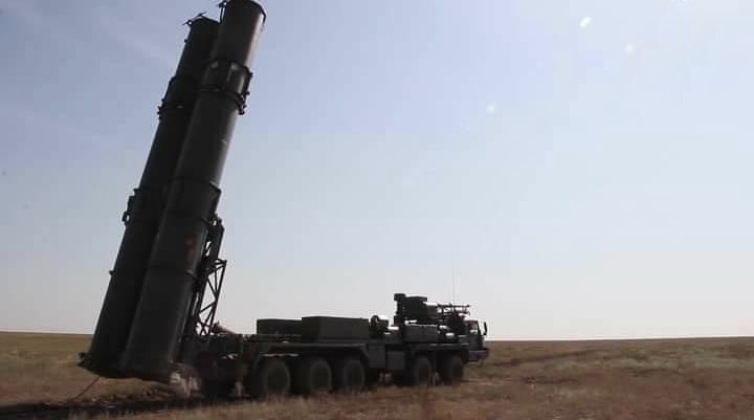
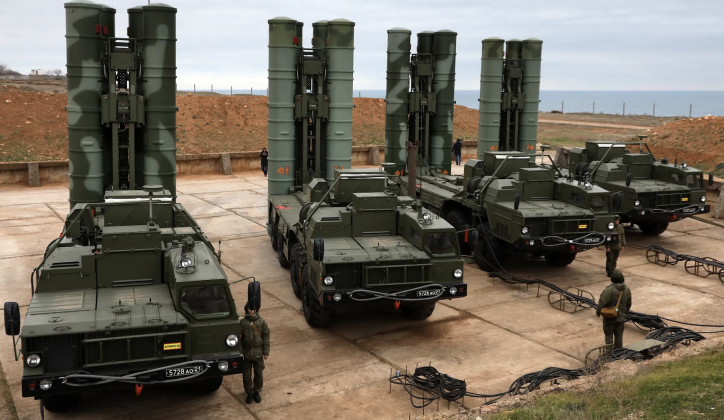
The Russian Aerospace Forces were confirmed in December 2025 to have formed their first full regiment equipped with the S-500, which was the world’s first mobile surface-to-air missile system with the ability to shoot down satellites or intercontinental range ballistic missiles. The system’s very long engagement range of up to 600 kilometres allows it to pose a serious threat to force multiplier assets such as tankers and airborne early warning and control systems that are vital to the functioning of NATO air power. The system can also employ the 40N6 long range surface-to-air missile which the Indian Air Force has already procured to equip its S-400 systems, and combat tested to shoot down a high value Pakistani support aircraft in May deep inside the country’s airspace at a range of over 300 kilometres. The missile type has also been extensively combat tested by the Russian Aerospace Forces to achieve even longer range kills in the Ukrainian theatre.
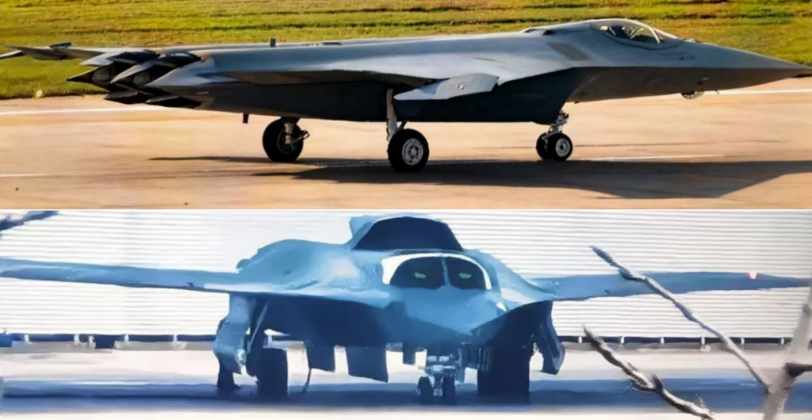
Indian interest in procuring the S-500 is likely to have been stimulated by multiple factors, one of which is China’s unveiling of the rival HQ-29 system in active service in September. The two are the only systems in the world that provide a mobile anti-ICBM and anti-satellite capability, although the United States is expected to seek to develop similar systems as part of the Golden Dome missile defence program. A further factor is the reported particularly impressive performance of the S-400 during engagements with Pakistani forces in May, contesting sharply to the underwhelming performance of India’s other high profile new air defence asset the Rafale fighter which saw between one and four shot down during the engagements. The underperformance of the Rafale, the which received little comment from Indian officials, served to further raise the perceived importance of the S-400, and is speculated to have also revived interest in procurements of more advanced Su-57 fighters.
Prime Minister Narendra Modi was among multiple officials who singled out the performance of the S-400 for praise when commenting on hostilities with Pakistan, observing: “Platforms like the S-400 have given unprecedented strength to the country… A strong security shield has become the identity of India.” Indian Air Force Air Chief Marshal Amar Preet Singh in early August observed: “The S-400 system which we had recently bought has been a game changer… The kill range of that system kept their aircraft away from the maximum distance at which they could employ their long-range air-to-ground weapons, like those long-range glide bombs that they have.” The S-500’s capabilities are highly complementary to those of the S-400, and could provide a much needed improvement to air defence capabilities as neighbouring China is poised to begin fielding the world’s first sixth generation fighters from the early 2030s. Even with the Su-57 potentially entering service, the Indian fighter fleet is expected to remain well below parity in its sophistication relative to that of China, which makes the fielding of more advanced air defence systems particularly important to provide an asymmetric defence.


Yindia will buy cheap system, like cheap oil. Isaac's Iron Beam is much cheaper and is ready now. S500 is vaporware.
ReplyDeleteWakakakaka… gullible gullie zionist iron bean fart
DeleteEach S500 missile costs $1 million.
ReplyDeleteEach laser beam cost as per Tenaga tariff rate RM0.55 per kWh.
Here we go. It's been announced that by December 30 of this year, Israel will officially deploy the Iron Beam laser air defense system in the field, which can destroy rockets, missiles, and drones at a very low cost.
A huge step forward in Israel's military capabilities.
https://x.com/VividProwess/status/1995493587228791136?s=20
wait for that mfering field test to debunk yr zionist fart.
DeleteOoop… zionist state has foreclosured ALL out flowing military field infos!
Each S400 system has 72 missiles, 144 in total and 48 spare. Total = 192.
ReplyDeleteIron Beam can shoot laser beams as long as Tenaga got supply and you pay the bill.
Wakakakaka… see yr mfering fart of supplying electricity for the zionist iron bean!
DeleteEither, everytime when that bean is deployed, the whole zionist supply grid collapses. Or, nothing happened. Not even the closest mosquito flying within that bean's target range.
The Iron Beam laser system requires a 100-kilowatt power output. This high-energy laser weapon system is designed to neutralize threats like rockets, mortars, and drones. It is a part of a family of Rafael systems, with the Lite Beam being a lower-power 10-kilowatt system for tactical use.
ReplyDeleteIron Beam: This system is a 100kW class high energy laser weapon system.
Lite Beam: A smaller version of the system, the Lite Beam has a 10kW power output and is designed for tactical applications against threats like drones.
Wakakakaka… know-nothing fart!
DeleteDo u know how much is 100KW power output? What kind of the existing mobile generator can produce that beam output?
Zionist gullible gullie of the nth type.
Even Old Tesla DC supercharger V2 have outputs of 120kW. Latest ones V4 deliver 500kW.
ReplyDeletesupercharger produces instant pulse of power surge. It can't sustain duration of even 1min of power release.
DeleteTesla uses V2 to generate instant power surge to jump start the electric motors. V4 is a experimental supercharger uses for EV battery charging. It's dimensionally huge & very heavy. & thus not movable friendly.
Smell yr know-nothing c&p fart lah
Even cheap EVs like BYD have ultra-fast chargers going up to 180kW.
Deletehttps://bydenergia.com/en/products/electric-vehicle-chargers/
wakakaka… mfer, whats the function of a EV charger vis-a-vis yr zionist's iron brand fart?
DeleteCharger replentiful the depleting battery.capacity. A 100kW charger doesn't mean it can produces 100kW instant electricity for a concentrated light beam!
S-400 Kena Gasak by Ukraine and Israel in real-war scenarios.
ReplyDeleteNow Yindia wants to buy S-500 ..more of the same shit from Russkis...
Wakakaka..luckily I'm not an Indian taxpayer.
Mfer, u DON'T even know whats the function of S400!
Delete🇨🇳 Chinese Naval J-15 jet crashes during normal training session. It nose dive, tail up and never recovers.
ReplyDeleteNo wonder CCP defense output is at -10% YoY.
This will not go viral as CCP and white Wumaos will not allow it.
https://x.com/arunpudur/status/1996130065621647440?s=46
Arun Pudur
Delete@arunpudur
Dharmā । Kuṭumba । Rāṣṭra । Ṭechnōlōgy l Niveśā l Rājanītī l
wAKAKAKA
A laser beam101 to entice that zionist gullible gullie.
ReplyDeleteIsrael's Iron Beam is a real-world example of a high-energy laser system for air defense.
A key limitation for high-power lasers in the atmosphere is energy dissipation and dispersion, which systems like Iron Beam try to mitigate by using multiple small beams that are concentrated on the target.
Energy delivery: By deliver a large amount of energy to a specific point on the target, causing damage through heating, structural damage, or disruption of electronics.
Atmospheric effects: For lasers, atmospheric conditions like air density can disperse the beam, affecting its effectiveness.
Technological limitations: Practical implementation of high-energy beam weapons is a significant technological challenge, requiring powerful and compact energy sources, and precise targeting systems.