

MOHE officer nabbed in 'gay' sauna raid told to resign, but questions remain
Yiswaree Palansamy
Published: Dec 2, 2025 11:58 AM
Updated: 3:28 PM
Summary
- A civil servant detained during a raid on a wellness centre accused of “immoral activities” has been instructed to resign from the Deputy Higher Education Minister's office.
- The ministry’s integrity unit has also initiated an internal investigation to determine any wrongdoing in accordance with service regulations.
- However, under Article 135(2) of the Federal Constitution, no public servant may be dismissed or reduced in rank without being given a “reasonable opportunity of being heard”.
An administrative and diplomatic officer who was detained by the police during a raid on a wellness centre accused of organising immoral activities involving men has been instructed to resign, Deputy Higher Education Minister Mustapha Sakmud said.
In a statement issued late last night, Mustapha added that the ministry’s integrity unit had also initiated an internal investigation “towards disciplinary action” in accordance with service regulations.
"The officer concerned has been instructed to resign with immediate effect from the deputy minister’s office.
"The Higher Education Ministry emphasises that no one is exempt from the legal and governance processes, and any further action will be decided based on the findings of the integrity unit’s investigation and in cooperation with the relevant authorities.
"As deputy minister, I respect the ongoing investigative process and urge all parties to refrain from making any speculation that may compromise the integrity of the investigation," Mustapha said.

Deputy Higher Education Minister Mustapha Sakmud
While Mustapha’s statement did not detail the nature of the offence, Malaysiakini reached out to him and received confirmation that it was indeed related to the raid on the wellness centre.
A check on Mustapha’s Facebook page, where the statement was posted, showed that he had also restricted who could comment on the post.
Civil servants in Malaysia are governed by the Public Officers (Conduct and Discipline) Regulations 1993 (POCD 1993), which set out rules on misconduct, discipline, dismissal, and demotion. They cannot be dismissed arbitrarily.
In addition, the Malaysian Public Service Commission (PSC) has authority over appointments and dismissals for many civil-service posts under the Federal Constitution, notably Article 132, with Article 135 protecting against improper dismissal.
Under Article 135(2) of the Constitution, no public servant may be dismissed or reduced in rank without being given a “reasonable opportunity of being heard”.
Steps before sacking civil servants
When a civil servant in Malaysia is accused of misconduct, whether corruption, a criminal offence, or a serious breach of discipline, the process begins with an internal investigation.
Evidence is collected meticulously, from documents and statements to interviews with witnesses, and the investigating body is required to act impartially throughout.
If the preliminary findings point to possible wrongdoing, the next step is the issuance of a formal show-cause letter. This notice sets out the allegations clearly, including the time, place, and nature of the alleged misconduct, allowing the officer to understand precisely what they are being accused of.
While Mustapha’s statement did not detail the nature of the offence, Malaysiakini reached out to him and received confirmation that it was indeed related to the raid on the wellness centre.
A check on Mustapha’s Facebook page, where the statement was posted, showed that he had also restricted who could comment on the post.
Civil servants in Malaysia are governed by the Public Officers (Conduct and Discipline) Regulations 1993 (POCD 1993), which set out rules on misconduct, discipline, dismissal, and demotion. They cannot be dismissed arbitrarily.
In addition, the Malaysian Public Service Commission (PSC) has authority over appointments and dismissals for many civil-service posts under the Federal Constitution, notably Article 132, with Article 135 protecting against improper dismissal.
Under Article 135(2) of the Constitution, no public servant may be dismissed or reduced in rank without being given a “reasonable opportunity of being heard”.
Steps before sacking civil servants
When a civil servant in Malaysia is accused of misconduct, whether corruption, a criminal offence, or a serious breach of discipline, the process begins with an internal investigation.
Evidence is collected meticulously, from documents and statements to interviews with witnesses, and the investigating body is required to act impartially throughout.
If the preliminary findings point to possible wrongdoing, the next step is the issuance of a formal show-cause letter. This notice sets out the allegations clearly, including the time, place, and nature of the alleged misconduct, allowing the officer to understand precisely what they are being accused of.

They are then given a reasonable opportunity to respond, usually through a written representation supported by evidence, explanations, mitigation, or even witness statements.
For allegations that require deeper scrutiny, an inquiry committee or a disciplinary board, comprising senior officers who are neither biased nor subordinate to the accused, may be convened.
This panel reviews all available evidence alongside the officer’s defence before recommending an appropriate course of action. Punishments can range from a warning or minor disciplinary penalties to demotion or dismissal.
If dismissal or reduction in rank is decided, the decision is formalised and officially served to the officer, and it must meet constitutional requirements of fairness and procedural integrity. The reasons for the decision must also be clearly stated; failure to justify the rejection of the officer’s defence could open the decision to judicial review.
Ultimately, any officer who believes due process has been violated - whether through lack of opportunity to be heard, procedural irregularities or potential bias - has the right to challenge the dismissal in court.
For context, administrative and diplomatic officers hold permanent, substantive posts in the civil service. They are not “at-will” employees of a single ministry.
Their employment is under the civil service framework, not under a particular minister. They, therefore, cannot simply be asked or forced to resign from one ministry only to be transferred to another.
So did the officer resign?
While his initial statement said that the officer had been “instructed to resign”, Mustapha's later clarification indicates that the officer was not dismissed from the civil service but merely removed from his office and transferred to another unit.
Mustapha also confirmed that the officer’s position and substantive grade remain unchanged pending an internal investigation, raising questions about whether the officer had truly been let go or simply reassigned.
"I instructed the officer concerned to resign from and vacate his position in the deputy minister’s office to allow for a new appointment.
"The ministry’s Human Resource Management division immediately transferred him to another unit and directed the integrity unit to conduct an investigation to determine any wrongdoing and the necessary action to be taken in accordance with Article 135(2)," Mustapha told Malaysiakini.
In a statement yesterday, the Education Ministry said it has also taken immediate action against several of its officers who were reportedly detained during the raid.
However, it said that an internal investigation is ongoing and the implicated officers have been removed from their respective organisations.
"The Education Ministry does not compromise on immoral behaviour. An internal investigation is ongoing. Immediate action has been taken to ensure that the officers involved are no longer present in any educational institution under the ministry until the investigation is completed.
"All heads of departments are reminded to enhance monitoring and ensure that immoral activities are eradicated at every level," the statement read.
Majlis Amanah Rakyat (Mara) chairperson, Asyraf Wajdi Dusuki, had also issued a warning to those under the government-linked company (GLC) found to be involved in "deviant activities".
"Mara management is aware of my firm stance: if any officer or staff of Mara, or at any Mara educational institution, is involved in deviant activities, strict action, up to and including dismissal, must be taken," he said, after reports of the wellness centre raid emerged.
Yesterday, the Federal Territories Islamic Religious Department (Jawi) recorded statements from a group of men who were detained at the said health club.
Minister in the Prime Minister's Department (Religious Affairs) Na'im Mokhtar said the suspects were summoned to the Jawi Enforcement Division office to record their statements to assist in the investigation, Bernama reported.
Several civil servants involved
Bernama reported that 17 civil servants were identified to be among the over 200 men who were detained in the Nov 28 raid, which NGOs have criticised as discriminatory.
Several clips of the men at the centre, clad only in towels, also went viral, drawing criticism of the police over how the raid at a private wellness centre was publicised.
PSM accused the authorities of blatant power abuse in detaining the men past the 24 hours allowed without obtaining a remand order from the magistrate.
Its youth wing leader, Aiman See, also described the media that participated in the raid as unethical, claiming that the suspects’ identities were leaked due to extensive media coverage.
Aiman claimed that they were informed of brutality during the raid and that the suspects’ basic and legal rights were ignored. However, Dang Wangi police chief Sazalee Adam denied this.
According to news reports, the raid at the Jalan Raja Laut premises followed public tip-offs and a two-week surveillance. Those arrested were between 19 and 60 years old.
Berita Harian quoted Kuala Lumpur deputy police chief Azani Omar as saying that intelligence gathered showed there were “immoral activities” at the premises involving gay men.
Those arrested included 80 Muslims and foreigners from South Korea, Indonesia, Germany, and China, he said.
Kuala Lumpur police chief Fadil Marsus confirmed that 171 suspects have been released as the authorities failed to obtain a remand order, the New Straits Times reported.
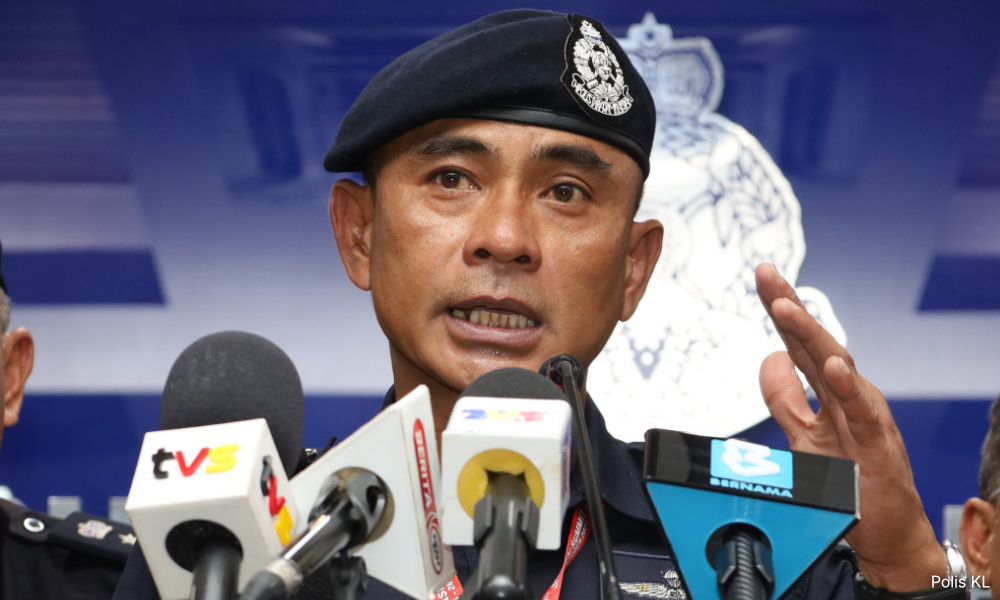
Kuala Lumpur police chief Fadil Marsus
He said their remand application was dismissed as it was submitted late, which he claimed was due to the large number of detainees, and that the authorities could not proceed with their investigations under Sections 377 and 372 of the Penal Code due to a lack of evidence.
He added that the authorities could not charge any of the detainees as none of them claimed to be victims of exploitation, prostitution, or unnatural sex.
He said their remand application was dismissed as it was submitted late, which he claimed was due to the large number of detainees, and that the authorities could not proceed with their investigations under Sections 377 and 372 of the Penal Code due to a lack of evidence.
He added that the authorities could not charge any of the detainees as none of them claimed to be victims of exploitation, prostitution, or unnatural sex.
***
Ada evidence, charge. Ta'ada, jangan kacau, podah.
Hypocrites, what about a former (male) minister who was video-ed being bonk-ed by another man?
Are these double standard cases the manifestation of Islamic legal fairness, or favoured feudalism?


If he is well advised, he will not resign. Government employees under JPA cannot be "instructed to resign"
ReplyDeleteThey will have to go through the formal process of firing him, and it is not easy.
For a criminal charge, there has to be a complainant and an alleged aggrieved party.
ReplyDeleteIn this case , what was the grievance ?
For Muslim detainees, there may be some "moral offence" under Syariah law that could be charged...Shariah lawyers could advice.
I think he was there to conduct PhD supervised research into LGBT++
ReplyDelete