Dennis Ignatius
~ Provoking discussion, dissent & debate on politics, diplomacy, human rights & civil society.

Hannah Yeoh And The Politics Of Prejudice
22MondayDec 2025
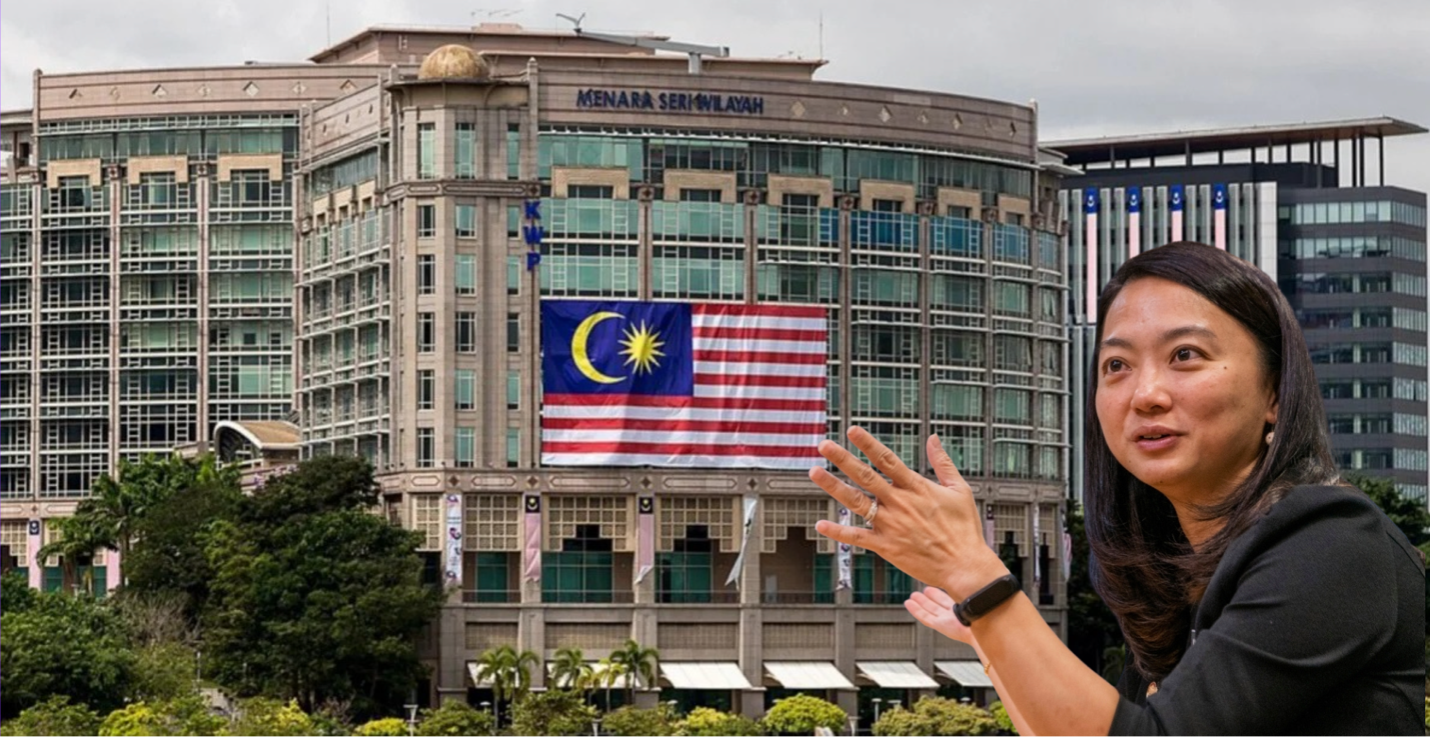
[1] Before the ink on Hannah Yeoh’s appointment letter had even dried, the predictable backlash began. The usual suspects sounded the alarm, not about competence or policy, but about race.
[2] PAS secretary-general Takiyuddin Hassan warned darkly that Yeoh’s appointment was a “deliberate ploy” to entrench DAP’s dominance over Kuala Lumpur and other urban centres, allowing a single party to shape urban policy without adequate checks and balances.[1] Umno secretary-general Asyraf Wajdi Dusuki echoed the anxiety, raising concerns about the fate of Bumiputera urbanites and reviving fears of local council elections in Kuala Lumpur — a long-standing DAP policy position.[2] A former minister went further, lamenting that “too many DAP appointees” now control the big cities and towns, supposedly holding a “chokehold” over the country’s economic lifelines.
[3] It doesn’t take much to see that these objections are rooted in bigotry; upon the racist notion that non-Malay ministers cannot be trusted with power. Every time a non-Malay is appointed to a senior post, we hear the same refrain: the Malay agenda will be undermined, Malays will be marginalised, the nation placed at risk. We have seen this script before — most notably when a non-Malay was appointed attorney general.
[4] The fixation on local council elections is particularly revealing. Right-wing Malay politicians routinely claim that the DAP’s support for such elections is a strategy to secure Chinese political dominance in urban areas, warning that Malays would be sidelined in their own cities. And this despite the fact that Malays are in the majority in most cities.
[5] I am reminded of a conversation I had years ago with Dr Mahathir Mohamad. He complained bitterly that Malays were being pushed out of their traditional enclaves in Kuala Lumpur by the Chinese, and that parks, sports facilities and other amenities were concentrated in predominantly Chinese areas while Malay neighbourhoods were neglected. Very conveniently he ignored the fact that the Federal Territories minister at the time, the mayor of Kuala Lumpur and the overwhelming bulk of the city’s bureaucracy were all Malays. If there was uneven development, shouldn’t he have taken city officials to task rather than blaming anyone else?
[6] In reality, local council elections enjoy broad public support across ethnic lines. City dwellers all over the country are weary of all the corruption, abuse of power, mismanagement and overdevelopment that are steadily eroding the quality of urban life — issues our politicians have consistently refused to face up to. Citizens want transparency and accountability, and they see elected local councils as one way to achieve it. Most do not care about the ethnicity of a mayor so long as he or she governs competently, honestly and in the public interest.
[7] In any case, it is profoundly dishonest to suggest that a DAP minister could unilaterally impose such changes. Asyraf, for one, knows perfectly well that no minister can push through legislation on their own. Major policy decisions require collective cabinet approval and, ultimately, parliamentary sanction. To imply otherwise is to deliberately mislead the public.
[8] The most bewildering response to Yeoh’s appointment, however, came from none other than Minister of Information and government spokesman Fahmi Fadzil who felt compelled to clarify that Yeoh “does not head a separate ministry,” that her “direct superior is the Prime Minister,” and that all decisions would be referred to him.[3] In other words, she would be kept on a tight leash.
[9] Why the need to publicly diminish her standing, as though she were somehow less trustworthy than her cabinet colleagues? Does the appointment of an ethnic Chinese minister now require ritual reassurance and symbolic emasculation? Whatever the intent, the effect is unmistakable: it validates racial anxieties and reassures racist politicians that a non-Malay minister will be closely monitored and constrained.
[10] To his credit, Prime Minister Anwar Ibrahim – who has been too silent on such issues for too long – pushed back immediately and firmly against the racist undertones of the criticism. “To reject a person because of her colour or race… that is atrocious in this day and age,” he said, adding that he could not comprehend the level of intolerance on display.[4] Deputy Prime Minister Zahid Hamidi also deserves recognition for defending Yeoh, despite grumblings within his own party.[5]
[11] Such interventions matter. When racist narratives surface, senior leaders have a responsibility to confront them directly. Silence, equivocation or bureaucratic hedging only legitimise prejudice. Clear rebuttals deprive racism of oxygen and reassure citizens that diversity is not merely a slogan, but a principle that is honoured.
[Dennis Ignatius | Kuala Lumpur | 22 December 2025]


No comments:
Post a Comment