Saturday, July 30, 2022

Ending Penang’s water woes, by sea and by pee


Ending Penang’s water woes, by sea and by pee


This week the environment and water minister told Penang to dig underground for its own water supply, and not rely on buying water from Kedah.

That sounds fair enough on the face of it. Being self-sufficient is important for survival, especially in today’s world.

However Penang, even if it doesn’t have much natural resources, is already one of the most self-sufficient and resilient states in the country.


I’m surprised the minister didn’t tell Penang to boil the sea water, as we’re surrounded by it and you can get fresh water that way too. Ask the Emiratis in the Gulf – they have massive plants that do this, day in and day out.

Or we can do what Singapore does – the pee from its citizens, and turn it into potable water, hence creating a new circle of life – eat, drink, pee and be merry, and repeat.

The minister however didn’t mention that environment-wise, drawing water from the ground aquifers is not a good idea. It leads to depletion of such water supply, which cannot be replenished fast enough by rainfall, even in today’s increasingly wet weather.

Many parts of the world, especially the US, are suffering from having drawn too much water from their aquifers, leading to problems ranging from increasing salinity to ground subsidence.

Drawing too much water, even for agriculture, can be detrimental to the environment in other ways too. Witness the case of the Aral Sea in Central Asia which has shrunk to less than 10% of its original size when river water was diverted away from flowing into it.


Rusted and abandoned ships in a former port city in Uzbekistan where the Aral Sea has dried up. (United Nations pic)


You may think less sea means more land. But the land exposed is salty and contaminated by centuries of pollution deposited on the sea bed which has turned into toxic dust blown everywhere by wind.

And of course, there’s no water any more for agriculture or other purposes.

These are just the problems we know now. The water cycle is very complex, with many interactions between various biological, chemical and geological forces not yet known, but all of which are guaranteed to be bad for us humans in the long term.

I hope somebody from the Penang water authority will remind the minister that Penang has one of the best, if not the best, water management systems in the country, in terms of quality, distribution and prevention of leakages.

If Penangites do use up more water than some, it’s also because we don’t have convenient rivers besides our houses to serve as free water supply (or as toilets and garbage dumps) as in some other states.

Doing it Singapore-style

I’m sure if we need to, we can do what Singapore does – buy raw water from surrounding states, treat it and sell it back at a special price.

Or as mentioned earlier, we can also do the other thing Singapore does – turn raw pee into pure drinking water. We can sell this to surrounding states too, though at a much higher price, as Penang is a highly developed state and our pee is of a higher quality.

We can even trademark it as “Peenang Juice”. Remember, you heard it here first.

The tone of the minister’s comments, even if he was just reading from a prepared statement, is one of condescension that seems to say “we have water, you don’t have water, nanananana…”

I’m sure many people in other states look at Penang’s perennial water challenge with undisguised glee, given the plentiful water supply in their states.

That attitude is typical of today’s entitled people, politicians included, being proud of what they inherited through blind luck rather than earned through hard work.

But Penang does need to seriously look at other options for water, as it only has small rivers which are insufficient to support its needs.

I used to work in a large complex of medical device manufacturing plants in Penang, each of which was the largest of its type in the world. We used up so much water we had our own water treatment plant that’s larger than those in most towns.

Clearly this was not sustainable in the long term, and the factories have closed and moved to Thailand. They certainly wouldn’t have survived in Penang without water from neighbouring states, for which we should be thankful.

But the factories also provided employment to 4,000 people directly, and indirectly to hundreds or even thousands more. Millions, nay billions, entered the local economies of Penang and the surrounding states, including by adding value to local commodities which were exported as premium products.

I think many in Kedah take their plentiful water supply for granted.

Turning from rice to mud

Kedah has always been an agriculture state, growing rice and other crops as their main source of income, even while their local politicians grew giddy with excitement about billions of ringgit in unspecified “minerals” to be exploited in their state.

I don’t want to spoil their fun, as I’m not privy to whatever information they have about these “minerals”, but I’d like to remind them that mud contains mineral too, though they’d have to sell millions of hectares of it, likely to Penang, to earn the billions they’re dreaming about.

Here’s some other bad news – planting rice is highly damaging to the environment given the plant’s voracious need for fresh water. At some point we’d have to come up with a better way to grow rice, possibly through hydroponic – or even hydropeenic – cultivation!

We may have to change our diet and do with less rice and more of other environmentally friendly crops. But bread and roti canai and other sources of carbohydrates, perhaps quinoa for those who live in the “kayangan”, are not too bad, given that our young ones already seem to survive on MacDonald’s anyway.

The irony is that while Kedah is cutting down its hills, indirectly causing floods which have killed its own citizens and made rivers murky and polluted with silt and pesticides and fertiliser, the silt from the same hills is being deposited into the sea off Penang, and will end up creating even more land for Penang!

So, Penang is getting land (very valuable topsoil that’s been washed of pollutants) from Kedah for nothing! Given we don’t do much agriculture any more, and water is scarce because Kedah is reluctant to sell us more, we can build factories or condominiums and sell them to rich Kedah durian farmers.

In the meantime, while we negotiate with Kedah for water purchases, we should also negotiate for commissions on the billions of ringgit of economic wealth pushed to places like Kulim and Sungai Petani because of their proximity to Penang.

Or else let Kedah dig deep underground for their own wealth.


Former stateless child Rohana gets offer to study in university


Former stateless child Rohana gets offer to study in university


Rohana Abdullah will be separated for the first time from her Chinese ex-teacher, Chee Hoi Lan, who has been caring for her since young. (Metro pic)


KUALA LUMPUR: Rohana Abdullah, whose father is said to be a Malaysian and who was abandoned by her Indonesian mother and brought up by a Chinese woman, is to study computer science.

She is able to achieve her dreams of pursuing a higher education as Universiti Teknikal Malaysia Melaka (UTeM) offered her a place to do a diploma in computer science today.

Rohana, who has accepted the offer, obtained her citizenship status and an identity card last April after her life story went viral on social media and caught the attention of Prime Minister Ismail Sabri Yaakob.

Rohana, who has been cared for by her Chinese ex-teacher, Chee Hoi Lan, said she will work hard to complete her studies so that she can pay back to the local community.

“I don’t know how to say ‘thank you’… I am very grateful for the gift God has given me because this is something I have been dreaming about for a long time.

“Thank you also to UTeM. Although I am more interested in the field of medicine, computer science is my second choice and ‘laoshi’ (Chee) is also supportive of it.

“So I will do my best to repay her,” said the former student of Sekolah Menengah Kebangsaan Dato’ Ibrahim Yaakob, Kampung Batu here.

Reporters met Rohana after she received her study offer letter from UTeM vice-chancellor Massila Kamalrudin at Chee’s house at Batu 5, Jalan Ipoh, here today.

Rohana said she would leave with Chee to Melaka tomorrow as the UTeM registration for admission to the course is on Monday.

She said she still had lots of preparations to make as she only learnt of the offer last Saturday before confirmation today.

“There are several things I need to buy and at the same time need to find a housekeeper to take care of laoshi (Chee) when I am not around.

“Lately, she cries whenever she thinks of our separation. Therefore, it is better to find someone to be with her at home while waiting for my return during the weekends,” she said.

Meanwhile, Chee said this will be the first time she will be separated from Rohana and hopes the girl will be able to look after herself well during the course.

“I hope she (Rohana) will not forget me, and whenever she has free time she will come back to see me.

“When she finishes studying, I hope she can become an internet (information technology) expert,” she said.

Meanwhile, Massila said Rohana is among three individuals chosen to participate in the pilot project of Program Anak Emas UTeM that has just begun.

Massila said the programme provides opportunities to outstanding students from less fortunate families to continue their studies at UTeM, with the cost fully covered by Yayasan Tun Chancellor.

“Rohana is the first student in this programme. She meets the desired characteristics of being from the needy group, such as the B40 group.

“She has excellent Sijil Pelajaran Malaysia (SPM) exam results,” she said.

Rohana’s story came to light when it went viral. She was raised by Chee since she was two months old after being abandoned by her biological mother who returned to Indonesia.

As there were no identification documents or an identity card, Rohana had a difficult life as she was unable to continue her studies at university.

Perhaps Zaid knows some things we don’t


Perhaps Zaid knows some things we don’t


From Terence Netto


No career in Malaysian politics has been stranger than Zaid Ibrahim’s.

Politically, the man has been around the block. Keeping track of the changes to his stances and party affiliations over the years has been a dizzying and unedifying business.

Zaid has been an Umno MP, a Cabinet minister, a PKR candidate for parliament, a sometime ally of Dr Mahathir Mohamad in his campaign to unseat Najib Razak, and a DAP member.

About the only party he has not joined is PAS; a liberal Malay/Muslim like Zaid would find PAS too medieval for his tastes.

Ah, yes, Zaid has also stayed clear of Parti Sosialis Malaysia, but he has socialist proclivities.

A foundation Zaid set up in his hometown of Kota Bahru in his wealthier days as a lawyer has provided aid to people suffering from a host of afflictions. This part of him Zaid does not wear on his sleeve.

Because Zaid’s politics defy easy categorisation, and because the shifts in his stances have been startling, people have wondered about his convictions.

But, somehow, he has not been tagged with the pejoratives “maverick” and “opportunist,” which is a surprise given his game of political hopscotch that has marked his career over the years.

Sure, the philosopher Ralph Waldo Emerson has cautioned us that “A foolish consistency is the hobgoblin of little minds”.

But Zaid’s allegiances have been so consistently inconsistent, it’s not easy to believe he has changed his stances because of new awareness of hitherto hidden facts.

True, in matters of grave public import, Zaid has not been afraid to be ahead of the zeitgeist.

In March 2009, he urged the Yang di-Pertuan Agong not to appoint Najib as prime minister because of the suspicion that swirled around him in connection with the murder of the Mongolian Altantuya Shaarribuu.

Though Mahathir never liked Zaid, the latter was swift to enlist with the Mahathir bandwagon launched in 2015 to unseat Najib as prime minister because of Najib’s alleged involvement in the 1MDB scandal.

There, Zaid was being true to his forerunning self, consistent in wanting to be in the front of the pack and not just content in bringing up the rear.

With all this as prelude, imagine what the public reaction was when it was announced last week that Zaid’s legal firm will lead the defence for Najib in the final round of the former PM’s appeal against his guilty verdict in the RM42 million SRC scandal.

The least kind thing that was being said about Zaid’s latest disposition was that he was being his usual inconsistent self; the most charitable was that Zaid knows something the rest of us don’t.

Precisely because most politicians in Malaysia walk around with labels around their necks, a politico of no category and inconsistent affiliation like Zaid is intriguing.

His free-floating self can paddle around the dark corners of Malaysian politics where reality slides around idealism and government and politicians sustain the pretence that all’s well that seems well.

Perhaps Zaid has small taste for charades.


Terence Netto is a senior journalist and an FMT reader.

*********

kt comments:

Netto's last sentence reminds me of a couple of my previous old posts, reproduced here for your convenient perusal:


Only 40% of Malay youths ready to vote in GE15, according to survey


Only 40% of Malay youths ready to vote in GE15, according to survey


The respondents were almost equally split on whether they felt the country was headed in the right direction or otherwise.


PETALING JAYA: Only 40% of Malay Muslim youths are keen to cast their ballots in the upcoming general election (GE15), according to a survey.

A recent survey conducted by polling firm Merdeka Center found that 40% of Muslims, aged between 17 and 25, said they would “very likely” vote if GE15 were to be held now.


It did not state the reasons why they would stay away from voting but a street survey carried out by the Singapore Straits Times, based on the Merdeka Center findings, found that many were disillusioned by the politicking taking place in the country.

One of them said things appeared not to have really changed after elections were held, adding that even if they did, they did not last long.

She said witnessing the “rightly elected government being toppled” and the formation of a “backdoor government” did not help, referring to the three changes of administration since the last general election in 2018.

Another person interviewed, a college student, said the country is being run now by someone whose party did not win in GE14.

“So it made me think, would voting really make a difference? I’d only be more inclined to vote if the candidates have more integrity than the bunch we see now in Parliament,” she added.

Meanwhile, 29% said “somewhat likely”, 11% “maybe” while the remainder “somewhat unlikely” (8%) and “very unlikely” (11%) when asked about voting in GE15.


The survey also found that over half of the respondents (51%) said “leadership” was the most important factor in determining their vote, while only 5% cited “support for the party” as their main reason for voting.

Respondents were almost equally split on whether they felt the country was headed in the right direction or otherwise.

Those who voted “wrong direction” (52%) cited reasons such as politics and economic concerns, while those who voted “right direction” (45%) seemed fairly content with the economic situation and administration.

When asked to state the level of trust in the federal government, 69% answered in the affirmative.

The survey involved 1,216 respondents in all parliamentary constituencies across the 14 states.

The selection of the respondents was also proportional to the population in each parliamentary constituency.

Overwhelming response for 50% discount on police traffic summonses - - - [which traffic offender would ever pay promptly or on time?]


Overwhelming response for 50% discount on police traffic summonses


A section of the crowd waiting to settle their outstanding police traffic summonses at Dataran Merdeka today. (Bernama pic)


KUALA LUMPUR: The one-day 50% discount on police traffic summonses has received an overwhelming response from the public.

It was offered at the Road March 2022 programme, in conjunction with the 215th Police Day celebration at Dataran Merdeka here.


People started lining up as early as 7am, despite the fact that counters only opened at 9am.

Abu Kassim Karim, in his 40s, said that he chose to pay his summons at Dataran Merdeka despite having to join the long queue, as he could save money doing so.

“I joined the queue as early as 7am. In view of the current economic situation, it’s worth the effort,” he said.

A student, Asyraf Mustafa, 18, said the discount given would ease the public’s burden and he was grateful for the reduction.

“Giving this discount has actually given space to road users to settle their summonses which may have been overdue for a long time.”

Police had announced on Facebook and Twitter that a 50% discount would be offered for selected traffic offences during the celebration today.


However, certain offences were not eligible for the discount. These included those involved in accidents, summonses with arrest warrants issued, overtaking along double lines, beating the red light, overtaking dangerously and using the emergency lane.

Offences related to heavy vehicles and vehicle exhaust modifications were also not eligible for the discount.


Kelantan aspires to be hub for Japan, China air traffic


Kelantan aspires to be hub for Japan, China air traffic


A state executive councillor said the prime minister had already agreed to upgrade the Pengkalan Chepa airport to international status and expand its capacity.


PETALING JAYA: Kelantan has revived its aspirations to have an international airport, given the growth and revenue prospects arising from the state’s close proximity to cities in Japan, China and Indochina by air.

Deputy menteri besar Amar Nik Abdullah said in the past, low-cost carrier AirAsia wanted to build its regional hub in the state, with a 200ha piece of land in Machang set aside for this plan.


However, he said the plan was thwarted due to “politics and blocks by certain parties” which led it to be scrapped.

Amar said with a favourable political scenario now, he hoped the idea can be seriously considered.

“We are close in terms of distance to Indochina, Japan and China. Even planes from Kuala Lumpur have to pass through Kelantan airspace first,” he was quoted as saying by Harakahdaily.

Countries in the Indochina region are Cambodia, Laos, Myanmar, Thailand and Vietnam.

Meanwhile, state executive councillor Hanifa Ahmad said the prime minister had already agreed to upgrade the Pengkalan Chepa airport to international status and expand its capacity.

He said after the expansion, the airport is expected to cater to four million passengers per annum, compared to the current 1.6 million.

“We stand in good stead to serve the Southeast Asian region. After Kuala Lumpur and Penang, Kelantan is the third busiest domestic route.

“Most domestic flights are filled with Kelantanese. I don’t know why, but perhaps we are rich?”


Another Lebai Rape Case - It Is Becoming A Pandemic

OutSyed The Box

Saturday, July 30, 2022


Another Lebai Rape Case - It Is Becoming A Pandemic


The following is taken from Permadu Malaysia :

http://permadumalaysia.blogspot.com/2022/07/agamawan-bergelar-ustaz-direman-5-hari.html


  • Profesion pendakwah semakin tercalar walau kes ini belum terbukti bersalah
  • Jangan nanti masyarakat hilang hormat kepada agamawan
  • Polis reman 5 hari lagi ustaz kes rogol remaja 14 tahun, lapor Kosmo!
  • Perintah tahanan reman oleh Mahkamah Majistret Ipoh
  • Sek 376 Kanun Keseksaan, Sek 14(a) Kesalahan Seksual Kanak-Kanak 2017
  • Polis percaya siasatan dapat dilengkapkan
  • laporan polis diterima dari mangsa rogol di Kuala Lumpur.
  • suspek 30-an direman Polis Kuala Lumpur empat hari bagi bantu siasatan
  • Suspek ditahan di (IPD) Kuala Selangor 18 Julai didakwa rogol remaja


My Comments :

These sexual crimes involving the lebai fellows seems to be approaching pandemic proportions. Every other day some lebai fellow is arrested for rape, sodomy, sexual assault etc.


I really cannot be bothered if the profesion pendakwah semakin tercalar or not. The fact is (yes it is a fact) all over the world these lebai fellows seem to be possessed by some demons that cause them to behave in really dysfunctional ways.
All over the world these lebai fellows get mixed up in all sorts of dysfunctional behaviour that is centered around VIOLENCE. It is always VIOLENCE. Their psychology is VIOLENCE.


Be it the Salafi, Syiah, Saudi Arabia chop head on Friday, Taliban, ISIS, Deobandi, Boko Haram, Muslim Brotherhood or the Arab lebai fellows fist fighting on TV - see hEre https://youtu.be/X6nTzAHg-rM. Their psychology is finely tuned towards showing cruelty, violence and wickedness towards their fellow human beings. They are always angry 24/7 at someone or at something. Just listen to their angry shouting and their loud tone of voice over the loudspeakers in your neighborhood.

But what hurts me most is the damage these fellows cause to the image of Islam, especially in the eyes of the non Muslims. With social media and the Internet the non Muslims are instantly informed of all the weird and mindboggling behaviours of these lebais.


There is (correction : there must be) an underlying problem that afflicts the thinking and the psychology of all these lebais. There must be a common factor. The answer lies in their indoctrination that they have the right and the authority to interfere in the rights and in the personal space of other human beings. And if they dont like what they see in the private, personal and individual lives of other human beings they feel they have the right to use FORCE (aka VIOLENCE) against other people.

This is their basic problem. Their profession, their psychology, their rice bowl and everything else revolves around their indoctrination that they have the absolute right to encroach into the rights and the private space of other human beings. And that they have the right to use FORCE (aka VIOLENCE) against other human beings who do not conform to their own SECT. Because certainly theirs are sectarian beliefs.

How does this connect to rape - you will be wondering. Well a lot of these rape cases and sodomy cases involving these lebais have taken place in the madrassahs, in religious training sessions and even even during religion based "treatment" sessions (aka bomoh sessions). Places and circumstances where the lebai fellows control the environment and hold tight control over their victims. They feel they have a right to encroach upon the rights of their victims.

The lebai rapists rarely hide behind a tree to pounce on their unsuspecting victims. In most of these cases the victims are known to the lebais, they are students in some classroom environment or subordinates etc.

The other fact is (yes this is a fact) the numbers of these cases are obviously increasing. Every other day there is a lebai fellow who rapes, sodomises or sexually assaults some young child.


From what I see nothing much is being done to study and try to stop this new wave of sexual crimes among the lebai - until it becomes a Police case.


This is where we need inputs from the psychiatrists, psychologists and sosial scientists to study and advise us what can be done to arrest this situation. Because for certain this is a psychiatric, psychological and sosial problem. This is not because of global warming, zionist conspiracies or "bloodsuckers" hoarding live chickens somewhere.


I hope the Muslims in this country will take note. This is getting to be another 'Muslim' problem in this country. Dont worry about other countries. Your son, daughter or grandchild could be the next victim. Dont say I did not warn you.


Muhyiddin hints at retiring from politics after GE15


Muhyiddin hints at retiring from politics after GE15


Muhyiddin Yassin said the time had possibly come for him to retire, but it will also depend on the circumstances. (Bernama pic)


PETALING JAYA: Bersatu president Muhyiddin Yassin has said he is prepared to retire from politics after the next general election (GE15).

When asked if he would contest in GE15, the 75-year-old former prime minister said he will, if that is what the party’s grassroots want.


However, Muhyiddin, who is also the National Recovery Council (MPN) chairman, said that this is likely to be the last time he will be standing in an election.

“This might be my last term. After that, I’ll just rest at home with my wife, grandchildren,” he said at a dialogue session in Kuala Terengganu today.


The Perikatan Nasional chairman said the time had possibly come for him to retire, but it also depended on the circumstances.

The Pagoh MP added that he was thankful for his health, having recovered from cancer, adding that if he can hit a golf ball a distance of 200 metres, then he could still serve the nation.

In 2018, Muhyiddin was diagnosed with Stage 1 pancreatic cancer. He underwent an operation to remove the cancer and chemotherapy.

Muhyiddin was Malaysia’s eighth prime minister following the infamous Sheraton Move, which brought down the Pakatan Harapan administration after a mere 22 months in power.


Last August, Muhyiddin resigned from his post as prime minister after immense pressure from Umno and other opposition parties demanding that he do so.

Lebai Minister in hot water over Oktoberfest remarks

The Star:

Minister in hot water over Oktoberfest remarks


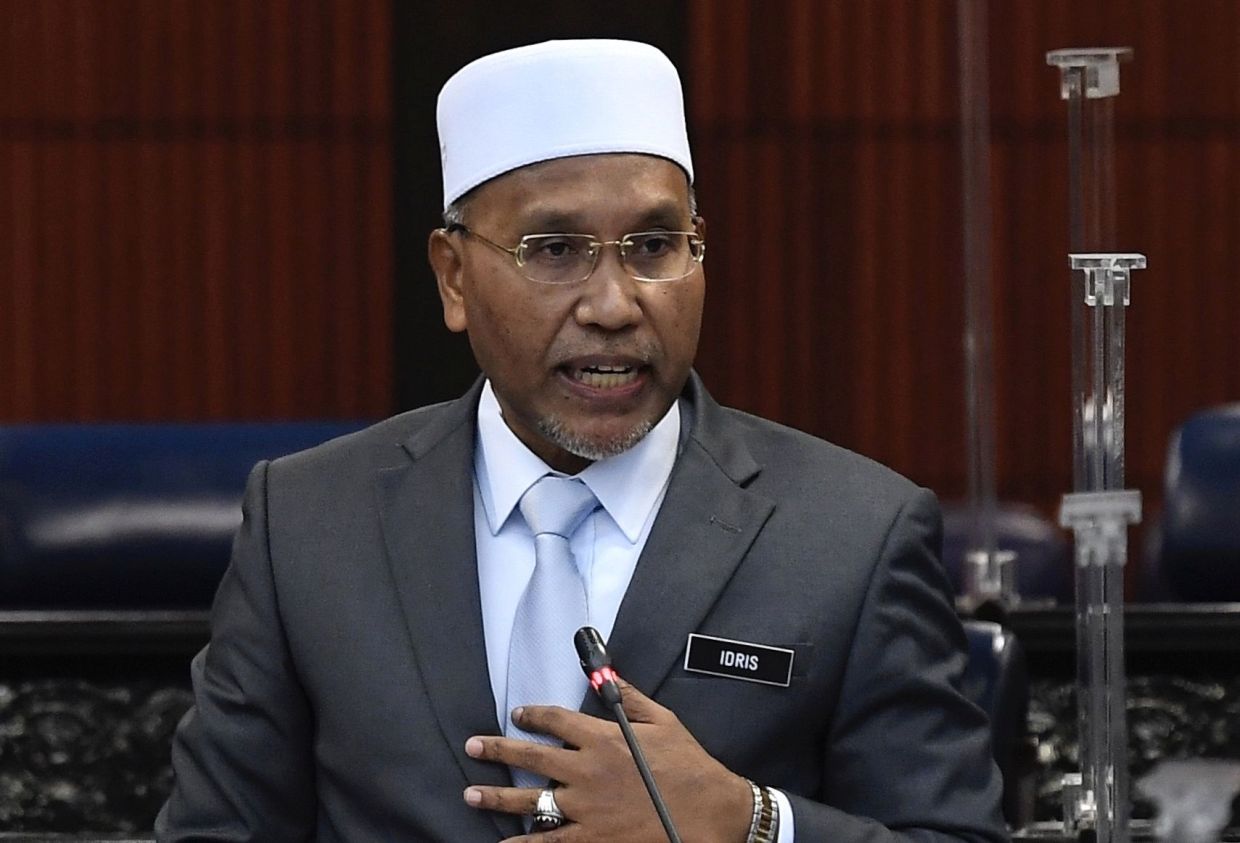
PETALING JAYA: After his controversial remarks on Bon Odori, Minister in the Prime Minister’s Department (Religious Affairs) Datuk Idris Ahmad (pic) has again come under fire – this time for his comments on Oktoberfest.

Many people took to social media to deny his comments that the German-originated beer festival, which had been held locally many times previously, would disrupt social harmony.

ALSO READ: Oktoberfest could disrupt social harmony, says Religious Affairs Minister

“It’s been celebrated around the world for many years with no problems. Not allowing it will cause more resentment. Oktoberfest does not disrupt social harmony; it brings people together,” said Angela Usmar.

“As far as I remember, this kind of event has been going on for years. I haven’t seen any problem coming from it,” said Julian Mokhtar.

Nurul Munira Moon Rohizan said for those celebrating Oktoberfest, they should just go and enjoy themselves.

ALSO READ: Oktoberfest to go ahead in 2022 after pandemic break

“To those who are not, let them be. To those who are frowning ... siapa suruh! Tak dijemput pun (you weren’t even invited). Life is easier if you tolerate each other!!”

Nyuk Foh Sim said for any festival in a multiracial religious society, let the people do what they were allowed and supposed to do.

“Those who are forbidden by religious and cultural myths may politely abstain,” he posted on Facebook.

“All these years Oktoberfest has been going on and no issue arose for the non-Malays,” said Sumitha Appukutty.

On Thursday, Idris said in a written reply in Parliament that the cultural festival had the potential to disrupt social harmony and safety.

He said non-Muslims were not forbidden from consuming alcohol, but Oktoberfest events could trigger social problems as alcohol was consumed openly in a festival setting.

Just recently, Idris was criticised after he told Muslims to stay away from the Bon Odori event in Selangor as he said it had “elements of other religions”.

This led to Selangor Ruler Sultan Sharafuddin Idris Shah ordering the state Islamic Religious Department (JAIS) not to prevent any individuals from attending the festival as it was a cultural showcase organised by the Japanese community in Malaysia.

While the annual Oktoberfest – touted as the world’s largest beer festival – is held officially in Germany, many countries hold their own versions.

The annual Malaysian-German Society Oktoberfest in Penang will return on Oct 21 and 22 this year.

It will feature a live band, dancing and games, with German food and beer served.

In the Klang Valley, breweries will have their own Oktoberfest promotions in individual bars.


Muhyiddin Yassin as an “overlooked reformist”??? What has Azhar been smoking?


MP and Bersih chief sneer at ‘reformist’ label for Muhyiddin


Charles Santiago and Thomas Fann scoff at Speaker Azhar Harun’s description of Muhyiddin Yassin as an ‘overlooked reformist’.


PETALING JAYA: An Opposition MP and the head of the Bersih electoral reform group have ridiculed the labelling of former prime minister Muhyiddin Yassin as an “overlooked reformist”.

In disputing the description, raised by Dewan Rakyat Speaker Azhar Harun today, they cited the “Sheraton Move” of 2020 which led to the downfall of the Pakatan Harapan government and the formation of a new government led by Muhyiddin.


Klang MP Charles Santiago of DAP said that Muhyiddin was among the two “big architects” – the other being Azmin Ali – who had brought down a democratically elected government by engineering defections.

In the Sheraton Move, MPs of Barisan Nasional, Bersatu, PAS, and a faction led by Azmin, then PKR deputy president, joined forces to topple the Pakatan Harapan government.

“So how can people who spat on the people’s mandate be considered a reformer?” Santiago told FMT, referring to the 2018 general election.

Santiago also said that Muhyiddin never brought any substantial changes to the law when he was the home minister during PH’s brief reign.

This included ones on citizenship and the Security Offences (Special Measures) Act 2012 (Sosma).

Santiago said that “there isn’t much that he (Muhyiddin) can speak of” during his tenure as home minister, or even as prime minister for that matter.


He said Muhyiddin only proposed reforms on the eve of his removal as prime minister, when he made overtures for opposition support to keep the Perikatan Nasional-led government intact.

This included a framework for bipartisan political cooperation, including equal annual allocations for all MPs regardless of their political party.

“I’m not clear what does Azhar mean? What is he smoking,” Santiago said, referring to the term “overlooked reformist” that Azhar was quoted as having used of Muhyiddin at a book launch today.

Malaysiakini said Azhar hailed Muhyiddin achievements such as making a political comeback, after being removed as deputy prime minister under Najib Razak, and becoming Bersatu president as part of a coalition that ended Umno’s 61-year old reign.

Azhar also cited Muhyiddin’s reform agenda as home minister and his efforts to steer the nation in the opening months of the Covid-19 pandemic, Malaysiakini reported.

Bersih chairman Thomas Fann said while Muhyiddin certainly had the opportunity to be a reformist when he was part of PH he was ineffective, especially when it came to changing agencies like the police which came under the home ministry’s preview.

“Instead, he led his party out of PH and overthrew a democratically elected government” and Muhyiddin pushed for an emergency to suspend Parliament and elections in order to stay in power, Fann said.

Democracy in this country had never been more threatened than when it was under Muhyiddin, Fann added. “I am bewildered that he could even be labeled a reformist.”

Game changer or ageist wedge: Lawyers weigh in on Putrajaya’s generational bid to phase out tobacco addiction


Game changer or ageist wedge: Lawyers weigh in on Putrajaya’s generational bid to phase out tobacco addiction


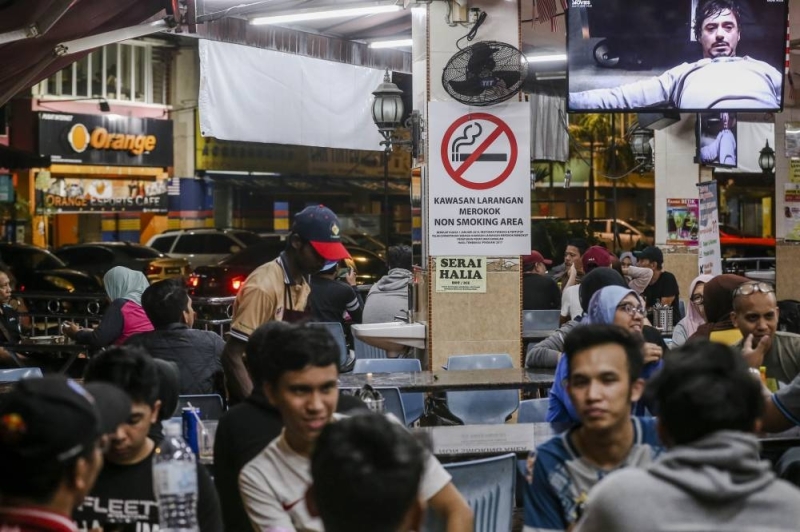
File picture of a no-smoking sign is seen in Restoran Ali Maju in Kuala Lumpur, January 1, 2019. The GEG Bill prohibits the sale of cigarettes or vape products as well as making available smoking services to those born after 2007. — Picture by Firdaus Latif

Saturday, 30 Jul 2022 7:00 AM MYT


KUALA LUMPUR, July 30 — There have been many arguments for and against the government’s ambitious Control of Tobacco Product and Smoking Bill 2022, which was tabled in Parliament last Wednesday.

But lawyers contacted by Malay Mail said there is a glaring flaw in the Generational End Game Bill — GEG for short — which runs counter to two constitutional guarantees for all residents in the country: equality before the law, and personal freedom.


Muhammad Haziq Abdul Aziz, Nizam Bashir Abdul Kariem Bashir, and Fahri Azzat all said legislating GEG opens it to challenge in court on grounds of discrimination.

The first is a fundamental guarantee under Article Article 8(1) of the Federal Constitution, which accords equal protection under the law to everyone in Malaysia.


Potential discrimination and power overreach


“Does Article 8(1) and (2) cover age, since this provision made no mention of the word ‘age’?” Muhammad Haziq told Malay Mail.

“How would our Federal Court give meaning to age? How would the Federal Court expand the group of persons who shall receive equal protection under the law?” he added.

Article 8(2) bars discrimination based on religion, race, descent, place of birth or gender “except as expressly authorised” by the Constitution.

The GEG Bill prohibits the sale of cigarettes or vape products as well as making available smoking services to those born after 2007.

First-timers found doing so can be punished with a maximum fine of RM20,000, or up to a year in jail, or both while repeat offenders face up to RM30,000, two years in jail, or both.

Criminal action against businesses includes a maximum sentence of RM100,000 for first-timers and triple that for repeat offenders. The business owners are also liable to jail time if convicted.

The GEG Bill also appears to encroach on personal freedoms as guaranteed by Article 5 of the Federal Constitution, the lawyers said.

Article 5(1) guarantees that no one “shall be deprived of his life or personal liberty save in accordance with law”.

“Does smoking fall under the umbrella of personal liberty? Should the court interpret the definition of life liberally so as to include the liberty to smoke? How about the duty of the government to protect public health from hazardous cigarette smoke?” Muhammad Haziq posed.

“The court has to balance these two and interpret the Constitution harmoniously, at the same time liberally, so as not to restrict the rights of individuals guaranteed under the Constitution from being oppressed by the government,” he added.


Lawyer Nizam Bashir Abdul Kariem Bashir added that it would be interesting to see how the government plans to balance the revenue losses to the Treasury through the sale and taxes on tobacco products with the anticipated benefits the GEG Bill is supposed to bring to Malaysia. — Picture by Hari Anggara


Nizam noted that the GEG Bill contains some questionable legal provisions that would allow law enforcers full access to private data.

Article 34(1) and 34(2) in the Bill sighted by Malay Mail states that investigating officers must be given access to any recorded information or computerised data in the course of their investigations, if they believe the device is involved in an offence.

Article 34(3) of the Bill states that the authorised officer may make copies of or take extracts from the recorded information or computerised data, if he deems it necessary.

Furthermore, Article 34(4) states that access to be given to the officers includes the necessary password, encryption code, decryption code, software or hardware and any other means required to enable the officers to scrutinise the information or data.

Malay Mail has written in detail about how the provisions would allow authorised officers by law unfettered access to an individual’s recorded information and computerised data.

Chance of backfiring?

Fahri said these two key points make the GEG appear “absurd” and needs deeper thought before being passed in Parliament.

“There is a possibility the complete ban of tobacco on those born before 2007 may backfire with the youths and encourage them to experiment and try it. Personally, I think this is the lazy approach to encouraging youths or people in general to not use tobacco,” he added.

To Fahri, using legislation to compel Malaysians into anti-vice behaviour may work for a short spell, but will backfire in the long run.

He added that criminalising smoking would push young Malaysians into doing the opposite of what the GEG wanted to avoid, besides expanding the black market for these activities and feeding corruption.


Lawyer Fahri Azzat says using legislation to compel Malaysians into anti-vice behaviour may work for a short spell, but will backfire in the long run. — Picture by Miera Zulyana


“Using the law to ban something or make something illegal does not necessarily result in its absence or eradication. What it does most times is send it underground from which it becomes an illegal industry. It provides room for corruption by authorities,” he said.

He pointed to current laws that provide for harsh punishments on drugs, alcohol and cigarettes as an example of legislation that failed to stem the menace.

“The problem in Malaysia is usually not with the law but with its enforcement,” Fahri said.

Nizam said the government has a delicate balancing act with the GEG Bill.

“Pro-smoking advocates, conversely, premise their arguments on rights to liberty, self-determination and the right to privacy.

“However, given the medical evidence that stands starkly against the tobacco lobby or pro-smoking advocates, it seems difficult — to put it diplomatically — not to introduce some form of legislation against it.

“Even so, perhaps criminalisation is not necessarily the way forward. Education and soft measures may be more effective in that regard,” he said.

Nizam added that it would be interesting to see how the government plans to balance the revenue losses to the Treasury through the sale and taxes on tobacco products with the anticipated benefits the GEG Bill is supposed to bring to Malaysia.

Friday, July 29, 2022

When did Oktoberfest cause problems, Guan Eng asks minister


When did Oktoberfest cause problems, Guan Eng asks minister


A Bavarian brass band performance at Oktoberfest, held in Penang in 2019. (Malaysian-German Society pic)


PETALING JAYA: DAP chairman Lim Guan Eng has questioned a minister’s rationale for urging that the German cultural festival Oktoberfest not be held openly for the public.

“I cannot see how Oktoberfest has led to public disorder,” he said, in response to a written reply in the Dewan Rakyat by religious affairs minister Idris Ahmad.


The minister had said that “alcohol parties” open to the public would affect the “social harmony, order and security of society”.

But Lim said there had been no Oktoberfest-related incidents in the past. “Idris should answer me based on facts, can he show us examples where the German culture festival has been a problem?”


Oktoberfest, organised by the Malaysian-German Society, has been held in Penang for four decades. It usually features a Bavarian band performance, German food and a variety of German and international beers.

Lim had also questioned Idris’ stance on the Japanese summer festival of Bon Odori, when he had previously advised Muslims against attending.

The celebration, organised by the Japanese community in Malaysia, was held in Shah Alam on July 16, and will be held in Penang tomorrow.

Mother of 7 gets her MyKad after 40-year wait


Mother of 7 gets her MyKad after 40-year wait


R Alliamah, 64, displaying her MyKad which she received from the director-general of registration, Ruslin Jusoh, in Penang today. (Bernama pic)


GEORGE TOWN: After waiting more than 40 years for an identity card, a senior citizen could heave a sigh of relief today because she was finally granted a MyKad.

It was all the more gratifying for R Alliamah, 64, as she received her MyKad personally from the director-general of national registrations, Ruslin Jusoh, at a ceremony at the Penang registration department.


Alliamah, from Liberty Wood Estate, Kulim, in Kedah, said she has lived without an identity document or MyKad because her family home was razed along with all personal documents after her birth.

She said she was the only one among her seven siblings who did not possess an identity document while the rest had birth certificates and also MyKad.

“When I was a child, there was a fire at home which destroyed all the important documents needed to register my birth at that time, making it difficult for me since I was a child.

“At the age of 64, I have finally obtained a MyKad today. Thank you to all the parties involved, especially the national registration department (JPN) for helping me. I am finally a Malaysian and can register to vote in the general election,” she said here today.

Her son Faizal Abdullah, 45, said his late father S Sahar Segaran who died at age 39, had exhausted all avenues to secure a valid MyKad for his mother who works as a cook.

He said his family had also previously compiled the relevant documents for the MyKad application but all were lost in a flood when they were living in Kedah at the time.


“We, seven siblings also met up with various parties including representatives of political parties, non-governmental organisations and so on but still failed to get a MyKad because we did not find the right channel (to apply for it). We were also cheated by agents who claimed to be able to get a MyKad for my mother,” he recalled.

He said that after elaborate efforts were made, he and his mother in December last year met with JPN officials to again apply for a MyKad and after more than six months, his mother finally succeeded in obtaining it, culminating in one of the happiest moments of their lives.

“My mother has gone through thick and thin without a MyKad despite being born a Malaysian citizen. She also had a hard time raising us without it. We would like to thank the JPN staff who made it a breeze for us, and helped my mother get the MyKad,” he added.

Ruslin said the registration department in Penang had conducted a DNA test to prove the family ties between Alliamah and her siblings. The registration of Alliamah’s birth was approved by a late registration panel on March 23 after carrying out interviews, birth record searches, DNA tests, and inspecting supporting documents from Alliamah’s siblings.

He said her late-registration birth certificate, denoting Malaysian citizenship, was issued and handed to her on March 24. She applied for a MyKad on March 31.

Anti-hopping law: It’s the principle, not the numbers


Anti-hopping law: It’s the principle, not the numbers

By Prof Ramasamy Palanisamy


IT is ridiculous to allow for mass hopping in circumstances where a particular party fails to secure 50% support from the people.

I quite agree with the former law minister Datuk Seri Nazri Aziz that there is no difference between individual party-hopping and mass party-hopping.

The suggestion by the former prime minister Tun Dr Mahathir Mohamad does not make sense.

I am not sure why he made this point as maybe he thinks that if mass hopping is allowed, a party like Pejuang might potentially benefit from such move.

Or, he might not realise, if mass hopping is permitted, smaller parties like Pejuang could be wiped out totally.

Mahathir clarified his statement by saying that mass hopping is conditional and can only be permitted under circumstances where one party has less than 50% of the popular votes.

Thus, under these circumstances, there should be an option for a mass crossover, without being labelled as party defection.

Leap-frogging from one party is the same as mass party-hopping.

The definition of party hopping or defection is not changed in accordance with numbers, either by adding or subtracting.

It is the principle that counts – this is something that is universally accepted in democratic countries.

Malaysia might be late entrant, but the law has finally appeared.

The fundamental principle of party defection must be not be permitted by the law and this is why the Parliament passed the bill on anti-hopping yesterday with more than two-thirds support.

Once the upper house of the Parliament approves the bill, the anti-hopping bill will be gazetted as a law.

While the anti-hoping legislation might not be perfect, it provides the bare essentials in curbing the curse of party defections.

Without this legislation, electoral politics in the country will akin to a game of musical chairs. It is already a nightmare.

The “Sheraton Move” in 2018 is one example of how the mandate of the people was shamelessly violated.

The strange thing is that those who violated the mandate given by the people are roaming the corridors of power.

If there existed a law on anti-hopping before Pakatan Harapan (PH) came to power at the national level, the infamous “Sheraton Move” could have been avoided.

No country in the world might succeed in passing a comprehensive law on anti-hopping in the first instance.

I understand that India had revisited the anti-defection law twice to deal with the changing political circumstances.

Similarly, Malaysia might have to revisit the anti-hopping law in the future to render it more comprehensive and responsive to changes.

It is a good start, with significant credit to the memorandum of understanding (MOU) between the government and the opposition.

However, on Wednesday (July 27) Prime Minister Datuk Seri Ismail Sabri Yaakob announced that the MOU will not be extended.

The minute the anti-hopping bill was passed in the lower house of the Parliament, the MOU was “shredded” in pieces.

Only the apologists and sentimentalists might bemoan the disappearance of the MOU.

The passage of the anti-hopping law was the only silver lining to the MOU.

At the end of the day, it appears that the MOU was more in favour of the Government than the opposition.

Since the anti-hopping law is out of the way, all eyes are on the GE15.

I wonder whether the opposition can derive electoral support from signing the MOU, or is it going to become an albatross around the opposition’s neck for some time to come. – July 29, 2022


Prof Ramasamy Palanisamy is the state assemblyperson for Perai. He is also deputy chief minister II of Penang.


Analysis: EU gas solidarity complicated by lack of fuel sharing deals

Reuters:

Analysis: EU gas solidarity complicated by lack of fuel sharing deals


Model of natural gas pipeline, EU and Russia flags, July 18, 2022. REUTERS/Dado Ruvic/Illustration


BRUSSELS, July 29 (Reuters) - The European Union clinched a deal this week to cope with a gas supply crisis, but to make it work member states need to establish bilateral pacts to share gas and, right now, most have no such agreement in place.

Only six such deals have been secured, leaving most of the EU's 27 countries without firm terms on how and when they would share gas in a supply crunch, or the financial compensation they would give or get for doing so.


"(Bilateral deals) are really ... the only thing that will hold at the end of the day if there is a real supply crisis," Christian Egenhofer, associate senior research fellow at the Centre for European Policy Studies, said.

"They organise the legal stuff, the compensation, the financial but also the infrastructure constraints," he said.

Fearing Russia may completely halt gas flows, EU countries agreed on Tuesday to curb their gas use by 15% over winter, to fill storage and free up fuel to share around in a supply crisis. read more


But it is up to individual countries to sort out how that sharing of fuel will happen in practice.

EU laws oblige member states to send gas to a neighbouring state whose households or essential services like hospitals face a severe shortage. To make that happen, governments arrange bilateral deals. However, just eight countries are covered by the six agreements so far - including between Germany and Austria, Estonia and Latvia, and Italy and Slovenia.


"This is not sufficient," EU energy policy chief Kadri Simson said last month, urging countries to arrange more.

A handful of countries are negotiating new two-way agreements, government officials said. A German-Czech deal is due to be signed by winter, and Germany is working on further agreements with Poland and Italy, its economy ministry said.

But some countries heavily reliant on Russian gas - such as landlocked Hungary, which opposed this week's deal - have none. Italy and France are the EU's biggest gas users after economic powerhouse Germany. Italy has just one bilateral deal on emergency gas sharing and France has none.

A senior Italian official said the country was negotiating a deal with Greece on gas storage. The French energy ministry said "at this stage" France did not have any bilateral agreements in place.

The solidarity deals aim to avoid a panicked response if a supply crisis did strike, and reduce the risk that countries would hoard fuel and refuse to help their neighbours.

GUARANTEEING GAS SHARING


Simone Tagliapietra, senior fellow at the Bruegel think tank, suggested the EU should implement a wider compensation scheme where countries pay other member states to save and share gas.

"Without such a compensation mechanism it will be difficult to ensure solidarity," he said, adding that Europe's biggest economy Germany, which is heavily reliant on Russian gas, should be first to contribute.

Without firmer terms on gas sharing, "we might not see all the solidarity we currently see on paper turn into molecules moving around Europe," Tagliapietra added.

The idea of compensation may appeal to states like Greece and Spain, which initially balked at being asked by Brussels to use less gas to help countries that for years cultivated closer energy ties with Moscow.

Spain does not rely on Russian gas, and EU diplomats said Brussels' call for solidarity rankled in some capitals that still resent Germany's sharp criticisms of southern states' economic policies during past financial crises.

After EU countries approved the gas curbs on Tuesday, however, Spanish Energy Minister Teresa Ribera struck a more conciliatory tone, expressing willingness to reinforce Spain's liquefied natural gas import capacity "for the benefit of all".

German Economy Minister Robert Habeck also pledged, "as part of European solidarity" to keep gas flowing to its neighbours including Austria and the Czech Republic.

Germany has so far been the most active country in seeking solidarity arrangements with neighbours. As well as being Europe's biggest gas consumer, Germany's pipelines are the veins through which gas reaches many central and eastern states.

Some appear unwilling to cooperate, however. Hungary this month said it would stop exporting fuels to other countries. Poland has also struck a sceptical tone on sharing supplies.

The EU-wide deal on Tuesday was approved by all 27 members except Hungary, which also initially opposed EU oil sanctions on Russia. The agreement set voluntary curbs on gas use that can be made binding in a supply crisis. But it included a raft of exemptions and derogations for countries and industries that some analysts said meant, if Russia did shut off flows, more severe curbs and sharing between states would be needed to guarantee supply.

One EU diplomat said it was ultimately in countries' own interests to help one another, since an economic crisis or a gas shortage in one - particularly in Germany - would ripple around the bloc.

"If Germany falls, every one of us will fall with Germany," the diplomat said.

Paul Yong takes garden leave from PBM pending appeal


Paul Yong takes garden leave from PBM pending appeal


Paul Yong was sentenced to 13 years’ jail and two strokes of the rotan for raping his former maid in 2019. (Bernama pic)


PETALING JAYA: Parti Bangsa Malaysia (PBM) has accepted a request from its treasurer-general, Paul Yong, to go on garden leave following his recent conviction on a charge of raping his maid.

The party’s information chief Zakaria Abdul Hamid said Yong has requested not to be involved in any PBM-related activities until the conclusion of his appeal against conviction and sentence.


Yong, who is assemblyman for Tronoh and a former Perak state executive councillor, was sentenced to 13 years’ jail and two strokes of the rotan for raping his former maid in 2019.

The Ipoh High Court granted his request for the sentence to be stayed pending an appeal.

Zakaria said PBM will name a new Perak chief and treasurer-general in the near future to replace Yong.

PBM will hold its state-level annual general meeting (AGM) from Aug 15 to Aug 29, while divisional meetings will be held from tomorrow until Aug 14. The date for the national-level AGM will be announced later.

RoS approves Umno polls after general election


RoS approves Umno polls after general election


Umno’s general assembly this year approved constitutional amendments allowing a postponement of party elections. (Bernama pic)


PETALING JAYA: The Registrar of Societies (RoS) has approved Umno’s application to amend its constitution and postpone its party elections, says Umno secretary-general Ahmad Maslan.

In a statement, Ahmad said he received an RoS letter confirming the matter this evening.


Now that the amendment is approved, Umno will be allowed to postpone its party elections for up to six months after a general election, or up to 18 months from the end of its leadership’s term, whichever comes later.

Ahmad said Umno will hold its party elections no later than six months after the next general election.

“On behalf of Umno, I want to thank the RoS and other parties who were involved in approving the amendment to Umno’s constitution,” he said.

Earlier today, it was reported that Umno deputy president Mohamad Hasan said the party had written letters of appeal to RoS for the decision to be announced before July 31 so that the party could prepare for internal elections if the application for postponement was rejected.

Umno had postponed its elections for 18 months after the last term ended on June 30 last year. This means the elections would have to be held before Dec 30 if the amendments were not approved.

“Stop with your absurd suggestions,” DAP MP tells Tuan Ibrahim


“Stop with your absurd suggestions,” DAP MP tells Tuan Ibrahim


BUKIT Mertajam MP Steven Sim has criticised Environment and Water Minister Tuan Ibrahim Tuan Man for telling Penang to explore tapping into water from the ground to meet its “desperate” water supply needs.

The DAP MP was responding to Tuan Ibrahim’s written parliamentary reply to Tanjong MP Chow Kon Yeow, in which Tuan Ibrahim said that his ministry welcomed initiatives to explore alternative sources to guarantee the sustainability of the people’s water supply.

He also advised the state government to take proactive steps to encourage Penangites to save water, adding that in 2021 the use of water by Penang was 308 litres per capita compared to 301 litres per capita in 2020.

Calling the suggestion “absurd”, Sim said that Tuan Ibrahim needs to only review the Federal Government’s own reports – specifically the National Water Resources Study (2000–2050) and the Formulation of National Water Resources Policy (2011) – to know that the quantity of underground water in Penang is insufficient to cover the domestic water demand.

Furthermore, the process of extracting water from the ground could cause soil structures to sink, which would result in further damage to the environment and existing infrastructure.

In addition, rising sea levels further translates to higher risks of flooding in Penang as the soil in the area sinks, Sim added.

He said that studies have indicated that the underground water extraction carried out in the northern part of Kelantan has caused the land to sink up to 4.22 millimetres per year.

“The most drastic example is Indonesia’s move to relocate the country’s capital from Jakarta to Kalimantan as the production of underground water has caused the city of Jakarta to rapidly sink into the Java Sea,” Sim elaborated.

According to him, the water supply issue in Penang can be resolved through the Sungai Perak Raw Water Transfer Scheme (SPRWTS), which the Penang state government had submitted to the Federal Government.

“This scheme will not only guarantee water supply to Penang but also to the northern areas of Perak until 2050,” Sim noted.

“Unfortunately, the Federal Government did not approve this proposal and had instead suggested that Penang explore underground water which would greatly affect Penangites.

“Rather than coming up with absurd ideas, Tuan Ibrahim should carry out his responsibility as mediator for the SPRWTS proposal for there to be a win-win solution that would benefit both Penang and Perak.” – July 29, 2022

PAS minister has dog-in-manger mentality - I can't eat the hay, I won't allow the cows to eat the hay too, woof woof


Religious affairs minister: “Oktoberfest should not be allowed in Malaysia, period!”


HOT on the heels of the Bon Odori festival controversy is news that a beer festival that is open to the public should not be allowed in Malaysia.

Minister in the Prime Minister’s Department (Religious Affairs) Datuk Idris Ahmad said that all parties should respect the rules and laws of the country that is based on Islam as the religion of the federation.

In a Parliamentary written reply to Bagan MP Lim Guan Eng, Idris said that while non-Muslims are not forbidden from consuming alcohol the Government is of the view that turning alcohol consumption into a festival that is opened to the public should not be allowed.

This is because alcohol causes social problems since it is seen as being capable of affecting harmony, tranquility, and public security, he added.

The DAP chairperson had asked the prime minister to state the Government’s stance regarding the Bon Odori festival and Oktoberfest, which are cultural events that are, respectively, of Japanese and German origin.

Lim noted that these festivals had been held in Malaysia for decades without troubling anyone or damaging the morals of its attendees.

Even before becoming part of the Government, PAS had opposed Oktoberfest even if it was held behind closed doors.

As for Bon Odori, PAS maintained that the Government is not opposed to it being held and only advised Muslims to not get involved in the cultural festival.

Idris said the Islamic Development Department’s studies and preliminary observations found that the festival contains elements similar to other religions and rituals that are not in line with Islam.

Despite Idris’s advice, it must be noted that some 35,000 visitors – including Muslim – had thronged the Japanese Bon Odori festival in Shah Alam on July 16, 2022.

The Sultan of Selangor Sultan Sharafuddin Idris Shah had also intervened on this matter, instructing the Selangor Islamic religious department (JAIS) to allow the festival to proceed and also instructing JAIS and the Shah Alam City Council to attend Bon Odori to “see for themselves” what takes place at the festival. – July 29, 2022

Abe murder spotlights Unification Church controversy in Japan


Abe murder spotlights Unification Church controversy in Japan


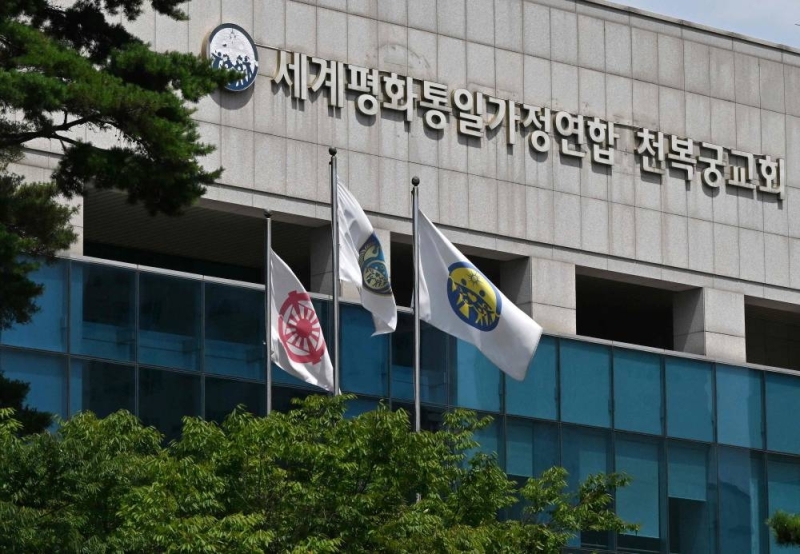
This picture taken on July 26, 2022 shows flags fluttering outside a branch facility of the Unification Church, known officially as the Family Federation for World Peace and Unification, in Seoul. — AFP pic

Friday, 29 Jul 2022 12:18 PM MYT


TOKYO, July 29 — The assassination of former Japanese prime minister Shinzo Abe by a man resentful of the Unification Church has resurfaced years of controversy over the group.

Police say Tetsuya Yamagami targeted Abe because he believed the former prime minister supported a “certain group” to which the man’s mother had made large donations.


In a letter published by local media, Yamagami accused Abe of supporting the Unification Church and expressed resentment towards the group, which has confirmed his mother’s membership.

Former followers, lawyers and academics who study the church say reported details on Yamagami’s family fit a common pattern in Japan.


Yamagami’s mother reportedly joined the church after her husband died by suicide, and was quickly consumed by her faith.


Yamagami’s uncle told local media his nephew sometimes called him for help when his mother left her children alone and without food while attending church.

She donated ¥100 million (about RM3.34 million) to the church, he said, and later declared bankruptcy.

That all sounds familiar to attorney Hiroshi Yamaguchi, who represents former church members.

“Members are under pressure every day to make donations,” he told AFP.

“They tell you karma is attached to money and (donations) are the only way to save yourself. So you think you have to do it.”

Known officially as the Family Federation for World Peace and Unification (FFWPU), the church was founded by Sun Myung Moon in Korea in 1954 and its followers are colloquially known as “Moonies”.

The Japan chapter began in 1959, and membership took off during the country’s 1980s economic boom — “an era in which people were unsure how to live their lives”, said Kimiaki Nishida, professor of social psychology at Tokyo’s Rissho University.

‘Distorted my entire life’

Japan became a financial hub for the church, which taught Japanese believers they needed to atone for their country’s wartime occupation of Korea.

“They allocate different roles to each country intentionally,” said Hotaka Tsukada, an associate professor of the sociology of religion at Joetsu University of Education.

“They have (sales) manuals to exploit believers,” he told AFP.

The church offered “spiritual sales” of exorbitantly priced goods including a ¥43-million- (US$350,000) statuette, which Japanese believers were told would absolve them or their ancestors.

Huge outlays by members led to a backlash.

Japan’s National Network of Lawyers Against Spiritual Sales says it has filed suits seeking ¥123.7 billion in damages for former followers since 1987.

A series of arrests in the 2000s and verdicts against the church prompted limits on “spiritual sales”, but lawyer Yamaguchi says believers are still pressed to meet monthly donation targets.

“It’s a goal God decides,” he says the church tells members. “It’s a quota they need to meet.”

The church denies members are pressured.

“Our view is that all donations before Heaven must be freely given,” FFWPU press contact Demian Dunkley told AFP.

“FFWPU sometimes makes appeals for donations, but FFWPU members choose whether, when and how much they will give.”

In 2005, Yamagami reportedly attempted suicide after his mother’s bankruptcy, hoping his siblings would receive an insurance payout.

His older brother, a childhood cancer survivor, died by suicide a decade later.

In a letter to an anti-church blogger sent the day before Abe’s murder, Yamagami said his teen years were marred by his mother’s “overspending, family disruption and bankruptcy”.

“The experience has distorted my entire life,” the letter published by local media said.

‘One family under God’

Former church members have recounted similar family ruptures, including a Japanese woman whose mother told her to stay with an abusive husband chosen by the church because a divorce would “please Satan”.

“I can’t defend what (Yamagami) did,” she told a press conference this month, speaking on condition of anonymity.

“But... that’s how badly the church destroys lives.”

Yamagami’s letter accused Abe of being “one of the most influential supporters of the Unification Church”, based partly on a 2021 speech the politician gave to a church-linked group.

The church and affiliated groups have regularly enlisted prominent figures, including former US president Donald Trump, for events.

Dunkley said the church “seeks to build relationships with anyone interested in peace”.

He said its “mission is to help bring about a peaceful, harmonious world of true love in which humanity lives as ‘one family under God’”.

But the former church member said followers were shown pictures of Moon with prominent figures to encourage reverence.

“It made me feel they have connections with politicians and Moon was a true Messiah,” she said.

The assassination has forced a re-examination of the church’s ties with politicians in Japan, including Abe’s grandfather: Former prime minister Nobusuke Kishi.

Abe’s brother, Defence Minister Nobuo Kishi, acknowledged this week that church members had served as campaign volunteers, something Dunkley said followers only do “as private citizens”.

Opposition parties have now announced several task forces to scrutinise the church’s activities and links with politicians. — AFP