QTR’s Fringe Finance
What If The Oil Crisis Gets Much, Much Worse?
I’m talking about a genuine global energy emergency, where oil reaches $150 or even $200 a barrel
Quoth the Raven
23 hours ago
What if the global oil crisis gets much, much worse?
I’m not talking about another $10 move in crude. I’m talking about a genuine global energy emergency, where oil reaches $150 or even $200 a barrel, physical shortages begin shutting down meaningful portions of the global economy, and central banks find themselves confronting an inflationary recession.
I don’t think it is going to happen, but that I think investors would be making a serious mistake to dismiss the possibility entirely. The likely scenario remains some combination of restored shipping, emergency government intervention, reduced demand, and additional supply eventually stabilizing the situation.
But it must be noted…we’re in historically extraordinary territory, and I think it’s worth understanding just how fragile the situation could become if the next major development is another disruption rather than a resolution.
The easiest way to understand the problem is to think about how much oil the world uses and how little room there is for that supply to be interrupted.
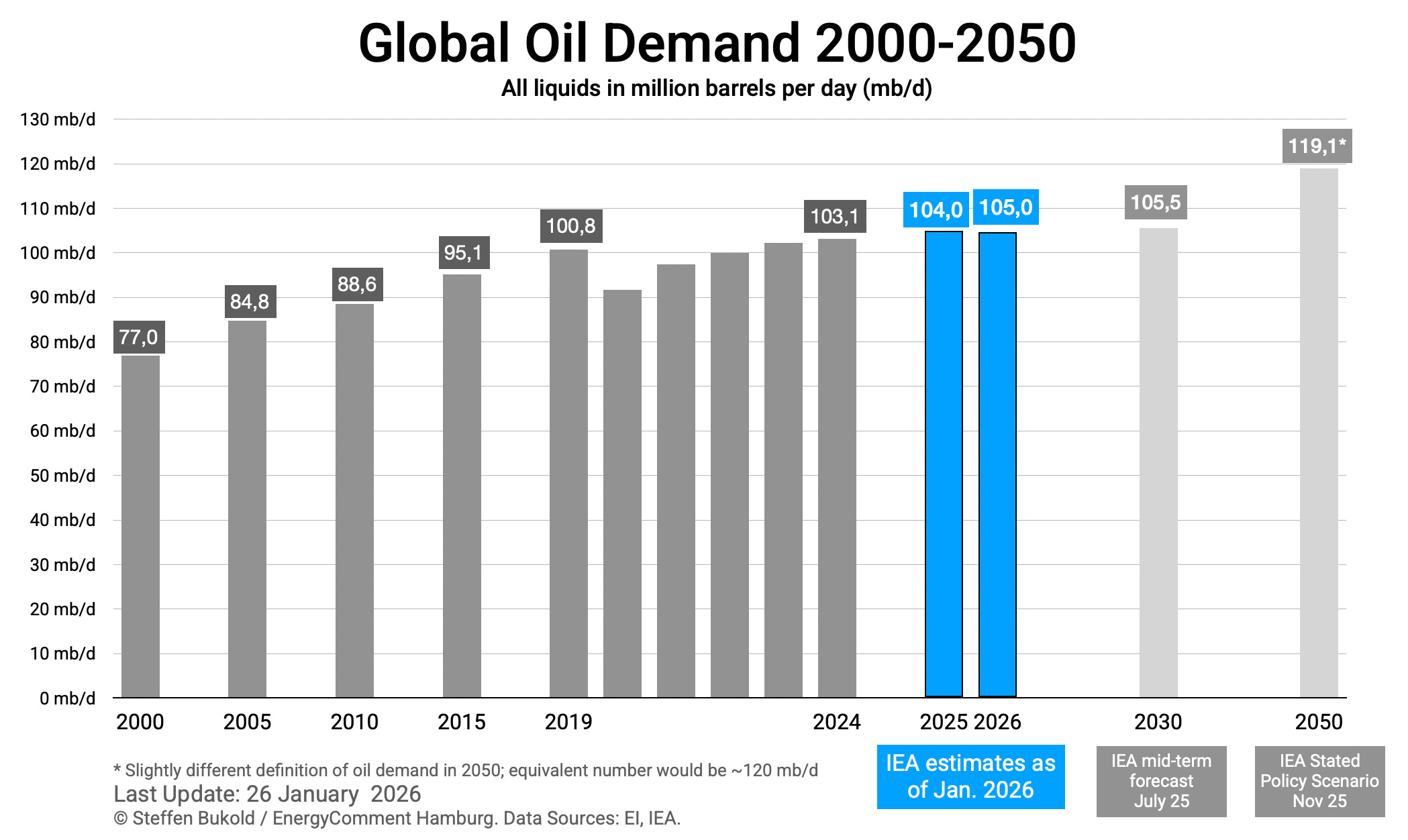
Global consumption runs at roughly 100 million barrels per day. That oil powers cars, trucks, airplanes, ships, agricultural equipment, factories, and enormous portions of the world’s transportation and industrial infrastructure. It also provides the raw materials for plastics, chemicals, packaging, and countless manufactured products.
Under normal circumstances, this gigantic system operates almost invisibly. Oil is pumped out of the ground, loaded onto tankers or moved through pipelines, delivered to refineries, and transformed into the fuels and materials that keep the global economy functioning.
If oil cannot be transported from Saudi Arabia to a refinery in Asia, or if a refinery cannot obtain the particular crude it needs, that supply effectively disappears from the market until the problem is resolved.
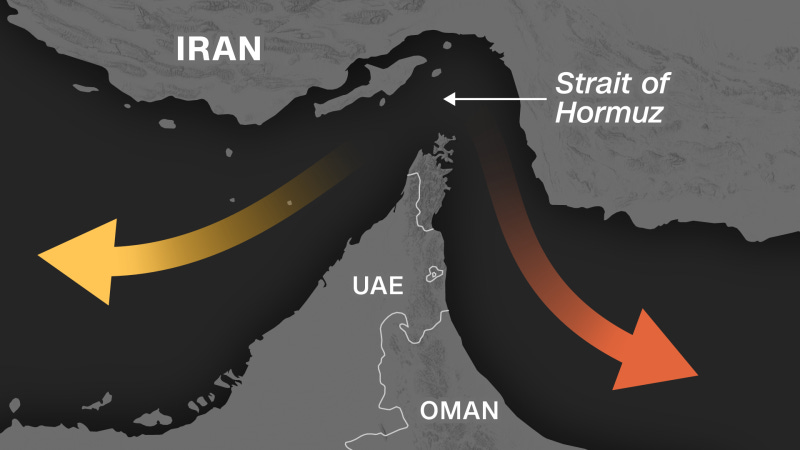
And that’s exactly the kind of disruption the world has been dealing with. The Strait of Hormuz, through which roughly one-fifth of global petroleum liquids consumption normally passes, has become the epicenter of an extraordinary supply crisis. Disruptions to tanker traffic and regional infrastructure have forced producers to shut in output, refiners to scramble for alternative supplies, and governments to draw down inventories to make up the difference.
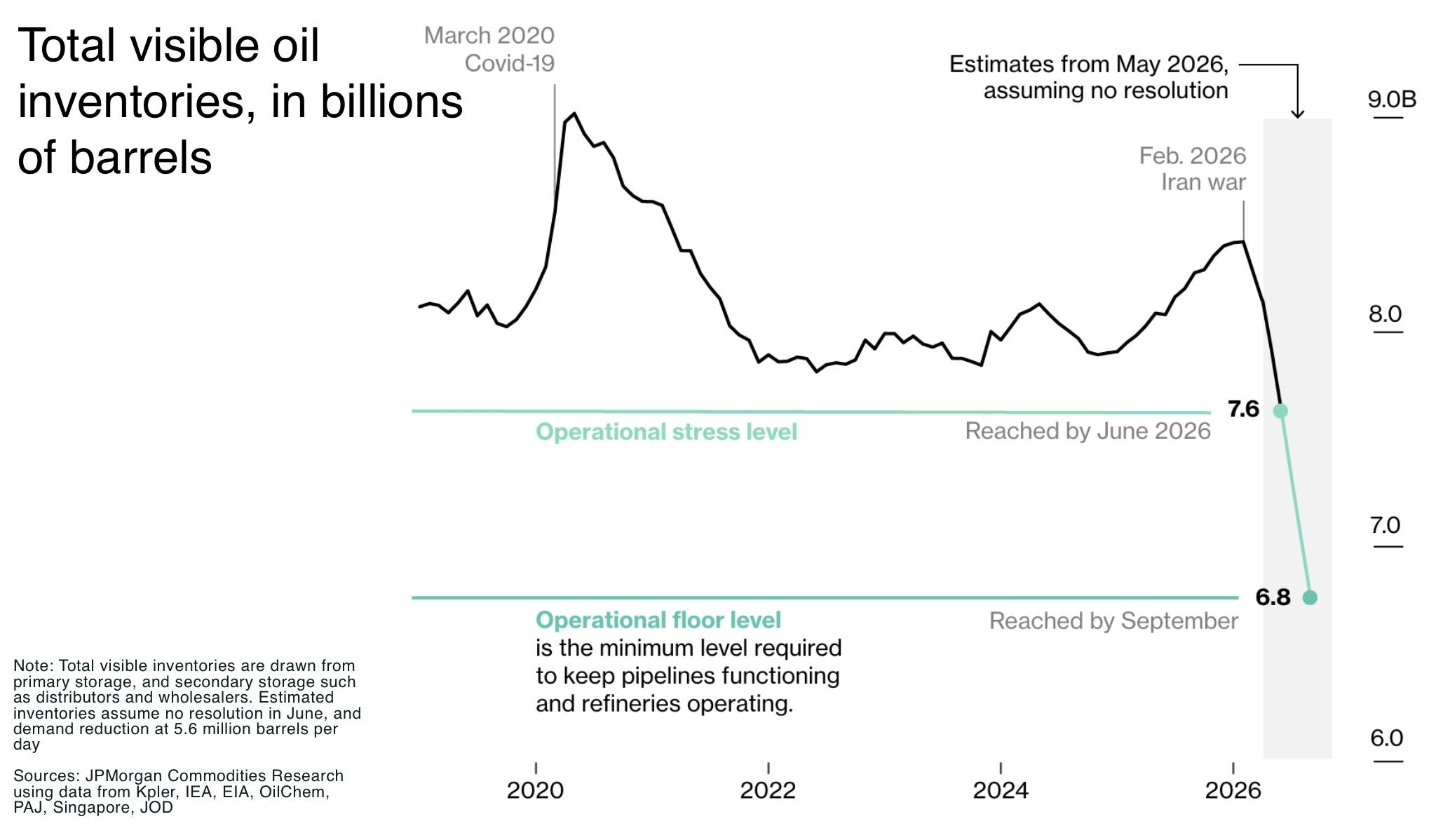
The International Energy Agency reported that global oil production fell to approximately 100.1 million barrels per day in August, down 1.6 million barrels per day from July. More than 10 million barrels per day of Gulf production had been shut in during August, while observed global inventories declined by approximately 507 million barrels between February and August.
To put that in perspective, that’s more than five days of total global oil consumption effectively disappearing from observed stockpiles over a matter of months. That doesn’t mean the world had only five days of oil left. It means the system was consuming an enormous amount of its accumulated cushion to keep supply flowing.
Think of it like a household that suddenly loses a significant portion of its income. The household can maintain its lifestyle by spending savings for a while, but every month it does so, its financial flexibility deteriorates. Eventually, if income doesn’t recover, spending has to fall.
The global oil market works in much the same way. When production and deliveries cannot keep up with consumption, inventories make up the difference. When those inventories become harder to draw down, prices rise until consumption falls or supply returns.
But the key is…in the oil market, forcing consumption lower can mean forcing actual economic activity to stop.
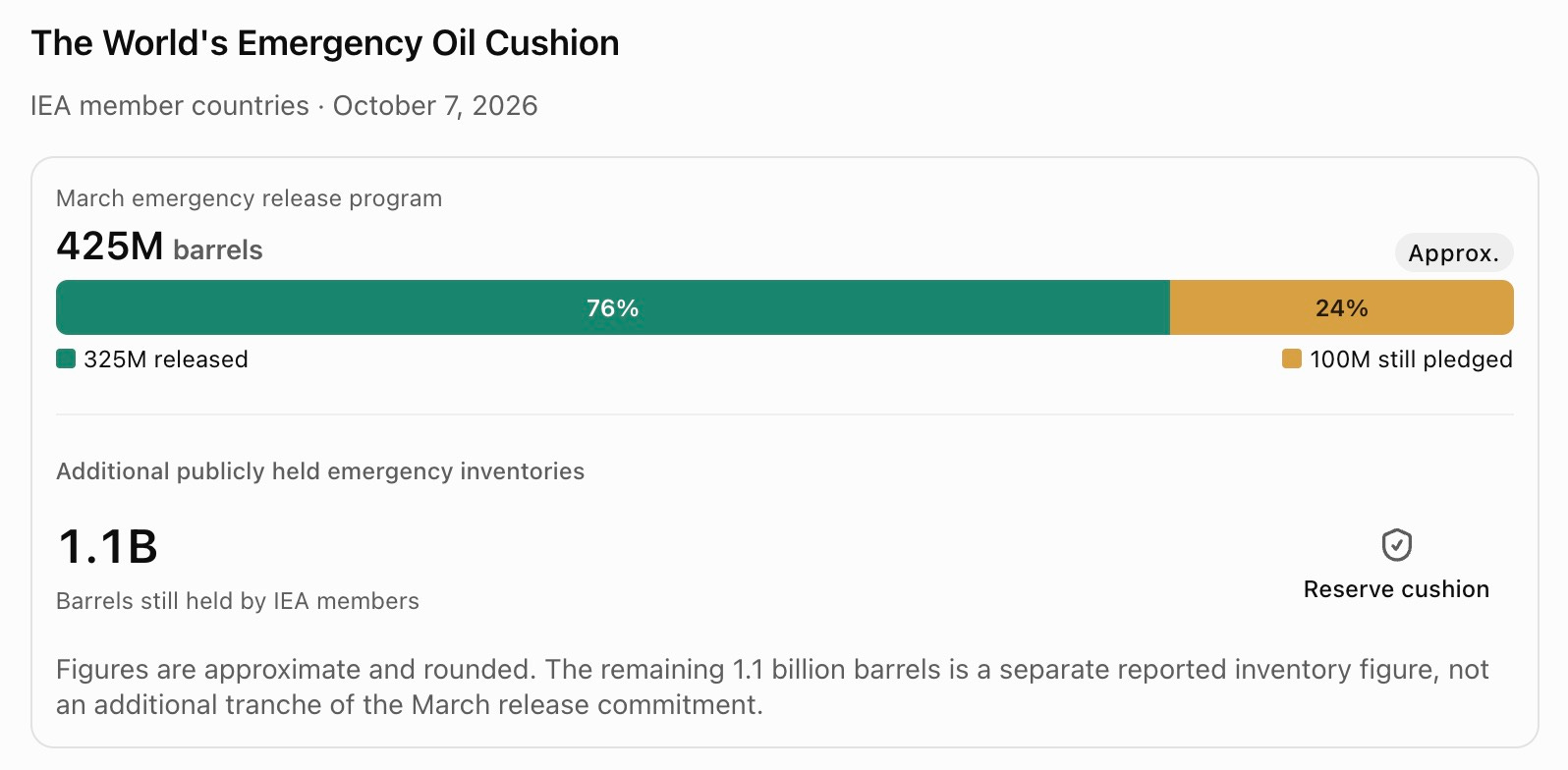
Governments have already responded with emergency measures of historic proportions. In March, IEA member countries committed to releasing 400 million barrels of emergency petroleum stocks, the largest coordinated release in the organization’s history. By early October, hundreds of millions of barrels had already been released, and the IEA was calling for the remaining pledged supply to be delivered faster, particularly diesel.
It’s worth stopping here to appreciate what that actually means.
Governments have spent decades maintaining emergency oil reserves for circumstances like wars, embargoes, and catastrophic supply disruptions. These reserves aren’t intended to manage ordinary price fluctuations. They’re designed to prevent a temporary interruption in physical supply from bringing major parts of the economy to a halt. And now we’re using them on an unprecedented scale.
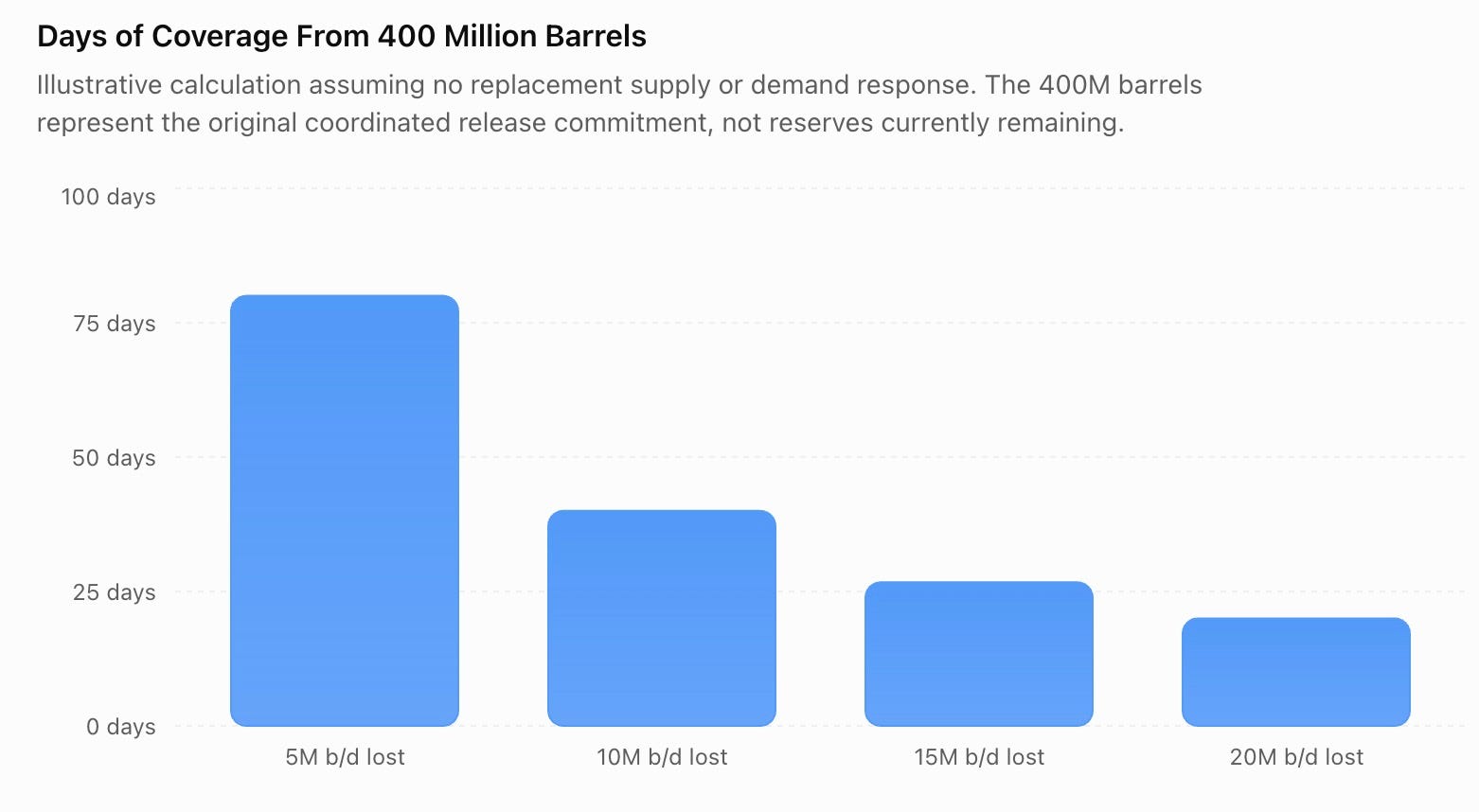
But even 400 million barrels, which sounds almost unimaginably large, is equivalent to just four days of total global oil consumption. Of course, the reserves don’t need to replace all consumption, only the missing supply. At a hypothetical shortfall of 10 million barrels per day, 400 million barrels would cover 40 days of that gap. At 20 million barrels per day, it would cover just 20 days.
That’s why these releases are so important, but also why they aren’t a permanent solution. They buy time for shipping routes to reopen, production to recover, and consumption to adjust. They cannot indefinitely replace millions of barrels of lost daily supply.
And emergency reserves aren’t the only measures being deployed. Governments have relaxed certain fuel regulations, redirected available shipments, and taken steps to protect domestic supplies. China has reportedly restricted petroleum-product exports to preserve fuel at home, while some countries have faced localized fuel restrictions and interruptions to industrial operations.
The IEA’s October 7 statement said approximately 325 million barrels had already been released under the March program, with roughly another 100 million barrels of pledged supplies remaining to be delivered. Member countries still held approximately 1.1 billion barrels of publicly controlled emergency stocks, so it’s important not to suggest that the world is literally running out of emergency oil.
But the fact that these measures are being used at all tells you how unusual the situation has become.
And the consequences are already showing up in the real economy. Petrochemical producers in parts of Asia have curtailed output because of shortages of naphtha and other petroleum-derived inputs. Chinese refiners have reduced throughput amid difficulties obtaining certain crude supplies. Airlines have reduced some services as jet fuel costs have surged, and isolated airports have experienced refueling restrictions. Factories in energy-dependent countries such as Bangladesh have faced interruptions linked to broader fuel and natural gas shortages.
These are not all the same kind of shortage, and not all are directly attributable to crude oil. But they’re examples of energy stress beginning to interfere with the production and movement of actual goods and services.
That’s the distinction I think investors need to understand. A company paying more for diesel has a profitability problem. A company that cannot obtain diesel has an operating problem. A chemical manufacturer paying more for feedstock can try to raise prices. A chemical manufacturer that cannot source feedstock may have no choice but to shut down.
The first situation produces inflation and margin compression. The second can destroy economic output entirely.
And now imagine what happens if another major shock hits before the system has recovered.
Suppose a significant Saudi export facility is damaged, another refinery complex goes offline, or tanker traffic through Hormuz deteriorates further. Suppose another 5 million barrels per day becomes unavailable for three months. That’s 450 million barrels of lost supply before accounting for alternative production or reduced consumption. At 10 million barrels per day, the figure rises to 900 million barrels.
Those numbers are enormous relative to the emergency stock releases already underway. And unlike a temporary price spike, physical damage to oil infrastructure can take months or even years to repair.
The danger isn’t that the world suddenly wakes up one morning with no oil. It’s that the market is forced to balance itself through progressively more painful adjustments: reduced flights, less freight movement, lower factory output, curtailed industrial activity, and eventually government intervention to ensure that essential services receive enough fuel.
At that point, a supply disruption stops being merely an energy-market story and becomes a problem for the entire global economy.
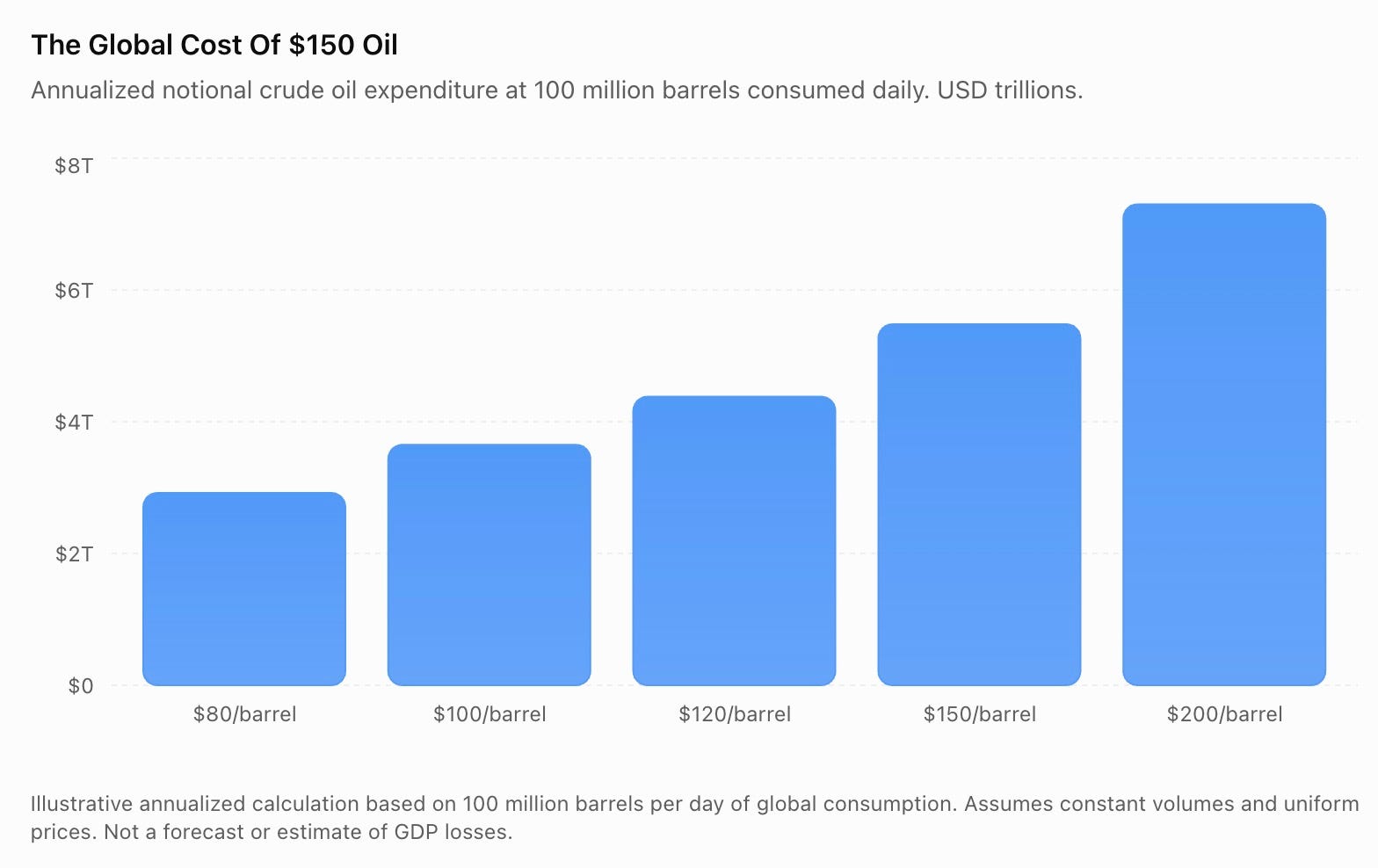
Now consider what $150 oil would mean for the economy. For starters, moving from $100 to $150 per barrel represents a 50% increase in crude prices. At roughly 100 million barrels of daily global consumption, that works out to an additional $5 billion per day in the notional cost of oil, or approximately $1.8 trillion annually if sustained for a full year.
That isn’t the same thing as saying the world loses $1.8 trillion of economic output. Oil producers receive much of that money, consumption adjusts, and actual prices differ across contracts and grades. But it gives you some sense of the staggering amount of purchasing power that would be redirected toward energy.
For households, the effect would show up at the gas pump, in utility and transportation costs, and eventually in the price of just about everything that needs to be manufactured or delivered. For businesses, it would show up in higher operating expenses, shrinking margins, and consumers who suddenly have less money to spend on anything besides necessities.
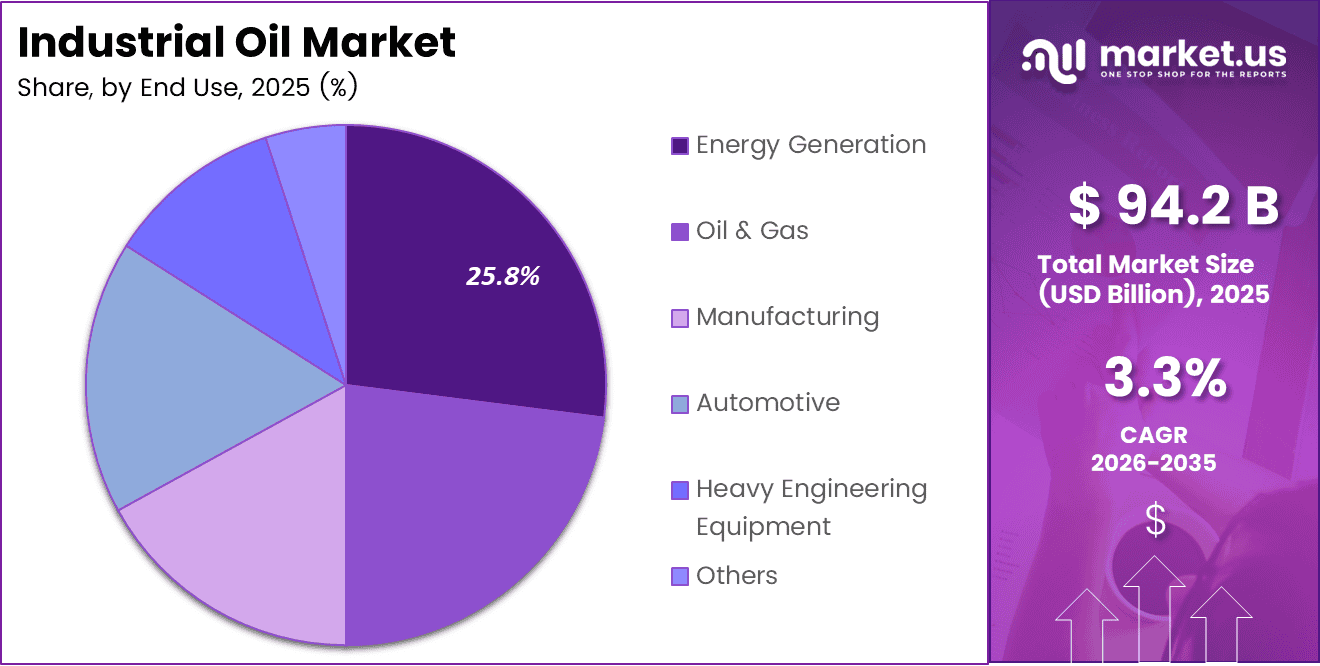
And diesel could make the situation considerably worse. According to the IEA, diesel and gasoil account for nearly 30% of global oil demand, and U.S. diesel prices on a barrel-equivalent basis exceeded $200 in early September, almost double their prewar level. The agency also reported that Gulf diesel exports in August were barely a quarter of their February level. That’s a particularly nasty problem because diesel is essential to trucking, agriculture, construction, shipping, and industrial activity.
In other words, oil doesn’t have to reach $200 for certain parts of the economy to already be experiencing the equivalent of $200 energy costs.
Imagine what that does to a trucking company operating on thin margins, or a farmer who needs diesel to harvest crops, or a manufacturer whose raw materials are becoming more expensive at the same time its customers are cutting back on spending.
Eventually, those higher costs get passed along to consumers, businesses absorb them through lower profits, or economic activity simply stops making financial sense. And that’s how you wind up with an economy in which inflation is rising while growth is slowing.
The Federal Reserve would find itself in an almost impossible position. Under ordinary circumstances, a recession gives the Fed room to cut interest rates to encourage borrowing and spending. But if oil is at $150 and transportation costs are pushing inflation higher, cutting rates aggressively risks worsening inflation expectations and potentially weakening the dollar. Keeping rates elevated, meanwhile, risks accelerating the slowdown and putting even more pressure on indebted households and businesses.
I’ve written extensively about why I think the bond market is already one of the most vulnerable parts of the global financial system. A sustained oil shock could make that problem much worse. If investors demand higher yields to compensate for inflation, governments would face rising financing costs at the same time economic growth and tax revenue are weakening. Corporations refinancing debt would face the same problem, potentially putting additional pressure on private credit, commercial real estate, and highly leveraged businesses.
There is, of course, another possibility. If the recession becomes severe enough, investors could rush into Treasuries and drive yields lower despite elevated energy prices. That’s why I wouldn’t pretend to know exactly how bonds would respond. But the combination of an inflation shock, weakening growth, and enormous existing debt burdens would create an exceptionally difficult environment for policymakers.
And at $200 oil, particularly if accompanied by physical shortages, the situation could become substantially more dangerous.


No comments:
Post a Comment