
Malaysia's #1 Content Aggregator
Poor Kee Thuan Chye; Malaysia Still Wants More
5 Oct 2026 • 7:45 AM MYT
.jpg)
Mihar Dias on Gemini
Poor Kee Thuan Chye; Malaysia Still Wants More
By Rahim Said
I read Kee Thuan Chye’s piece with the peculiar emotion one experiences when an old colleague writes something you wish he didn't have to write. https://www.facebook.com/share/p/19VCdMFCjV/
We once belonged to the same academic ecosystem at USM. In those days, universities were places where people argued about ideas, politics, literature and society without first checking whether the argument came with the correct racial, religious or institutional warranty.
Thuan Chye has remained remarkably consistent.
He wants to be Malaysian.
Unfortunately, Malaysia appears to have developed a rather complicated application procedure for that.
First, you must be born here.
Then you must grow up here.
Then you must eat the food.
Then you must sing Negaraku.
Then you must demonstrate sufficient appreciation of Malay culture, Chinese culture, Indian culture and probably whatever culture happens to be fashionable at the moment.
Thuan Chye has done all that.
He has even given his children Malay, Indian and Chinese names.
Still not enough.
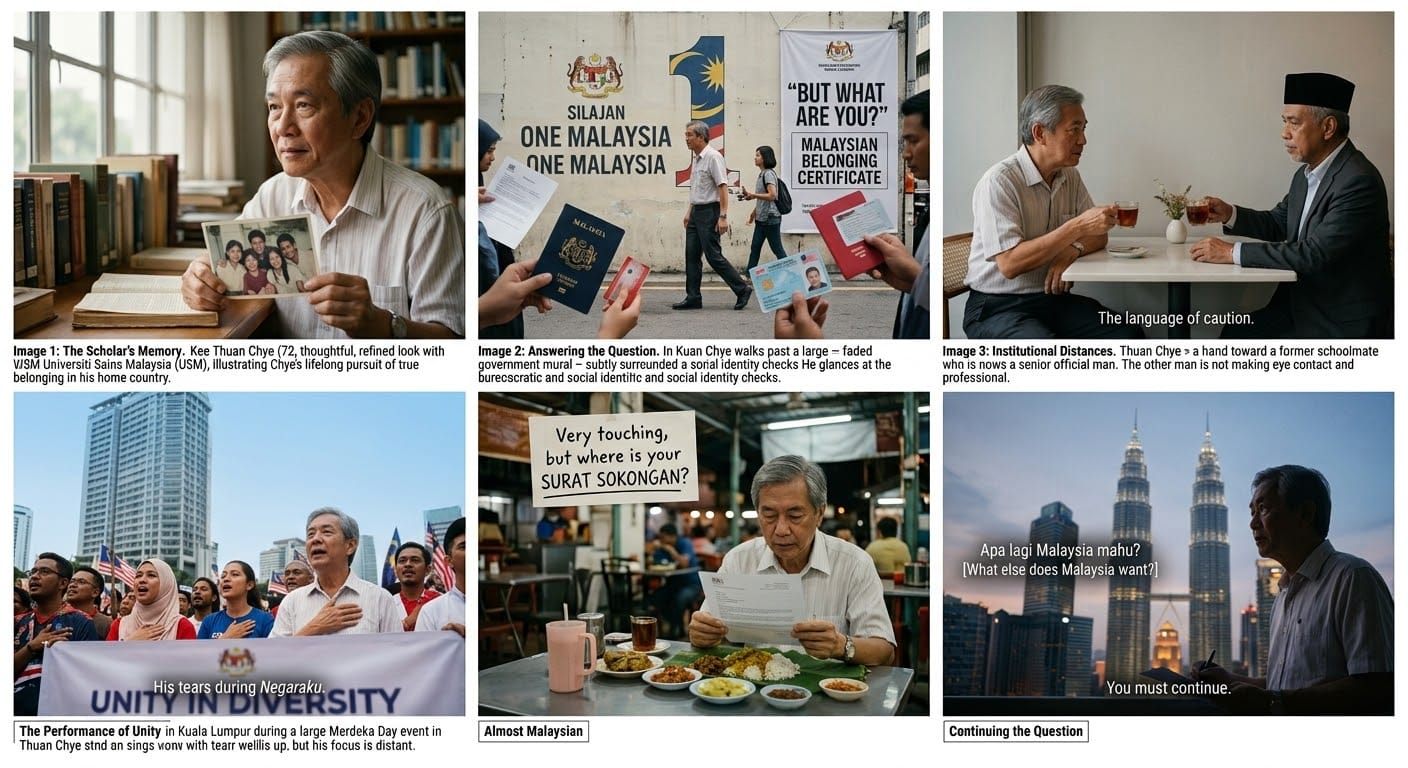
Perhaps the Immigration Department should consider issuing a Malaysian Belonging Certificate.
Validity: five years.
Renewal subject to political circumstances.
Conditions may change without notice.
Thuan Chye’s problem, I suspect, is that he has committed the unforgivable offence of taking Malaysia seriously.
He believed that being Malaysian meant belonging to the country rather than to a racial category.
How quaint.
He thought citizenship was a relationship between an individual and a nation.
We seem occasionally to treat it as a membership card in an enormous and permanently quarrelling club.
And the membership committee is forever asking:
“But what are you?”
Thuan Chye has spent a lifetime answering that question.
Perhaps the better question is:
“What has Malaysia become?”
That is where his article becomes uncomfortable.
He remembers the Malaysia of his youth, when Malay, Chinese and Indian schoolchildren could be friends without somebody eventually producing a constitutional footnote.
He remembers Yusoff Carrim, his Form Six friend, with whom he did things that school authorities would probably have preferred to remain permanently classified.
That is what friendship used to be.
You did not have to establish your ethnic credentials before getting into trouble together.
Then came May 13.
Then came decades in which race and religion became increasingly organised, institutionalised and, occasionally, weaponised for political purposes.
Thuan Chye describes something particularly sad: meeting old Malay friends years later and discovering that they now speak a different language.
Not Bahasa Melayu.
The language of caution.
The language of institutional survival.
The language that tells you that certain subjects are better left untouched.
I recognise the phenomenon.
There is a strange occupational hazard in Malaysia: the higher a person climbs into the establishment, the more carefully he sometimes has to avoid looking down.
Thuan Chye says some of his old schoolmates who have risen into senior positions are particularly difficult to talk to because they cannot complain about the system.
They are beneficiaries of it.
And here I feel especially sorry for him.
Because Tuan Chye has spent much of his life speaking truth to power.
The trouble is that power has become increasingly sophisticated at pretending not to hear.
His question therefore deserves another question.
What does Malaysia actually want from Kee Thuan Chye?
He has already given it 72 years.
He has given it his writing.
His theatre.
His memories.
His children.
His loyalty.
His tears during Negaraku.
His love of Sejarah Melayu.
His appetite for banana-leaf rice.
At this rate, the poor man may eventually have to offer Malaysia his DNA.
Even then someone may say:
“Very touching, Kee Thuan Chye. But where is your surat sokongan?”
The tragedy of being almost Malaysian
There is something deeply Malaysian about Thuan Chye’s predicament.
We are perfectly capable of celebrating diversity in speeches.
We put “unity in diversity” on banners.
We have multicultural festivals.
We eat together.
We pose together.
We sing together.
And then, occasionally, we go back to our respective corners and ask whether the other fellow has been getting too comfortable.
This is the Malaysian paradox:
We are very good at living together. We are less certain about belonging together.
Thuan Chye's sadness is therefore not really about food, music, poetry or even politics.
It is about recognition.
He wants to know whether after 72 years Malaysia will finally stop asking him to prove that he belongs to the country in which he was born.
And that is where I feel sorry for my old USM colleague.
Because Thuan Chye has spent decades trying to convince Malaysia that he is Malaysian.
Perhaps the joke is that Malaysia should have been trying to convince him.
After all, he has already passed the test.
It is Malaysia that appears to be sitting for the examination.
And judging from the answers so far, I am afraid the examiner may have to remark:
“Promising candidate. Unfortunately, still has difficulty with belonging.”
So, Kee Thuan Chye, old friend, you ask:
Apa lagi Malaysia mahu?
I have a cynical suggestion.
Perhaps Malaysia wants you to stop asking.
And that, my dear Kee Thuan Chye, may be precisely why you must continue.
By Rahim Said
I read Kee Thuan Chye’s piece with the peculiar emotion one experiences when an old colleague writes something you wish he didn't have to write. https://www.facebook.com/share/p/19VCdMFCjV/
We once belonged to the same academic ecosystem at USM. In those days, universities were places where people argued about ideas, politics, literature and society without first checking whether the argument came with the correct racial, religious or institutional warranty.
Thuan Chye has remained remarkably consistent.
He wants to be Malaysian.
Unfortunately, Malaysia appears to have developed a rather complicated application procedure for that.
First, you must be born here.
Then you must grow up here.
Then you must eat the food.
Then you must sing Negaraku.
Then you must demonstrate sufficient appreciation of Malay culture, Chinese culture, Indian culture and probably whatever culture happens to be fashionable at the moment.
Thuan Chye has done all that.
He has even given his children Malay, Indian and Chinese names.
Still not enough.
Perhaps the Immigration Department should consider issuing a Malaysian Belonging Certificate.
Validity: five years.
Renewal subject to political circumstances.
Conditions may change without notice.
Thuan Chye’s problem, I suspect, is that he has committed the unforgivable offence of taking Malaysia seriously.
He believed that being Malaysian meant belonging to the country rather than to a racial category.
How quaint.
He thought citizenship was a relationship between an individual and a nation.
We seem occasionally to treat it as a membership card in an enormous and permanently quarrelling club.
And the membership committee is forever asking:
“But what are you?”
Thuan Chye has spent a lifetime answering that question.
Perhaps the better question is:
“What has Malaysia become?”
That is where his article becomes uncomfortable.
He remembers the Malaysia of his youth, when Malay, Chinese and Indian schoolchildren could be friends without somebody eventually producing a constitutional footnote.
He remembers Yusoff Carrim, his Form Six friend, with whom he did things that school authorities would probably have preferred to remain permanently classified.
That is what friendship used to be.
You did not have to establish your ethnic credentials before getting into trouble together.
Then came May 13.
Then came decades in which race and religion became increasingly organised, institutionalised and, occasionally, weaponised for political purposes.
Thuan Chye describes something particularly sad: meeting old Malay friends years later and discovering that they now speak a different language.
Not Bahasa Melayu.
The language of caution.
The language of institutional survival.
The language that tells you that certain subjects are better left untouched.
I recognise the phenomenon.
There is a strange occupational hazard in Malaysia: the higher a person climbs into the establishment, the more carefully he sometimes has to avoid looking down.
Thuan Chye says some of his old schoolmates who have risen into senior positions are particularly difficult to talk to because they cannot complain about the system.
They are beneficiaries of it.
And here I feel especially sorry for him.
Because Tuan Chye has spent much of his life speaking truth to power.
The trouble is that power has become increasingly sophisticated at pretending not to hear.
His question therefore deserves another question.
What does Malaysia actually want from Kee Thuan Chye?
He has already given it 72 years.
He has given it his writing.
His theatre.
His memories.
His children.
His loyalty.
His tears during Negaraku.
His love of Sejarah Melayu.
His appetite for banana-leaf rice.
At this rate, the poor man may eventually have to offer Malaysia his DNA.
Even then someone may say:
“Very touching, Kee Thuan Chye. But where is your surat sokongan?”
The tragedy of being almost Malaysian
There is something deeply Malaysian about Thuan Chye’s predicament.
We are perfectly capable of celebrating diversity in speeches.
We put “unity in diversity” on banners.
We have multicultural festivals.
We eat together.
We pose together.
We sing together.
And then, occasionally, we go back to our respective corners and ask whether the other fellow has been getting too comfortable.
This is the Malaysian paradox:
We are very good at living together. We are less certain about belonging together.
Thuan Chye's sadness is therefore not really about food, music, poetry or even politics.
It is about recognition.
He wants to know whether after 72 years Malaysia will finally stop asking him to prove that he belongs to the country in which he was born.
And that is where I feel sorry for my old USM colleague.
Because Thuan Chye has spent decades trying to convince Malaysia that he is Malaysian.
Perhaps the joke is that Malaysia should have been trying to convince him.
After all, he has already passed the test.
It is Malaysia that appears to be sitting for the examination.
And judging from the answers so far, I am afraid the examiner may have to remark:
“Promising candidate. Unfortunately, still has difficulty with belonging.”
So, Kee Thuan Chye, old friend, you ask:
Apa lagi Malaysia mahu?
I have a cynical suggestion.
Perhaps Malaysia wants you to stop asking.
And that, my dear Kee Thuan Chye, may be precisely why you must continue.


No comments:
Post a Comment