


Mariam Mokhtar
Published: Sep 4, 2026 11:09 AM
Updated: 1:09 PM
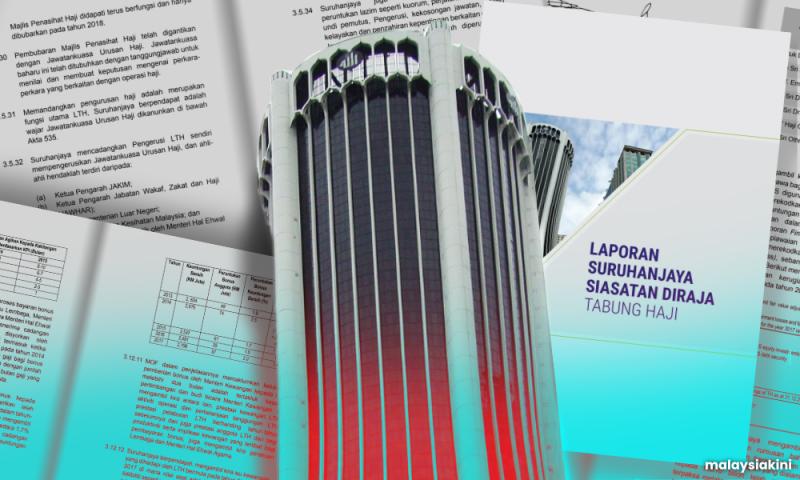
COMMENT | Nurhisham Hussein, an economic adviser to the Prime Minister’s Office, said: “When I read the RCI report, I had a bit of a sense of déjà vu.”
Apparently, Felda Global Ventures (FGV) had given him déjà vu. He said the problems uncovered by the Tabung Haji royal commission of inquiry were almost the same: assets bought at inflated prices, insufficient security, and inadequate due diligence.
That alone should worry us, because if we’ve seen this before, why didn’t anyone stop it? And who was supposed to?
FGV, 1MDB and its power asset acquisitions, Mara’s Melbourne property, Felda’s London hotel purchases, the littoral combat ships involving Boustead, and the Defence Ministry’s military land swaps.
And a succession of controversial investments by government-linked institutions, including Khazanah.
Published: Sep 4, 2026 11:09 AM
Updated: 1:09 PM
COMMENT | Nurhisham Hussein, an economic adviser to the Prime Minister’s Office, said: “When I read the RCI report, I had a bit of a sense of déjà vu.”
Apparently, Felda Global Ventures (FGV) had given him déjà vu. He said the problems uncovered by the Tabung Haji royal commission of inquiry were almost the same: assets bought at inflated prices, insufficient security, and inadequate due diligence.
That alone should worry us, because if we’ve seen this before, why didn’t anyone stop it? And who was supposed to?
FGV, 1MDB and its power asset acquisitions, Mara’s Melbourne property, Felda’s London hotel purchases, the littoral combat ships involving Boustead, and the Defence Ministry’s military land swaps.
And a succession of controversial investments by government-linked institutions, including Khazanah.

These cases are not identical. Some involve allegations, some poor investments, some questionable valuations, some governance failures, and some investigations into possible wrongdoing; but the questions sound remarkably familiar.
Who set the price? Who checked it? Who conducted the due diligence? Who raised concerns? Who had the power to stop it? More importantly, why didn’t they?
Numb to the song and dance
We are exposed to never-ending violence on our television screens, so that horrific images eventually become almost routine. Could the same thing be happening with scandal?
Having been subjected to one major scandal after another for ages, perhaps Malaysians have become desensitised to scandal itself.
FGV, 1MDB, Mara, Felda, LCS, the Defence Ministry, and Tabung Haji.
The names change. The institutions change. The governments change.
Hearing that millions or billions of ringgit may have been lost, we demand answers. There is an investigation. A report is produced. There are calls for reform.
And then? We move on.
Perhaps the most dangerous consequence is not that Malaysians no longer care. It is that we no longer expect anything to change.
Someone may have failed. Someone may have ignored warnings. Someone may have approved the deal. Or the system is flawed. Yet those responsible can appear to escape meaningful consequences.
Another scandal. Another report. Another promise. And another opportunity for the public to shrug and say: “What else is new?”
That is not apathy. It is something potentially more dangerous: resignation.
We may not have become immune to the scandals. We may have become resigned to the lack of consequences.
Scrutiny in Khazanah
That raises an even bigger question: Is the problem simply corruption or poor governance, or is it the absence of political will to stop it?
Who is prepared to act? Political leaders, politicians or senior civil servants? Who is prepared to say “stop” before the next billion disappears?
Some Malaysians claim that Khazanah has historically been treated differently because it is regarded as a sophisticated investment institution, with losses often being framed as investment risk rather than a governance failure.
Oftentimes, scrutiny of Khazanah becomes a debate about whether the fund is being unfairly attacked, rather than simply asking whether individual decisions deserve the same detailed scrutiny as those at Tabung Haji, Felda, or FGV.
Perhaps some of that deference comes from its elitist image, the assumption that because its people are highly educated, including graduates of prestigious universities, they must know best.
But a prestigious degree is not a guarantee against bad judgment, and public money is still public money.
Hence, Khazanah should undergo the same thorough questioning as any other institution entrusted with public money.
Who approved the investment? What due diligence was done? Who raised concerns? And who had the power to stop it?
And this is a marked development. On Aug 20, Prime Minister Anwar Ibrahim ordered a forensic investigation into Khazanah’s subsidiary Xeraya Capital after governance concerns and irregularities in past transactions were identified.
Perhaps being sophisticated should mean being more accountable, not less.
Speak up when it matters
Nurhisham saw Tabung Haji and thought of FGV. But déjà vu should mean more than recognising a familiar problem after the damage is done; it should force us to ask why the pattern keeps repeating.
Perhaps the challenge to Malaysia’s leaders and senior civil servants is simple: Break ranks.
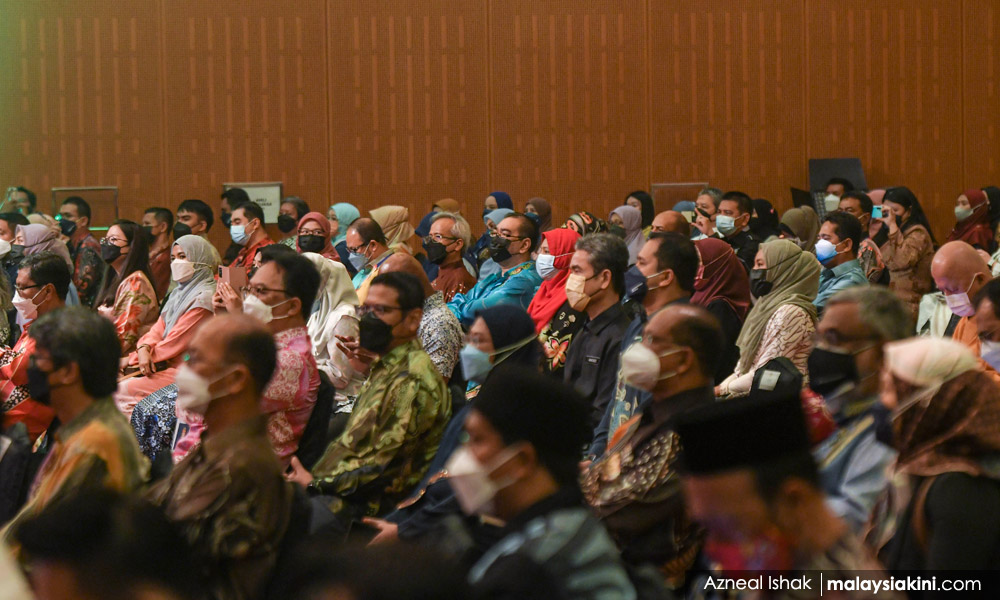
A civil service meeting in Putrajaya, circa 2021
The old guard cannot remain the permanent gatekeeper of what can and cannot change, and the younger generation cannot simply inherit the same habits.
It is not enough to be younger if you still think like the old guard.
If you know something is wrong, say so. If a deal does not make financial sense, stop it. If warnings are ignored, speak up. If political pressure is being applied, expose it. And if you have the authority to intervene, use it.
Stop telling us, “I don’t know what happened.” Stop telling us, “There is nothing I can do.” And stop blaming everything on the mysterious “deep state” when those in positions of authority refuse to act.
Because leadership is not about explaining why something went wrong after billions have disappeared; it is about having the courage to say “No” before they do.
Malaysia does not need another report telling us what went wrong. It needs someone inside the system brave enough to break the pattern.
Whether that person will come from the old guard, the new guard, politics or the civil service remains to be seen.
But until someone does, déjà vu will remain Malaysia’s most predictable political phenomenon.
It is not enough to be younger if you still think like the old guard.
If you know something is wrong, say so. If a deal does not make financial sense, stop it. If warnings are ignored, speak up. If political pressure is being applied, expose it. And if you have the authority to intervene, use it.
Stop telling us, “I don’t know what happened.” Stop telling us, “There is nothing I can do.” And stop blaming everything on the mysterious “deep state” when those in positions of authority refuse to act.
Because leadership is not about explaining why something went wrong after billions have disappeared; it is about having the courage to say “No” before they do.
Malaysia does not need another report telling us what went wrong. It needs someone inside the system brave enough to break the pattern.
Whether that person will come from the old guard, the new guard, politics or the civil service remains to be seen.
But until someone does, déjà vu will remain Malaysia’s most predictable political phenomenon.
MARIAM MOKHTAR is a defender of the truth, the admiral-general of the Green Bean Army, and the president of the Perak Liberation Organisation (PLO). Find her on her website and on X.


Kah kah kah...
ReplyDeleteHello...quiet in here? Tan Sri sudah masuk jel kah?
ReplyDelete