
As smoke spreads across South-east Asia, Indonesia works with neighbours to tackle transboundary haze
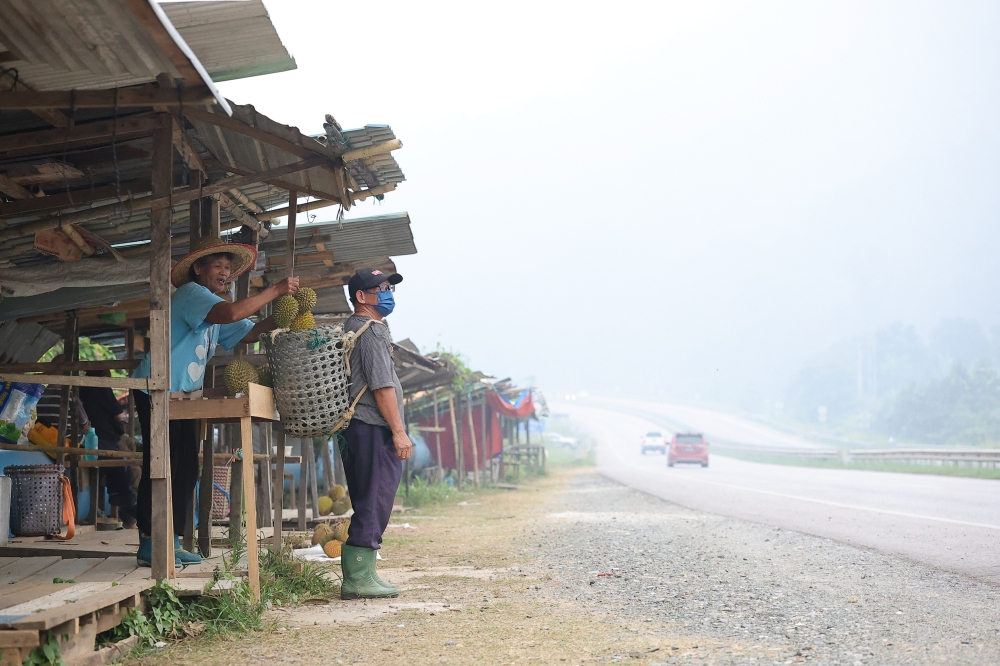
Kampung Rasau residents Rikat Tanggok (right) and his wife, Jumi Buu, sell durians by the roadside along the Serian-Sri Aman road in Sarawak, on September 4, 2026 as South-east Asia is hit by transboundary haze. — Bernama pic
Summary
- Indonesia is actively collaborating with neighboring countries within the ASEAN framework to combat transboundary haze originating from forest and land fires in the region.
- Indonesian Foreign Ministry Spokesperson Vahd Nabyl emphasized the significance of maintaining strong bilateral relations to tackle environmental issues with cross-border impacts.
- The country is fulfilling its obligations under the ASEAN Agreement on Transboundary Haze Pollution, including providing daily reports and data on environmental conditions.
- Indonesia is also advocating for the full operationalization of the ASEAN Coordinating Centre for Transboundary Haze Pollution Control to enhance regional response efforts.
First Published: Saturday, 05 Sep 2026 10:33 AM MYT
Last Modified: Saturday, 05 Sep 2026 10:36 AM MYT
JAKARTA, Sept 5 — Indonesia continues to coordinate with neighbouring countries and utilise Asean mechanisms to address transboundary haze, while intensifying domestic efforts to control forest and land fires as smoke spreads across parts of South-east Asia.
Indonesian Foreign Ministry spokesman Vahd Nabyl said Indonesia placed importance on cooperation with neighbouring countries and maintaining good bilateral relations, particularly in addressing environmental issues with cross-border impacts such as haze.
“Together with countries in the region, Indonesia is also stepping up vigilance against dry weather linked to prevailing climate conditions,” he said in a statement on Saturday.
Haze from fires in Indonesia has spread across parts of South-east Asia, affecting neighbouring Malaysia, Singapore and Brunei as well as the Philippines.
In Malaysia, an emergency was declared throughout Serian Division in Sarawak on Friday after the Air Pollutant Index (API) exceeded 500, while several other areas in the state have also recorded hazardous or very unhealthy air quality.
Vahd said Indonesia was also using the Asean framework to address the haze, with mechanisms under the Asean Agreement on Transboundary Haze Pollution (AATHP) already in place and regular meetings held to discuss the issue and coordinate follow-up measures.
He said the Asean Secretariat, acting as the Interim Asean Coordinating Centre for Transboundary Haze Pollution Control (ACC THPC), had maintained Alert Level 3 for the region since August 26, requiring Asean member states to submit daily Situation Reports, including haze trajectory maps, for distribution to national focal points.
Vahd said Indonesia had fulfilled all daily reporting obligations and mandatory actions under Alert Level 3 in accordance with Asean’s Monitoring, Assessment and Joint Emergency Response procedures.
This included proactively providing data on hotspots, environmental conditions, indications of haze movement and forest and land fire control efforts.
“Indonesia also continues to push for the Asean Coordinating Centre for Transboundary Haze Pollution Control to become fully operational,” he said. — Bernama


No comments:
Post a Comment