
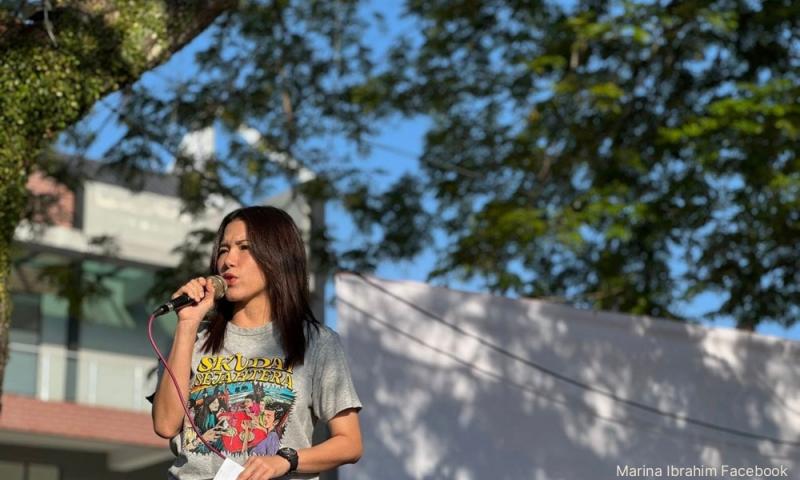

Marina: DAP leader's stance on Najib pardon drove me out of politics
Published: Jul 1, 2026 2:07 PM
Updated: 4:16 PM
Former DAP Skudai assemblyperson Marina Ibrahim has revealed that a party leader's position on former prime minister Najib Abdul Razak's pardon was the "last straw" that shattered her faith in politics and prompted her to retire from the political arena.
In a Facebook post last night, she said elections often expose politicians' true colours, claiming that whenever polls approach, the Najib issue resurfaces with the message that "a vote for BN equals saving Najib."
"I only hope that the DAP leader who met with me at a community clothing shop in Taman Mas (Skudai) on April 12 still has a shred of shame left when reading this article. That is, of course, if they still have any sense of shame.
"Many say I betrayed the struggle. Many also say I sulked and left just because I was moved to a different constituency.
“But they do not know... I lost faith in politics not because I was moved. That conversation was the very point that completely destroyed my confidence in our principles."
Timing of pardon
Marina claimed the DAP leader, who had previously been outspoken against Najib's pardon, told her there was nothing wrong with the former Umno president receiving a royal pardon and serving his sentence under house arrest in view of his past contributions.
She quoted the leader as saying: "We hope Najib only receives his pardon after the general election. If he is pardoned before the election, the public’s trust - especially the Chinese community's - towards us will decline."
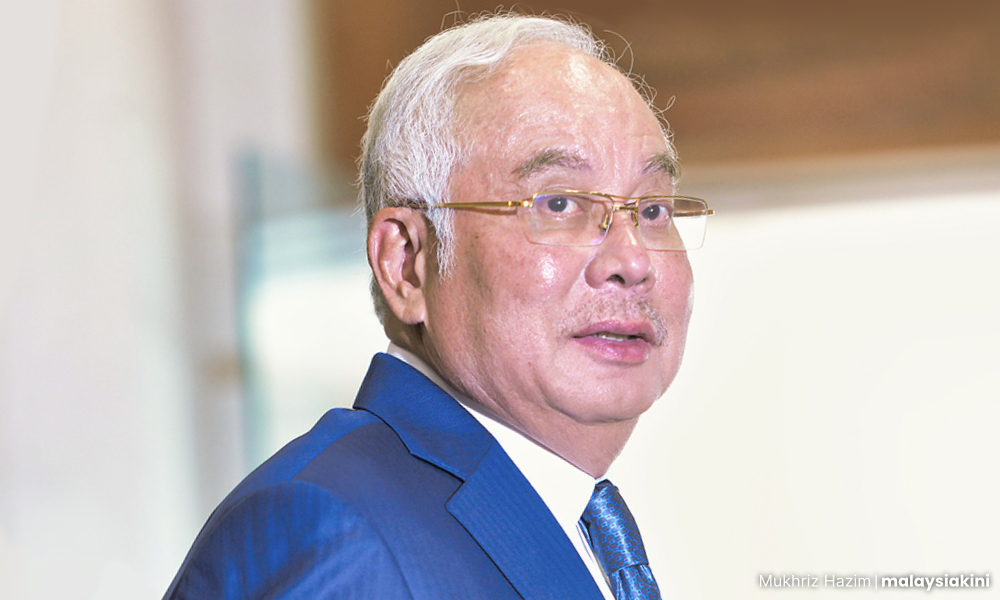
Ex-PM Najib Abdul Razak
Marina said the conversation convinced her the DAP leadership already knew Umno's position on the issue and understood there was a high likelihood that Najib would eventually be pardoned.
"If Najib only receives his pardon after the party wins GE, by then it will already be a done deal. Voters will just have to accept it, and positions within the government will no longer be affected.
"At that time, no one knew when the state election would be held. That is why this issue was not played up openly; instead, they chose to remain silent as long as they could," she added.
‘Political performance’
According to Marina, the DAP leader also spoke about plans to manage public perception during the party's upcoming special congress to regain the confidence of Chinese voters and avoid a repeat of the backlash seen in the Sabah election.
“How certain leaders would be willing to resign from their ministerial posts if Najib received his pardon too early, but at the same time, would still openly declare their continued support for the federal government.
"To me, all of that looked more like a political performance. Because they also knew that by then, the general election would not be far off.
“Resigning as a minister would no longer have a major impact on the party, but it would give the impression that they still have 'principles'. All of this was done solely to avoid the anger of voters, just like what happened in Sabah," she said.
"If Najib only receives his pardon after the party wins GE, by then it will already be a done deal. Voters will just have to accept it, and positions within the government will no longer be affected.
"At that time, no one knew when the state election would be held. That is why this issue was not played up openly; instead, they chose to remain silent as long as they could," she added.
‘Political performance’
According to Marina, the DAP leader also spoke about plans to manage public perception during the party's upcoming special congress to regain the confidence of Chinese voters and avoid a repeat of the backlash seen in the Sabah election.
“How certain leaders would be willing to resign from their ministerial posts if Najib received his pardon too early, but at the same time, would still openly declare their continued support for the federal government.
"To me, all of that looked more like a political performance. Because they also knew that by then, the general election would not be far off.
“Resigning as a minister would no longer have a major impact on the party, but it would give the impression that they still have 'principles'. All of this was done solely to avoid the anger of voters, just like what happened in Sabah," she said.
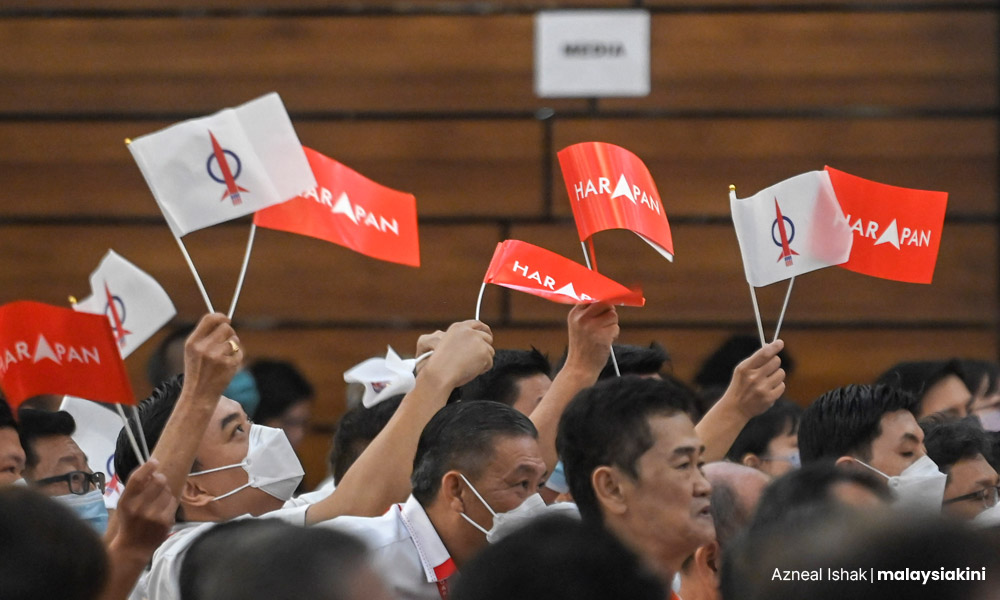
Marina questioned whether the issue of Najib's pardon would have been raised so quickly to attack the opposition if Johor Umno had not first declared it did not want to cooperate with DAP ahead of the Johor election, or whether it would have remained buried.
"For four years, we have all known Umno’s stance on the Najib issue. If DAP truly considered this a red line that could never be compromised, why did they continue to hope that cooperation with BN would carry on for those four years?"
She noted that Johor never had a unity government and argued that, if the issue truly involved non-negotiable principles, DAP should have been the first to sever ties with Umno in Johor.
"Yet until right before the Johor election, DAP leaders were still trying to secure cooperation with BN and hoping the relationship could continue.
“Is this a matter of principle, or a matter of political necessity?"
She also pointed out that Umno Youth chief Dr Akmal Saleh, a frequent DAP critic, did not "join BN, Umno, or become a Malacca exco member yesterday."
"If Umno had not drawn that dividing line first, would the narrative of 'a vote for a certain party equal a vote for Akmal' have even emerged?"
Marina conceded that perhaps she was too “naive” and did not know how to play politics.
"But I cannot help but ask: Has manipulating the voters' trust truly become part of political strategy? Is the problem that my worldview is not big enough, or has deception simply become considered a norm in politics?"
Denies being influenced
Marina also dismissed claims that she had been influenced by those around her, saying critics did not know her team and that none of them had vested interests.
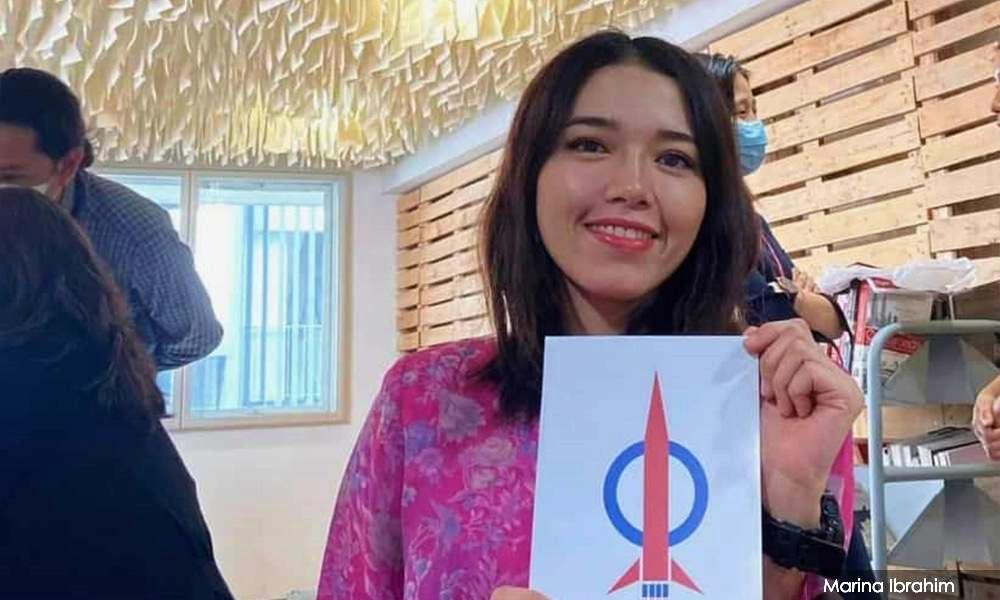
She revealed that the final sentence in her letter declining the party's offer to contest read: "I hope that as leaders, we will never forget the reason why the voters placed their trust in us in the first place."
"In the past, when others did the same thing, we said it was wrong. Today, when we do it ourselves... suddenly it becomes right? Or do principles actually change depending on who is doing it? If that is the case... isn't that what you call a double standard?"
"Most of the time, the scary thing is not which side you stand on. What is more worrying is when your stance constantly shifts according to the situation, and then everything is packaged, justified, and the people are even manipulated and incited to agree with what you call 'the bigger picture'."
"You can very well consider me not mature enough or lacking in experience. But to me, what is called 'the bigger picture' is often just a narrative carefully constructed by politicians. A narrative that exploits the people's sense of justice, emotions, and trust so they believe it is the only right path."
"The reality of the bigger picture is simply this: you, the people, are the chess pieces. But the ones moving the chess pieces are certain politicians seeking their own interests."


No comments:
Post a Comment