
A kingdom is not a prize to be seized
The attempted removal of Yang di-Pertuan Besar Tuanku Muhriz Tuanku Munawir has deeply troubled many Malaysians
Updated 7 hours ago
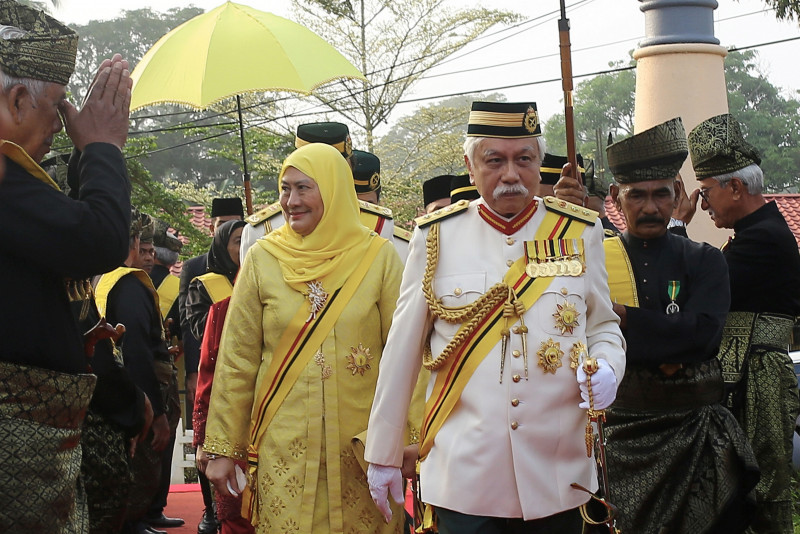
Institutions only survive when they are stronger than the ambitions of those who temporarily surround them. - June 8, 2026

by Vinod Sekhar
THERE are moments in a nation’s history when the question before us is larger than politics, larger than personalities, and larger even than the individuals immediately involved.
This is one of those moments.
The events unfolding in Negeri Sembilan are not merely about who sits upon a throne. They are concerned whether institutions that have survived generations will continue to be protected by principle or become vulnerable to convenience.
The attempted removal of Yang di-Pertuan Besar Tuanku Muhriz Tuanku Munawir has deeply troubled many Malaysians, myself included.
Not because I am interested in palace intrigue. Not because I belong to one faction or another. But because of the precedent that such actions threaten to establish.
If a sitting ruler who has committed no proven crime, violated no demonstrated constitutional obligation, and whose reign has brought stability and dignity to his state, can be displaced through manoeuvring, then what message are we sending to future generations?
Is that loyalty temporary?
Do institutions exist only until they become inconvenient?
Does that manipulated influence matter more than legitimacy?
History teaches us that societies rarely collapse because of one dramatic event. They weaken when norms are abandoned and when powerful individuals begin to believe they can reinterpret long-standing institutions to suit their immediate interests.
It may be a ruler. It may be a judge. It may be a prime minister. The principle remains the same.
Institutions only survive when they are stronger than the ambitions of those who temporarily surround them.
For nearly two decades, HRH Tuanku Muhriz has represented continuity, moderation and dignity. His reign has been marked not by controversy but by quiet service. He ascended to the throne after one of the longest waits in Malaysian royal history, carrying himself not with bitterness but with grace.
His contribution to Negeri Sembilan has often been understated precisely because it has been steady. The strongest leaders are frequently the least theatrical.
Alongside him stands Tuanku Aishah Rohani, whose own record of service extends into education, healthcare and academia. She serves as Chancellor of the Islamic Science University of Malaysia and has become an important patron of educational and social initiatives. Institutions, schools and healthcare facilities carry her name because of her commitment to public service.
Their family has likewise embraced service rather than celebrity.
Tunku Ali Redhauddin, an heir to the throne, has worked across the public, private and non-profit sectors. Highly educated, his leadership in organisations such as Cancer Research Malaysia, his military service, and his engagement with international institutions reflect a modern vision of public duty.
This is not a family known for excess.
It is a family known for engagement
A family that has consistently attempted to bridge tradition and modernity. A family that has represented Negeri Sembilan and Malaysia with dignity on both national and international stages.
The greatness of Negeri Sembilan has always been rooted in something unique. It is a state built upon adat, consultation, balance and consensus. The genius of its system is that power is never meant to belong entirely to any one individual.
Yet neither should it become vulnerable to temporary alliances, personal greed and ambition or political calculations.
The people of Negeri Sembilan deserve certainty. The institution of monarchy deserves protection.
And Malaysia deserves constitutional clarity.
The principle should unite all Malaysians:
No ruler should be removed simply because he is inconvenient to the ambitions of others. No institution should be altered because temporarily influential people believe they can get away with it.
And no generation should inherit a precedent that weakens the very foundations that previous generations worked so hard to preserve.
The answer is not conflict.
The answer is not division.
The answer is fidelity to law, fidelity to custom, and critically - fidelity to the spirit of justice.
Because when institutions are protected, everyone benefits. When institutions are weakened, eventually everyone pays the price.
I know wisdom will prevail, and Negeri Sembilan will emerge stronger.
And I hope that future generations will look back on this moment not as the beginning of institutional decline, but as the moment Malaysia chose principle over expediency.
That is the choice before us.
And it is a choice that will echo long after today’s headlines have faded.
by Vinod Sekhar
THERE are moments in a nation’s history when the question before us is larger than politics, larger than personalities, and larger even than the individuals immediately involved.
This is one of those moments.
The events unfolding in Negeri Sembilan are not merely about who sits upon a throne. They are concerned whether institutions that have survived generations will continue to be protected by principle or become vulnerable to convenience.
The attempted removal of Yang di-Pertuan Besar Tuanku Muhriz Tuanku Munawir has deeply troubled many Malaysians, myself included.
Not because I am interested in palace intrigue. Not because I belong to one faction or another. But because of the precedent that such actions threaten to establish.
If a sitting ruler who has committed no proven crime, violated no demonstrated constitutional obligation, and whose reign has brought stability and dignity to his state, can be displaced through manoeuvring, then what message are we sending to future generations?
Is that loyalty temporary?
Do institutions exist only until they become inconvenient?
Does that manipulated influence matter more than legitimacy?
History teaches us that societies rarely collapse because of one dramatic event. They weaken when norms are abandoned and when powerful individuals begin to believe they can reinterpret long-standing institutions to suit their immediate interests.
It may be a ruler. It may be a judge. It may be a prime minister. The principle remains the same.
Institutions only survive when they are stronger than the ambitions of those who temporarily surround them.
For nearly two decades, HRH Tuanku Muhriz has represented continuity, moderation and dignity. His reign has been marked not by controversy but by quiet service. He ascended to the throne after one of the longest waits in Malaysian royal history, carrying himself not with bitterness but with grace.
His contribution to Negeri Sembilan has often been understated precisely because it has been steady. The strongest leaders are frequently the least theatrical.
Alongside him stands Tuanku Aishah Rohani, whose own record of service extends into education, healthcare and academia. She serves as Chancellor of the Islamic Science University of Malaysia and has become an important patron of educational and social initiatives. Institutions, schools and healthcare facilities carry her name because of her commitment to public service.
Their family has likewise embraced service rather than celebrity.
Tunku Ali Redhauddin, an heir to the throne, has worked across the public, private and non-profit sectors. Highly educated, his leadership in organisations such as Cancer Research Malaysia, his military service, and his engagement with international institutions reflect a modern vision of public duty.
This is not a family known for excess.
It is a family known for engagement
A family that has consistently attempted to bridge tradition and modernity. A family that has represented Negeri Sembilan and Malaysia with dignity on both national and international stages.
The greatness of Negeri Sembilan has always been rooted in something unique. It is a state built upon adat, consultation, balance and consensus. The genius of its system is that power is never meant to belong entirely to any one individual.
Yet neither should it become vulnerable to temporary alliances, personal greed and ambition or political calculations.
The people of Negeri Sembilan deserve certainty. The institution of monarchy deserves protection.
And Malaysia deserves constitutional clarity.
The principle should unite all Malaysians:
No ruler should be removed simply because he is inconvenient to the ambitions of others. No institution should be altered because temporarily influential people believe they can get away with it.
And no generation should inherit a precedent that weakens the very foundations that previous generations worked so hard to preserve.
The answer is not conflict.
The answer is not division.
The answer is fidelity to law, fidelity to custom, and critically - fidelity to the spirit of justice.
Because when institutions are protected, everyone benefits. When institutions are weakened, eventually everyone pays the price.
I know wisdom will prevail, and Negeri Sembilan will emerge stronger.
And I hope that future generations will look back on this moment not as the beginning of institutional decline, but as the moment Malaysia chose principle over expediency.
That is the choice before us.
And it is a choice that will echo long after today’s headlines have faded.
Datuk Dr Vinod Sekhar is the publisher of The Vibes and Chairman of the Petra Group


This is the core issue of fairness and due process, which the Rais Yatim guy spouting his so-called expertise about Negeri Sembilan Adat has failed to be convincing.
ReplyDeleteWhat was the need to remove the sitting Yang Di Pertuan Besar in the first place ? Unexplained.
Was the "removal" done via Due Process ? Doesn't look convincing.