
How the Houthis went from Yemen’s fringes to controlling a global chokepoint

Fighters loyal to the Houthi authorities, march during a rally to recruit more fighters, in Sanaa, Yemen on September 10, 2026. — AFP pic
Summary
- In recent developments, Yemen's Houthi militia, an Iran-backed group, has seized control of the strategic Bab al-Mandab Strait and the entire Red Sea coast, solidifying their position as a significant regional force.
- Originating from Yemen's Zaidi minority, the Houthis have expanded from an isolated faction to a key player in the Middle East, with considerable military strength and strategic alliances, including close ties with Iran.
- Their control over key maritime routes enhances their ability to disrupt commerce, particularly affecting Saudi Arabian oil shipments.
- The group's actions align them with Tehran's "Axis of Resistance," though they maintain some autonomy from Iran.
First Published: Sunday, 13 Sep 2026 9:00 PM MYT
DUBAI, Sept 13 — Within a matter of days, Yemen’s Houthis have swept south and seized the strategic Bab al-Mandab Strait, cementing their rise as a force to be reckoned with in the constellation of Iran-backed armed groups across the Middle East.
Once considered a relatively isolated religious and military movement, the Houthis now hold all of Yemen’s Red Sea coast, as well as significant territory in the country’s north, including the capital Sanaa.
Minority community
The Houthis belong to the Zaidi community, an offshoot of Shia Islam, which is a minority in Yemen’s mostly Sunni population.
They rose up in the 1990s in response to alleged sectarian discrimination against the Zaidis, who are mostly present in the country’s impoverished north.
The Houthi movement, also known as Ansar Allah (Supporters of God), is named after its late spiritual leader Badreddin al-Houthi and his son Hussein, who was killed by Yemeni government forces in 2004.
Houthi’s other son, Abdulmalik, assumed the reins of power, delivering fiery speeches and transforming his group from an isolated faction in the northwest into the ruling power in the capital and a regional player.
He now has tens of thousands of fighters, that are well-trained, tenacious and battle-hardened in Yemen’s harsh, mountainous terrain.

Mohammed Ahmed Miftah, the Houthi authorities’ caretaker prime minister, holds a press conference in the Yemeni capital Sanaa on September 12, 2026. — AFP pic
The Houthis control areas where the majority of Yemen’s population lives, though the internationally recognised government still holds more territory.
The group’s missiles and drones also pose a threat to the country’s oil-rich Gulf neighbours, as well as Israel, which it targeted repeatedly after the outbreak of the Gaza war.
Decades-long rise
Between 2004 and 2010, the group fought six wars against Yemen’s then-government and battled Saudi Arabia in 2009-2010 after storming across the border.
They also took part in protests that forced former ruler Ali Abdullah Saleh from office in 2012 following the Arab Spring protests. But they later formed an alliance with him before again falling out and killing him in 2017.
Their big move came when they took over Sanaa in 2014, setting off a Saudi-led intervention against them in March 2015, followed by a brutal civil war that left hundreds of thousands dead and triggered a massive humanitarian crisis.
In 2022, they reached a truce with the Saudi-backed government, but remained in control of a large part of the country’s north.
The Houthis triggered a return to hostilities in July, when they let an Iranian plane land in defiance of Saudi control of Yemeni airspace. The government retaliated by striking the airport.
‘Axis’-aligned
The Houthis are part of the Tehran-led “Axis of Resistance”, which also includes Lebanon’s Hezbollah, the Palestinian Hamas movement and Iraqi armed groups.
Saudi Arabia and the United States have long viewed the rebels as an Iranian “tool”, accusing Tehran of supplying them with weapons — a charge it had previously denied.
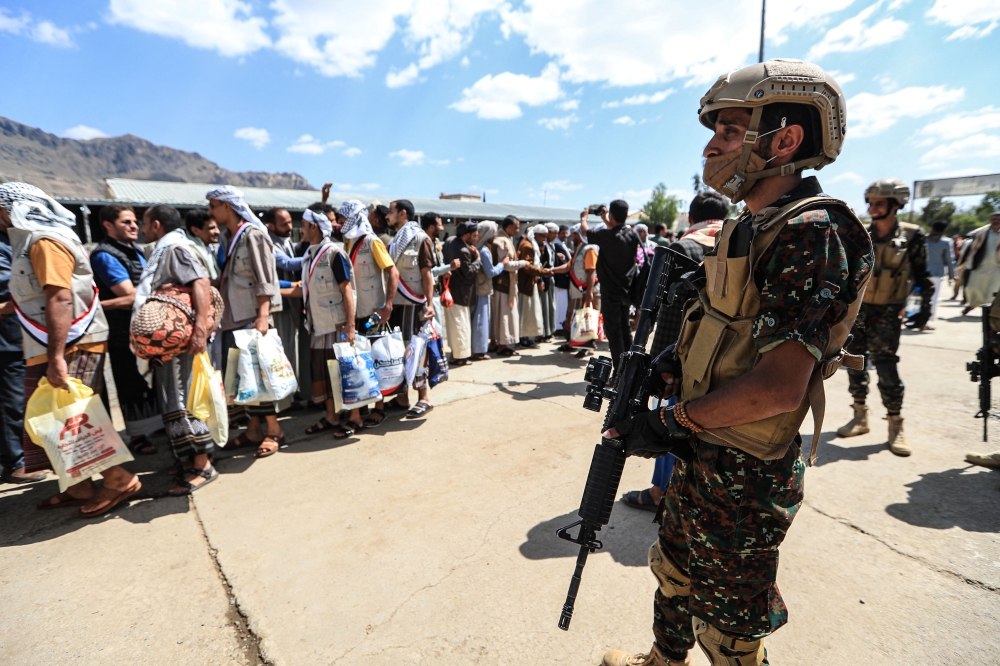
Yemeni prisoners loyal to the Houthi authorities stand in line after being liberated from prisons on the west coast where they were being held by Yemen’s Saudi-backed government forces, as they arrive in the capital Sanaa on September 12, 2026. — AFP pic
Unlike Hezbollah, the Houthis do not subscribe to the belief that Iran’s supreme leader is the ultimate authority. They have, however, grown closer to Iran over the years.
In 2024, Houthis began attacking ships in the Red Sea that they said were linked to Israel, saying the move was in support of Palestinians during the Gaza war.
The campaign forced many shipping companies into a lengthy detour around the tip of southern Africa.
The Houthis joined the Middle East war in support of Iran in March, claiming new drone and missile attacks against Israel, without causing significant damage.
Despite their close ties to Iran, the Houthis have managed to retain a degree of autonomy from their backer and mostly rely on them for military support.
Battle for Bab al-Mandab
The Houthis have long been able to disrupt commerce with their attacks in the Red Sea and the Bab al-Mandab Strait, its southern gateway.
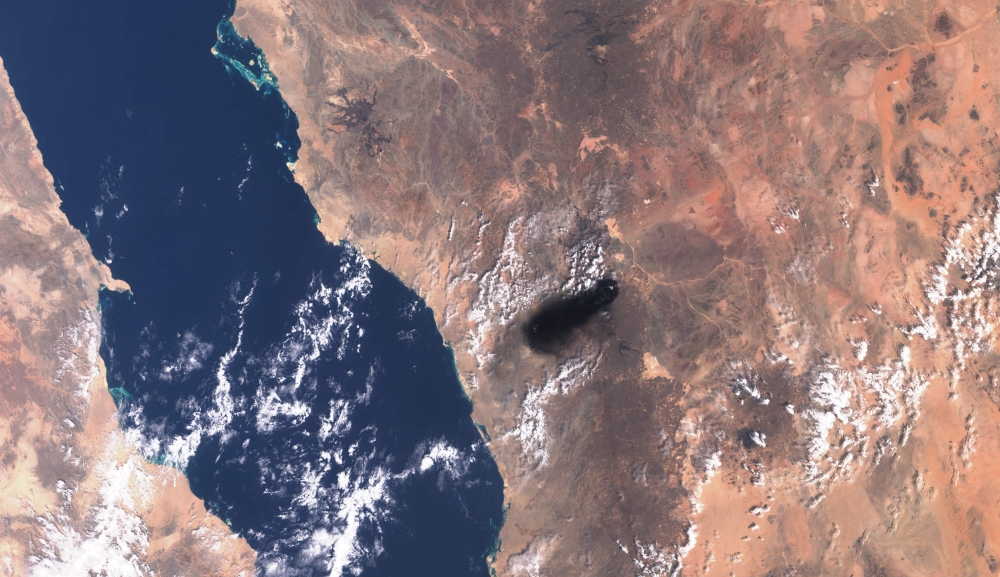
Black smoke billowing over the desert southeast of Medina along the general route of Saudi Arabia’s East-West pipeline (Petroline) on September 10, 2016. Attacks by Yemen's Iran-backed Houthis are hurting Saudi Arabia's oil industry and risk dragging it back to full-scale war. — Copernicus Sentinel Data handout pic via AFP
The sea, which links Europe and Asia via the Suez Canal, has become a crucial artery to their foe Saudi Arabia, which turned to the waterway to keep up oil exports after Iran largely cut off shipments from the Gulf with its blockade of the Strait of Hormuz.
In July, the Houthis declared a maritime blockade on Saudi Arabia, and have since repeatedly targeted its ships in the Red Sea.
Not long after hostilities with Yemeni government forces resumed, the group launched on September 3 a major assault focused on capturing the Bab al-Mandab.
A week later, they had seized the entire Red Sea coast, as well as strategic islands in and around the strait, boosting their ability to exert control over navigation and target Saudi tankers. — AFP


No comments:
Post a Comment