
Eight Newly Produced MQ-9 Reaper Drones Destroyed in Iranian Strike: Fleet Shortages Increasingly Critical
Middle East , Aircraft and Anti-Aircraft
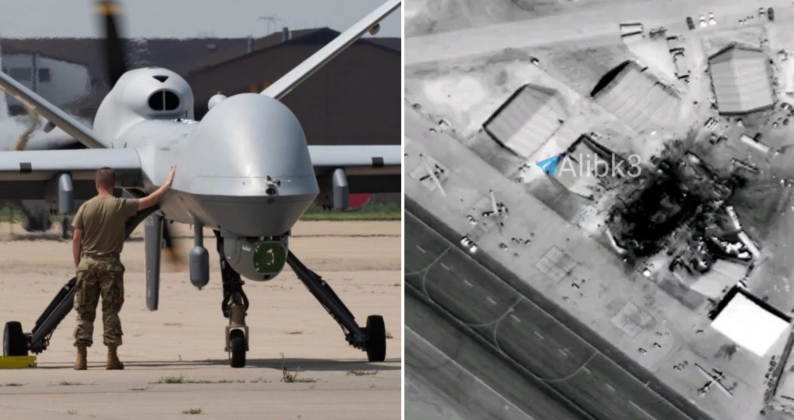
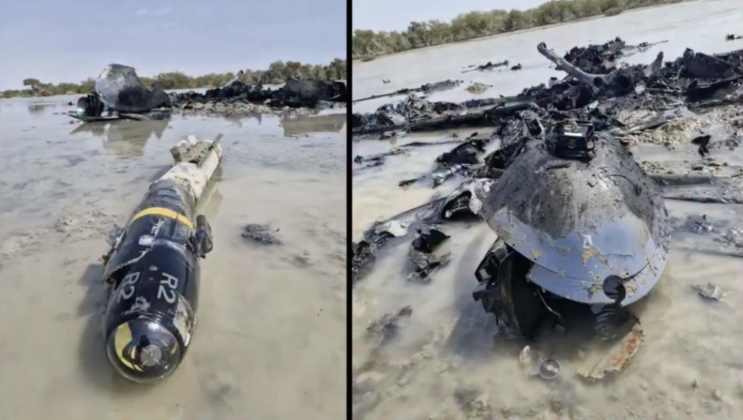
Eight newly produced and unassembled U.S. Air Force MQ-9 Reaper unmanned aircraft were destroyed during an Iranian missile strike on King Faisal Air Base in Jordan, according to reports from multiple regional sources. The Iranian Islamic Revolutionary Guard Corps targeted the facility, as well as Prince Hassan Air Base and Muwaffaq Salti Air Base, as part of its 25th wave of retaliatory strikes responding to U.S.-led attacks on the Iran. Two additional Reaper drones in active service were also destroyed in the attacks. Although multiple types of aircraft have been lost in Iranian attacks on U.S. bases, ranging from UH-60 Black Hawk utility helicopters, to F-15E fighters, the MQ-9 stands out due to the increasingly severe shortages the U.S. Air Force has faced as a result of wartime attrition.

Reports of unassembled MQ-9 drones being present at air bases in the Middle East corroborates with reports from U.S. sources that a number of airframes stored by the type’s primary producer, General Atomics, could be purchased by the Air Force to replenish wartime losses. Responding “to demand for additional aircraft, the firm reported in early June: “Between parts in stock for new builds, and company-owned Reapers with some number of flight hours on them, there are less than 10 total ‘new’ MQ-9As available to any customers anywhere in the world.” The destruction of eight of these new aircraft thus likely accounts for the United States’ entire reserve of its most critical unmanned aircraft type.
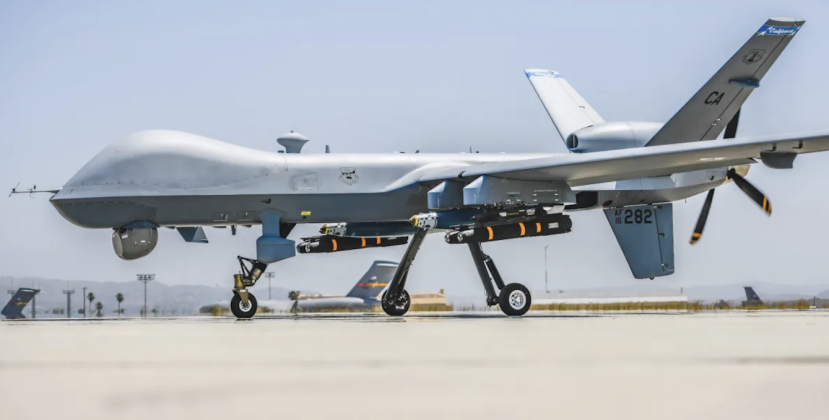
The U.S. Air Force cannot place orders for additional MQ-9A Reapers due to the suspension of production, as while limited production of the MQ-9 continues, only the very different MQ-9B SeaGuardian, which has a redesigned airframe that has different systems and logistics requirements, is being produced. At least 53 MQ-9As have been lost in combat since late 2023 in clashes with Iranian and Yemeni Ansurullah Coalition forces. The lack of an ability to replenish losses has been interpreted by analysts as an indication of how limited the United States’ ability is to rapidly regenerate its losses have become in the post-Cold War era.
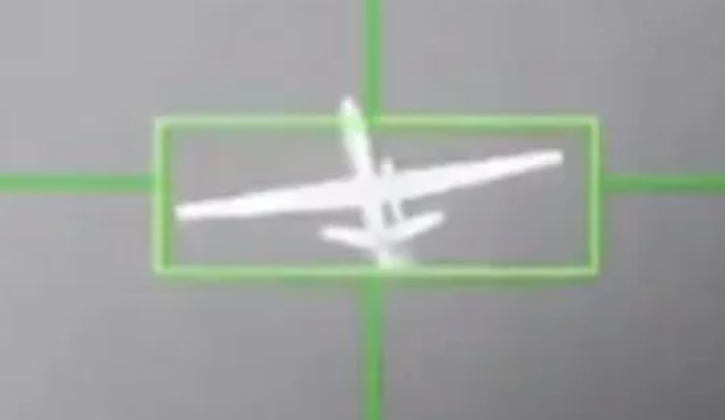
According to a report by the Iranian Islamic Revolutionary Guard Corps, a drone maintenance facility and multiple MQ-9 drones were destroyed, with a hangar used to prepare F-15 fighters also hit. The statement elaborated two U.S. heavy-lift helicopters suffered significant damage after a helicopter hangar was hit, and a strike on a U.S. troop accommodation facility resulted in an unspecified number of personnel being killed or wounded. This follows a report by The New York Times, citing an assessment based on satellite imagery, verified videos, and official statements, reporting that a significant number of UH-60 Black Hawk helicopters were damaged in an Iranian strike on Muwaffaq Salti Air Base and other facilities in Jordan.
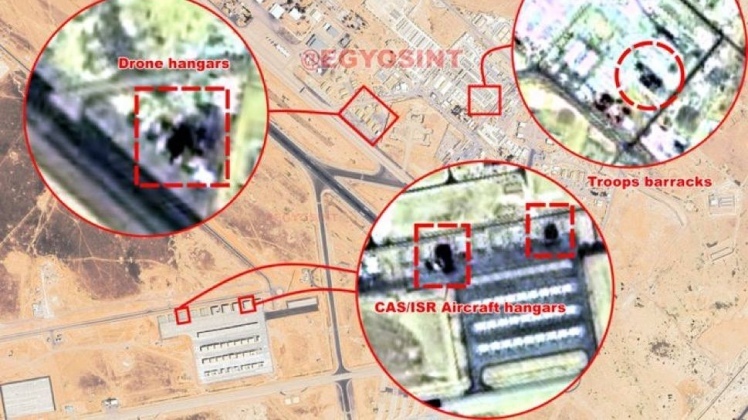
Iranian reports have been further corroborated by satellite imagery showing significant damage to aircraft hangars at King Faisal Air Base in Jordan, with a destroyed hangar structure with a large plume of black smoke rising from the site indicating that at least one of the F-15E Strike Eagle fighters inside was destroyed. The U.S. has lost at least five F-15 fighters during hostilities with Iran, four of which were shot down under unclear circumstances. MQ-9 losses have been among the most extreme, however, with the aircraft’s particularly central role in offensives against Iran, and U.S. reliance on the type for operations globally, having the rapid rate of losses particularly concerning.
The MQ-9 performs persistent intelligence, surveillance, reconnaissance, target acquisition and precision strike missions that are routinely shared with allied militaries through combined operations. NATO partners and coalition forces have increasingly relied on U.S. Air Force Reapers to provide continuous battlefield awareness, reducing their own need to field equivalent capabilities. A diminished fleet therefore risks lowering the availability of high-end ISR coverage and precision strike support across multiple theatres simultaneously, forcing allies either to accept reduced situational awareness or commit more of their own limited assets. For allies whose operational planning assumes sustained U.S. logistical support and advanced ISR capabilities, the episode serves as a reminder that U.S. inventories and defence-industrial capacity are finite and can come under significant strain during extended combat operations.


No comments:
Post a Comment