
Want to change the N. Sembilan MB? Vote of no confidence still the ‘gold standard’, lawyers say
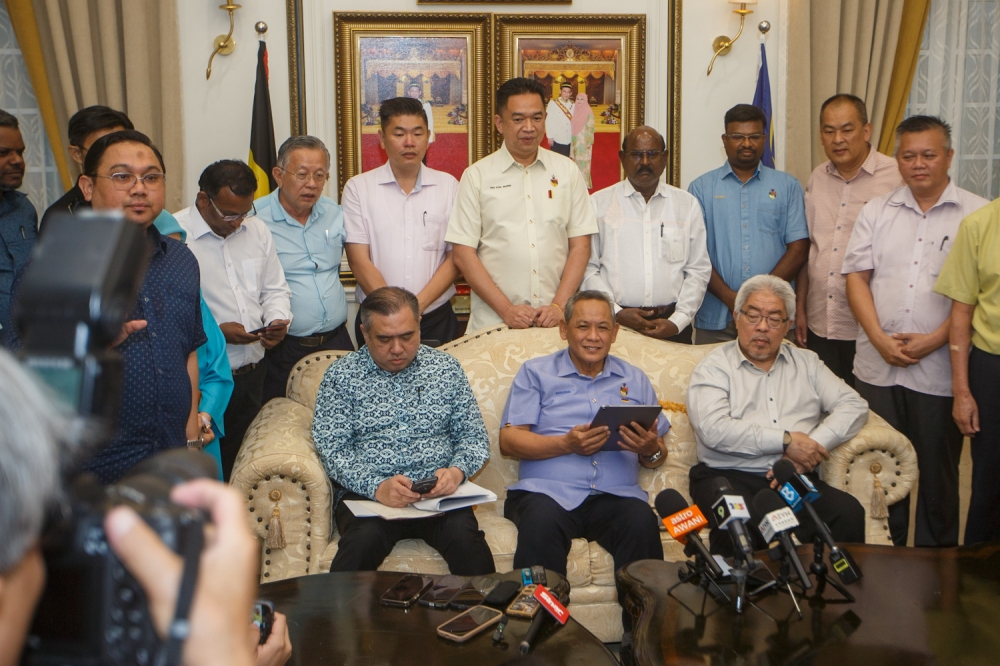
Would a press conference or public statement to declare loss of confidence in a menteri besar be enough to result in a change in government? Or would an official vote be required? — Picture by Raymond Manuel
Tuesday, 28 Apr 2026 10:00 AM MYT
KUALA LUMPUR, April 28 — Would the current Negeri Sembilan Menteri Besar lose his position just because a group of lawmakers publicly declare that they have lost confidence in him?
Constitutional lawyers told Malay Mail that the best way or “gold standard” is still for lawmakers to vote on whether they have lost confidence in the Menteri Besar, and that this vote should be done in Negeri Sembilan’s state legislative assembly or Dewan Undangan Negeri (DUN).
When contacted by Malay Mail, former Court of Appeal judge Datuk Seri Mohd Hishamudin Yunus went one step further by saying that a vote in the DUN is the only way to decide if an MB has lost majority support: “Loss of confidence could only be determined by vote in the Dewan.”
Hishamudin referred to the Negeri Sembilan state constitution’s Article XXXVIII (or Article 38), which explains what would happen if a Menteri Besar loses the confidence of the majority of members of the legislative assembly.
“Article 38 does not expressly say how this ‘loss of confidence’ is determined. But constitutional convention requires that this loss be decently and transparently determined by a proper vote on the floor of the Dewan,” he said.

Retired Court of Appeal judge Datuk Seri Mohd Hishamudin Yunus said voting in the state legislative assembly is required by convention to decide if there was loss of majority support. — Picture by Firdaus Latif
Constitutional lawyer New Sin Yew said it has to be proved that a menteri besar “had ceased to command the confidence of the majority of the state legislative assembly (SLA)”, and gave examples of how such uncertainties have been resolved in the past.
“This can be done in various ways — vote of confidence in a SLA sitting, statutory declarations (SDs), interview by the ruler,” he told Malay Mail, basing this on similar past cases in Perak, Selangor, Sabah and at the federal government level.
In the case of the 2009 Perak constitutional crisis, the Federal Court in 2010 decided that the question of whether an MB still has majority support can be determined by other methods, as “there is no requirement in the State Constitution which requires a vote of no confidence to be tabled” in the Perak legislative assembly.
Previously, Malaysia had seen MPs filing in statutory declarations, as well as the Yang di-Pertuan Agong having to step in and interview MPs in 2020 and 2022 to decide who is likely to have majority support to be the prime minister.
While other methods have been accepted in the past, New indicated that a mere press conference would not be enough.
“So I don’t think just 14 people holding a press conference is in itself sufficient to say that MB has lost confidence,” he said.
“But I suppose the gold standard is through the DUN vote of no confidence,” he concluded.

Lawyer New Sin Yew said voting in the DUN would be the ‘gold standard’ to show whether an MB no longer has majority support. — Picture by Sayuti Zainudin
Citing past cases, constitutional lawyer Datuk Malik Imtiaz Sarwar said the ideal method is to have a vote of confidence in the Negeri Sembilan state legislative assembly.
“Ideally, a motion of confidence should be tabled. Alternatively, it must be demonstrated to the Yang di-Pertuan Besar convincingly that the MB has ceased to command the confidence of the majority,” he told Malay Mail when contacted.
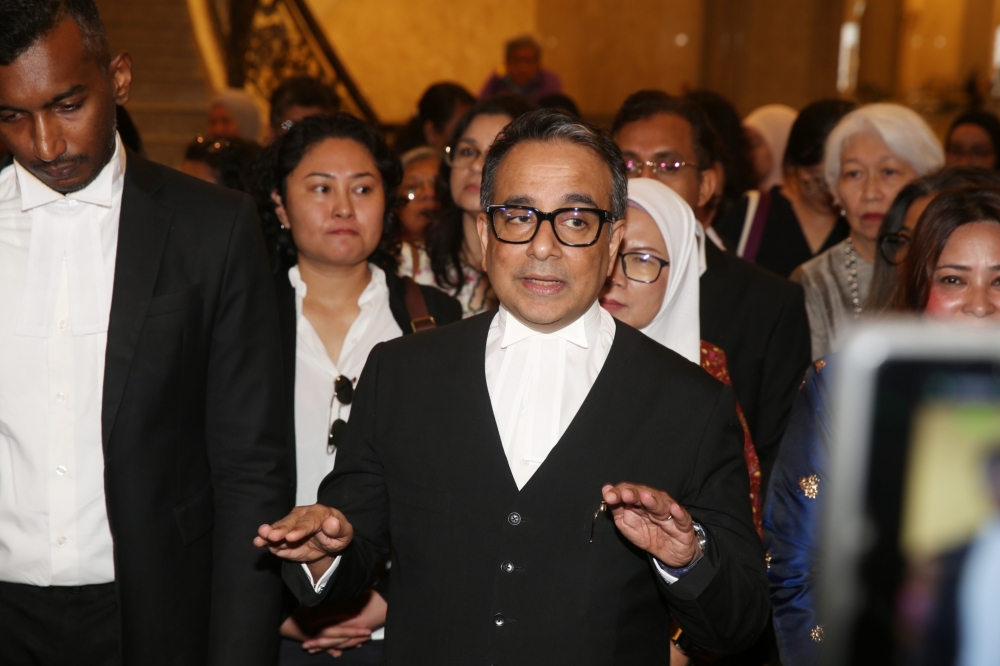
Lawyer Datuk Malik Imtiaz Sarwar said putting the matter of whether lawmakers had confidence in the Negeri Sembilan MB would be the ideal way. — Picture by Choo Choy May
Constitutional lawyer Andrew Khoo said a vote of no confidence may not be necessary to determine if the Negeri Sembilan MB has lost majority support, as the courts’ previous ruling in the Perak case have said that the ruler “can use different ways to determine this”.
“But it is the best and most transparent way,” he said of the DUN vote method.
“A vote of no confidence is strictly not required BUT in a situation where things are not clear a vote would be conclusive evidence of support or lack thereof,” he also told Malay Mail.
Khoo explained the process that would usually happen in Malaysia at the federal level and at state governments such as Negeri Sembilan’s, in a situation when the top government leader loses majority support.
“In the Westminster-style democratic system practised in many countries, the head of government would need to inform the head of state if s/he has lost the support of the majority of members of the legislative assembly, and tender her/his resignation.
“The head of state would then invite a person who s/he believes has the support of a majority of the members of the legislative assembly to form a new government,” he said.
He said Malaysia’s Federal Constitution imposes this same process or system on all state governments, based on the Constitution’s Section 2 of Part I of the Eighth Schedule (Provisions to be Inserted in State Constitutions).
So for Negeri Sembilan for example, a Menteri Besar who no longer has majority support could either call for fresh elections by asking the state ruler to dissolve the state legislative assembly, or resign if the ruler does not dissolve the assembly as requested.
Khoo noted that the state ruler “has sole and absolute discretion whether to dissolve or appoint someone else”.
Leading a minority government
Khoo said the current Negeri Sembilan Menteri Besar, Datuk Seri Aminuddin Harun, could still stay on and lead a minority government.
“So he would lead a minority PH government since he would still lead the largest bloc of 17 ADUNs,” he said, referring to the 17 Pakatan Harapan (PH) lawmakers in the 36-seat Negeri Sembilan DUN.
He said Aminuddin’s minority government could have a “supply and confidence” arrangement with Perikatan Nasional (PN) lawmakers, and cited then prime minister Datuk Seri Ismail Sabri Yaakob’s 2021 deal with political rivals PH as an example.
Based on the UK Parliament’s glossary, a minority government is when a political party decides to form government alone instead of form a coalition with another party, and this can happen when no single party has a clear majority of lawmakers.
A minority government would need other parties’ lawmakers to provide support for laws to be passed, the glossary said.
Yesterday, Negeri Sembilan’s 14 Umno state lawmakers declared in a press conference that they had lost confidence in the current MB, while five Perikatan Nasional (PN) lawmakers said in a separate press conference that they were ready to work with the Umno representatives.
Aminuddin, who is also Negeri Sembilan PH chief, yesterday said he was advised by the state ruler to continue serving as MB, until the situation becomes clearer.
The Negeri Sembilan Umno lawmakers last night in a press statement claimed that Umno (and the larger Barisan Nasional coalition it belongs to) now has simple majority to form a new state government, due to the support from the five PN lawmakers.
Recommended reading:
Umno reps claim simple majority to form N. Sembilan government with five Perikatan assemblymen
Loke: DAP rejects ‘backdoor government’ in Negeri Sembilan, says constitution must prevail
Loke: DAP rejects ‘backdoor government’ in Negeri Sembilan, says constitution must prevail


In Malaysia, the picture is now mich mucker than commonly held Westminster standards.
ReplyDeleteThe Perak putsch of 2009 set up the Federal Court ruling precedent whereby Statutory Declarations by sufficient number of Represenntatives was sufficient for the Ruler the dismiss the sitting State Government and apppoint a new MB.