U.S. Shortages of GBU-57 Bunker Buster Bombs Limit Ability to Hit Iran’s Critical Underground Missile Bases
Middle East , Aircraft and Anti-Aircraft
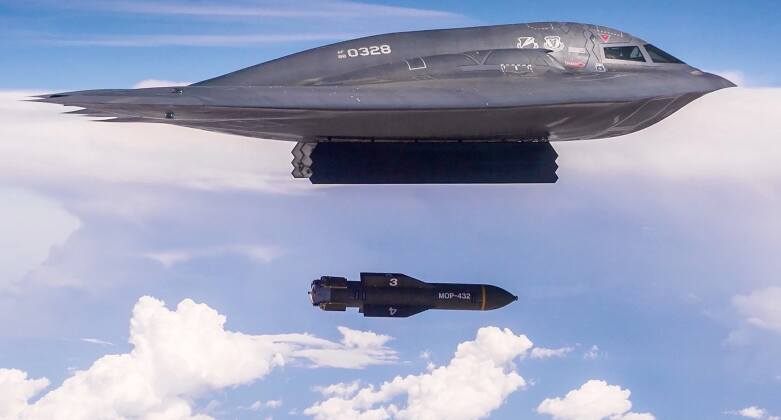
Following the initiation of a large scale U.S. and Israeli air assault against Iran on February, the United States was confirmed to be launching strikes on a missile base in Khosrowshah, as well as on targets in the mountains of Sahand, Urmia, Bandar Abbas, and Qom, which are thought to host ballistic missile related facilities. The Iranian ballistic missile deterrent has for decades been a primary factor constraining U.S. and broader Western Bloc options for launching attacks against the country, with missile strikes having been launched against U.S. and Israeli military facilities and other strategic targets across the Middle East. While during prior attacks on the Iran in June 2025 the United States did not deploy its aircraft for a sustained campaign to target missile sites, and launched only a limited strike on nuclear facilities, destroying the missile arsenal is critical for a much larger scale U.S. assault with wider reaching objectives to succeed.
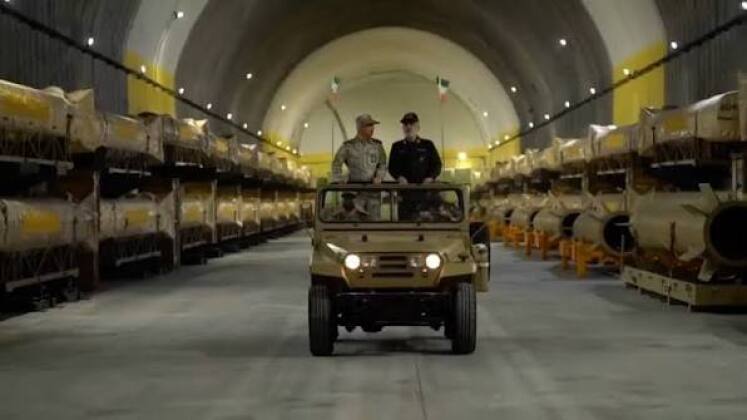
Operations aimed at destroying the Iranian ballistic missile arsenal face multiple challenges. Iran’s missiles largely use solid fuel composites and deploy from mobile transporter-erector launchers, which allows them to rapidly redeploy and maintain short firing cycles. The country has also with North Korean assistance constructed missile storage facilities very deep underground, often under mountains, which attacks by cruise missiles and the large majority of air-launched weapons will struggle to seriously threaten. The United States in the early 2000s developed the GBU-57 penetrative bomb specifically to be able to neutralise such targets, with the bomb having been designed for use by the country’s single squadron of B-2 stealth bombers, and allowing multiple bombers to ‘layer’ attacks to achieve greater penetration.
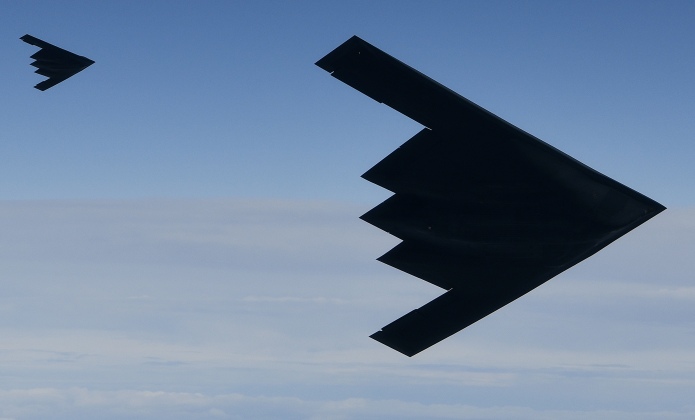
Although analysts have widely noted that the very small size of the B-2 fleet at just 19 aircraft significantly limits its utility, with the Air Force reported in mid-February to be working to keep the fleet at unusually high levels of operational readiness to prepare for possible attacks on Iran, a further constraint to the possible use of the aircraft to strike underground missile sites remains the serious shortages of GBU-57 bombs. The most immediate cause of the shortage was the use of 14 GBU-57 bombs during Operation Midnight Hammer in June 2025 to target nuclear facilities at Fordow and Natanz, causing a massive drawdown of the available inventory. The strike exposed the risks of having a very small pool of the cost bombs. Estimates for the remaining number of bombs stand at between six and 15 bombs. The possible use of the bombs to strike heavily fortified Yemeni targets in October 2024, when the use of B-2s was confirmed, has further raised uncertainty regarding remaining quantities.
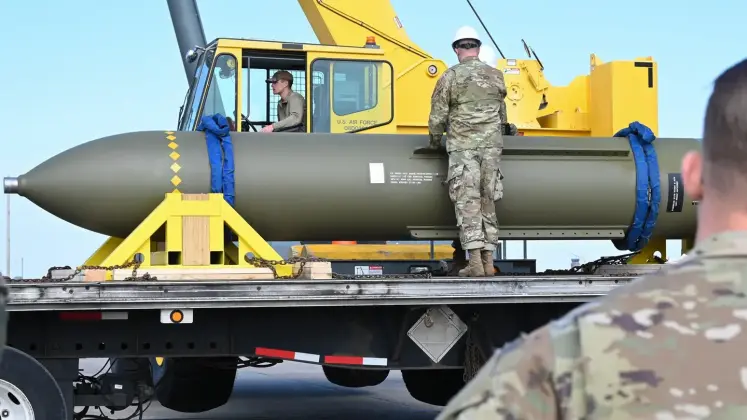
With each bomb is estimated to cost over $370 million, the GBU-57 was never produced in large numbers, and is considered a high-value, low-density munition. A critical issue highlighted after strikes on Iran in June is the U.S. government relies on a single contractor, Boeing, which owns the intellectual property for the bomb's critical tail kit guidance system. This "vendor lock" prevents the government cannot easily sourcing components from other manufacturers to quickly increase production or resolve parts obsolescence. To meet urgent replenishment needs after the strikes, the Air Force had to award a sole-source contract to Boeing, while reverse-engineering one component from the ATACMS ballistic missile system. The supply chain issues reflect broader issues that have affected the U.S. defence sector increasingly severely since the end of the Cold War due to the contraction of industry.
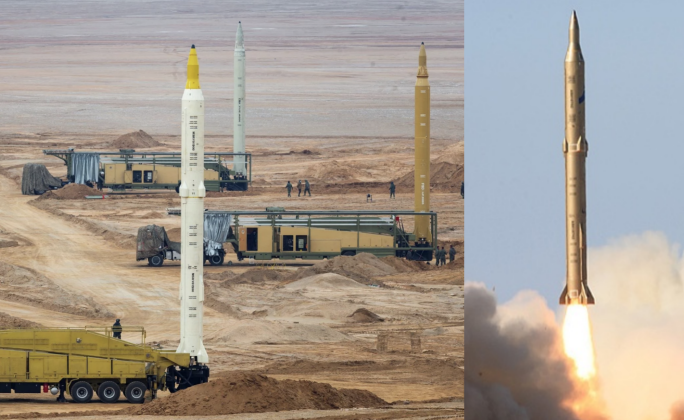
While a contract valued at over $100 million was awarded to Boeing in early 2026 to produce new tail kits and other components, deliveries of replenishment GBU-57 bombs are only expected to begin in 2028. Without near term replenishment of the inventory, the B-2 fleet will be impeded in its ability to strike heavily fortified targets in Iran, including underground missile bases, with no non-nuclear weapons in the U.S. or allied arsenals having similar destructive potentials. A successor to the GBU-57 is currently under development, and will reportedly be smaller to allow for its carriage by the B-21 next generation bomber, which was designed to be lighter than the B-2 to make it more affordable for large scale procurements. There remains significant uncertainty regarding how the United States will approach the challenge posed by Iran’s heavily fortified underground missile bases.
***
American taxpayers must be thrilled by the cost of the GBU-57 bomb at $370 million per pop


You kena tipu by Military Watch, and deserve it.
ReplyDeleteThe estimated unit cost for a GBU-57 Massive Ordnance Penetrator (MOP) bomb varies depending on the source and the year of estimate, generally falling between $3.5 million and $20 million per unit, not including development costs.
The ONE-TIME total development cost for the weapon system was approximately $400 million to $500 million.
OK you're right:
DeleteUnit Production Cost: The estimated cost to manufacture a single GBU-57 is around $3.5 million to $5 million.
Program and Equipment Costs: Reports have cited specific procurement contracts, such as an order for eight bombs plus supporting equipment for $28 million in 2011, which averages to a higher price per unit when factoring in non-bomb expenses. Other estimates mention a price tag of around $20 million apiece when considering overall program costs.
Development Costs: The total cost to develop the GBU-57 program over more than a decade was between $400 million and $500 million.
Operational Context: The GBU-57 is a specialized, strategic weapon designed for heavily fortified, deeply buried targets. Its use also requires the highly expensive B-2 Spirit stealth bomber for delivery, adding significantly to the overall operational cost of a mission.