Thursday, October 15, 2026

Johor student charged with the murder of Form Four classmate Irene Sofiya


Johor student charged with the murder of Form Four classmate Irene Sofiya


Irene Sofiya Mohd Khairoul Faisal, 16, who was found dead in a Yong Peng, Johor school on October 3, 2026 and suspected to have been murdered. — Facebook pic


Summary

  • In a closed-door session, a 16-year-old boy was charged in the Magistrate's Court in Batu Pahat with the murder of his classmate, Irene Sofiya Mohd Khairool Faisal, following the discovery of her body in a school hall.
  • The incident occurred at Sekolah Menengah Kebangsaan Dato' Seth in Yong Peng on October 3.
  • The accused, protected by law due to his minor status, faces charges under Section 302 of the Penal Code, which may lead to significant penalties but excludes the death sentence for offenders under 18.
  • The case will be addressed by the High Court, and further details are awaited.


First Published: Thursday, 15 Oct 2026 10:39 AM MYT


BATU PAHAT, Oct 15 — A 16-year-old schoolboy was charged in the Magistrate's Court here today with the murder of his classmate, Irene Sofiya Mohd Khairool Faisal, whose body was discovered inside a secondary school hall in Yong Peng earlier this month.

The accused, a Form Four student at the same school, nodded in understanding when the capital charge was read out to him before Magistrate Mustaqim Sukarno during a closed-door proceeding.


No plea was recorded from the teenager, whose identity is protected by law as a minor, because murder cases fall under the jurisdiction of the High Court.


According to the charge sheet, the accused is alleged to have murdered 16-year-old Irene Sofiya in Dewan Sri Tanjung at Sekolah Menengah Kebangsaan (SMK) Dato' Seth in Yong Peng between 2.30pm and 4.00pm on Oct 3.


The charge was framed under Section 302 of the Penal Code. Upon conviction, the offence carries the death penalty or a prison sentence of between 30 and 40 years, along with a minimum of 12 strokes of the cane.

Under Malaysian law, offenders under the age of 18 at the time of the offence cannot be sentenced to death, but may be detained at the pleasure of the Yang di-Pertuan Agong or the respective state Ruler.

MORE TO COME

Bersatu’s planned pact with Selangor govt adds to tensions in PN


Bersatu’s planned pact with Selangor govt adds to tensions in PN

Published: Oct 15, 2026 8:00 AM


Bersatu’s plan to ink a confidence and supply agreement (CSA) with the Selangor government appears to have unsettled its Perikatan Nasional ally, PAS.

PAS deputy president Tuan Ibrahim Tuan Man said the proposed deal would run counter to PN’s position on cooperation with Pakatan Harapan.

While the agreement has yet to materialise, he said PN would have to decide how to respond if Bersatu went ahead with it.

"We are looking into this issue, but for now, it remains a rumour. Nevertheless, PN will make a decision if it becomes clear that Bersatu is entering into a CSA.


"This action goes against PN’s decision, but Bersatu has the right to make its own decisions," Tuan Ibrahim (above) told Malaysiakini.

Yesterday, Malaysiakini reported that Bersatu and the Harapan-led Selangor government were moving closer to an agreement that would strengthen Menteri Besar Amirudin Shari’s support in the state assembly.


In return, the state government would provide Bersatu assemblypersons with equal constituency allocations, among other benefits.

Bersatu supreme council member Dr Afif Bahardin said the party also wanted its assemblypersons to be involved in state decision-making, including by being allowed to attend government meetings.


The proposed pact comes amid strained ties between Harapan and BN, which are partners in both the federal and Selangor governments. Bersatu has also fallen out with PAS, which now leads the opposition coalition.

Amirudin’s administration currently has the support of 35 of the state assembly’s 56 members: 32 from Harapan, two from BN, and one independent.

Bersatu holds 11 opposition seats, while PAS has 10.


***


Dei PAS, nyanyuk kah? Bukankah kau 'dah talaq x3 Bersatu? wakakaka


PAS accelerating Putrajaya ambitions with Umno alliance, says analyst


PAS accelerating Putrajaya ambitions with Umno alliance, says analyst


4 hours ago
Elill Easwaran


Azmi Hassan says the cooperation offers the Islamic party a shot at the premiership after GE16 but Mazlan Ali says it also comes with a risk


PAS and Umno are ultimately political rivals, and any gains achieved through cooperation could eventually result in renewed competition, says an analyst.


PETALING JAYA: PAS may be fast‑tracking its ambitions for federal leadership, viewing its cooperation with Umno as the party’s best chance of leading Putrajaya, according to a political analyst.

Azmi Hassan.

Akademi Nusantara’s Azmi Hassan said PAS recognises that, on its own, it would struggle to build the nationwide influence and support needed to form the federal government, even in the long term.

He said Umno enjoys broader appeal across Malaysia, while PAS’s strength is concentrated in Kedah, Perlis, Kelantan and Terengganu.


Azmi said PAS’s current partnership with Umno was not simply about political survival but about positioning itself closer to federal power.


“I don’t think PAS is prepared to wait another 10 years to be part of the federal government or to see one of its MPs appointed prime minister.


“I don’t think that is the intention behind its current cooperation with Umno,” he told FMT.

Azmi said PAS may be willing to defer to Umno for now, though a swift shift in tone may occur if the outcome of the next general election (GE16) favours the Islamic party.

“Playing second fiddle now is just to ride on Umno’s popularity,” he said. “But if they have the greater number of seats, PAS will push for the prime minister’s post.”

According to Azmi, the Perikatan Nasional coalition may be turning into a “thing of the past” for PAS, though the party may continue working with Hamzah Zainudin’s Wawasan.


Last week, former Umno information chief Shahril Hamdan suggested that PAS may be prepared to wait between five and 10 years before mounting a serious push for national leadership.

He said Umno seems more focused on regaining power immediately, while PAS may prefer to use its time in government to build administrative experience and increase familiarity among voters and civil servants with the party.

Mazlan Ali.

Another analyst, Mazlan Ali of Universiti Teknologi Malaysia, agreed with Shahril, noting that PAS was aware of its shortcomings when compared to Umno, particularly its lack of prominent figures and experience in federal administration.

He said Umno, which governed Malaysia from independence until 2018, has decades of experience that PAS can learn from.


“PAS faces the limitation of being perceived as a local party with appeal primarily among traditionalist Malays.

“It needs more time to learn from Umno’s experience in the federal government before it is truly ready to take over the reins of power itself in the future,” he said.


Mazlan expects PAS to allow Umno to lead Putrajaya if the two parties succeed in forming a government after GE16.

However, he cautioned that such a move could backfire on PAS, while potentially aiding Umno’s bid to regain support among Malay voters.

“A major risk for PAS is that if Umno manages to regain the trust of the Malays, as it did in the 1970s, 1980s and 1990s, PAS could lose its influence, given that the two parties compete for the same segment of Malay voters,” he said.

Mazlan said PAS and Umno were ultimately political rivals, and that any gains achieved through cooperation could eventually result in renewed competition.

An alliance could strengthen both parties and improve their chances of winning GE16, he said, but its long-term success would depend on whether they are able to maintain ties.

“If the relationship between the two parties is not further strengthened, they may well return to competing against each other on the political stage for the Malay vote in the future,” he said.


***


For nons, perhaps 'better the Devil you know than the one you don't'

Vietnam mourns 731 war dead exhumed from Ho Chi Minh City park in largest effort to identify missing soldiers


Vietnam mourns 731 war dead exhumed from Ho Chi Minh City park in largest effort to identify missing soldiers


A man lights incense for caskets bearing the remains of fallen soldiers at Le Thi Rieng Park in Ho Chi Minh City October 14, 2026. Vietnam held funeral rites for more than 700 of its war dead on October 14, unearthed in a major push to identify those missing from decades of conflict with France and the United States. — AFP pic


Summary

  • Vietnam held funeral rites for over 700 war dead unearthed during efforts to identify those missing from conflicts with France and the United States.
  • A 500-day national campaign has been launched to locate missing soldiers, involving hundreds of experts and soldiers working to excavate remains.
  • The government aims to recover 7,000 remains by 2027, using DNA analysis and a genetic database to identify them, but faces challenges due to time and decomposition.


First Published: Wednesday, 14 Oct 2026 2:25 PM MYT


HO CHI MINH CITY, Oct 14 — Vietnam held funeral rites for more than 700 of its war dead today, unearthed in a major push to identify those missing from decades of conflict with France and the United States.

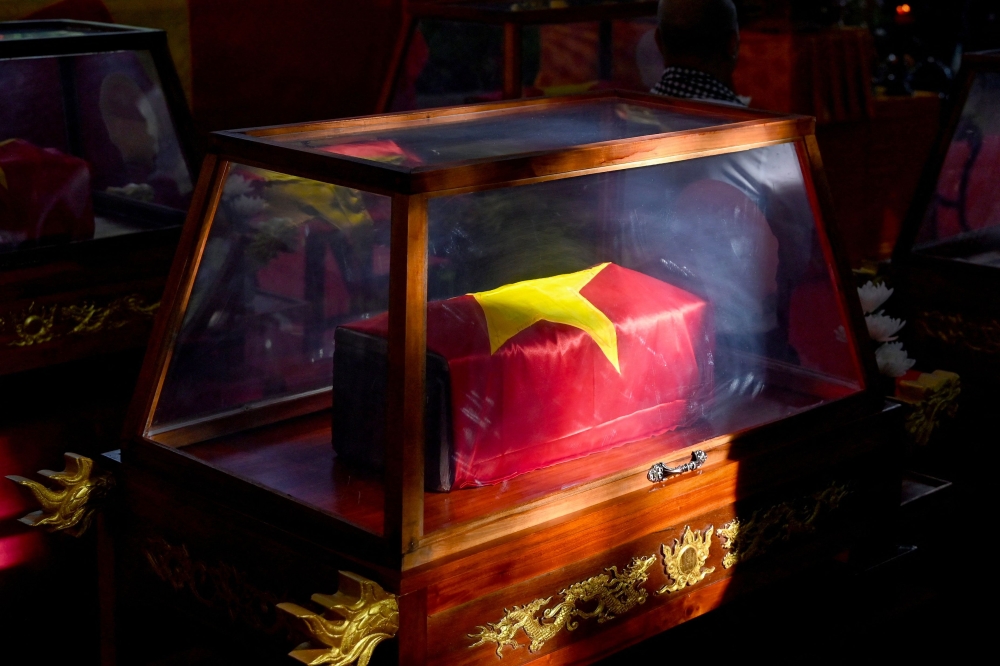
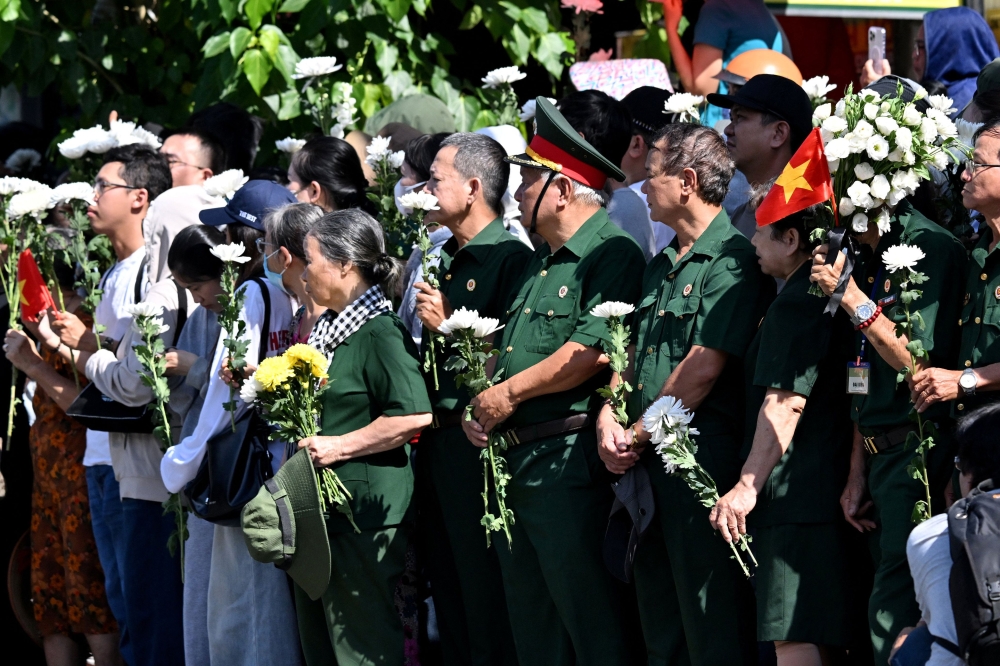
Tens of thousands of people lined the streets of Ho Chi Minh City, some holding white flowers or praying as buses carrying terracotta caskets covered by Vietnam’s national flag moved in procession to a cemetery for fallen soldiers on the outskirts of the city.


The 731 sets of remains, taken from individual and mass graves of fighters killed when US-backed forces crushed an uprising by communists in 1968, were exhumed from a tree-shaded public park, according to the military.


Le Ngoc Mai Uyen was a frequent visitor to the park named after her grandmother, revolutionary fighter Le Thi Rieng, before she realised her relative’s body may be buried there.


“I have always felt something sacred here at this park,” the 36-year-old told AFP recently, after burning incense near a memorial plaque.


While she knew it was “extremely difficult”, Uyen said she has “strong faith” that the remains of her grandmother will be found.

The park was excavated as part of a 500-day national drive launched in March, touted as Vietnam’s largest push to locate some of the hundreds of thousands missing since the war.


Since July, hundreds of experts and soldiers have been working to unearth layers of remains at the park, aided by bulldozers, excavators and water pumps but often sifting through the mud by hand.

At the funeral service today, patriotic songs blaring, the city’s deputy mayor Nguyen Manh Cuong said authorities “will not overlook any opportunity or method to continue the journey of searching for the fallen comrades”.


A casket bearing the remains of fallen soldier is seen at Le Thi Rieng Park in Ho Chi Minh City October 14, 2026. — AFP pic


Race against time


“Due to the ferocity of the war and the passage of so much time, we have not yet been able to identify the names or hometowns of most of the soldiers recovered in this phase,” Cuong said.

The government has announced the identity of one dead soldier, squad leader Huynh Van Quen who fought in 1968 and whose remains were found in Le Thi Rieng Park, according to state media.

Quen was identified in July thanks to a scrap of paper bearing his name that was found with his remains, and DNA samples that matched his relatives.

Up to 1.2 million Vietnamese soldiers are estimated to have been killed between 1945 and 1975, during wars involving former colonial power France, and then the United States as well as its allies.

There are 230,000 graves nationwide for unidentified soldiers, while thousands of others are believed to remain buried in remote jungles, or under farmland or other former battlefields.


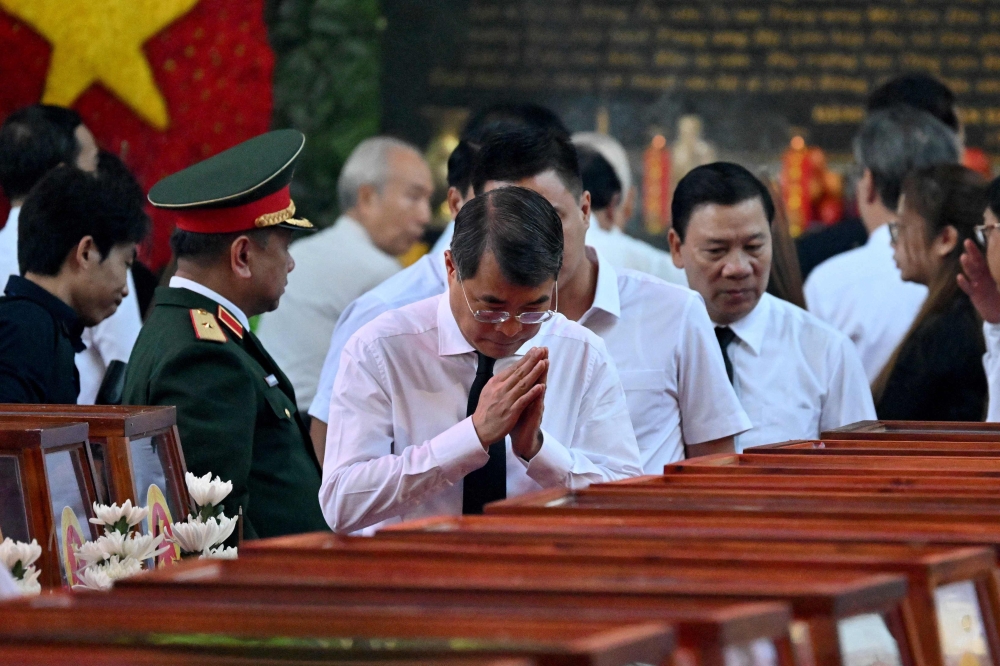
Vietnam’s Prime Minister Le Minh Hung pays his respects with folded hands as he passes caskets bearing the remains of fallen soldiers at Le Thi Rieng Park in Ho Chi Minh City October 14, 2026. — AFP pic


The government aims to recover 7,000 sets of remains by July 2027, “a political task of special importance but also a command from the heart”, according to Deputy Prime Minister Pham Thi Thanh Tra.

More than 1,500 people have been deployed to search old battlefields in Vietnam, Laos and Cambodia — neighbouring countries drawn into the war — alongside thousands more engaged in data collection and analysis.

They are collecting samples from the 230,000 unidentified graves as well as conducting DNA analysis on 18,000 samples of remains and setting up a genetic database of their next of kin.

Colonel Trinh Tung Lam, part of the project’s command team, said their task was not easy, but it was the “right” time for this “most special and humane” effort.

In a lab at the Center for DNA Identification in Hanoi last week, technicians carefully cut into bone fragments separated from remains to extract samples for DNA analysis.

Director Tran Trung Thanh told AFP the state institution had acquired and developed “a world-first process for handling remains that have undergone severe degradation”.

Using US-funded technology through the International Commission on Missing Persons, a pilot programme had reported genetic data was successfully pulled from 54 of 58 samples, he said.

But he warned the process was “lengthy” — and they were in a race against time.


People gather with flowers by a roadside as they wait for the vehicle transporting the remains of fallen soldiers to pass by in Ho Chi Minh City October 14, 2026. — AFP pic


‘Final hope’

“As the surviving relatives and close kin of the fallen age and pass away, we risk losing a vital source of reference data,” Thanh said.

Meanwhile, “the remains continue to decompose under natural conditions”, he said, making it harder to extract DNA.

For many, finding their loved ones has been a lifetime’s work.

Doan Van Cong, 68, and his family spent years touring cemeteries and talking to witnesses to discover what happened to his uncle, who died in 1950, when he was in his early 20s.

They believe he was among communist combatants buried in a mass grave 50 kilometres (30 miles) from his home after an ambush by French troops.

But “there were no opportunities to excavate” the suspected sites, he told AFP.

Now, Cong said, the government drive for answers is his “final hope”. — AFP


***


A brave, patriotic and proud people, I salute them


ZeroHedge Debate: Sankey Predicts 2028 Oil Futures Will Feel The Pain Soon


ZeroHedge Debate: Sankey Predicts 2028 Oil Futures Will Feel The Pain Soon


by Tyler Durden
Thursday, Oct 15, 2026 - 06:05 AM


The damage inflicted on global energy infrastructure during the Iran war could have consequences lasting well beyond the conflict itself, according to veteran energy analysts Paul Sankey and Arjun Murti, who joined Erik Townsend for last night’s ZeroHedge Debate.


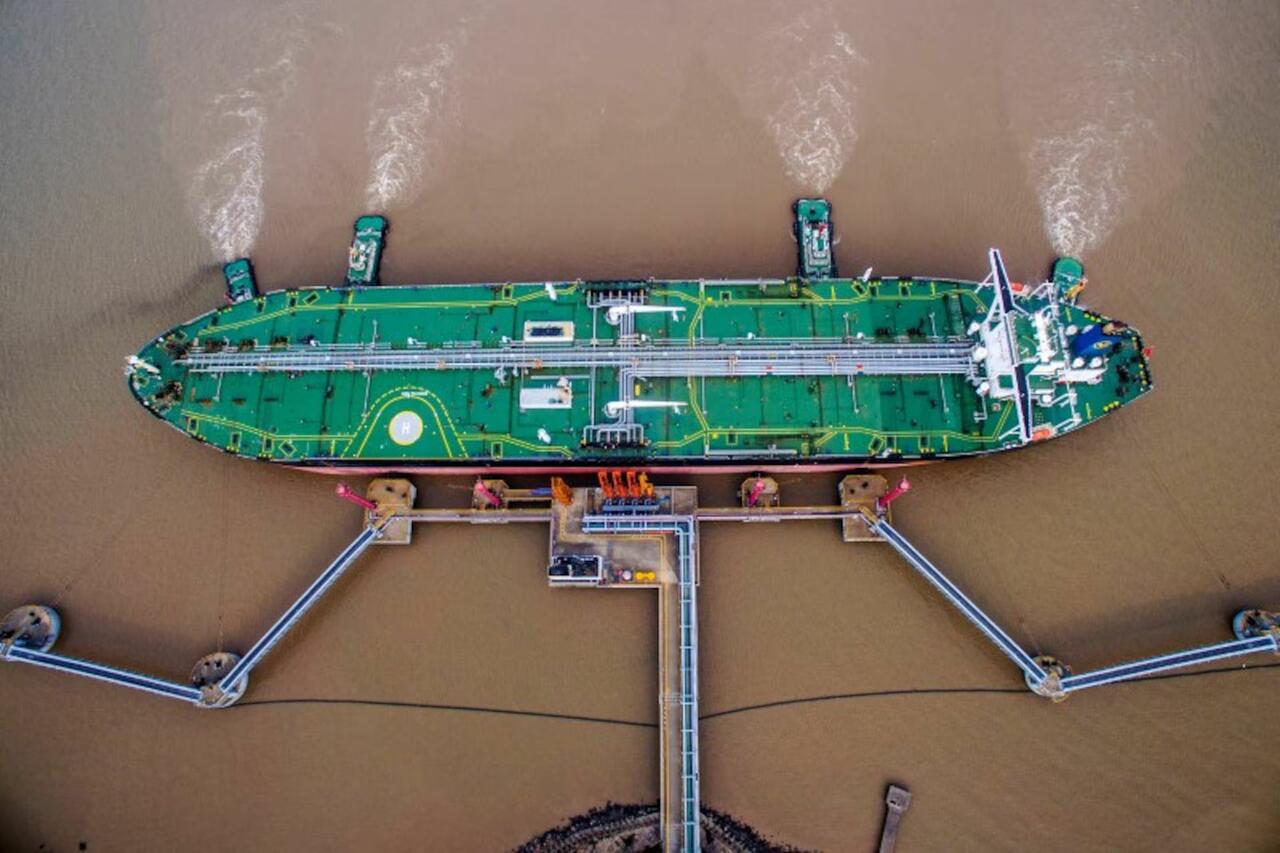
An oil tanker unloads crude oil at a crude oil terminal in Zhoushan, Zhejiang province, China July 4, 2018. Picture taken July 4, 2018. REUTERS/Stringer/ File Photo


Sankey predicted that 2028 crude futures will see large moves upward as markets adapt to the reality that refinery capacity will not recover anytime soon.

Townsend fears that not only will 2028 prices rise… but that the globe may face a decades-long shortage of refined oil products, a risk he thinks people are not taking seriously. Murti meanwhile, in light of these realities, thinks “cash is king” for those weary of volatility.

Below were some highlights from the discussion though we highly recommend the full conversation for those who missed it live:


Could Refinery Damage Take A Decade To Repair?

"If you kept blowing refineries up around the world, you'd get to the point where we just don't have enough refining capacity to run the planet, period."

So what if the conflict drags on for years? Townsend asked:

"How far does this have to go before we get to the point where we look back on $60 crack spreads and say those are the good old days before we got to $200 crack spreads?” Crack spread being the difference in the price of crude and the consumable refined products.

"If the Iran conflict goes to five years and it's punctuated by blowing up a lot of refineries, both in the Middle East and in Russia, how long do we go before the world has a problem that cannot be recovered for a full decade 'cause that's how long it takes to build new refineries?"

Sankey said that we might already be there… "The short answer is it's going to take an awful long time to recover from this, I'm afraid to say."

"Back in Q1 results, Valero said that I think the line was [...] for every day out, we need a week to recover.”


3
Reply
Copy link


Playing Oil's Volatility: 'Cash Is King'

Murti argued companies and investors should resist becoming too greedy.

"Our call has been geopolitical super volatility is here to stay. And that means generally high but volatile prices. You gotta be prepared for the pullbacks that will happen."

With oil around $100 per barrel and refining margins elevated, Murti expects companies to face pressure from investors demanding larger payouts.

"There's a real strategic value to companies having cash on their balance sheet. We have generally stressed fortress balance sheets as a mindset in a deeply cyclical, volatile business."

Murti pointed to the industry's recurring downturns: 2015, the COVID collapse in 2020, and oil's retreat from $120 in 2022 toward $50 in 2025.

"Every five years we're having some notion of a pullback. We can't predict the next one will be 2027 or 2030, but there's a real strategic value to these publicly traded companies, especially in the oil value chain, to actually hoard some cash… Cash is king."


1
Reply
Copy link


Check out the full discussion below, on the ZeroHedge Youtube channel, or listen on Spotify.