Saturday, August 22, 2026

Umno must balance principles and electoral strategy in Melaka, says analyst


Umno must balance principles and electoral strategy in Melaka, says analyst

Umno must balance principles and electoral strategy in Melaka, says analyst

The rejection of BN-PH cooperation in Melaka by Umno Youth chief Dr Akmal Saleh is seen as a test of Umno’s willingness to compromise.

akmal saleh
A political observer says Dr Akmal Saleh’s political career could suffer in the short term should he sit out the Melaka state election but he would benefit in the long run.
PETALING JAYA:
Umno must balance between taking a principled stand on seeking alliances and its pursuit of its overall electoral strategy, a political analyst said following Umno Youth chief Dr Akmal Saleh’s rejection of any potential tie-up between Barisan Nasional and Pakatan Harapan in Melaka.

Global Asia Consulting analyst Ahmad Zaharuddin Sani Ahmad Sabri said Akmal’s refusal to defend his Merlimau state assembly seat if the two coalitions cooperate was a test of Umno’s willingness to compromise.

He said Akmal’s rejection was grounded in the views of some Umno grassroots members who remain uncomfortable with cooperation between BN and PH.

“However, politics is not merely a matter of emotion. Principles will win you applause, but strategy will determine victory,” he told FMT.

Political analyst Kamarul Zaman Yusoff agreed, saying an important consideration for Umno and BN was whether they could retain core supporters and attract fence-sitters.

He said Akmal’s statement also showed that he was highly confident a BN-PH tie-up in Melaka was unlikely. “He is staking his seat on his principles,” he said.

On Aug 18, Akmal said he would not defend his seat to remain true to his political principles, in response to speculation that BN and PH could hold talks on cooperation in the coming state election.

Zaharuddin said that while a possible BN-PH tie-up made sense from the standpoint of electoral calculations, it risked driving disgruntled Umno supporters to Perikatan Nasional instead.

However, Afifi Abdul Razak of Universiti Utara Malaysia said that while Akmal’s absence from the election could have a moderate effect on BN’s influence among the state’s young voters, it would not necessarily affect BN’s chances of victory in Melaka.

He said Umno and BN’s strength in Melaka was not dependent on any individual, but on the strength of their machinery and candidates as well as broader political developments.

Afifi recognised Akmal’s stance as a principled “sacrifice” that could bear fruit in the long term. “Akmal’s political career may be damaged in the short term, but a principled sacrifice such as this could benefit him politically in the long term,” he said.

***

What 'principles'? Terengganu flag frig-up. diam diam saje

North Korea Delivers Russia KN-30 Ultra-Heavy Ballistic Missile with Five Times the Firepower of the Iskander


North Korea Delivers Russia KN-30 Ultra-Heavy Ballistic Missile with Five Times the Firepower of the Iskander

Military Watch Magazine Editorial Staff


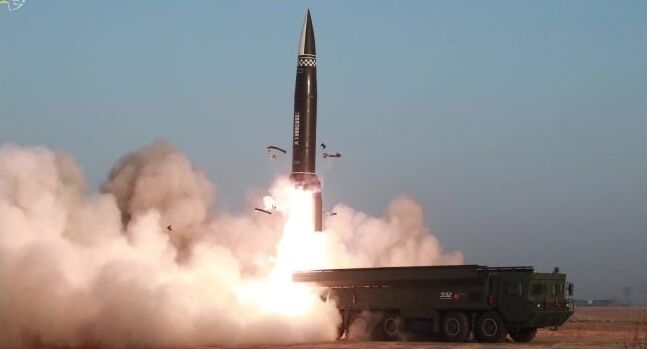
Russia has received North Korean KN-30 ballistic missiles for the first time, according to reports from Ukrainian intelligence, supplementing deliveries of KN-23 and KN-24 short range tactical missile systems in July. The missile integrates a warhead weighing 2,500 kilograms, providing five times the payload of Russia’s primary tactical ballistic missile the Iskander-M. Ukrainian intelligence says that approximately 90 North Korean military personnel have deployed to Russia’s Voronezh Oblast, where they are expected to operate up to six launchers, raising questions regarding whether the missiles are being exported to Russia, or simply represent part of Pyongyang’s contributions to its neighbour’s war effort. 

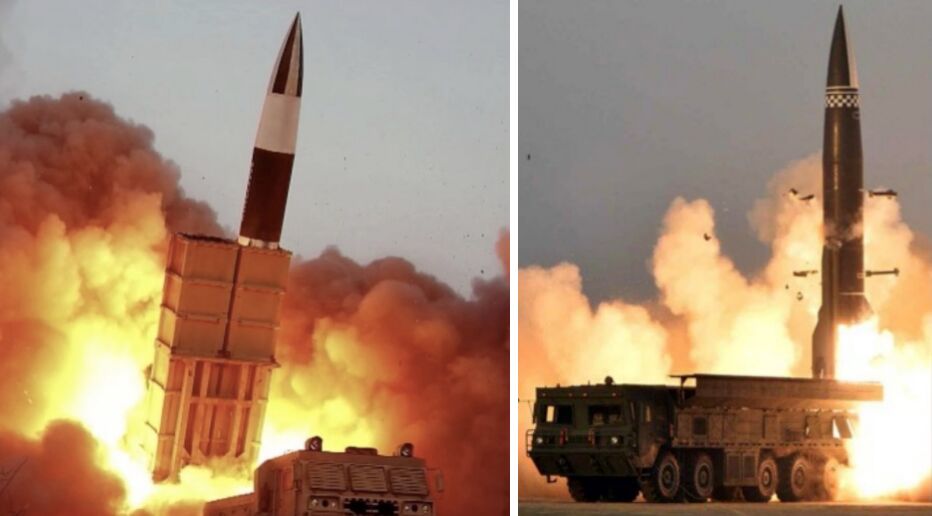
North Korean KN-24 (left) and KN-23B Ballistic Missile Launches qwe

The KN-23 and KN-24 have already demonstrated why North Korean ballistic missiles are attractive to Russia. Their manoeuvrability and low-altitude flight characteristics can complicate interception, while their relatively short ranges make them particularly suited to attacks against targets close to the front and deeper within Ukraine. The KN-30 could broaden this role, engaging fortified targets or large personnel concentrations with significantly greater explosive payload and penetrative capabilities. The KN-23B and KN-30 both have ranges of approximately 1000 kilometres, around double of the Russian Iskander-M. 

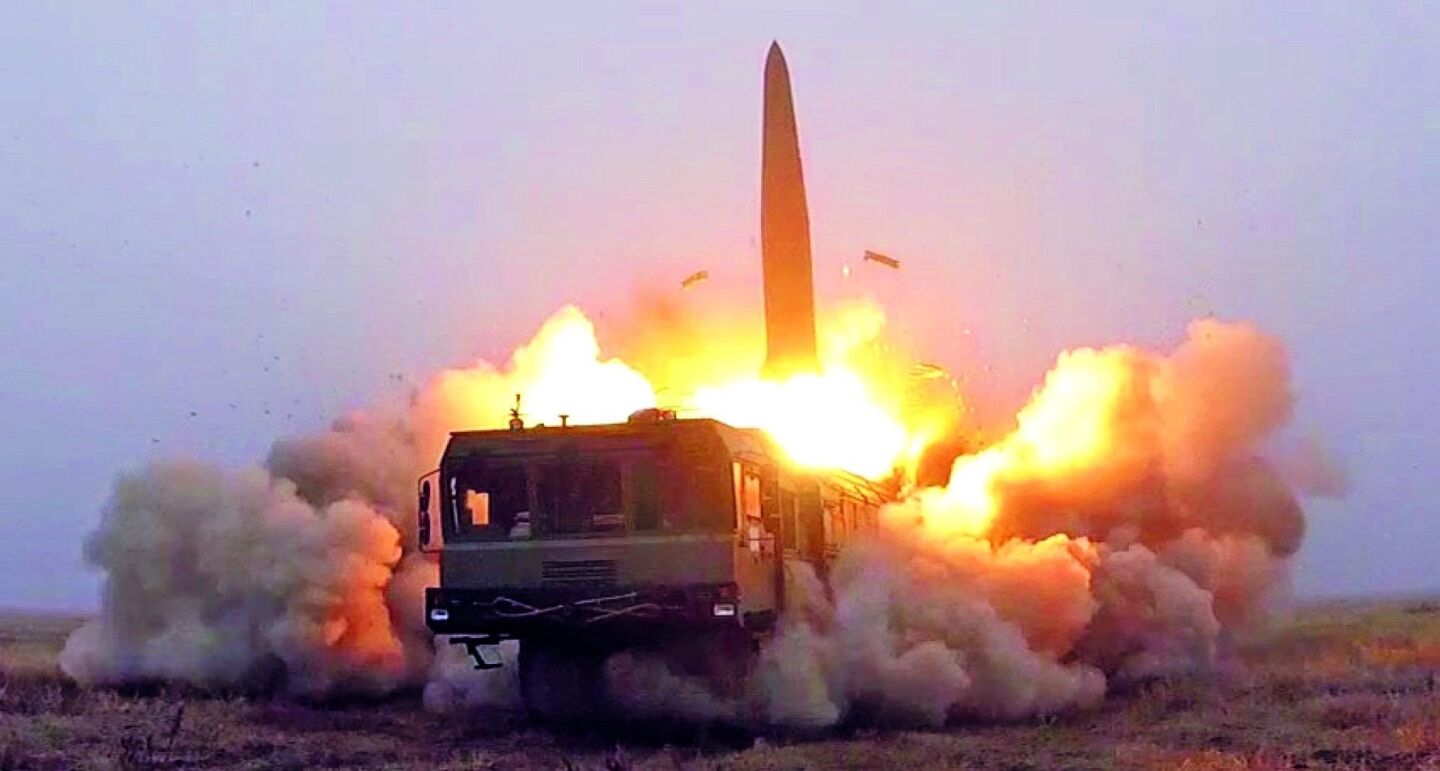
Ballistic Missile Launch from Iskander-M System

The KN-23B and KN-30 are serious contenders for the titles of the world’s most capable surface-launched short range ballistic missile types - a category which includes all surface-to-surface ballistic missiles with ranges under 1000km. Both were developed as larger variants of the original KN-23 design. While the KN-23 was widely compared to the Iskander-M, it had significant advantages most notably its 700 kilometre engagement range compared to the Russian system’s 500 kilometre range. The Korean missile’s approximately 20 percent larger size, with its smooth base, and its much larger cable raceway indicating a far greater fuel capacity. These advantages are significantly greater for the even larger KN-23B, and moreso for the KN-30. 

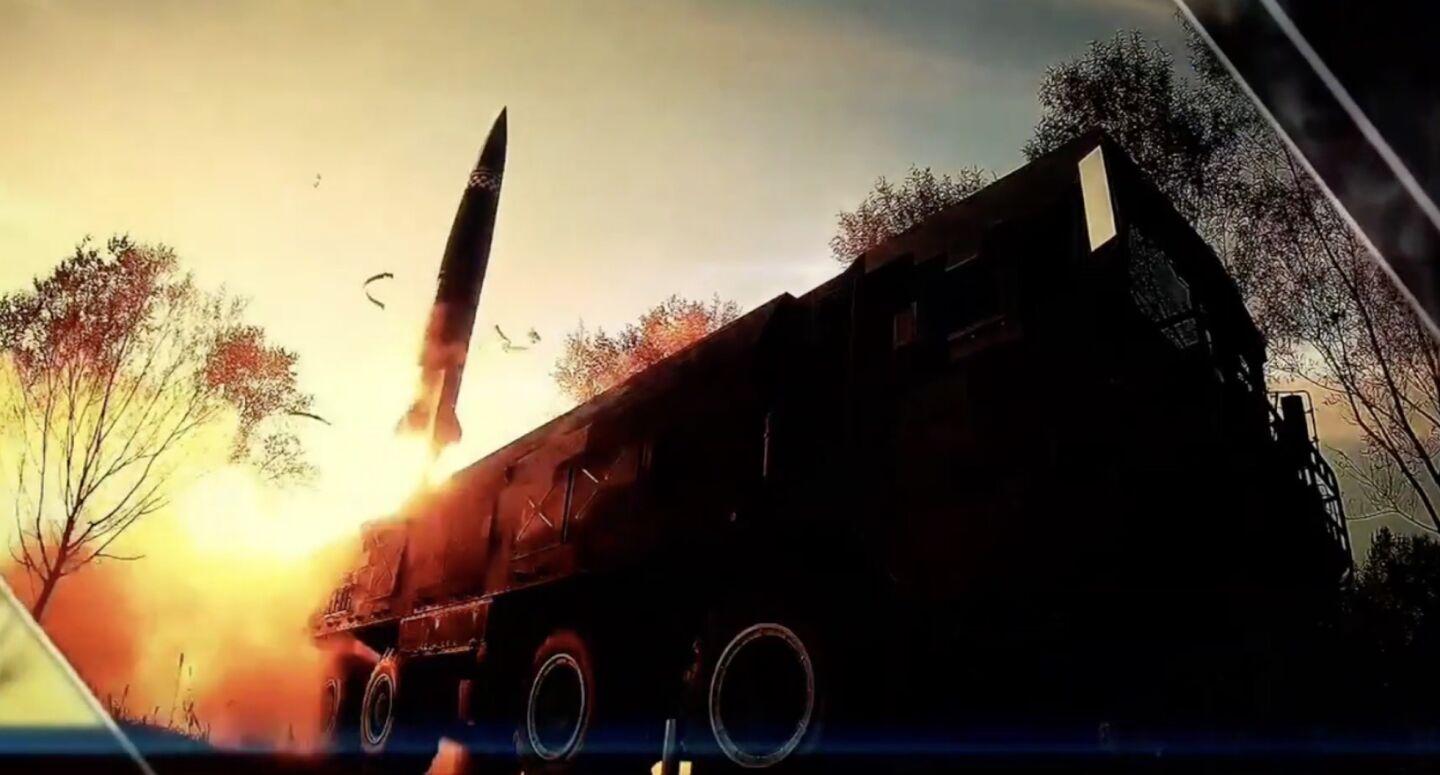
Ballistic Missile Launch from KN-23 System

The KN-23, KN-30 and the Iskander-M all fire missiles on semi ballistic depressed trajectories with the ability to conduct extensive in flight manoeuvres throughout their flight paths, making them extremely difficult to detect or track. These capabilities proved sufficient that the US. AEGIS anti-missile system proved unable to even detect KN-23 missile launches – which was confirmed by South Korean sources after a test launch in October 2019. With Ukrainian forces relying heavily on fortifications, the KN-30’s unrivalled penetrative capabilities and warhead size make it an optimal system for frontline use.