Monday, January 29, 2024

In 1987, Dr M protected Daim despite increasing UMNO’s debts


In 1987, Dr M protected Daim despite increasing UMNO’s debts


29 Jan 2024 • 12:00 PM MYT


M. Krishnamoorthy
A media coach, associate professor and an undercover journalist
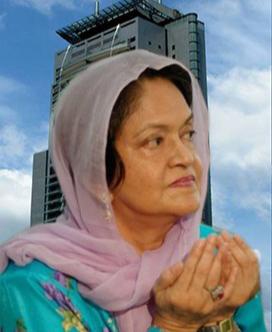


Late Marina Yusoff. Image Source: Suara Merdeka


A letter written to Dr Mahathir Mohamad by a former UMNO Supreme Council member (late) Marina Yusoff, dated 14th April 1987, is now widely circulated on social media, including Facebook and WhatsApp.


She opened the letter by saying: “As I have not succeeded in seeing you (Dr Mahathir) even though I have tried several times since November 1986. Now, I am forced to communicate by letter about FLEET HOLDINGS SND BHD.


“Several years ago, I was appointed with YB Dato' Rais Yatim in the UMNO Assets Committee. We were appointed to investigate and list out all UMNO Assets. Several questions were forwarded to you, which, to date, have not received any reply,” Marina said in the letter's opening.”


In 1983, Marina said, YBM Tengku Razaleigh Hamzah (Treasurer of UMNO) handed over control of Fleet Holdings Sdn Bhd to YB Encik Daim Zainuddin. That year, the value of the properties and shares in Fleet Holdings totalled more than $500 million, with debts of $56 million only.


“But today (14th April 1987), the debts of Fleet Holdings and its subsidiaries exceed $448 million. We are told today that it cannot service its interest of $3 million a month. It is most likely that those enormous debts cannot be repaid. We UMNO members take a severe view that foreign interests will eventually control these companies,” the late Hajjah Marina wrote a letter to Dr Mahathir Mohamad, then the Prime Minister and UMNO president.


“As you are well aware, Straits Times Press (M) Bhd has been listed on the Stock Exchange of Kuala Lumpur and Singapore, and in 1974, its name was changed to New Straits Times Press (M) Bhd. Fleet Holdings paid $32 million to control 80 per cent of Straits Times Press (M) Bhd with borrowings from Bank Bumiputra. After that, Fleet Holdings sold 25 per cent of its shares to pay part of the debt.


“Other than Fleet Communications, all the subsidiaries of Fleet Holdings showed profits. New Straits Times Bhd showed profits of RM43 million from a paid-up capital of $21 million in 1983. When Encik Daim and his friends took over in early 1983, they changed their business interests. They closed and sold several companies while buying othersthe , including those connected with YB Daim himself.”


Marina listed the companies and explained the financial problems and overhanging debts since Daim took control of the companies through his proxies. The following are the details of her letter.


1. FABER MERLIN


We have doubts about purchasing Faber Merlin shares at such a high price. To facilitate this purchase, part of the NST shares was withdrawn from Bank Bumiputra and charged again to Malayan Banking and Overseas Union Bank. A portion more of the NST shares was charged to Malayan Banking to get a loan of $90 million.


The Faber Merlin shares were purchased through the broker firms Rashid Hussain in Kuala Lumpur, Thong and Oh in Penang and Kay Hin Securities in Singapore in the name of Citivest Sdn Bhd. We have been informed that the shares purchased by Fleet Holdings Sdn Bhd were personally owned by YB Daim and his friends. YB Daim and his friends personally informed that the sale price to Fleet Holdings Sdn Bhd was $3.00 per share. The result is that YB Daim and his friends made profits of no less than $50 million.


Details of the sale of these shares can be obtained from the above-stated firms. The credibility of one of the above brokers became questionable when one of the partners of Kay Hin Securities, Mr Peh, had his passport confiscated by the Singapore Government.


2. TAMAN BUKIT MALURI


After Fleet Holdings controlled Faber Merlin, YB Daim and his friends directed Faber Merlin to buy land belonging to Bukit Maluri Sdn Bhd at $86 million. Before that, Daim had bought this land from Syarikat Permodalan Kebangsaan (SPK) at $16 million. This meant that YB Daim and his friends made profits of not less than $70 million.


3. DAZA SDN BHD


Another loss to us resulted from YB Daim and his friends' negotiations with Straits Times Singapore to purchase 25 percent of New Straits Times. He bought these shares not for Fleet but for himself and his friends through his company, DAZA Sdn Bhd, with a loan of $58 million from the Union Bank of Switzerland. After that, YB Daim directed Faber Merlin to buy the shares at $136 million.


Therefore, YB Daim and his friends made profits of $80 million. Unfortunately, Faber Merlin could only afford to pay $34 million as a deposit. As YB fixed the price, Daim and his friends were too high and unreasonable, and Faber Merlin failed to get sufficient funds to pay the balance. As a result, Faber Merlin was given 5 per cent of the shares, and the 20 per cent balance remained in Daza Sdn Bhd it was evident that the sale of only 5 per cent of the New Straits Times Press shares to Faber Merlin was not enough to repay the loan of $57 million from the Union Bank of Switzerland given to Daza Sdn Bhd. To overcome the problems of Daza Sdn Bhd and YB Daim and his friends, Fleet Holdings was forced to buy Daza Sdn Bhd for $1 million. At first glance, it was cheap, but in fact, with the purchase, Fleet Holdings was forced to bear the debts of Daza Sdn Bhd, totalling $120 million.


4. UNITED ESTATES PROJECTS BHD


YB Daim and his friends succeeded in selling the United Estates Project Berhad to Sime Darby. Before Sime Darby YB took over this company, his friends directed Faber Merlin to buy Subang View Hotel for $56 million, which was paid by the exchange of $36 million Faber Merlin shares valued at $1.60 each. The cost of the construction of the Hotel was only $26 million. This meant Daim and his friends made profits of not less than $30 million.


Fleet Holdings' income was from the dividends of its subsidiaries. Other than New Straits Times, all subsidiaries suffered losses, affecting their income. Fleet Holdings failed to repay the loans from Malayan Banking, Overseas Union Bank and Bank Bumiputra. Daza Sdn Bhd also failed to pay the interest and principal loan from the Union Bank of Switzerland (UBS). As a result, Overseas Union Bank and Malayan Banking Berhad are the institutions that control the shares of New Straits Times (M) Bhd and its subsidiaries, including TV3.


Marina questioned in her letter what the result of YB Daim's and his friends' actions are to the fate of the UMNO company, Fleet Holdings?


She provided the answer. “It is estimated that Daim and his friends made clean profits of more than $200 million from these manipulations and transactions. Unfortunately, Fleet Holdings and Faber Merlin are facing heavy losses. There is no other way for Fleet Holdings to reduce its debts except to sell a portion of its NST shares. Now the shares of Fleet Holdings in NST is only 50.3 per cent from the 55 per cent it had before.”


5. TV3


Recently (1987), as Dr Mahathir announced, New Straits Times has been directed to buy shares of Malaysian Television Sistem Berhad, which is held by Utusan, Fleet Group and Syed Kechik Holdings at $77 million. Not enough with this purchase, the New Straits Times has been directed to buy shares of Bank of Commerce and American Malayan Insurance owned by Fleet Holdings. New Straits Times has borrowed from local banks to facilitate the purchase of the shares. Throughout its existence, the New Straits Times has never borrowed. As a result of this borrowing and reduced profits for the last three years, we are concerned that the New Straits Times will face the same fate as Fleet Holdings.


I have enclosed a list of Fleet Holdings Group debts with this letter.


The banks holding the shares of New Straits Times charged as security for the loans listed above can immediately take control of the New Straits Times Malaysia Berhad Group, and UMNO will lose its hold on the above companies.


6. DAAN AND DANI


We should also like to state that Daan and Dani (companies owned by YB Daim) also own 2.5 million shares in TV3. Should this occur when TV3 is supposed to be owned by UMNO through Fleet Holdings and not by individuals?


By right YAB Dato Seri Dr Mahathir should take immediate and firm action before it becomes worse. Unfortunately, you have tried to conceal this matter by saying it is a "secret". Once more, if YAB Dato' Seri Mahathir does not take immediate and firm action to rectify the matter, it is most likely that foreign powers will own Fleet Holdings Sdn Bhd and its subsidiaries. This is in conflict with UMNO's policies.


“In all humility, we request immediate, positive and meaningful action be taken so that certain personalities in UMNO will not make the image of UMNO and the interest of the Malay race merchandise,” pleaded Marina as she concluded the letter.


Freelance Writer M. Krishnamoorthy (www.imkrishna.net) is a media coach, adjunct professor and undercover journalist. He has freelanced with Bernama, NST, The Star, and Malaysiakini. He also freelances as a fixer/coordinator for CNN, BBC, German and Australian Television networks and the New York Times. As an undercover journalist, he has highlighted society's concerns.

Daim charged with failure to declare assets to MACC, claims trial


Daim charged with failure to declare assets to MACC, claims trial


Former finance minister Tun Daim Zainuddin arrives at the Kuala Lumpur Court Complex January 29, 2024. — Picture by Firdaus Latif

Monday, 29 Jan 2024 10:14 AM MYT


KUALA LUMPUR, Jan 29 — Former finance minister Tun Daim Zainuddin, was charged in the Sessions Court today with failing to declare his assets to the Malaysian Anti-Corruption Commission (MACC).

The 86-year-old pleaded not guilty after the charge, made under Section 36(2) of the Malaysian Anti-Corruption Commission (MACC) Act, was read out to him.


Section 36(2) covers the offence of wilfully neglecting or failing to comply with the terms of a notice issued by the MACC to give a written statement on oath or affirmation of their assets.

He can be punished with a maximum five-year jail term and a maximum fine of RM100,000 if convicted.


Daim was accused of having on December 13, 2023, at the MACC headquarters in Putrajaya, willfully given a written statement on oath that did not comply with the terms of a MACC notice dated November 8 of the same year that was served on him on November 14.


He was alleged to have committed the offence by not declaring assets as stated in a list (Lampiran A).

He is accused of failing to declare his ownership in 38 companies; seven vehicles; 19 plots of land in Kuala Lumpur, Selangor, Negeri Sembilan, Pahang and Kedah; and six properties.

Besides that, Daim also allegedly omitted in declaring an Amanah Saham Berhad and Amanah Saham Nasional bank account.

MORE TO COME

Sunday, January 28, 2024

The BIG JOKE on Malaysian (Higher) Education continues


Ranjit Singh Malhi
Published: Jan 28, 2024 12:12 PM


COMMENT | The recent controversy surrounding an article written by two academics Rozita Che Rodi and Hashim Musa from Universiti Putra Malaysia (UPM) has put the crucial issue of academic quality and integrity in our country under scrutiny.

Rozita and Hashim, both from UPM’s Malay Language Department, had jointly written the article titled “The Jongs and The Galleys: Traditional Ships of The Past Malay Maritime Civilisation” which was published on Nov 19, 2023, in the “International Journal of Academic Research in Business and Social Sciences” (IJARBSS), Vol 13, Issue 11, 2023.

Like most publications of its kind, it may well have passed unnoticed by the wider public, if not for Serge Jardin, a French writer of history.

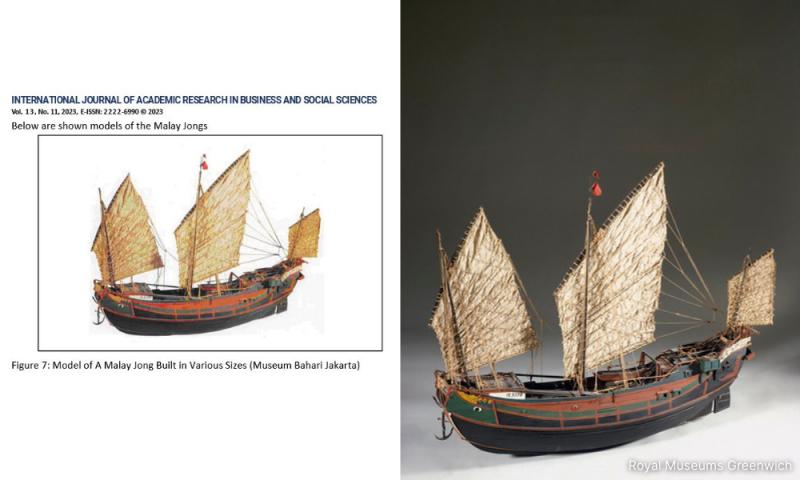
In a Facebook post on Jan 20, Jardin alleged that an image used in the article by the UPM academics to represent a model of Malay jongs is actually a hua-p'i-ku or a Foochow pole junk from China. The Foochow pole junk is a cargo-carrying junk with a capacity of 200-400 tonnes, and capable of long sea voyages.

Jardin further alleged that the model in question is not displayed in the Bahari Museum in Jakarta, Indonesia as stated by the authors in their article, but rather, is in the Royal Museums Greenwich, London (ID: AAE0200).

At the same time, Jardin went on to question whether the journal in which the article was published was credible and peer-reviewed.

Jardin’s comments are very serious and disturbing. They go to the heart of academic rigour and integrity which is central to maintaining the quality of academic research and reputation.

In addition, he has shone the spotlight on the increasing prevalence of academic journals of questionable quality, particularly open-access “predatory journals” which prioritise profit over academic integrity.


Predatory journals

Reputable academic journals uphold high editorial standards, and diligently screen articles submitted for publication for factual accuracy of content, including images by in-house editors as well as external peer reviewers.

In contrast, “predatory journals” are those that require authors to pay a fee for publishing their articles, and hence expose themselves to the risk of accepting submissions which could be of inferior quality. About IJARBSS, authors have to pay a publication fee of US$82 per article to get them published in the journal.


Predatory journals have been criticised for lacking robust peer review, poor quality editorial services, and choosing rapid publication turnaround.

Nonetheless, they have mushroomed in recent years due to the “publish or perish” reality of academic life - academics are under tremendous pressure to produce journal publications to move up the academic ladder.

As can be expected, the article’s publication has drawn flak from several renowned scholars. For example, Syed Farid Alatas, a professor of Sociology at the National University of Singapore, has commented: “It’s high time that something is done about the standards of higher education in Malaysia.

“It is not at all surprising that there are problems with published papers and books, such as those found in the by now infamous UPM paper on Malay maritime history.”

Syed Farid also questioned the credibility of the journal in which it was published: “I can say with much confidence that no publication in the International Journal of Academic Research in Business and Social Sciences would be taken seriously in any academic institution that has a decent standard.”

Whereas, James Chin of the University of Tasmania’s Asia Institute has questioned the ulterior motive of the UPM academics in claiming the Chinese junk to be Malay in origin. He has suggested that the UPM academics might be biased (influenced by the ideology of ketuanan Melayu or Malay dominance) and “so desperate to rewrite history”.

He has also stated that he was “completely dumbfounded” because the facts in dispute could have been easily checked. Additionally, James has bluntly labelled the IJARBSS as a “fake academic journal”.

In a similar vein, published Malaysian author Preeta Samarasan has referred to it as a “backyard journal” that “can count as a publication record for Malay(sian) academics ...”

It is also noteworthy to mention the views of Syukry Kamarudin, an independent researcher, who concurs with Jardin that the junk in question is “certainly Chinese” because “the oculus eyes on the bow” are “part of Chinese superstition”, and that the hull and the transom bow are typically found in Chinese vessels.


The Royal Museums Greenwich in London said the photograph of a ship model in its collection is correctly attributed as ‘Foochow junk’, as per its catalogue.


UPM, understandably but not convincingly, has put out a press statement, defending the article written by its two academics. The university has asserted that the article had been subjected to a blind peer review process and blithely argued that “the field of social sciences and humanities studies is open to interpretation from various parties”.

How confident is UPM that the article was indeed reviewed by independent experts in Malay maritime history?


Facts and interpretations

To quote Jardin: “Are we speaking of a peer blind review or are the so-called experts blind? How is it possible for an expert not to see the difference between a Chinese junk and a Malay jong?”

Let us also not forget that the main issue at hand is factual accuracy and not interpretation which are distinctly different. Factual accuracy is factually accurate information.

Facts are indisputable; they can be objectively verified and proven through evidence. For example, the image used in the controversial article is that of a Foochow pole junk and not a Malay jong.

Interpretation, on the other hand, places facts in a context and seeks to explain their significance or to provide a conclusion based on them. We can have the same facts but different interpretations.

What has not been highlighted so far in this worrying issue is that the article published by the two academics in IJARBSS is essentially a translation of a paper (available online), “Teknologi perkapalan Melayu tradisional: Jong dan Ghali meredah tujuh lautan”, which was presented by Hashim in “Persidangan Antarabangsa Manuskrip Melayu” from Oct 15 to 17, 2019.

Interestingly, in the paper presented by Hashim, no source was given for the controversial model of the Malay jong.

It is especially troubling to note that both academics did not disclose the fact to the journal’s readers that the article was not original when publishing it in IJARBSS.

Arguably, both of them may have to explain if they had committed a transgression in academic publishing called self-plagiarism - reusing a substantial part of one’s previous work without citing the original text.

Self-plagiarism misleads readers by presenting previously published work as completely new and original. Furthermore, if an academic paper is reproduced or translated into another language, it has not contributed to new knowledge and is thus not worthy of publication.

Incidentally, IJARBSS claims that it publishes original research articles. If the article was indeed peer-reviewed, as claimed by HRMARS’ Journal Publications director Sunil Noel, one wonders why the reviewers did not discover that it was not an original article.

For the record, the opening sentence in the abstracts for both the published article and the paper presented at the 2019 conference is 100 percent similar, including the usage of punctuation such as commas: “The Malay civilisation in the past, located in the Malay Archipelago, was a maritime civilisation, being strategically situated midway between the trade sea routes of the western and eastern trading nations.”

Let us now focus on the Human Resource Management Academic Research Society (HRMARS) which publishes the IJARBSS. It has been labelled as a “predatory publisher” by Predatory Reports - an organisation comprising volunteer researchers who have been harmed by predatory publishers and desire to help researchers identify legitimate journals and trusted publishers for their research.

One also wonders how a “human resource management” society such as HRMARS considers it within its area of expertise to reportedly publish the following journals spanning various disciplines: International Journal of Academic Research in Business and Social Sciences; International Journal of Academic Research in Accounting, Finance and Management Sciences; International Journal of Academic Research in Economics and Management Sciences; International Journal of Academic Research in Progressive Education and Development; and Multilingual Academic Journal of Education and Social Sciences.

On top of that, I almost jumped out of my chair when I shockingly discovered that Vol 13, Issue 11, November 2023 of the IJARBSS, in which the controversial article was published, had a total of over 200 articles amounting to 8,132 pages.

In contrast, most scholarly and genuine journals have on average only about 10‒12 articles per issue. Additionally, articles in IJARBSS are published rapidly unlike those of reputable journals, on average within a month of submission.


Grammatical errors

I am also not impressed by the editorial standards of IJARBSS. Several articles, including “Political Islam in Islamism and Post Islamism: A Study on Islamic Renaissance Front (IRF)” by two academics from Universiti Pendidikan Sultan Idris (published on Feb 4, 2018) are littered with grammatical errors.

Some examples of atrocious grammatical errors are: “Although, the AKP’ direction is still be a big questioned”; “In this situation, the AKP came to power on Turkey”; and “Therefore, Islam principles and Western values are not in similar and contrary stand.”

Incredibly, there are even fundamental language errors in the titles of published articles. Some examples are: “Development Micro-Credentials Overview Social Security” and “The Issues of Safety and Health Items Provided in Construction Industry Standard (CIS 27: 2019): The Level of Safety Items Importance toward Contractors” (both in IJARBSS, Vol 13, Issue 11, November 2023).

To conclude, I trust that the Higher Education Ministry and the top management of our local universities will do the needful to ensure high-quality journal articles are published by Malaysian academics.

Ultimately, of course, as writers, the onus is on Malaysian academics to uphold the quality of their published works and adhere to the highest standards of academic integrity.

They should painstakingly fact-check and scrupulously edit their written output, besides refraining from publishing their articles in sub-standard and “predatory journals”.

These are the sole prerequisites by which our academics can garner respect and credibility among their peers and the public.


RANJIT SINGH MALHI is an independent historian who has written 19 books on Malaysian, Asian and world history. He is highly committed to writing an inclusive and truthful history of Malaysia based upon authoritative sources.


RPK: Bersatu likely to follow self-destructive path of Semangat 46; Azmin to replace Hamzah as sec-gen By FocusM


Focus Malaysia:

RPK: Bersatu likely to follow self-destructive path of Semangat 46; Azmin to replace Hamzah as sec-gen


Raja Petra Kamarudin (RPK)


FUGITIVE blogger Raja Petra Kamarudin’s (RPK) Bersatu bashing has lingered on with the once PKR frontman likening the fate of the UMNO splinter party to that of Semangat 46 which only survived eight years prior to being dissolved in 1996 with all its members returning to UMNO.

The Malaysia Today editor with ties to the Selangor royalty drew such comparison as Bersatu has clocked seven years of existence to-date.

“Will Bersatu repeat the history of Semangat 46 of which in a year or two from now the party will also be buried?” wondered the opposition-slant mercenary blogger in his latest video clip.

“Founder Tengku Razaleigh Hamzah decided to disband Semangat 46 as he deemed that the party has no hope for the future … he has to accept the painful truth that Semangat 46 was incapable of replacing UMNO, hence a return to UMNO is imminent for the political future of its leaders.”

Recall that Semangat 46 was formed by Tengku Razaleigh’s “Team B” faction in 1988 as a challenge to twice former premier Tun Dr Mahathir Mohamad during his first stint in office (1981-2003).

Back then, Semangat 46 even boasted the personal support of former UMNO prime ministers (PM) Tunku Abdul Rahman and Tun Hussein Onn, both of whom had also fallen out with Dt Mahathir.

“Bersatu which dreams to replace UMNO cannot advance exactly like Semangat 46 in view of power struggle or internal crisis between two warring factions led by its supreme council member Datuk Seri Mohamed Azmin Ali and its secretary-general Datuk Seri Hamzah Zainuddin,” asserted RPK.

“In a way, this is the fault of its president Tan Sri Muhyiddin Yassin who has expressed his desire to quit the party or not contesting in the future … but still hold on to the party’s presidency, thus leaving both camps to be eyeing the coveted post.”

RPK further hurled insult at Bersatu for the eruption of civil war within the party has eventually resulted in the futile move to topple the unity government via the failed Dubai Move.

“In fact, rumours have abounded since June last year among Hamzah’s boys that the Opposition leader was on course to replace PM Datuk Seri Anwar Ibrahim,” revealed the self-exiled blogger from his Manchester, UK residence since 2009.


He further speculated: “Muhyiddin will replace Hamzah with Azmin during today’s (Jan 28) supreme council meeting with the Perikatan Nasional (PN) information chief eventually take over as the Opposition leader in the Dewan Rakyat.

“This will certainly spark a rebellion among Hamzah’s boys who had since June last year plotted Hamzah’s rise as Bersatu’s president … above all else, this comes a little too late for it serves no good to lock the door after the horse has bolted.

“No thanks to Bersatu, the harm are done for the Dubai Move is dead and buried with Anwar poised to remain PM all the way till GE16 (the 16th General Election).” – Jan 28, 2024


UK, Finland suspend funding for UN agency over Israeli allegations


UK, Finland suspend funding for UN agency over Israeli allegations


The UK and Finland have joined other countries in pausing funding to the United Nations agency for Palestinian refugees (UNRWA).

Following the US, Italy, Australia, and Canada, the UK and Finland have also decided to suspend funding to the UN agency after allegations of involvement by some of its employees in the Oct 7 attacks on Israel.

After the Israeli allegations, the agency on Friday said that it had terminated contracts with several of its staff over their alleged involvement in the attack, Anadolu Agency reported.

Citing the UK Foreign Office, local media reported on Saturday that Britain is temporarily pausing any future funding to UNRWA while reviewing these concerning allegations.

Saying it was "appalled" by the claims, it added: "We remain committed to getting humanitarian aid to the people in Gaza who desperately need it."

Finnish Minister for Foreign Trade and Development Ville Tavio said on Saturday that the case must be investigated thoroughly.

Israel has launched relentless air and ground attacks on the Gaza Strip since Oct 7. At least 26,257 Palestinians have been killed, mostly women and children, and 64,797 injured, according to Palestinian health authorities.​​​​​​​

- Bernama

***

kt comments:

Did fxzck-all during the genocide, but the instant ISRAEL made an allegation, the Macai's of the Jewish State leapt to attention and obeyed their LOrd & Master into doing exactly what Israel wants, that is, to stop all aid for Gazans.


Trafigura assesses Red Sea risks after tanker attacked by Houthis


Reuters:

Trafigura assesses Red Sea risks after tanker attacked by Houthis

January 28, 2024


DUBAI, Jan 27 (Reuters) - Commodities trader Trafigura said on Saturday it was assessing the security risks of further Red Sea voyages after firefighters put out a blaze on a tanker attacked by Yemen's Houthi group a day earlier.

The U.S. military said a U.S. Navy ship and other vessels provided assistance after the Marlin Luanda was hit by a Houthi anti-ship missile.

"No further vessels operating on behalf of Trafigura are currently transiting the Gulf of Aden and we continue to assess carefully the risks involved in any voyage, including in respect of security and safety of the crew, together with shipowners and customers," a Trafigura statement said.

Some shipping companies have suspended transits through the Red Sea, which is accessed from the Gulf of Aden, and taken much longer, costlier journeys around Africa to avoid being attacked by Yemen's Iranian-backed Houthi group, which began launching waves of exploding drones and missiles at vessels on Nov. 19 in response to Israel's military operations in Gaza.

The Houthi attacks have primarily targeted container vessels moving through the Red Sea. Many fuel tankers have kept using the route.

A notable exception is QatarEnergy, the world's second largest exporter of liquefied natural gas, which earlier this month stopped sending tankers via the Red Sea, citing security concerns.

Over several hours early on Saturday the Marlin Luanda's crew battled a blaze in one cargo tank on the vessel's starboard side, Trafigura's said in a statement.
By Saturday afternoon, the blaze was extinguished and all crew were safe, Trafigura said.

"The vessel is now sailing towards a safe harbour," Trafigura said, adding that the firefighting effort had been supported by Indian, U.S. and French navy vessels.


Smoke rises from Marlin Luanda, merchant vessel, after the vessel was struck by a Houthi anti-ship missile, at the location given as Gulf of Aden, in this handout picture released January 27, 2024. @indiannavy via X/Handout via REUTERS Acquire Licensing Rights, opens new tab


The Marshall Islands-flagged Marlin Luanda issued a distress call on Friday and reported damage, U.S. Central Command said in a post on X, formerly Twitter. The USS Carney and other coalition ships were providing assistance to the tanker, it said.

India's navy deployed INS Visakhapatnam, a guided missile destroyer, after receiving a distress call from the Marlin Luanda, which had 22 Indian and one Bangladeshi crew on board, an Indian Navy spokesman said.

The tanker was carrying Russian naphtha purchased below the price cap in line with G7 sanctions, a Trafigura spokesperson said on Friday.

U.S. and British warplanes, ships and submarines have responded to the Houthi attacks on shipping in recent weeks with dozens of retaliatory strikes across Yemen against Houthi forces.

About eight hours after the Marlin Luanda incident, the U.S. military destroyed a Houthi anti-ship missile that was aimed into the Red Sea and ready to launch, Central Command said.

The missile "presented an imminent threat to merchant vessels and the U.S. Navy ships in the region", it said.

The Houthis' Al-Masira television said on Saturday that the United States and Britain launched two air strikes that targeted the port of Ras Issa, Yemen's main oil export terminal.

It was not clear if this was the strike referred to by Central Command, and the U.S. Fifth Fleet did not immediately respond to a request for comment.

The British Defence Ministry declined to comment.


Bad karma hits UK nuclear power plans after China kicked out


Bad karma hits UK nuclear power plans after China kicked out


OOPS. BAD KARMA HAS HIT the UK’s nuclear power plans after the Brits kicked out their Chinese partners.

The action left the country’s nuclear hopes (now extremely late and over-budget) in the hands of a French company—which announced that it has run out of money for it.

To make matters worse, the Chinese have built 37 nuclear reactors in the past decade, while Britain is struggling to finish one.


SELF-MADE DISASTER

First, the breaking news. Last week, French builder EDF said the switch on date for the first of the Hinkley Point’s two reactors would be delayed to after 2027, or perhaps as late as 2031. The original switch on date, rather unrealistic, was 2017.

And the construction price, originally £16 billion in 2012, will be more than £40 billion.

French plant-builder EDF is struggling financially, so cannot fulfil its side of the contract, and is calling for more money. Britain is saying no—the contract says EDF has to pay for cost over-runs.

In the meantime, the other plant under construction, Sizewell C, also needs money. On Monday last week, Prime Minister Rishi Sunak put £1.3 billion of taxpayer cash into it, but much more will be needed. No one dares to ask the Chinese.


POLITICAL REASONS

Quick history: Originally, the folk from China Nuclear Group were happily working with the French on two nuclear power plants for the UK, Sizewell C and Hinkley Point.

But then the usual right wing group of anti-China campaigners (yes, Ian Duncan Smith, Tom Tugendhat, Benedict Rogers, Chris Patten, etc) turned up their “demonize the Chinese” operation to maximum, supported by a uniformly Sinophobic UK media.

For entirely political reasons, the Chinese were kicked out of Sizewell C. Luckily, they had negotiated a tight contract, so had to be paid £100 million to leave the site.

The Chinese still have a 33% stake in the sister operation at Hinkley Point, but after they were treated so badly at the other plant, no one dares to ask them for more money.

That leaves the other builder, a French company called EDF, to finance the building project. But EDF can’t afford it, and the British are sticking by their contract, which says EDF has to cover over-budget expenses.

Meanwhile, at the now Chinese-free Sizewell plant, the overrun problem is repeated. That project again needs to find billions of pounds to continue building, and the first bit of electricity from it is not expected until after 2040.

Awkwardly, these nuclear plants are key to the plan for Britain to cut its carbon emissions by 2030. How will they contribute if they can’t be switched on by that date?


LEFT BEHIND BY HISTORY

The Chinese, meanwhile, are continuing to build new nuclear power plants, and trying different models. While China is struggling to close down its coal operations, it does take clean energy investment seriously.

There are fears that the UK’s nuclear plant construction efforts are going so slowly that other power generation technologies (modular reactors, wind farms, enhanced solar power collectors) will make them seem old-fashioned even before they are finished.

The Chinese, as is their habit, have chosen not to complain about the way they were treated, nor have they gloated about the problems. Instead they are working hard.

Out of the 61 nuclear power plants in construction around the world, 26 (more than 40%) are in China alone.

The Chinese way seems to be to let karma deal with the injustice they have faced. And at the moment, at least, she seems to be doing a good job.


Image at the top by EDF.


"INDIA IS BROKEN" by PROF ASHOKA MODY


Sunday, January 28, 2024


INDIA IS BROKEN by PROF ASHOKA MODY


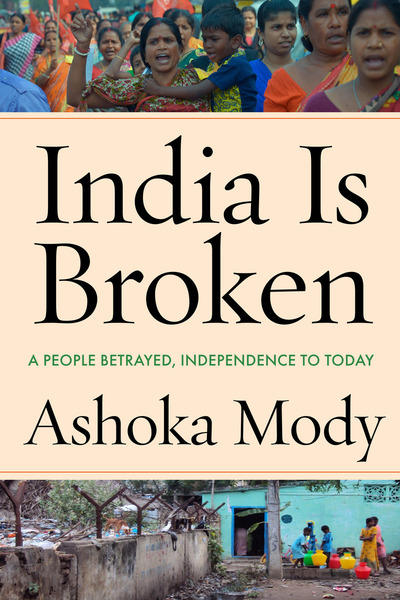
 The cover of India is Broken: A people betrayed, independence to today

The basic premise of the book is that India is broken. How so?

Ashoka Mody is an economic historian at Princeton, but writes, his “heart is in India.” It’s through this lens that Mody, formerly of the World Bank and the International Monetary Fund, channels his finance- and policy-driven analysis of the world’s second most-populous country. Weaving history, statistics, economics and political science, Mody’s “India is Broken: A People Betrayed, Independence to Today” is a clear-eyed look at the obstacles the country faces on its path to becoming a global superpower. Mody recently sat down with Princeton International to discuss his findings.

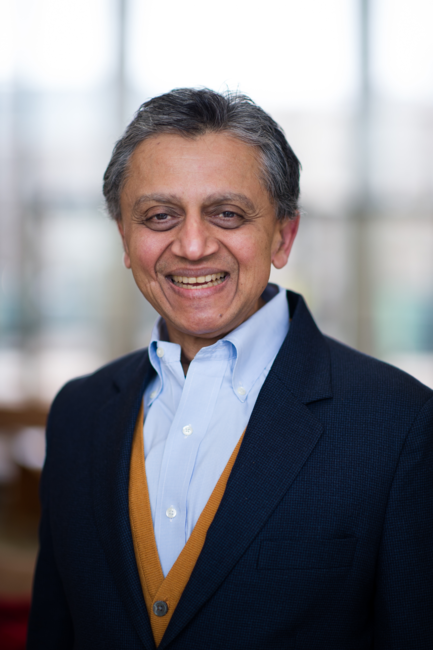
 headshot of Ashoka Mody


Ashoka Mody, the Charles and Marie Robertson Visiting Professor in International Economic Policy and Lecturer in Public and International Affairs at the Woodrow Wilson School of Public and International Affairs

Indian elites who live first-world lives and their international counterparts tell a very upbeat story about India, relying on whacky techno-optimism and using superficial indicators.

I have long felt that that upbeat story is completely divorced from the lived reality of the vast majority of Indians. I wanted to write a book about that lived reality, about jobs, education, healthcare, the cities Indians live in, the justice system they encounter, the air they breathe, the water they drink. And when you look at India through that lens of that reality, the progress is halting at best and far removed from the aspirations of people and what might have been. India is broken in the sense that for hundreds of millions of Indians, jobs are hard to get, and education and health care are poor. The justice system is coercive and brutal. The air quality remains extraordinarily poor. The rivers are dying. And it's not clear that things are going to get better. Underlying that brokenness, social norms and public accountability have eroded to a point where India seems to be in a catch-22: Unaccountable politicians do not impose accountability on themselves; therefore, no one has an incentive to impose accountability for policy priorities that might benefit large numbers of people. The elite are happy in their gated first-world communities. They shrug their shoulders and say, “What exactly is the problem?”
 
A line in your book reminded me of an anecdote: My sister dated a man from an India who was born into an elite family — his dad was a government minister of some sort. This boyfriend said he had cheated on every single test he ever took from elementary school through college, just because he could.

That is a heartbreaking story, but I am not surprised to hear it. That is the breakdown of the norms — there is a sense of entitlement that I can cheat my way through the entire educational process — and who is going to catch me? I call this a bad equilibrium. If enough people cheat as he did, then what is my incentive to be honest? Unless I cheat, I'm going to get really left behind. Such societies coalesce around the dictum, “Do unto others before they do unto you” — and once the norms are broken, they are very hard, if not impossible, to repair.
 
Let’s talk about the jobs issue.

There were not enough jobs in 1950, when Jawaharlal Nehru was prime minister, and the jobs crisis, if anything, has become steadily more acute. There were fewer people employed in 2021, than in 2011; this was so at a time when 7 million to 9 million new job aspirants entered the market every year. If my calculations are right, India needs 200 million jobs over the next 10 years to employ its working-age population, and we’re starting from a decade that has experienced net zero or even net negative job growth. I say repeatedly in the book: If you want to understand India, you must keep an unflinching gaze on jobs. Because jobs are not just about economics, they are about dignity and respect.
 
The cover of India is Broken: A people betrayed, independence to today
What do you make of the announcement that Apple is going to bring manufacturing jobs to India?

The Apple investment is one part of the upbeat Indian story I referred to at the start. To digress for a minute, another part is the relative GDP growth rate. The growth rate story is utterly misleading because Indian GDP fell sharply during the COVID period. And if you fall sharply, there is always a bounce back, so GDP is growing. Even otherwise sensible economists are extrapolating that bounce back into the next century. I anticipate Indian GDP growth will moderate quite rapidly after this unusual year.

To return to your question, yes, there is some chatter that Apple is planning to expand — that this is the leading edge of an expansion of manufacturing in India. The underlying premise is that because sourcing from China had become a problem due to its lockdowns, a lot of companies were beginning to leave. At the very least, it is way too premature for India to cheer.

The problems are manifold. First, it's very hard to leave China because it doesn’t just make iPhones, it supports an entire supply chain of components. So, firms are still sticking around there. Second, U.S. firms are relocating to Mexico, and Asian firms are relocating to Vietnam and even Cambodia. Finally, recent reports warn that the iPhone production in India has run into severe quality problems. It's possible that Apple will expand into India. But in the larger scheme of things, considering all types of labor-intensive manufactured exports, the conclusion for now is that this train has left.

We in India still have a dismal education system. Go to a school in Delhi, a fifth grader cannot do second-grade reading and writing. By ninth grade, something like 30 percent drops out. And those who go on are poorly educated — many go to rubbish colleges, several of which are money spinners set up by local politicians and notables. People are clamoring for a degree certificate that they can peddle to get a job. This idea that Apple is somehow going to solve these deeply rooted problems is laughable, although as somebody who has his heart in India, it makes me cry.

Something I noticed in your book is that you're very deliberate about pairing the joblessness situation with the ongoing climate catastrophe.

Astonishingly, environmental damage does not figure in the Indian discourse on economic policy. It's not convenient. For example, there’s been a lot of news about a man named Gautam Adani, who was briefly the second richest person in the world. Adani is reputedly a very close friend of the Prime Minister. And everything Adani does leaves a deeply grievous wound in the environment — as just one instance, he may well be one of the world's biggest coal miners. Adani’s staff and the government officials work together to evict people from these mining areas. Technically, you need the permission of those evicted to clear the forests under which the coal typically lies. But Adani can afford to pay people off, leaving them some immediate funds but with unclear prospects. In the meantime, his projects are destroying pristine forests. The attitude of the Indian elite is “Yeah, but this is how development occurs.” What is this development if you are robbing your kids’ inheritance by mowing down pristine forests and polluting the air and water? Mine, I think, is the first book from a macroeconomic perspective that puts environmental damage and preservation on center stage.

Making matters worse, as Indian authorities will only too quickly remind you, India has some of the best environmental laws in the world. This is where the norms come in. Who cares about the laws and regulations? They are routinely flouted. It is common knowledge that environment-impact assessments are just pieces of paper, where people check boxes while lying through their teeth.

While the breakdown of norms and accountability is reflected in poor job creation and public-goods provision, it is most acutely reflected in the destruction of the environment. And this is so everywhere in the country. Economic growth in India relies so heavily on natural resources and construction, both of which are tied up with the mafia. The construction push, for example, has spawned illegal sand mining.

Here is the problem: in every corner of the country, sand — as an important ingredient in concrete — is in huge demand for construction projects. And illegal sand mining causes vast environmental damage and breeds criminal activity, which creates a steady supply of criminal politicians. Miners dredge sand from riverbanks and river beds, thus shifting and reducing the flow of water. Bear in mind, the rivers are already polluted;  if you slow down the river flow, the rivers cannot cleanse themselves. Also, sand is a like a sponge. After a rainfall, the sand absorbs the water, allowing it time to percolate down and replenish the groundwater. If you remove the sand, the water runs away without filtering back into the ground. Sand mining also kills biodiversity and the natural habitat of fish. I don’t know what causes greater harm: the environmental damage or the supply of criminal politicians.
 
On a brighter note, you have a couple of prescriptive measures.

The priorities are clear: We need better education, better health care, reform of the judicial system, working cities, and greater respect for the environment. The solution must lie in repairing social norms and accountability. The only way to rebuild norms and accountability is to bring the governing class and the governed into closer proximity. This requires more decentralized, community-based governance. Things will change only when politicians are forced to deliver on their promises rather than showing up at election times, making promises, and disappearing until the next election. In the 1830s, Alexis de Tocqueville wrote glowingly about civic consciousness in American communities. We see glimpses of that in Kerala.

Kerala is a southwestern Indian state that has long been the country’s most socially advanced; it has been long governed by a communist party, which is, truly speaking, a social democratic party. For the last 75 years, maybe 100 years, Kerala has had the best education and the best healthcare in the country. And although even Kerala’s air, water, and land have suffered damage, communities in the state are sensitive to and often successful in fending off environmental damage. Many Indians often dismiss Kerala’s example as unique and impossible to replicate. In which case, I say, we have no hope. Because if other parts of the country cannot aspire to Kerala’s achievements, then what right do we have to hope for anything better?

Despite my grim prognosis, I am an idealist. Idealism requires us to create realistic institutional structures that will lead people to behave in ways where they feel obligated to be honest and responsive. A sense of community and civic consciousness in a decentralized institutional framework with adequate resources is, as I see it, our best hope.

After Thaipusam, PAS warms itself to Kelantanese Chinese who will be ushering in the year of the dragon


Focus Malaysia:

After Thaipusam, PAS warms itself to Kelantanese Chinese who will be ushering in the year of the dragon


HAVING recently highlighted Thaipusam celebrations in Kelantan to flex its multi-cultural credentials, PAS has leveraged the forthcoming Chinese New Year (CNY) celebration to convey the message of unity in diversity in the state which the Islamist party has ruled for 34 years.


At the very top of its multi-racial agenda is that non-Muslim communities in Kelantan – whether they are Chinese, Siamese, Indian or Orang Asli – have never been marginalised or sidelined but instead have always been welcomed and assisted by the state government leadership.

The state’s Local Government, Housing, Health and Environment Committee chairman Hilmi Abdullah contended that when the lunar new year comes, they are also celebrated by state government leaders and representatives of the people.

In so doing, the leadership of the Kelantan state government at all levels will go down to the ground to usher in the festivity with the Chinese community whether at the state legislative, parliamentary or state level.

“Along with the Kuala Krai MP Abdul Latif Abdul Rahman and the leader of the Guchil State Legislative Action Council, we’ve attended the Yit Lan Association Open House to enliven the handing over of angpow (red packets) ceremony to senior citizens of Kuala Krai,” penned the Guchil state assemblyman posted in a recent Facebook post.

“The gift is in conjunction with the CNY which will be celebrated on Feb 10.”

In addition to the distribution of angpow to the elderly, there was also an exhibition and Chinese calligraphy art presentation at the premises of the Yit Sing Kong’s Red Temple. The programme was organised by the Kuala Krai Hakka Association in collaboration with NGOs (non-governmental organisations) and welfare associations around Kuala Krai.

Whether this is a publicity blitz or otherwise, Central PAS National Unity chairperson Dr Halimah Ali has recently pointed out the following:The diversity of religions and ethics such as Indian, Chinese and others was created by the same God. As Muslims, we are instructed to respect and not insult, hence we cannot destroy the houses of worship of non-Muslims.
If we become enemies, we cannot mistreat their women folks, children or even their crops. This is Islamic justice which is already enshrined in the Quran.

PAS has ruled Kelantan for 34 years. Non-Muslims are a minority in Kelantan. This means that even if non-Muslims do not support PAS, PAS will still win (an election). So, PAS is in a comfortable and strong position.

Among the disputed matters, non-Muslims are permitted to eat/drink food which is forbidden for Muslims. Likewise with entertainment. Are all the needs of non-Muslims not fulfilled in Kelantan? Non-Muslims in Kelantan can sell pigs, consume pork and some even rear pigs. Likewise, they can consume alcohol but confined to their respective areas.
Wat Photivihan or the Phothivihan Buddhist Temple in Tumpat, Kelantan is deemed Malaysia’s largest reclining Buddha with a length of 40 metres. – Jan 28, 2024

Former AG Apandi Ali says ready to be called up by RCI on Batu Puteh


Former AG Apandi Ali says ready to be called up by RCI on Batu Puteh


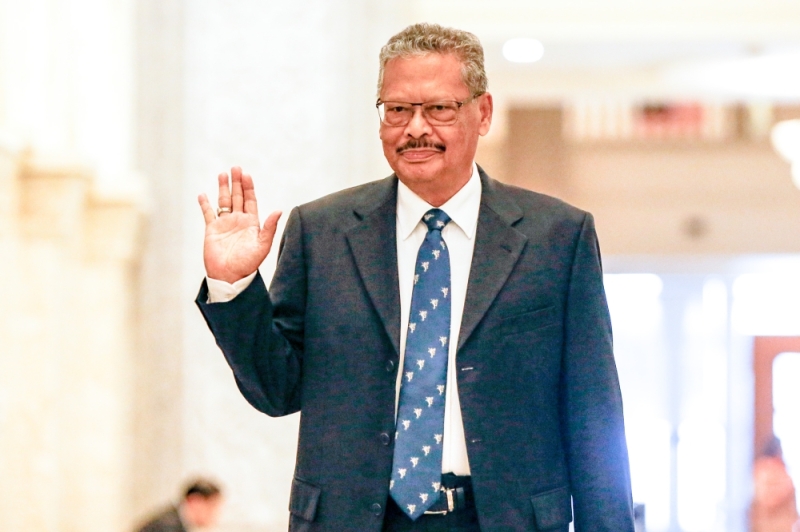
Former attorney general (AG) Tan Sri Mohamed Apandi Ali reportedly said that he is willing to be called up by the Royal Commission of Inquiry (RCI) to help with the Batu Puteh case assessment. — Picture by Hari Anggara

Sunday, 28 Jan 2024 9:44 AM MYT


KUALA LUMPUR, Jan 28 — Former attorney general (AG) Tan Sri Mohamed Apandi Ali reportedly said that he is willing to be called up by the Royal Commission of Inquiry (RCI) to help with the Batu Puteh case assessment.

According to the New Straits Times, Mohamed Apandi said it is “high time” that the RCI panel be set up.


“No problem at all,” he was quoted as saying when asked if he was willing to be called up by the panel for a hearing.

“The RCI’s job scope will include legal powers, compared to the special task force I chaired, which did not have the force of law.


“RCI will be more effective in studying the case of Batu Puteh, Middle Rocks and South Ledge,” he added.


In 2008, the International Court of Justice (ICJ) decided that Batu Puteh belonged to Singapore, and Malaysia applied to the ICJ requesting an interpretation of the judgment in 2017.

In 2018, the Tun Dr Mahathir Mohamad-led administration withdrew an application to overturn the ICJ ruling.

In October 2022, Dr Mahathir claimed that the decision not to proceed with legal action at the International Court of Justice (ICJ) on Malaysia’s claim to Pulau Batu Puteh was based on the advice of officers appointed by Mohamed Apandi.

Last year, a special task force set up to study the case found that Dr Mahathir might have made a mistake in withdrawing the application.

On Thursday, the Minister in the Prime Minister’s Department Datuk Seri Azalina Othman Said said the RCI panel on the Batu Puteh case is to assess weaknesses in case management.

The law and institutional reform minister said that there was a task force set up to look into the issue, but there were constraints on conducting further investigations, so the RCI is a follow-up action to further investigate the matter.

Because of its complex nature involving maritime borders and islands, Azalina said that the RCI will also help to establish a process and procedures for sovereignty issues and which agency is responsible for sovereignty.

Ukraine uncovers mass fraud in weapons procurement, says security service


Ukraine uncovers mass fraud in weapons procurement, says security service


Ukraine’s SBU security service said yesterday it had uncovered a corruption scheme in the purchase of arms by the country’s military totalling the equivalent of about US$40 million. — Reuters pic

Sunday, 28 Jan 2024 8:44 AM MYT


KYIV, Jan 28 — Ukraine’s SBU security service said yesterday it had uncovered a corruption scheme in the purchase of arms by the country’s military totalling the equivalent of about US$40 million (RM189 million).

The announcement of mass procurement fraud, confirmed by Ukraine’s Defence Ministry, will have a huge resonance in a country beleaguered by Russia’s nearly two-year-old invasion.


The fight to root out endemic corruption remains a major issue as Ukraine presses its bid to secure membership in the European Union.

The SBU said an investigation had “exposed officials of the Ministry of Defence and managers of arms supplier Lviv Arsenal, who stole nearly 1.5 billion hryvnias in the purchase of shells”.


“According to the investigation, former and current high-ranking officials of the Ministry of Defence and heads of affiliated companies are involved in the embezzlement.”


The embezzlement, it said, involved the purchase of 100,000 mortar shells for the military.

The SBU said a contract for the shells was clinched with Lviv Arsenal in August 2022 — six months into the war — and payment was made in advance, with some funds transferred abroad.

But no arms were ever provided, the statement said, with some funds then moved to other foreign accounts.

The statement said five individuals had been served “notices of suspicion” — the first stage in Ukrainian legal proceedings — both in the ministry and the arms supplier. One suspect, it said, was detained while trying to cross the Ukrainian border.

Corruption within the military has been a particularly sensitive issue in Ukraine as it tries to maintain wartime public morale and present its case to join the 27-nation EU.

Defence Minister Oleksii Reznikov was dismissed last September over various corruption cases despite enjoying a solid reputation in representing Ukraine in its discussions with Western allies.

Although he was not alleged to have engaged personally in corruption, several cases hit the military under his stewardship, one for supplying troops with food, another over procuring suitable clothing for servicemen. — Reuters

A pity no Muslim nation hauled Israel to ICJ, says don


FMT:

A pity no Muslim nation hauled Israel to ICJ, says don


Syed Farid Alatas of the National University of Singapore commends South Africa, and says Malaysia and other Muslim nations must engage in self-reflection.


Sociology professor Syed Farid Alatas said South Africa’s action had shown up the hypocrisy of western nations.


PETALING JAYA: The fact that neither Malaysia nor any other Muslim nation that claims to defend Palestine had hauled Israel to the United Nations’ top court calls for some self-reflection, says an academic.

Syed Farid Alatas of the National University of Singapore said Malaysia should support the International Court of Justice’s ruling that Israel must prevent genocidal acts and facilitate humanitarian aid into Gaza urgently.

He commended South Africa for exposing Western hypocrisy by challenging Israel’s actions at the ICJ, unlike Malaysia and other Muslim nations.

“Through the filing of this case, South Africa has shown the hypocrisy of the powerful nations of the West who claim to uphold the rule of law but failed to take Israel to task.

“It took a country from the global south to do that. It’s a pity that Malaysia and other Muslim nations did not play such a heroic role,” he told FMT.

On Friday, the ICJ urged Israel to refrain from committing “possible genocidal acts” in Gaza, though it stopped short of ordering a ceasefire. South Africa had brought the case against Israel earlier this month, accusing it of breaching the UN Genocide Convention through its military operations in Gaza.

The ICJ did not consider whether Israel was committing genocide in Gaza as that process will take several years.

While disappointed that the ICJ did not call for a ceasefire, Farid said a positive development was that it demanded Israel stop the killing or destruction of the Palestinian people while reporting to the ICJ on measures taken to prevent such incidents.

“More importantly, the ICJ has not thrown out the case accusing Israel of genocide in Gaza. The ICJ will eventually rule on the merits of the genocide allegations against Israel, a process that is likely to take years.”

Israel launched a military offensive against the Gaza Strip after the Hamas militant group launched an attack on Oct 7, killing approximately 1,140 people in Israel, the majority of whom were civilians.

At least 26,000 Palestinians have been killed in the Gaza Strip since then through Israeli bombardments and ground offensive, with Hamas saying about 70% of the victims were women, young children, and adolescents.

Cakap cakap...bloody country run by Mafias?


Hussein Abdul Hamid


Cakap cakap...bloody country run by Mafias?


We live in interesting times. Anwar Ibrahim is prime minister. There is a government in Putrajaya with Pakatan Harapan, Barisan Nasional, and an East Malaysian block all in cahoots with each other doing government....good government! We have an Opposition that dares to think, with some relevance, that they could be doing government dalam masa terdekat. And the natives are restless, and with good reasons because they know that in the last election they have rid themselves of some of the riff raffs that had cluttered the political horizon...some of the riff raffs but not all.


Azam Baki is still at SPRM. Dia tidak memberi image yang baik bagi SPRM. Tainted, his integrity questioned, his tenure extended by no less a person than PMX himself who believes that you need a thief to catch a thief. Surely a contentious extension to an already contentious Commissioner of SPRM who had served the political agenda of other political masters? And now he is serving PMX political agenda? Not good. Not right.


Banyak kes rasuah tidak di siasat dengan baik dan mereka yang terlibat tidak di ambil tindakan. Apa sudah jadi dengan sisatan kes Malik? Dia hanya dikenakan denda sahaja sebab kurang bayar cukai. Kes sebenar adalah kesalahan AMLA sebab beratus juta datang daripada questionable activity sampai dia boleh beli hotel mewah di Malaysia dan Dubai!


In the past we had Najib whose 'lanun' ways....possibly a legacy of his Bugis origins....have resulted in his incarceration. Today we have Anwar whose fight against corruption transcends all previous expectations, but questions are being asked of the manner he is doing it....and the common consensus is that there need to be a change in MACC sooner rather than later if confidence in its ability to be open, fair and independent of any political 'interference" is to be restored!


A changing of the guard at Istana Negara, may give one some inkling of what is to come. This is no ordinary King that we will have in the coming days. He has the courage to act on his own convictions. Like his prime minister, he is against corruption. Just think! A King and his prime minister, together against corruption! How good is that?


How goes the deep state? The Civil Service? The Chinese says that a fish rots from the head down.....no greater truth of that can be seen than in the civil service today. How long has the KSN been holding on to his post? How embedded is his "way" of doing things that has NOT served the interest of our nation? How low is the moral within the Civil Service because of Zuki "ways"? ENOUGH! No more extension to Zuki Ali's tenure as KSN. Retire him at the end of his two year extension ending in August 10th 2024...if not earlier.


And what is going on in PDRM? Pasukan Polis yang sekarang dah hilang hala tuju! Will he or will he not go? And who will replace him. Please Mr. PMX end the speculation and the uncertainty within PDRM. I think the incoming King will have his choice as to who will rule the roost in Bukit Aman....and until that happens, uneasy lies the head that wears the PDRM crown.


Enough said!


When the mask of victimhood slips, it reveals entitlement and privilege – Khaw Chia Hui


Tun Dr Mahathir Mohamad and Toh Puan Na’imah Abdul Khalid have found themselves in front of microphones and cameras over recent weeks, both flabbergasted over their families coming under scrutiny for crimes decades past. – Sairien Nafis/Scoop combo pic, January 24, 2024


When the mask of victimhood slips, it reveals entitlement and privilege – Khaw Chia Hui


A pair of Malaysians used to prowling the corridors of power are confounded at being treated the way regular citizens have been for decades


FOR the past month, Malaysians have been treated to a spectacle of continuous hue and cry – one from a 98-year-old and one from the wife of an 85-year-old.

Both are decrying political persecution and a supposed outright vendetta using the law against their families, as a means of somehow exacting vengeance on perceived sins of the past.

Former prime minister Tun Dr Mahathir Mohamad has been castigating the government, particularly his one-time deputy and successor, Datuk Seri Anwar Ibrahim, for investigating his eldest son, Mirzan.

While he tried playing the victim in his press statements and subsequent drawn-out media conferences, what comes across is Dr Mahathir’s sense of entitlement and zero recognition of his privilege.

The same could be said of Tun Daim Zainuddin and his wife, Toh Puan Na’imah Abdul Khalid.

Many could have put up with their repeated insistences that they are model citizens and shrewd business owners.

But the sense of entitlement became obvious when Na’imah requested to be charged in court at her convenience.

It is plain to see, people who once walked the corridors of power have forgotten that the rule of law applies to everyone, regardless of wealth and position.

Regular Malaysians would be summoned to give statements to MACC at its headquarters or state offices, not the other way around.

Regular Malaysians could not dictate to the public prosecutor or the courts when was the best time to be charged.

Regular Malaysians certainly could not complain about having to declare their assets within 30 days after being served with a MACC notice.

Regular Malaysians are subject to audits on their income and even probed for living beyond their means.

Leading an ultra-rich lifestyle is not inherently a crime in Malaysia. The question is how the wealth was amassed.

Were any laws broken in the process? Abuse of power and misappropriation of public funds?

Besides, those being investigated should take their own advice and prove your innocence in court. You don’t need a former attorney-general or solicitor-general to tell you that.

While I cannot quote Shakespeare at the top of my head, I have a motivational quote used by the UK government during World War II: Keep calm and carry on.

Try it for a change. Malaysians have been doing that for the longest time. – January 24, 2024


Khaw Chia Hui is the Executive Editor of Scoop