Saturday, April 30, 2022

Maybe PAS more comfortable with 'snakes', 'monkeys' in jungle - Salahuddin


Maybe PAS more comfortable with 'snakes', 'monkeys' in jungle - Salahuddin


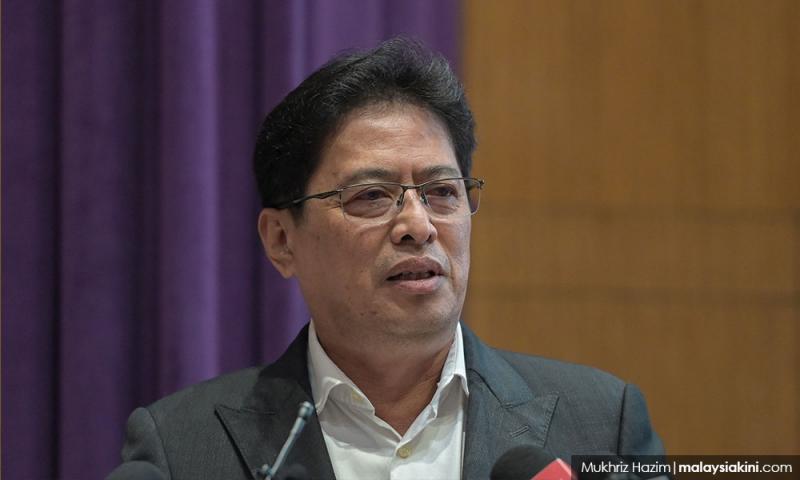
Pakatan Harapan is unfazed if PAS refuses to join its ‘big tent’ cooperation within the opposition bloc, which is meant to ensure a straight fight with BN in the upcoming general election.

Harapan vice-president Salahuddin Ayub said this is because PAS may not be comfortable being in the opposition’s big tent.

Instead, he said PAS may be more comfortable in the jungle, making friends with an assortment of wild animals including reptiles and simians.

“Let PAS be if it does not want (to join). Maybe PAS is more comfortable being friends with snakes, lizards and monkeys.

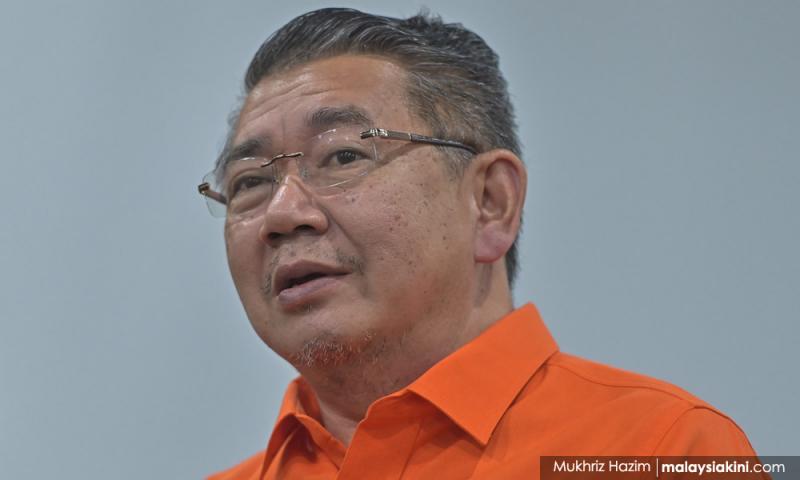
“PAS is uncomfortable in a tent. Maybe they are more interested in the jungle,” Salahuddin (above) told Malaysiakini.

The Amanah deputy president said this when asked to respond to PAS president Abdul Hadi Awang’s comment that his party will not join Harapan’s big tent as there are “mice” and “cats” inside.

Yesterday, the head of the Islamist party took a jab at the idea of cooperating within Harapan’s big tent, stressing that PAS will not do so but will continue to defend the agenda of “Muslim unity” together with the biggest Muslim parties - Bersatu and Umno.
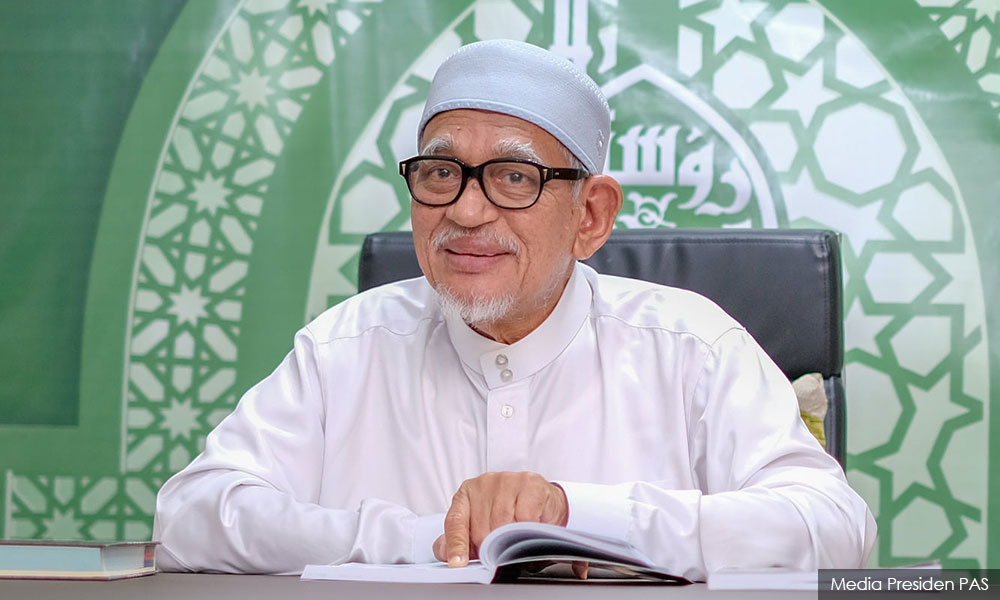

PAS president Abdul Hadi Awang

Aside from that, Hadi said they would also work with non-Muslim organisations, groups and parties that are not extreme.

“We do not want to join the tent because in the tent there are ‘mice’, ‘cats’, and all sorts. All of them are in there,” he added.

PAS-Umno fissure

Even though some PAS leaders have shown interest in continuing their cooperation within Muafakat Nasional, Umno - which is seen as the dominant party in the government - does not appear to be interested anymore.

The relationship between the two parties worsened recently with the emergence of the ‘PAS leaks’ document, which allegedly revealed a conspiracy against Umno.

The “leaked document” is a purported summary of meetings between PAS vice-president Ahmad Samsuri Mokhtar, PAS secretary-general Takiyuddin Hassan, and other political figures from Bersatu, Pejuang, and Umno between March 24 and April 7.

According to the document, Bersatu president Muhyiddin Yassin told the PAS leaders that “the attorney-general and chief justice have agreed to expedite the case and sentencing” of Umno president Ahmad Zahid Hamidi and former prime minister Najib Abdul Razak.

Samsuri called the leaked document “rubbish” but conceded he did attend meetings with some of the Umno and Bersatu figures named in the document.

Umno’s Noh Omar keen to ally with PAS to capture Selangor in GE15

MM:

Report: Umno’s Noh Omar keen to ally with PAS to capture Selangor in GE15


Selangor Umno chief Tan Sri Noh Omar pointed out that the political situation in each state is different, especially in Selangor, where Umno is in dire need of political cooperation with PAS. ― Picture by Yusof Mat Isa


KUALA LUMPUR, April 30 — Selangor Umno will seek to maintain its ties with Selangor PAS through the Muafakat Nasional (MN) pact to win the state in the 15th general election (GE15).


Its chief Tan Sri Noh Omar said the two parties, which are currently part of the Opposition in Selangor, must unite to wrest the state from Pakatan Harapan (PH).

He pointed out that the political situation in each state is different, especially in Selangor, where Umno is in dire need of political cooperation with PAS.


“If there is a three-cornered contest, it will be very risky as this will give PH the advantage.


“Instead, we (Umno) hope to continue our cooperation with MN, but not with the Perikatan Nasional (PN) pact,” Noh told Sinar Harian when met at the Tanjong Karang Ramadan Bazaar site yesterday.

The Tanjong Karang MP pointed out that based on a study of voters in Selangor, the number of Malay voters almost equaled that of their non-Malay counterparts in the state.

“There are several state assembly seats and Parliament seats in Selangor that have a Malay majority.

“However, if these seats split, it will only give PH candidates the advantage,” Noh was quoted as saying in the report published today.

Noh, who is also the entrepreneur development and cooperatives minister, said that cooperation between Umno and PAS through MN is still good.

He said both parties often hold joint programmes together in Selangor.

“I recently had a discussion with Selangor PAS commissioner Datuk Dr Ahmad Yunus Hairi, touching on the fact that Selangor is different from other states.

“If we want to take over Selangor, then Umno and PAS must work together to bring down PH first,” said Noh.

However, he said both parties will still abide by any decisions made by their respective central leaderships.

“So far, I have not received any instructions from Umno’s top leadership,” said Noh.

Of late, several political leaders have been mooting political cooperation as speculation mounts that national polls will be held soon.

This includes PH and its component parties that are considering the “big tent” approach as a form of political cooperation against Barisan Nasional (BN) and its lynchpin party, Umno.

Why Maria Chin should be spared a jail sentence


Why Maria Chin should be spared a jail sentence


Ask any single Muslim mother about her experience of attending the shariah court to fight her case and the story is often a depressing one.

Her story will reflect what Petaling Jaya MP Maria Chin Abdullah was trying to highlight when, in September 2019, she made a reference to a high-profile divorce case.

The husband in the case took umbrage at Maria’s remarks and initiated contempt proceedings against her. On April 25, the Federal Territory shariah high court sentenced Maria to seven days’ jail for allegedly “insulting” Islam.


As many Malaysians said later, Maria’s criticism was not directed at Islam but at the shariah legal system and process. Some said she merely pointed out what she already knew from the testimony of women who had probably sought her advice at her constituency clinic.

Few people will dare to speak up because they do not want to be targeted by those who will claim they are going against the religion. But keeping silent will not help either. In the end, a system ripe for reform remains unchanged, with the result that more women, both Muslim and non-Muslim, could be discriminated against, and children left to suffer.

One woman said she tried to divorce her husband after he committed adultery, but he refused her request. Her experience is shared by others who have been through the shariah court system.

Husband who keeps avoiding court hearing

The husband left the marital home, and she suspected that he had returned to his parents’ house, but they were unwilling to disclose his whereabouts, because they knew he would be summoned to face charges.

She did not give up trying to divorce him, but it was tough because the hearing was postponed several times after her husband refused to turn up.

It was a stressful time, and the experience depleted her savings. She had to pay her lawyer to attend each hearing, both not knowing if the husband would present himself in court.

She spent a small fortune on transport (she relocated to Kuala Lumpur but had to travel to Shah Alam for the divorce proceedings, as the address of their former marital home was registered there).

She had to pay a child-minder, and had to take time off from work to attend court. After several court appearances, her employer served her notice because her frequent absence was disrupting his business and he had to find temporary staff to fill in for her.

Police can’t locate him

Her lawyer asked the police to help locate her husband and arrest him. When she went to court four weeks later, she discovered that the police had not been informed and had not brought him to court. A new date had to be arranged.

When that day arrived, the police said they could not find him at the address provided, so yet another date had to be set.

“That was the last straw and I gave up,” the woman was reported to have said. “I had waited several months for something to happen.

“Some of my friends said it had taken them several years to finalise a divorce, by which time their husbands claimed they could not afford to pay for the children.

Urgent reforms needed

“Another friend said her ex-husband would pay for the child’s maintenance in full, but that happened only for the first few months. When he stopped payment altogether, she was forced to drag him to court again.

“One friend said her former husband just ‘strung’ her and her lawyer along by asking for more time to effect payment. She soon realised that he was hoping to avoid maintenance, especially as the date of their child turning 18 was fast approaching. At 18, his father is under no obligation to pay.”

Versions of this story are commonly shared by other single mothers.

What Maria claimed was that women were discriminated against under the system. The system needs urgent reform to bring it up to date with modern day Malaysia. It also needs to be standardised throughout the nation.

Are other MPs, apart from Maria, willing to push for this?

KL Ramadan bazaars sales better in a "Let Her Rip" atmos

MM:

As pandemic retreats, KL Ramadan bazaars say sales back better than ever


People throng the Aidilfitri Bazaar on Jalan Tuanku Abdul Rahman, Kuala Lumpur April 27, 2022. — Picture by Hari Anggara


KUALA LUMPUR, April 30 — Even before Malaysia’s first Hari Raya Aidilfitri without the pandemic restrictions, some bazaar traders said sales this year not only has recovered but may even have surpassed some years prior to Covid-19.


Despite the drizzle when Malay Mail visited Jalan Tuanku Abdul Rahman (Jalan TAR) in the capital city, the street was bustling with vendors selling goods and apparel for Aidilfitri.

Just before iftar, the sunset meal with which Muslims break their fast, patrons thronged the street both in search of places to eat and for items to buy for their Aidilfitri celebrations this year.


Rqal Exclusive staff Muhammad Rijalul Haq, 22, speaks to Malay Mail during an interview on Jalan Tuanku Abdul Rahman, Kuala Lumpur April 27, 2022. — Picture by Hari Anggara


As Raya tunes played in the background, 22-year-old Muhammad Rijalul Haq from Rqal Exclusive said sales of their baju Melayu, the traditional Malay outfit typically worn by men during Aidilfitri, has gone off the charts and was unmistakably better than the previous two years.


Gesturing animatedly as he spoke, Rijalul said this could be the store’s best year in terms of sales, due to the number of patrons to the area that were beyond his imagination.

“It is absolutely unbelievable that we managed to sell so many baju Melayu and we absolutely did not expect such a crowd on the first day when we opened the store; we needed to restock everything for the next day!

“I can even say that this year’s (sales) performance was even better than the past four or five years and after what happened for the past couple of years, it is absolutely relieving, not just for me, but the whole business community here at Jalan TAR,” he said while modelling the baju Melayu he sold.


Trader Muhammad Hapis Mohd Syafarudin says he can finally breathe a sigh of relief this year, after restrictions such as crowd limits and travel bans put a damper on the Aidilfitri celebrations from 2020. ― Picture by Hari Anggara


Nearby, 24-year-old trader Muhammad Hapis Mohd Syafarudin tended to his stall selling traditional outfits including baju Melayu and baju kurung, the traditional Malay outfit for women, in sizes catering from toddlers to adult.

Taking a break to speak with Malay Mail, Hapis said he could finally breathe a sigh of relief this year, after restrictions such as crowd limits and travel bans put a damper on the Aidilfitri celebrations from 2020.

This year, he said shoppers were back with a vengeance, likely due to their willingness to once again shop in person because of the country’s high vaccination rate.

“Compared to the past few years, even before the pandemic, I think this is one of the best years for me and my sister and I have been here selling these since I was 18 years’ old.

“I think the people are more confident to go out and shop despite the fact that the cases are still in four figures because of the vaccination rate and less stringent rules (to contain the spread of Covid-19),” he told Malay Mail in between dealing with a customer.

For the past two years, Putrajaya had set strict public health measures to flatten the infection curve of Covid-19, which in turn heavily curtailed business activities.

This particularly affected seasonal traders such as those catering to festivals such as Aidilfitiri that took place only once each year.

While such bazaars are back in full swing, courtesy of the federal government effectively removing most restrictions as part of the country’s transition to Covid-19 endemicity, some said there have been lasting changes.


Natrah Kerepek House’s Fatin Farhanah Ahmad Jamili, 28, speaks to Malay Mail during an interview on Jalan Tuanku Abdul Rahman, Kuala Lumpur April 27, 2022. — Picture by Hari Anggara


According to Fatin Farhanah Ahmad Jamili, 28, who sold traditional cookies and biscuits for Aidilfitri, this year’s bazaar was set up differently to the past couple years when changes had been instituted to prevent crowds from forming.

“Previously, the bazaar was divided into three or four sections and everyone had to queue, sometimes for an hour, just to get in one of the sections. And sometimes they just went to one of the sections and were too tired to go to other sections.

“But now, with no limits to how many people can walk in and the way it was set up — like the before pandemic, as in just one long street filled with vendors — people can just walk back and forth freely and browse through the street as long as they want.

“Very convenient for them and very helpful for traders. Obviously a win-win situation,” she explained to Malay Mail.


A crowd is seen at the Aidilfitri Bazaar on Jalan Tuanku Abdul Rahman, Kuala Lumpur April 27, 2022. — Picture by Hari Anggara


Lively shopping with continued compliance


Despite preventive measures already easing at the time, Malay Mail still observed People’s Volunteer Corps (Rela) officers controlling traffic and enforcing MySejahtera check-ins.

Also present were Kuala Lumpur City Hall (DBKL) enforcers urging patrons to maintain physical distance from each other and wore face masks. Both measures will no longer be mandatory come May 1.

With her family of five in tow, 59-year-old Normala Nordin spoke to Malay Mail while browsing through a rack of blouses with her granddaughter, and said it is definitely more festive heading into Aidilfitri this year.

People are clearly more excited for Hari Raya after two years of muted celebrations due to the Covid-19 pandemic, she said.


Normala Nordin (right), 55, shops at the Aidilfitri Bazaar on Jalan Tuanku Abdul Rahman, Kuala Lumpur April 27, 2022. — Picture by Hari Anggara


“I’m here with my family and my besan all the way from Port Dickson here shopping for Raya and seeing a lot of people back in the bazaar to shop reminded me of the old days, before the pandemic,” she said, using the Malay word meaning one’s child’s in-laws.

“I think people are definitely willing to spend more as now we can go back to our hometown and celebrate Raya like the good old days with less restrictions.”

But not all were splurging to make up for the previous two years. Mohd Ashkhalani Apriabi, 34, who was doing his final rounds for Aidilfitri preparation with his children, said it is important to stay moderate to avoid overspending.

Despite all the hype and excitement surrounding this year’s celebration, he said that it is not necessary to shop extravagantly as doing so does not reflect the true spirit of Aidilfitri.

“I understand that people have missed Hari Raya so much but still need to be careful about spending all their money just for the preparation.

“I am not trying to be some sort of a killjoy or anything but to me Hari Raya is more like a rejoice after a month of Ramadan but in a more of a moderate manner,” he said while holding his son’s hand.


People visit the Aidilfitri Bazaar on Jalan Tuanku Abdul Rahman, Kuala Lumpur April 27, 2022. — Picture by Hari Anggara

Friday, April 29, 2022

Russian submarine strikes Ukraine with cruise missiles, defence ministry says

Reuters:

Russian submarine strikes Ukraine with cruise missiles, defence ministry says


image sourced from Net


April 29 (Reuters) - Russia used a diesel submarine in the Black Sea to strike Ukrainian military targets with Kalibr cruise missiles, the first time Moscow has announced the use of its submarine fleet to hit its former Soviet neighbour.

The Russian defence ministry released a video showing a volley of Kalibr missiles emerging from the sea and soaring off into the horizon - to what the ministry said were Ukrainian military targets.


This is the first time Russia's military has reported using submarine strikes against Ukrainian targets, Interfax news agency reported on Friday.


Putin warns West of lightning retaliation in Ukraine crisis

The Straits Times:

Putin warns West of lightning retaliation in Ukraine crisis


A Sarmat ICBM being test-launched by the Russian military at the Plesetsk cosmodrome in the Arkhangelsk region. PHOTO: REUTERS
UPDATED
28 APR 2022, 1:38 PM SGT


WARSAW/SOFIA/KYIV (REUTERS) – Russian President Vladimir Putin warned of lightning-fast retaliation if countries interfere in Ukraine as European leaders accused Russia of “blackmail” over its cuts to gas supplies.

Russia has told the United States to stop sending arms to Ukraine, saying large Western deliveries of weapons were inflaming the conflict.

Addressing lawmakers in St Petersburg on Wednesday (April 27), Mr Putin said the West wanted to cut Russia up into different pieces and accused it of pushing Ukraine into conflict with Russia.

“If someone intends to intervene in the ongoing events from the outside, and create strategic threats for Russia that are unacceptable to us, they should know that our retaliatory strikes will be lightning-fast,” said Mr Putin, according to video of his address supplied by Russian media.

“We have all the tools for this, things no one else can boast of having now. And we will not boast, we will use them if necessary. And I want everyone to know that.”

Russia’s invasion of Ukraine began on Feb 24 and has reduced towns and cities to rubble and forced more than 5 million people to flee abroad. Western countries have responded with sanctions and weapons for Ukraine to fight a war that has brought fears of wider conflict in the West, unthought-of of for decades.


Russia calls its intervention a “special operation” to disarm Ukraine and protect it from fascists. Ukraine and the West says this a false pretext for an unprovoked war of aggression by President Putin.


While Russia presses its military assault in eastern and southern Ukraine, its economic battle with the West threatens gas supplies to Europe and is battering the Russian economy as it struggles with the worst crisis since the 1991 fall of the Soviet Union.

Ukraine said Europe should stop depending on Russia for trade after it halted gas supplies to Bulgaria and Poland for not paying in roubles.

“The sooner everyone in Europe recognises that they cannot depend on Russia for trade, the sooner it will be possible to guarantee stability in European markets,” Ukrainian President Volodymyr Zelensky said late on Wednesday.


Germany, the biggest buyer of Russian energy, hopes to stop importing Russian oil within days but warned that a Russian energy embargo or blockade would tip Europe’s largest economy into recession.

Gazprom, Russia’s gas export monopoly, suspended gas supplies to Bulgaria and Poland on Wednesday for not paying in roubles, as stipulated in a decree from Mr Putin that aims to soften the impact of sanctions.

While the president of the European Commission said Gazprom’s suspension was “yet another attempt by Russia to use gas as an instrument of blackmail”, EU member state ambassadors asked for clearer guidance on whether sending euros breached sanctions.

How will the tussle between 3 ancient civilisations shape the future: Historian Wang Gungwu

The Straits Times:

WASHINGTON - If you repeat something often enough, more and more people will believe it because, in this age of social media with constantly competing narratives and diminishing interest in books, they do not have the capacity to think about it or find out what is really true, contends Professor Wang Gungwu.


The eminent historian and author of multiple books in English and Chinese was speaking to The Straits Times on competing narratives, and the challenge to the West of the rise of one of the three ancient civilisations to have survived till now - China.

"If you don't know the past, you are a victim of any story that comes along, and you don't know what to believe - and you just believe something that is said more often than others," warned Prof Wang.

"The past does not guarantee anything; but not to know it is far more dangerous than knowing it."

The 91-year-old is a professor at the National University of Singapore, as well as emeritus professor at the Australian National University.

He was speaking to ST as part of the new "Conversations on the Future" series, which starts on April 28.


On the geopolitical competition between the United States and China, Prof Wang underscored that China represented a civilisation rather than a country - with a particular fundamentally different view of the role and function of the state.

While some 80 per cent to 90 per cent of China today is modern - as in the West - its leadership had decided that liberal capitalism with its emphasis on individualism, and liberal democracy of the kind that the US stands for, did not suit China's society and "certainly did not suit the Communist Party, which had become the emperor, replacing the emperor".

"They like the capitalism part, but they want the capitalism to be in the traditional Chinese way, in the historical Chinese way, to be under the state," Prof Wang said.

Economic development and political responsibility could not be separated, and capitalists cannot be allowed to run the state.

"The state must ultimately be in control of economic development," he said.

This is a very serious challenge to what had been the dominant western discourse, Prof Wang noted.

"Because the dominant discourse was not satisfied with teaching neuroscience and technology and finance and money making," he said.

"They also want you to be like them in believing in individualism, human rights, liberal democracy and liberal capitalism. And if you don't believe in that, because it's a universal, as they have decided, universal and the most important part of... a modern civilisation... you are heading in the wrong direction."


Prof Wang added: "Of course, the two conclusions could be made: You will fail, or, in case you might succeed, we will make sure that you fail. And... I think what we're looking at today is actually something like that."

Azam’s conduct not judged by competent authority


R Nadeswaran


COMMENT | Sometimes, seeing photographs and reports in newspapers rekindles events and happenings of the past, many of which would have been consigned to the archives to gather dust in a steel cabinet.

But if you followed an issue, such reports provide the spur to pursue it further. A photograph of two characters in the fight against corruption together last week provided that spark.

It was not too long ago that the chairperson of the parliamentary Special Committee on Corruption, Rais Yatim, was at odds with the views of Abu Zahar Ujang who chairs the Anti-Corruption Advisory Board.

While Abu Zahar was adamant in exonerating MACC chief Azam Baki (above) on his share trading and related matters, Rais said the view was that Azam should go on leave while the authorities are investigating his corporate share ownership.

“In this matter, the facts surrounding (the case involving) Azam is not criminal or not a criminal act, but perhaps (a matter) of misconduct or not carrying out his duties,” Rais was then quoted as saying.

This was in January when Azam was making the headlines for the wrong reasons which were followed by street protests demanding that he step down.

The saga began in October last year when a news portal and a whistleblower site accused Azam of misconduct.

The issue grew two months later when Prof Edmund Terence Gomez resigned from MACC’s Consultation and Corruption Prevention Panel citing inaction over the allegations and over claims the issue was swept under the carpet.

Gomez said his three letters to panel chairperson Borhan Dollah and Abu Zahar failed to elicit any response.

Brother or not brother

Following the furore caused by Gomez’s resignation, Azam initially claimed that he allowed his brother to trade shares in his name but the Securities Commission (SC) subsequently clarified he carried out trades in his own name.


Professor Edmund Terence Gomez


This was a contradiction of what Azam said previously but if you thought an indictment of Azam’s conduct was forthcoming, it never did.

On the contrary, de facto Law Minister Wan Junaidi Tuanku Jaafar appeared to downplay the share ownership of Azam.

“The issue which was disputed by the opposition parties has been resolved. An inquiry by the SC decided that there is no case (against Azam).

“The SC found there was ‘no conclusive evidence’ that Azam had breached the Securities Industry (Central Depositories) Act 1991 (Sicda),” said Wan Junaidi in a written parliamentary reply.

Even Prime Minister Ismail Sabri Yaakob joined the chorus citing the decision by SC on Azam’s trading account should be accepted by all parties.

“The SC has made a decision… (this matter) was left to the SC as it involves the purchase of shares. So the SC has made a decision and it says there is no case against him (Azam). So, we accept the SC’s decision,” Malaysiakini quoted him as saying.

Really, Mr Prime Minister? The SC merely stated that he traded on his own account and did not nominate his brother as originally claimed by Azam.

How could it be resolved as government regulations had been breached?

The SC’s decision just states that Azam traded in his own name – nothing more, nothing less. Are we, law-abiding citizens, supposed to shut up?

Asset declaration

What about the requirements under Section 10 of the Public Officers Regulation (Conduct and Discipline) 1993?

The section states that all public servants must declare both movable properties, such as money in bank accounts, motor vehicles, jewellery, firearms, shares, warrants, stocks, bonds, and securities, as well as immovable properties, such as land, landed properties, and of course, business ownerships or directorships.

Did Azam, who was the MACC investigation director when he bought the shares in 2015, not breach government rules when he spent more than RM100,000 for the share purchase?

Last week, Azam made headlines again drawing flak from the legal fraternity and politicians for announcing the MACC has opened investigation papers on a judge of the Court of Appeal.

On Wednesday, Chief Justice Tengku Maimun Tuan Mat said the judiciary should not be open to unfounded and scurrilous attacks.

She said although judges are not immune to criticism, recent accusations against judges and the judiciary, in her view, went overboard.


Chief Justice Tengku Maimun Tuan Mat


As if as an act of defiance, today, the MACC read the Riot Act to those who criticised its action by issuing a statement reiterating it has powers to investigate anyone – including judges.

In a statement, it said: “MACC is vested with the power to investigate corruption offences under the MACC Act 2009, including to carry out investigation against 'public body officers' which in Section 3 of the act are interpreted as any individual who is a member, officer, employee, or anyone who serves a public body, and they include members of the administration, MPs, member of a state legislative assembly, High Court judge, Court of Appeal judge, or Federal Court judge, and anyone who receives a salary from a public body...”

But does MACC have the moral rectitude to make such statements when the conduct of its own head honcho continues to be clouded by his false statements to the public and breaching civil service regulations?

Unless he is ready to subject himself to an inquiry and be cleared by a competent authority, say the Enforcement Agency Integrity Commission, anything he says or does will be viewed with contempt and suspicion.


R NADESWARAN is a veteran journalist and writes on bread-and-butter issues. Comments: citizen.nades22@gmail.com


Najib: Kit Siang should focus on death of Ewein boss instead of Altantuya


Najib: Kit Siang should focus on death of Ewein boss instead of Altantuya


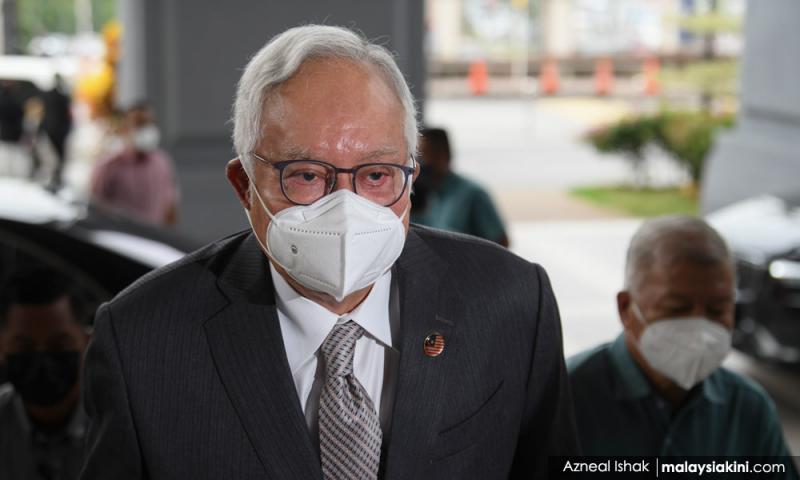
Former prime minister Najib Abdul Razak has urged DAP veteran Lim Kit Siang to explain why he did not show interest in the death of Ewein Bhd founder Ewe Swee Kheng.

Taking to Facebook today, Najib appeared to take offence with Kit Siang for today suggesting that the Public Accounts Committee (PAC) should interview two former police personnel Sirul Azhar Umar and Azilah Hadri.

“Why is it that ‘uncle’ (Kit Siang) is so interested in deaths that (occurred) more than 10 years ago which has been investigated multiple times but uncle is not interested in the mysterious death of a famous listed company owner?

“He was friends of your son (and died) just a month before he was due to testify in court,” wrote Najib.

Ewe was found dead at the ground floor of a luxury apartment on Oct 5 last year. Ewe and his family lived on the 17th floor penthouse. He was assumed to have fallen to his death.

His wife Seet Chin Leng told the Kuala Lumpur High Court on Nov 29 last year that he last saw him on the day of his death at 1am. Ewe was declared dead at 5.37am.

The court would eventually be told that the MACC recorded statements from Ewe four times and excerpts of his final statements to the graft buster (Aug 14, 2021) was read out on March 24.

Therein, Ewe said he met then Penang chief minister Lim Guan Eng in 2011. Ewe said he wanted to develop a piece of reclaimed land and had promised to gift several pieces of real estate to Guan Eng if the plan succeeded.


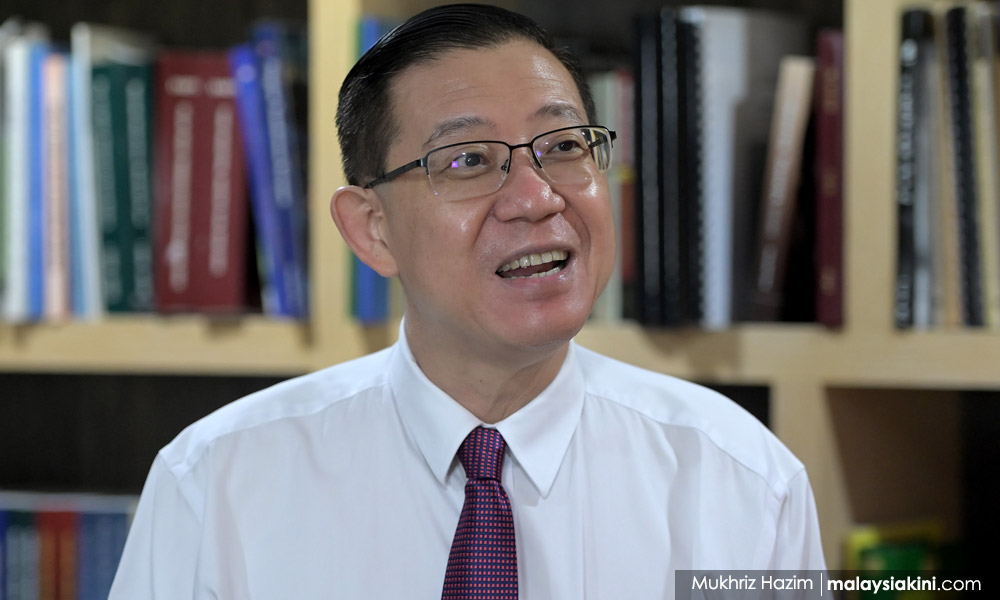
Former Penang chief minister Lim Guan Eng


Guan Eng is currently facing trial for allegedly using his position as then chief minister to obtain a bribe of RM3.3 million in exchange for helping a company owned by Zarul Ahmad Mohd Zulkifli secure a construction project worth RM6.3 billion.

Guan Eng is also facing a charge of soliciting bribes amounting to 10 percent of the profits to be earned by Zarul Ahmad’s company.

Earlier today, Kit Siang had issued a statement urging the PAC to interrogate Sirul and Azilah in view of the French authorities launching formal investigations against Thales Group over the 2002 sale of two naval submarines to Malaysia.

The PAC’s explicit mandate is to investigate matters concerning government finance. However, Altantuya was linked to at least one person involved in the procurement of the submarines.

Altantuya was murdered on Oct 18, 2006. When Sirul and Azilah were tried for murder, it was revealed that Altantuya was in an affair with Abdul Razak Baginda, the owner of several companies involved in the scorpene submarine deal.

Both Sirul and Azilah have been convicted. Azilah is currently on death row while Sirul has fled to Australia.

Loh's lawyers: Maips a 'busybody' trying to intervene in divorce proceedings - - - [disgusting to prey on minors]


Loh's lawyers: Maips a 'busybody' trying to intervene in divorce proceedings


The Perlis Islamic Religious and Malay Customs Council (Maips) is acting outside its state territorial jurisdiction in its bid to intervene in the divorce proceedings between Loh Siew Hong and her Muslim convert ex-husband, her lawyers submitted.

However, the state religious council’s legal team countered that it has inter-state jurisdiction when it comes to ensuring the welfare of the 35-year-old single mother’s three unilaterally converted children.

These submissions were heard during a hearing before the civil court today, namely the Kuala Lumpur High Court (Family).

Maips previously filed for leave to intervene in the civil court matter so that it would have legal standing to seek to modify Loh’s custody order over her three children who were converted into Islam by their father Muhammad Nagahswaran Muniandy, 35.

The council sought to be made a party so that it could further apply to vary the custody order - granted to Loh - in order to safeguard the Islamic education of her children, aged between 11 and 14.

During today’s hearing before civil court judge Evrol Peters Mariatte, Loh’s counsel A Srimurugan submitted that Perlis religious state enactment does not empower Maips with jurisdiction in other states.

The lawyer submitted that the divorce proceedings between Loh and Nagahswaran are a civil court matter and not a Syariah Court matter that permits Maips any right to be a part of.

Srimurugan argued that the Law Reform (Marriage and Divorce) Act 1976 (LRA) governs marriage and divorce matters involving non-Muslims, thus barring the involvement of an Islamic state council.

The Perlis state law in question is the Administration of the Religion of Islam Enactment 2006 (Perlis).

Malaysia practices a dual legal system split between the Syariah laws and the secular civil laws.

‘Maips merely carrying out duty’

The lawyer contended that the case laws that Maips is relying on to intervene in Loh’s divorce matter actually state that only interested parties directly involved in the non-Muslim divorce - such as individual family members - have the right to intervene.

“My friend’s (Maips’ legal team) case authorities were on parties linked to the marriage, not to an outsider and busybody.

“They (Maips) cannot come to court and try to vary the custody order to tell (Loh) how to raise her children.

“It (LRA) does not include corporate or religious entities. The word ‘interested persons’ (in LRA) must be interpreted strictly for the interest of the child,” Srimurugan said.


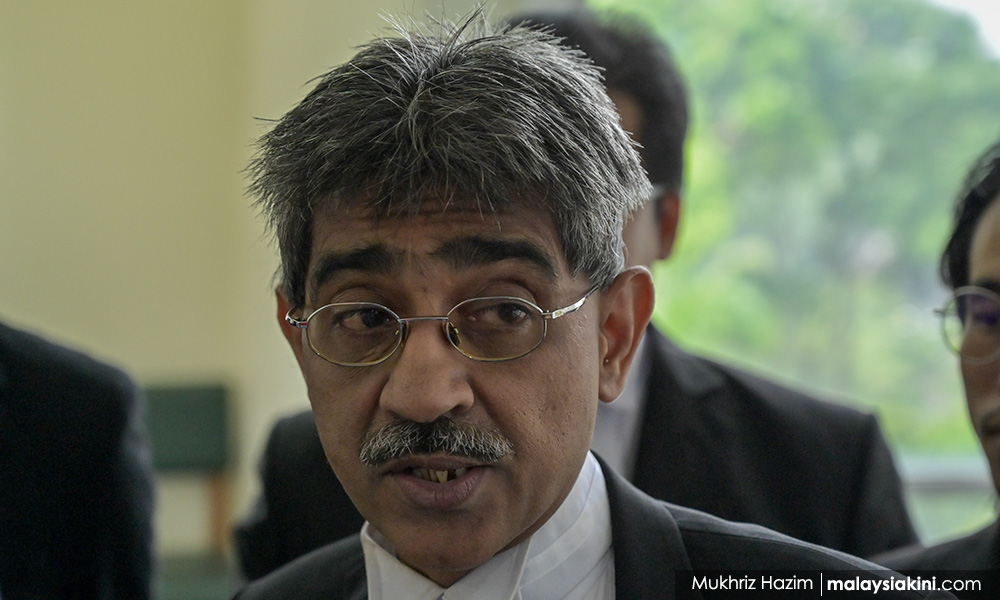
Lawyer Mohamed Haniff Khatri Abdulla


Maips’ lawyer Mohamed Haniff Khatri Abdulla then objected to the labelling of the state religious council as a ‘busybody’, saying that as it is merely carrying out its legal duty to ensure the welfare of Loh’s three children.

The lawyer stressed that Perlis’ state enactment empowers Maips with jurisdiction to provide for the religious education of any mualaf (new converts to Islam) registered in the state, even if the converts are currently residing in another state.

Loh and her three children are currently living in Selangor.

“Maips has a statutory duty and they did not wish to be busybodies.

“We should not be focusing on the right of the father or mother, but the right of the children. Time and time again that is the common law (from the United Kingdom) basis that the LRA emphasises,” Haniff argued.

The lawyer contended that Maips is concerned with the children’s welfare as past news reports indicated that the children are still practicing Islam even when under the present custody of non-Muslim Loh.

Heated arguments

The atmosphere in the civil court took a heated turn when both legal teams began touching on the issue of the unilateral conversion of Loh’s children.

Haniff had submitted that Maips should be allowed to intervene as the issue of the children’s conversion to Islam on July 7, 2020, was not before the civil court then, when it granted full custody of the children to Loh.

The civil court granted full custody on March 31 last year, and decree nisi (to annul the marriage) on Sept 23 last year.

Nagahswaran, who is currently serving a jail sentence in Kelantan over a drug offence, was alleged to have run away with the children and carried out the conversion in July 2020.

The conversion was allegedly done without Loh’s consent and knowledge.

However, Haniff’s submissions attracted a fierce response from Loh’s other lawyer, Shamsher Singh Thind, who countered that the intervener application should be dismissed as Loh’s separate bid to challenge the children’s conversion is pending before another civil court.

Shamsher urged the civil court to consider the element of prejudice that may befall Loh if Maips is allowed to intervene, as the single mother was allegedly the target of online attacks on social media over the religious issue.

“There are a lot of attacks on Facebook (against Loh) that claim that they (Loh’s three children) are Muslim children.

“There would be prejudice (against Loh) if the (civil) court allows the intervention, as a unilateral conversion is illegal and they (Maips) never questioned the unilateral aspect of the conversion,” Shamsher contended.

The lawyer then relied on the landmark 2018 Federal Court decision in M Indira Gandhi, which declared as invalid the unilateral conversion of her children by her former husband, who previously converted to Islam.

Evrol then urged both legal teams to calm down, reminding them that the present case does not involve religion but the interest and welfare of the children.

“It is not about religion. It is about the rights of the child. Here, the children are minors, and their rights are being exercised by the parent (Loh), while the religious council (Maips) contend they have the right to exercise (their duty to the children),” Evrol said.

The judge then fixed June 15 for a decision on whether to grant leave to Maips to intervene in the divorce proceedings.

If the state religious council is granted leave, then it would take the next step of applying for an order to vary the custody order.

Loh’s separate bid to strike down her children’s conversion is fixed for hearing before another Kuala Lumpur High Court on May 17.

On Feb 21, the Kuala Lumpur High Court (criminal jurisdiction) allowed her habeas corpus application to be reunited with her three children.

MACC probe of judge who convicted Najib valid, says legal expert

Malaysia Now:

MACC probe of judge who convicted Najib valid, says legal expert


Haidar Dziyauddin says the act employed by MACC has nothing to do with Article 125 of the Federal Constitution.


The Malaysian Anti-Corruption Commission is investigating Mohd Nazlan Ghazali, the judge who convicted former prime minister Najib Razak in the SRC International case, over claims of unexplained money in his account.


A legal expert says the investigation by the Malaysian Anti-Corruption Commission (MACC) into the judge who convicted former prime minister Najib Razak in the SRC International case is valid and within the purview of the act alloted to the anti-graft agency.

Speaking to MalaysiaNow, Haidar Dziyauddin said the use of the MACC Act 2009 applies to all Malaysian citizens including judges, adding that the commission had done nothing wrong in launching the investigation.

He also said that the act employed by the MACC in this case had nothing to do with Article 125 of the Federal Constitution as the investigation concerned elements of criminal misconduct, not disciplinary issues.

“Those who issue statements saying that MACC was wrong to have taken action might be confused with the jurisdiction of the tribunal and the code of ethics committee provided for in Article 125 of the constitution,” he said.

“MACC was only using the act provided for it, which can be applied to all citizens. Judges are also citizens of Malaysia.”

MACC said yesterday that it was bound by procedure to investigate any official report or complaint, amid questions by some over its probe of Mohd Nazlan Ghazali related to allegations of unexplained money in his account.

Nazlan, who was a High Court judge in 2020, had found Najib guilty of criminal breach of trust, abuse of power and money laundering in the misappropriation of RM42 million in SRC International funds.

He sentenced Najib to 12 years in jail and fined him RM210 million.

THe Malaysian Bar recently criticised MACC’s investigation, describing it as unconstitutional and in violation of the doctrine of the separation of powers.

It also said that the probe affected the independence of the judiciary.

Haidar however said that Article 125 of the constitution only refers to misconduct involving the violation of the code of ethics and discipline, and does not cover other illegal acts including crimes.

“In terms of a judges’ ethics committee, if a judge is found to have breached the code, he can be brought before a tribunal or code of ethics committee,” he said.

“But this committee has no power to impose the punishments provided for in the MACC Act or the Penal Code.”

Under the judges’ code of ethics, he said, there are only two possible decisions – to issue a warning or to suspend the judge for a maximum of one year.

“That’s all. No penalties, compounds or jail,” he added.

Umno declared us the enemy first, Bersatu man tells Annuar


Umno declared us the enemy first, Bersatu man tells Annuar


Bersatu Supreme Council member Faiz Na’aman (left) asks former BN secretary-general Annuar Musa ‘what vengeance’ he is talking about.


JAYA: A Bersatu leader has hit out at former Barisan Nasional secretary-general Annuar Musa for accusing the Perikatan Nasional lynchpin of bearing a vengeance against BN.

Bersatu Supreme Council member Faiz Na’aman told Annuar it was Umno’s leadership that first declared his party and the PN coalition as the enemy, particularly at Umno general assemblies.


“So what vengeance is he talking about? Surely he can’t expect Bersatu to continue daydreaming about working with BN come GE15.

“It’s Umno itself that clearly wants to have revenge for their fall from power after being rejected by the people in the last general election,” he told FMT.

Faiz also pointed out that Umno had made PAS its enemy in Annuar’s home state of Kelantan.

He cited party veteran Tengku Razaleigh Hamzah’s recent “bipartisan” group with state Amanah leaders, aimed at booting PAS out of the Kelantan government in GE15.

“What action will Umno take against Ku Li (Tengku Razaleigh)? Where is their Muafakat Nasional?” he said, referring to the pact between Umno and PAS which was formalised in 2019.

Annuar, the communications and multimedia minister, recently said Bersatu president Muhyiddin Yassin’s willingness to work with “anyone” to take down BN reeked of vengeance and would cause the party to be rejected by voters.


He also accused the party of being Machiavellian (cunning) in going against BN, warning that it could lead to PN’s breakup.

PN consists of Bersatu, PAS, Gerakan, Parti Solidariti Tanah Airku (STAR) and the Sabah Progressive Party (SAPP).

Faiz questioned Annuar’s change in tone towards Muhyiddin now, compared to when he was federal territories minister in the former prime minister’s Cabinet.

“When we were under Muhyiddin’s leadership, he was defensive over the PN government’s formation. Now, it’s as though he’s harming Umno and Bersatu’s ties even more,” he said.

Doubtful Pejuang will win favour in Sabah, says Bung


Doubtful Pejuang will win favour in Sabah, says Bung


Bung Moktar Radin tells Mukhriz Mahathir that Sabahans will not be interested in voting for Pejuang in the next general election.


PETALING JAYA: Pejuang is welcome to spread its wings to Sabah but it is doubtful if it will receive support from the people, says Sabah deputy chief minister Bung Moktar Radin.

“We are a democratic country. We cannot stop their intentions, so it is up to Pejuang.


“However, from my point of view, based on the previous elections in the peninsula, Pejuang lost badly.

“If they still want to expand to Sabah, I can see that Sabahans won’t be interested,” he said at a breaking-of-fast ceremony with the media and Tahfiz Pertubuhan Rumah Amal Selawat Nabi Sandakan at a hotel in Sandakan.


Pejuang president Mukhriz Mahathir said this week the party intended to contest in Sabah in GE15.

He said Sabah Pejuang, which would be officially launched on May 22, planned to expand to all 25 Sabah parliamentary constituencies as part of its preparations for GE15.

He said Pejuang currently had 16 branches in Sabah, making it the state with the third-highest number of members, after Kedah and Selangor.

According to a report by the Daily Express, Bung, who is also the Sabah Barisan Nasional (BN) chairman, said Umno’s decision to retain every party seat in GE15 was decided during the party’s last general assembly.


He said it was decided that Umno would vie for all the parliamentary seats it contested in the last elections.

“This includes the seats where the elected representatives later jumped to other parties.

“We cannot hand over our seats to any party for free. Maybe we can negotiate, but Umno insists that these seats belong to BN and should only be contested by it.

“This decision was supported by all Umno grassroots members,” he said.

Hadi's son-in-law moots qisas (retributive justice) on live TV for school bullies - - - [does that include amputation of bullies' arms?]


PAS leader moots retributive justice, live TV beat down for bullies


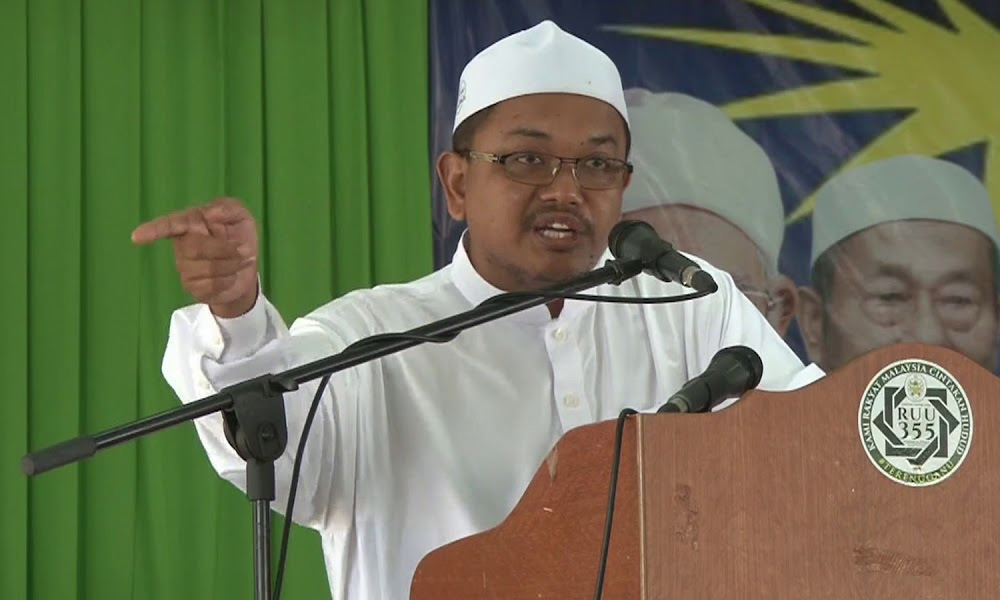
A PAS leader has suggested that the victim of a recent bullying assault case get justice via qisas (retaliation in kind) and mete out punishment live on television.

Subang division PAS chief Zaharuddin Muhammad said this could deter future bullying cases.

He was reacting to a case in which 13 students in a Langkawi school were detained for assaulting a classmate. A video of this incident showed one of the attackers hitting the victim with a table.

Zaharudin said that if convicted, the attackers would be sent to juvenile detention - where they may become even bigger bullies after spending time with other "evil" children.

Whereas the victim, he said, gets nothing.

As such, he said the victim should get justice via qisas, at least against the attacker who hit him with a table.

"In Islam, the student who is attacked with a table must receive qisas.

"The way is for the victim to hit back at the student who attacked him in public, it can be aired live on television," he said in a Facebook post.

Pay compensation

Zaharudin, who is also PAS president Abdul Hadi Awang's son-in-law, said that if it is feared that the victim's retaliation would be excessive, then the assailant must pay compensation.


Zaharuddin Muhammad


If the assailant can't afford to pay compensation, then his father must pay, he said.

He added that the money must go to the victim and it is haram for anyone else including the government, to take a cut.

The PAS leader believed that enacting qisas could serve as a strong deterrent to bullying.

"If the student who attacked with a table received qisas on live television, there might not be anyone who would dare be a bully in school in the next 10 years," he said.

PH-era probe found I was not linked to submarine deal, says Najib


PH-era probe found I was not linked to submarine deal, says Najib


Najib Razak says he had been cleared in a PH probe in 2018 over his role in the French submarine deal in 2002. (Bernama pic)


PETALING JAYA: Former prime minister Najib Razak says Pakatan Harapan had failed to prove that he was involved in the bribery scandal linked to the procurement of submarines from France in 2002.

Najib said PH’s investigation in 2018 did not find any evidence that he was involved in the deal, adding that it was a part of the opposition’s propaganda to tarnish his image.


He said PH also tried to link him with the 2006 murder of Mongolian interpreter Altantuya Shaariibuu by two police officers of the Special Action Unit (UTK) who were previously his bodyguards.

In a Facebook post, Najib explained that while he was the defence minister when the deal was signed to buy two Scorpene-class submarines and one Agosta submarine from French defence equipment manufacturing group Thales, it was the former prime minister (Dr Mahathir Mohamad) who made the purchase in a deal worth US$1.2 billion.


“It was not me who negotiated the deal. It was the 4th prime minister who selected the submarines and negotiated the deal,” he said.

Recently, opposition leader Anwar Ibrahim urged the government and “relevant parties” to state if Malaysians involved in the scandal would be brought to justice.

Muda also urged the authorities to reopen investigations into the procurement of submarines.

This comes after a report that a French court had charged Thales with complicity in bribery over the purchase of the three submarines.

U-turn on anti-vax teachers will cause mistrust of govt decisions, MP warns


U-turn on anti-vax teachers will cause mistrust of govt decisions, MP warns


The government has announced that unvaccinated teachers will be allowed to resume working in physical classrooms.


PETALING JAYA: An MP has warned of public mistrust of government decisions following an announcement that unvaccinated teachers will be allowed to resume teaching in physical classrooms.

Dr Kelvin Yii of DAP, who is the MP for Bandar Kuching, said the decision showed an inconsistency in policy making.


Education minister Radzi Jidin’s latest statement regarding unvaccinated teachers, which he issued yesterday, was an apparent about-turn from an announcement the ministry made last year, in which such teachers were warned that action would be taken against them since the public service department had issued a directive making vaccination against Covid-19 mandatory for all civil servants.

“Such inconsistencies basically build mistrust of government decisions,” Yii told FMT. “After this, who will follow a directive as it may be changed anytime?


“In my view, all high-risk groups and carers of high-risk groups, including teachers, should be vaccinated.”

Yii, who heads the parliamentary select committee on health, science and innovation, said parents should be informed about unvaccinated teachers in their children’s schools.

He also said such teachers should test themselves for Covid-19 before going to school each day.

Mak Chee Kin, who heads the Melaka Action Group for Parents in Education, criticised the unvaccinated teachers for their “glaring defiance” of a government directive.


He suggested that these teachers be moved to district education offices to carry out administrative tasks or transferred to remote schools that have small numbers of pupils in their classrooms.

“These are the stubborn few,” he said. “Action must be taken to reprimand them. Otherwise, a bad precedent is set.”

Noor Azimah Abdul Rahim, chairman of the Parent Action Group for Education, said she was concerned over the possibility of unvaccinated teachers being seriously infected.

She noted that 58% of Malaysian students had yet to be vaccinated and said they ran the risk of being infected from contact with unvaccinated teachers.

She proposed that unvaccinated teachers, particularly those with medical problems, be offered voluntary separation deals if they failed to be vaccinated.

Last September, Radzi said 2,500 teachers had turned down anti-Covid vaccination for health reasons and because of a lack of confidence in the vaccines.

By Oct 3, 97.5% of teachers had been fully vaccinated against the virus.

Activist slams home minister over rationale in keeping Rohingya detained


Activist slams home minister over rationale in keeping Rohingya detained


The Rohingya did not want to leave their country but were forced to do so due to a genocide in their own country, says former home minister Syed Hamid Albar.


GEORGE TOWN: A human rights activist has rubbished a claim by the home minister that more Rohingya would end up on Malaysia’s shores if they were not made an example of by detaining them.

Jerald Joseph said the claim by Hamzah Zainudin in justifying the government’s decision to keep the Rohingya refugees detained indefinitely was also wrong under international law.


Recently, Hamzah said the Rohingya would remain detained in immigration depots to serve as a warning to others planning to enter Malaysia.

His remark was in response to criticism against Putrajaya over the indefinite detention of Rohingya refugees at immigration depots across the country.


Jerald Joseph.

The issue came to light after more than 500 Rohingya refugees escaped from a temporary immigration depot in Kedah last week. About 60 of them are still at large.

“A minister has said more will come in if they let them go,” Joseph said at a forum hosted by Sinar Daily. “I have never seen this happening in countries that signed the refugee convention. The question that has yet to be answered is this: If you can’t send them back, why are we keeping them?”

He said Hamzah’s plan to “review” the issuance of UNHCR cards to refugees on the back of the Kedah refugee escape was also not right. The minister was reported to have said that the ease in the availability of such cards had seen more immigrants come into the country.

“They are an internationally recognised body. So why use them (UNHCR) as a regular whipping boy when there are legal or policy gaps in the country?” Joseph asked.


Refugees are not illegal, says former minister

Syed Hamid Albar.

Another panellist, former home minister Syed Hamid Albar, said the government must develop a clear refugee policy so that all enforcement agencies were on the same page.

He said the refugees were not illegal and should be allowed to work and be given coaching in language skills.

Hamid said the current atmosphere of fear-mongering that the Rohingya would take over local jobs was also not true, as most came from impoverished backgrounds and worked informal jobs in their home country.

“There is no need to look at each other as a foe. Malaysians are known to be charitable, compassionate and merciful, but they mistreat them when it comes to this group. We need to change this.

“These people did not want to leave their country but were forced to do so due to a genocide in their own country,” he said.

Women using shirts as sanitary pads, claims activist

Refuge for Refugees executive director Heidy Quah said the government should work hand in hand with NGOs.

She also claimed that detention centres’ dire state of affairs ought to be fixed, ensuring that they are supplied with necessities.

Quah claimed women and children suffered the most at these centres.

“They (women) are given two t-shirts and two pairs of pants, and they have to rotate that during their period. They also use the same T-shirts off their backs as diapers for children and newborns. There is no soap to wash their clothes, just running water,” she claimed.

Joseph said long-term detention at immigration depots did not work, as the Mandela Rules did not apply to them. The rules are international standards for prisons or detention centres.

“An immigration detention centre is only meant to hold a person without documents temporarily before they are sent back to their home country.

“In prison, you have exercise, work, and you are not in a cell for 24 hours. So holding these refugees for long periods is detrimental to their lives and wellbeing, what more when you cannot deport them to their home country,” he said.

Russia attacks infrastructure in western Ukraine to slow supply lines

Guardian:

Russia attacks infrastructure in western Ukraine to slow supply lines

Railways, fuel depots and bridges are being targeted to hinder delivery of weapons to Donbas


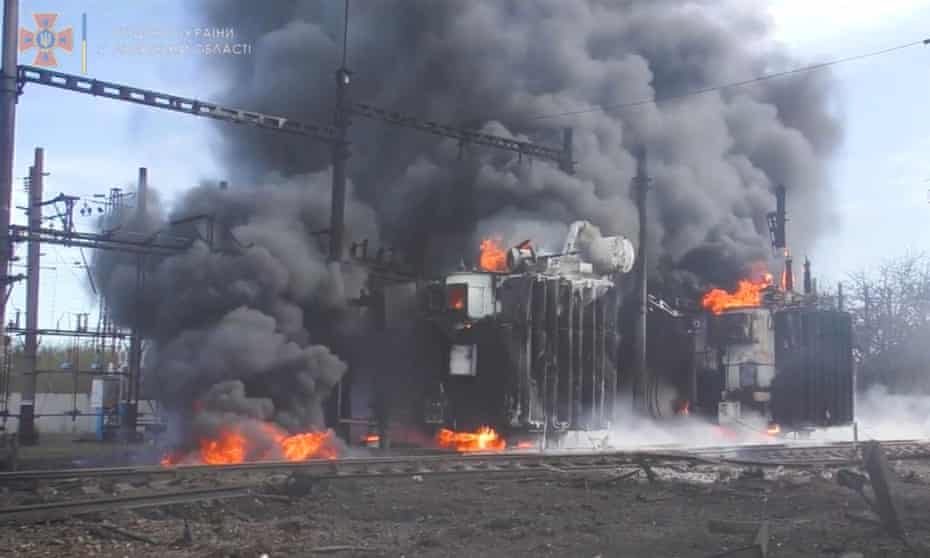
Krasne railway station in south-west Ukraine was shelled by Russian forces earlier this week. Photograph: State Emergency Service Of Ukraine In Lviv Oblast/SESU/Reuters


While tanks and troops exchange fire in Donbas, Ukraine faces another escalating battle on an invisible front line, one that may be equally crucial to determining the outcome of the war.

Russia is stepping up attacks on infrastructure deep into western parts of the country that Moscow has admitted for now it cannot capture, striking targets that keep both the war effort and the national economy running, including the railway network, a critical bridge and fuel depots.


The aim of Russian attacks is likely to slow the rapidly expanding delivery of weapons from Nato allies to the eastern front, while also hindering exports of grain and other commodities that help Kyiv pay for the war. With the country’s Black Sea ports are closed to shipping, overland routes are even more vital.

“It is my opinion that they didn’t believe the west will give Ukraine the necessary heavy weapon supplies so now the process is started, they feel they need to do something about that,” said one Ukrainian military official monitoring the infrastructure attacks. “Because western weapons and Ukrainian combat experience combined give us a big advantage.”

On Monday, five railway stations were hit by Russian missiles. The head of Ukraine’s railways company, Oleksandr Kamyshin, said it was the heaviest assault on his system since the war began. “The repair of all infrastructure damage will take months,” he acknowledged in a news conference.

Fuel depots have been another regular target, along with a critical bridge that provides the only overland link on Ukrainian territory to the southern Bessarabia region.

A spokesman for Ukraine’s defence staff said infrastructure was being hit to stop western arms shipments. “Russians are attacking military and civilian infrastructure to prevent getting weapons from our partners,” Oleksandr Shtupun told a press conference.

Russia’s foreign minister, Sergei Lavrov, said in a broadcast on state TV: “These weapons will be a legitimate target for Russia’s military. Storage facilities in western Ukraine have been targeted more than once. How can it be otherwise?”
Sign up to First Edition, our free daily newsletter – every weekday morning at 7am BST


It is not a one-sided battle. A series of destructive explosions and fires at strategic locations inside Russian territory and neighbouring Belarus – fuel depots and railways – are widely considered the work of Ukrainian forces, although none have been claimed officially by Kyiv.

In the early weeks of the war, Ukrainian forces were highly effective at damaging Russian logistics in areas that were contested or recently seized. But in this round of attacks both countries are targeting infrastructure deep inside enemy-held territory.

Senior presidential adviser Mykhailo Podolyak in a tweet about “self-destructing” Russian infrastructure appeared to hint broadly at his country’s role; on the list of destroyed assets he gave was the Moskva ship, widely acknowledged to have been sunk by a Ukrainian missile.

“How can we not believe in karma for the murder of [Ukrainian] children? Many are still willing to turn a blind eye to financing terrorism by buying Russian oil. But should the European Union depend on a country where everything is self-destructing?” he said.

The operations on Russian territory have often been bold and spectacular, boosting morale as much as hindering the enemy’s capacity. They include a daring helicopter raid on the border town of Belograd and Sunday night’s attack on oil storage facilities near a critical crude pipeline junction in Bryansk.

The same night another blast near Bryansk took out a military rail spur used to bring rockets and other munitions from storage onto the main railway network, a Ukraine security source said.

And a powerful radio control tower destroyed in Transnistria, part of Moldova controlled by Russian-backed separatists, was broadcasting propaganda across the region and may also have been used for military communications.

The battle over infrastructure deep inside enemy-held territory is an area where Ukraine may be more vulnerable than Russia because of the size of the country, the extent of Russia’s military resources and the battle for the air.

While not dominant in the skies, it is still easier for Russian planes, drones and helicopters to fly over Ukraine than the reverse and its own skies are largely open, while the government in Kyiv relies entirely on land transport for its military and economic lifelines.

“Rail has always been important [in Ukraine] for exporting things like coal, grain and steel, but it no longer has access to sea ports so a lot more has been going by rail out of the country,” said Tracey German, professor in conflict and security at King’s College London.

“So potentially this isn’t just a way of disrupting the military effort but also of putting pressure on the country economically.”

Russians perhaps did not move strongly against these targets at the start of the war because President Vladimir Putin anticipated a quick victory and perhaps the Russian military thought they would be using the infrastructure themselves.

They also expected to control the skies, which would have made it easier to deny access to roads and railways, said Niklas Masuhr at the Center for Security Studies thinktank in Switzerland. Now there are strong military incentives for a campaign behind front lines.

“The focus has shifted towards the Donbas and there are two underlying drivers of attacks on infrastructure, particularly in western Ukraine. They are potentially trying more to cut off supplies into the Donbas, create a battle of attrition in that part of Ukraine.”

“With strikes on Lviv and Kyiv they may also be trying to hit targets throughout the country, to force them to disperse air defence systems throughout the country, so they don’t have them where needed in the Donbas.”

For Ukraine to win this battle, it needs more air defences for the west, in addition to the heavy weapons and short range air defence systems heading east, the Ukrainian military source said.

“Ukraine on its own cannot protect any inch of its territory from the threat from the air, because Ukraine uses very old aerial defence systems,” the source said.

“Britain is sending short-range things that work great in Donbas. But the strategic thing really necessary for Ukraine is heavy and long-range defence systems to close the skies over [relatively] peaceful areas of the country.”

PH 2.0 will be doomed from the get-go, says analyst - - - [stupid move driven by power-craziness]


PH 2.0 will be doomed from the get-go, says analyst


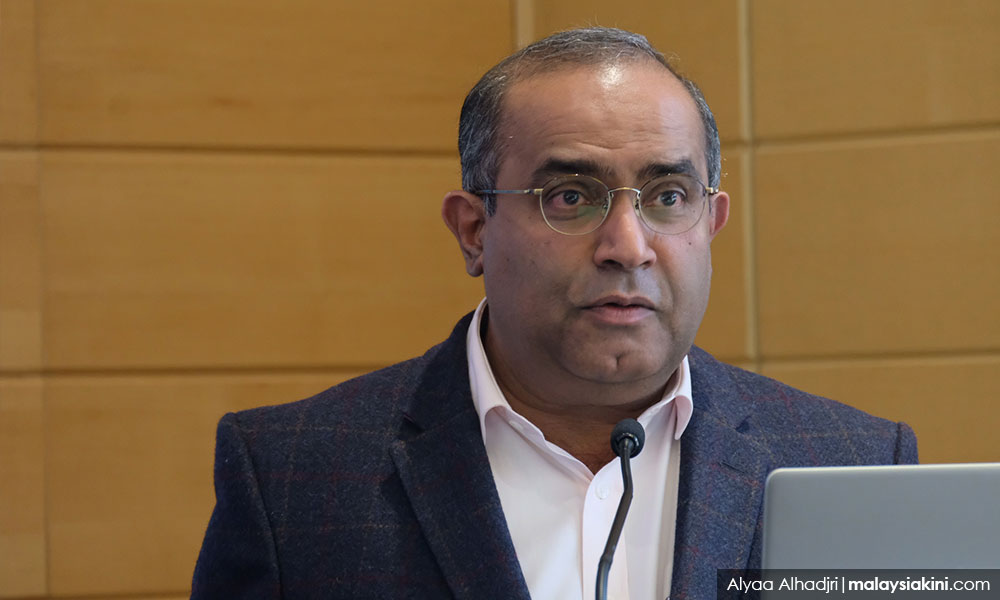
A reunion between Pakatan Harapan and Bersatu will not be stable or sustainable, because of their many differences, says USM’s Azmil Tayeb.


PETALING JAYA: A Bersatu and Pakatan Harapan (PH) reunion aimed at defeating Barisan Nasional (BN) will be doomed from the start given the “bad blood” between them, says a political analyst.

Azmil Tayeb.

Azmil Tayeb of Universiti Sains Malaysia said such a reunion will neither be stable nor sustainable because of the parties’ many differences.

“It would be hard to sell the coalition to PH supporters, compelling them to sit out the election or vote for other parties,” he said in commenting on Bersatu president Muhyiddin Yassin’s remarks that the party was prepared to cooperate with any party to ensure straight fights against BN in the 15th general election (GE15).

This came in the wake of Amanah deputy president Salahuddin Ayub saying PH should be open to talks with all opposition parties ahead of GE15 to put up a united front to defeat BN.

Speculation over a possible reunion prompted BN adviser and former prime minister Najib Razak to take a jab at his rivals, cautioning Malaysians to brace themselves for “PH 2.0”.

Azmi Hassan.

Azmi Hassan of Akademi Nusantara said a reunion was unlikely as Bersatu had little to offer PH after disastrous outings in the Melaka and Johor state elections.

“While they (Bersatu and PH) intend to defeat BN or, more specifically, try to avoid the court clusters from gaining power, it is going to be extremely difficult to come together,” he said.

He said if PH and Bersatu joined forces it may not sit well with their supporters.

Another stumbling block was consensus over who would be prime minister in the event Bersatu and PH managed to defeat BN in GE15.

“Unless they can resolve this issue, the so-called grand coalition won’t come to fruition,” Azmi said.