Monday, January 04, 2021

‘Meat cartel’ scandal suspected for years but authorities stayed silent

MM Online:

As ‘meat cartel’ scandal erupts, local butchers say suspected it for years but authorities stayed silent
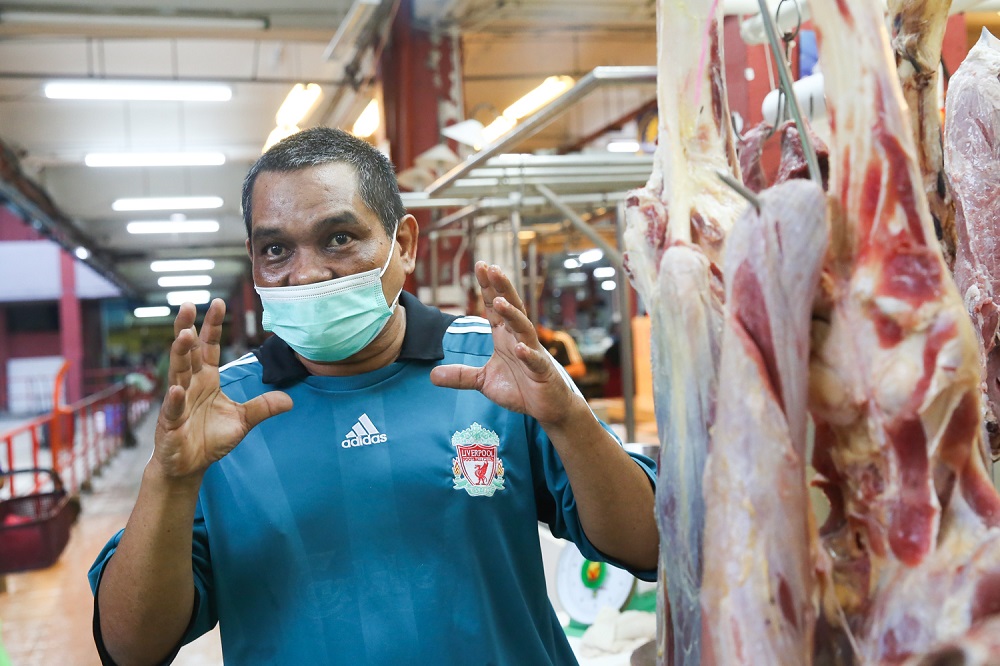

Local and imported frozen beef seller Zamry Shahbhari speaks to Malay Mail at his stall in the PJ Old Town market, December 31, 2020. ― Picture by Choo Choy May

KUALA LUMPUR, Jan 4 — The recent halal “meat cartel” scandal that blew up nationwide came as no surprise to many local butchers in Klang Valley recently polled by Malay Mail.

Speaking during our visit to wet markets, the butchers polled mostly said they have been suffering in silence for years knowing the existence of the purported cartel, and were left disappointed with the authorities’ lackadaisical attitude towards the syndicate.

Zamry Shahbhari, a butcher in the Petaling Jaya Old Town wet market, related that local butchers have been aware that there were companies bringing in more meat than they practically could, but said no action was taken despite them lodging complaints.

“I’m sorry to say but I feel what the government is doing right now to tackle this issue is a load of crap. I don’t want to mention which minister but we know who it is and they were doing a piss pot job of it.

“We’ve been hearing about this illegal meat trade for years and local breeders have made police reports but nothing came of them,” Zamry lamented.

“Instead we’re hearing about this company in Johor, Raihanah Cold Storage Sdn Bhd, and the husband and wife being charged for involvement in this illegal business. What’s the point? These are small fries, the bigger culprits are still out there,” he added.

Zambry was referring to a frozen meat supplier, whose directors were charged in the Johor Baru Sessions Court last week following the media exposé of a purported syndicate that repackaged non-halal meat with halal meat.

The accused Rahman Sheik Abdullah, 44, and his wife Raihanah Kasim, 42, pleaded not guilty, but they were merely charged with using a non-certified halal logo on the company truck.

When asked how the butchers became suspicious, Zamry said authorities only allow foreign companies to bring in a certain amount of frozen meat on a monthly basis — but the amount they brought it allegedly have always exceeded the amount approved by Islamic authorities which enforce the halal certification.

“Then suddenly we hear of this company bringing 50 to 70 containers per month to Malaysia for several months. This is way too many for one company. Usually it’s around 20 to 30 containers per month or less,” said Zamry, explaining that one container would contain the equivalent of one tonne of meat.

“I think we need to look at the Customs and Immigration departments, as well as other agencies involved more closely. Many butchers are not willing to talk for fear of repercussions but I feel this is an important issue and if it’s true you need not be afraid,” he said.


Sulong Mohd says corrupt officials and poor governance in government agencies have resulted in officers being corrupt for years. — Picture by Miera Zulyana

Another butcher located in Seksyen 16 Market in Shah Alam, Sulong Mohd, also lamented the fact that the possibility that the purported cartel has lasted for years meant that many of the corrupt staff involved from the authorities have likely been leading very comfortable lives with their ill-gotten gains.

“If they said that this meat cartel issue has been going on for 40 years, the officers involved probably have retired and are enjoying their life.

“They might have escaped this heresy, but we don’t know what’s going to happen in the afterlife,” he told Malay Mail when met.

Halal certification confirms that products have been prepared in accordance with Islamic law, and is a big deal for Muslims globally and in Malaysia, where they make up about 60 per cent of the population.

According to Bloomberg, the global halal-meat business is a US$2.3 trillion (RM9.3 trillion) market and Malaysia exports US$9 billion in halal-certified products including cosmetics and pharmaceutical products to China, Singapore, USA and Japan among others.

The meat cartel scandal became the talk of the town after the media broke news on the smuggling of frozen meat from China, Ukraine, Brazil and Argentina before repackaging said meat and assigning it the halal logo at a warehouse in Senai, Johor.

Inspector-General of Police Tan Sri Abdul Hamid Bador said the police have opened several investigation papers over the issue based on reports lodged by several individuals and non-governmental organisations.


Abu says many prefer imported meat because local grown meats are more expensive. — Picture by Miera Zulyana

However, Abu Khan, another butcher also from the Shah Alam market said that no matter what, consumers will always tend to prefer frozen meat to fresh ones due to the cheaper cost.

“This is the reality, the one and only factor was corruption among government officials and lastly, the people are the ones who are going to pay for the price,” Abu said when met.

The disparity between local beef and cheap imports

Checks by Malay Mail found the prices of local fresh beef remains the same, even as the story of the scandal broke and many Malay-Muslim groups have urged adherents to stay away from frozen imported meat until this issue gets solved by authorities and religious bodies.

Butchers told Malay Mail that this was down to price regulation, and the simple fact that butchers are not able to simply raise prices as local meat is already more expensive than imported meat.

Tenderloin from local beef goes for between RM43 and 48 per kg, compared to RM38 for imported ones. A kilogramme of topside, knuckle or rump goes for around RM40, while the imported meat costs RM28 per kg.

Minced or ground up meat is around RM35 per kg locally compared to RM24 for the imported meat.

Other meat cuts like the hoof, leg as well as innards like hearts, lungs and spleen have about RM1 to 5 differences between the local and imported meats.


Khairul Majid says he sees no increase in customers despite the meat cartel scandal. — Picture by Choo Choy May

“These price differences when added up for bulk purchases makes a lot of difference that’s the reason for businesses purchasing frozen meats from overseas,” said Khairul Majid, a butcher at Taman Tun Dr Ismail wet market.

“Plus this time of the year is the slow time. Not a lot of festivities and we do not see a stark increase in customers despite this scandal gripping the country. People are struggling economically too, so many aren’t eating meat on a daily basis.”

The government has not stopped the import of beef to the country while it is investigating the scandal. Instead, Deputy Minister of Domestic Trade and Consumer Affairs Datuk Rosol Wahid has even vouched for the top three frozen meat brands: Allana, Amroon, and Al-Aali — all from India.

When asked if there would be any shortage of halal beef following the scandal, one butcher who wished to be known as Ah Keong said the possibility will only be known in the next two weeks.


Butcher Ah Keong says if there is a shortage of halal meat, it will be known in a couple of weeks. — Picture by Choo Choy May

“I haven’t ordered my stock today so I don’t know what the situation is yet. But if there is a shortage we will know in two weeks.

“The main warehouse can store meats for up to two months so for now I believe things are still okay,” said Ah Keong.

Religious affairs minister Datuk Zulkifli Mohamad had last week said that the government will now meet with industry players involved in the importation of meat and slaughtering of animals to ensure they understand the set guidelines.

The senator said this was also to ensure a high level of compliance with the guidelines and integrity of the industry players.


Sunday, January 03, 2021

GE-15 will see WAR between UMNO and PRIBUMI BERSATU

FMT:

143 Umno divisions reject pact with PPBM to face GE15


Umno president Ahmad Zahid Hamidi said he respected the views of the divisional leaders.

BAGAN DATUK: Almost three-quarters of Umno’s 191 divisions have told the party leadership that they do not want to cooperate with PPBM for the next general election.

Umno president Ahmad Zahid Hamidi said he respected the views of the 143 divisions and had called for a Supreme Council meeting on Wednesday to discuss the matter.

Feedback on the need for cooperation with PPBM for the 15th general election was done via a WhatsApp chat group, comprising all division heads, he said, after officiating at the Bagan Datuk Umno division meeting today.

“As the president, I respect the 143 (division) leaders’ decision,” he said. The motions will be looked into, and need to be accepted by Umno leadership as they represent the voices of the grassroots.

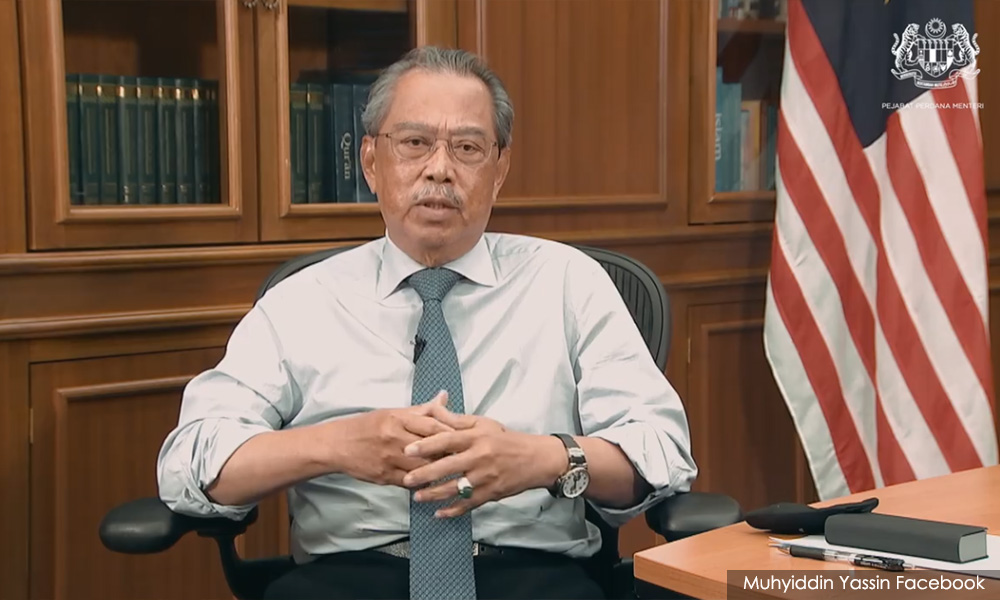
Zahid added that the decision not to cooperate with PPBM should be accepted as the party’s official decision, although Umno MPs have pledged parliamentary support for the Perikatan Nasional government. The government is led by PPBM president Muhyiddin Yassin.

Zahid said he understood there were certain quarters who spoke out on their dissatisfaction after being told to be “grateful” for being invited to be part of the PN government.

He questioned this notion, adding that Umno is the biggest contributor in forming the federal administration.

“There is a movement currently to set up 8,000 new branches (for a party under PN). Where can they find the members? Does this mean that Umno members can be ‘bought over’ with a cheap price?” Zahid questioned.

He added, “We are not easily persuaded and bribed. Umno members are resilient. If we can survive for 22 months (as opposition), what more in the coming months”.

The remark on the 8,000 branches was believed to be directed against PPBM secretary-general Hamzah Zainudin. Hamzah recently said PPBM is targeting one million members and will set up 8,000 branches across Malaysia.

Zahid also urged the government to call for an election soon, with all the SOPs in place.

“We agreed that the Covid-19 pandemic needs to be avoided and SOPs must be practiced. But why are they (government) scared of the election?

“There are over 30 countries that have held their elections during the pandemic but I believe they (Malaysian government leaders) are afraid of something else,” he added.


Anwar elegantly ignores ranting raving raging Mahathir

FMT:

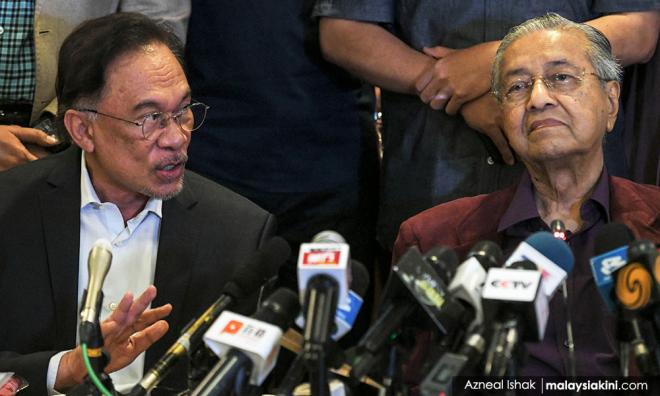
‘I don’t want to fight with him,’ says Anwar, dodging Dr M’s criticism of him


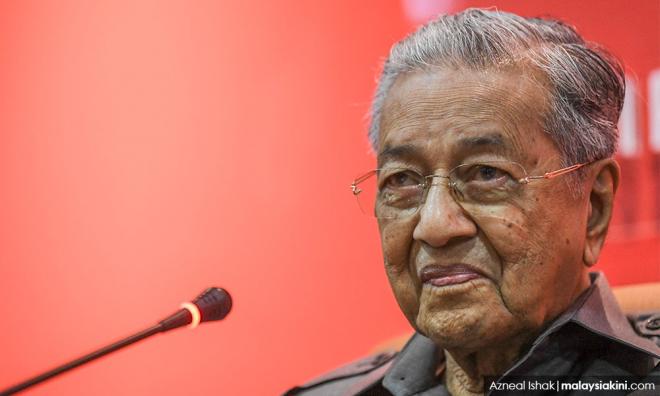
Anwar Ibrahim says Dr Mahathir Mohamad’s views of him could change, quipping that the former PH chairman could criticise him one week and say something else the next.

KUALA LUMPUR: PKR president Anwar Ibrahim has dodged criticism from Dr Mahathir Mohamad, saying he does not want to get into a fight with the former prime minister.

This comes after the Langkawi MP slammed Anwar for being untrustworthy over unfulfilled promises, after the PKR president’s claim to have the numbers to form a new government in September last year led to nothing.

During a press conference today, Anwar kept the door open to working with Mahathir again to topple the Perikatan Nasional (PN) government, saying Pakatan Harapan (PH) will not base its cooperation with other MPs on parties or individuals but on principles.

When asked about the criticism levelled against him by Mahathir, he declined to comment.

“Never mind, we’ve known for him so long. But for PH and PKR, we are open to anyone or any party which accepts good governance and rejects corruption and cronyism. I don’t want to fight with him.

“Our responsibility is to strengthen the opposition and invite our other comrades to join forces. Whether they want to join us or not is up to them, we can’t force them to say yes, but we are open.”

He also said Mahathir’s views could change with time, quipping that the former PH chairman could criticise him one week and say something else the next.

When asked to comment on Mahathir saying PH needed him in order to attract Malay support at the next election, Anwar pointed out that Pakatan Rakyat had managed to garner 52% of the popular vote during the 13th polls in 2013, suggesting that Mahathir was not desperately needed by PH.
facebook sharing button 
twitter sharing button 

Delightful political Headlines


MM Online
:

Report: Pulai Umno signs resolution urging party leaders to quit Perikatan, effectively forcing GE15

Another from same media,

Perak Umno will not give away its five seats to other parties

Yet another from same media,

Umno Youth chief welcomes lawsuit from Bersatu, says ready to prove member poaching claims in court

And yet another from same media,

Najib: Perikatan govt wants to pay ‘crony’ private company annually following termination of HSR contract

FMT:

Well done, Puad tells Pagoh Umno for saying ‘no’ to Muhyiddin

From same media,

Leave PN now, force GE15, says Pulai Umno in rejecting Muhyiddin’s leadership

And another,

PPBM’s poaching almost ended Sabah Umno for good, says state party’s youth chief

Malaysiakini:

Umno leader backs bid to challenge Muhyiddin in Pagoh


Anwar's Catch-22 - working with Mahathir

Malaysiakini:


Anwar's Catch-22 - working with Mahathir

YOURSAY | ‘For Anwar, damned if you do, damned if you don't.’

Ferdtan: PKR president Anwar Ibrahim is open to working with Dr Mahathir Mohamad for a grand opposition? Damned if you do, damned if you don't.

When Amanah's Mohamad Sabu and DAP's Lim Guan Eng in their joint statement, more of a veiled threat to Anwar, calling for 'political reset' that may jeopardise Anwar's position as opposition leader, many who wanted to win Putrajaya at all cost condemned him when he refused to listen to their 'advice'.


He showed his displeasure by cancelling the Pakatan Harapan presidential meet. Many condemned him for being selfish in not wanting to work with the one who had 'betrayed' him. Now it is the reverse.

As he was asked whether he can work with Mahathir, he conditionally - I repeat, conditionally - said only if Mahathir agrees to follow Harapan principles. Just in case many don't get it, he further stressed, “collaborators must not bring forth ‘personal agendas’.”

There is no way Mahathir would accept such conditions which are fair considering what happened the last time when Mahathir was prime minister.

IndigoCat9464: Indeed, as said many times:

1. It's time for PKR-DAP-Amanah to go on their own. Do a calculation of what seats you can retain from the last general election. See where you can win the remaining seats.

2. Pejuang-Warisan aren't going to win anything more. Instead, they might lose what they have at present.

So, with the combined present MPs, why are they pushing for the PM's post? Why can't they give in to Anwar for a term or two?

3. For Muda, it's their first time. Let them go on their own. See how they fare. Yes, it's a difficult situation when you have multi-cornered fights.

4. Think of what PKR needs to address. How are you going to get Malay votes? And PKR needs to think about how to win Sabah and Sarawak. They definitely need seats from there.

IndigoTrout2522: Harapan should shake off Mahathir’s shadow.

The way forward is to inject new leadership with younger leaders into all the component parties, and there is a good selection of them among all races. Those long-serving leaders should step aside into an advisory role and support these younger leaders.

For Harapan to reclaim Putrajaya, it has to gather support from Warisan and GPS in East Malaysia. It is too general a statement to characterise any party as kleptocratic.

Harapan must continue its principles of good governance, an economic policy based on needs and not race, a multi-racial society based on merits, and is people-oriented and free from corruption.

This seems like an impossible mission, but there are many moderates among the various parties.

It may not seem possible with the older political generation with so much finger-pointing, greedy and selfish agenda, but it is certainly possible with a younger group of leaders at all political and governmental levels.

There may need a re-alignment of political parties, but time is running out for GE15.

Frank: In my surmise, if the next Harapan government in power is going to be like the previous one headed by Mahathir and friends, it is for certain that ‘never again’ proclamation should be for it too.

Malaysia today is just like the previous few years - a country with no future - and this is well-recognised by smart people, including foreign investors.

Needless to say, millions of lives depend on the next general election. The stake is huge. Believe you me, it is ‘huger’ (if there is such a word!) than you can imagine.

Vijay47: Anwar, if ever there is another truth as unshakeable as the sun rising in the East, it is that Mahathir cannot be trusted. Which part of “cannot be trusted” do you not understand?

Every single relationship he has entered into he has betrayed, and every single pledge he had made he has dishonoured. And you still want to consider working with him?

A racist to the core and beyond, Mahathir is the man who sold out our hard-fought victory earned after 60 years of tyranny, which ironically includes 22 years of his own rule.

He seems to have reached a stage bereft of his senses, appears unconcerned with any consequence of his machinations and is guided only by his obsession to place his confused son on the seat of the premiership.

And nothing can distract him from his quest for the unholy grail.

We don’t mind the occasional mistake, Anwar, but monumental acts of insanity like running with Mahathir again will never be tolerated; if it came to that, we would only burn the boats and bridges and say to hell with you.

And this includes any romance with PAS and Umno or any of their criminal leaders suddenly discovering repentance as Sungai Buloh beckons.

We have nothing to lose, Anwar. We waited 60 years; we can wait a while more.


Saturday, January 02, 2021

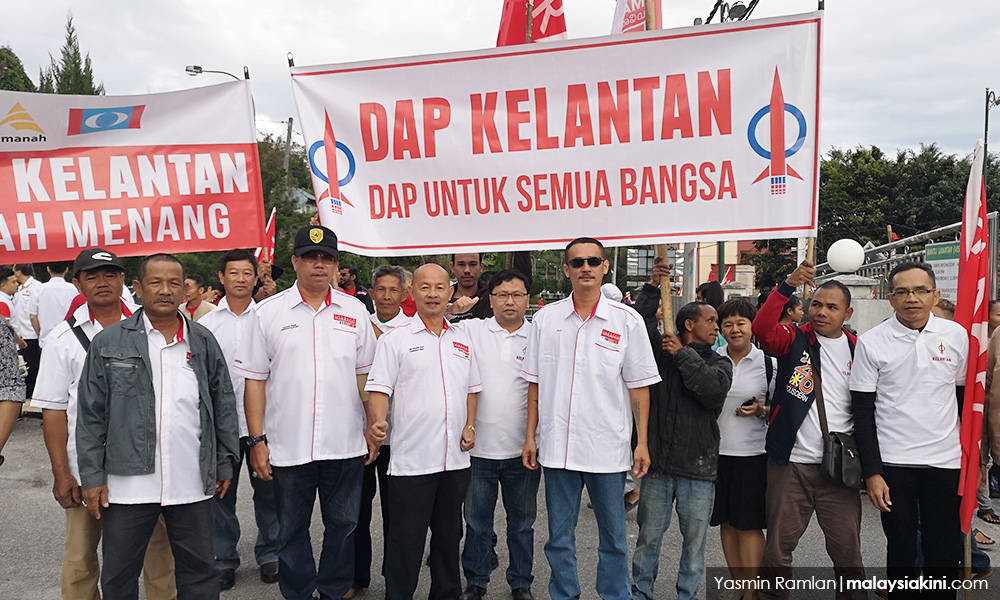
DAP has much to do to move beyond Chinese leadership

Malaysiakini:


Chin Huat chat #3: DAP has much to do to move beyond Chinese leadership

In the formative years of Malayan and Malaysian development, the founding fathers somehow thought it was a good idea to retain racial, religious and regional divisions when it came to political parties.

What might have worked in the earlier years after Merdeka soon proved itself to be a root cause of a form of politics that was far removed from ideas and innovation, but fixated on communalism of the basest sort.

Sadly, even parties that present themselves as multi-racial often fail to break through beyond a core following. That’s why DAP, a party of 55 years standing and currently the party with the most number of MPs in the Dewan Rakyat, is still viewed by many as representing the Chinese minority rather than all races.

After all, only one of its 42 MPs is a Malay and more than 80 percent of the party’s central leadership is Chinese. The former figure contrasts very poorly with that other large multi-racial party, PKR, whose 38 MPs are equally split between those of Malay and non-Malay ethnicities.

And while DAP performed very well in the last general election (winning 42 out of 47 parliamentary seats and 101 out of 104 state seats contested), its failure to break through beyond its typically urban Chinese-dominated communities suggests that the party is reaching the limits of its potential.

Political analyst Wong Chin Huat is one who feels that DAP’s journey thus far is a reflection of society’s aspirations and frustrations.

“To put it more bluntly, parties represent the divisions in society. The word 'party' comes from 'part', which is a division. They vie for representation in the legislature to either form government and implement certain policies, or to check on the government and its policies.

“To win seats and power, parties adjust their ideological or policy positions to build the largest possible coalition of voters without losing its core.

“DAP built up its base from disenfranchised Chinese and Indians since 1966, benefiting from the latter’s frustration and anger with MCA, MIC and Gerakan. It would not have survived had it abandoned its support for minority rights, in religion, language, culture, economy and politics,” Wong told Malaysiakini.

READ MORE: Chin Huat chat #1: Dr M wanted presidential power until dying


One of the odd things about the party is that, internationally, DAP has always belonged to social-democratic international associations making it a sister party of the UK’s Labour Party and scores of other moderate left-wing parties that have built up welfare states in countries as far-flung as Sweden and New Zealand.

However, with the exception of senator Liew Chin Tong and Pasir Pinji assemblyperson Howard Lee, very few leaders publicly identify themselves as social democrats.

Instead, party rallies are much more likely to showcase strident Chinese rhetoric from the likes of Nga Kor Ming and, until recently, the notoriously pro-China ‘Superman’ Hew Kuan Yau, while even party functions tend to alienate non-Chinese with lengthy detours in Mandarin.

Are they, in reality, a Chinese-rights party pretending to have a social-democratic ideology then?

Wong says that instead of explicitly advocating for Chinese ethnonationalism, DAP has adopted social democracy as its ideology to keep a more universalist outlook and wider appeal.

“From a Malay nationalist perspective, calling for equal citizenship – a Malaysian Malaysia – is already chauvinist.

“However, within its Chinese and Indian ground, distrust of the Malay-dominated state and bureaucracy naturally makes DAP shy away from advocating more government’s interventions in the economy and society, which is core to social democracy.


“Until capturing state power in 2008, DAP probably wanted a small government more than a benign powerful government,” said Wong.

He indeed cites Liew who characterised the old DAP as a party of “lawyers and hawkers”, with the former defending the latter from being harassed and having their rights encroached on by the state.

If compared with parties in the UK, DAP has looked more like the centrist Liberal Democrats than the centre-left Labour, said Wong.

So the question remains - can DAP evolve from its Chinese-majority leadership, be more grounded in social democracy and even collaborate with long-time foes Umno without looking like MCA 2.0?

“DAP has deliberately groomed many Malay leaders and fielded many Malay candidates since the 1970s. In 2018, DAP fielded Malay candidates in winnable seats in Penang, Selangor, Pahang, Perak, Malacca and Johor and appointed Malay excos in Penang, Perak, Johor and Malacca,” he said.

READ MORE: Chin Huat chat #2: Umno, PAS, Bersatu like three brothers after same girl

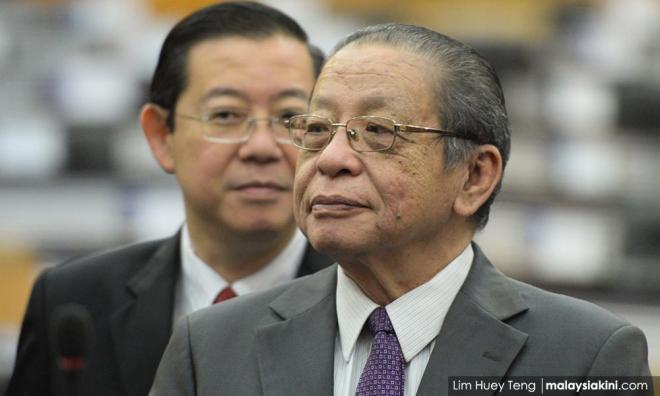
Just yesterday, veteran DAP leader Lim Kit Siang was prompted to issue a defensive statement on this issue in which he named the party’s Malay MPs and state assemblypersons through the years including Ahmad Nor, Ariff Sabri Abdul Aziz, Zairil Khir Johari (Penang state exco), Tengku Zulpuri Shah Raja Puji (former deputy minister for water, land and natural resources), Ariffin Omar, Syerleena Abdul Rashid, Abdul Aziz Bari (Perak opposition leader), Young Syefura Othman, Sheikh Umar Bagharib Ali (former Johor exco), Fadzlan Yahya, Mohd Salleh Nakhoda Itam, Daeng Ibrahim and Hassan Ahmad.


“The DAP had right from its formation in 1966 been committed to a multi-racial, multi-lingual, multi-religious and multi-cultural Malaysian objective and had never been against any race, religion or the monarchical system in Malaysia. We want every person in Malaysia, whether Malay, Chinese, Indian, Kadazan or Iban to have a Malaysian consciousness, identity and objective,” said Lim.

However, despite its rhetoric, only a handful of its national leadership is non-Chinese. What’s more damning are occasions like the Teluk Intan by-election in 2014 when voters overturned the 7,313-majority DAP obtained in the general election when the party fielded a Malay candidate, Dyana Sofya Mohd Daud, to replace a deceased Chinese MP.

A lower voter turnout was one factor, but so was the reality that at least some of DAP’s core support are voting along racial lines.

Wong says DAP’s leaders must be aware of this conundrum.

“To have more non-Chinese leaders, DAP needs to have more non-Chinese members as well but when Liew proposed in 2014 the goal of having 50 percent Malay members, it caused some unease as DAP’s Chinese grassroots feared losing their party to others.

Nonetheless, Wong believes that in the long run, given the demographic shift, a more diverse membership is inevitable for DAP.

“For that same reason, I think DAP would need to talk more about social democracy because that would allow it to reach out to working-class Malays than liberalism.

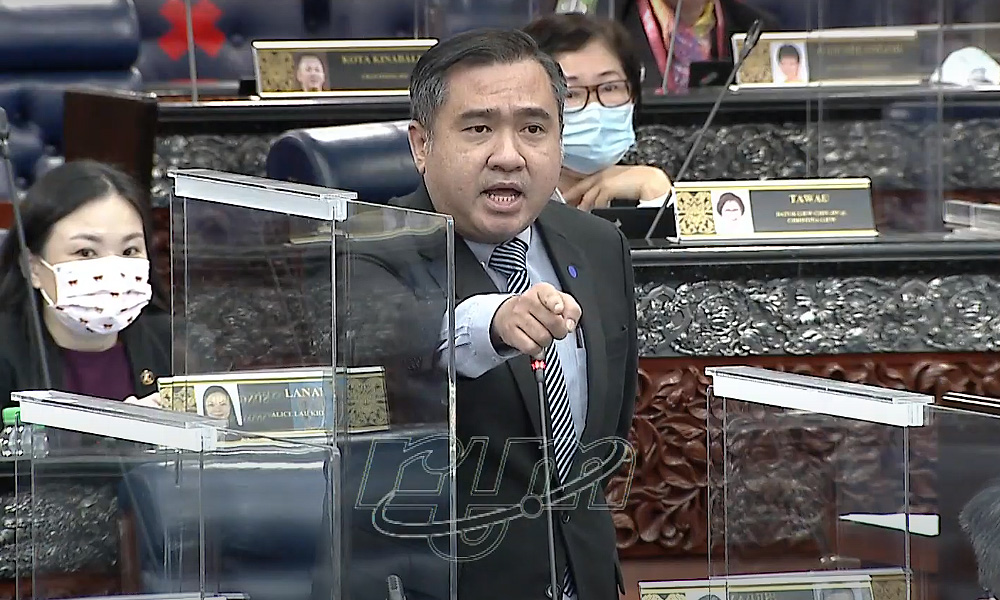
“Some DAP politicians like Anthony Loke and Chow Kon Yeow emphasise ideas like public transportation and gender inclusion in their administration even though they don’t talk much about social democracy.


Anthony Loke

He feels DAP’s bigger challenge is how to be an accommodative government partner without being seen as a traitor for its base.

“Its past success was much built on framing in black-and-white terms MCA’s performance as Umno's over-accommodative partner and the Chinese’s unfaithful representative. After 2018, DAP realises that it cannot implement changes it wants - recognition of the UEC (Unified Examination Certificate), for example - with just the consent of its Malay partners as written in the Pakatan Harapan manifesto.

“Instead, fundamental changes, especially those framed in identity terms, can only happen when some cross-communal consensus emerges. In other words, for UEC to be recognised, more than just DAP lobbying Bersatu, it requires the Chinese lobbying the Malays at the societal level.

“Such reality is hard to swallow for many Chinese supporters of DAP – not unlike many other Malaysians – who conventionally overestimate politicians’ ability and read politicians’ failure as a betrayal.

Wong believes that with the end of the “two-coalition politics” and fluid post-election coalitions becoming the norm, the DAP core is coming to terms with the idea that politics is not black and white, but they – rightly – reject “anything goes” opportunism.

“They still want some principled commitment to strategic manoeuvring. The CSA (Confidence and Supply Agreement) moved by DAP/Harapan in Perak and Johor is the right direction for the emergence of professionalised politics.

“To balance between principled-ness and flexibility, DAP is likely to be more professional about its manifesto and election promises – what they can realistically deliver, what they want in the best scenario and what they can compromise in government formation."

PAS’ Taliban threat a reality?

While DAP has consistently claimed that it is being demonised as an anti-Malay party, its own leaders have not been afraid to call former allies PAS out on its push for an Islamic state, often suggesting that an era of Taliban-inspired state repression will follow if PAS becomes stronger.

Does Wong believe it to be valid – the fear of Malaysian moderates and liberals that if PAS wins big in GE15, they will turn us into a repressive, backward and violent country?

“The biggest threat to religious freedom and multiculturalism is not opportunistic politicians who use religion to fish votes, but politicians, bureaucrats and judges who are ideologically committed to construct the supremacy of Islam, Muslims or both.

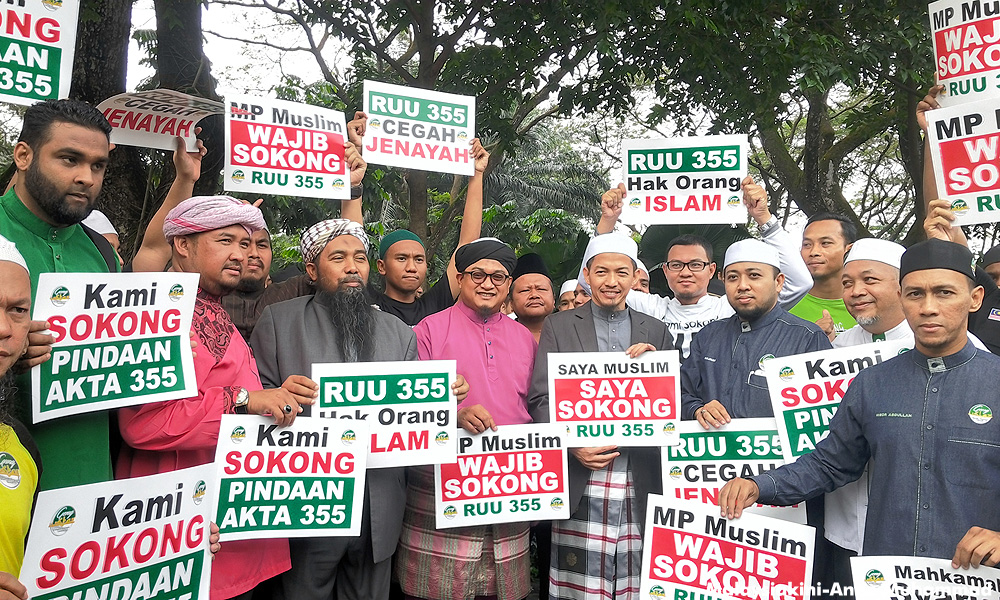
“Opportunistic politicians will adjust their positions and move in response to circumstances. This is best illustrated by Tuan Ibrahim Tuan Man's frank admission on PAS' change of stand on RUU355.

“In short, a party has less the need to be a drama queen when in government than in opposition,” he said.


He added that it was ironic that PAS was getting a taste of the same medicine that hurt DAP.

“Forced moderation when in government has hurt DAP's standing in its core Chinese constituency to the extent that it was derogatorily dubbed the “diam-diam party”.

“PAS is now experiencing this DAP-isation process. Its moral standing has also been eroded by its partisan defence of erring ministers and ulama. All these may hurt PAS in some marginal constituencies in GE15, especially if it still has to face both Umno and Harapan.

“This, however, is not cheerful news for supporters of religious freedom and multiculturalism,” he warned, saying that the Islamist party is likely to find other ways to fight its battles.

“First, PAS may simply signal its commitment to Muslim dominance by finding safe targets like alcohol sale and Hindu temples with dubious registration status.

“Second, other Malay politicians are jumping in to fill PAS' vacuum. Pejuang’s Jeram representative (Mohd Shaid Rosli) succeeded in forcing a grocery in Puncak Alam to shut down its non-halal section and its party leadership from Mahathir downward has responded with a deafening silence.

“And many activists of Amanah - the target of PAS' slamming for being moderate - are now repaying the favour on PAS' softening.

“Third, free from electoral consideration, unelected politicians and bureaucrats are also happy to be the champion,” said Wong, referring to Religious Affairs Minister Zulkifli Mohamad who expressed his hope for the controversial amendments that would allow harsher punishments for syariah criminal offences to be realised before his death. Recently, Jakim also causes a stir over restricting halal-certified bakeries on the use of "Merry Christmas".

Wong said that instead of slamming PAS and its base, the advocates of multiculturalism and religious freedom should try different methods to get their message across.

“Framing secularism based on Nusantara instead of European stylings - they can popularise discourses on Indonesia's Pancasila and Islam Nusantara. More discourses on diversity and human rights should also be carried out in Bahasa Malaysia and not primarily in English.

“They should also talk more about the plight of the Malay working-class who often feel that English-speaking liberals don't care about them and instead find PAS or some religious leaders more caring."

Wong admitted that for this to work, liberals need to think more like politicians. “In a democracy, you often have to care for others before others care about you,” he said.

Chin Huat chat #1: Dr M wanted presidential power until dying day

Chin Huat chat #2: Umno, PAS, Bersatu like three brothers after same girl


Umno, PAS, Bersatu like three brothers after same girl

Malaysiakini:


Chin Huat chat #2: Umno, PAS, Bersatu like three brothers after same girl

When Bersatu and PKR defectors pulled out of Pakatan Harapan and crossed the floor to join a coalition with Umno and PAS, it seemed like the dawn of a new dominant Malay-Muslim alliance that was in pole position for a lengthy rule.

However, in the months that followed, numerous fissures have formed between the would-be allies and Prime Minister Muhyiddin Yassin was even publicly held to ransom by senior Umno leaders.

Political scientist Wong Chin Huat says that far from being a marriage made in heaven, the tie-up has been fraught with competition for power.

“The year 2020 demonstrates a simple counter-intuitive fact in politics that many fail to understand - unity is difficult for people who share the same taste but more likely between those who have different tastes,” he told Malaysiakini in a series of chats about the current political scene.

“Umno, Bersatu, and PAS are like three brothers competing for the love of the same girl (conservative Malay voters).

“They tell the girl that her existential threats are another girl (liberal and non-Malay voters) and her lovers (Harapan, especially DAP).

“Now that three brothers have won their lover’s heart, they are fighting amongst each other to have more of her love. This explains why the PN-BN-GPS+ government is all about Malays but without unity. The trio can only unite if they divide their territories and respect the division, like how Umno, PBB, and, up to the 1990s, Usno used to do, in the old BN."


Umno, Bersatu and PAS leadership.

The roots of the problem would appear to lie in Bersatu’s position of false strength. It was part of Harapan which won a total of 121 (113 plus 8 from ally Warisan) parliamentary seats in the 2018 general election, but ex-premier Dr Mahathir Mohamad was its main drawing card, and even so, his party only won 13 seats.

Despite that, Bersatu has consistently managed to score a disproportionate number of high-powered positions in the federal government, first in Harapan and now in Perikatan Nasional (PN).

“Umno is the strongest in terms of parliamentary strength, popular support, and on-the-ground machinery of the three but has the least of federal power per MP – only 41 percent of Umno MPs are ministers and deputy ministers.

“In contrast, Bersatu which has little machinery and grassroots support, has built up its parliamentary strength from 13 to 31 by simply courting defectors from other parties: 15 from Umno and 10 from PKR.

“And it has generously rewarded itself beyond grabbing the prime minister’s position as 77 percent of Bersatu MPs are frontbenchers.

“PAS has the smallest number of MPs but commands the strongest loyalty amongst its leaders and members and it has a higher rate, 44 percent of frontbenchers amongst MPs,” said Wong.


According to him, whatever the politicians say, the game is very clear.

“Umno wants to claim back the PM’s job, reabsorb Bersatu as it did Semangat 46 in 1996 and contain PAS.

“Bersatu wants to hang on to the PM’s job and draw PAS into its orbit to check Umno, much like how Bersatu tried to draw Amanah away from PKR during Harapan’s time.

“PAS, as the smallest of the three, backs Bersatu to block Umno from restoring its hegemony,” said Wong.

Election may see internal sabotage

While there was initially a push for PN to hold federal elections soon after the Sabah state polls, the spike of Covid-19 cases put paid to such plans. Since then, however, there is the suggestion that Muhyiddin may look to ride out the rest of his term – no elections need be called until 2023 – rather than risk his party getting slaughtered at the polls.

“Muhyiddin will not become PM if Bersatu wins significantly fewer seats than Umno.

“Even if Muhyiddin manages to get (Umno president Ahmad) Zahid Hamidi to agree on a 1-to-1 agreement, warlords in Umno may not play ball.

“After all, what political authority does an Umno president who concedes the PM’s job to its arch-rival for the second time have over the party’s hungry and angry grassroots?” asked Wong.


Wong Chin Huat

Given the antipathy expressed to Bersatu’s Azmin Ali by Umno and PAS divisions in Azmin’s current seat of Gombak, there is every chance that Bersatu candidates who rode on PKR and DAP support in the last general election will find themselves undermined by Umno and PAS in the next federal polls.

“You can expect sabotage by Umno on the Bersatu candidates,” said Wong bluntly.

“PAS would not be of much help to Bersatu if it gets Umno’s undertaking to support PAS in its own constituencies in exchange for PAS’ neutrality.

Wong said the cracks were nearly exposed in the hostile takeover of the Perak state government from Bersatu by Umno when menteri besar Ahmad Faizal Azumu was toppled in a confidence vote.

“Only one thing stands in Umno’s way to take on Bersatu: the 'Malay Unity' narrative, which has successfully prevented Perak Umno from forming a coalition or a minority government with a Confidence and Supply Agreement (CSA) with Harapan.

“Still, the moves by Umno-led state governments in Perak, Johor, and Perlis are early signs of the rapprochement with Harapan and repositioning as a centrist party like what Umno was largely, up to 2013.

You can expect more fights amongst the three brothers in 2021, said Wong.


Malaysia's future - DAP minus Lims plus UMNO minus kleptomaniacs

Malaysiakini:


DAP's future path is clear

by Terence Netto

COMMENT | If democratic politics is a pattern of creative responses to society's inertia and a small margin for change, then the path beckoning the DAP to initiate a break in the current stalemate in national politics is clear.

The present deadlock in national politics is compounded of Malay unease, as Tengku Razaleigh Hamzah has put it, at Umno's not holding the reins of central power and general non-Malay discontent with the political status quo.

The upshot: A political logjam which somebody has got to break to allow economic rejuvenation and healthy political development to proceed in the country amidst a pandemic of worldwide proportions.

The DAP ought to initiate the break by doing something creative that will demonstrate quite convincingly its inventiveness in dealing with a deadweight in Malaysian politics.

This is the not quite rational Malay perception of the DAP as being anti-Malay, anti-Islam and anti-royal.

The DAP's Lim Guan Eng and Lim Kit Siang stir these anathemas in the Malay mind to the quick.

It would greatly help to break the logjam in Malaysian politics if the two stalwarts declined election to the party's central executive committee at its triennial elections that was deferred from its due date last month to later this year because of the pandemic.


One might argue over why these two party strongmen should step aside to placate somewhat irrational Malay fears when Guan Eng has gone to jail in defence of the honour of a Malay girl at the hands of a predator; and when nobody can cite a single instance of Kit Siang publicly uttering views that could be considered as evidence of racial or religious bigotry and as being anti-monarchy.

When is placation of the irrational myopic appeasement and when is it something beneficently constructive, done to get matters moving to the next level?

To paraphrase Shakespeare, there is a jam in the affairs of the Malaysian polity which when creatively broken at its present acutest moment will lead on to fortune.


If bypassed, in another bow to the bard, all of Guan Eng's and his father's lives will be bound in shallows.

A rapprochement between the DAP, sans its two stalwarts, and an Umno, shorn of its kleptocrats, will pave the way to a national concord that will be a new beginning in Malaysian politics.

That politics is now in a deep rut. Things cry out for the Gordian cut to be severed.

Of course, a DAP collaboration with Umno will have to involve the party's partners, PKR and Amanah.

It appears the latter two parties are not much of a problem for Umno in terms of its working with them.

For Umno, however, working with DAP is a problem if the Lims are an integral part of the DAP team.

This is not so much a fault of the DAP than it is a reflection of Umno being trapped by its own anti-DAP propaganda.

Again, why should DAP make the sacrifice of its stalwarts when it is not its fault that Umno is hamstrung by its own propaganda?

Well, politics is about dealing creatively with legacies of the past and expectations for the future.

Certainly, DAP's sacrifice won't entail dropping its demand that Umno gets rid of its kleptocrats. That would be suicidal.

Umno cannot seem to get rid of its kleptocrats, largely due to years of its practice of a policy that an officeholder has first to be found guilty of misconduct in court before being shown the door.

It is presently reaping a huge deficit from disdaining the more sensible policy of asking the indicted to take a leave of absence before returning to office when exonerated by the courts.


Meanwhile, the country writhes under the directionless leadership of Perikatan Nasional, with the Malays wanting Umno returned to the central levers of political power, and Umno declining to oblige by readying for the return by ridding itself of the obviously corrupt.

This combined with the long-frustrated non-Malay desire for a less unmeritocratic and less inegalitarian system of management of the national estate, the country is faced with a logjam.

There is only one party that is gaining from this deadlock: PAS is steadily burrowing its way to the attainment of its fundamentalist Islamic agenda.

This is something, it is safe to say, no other party is comfortable with.

To avert this outcome, and in what is a creative way to break that national deadlock, the historical moment beckons the DAP to set aside its two stalwarts and work, in tandem with its Pakatan Harapan allies, with Umno.

This is an Umno in which its sensible deputy president Mohamad Hassan and progressives like the Johor Menteri Besar Hasni Mohamad have the edge over their inferiors.

The DAP should creatively shore up that edge.


TERENCE NETTO has been a journalist for more than four decades


STFU, Amanah Youth to Old Man

FMT:

Amanah Youth pleads with Dr M to stop attacks on Anwar


Amanah Youth has appealed to Dr Mahathir Mohamad to cease his attacks on Anwar Ibrahim and to discuss the opposition’s new direction with Pakatan Harapan.

PETALING JAYA: Amanah Youth tonight pleaded with Dr Mahathir Mohamad to cease his attacks on opposition leader Anwar Ibrahim, adding that the two leaders were vital in realising the “grand coalition”.

The wing’s chief, Shazni Munir Mohd Ithnin, said for the “grand coalition” to materialise, the opposition must push for a truce between the former prime minister and the PKR president for them to come together.

“Hence, we are appealing to Tun Dr Mahathir to cease his attacks on Datuk Seri Anwar Ibrahim and to discuss the opposition’s new direction with Pakatan Harapan.”

Shazni said Mahathir’s attacks on Anwar only complicated matters.

Mahathir had slammed Anwar yesterday, calling him untrustworthy over unfulfilled promises, particularly his claim of having a strong and formidable majority to topple the Perikatan Nasional government.

The Langkawi MP said this when asked to respond to Anwar’s statement that PH could collaborate with any party, even with Mahathir, to form a “great, grand coalition” as long as they were aligned with the group’s principles.

PKR Youth has since urged PH to “move on” from any plan to work with Mahathir following his latest salvo against Anwar.

The wing’s chief, Akmal Nasir, said PH must realise that Mahathir was merely riding on the “grand coalition” idea to divide and conquer, a strategy which he said Mahathir had employed many times in the past.


Friday, January 01, 2021

Enough of Old Man's Kok-Tok - Let's Move On

MM Online:

Time for Pakatan to move on without Dr Mahathir, PKR Youth chief says after remark on Anwar


Johor Baru MP Akmal Nasrullah Mohd Nasir speaks during a press conference in Parliament August 12, 2020. — Picture by Shafwan Zaidon

KUALA LUMPUR, Jan 1 — PKR Youth Chief Akmal Nasrullah Mohd Nasir has suggested for Pakatan Harapan (PH) to “move on” from trying to cooperate with Tun Dr Mahathir Mohamad following the latter’s remarks against the former’s party president Datuk Seri Anwar Ibrahim.

Akmal, who is also Johor Baru MP, said it is very unfortunate that the event attended by Dr Mahathir, that should have been used to explain the direction of his still-unregistered Parti Pejuang Tanah Air, was used as a platform to attack Anwar.

“The attitude of Dr Mahathir seems to only want to deny the authority of Anwar as Opposition Leader and PH chairman,” he said in a statement.

“Although recently Anwar once again reiterated his openness to work with any party that can abide by the conditions and principles of PH’s struggle as well as abandon any outdated attitude and nonsense.”

Akmal also suggested that Dr Mahathir’s comment was merely a strategy that the former prime minister has often used to divide the Opposition in order to assert his own authority.

“It is completely absurd that this outdated strategy is able to deceive and divide the unity and agreement of PKR and PH,” he said.

Yesterday, Dr Mahathir alleged today that Anwar has outright refused to work with him in any capacity, despite PH stating that it is willing to cooperate with any parties to oppose Perikatan Nasional.

He said Anwar had also not agreed to let him or Datuk Seri Shafie Apdal to become interim prime minister candidate for “six months” before giving up the power to the PH chief.

In an interview with China Press also published yesterday, Dr Mahathir also claimed that PH will not be able to garner Malay support in the next general election if the coalition refuses to cooperate with him.

Earlier this week, Anwar had stated that it is up to a consensus within Pakatan Harapan whether to work with Dr Mahathir again but stressed any cooperation must be reform driven.

He wanted to rule like a president who has a free hand in cabinet appointments

Malaysiakini:


Chin Huat chat #1: Dr M wanted presidential power until dying day

2020 was inarguably the most tumultuous year Malaysia has endured since the 1960s, a decade that included the confrontation with Indonesia, Singapore's departure, the Communist insurgency, and bloody racial riots.

In a series of chats, political scientist Wong Chin Huat talks through this year in politics to help understand how a year that began with such promise has ended in confusion and uncertainty.

One of the basic elements of planning for the future is understanding and learning from the mistakes of the past. When historians in the years to come look back at 2020, they might see the supposedly reformist Pakatan Harapan government led by Dr Mahathir Mohamad toppled and replaced by the unelected Perikatan Nasional administration of Muhyiddin Yassin.

It might seem to them that Mahathir was a victim whereas to contemporary observers there can be no doubt that the ex-premier had a role to play in the downfall of his government.

His intended ‘self-coup’ was to end the Harapan administration, in which his hands were tied by a promised handover to PKR president Anwar Ibrahim, and replace it with a unity government that would allow him to serve out a full term.

So why is it then that some members of the public are still confused about Mahathir and his deservedly tarnished reputation? Did he or did he not behave unethically and play a leading role in the downfall of his own government?

“Revelations by Bersatu politicians like Azmin Ali and Wan Saiful Wan Jan corroborated by Mahathir's repeated dismissing of Anwar as future PM and even his DPM suggests the picture,” said Wong.

“Mahathir consented to, if not prompted, the early moves of the Sheraton Move, but his version looked more like a turbo version of his earlier operation of collecting Umno defectors into Bersatu. The main difference was that these defectors could join his government as independents if they didn't want to join Bersatu.

“What’s clear was that the end game was a 'partyless unity government', if possible, in which he would prevail as the only acceptable PM candidate and appoint ministers who would then be personally answerable to him rather than their parties.

“In short, he could rule like a president who has a free hand in cabinet appointments,” Wong said.


He thinks that Mahathir simply does not believe anyone else is capable of taking over and tries to project the idea that his leadership is indispensable.

“Perhaps more than blocking Anwar, Mahathir's core motivation is to serve as PM until his last day, because he genuinely believes Malaysia needs his stewardship.

“It's not 'I don't mind being PM again' but 'I mind not being PM again’. I doubt Mahathir can ever see anyone as both smart and agreeable enough for him to trust and pass on the baton.”

Mahathir’s legacy is destined to be a chequered one. He presided over the boom years of the 1980s and 1990s, yet was not above suppressing press freedom and judicial independence while jailing political opponents.

When he returned as prime minister in 2018, it was meant to serve as a curtain-raiser for a new era of openness, democracy, and prosperity, but instead, his disinclination to keep to the terms of his handover agreement triggered a political crisis that is still playing itself out.

“Mahathir is Malaysians' collective karma. Because of our deep division, his prime ministerial candidature was a necessity for Harapan to succeed in 2018,” said Wong.

“He then exploited many Malaysians' craving for strong leadership and unity to keep Harapan in perpetual crisis (to be fair, he didn't singlehandedly create it) so he can be indispensable.

“Had he got his way fully after Feb 24, he would have never stepped down or appointed an heir apparent. This would have spared us the seat-buying madness under Muhyiddin, but it might also merely postpone the succession crisis.

“So because Mahathir has a retirement problem, Malaysia has a leadership succession problem,” he added.

Wong said it was poetic justice that Mahathir's ambition to be Malaysia’s “permanent prime minister” was terminated in the year 2020, which once symbolised his vision.

“His Parti Pejuang Tanah Air party is likely more short-lived than Tengku Razaleigh (Hamzah)’s Parti Melayu Semangat ’46 party.

"May no one come to lead the opposition or the government as Mahathir’s proxy,” he added as a wish.

Harapan running out of time

Given that Anwar spent a decade in jail, tried to bring a more multi-racial tone to politics, and has been cheated out of the premiership, he could legitimately expect some sympathy. However, his stock has clearly fallen recently, especially after declaring that he has a comfortable parliamentary majority and falling short.


Not only does he seem to have been fooled by a U-turning Umno twice, but he appeared willing to work with disgraced ex-premier Najib Abdul Razak. Furthermore, his own inability to manage personalities within PKR is another cause of his undoing. Is he reaching the end of the road?

“Anwar is too smart for me to believe the storyline that he was conned by Umno,” said Wong.

“He did his dramas because that's the only way to entice Umno rebels to defect. He is like the frog prince who needs to be kissed by princesses to turn into a prince. The princesses he courts, however, all want him to turn into a prince first before they kiss him. That's Anwar's dilemma.”

He added that Anwar's own courting of Umno rebels also had the effect of making the machinations against him seem less condemnable.

Wong suggested that the PKR president needs to rebuild Harapan and a possible grand coalition by forming a shadow cabinet first.

“Anwar stands a better chance of positioning himself as a PM-in-waiting, even just to court Umno rebels, by presiding over a shadow cabinet's weekly meetings than repeating his number claim like a miserable uncle queuing in a Magnum (lottery ticket) shop murmuring that his number will strike the next day.”

Wong said Harapan urgently needs to be reorganised as an effective policy machine.

“It should aim to advance the well-being of the Malays with well-thought policies that are effective, sustainable, and inclusive for all Malaysians.

“Not overcoming the Malays' distrust means Harapan will suffer defeat in many constituencies with a Malay majority/plurality, and a return to power will need a partnership with one or more Malay parties.

“Meanwhile, not having better and coherent policies will put off many in its urban-based core constituency. A low turnout can kill Harapan in many mixed constituencies, the number of which will increase after June 2021 with the influx of new and young voters,” said Wong.

He said Haparan had to find a way to overcome both challenges holistically, not pursuing one at the expense of another.

“Harapan should have proposed a shadow budget this year, which would then legitimise its votes against the budget. It should also start reformulating its manifesto as it can't just recycle Buku Harapan or go into the election without a coherent programme.”

He said that this could be easily delegated to shadow ministers if Harapan had the shadow cabinet.

“But Anwar is simply disinterested, and some Harapan parliamentarians are finding excuses to justify not having one.

“The shadow cabinet doesn't interest Anwar probably because he wants a free hand in offering any ministerial post to Umno rebels and he cares little about having alternative policies after becoming PM.

But his obsession with wanting the PM post beyond everything else may have made his dream even more unachievable.

Realignment is underway

Finally, Wong has this to say to Reformasi-era oppositionists who suddenly turned against Anwar to the benefit of long-time foe Mahathir, blighting their own reputations in the process.


“Notwithstanding the differences made by personalities, what we get from Anwar, Azmin, and even Mahathir is the product of our socio-political realities and political structures.

“Those who oppose Anwar should always remember the structural flaws - from top-down candidate selection to the absence of a shadow cabinet - that enable or reinforce Anwar's personalised leadership.

“If they campaign for structural reforms while opposing Anwar, then they can claim to be principled. However, if they oppose Anwar in a personalised and moralistic way, as how the opposition often does in framing their political enemies, then they get trapped like when Azmin toppled the first non-BN government for his own survival.”

Regardless, Wong did say that politicians of principle should step up and distinguish themselves from the crowd.

“The realignment in Malaysian politics and Harapan is underway. Some of the parties we see today may not be around five years down the road.

“What we should ask for in such realignment is that strong and meaningfully differentiated parties - in terms of policy and ideology, not of personality and patronage networks - will emerge at the end, so that people have real choices and can benefit from competition between parties.

More important than the number of parties and MPs in coalition-building is policy coherence, he added.

“Coalition parties don't have to have the same policies, but they must discuss to produce their common policies so that people know what to expect if they return to government again.

“It's pathetic when our politicians are interested in only ministerial posts but not policies, and when the shadow PM fears having shadow ministers by his side,” said Wong.


Old Man's kok-tok about his Malay appeal confirmed by way of Slim by-election defeat

Malaysiakini:


Where was Dr M's Malay appeal during Slim by-election defeat? - PKR Youth leader

If former prime minister Dr Mahathir Mohamad's claim that he can attract Malay voters for the opposition still held true, then why didn't the Malay-majority constituents of Slim flock to his chosen candidate during last year's Slim by-election?

This was a question posed by PKR Youth vice-chief Syed Badli Shah Syed Osman, who insisted that Pakatan Harapan should move on instead of including Mahathir and his allies in a "grand coalition" the opposition.

"His value to influence the Malay vote during the Slim by-election signalled that the people had rejected him. The seat comprised 75 percent Malays," Syed Badli Shah said in a statement.

Mahathir's yet-to-be registered Parti Pejuang Tanah Air fielded Amir Khusyairi Mohd Tanusi as an independent candidate during the Slim by-election on Aug 29 last year against BN's Mohd Zaidi Aziz.

Amir, who was endorsed by Mahathir, garnered 13.69 percent of the votes against Mohd Zaidi's 84.53 percent of the votes. Another independent candidate, Santharasekaran Subramanaim, only received 1.78 percent of the votes.

In contrast, Harapan, represented by Bersatu, picked up 33.08 percent of the votes in Slim during the 2018 general election.

However, BN still came out on top with 44.83 percent of the votes while PAS got 22.09 percent of the votes.

Mahathir, who founded Bersatu but was later expelled, had claimed that Harapan would lose Malay support if it sidelined him and his allies.

Amanah has been pushing for a grand coalition in the opposition that includes Mahathir's Pejuang and DAP secretary-general Lim Guan Eng was quoted by The Star yesterday as saying that they plan to discuss the matter this month.

However, their coalition partner PKR has been less keen.

Syed Bali Shah likened Mahathir to "old baggage" that couldn't be managed.

He also noted that Mahathir had continued to make critical remarks against PKR president Anwar Ibrahim.

"His latest statement showed that he is no longer relevant in the current mainstream politics and Harapan should move forward without being disturbed by Mahathir," Syed Badli Shah said.

He added that opposition MPs who insist on staying on with Mahathir should be sidelined as he is a "bad influence" that could hurt Harapan's agenda.


The Utter Abysmal Failure of the Malaysian IGP

MM Online:

Indira Gandhi’s 2021 journey to reunite with stolen daughter


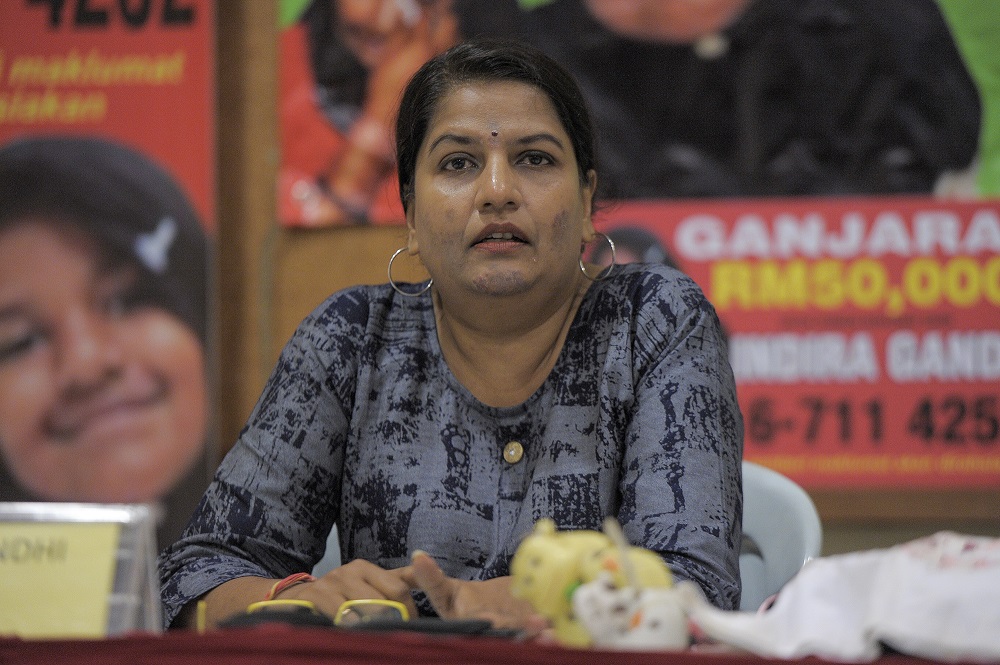
M. Indira Gandhi speaks at a press conference in Kuala Lumpur October 9, 2020. — Picture by Shafwan Zaidon

KUALA LUMPUR, Jan 1 ― M. Indira Gandhi’s resolution for 2021 remains the same as the one she made 11 years ago when she was forcefully separated from her youngest child Prasana Diksa.

To see and hold her little girl once more.

“It's getting very frustrating because we are waiting for an end to this and that a solution will come, but nothing is happening.

“I waited for more than 11 years. Prasana is already 12, but still, I can't even see her. I am not even allowed to see her. I feel very let down by the government,” she told Malay Mail when contacted.

The wheels of justice have been grinding exceedingly slow for this mother of three from Ipoh, Perak.

Indira saw justice as on her side when the Federal Court ordered the police in 2018 to find and return Prasana, stolen away by her ex-husband just before he converted to Islam in 2009.

The High Court had first issued an arrest warrant for the Muslim convert who now goes by Muhammad Riduan Abdullah in 2014.

But until last September, Inspector-General of Police Tan Sri Abdul Hamid Bador said the process to return Prasana and Muhammad Riduan was complicated and time consuming as both were no longer in Malaysia.

Abdul Hamid said police knew where the father and daughter were, but did not disclose the country, only saying negotiations for their extradition through a third-party were ongoing.

In August, Home Minister Datuk Seri Hamzah Zainuddin claimed Muhammad Ridhuan was believed to be living abroad and regularly relocating to avoid detection.

That same month, Abdul Hamid also said that the police were looking for an amicable solution where both Indira and Muhammad Riduan will get the benefit of “some form of joint custody”.

This despite a High Court ruling in 2010 granting full custody of all three children from their marriage to Indira.

Unable to bear the misery of a longer wait, India filed a RM100 million lawsuit against the IGP and the police in November 2020, over their continued failure to execute the court order to reunite the mother and daughter.

Her voice cracking with emotion, Indira pointed out that the courts had sided with her and questioned why the IGP sought to negotiate with her fugitive ex-husband for joint custody of Prasana.

“I truly do not get all these statements by the authorities one bit. I am not asking for anything unjust, but what is rightfully mine. Why must so much consideration be given to a party who wronged me?

“This matter should also not be politicised by other parties. She is my daughter and I want her back. Why must this be spiralled into what it is today? When will I see Prasana ever? I am her mother. Her birth mother. I should not be begging this way,” Indira said.

Now 45, Indira has gained a number of accolades and recognition in her search for her daughter last seen at 11 months old.

The US Embassy here lauded Indira as one of its international women of courage in recognition of her legal challenge against the unilateral conversion of her three children, and her efforts to reunite with Prasana.

Muhammad Riduan, formerly known as K. Pathmanathan, embraced Islam in 2009 and converted all three of his children with Indira on April 2 the same year without her knowledge. They had been raised as Hindus.

After a protracted court battle that spanned years, the Federal Court ruled in January 2018 that the unilateral conversions of Indira’s children were unlawful.

Their two older children, Tevi Darsiny, now 22, and Karan Dinish, now 21, have stayed with Indira.

Keeping hope lit

Despite the setbacks, Indira has not given up hope of meeting her lost daughter.

She had initially planned to go on a hunger strike to compel a meeting with the IGP. It was later cancelled after he agreed to meet not just Indira but her supporters who have formed a solidarity group called the Indira Gandhi Action Team, or Ingat for short, last September.

Indira also planned to carry out a justice walk from Sungai Petani, Kedah to the Prime Minister's Office in Putrajaya, which has been put on hold due to the pandemic.

She told Malay Mail that her justice walk would resume in 2021 at a date to be announced later, though she hopes to do it by the end of January if the Covid-19 situation in the country improves by then.

“We will announce the date because it's the pandemic now, and the numbers are increasing. We don't want to take risks. Other than that, we have the plan set up.

“We want to do the justice walk at the end of January but we are still going to wait and see how the pandemic situation is by then,” she said.