Sunday, November 01, 2026

Israelis may have voted for their own demise


Murray Hunter


Israelis may have voted for their own demise


8 hours ago



Benjamin Netanyahu is positioned to remain Israel’s caretaker prime minister after the inconclusive October 2026 election. His right-wing bloc sits at roughly 53 seats in the 120-seat Knesset, ahead of Gadi Eisenkot’s opposition at about 48, with Arab parties holding a strong 19. No clear majority exists without major compromises. This outcome keeps Netanyahu in control of security and foreign policy levers while coalition talks drag on, potentially for weeks or months.

Netanyahu’s playbook prioritizes survival. He can prolong caretaker status, explore a broader unity government by dangling shared security priorities, especially further action against Iran, coordinated with the United States under President Trump. Domestically, he is challenging the legitimacy of the Arab vote to block any alternative reliance on those parties, and, if necessary, force another election in early 2027 while remaining in office.

Several assessments point to the possibility of escalating or highlighting the Iran threat during this period. A major security development could rally public support around continuity of leadership and justify delaying political change.

That path carries profound risks for Israel. Recent reports describe heightened U.S. and Israeli military preparations for possible renewed strikes on Iran after the American midterms on November 3. Early signs including diplomatic warnings to Gulf states, repositioning of U.S. personnel, replenished munitions, additional Patriot systems, naval build-ups including another carrier strike group, increased joint exercises, and updated Israeli target lists are coming into place to signify further action.

Netanyahu has publicly stressed the need to further degrade Iranian capabilities and has framed regime change or decisive pressure as essential. He has long advocated aggressive options to Trump, sharing intelligence and pushing maximalist goals, though final decisions rest with Washington, which has delayed action for its own political and economic reasons.

Iran has responded with “zero red lines” rhetoric. Officials promise a longer, wider, less constrained retaliation with large-scale missile and drone salvos against Israeli targets, multi-front pressure via remaining proxies, and strikes on Gulf energy infrastructure, undersea cables, desalination plants, and other critical assets.

In contrast, Israel’s multi-layered defenses including the Iron Dome, David’s Sling, Arrow, are now reinforced by U.S. Patriot and THAAD contributions. However, this time around, there are many question pundits have about its potential effectiveness to an all-out Iranian onslaught. Saturation attacks can produce leaks. Israel’s compact size and population density mean even partial successes would cause casualties, infrastructure damage, economic strain, and psychological pressure. Multi-front activity would stretch resources further. A truly maximal Iranian response would not destroy Israel overnight, especially with American support, but it would sharply raise costs in lives, stability, and regional spillover.

Netanyahu stands to benefit politically from the resulting chaos. This reinforces his case for experienced, continuity-focused leadership and can freeze political transitions under the banner of national emergency. Israeli voters who enabled his continued hold on power may therefore have locked Israel into a more confrontational trajectory.

An alternative government led by figures such as Eisenkot might have pursued different calibrations with greater emphasis on diplomacy alongside deterrence, different timing, or less maximalist endgames, potentially reducing the risk of a broader conflagration while defenses still held firm.

Outcomes remain uncertain. Diplomacy continues in parallel, Trump controls the ultimate U.S. timeline, and military moves can serve deterrence as much as preparation for war.

The greatest fear is that if the US or Israel used any tactical nuclear weapons, then Israel may cease to exist after Iranian retaliation.

Yet the hypothesis stands: by keeping Netanyahu in position amid active Iran planning, Israeli voters may have chosen a path that heightens the very existential dangers their defenses are meant to contain. If Iron Dome and allied systems are tested to their limits and falter under sustained pressure, the political survival of one leader could exact a heavy price on the country itself.

North Korea’s New Heavy Stealth Drone Poised to Transform its Air Combat Capabilities


North Korea’s New Heavy Stealth Drone Poised to Transform its Air Combat Capabilities

Military Watch Magazine Editorial Staff


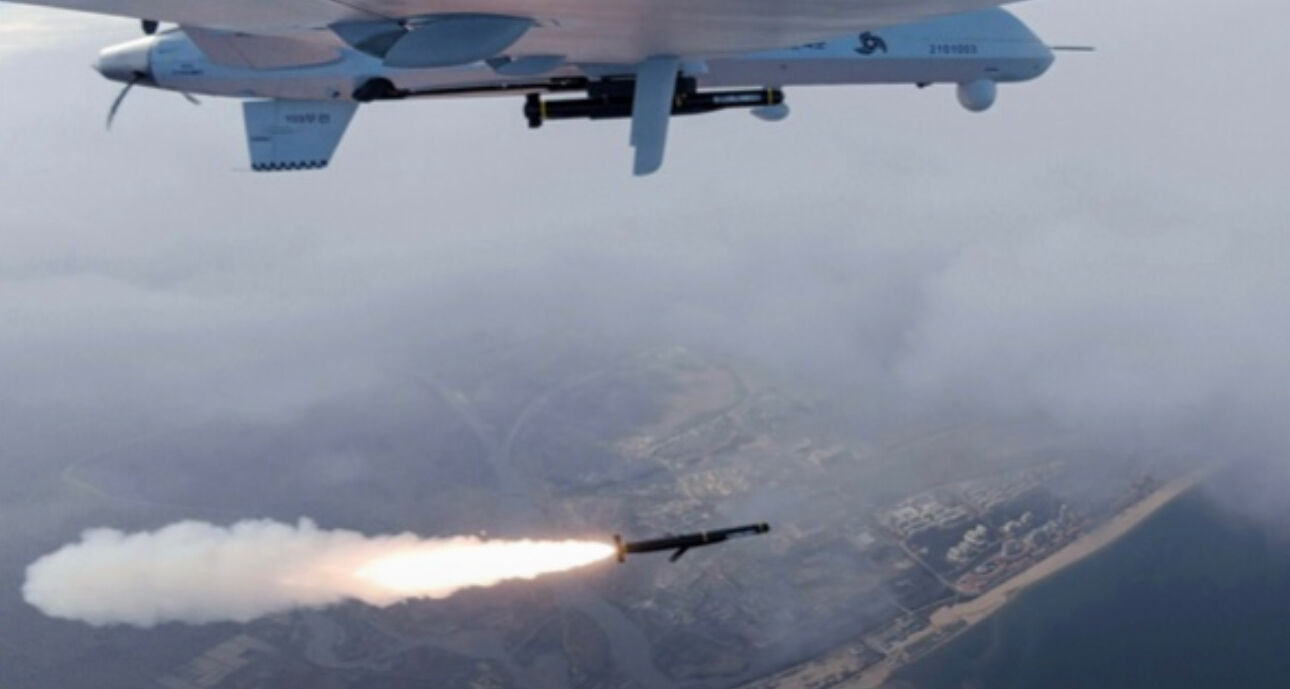
North Korea has unveiled a previously unseen stealth unmanned combat aircraft at its Unmanned Aerial Technology Development-2026 exhibition, alongside the much lighter Saetbyol-9, which resembles the U.S. MQ-9 Reaper, and the Morning Saetbyol-4, which is a much larger and longer range surveillance platform. The appearance of the new flying-wing design suggests that Pyongyang is pursuing a broader range of unmanned platforms. The chairman of the ruling Korean Workers’ Party Kim Jong Un attended the exhibition and inspected a large number of first-person-view (FPV) drones, which have become prominent in the Russia-Ukraine conflict and Israeli-Hezbollah hostilities because of their relatively low cost and ability to strike personnel, vehicles and fortified positions. North Korea has had opportunities to study the extensive use of unmanned systems in the Ukrainian theatre through its military cooperation with Russia. 

Saetbyol-9 Drone Launches Cruise Missile


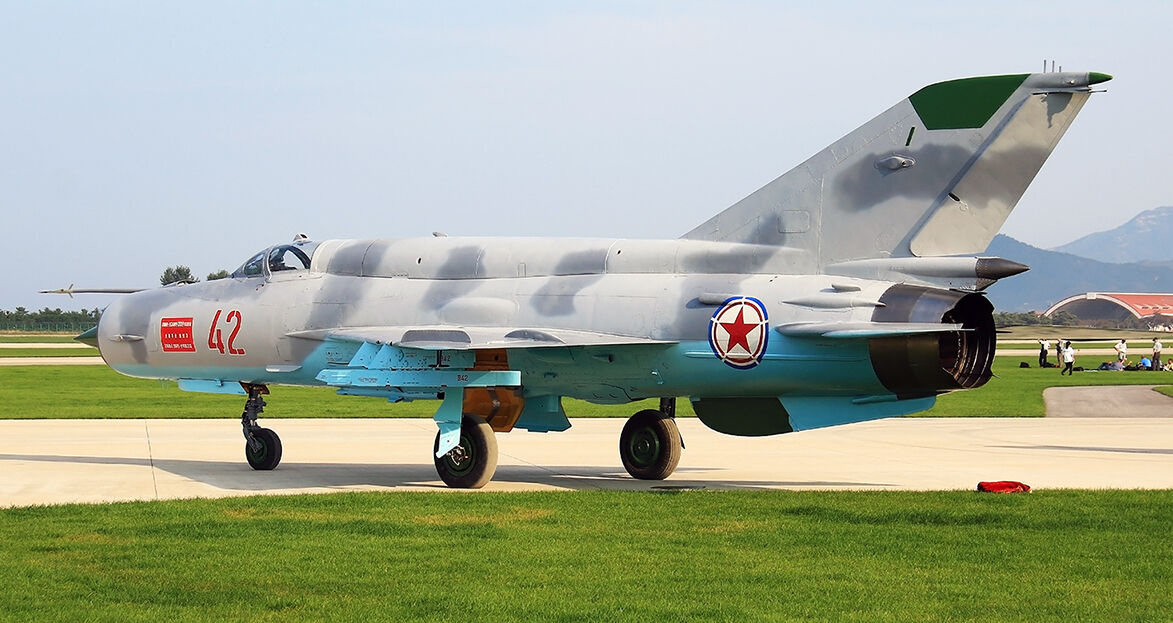
The fielding of advanced stealth drones has the potential to have a transformative impact on North Korean aerial warfare capabilities, as the large majority of the country’s combat fleet is left increasingly obsolete. Such aircraft have significantly lower sustainment costs than even relatively lightweight manned fighters due to the much lower costs of personnel training. Unmanned stealth drones have proven highly survivable on penetration missions into heavily defended airspace in the Middle East, with the North Korean aircraft expected to integrate a wide range of guided bombs and cruise missiles. It is likely that advances in artificial intelligence, sensor and targeting capabilities will eventually allow these aircraft to engage in air-to-air operations as well. 

North Korean MiG-21 Fighter - New Unmanned Aircraft Are Expected to Replace Much of the Older Fighter Fleet in Service

North Korean state media reported that the exhibition included demonstrations involving single use attack drones and multipurpose unmanned aircraft, alongside other weapons systems. Chairman Kim called for North Korea to achieve “absolute superiority” in drone technology, describing unmanned aviation as essential to adapting the armed forces to the changing character of modern warfare. The event also featured a public demonstration of the country’s 600mm rocket artillery system, namely the KN-25 which is the longest ranged system of its kind in the world, indicating that the exhibition was intended to showcase broader conventional weapons development alongside unmanned systems. It is possible that the KN-25 used guidance from surveillance drones, which would have tied its appearance with the broader theme of the exhibition. 

Why Zelensky is Not Thrilled as U.S. Approves $2.1B Sale of 500 Patriot PAC-3 MSE Missiles to Ukraine?


Why Zelensky is Not Thrilled as U.S. Approves $2.1B Sale of 500 Patriot PAC-3 MSE Missiles to Ukraine?


By EurAsian Times Desk
-October 30, 2026


The U.S. has approved the sale of 500 Patriot interceptor missiles to Ukraine, the State Department said, but Ukrainian President Volodymyr Zelensky doesn’t appear to be too thrilled.


“The U.S. Department of State has made a determination approving a possible Foreign Military Sale to the Government of Ukraine for the purchase of PATRIOT Advanced Capability-3 (PAC-3) Missile Segment Enhancement (MSE) missiles. and related equipment. The estimated total cost is $2.1 billion, funded entirely by partners and allies.”


The release said Kyiv had requested to buy 500 PATRIOT Advanced Capability-3 (PAC-3) Missile Segment Enhancement (MSE) missiles. It added that Ukraine will pay for this purchase with donations from Canada, Germany, and Norway via the JUMPSTART program and national funds, financed by the European Union’s Ukraine Support Loan.

The proposed sale will improve Ukraine’s capability to meet current and future threats by improving its integrated air and missile defense capabilities. This proposed sale will sustain existing PATRIOT system operations against ongoing aerial threats. Ukraine will have no difficulty absorbing these articles and services into its armed forces.

“The proposed sale will improve Ukraine’s capability to meet current and future threats by improving its integrated air and missile defense capabilities,” the department said in a statement.


What is the JUMPSTART Program

The Joint Ukraine Multinational Program – Services, Training and Articles Rapid Timeline (JUMPSTART) is a specialized U.S. Defense Security Cooperation Agency (DSCA) framework created to speed the delivery of American-made defense articles, services, and training to Ukraine.

It does so by letting NATO allies and other partners donate money that funds Ukraine’s Foreign Military Sales (FMS) purchases—without drawing on U.S. government appropriations.


Established after Russia’s invasion of Ukraine, JUMPSTART operates under the Arms Export Control Act.

A donor country first signs a Funding Arrangement with the U.S. Department of War. Those funds are then applied to specific Letters of Offer and Acceptance (LOAs) for equipment Ukraine has requested.


The U.S. government manages the procurement and transfer process, while the donor never takes title to the items. All standard FMS rules, congressional notifications, and reporting requirements still apply.

Earlier uses of the mechanism have included support for F-16 sustainment and other munitions.

By formalizing a rapid, donor-funded pathway through the U.S. FMS system, JUMPSTART allows allies to convert political pledges of support into concrete American weapons while the United States retains control over export licensing and end-use conditions.


PAC-3 MSE is the most advanced interceptor in the Patriot defense family.

Manufactured by Lockheed Martin, it is a high-velocity, hit-to-kill missile designed to destroy tactical ballistic missiles, cruise missiles, and certain aircraft by direct body-to-body impact rather than a conventional blast-fragmentation warhead.


Ukrainian Patriot batteries have used PAC-3 MSE interceptors against Russian ballistic and quasi-ballistic threats, including Iskander-M and Kh-47M2 Kinzhal missiles.


Ukrainian officials and Western reporting have highlighted successful intercepts of these high-speed targets, making the PAC-3 MSE the most sought-after defense system not only in the war in Ukraine, but also in the ongoing Middle East conflict.


Why Zelenskyy is Not Thrilled?

Ukrainian President Volodymyr Zelensky has welcomed the U.S. State Department’s decision to approve a possible sale of 500 PAC-3 Missile Segment Enhancement (MSE) interceptors to Ukraine, but he has made clear that the timeline does not meet Kyiv’s immediate needs.


In a post on X, he described the authorization as “a strong decision” and said 500 PAC-3 interceptors were “a substantial number.”


He added, however, that “it has been stipulated that deliveries may begin ONLY IN A FEW YEARS.”

Note, “Only in a few years” is written in All Caps, which clearly hints at his displeasure.

“We are asking our American partners to find a solution for the time when there is a real danger and a real need to use PAC-3 interceptors,” he wrote.


“Five hundred missiles would be enough to protect our skies over the coming months — precisely when it is so important for Ukraine to be in a strong position in negotiations and for Russia NOT to succeed in breaking life in Ukrainian cities and communities.”


Zelensky has repeatedly argued that partners hold sufficient stocks of PAC-3 interceptors in warehouses and that these could be transferred now, with the new production used to replenish those stocks in later years. He has said this approach “is entirely feasible.”


In October, Zelensky told journalists that Ukraine had been receiving an average of 12 Patriot interceptors per month from the United States throughout 2026. He contrasted this with the need to counter roughly 150 Russian ballistic missiles a month, saying: “Imagine: you can count on 150 missiles per year from America, but you need to shoot down 150 ballistic missiles a month.”


Earlier, while speaking to CNN in August, Zelensky said Ukraine had “two and a half times fewer interceptors” in 2026 than in 2025, while Russia was launching roughly twice as many ballistic missiles per month.

He suggested that 5% of U.S. interceptor stocks would be enough for Ukraine to get through the winter and save lives, and that 10% would allow it to intercept all Russian ballistic missiles. At the time, he said Ukraine effectively had access to about 1%.


In conclusion, Zelensky wants the interceptors to come fast so that its military can counter Russian ballistic missile attacks that have devastated Ukraine.


Polish President Seen Physically Pushing Way Into Top Court Amid Pro-EU Tusk's 'Judicial Coup'


Polish President Seen Physically Pushing Way Into Top Court Amid Pro-EU Tusk's 'Judicial Coup'


by Tyler Durden
Sunday, Nov 01, 2026 - 12:50 AM


It is approaching 24 hours since Poland was dramatically plunged into a Constitutional crisis. Starting Friday night, Prime Minister Donald Tusk staged a forced takeover of one of the country's top courts, prompting Polish President Karol Nawrocki to abrubtly turn back his plane which was ‌en route to Africa for a scheduled state visit.

"At a moment like this, the President must be in Poland. I am ‌cutting short ⁠my flight to Senegal. I am returning," he wrote on ⁠X. The globe's attention then turned to Warsaw and site of the Constitutional ‌Tribunal, where police had surrounded it, and prevented the independent body's leaders from entering its grounds.


via Associated Press


Protesters also soon descended, after it was revealed that the court's longest-serving judge Anna Korwin-Piotrowska had suspended Bogdan Swieczkowski, the tribunal's president. The country's main anti-Tusk opposition decried the blatant judicial power-grab.

President Nawrocki, an ally of the previous nationalist and Right-wing government is now in a desperate battle against Tusk's pro-EU government for ultimate control of the judiciary.

Tusk's ruling coalition has been trying for weeks to remove judges appointed under the previous PiS government, and now the trigger has been pulled in the most obvious of ways - with the clash literally spilling into the streets amid a stand off with police.

After disembarking his plane upon his abrupt return to Warsaw Friday night, President Nawrocki physically attempted to gain entry amid unpredented displays of scuffles breaking out at the top court:


7.9K
Reply
Copy link

Outside the court the Associated Press observed clashes with police as the crowds grew and security blocked all entrances, even to top court officials:


Hundreds of anti-government protesters rallied overnight around a top court in Poland to denounce the suspension of the tribunal’s president, for which they blame the country’s pro-European government. Police said they detained three protesters after some threw objects at the officers and tried to break through the security fence around the court.

The primary responsibility of the tribunal is conducting judicial review to verify that Polish statutes adhere to constitutional standards.

The Friday night chaos started when it was the Polish official agency PAP which was the first to report that court chief Bogdan Święczkowski and his number two, Bartlomiej Sochanski, were suspended for a month by order of Judge Anna Korwin-Piotrowska.

Overnight scenes of a group cutting "the chains of Tusk’s captivity"...


🚨SCHOCKING: POLAND’S PROTESTERS GRIND THROUGH THE CHAINS ON THE CONSTITUTIONAL COURT GATE — TUSK’S POLICE LOCKED THE BUILDING, NOW SPARKS FLY AS PEOPLE CUT THEIR WAY BACK IN Poland is a Slavic EU and NATO country. After riot police under Prime Minister Donald Tusk entered and Show more
298
Reply
Copy link

"Today, I issued an order immediately suspending the duties of Mr. Bogdan Święczkowski, acting president of the Constitutional Tribunal. I issued the same order with respect to Judge Bartłomiej Sochański, acting vice president of the Constitutional Tribunal," she announced, with changes quickly reflected in the tribunal's website.

By early Saturday morning hours, President Nawrocki announced outside the court (via an aide), "Tonight, there ‌was a ​breach of public order in the Republic of Poland ⁠and a forcible takeover of ⁠a constitutional body."

Will there be convenent silence from EU leadership over such a blatant 'rule of law' breach in Warsaw?


The riot police ordered by Globalist Tusk to surround the constitutional court in Poland after the globalists tried to suspend the top judge on the court in a judicial coup
1.8K
Reply
Copy link

Tusk has essentially admitted that this was precisely what he did: "Restoring the rule of law is our obligation," Tusk wrote on X Friday evening. "After years of lawlessness under PiS this is a difficult process, sometimes painful and it requires decisive action. There is no other way."

Politico confirms that the president had to literally try and force his way in...


Polish President Karol Nawrocki forced his way into the Constitutional Tribunal in Warsaw shortly after midnight on Saturday, in the latest escalation of the rule-of-law tussle between the PiS-allied president and Prime Minister Donald Tusk.

A video published overnight showed Nawrocki pushing through people gathered at the court’s entrance, including Anna Korwin-Piotrowska, the judge whose disputed nomination as the court’s acting president triggered the crisis on Friday.

Another judge of the top court, Maciej Berek, accused the president of physically confronting Korwin-Piotrowska. Presidential aide Rafał Leśkiewicz claimed it was the judges, whom he called “usurpers,” who had obstructed and manhandled Nawrocki.


PRO-EU POLISH PM DONALD TUSK MOVES to TAKE OVER Poland’s CONSTITUTIONAL TRIBUNAL after its president & deputy are SUSPENDED — SPARKING MASS PROTESTS EU-SKEPTIC Polish President Nawrocki RETURNS from SENEGAL & FORCES WAY INTO court as his party ALLEGES 'ILLEGAL COUP'
1.4K
Reply
Copy link

Each side continues accusing the other of coup-like activities and democratic backsliding, and eroding important checks and balances; however, it is Tusk who has openly admitted to a forced takeover of what's supposed to be an independent legal body with power of Constutional and judicial review.

Politicians from PiS, the country's single largest opposition force, have called out Święczkowski’s 'unlawful' suspension. "This is a blatant, criminal attack on the constitutional order," former Justice Minister Zbigniew Ziobro stated on X Friday evening. "That is why I call for resistance that will be loud, firm, solidary and fearless."