Monday, May 11, 2026

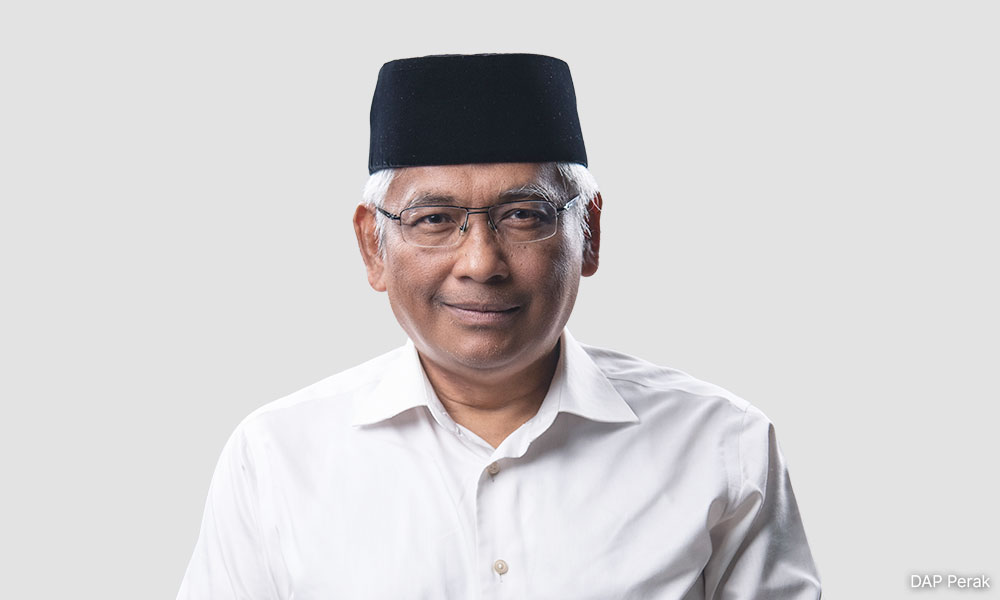
Ramasamy dreads slippery slope awaiting DAP in fortress Penang, sees no respite on the horizon


Ramasamy dreads slippery slope awaiting DAP in fortress Penang, sees no respite on the horizon


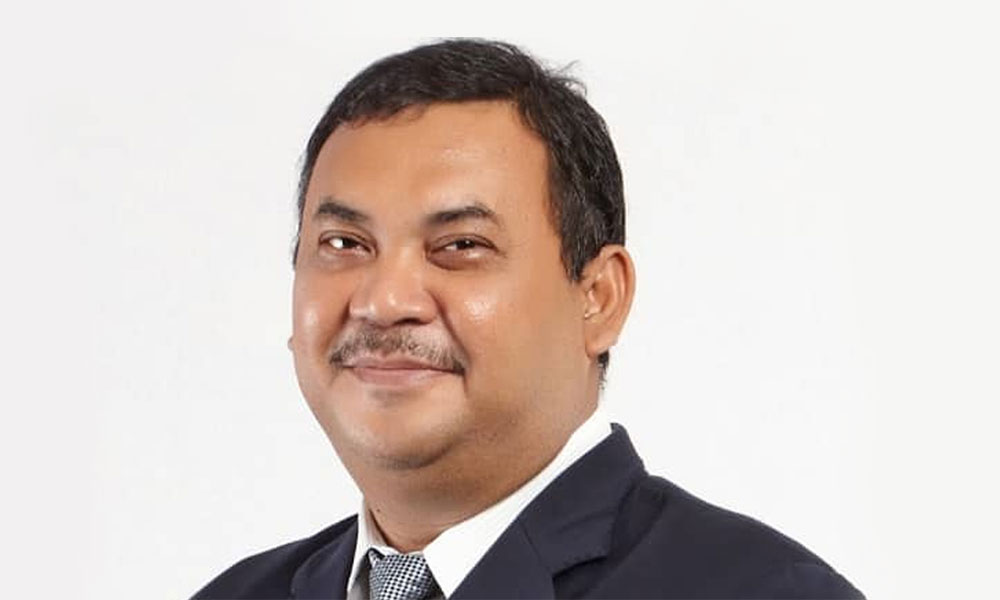
By Prof Ramasamy Palanisamy
2 hours ago


THE outcome of elections is not always predictable. Look at what happened in Tamil Nadu, a state in South India.

Actor-turned-politician Joseph Vijay Chandrasekaran was a popular figure but nobody expected him to form the government. He defeated the traditional parties that headed the coalitions in the state.

In the recent regional elections in Sabah, DAP was completely wiped out in all the eight seats the party contested.

Some DAP leaders, preferring to be anonymous, are contending that DAP with PKR and Barisan Nasional (BN) might not retain the super majority of 29 seats of the total of 40 seats in the Penang state assembly.


In the four terms in the past, DAP maintained its 19-seat election victory. Can DAP translate its majority in the next term?

The Chinese and Indians voted for the Pakatan Harapan (PH) coalition in the last elections – both at the Federal and state level.

However, in the August 2023 state elections, Indian support declined considerably to 45%. DAP’s internal purge of some prominent Indian leaders was the cause.

In the coming elections, Indian support for the PH coalition and the DAP might be lower. DAP might have to depend on the Chinese voters.

Unfortunately, the Chinese in Penang and in the rest of the country have become disillusioned with PH in general and the DAP in particular.


No solid Madani reform

The much talked about reforms by the government headed by Prime Minister Datuk Seri Anwar Ibrahim are nowhere to be seen.

Anwar’s promise of reforms has dissipated in the interest of political expediency. The experience of DAP in Sabah might not be replicated in Penang but the level of support has deteriorated.

While Anwar is the main problem, DAP – by being a yes-man party – has refused to press for reforms.

The party’s rhetoric of deadlines and others simply revealed that it has lost its political dynamism when it was in the opposition.

There are even chances that DAP might leave the PH coalition just before the announcement of elections.

Such a move might not get the votes of the non-Malays but might expose the opportunism of the party.


At the national or state levels, DAP might be in serious trouble. In Penang, the on-going rift between party adviser Lim Guan Eng and Chief Minister Chow Kon Yeow over quit rent charges has reduced the confidence of the Chinese electorate.

Moreover, the sharp rise in land taxes has increased the financial burden on the people.

Indians are unhappy with the lack of employment opportunities in state agencies, the re-settlement of former estate workers, especially in the case of Ladang Transkrian, and not least the eviction of the Indian tenant operating the 100-year-old Waterfall Cafe in the Penang Botanic Gardens. – May 11, 2026


Prof. Dr. Ramasamy
about 2 weeks ago

A heritage lost: The demolition of the 103-year-old Waterfall Cafe

P. Ramasamy
Chairman Urimai
April 28, 2026

...See more
May be an image of one or more people and text
May be an image of tree and text

DAP branch welcomes Loke to contest in Penang


11-May-2026, 14:49


The Kampong Kolam branch is believed to be the first DAP branch in Penang to openly welcome the party’s secretary-general to contest in the state


DAP’s Kampong Kolam branch says DAP secretary-general Loke Siew Fook could strengthen the party’s electoral prospects in Penang if he contests a seat in the state at the next general election.


GEORGE TOWN: A DAP branch in Penang has passed a resolution welcoming party secretary-general Loke Siew Fook to contest in the state at the next general election.

The Kampong Kolam branch, which held its annual general meeting (AGM) yesterday, said Loke, the Seremban MP, could strengthen DAP’s electoral prospects in Penang and help “lead and propel” the state towards greater development.

The resolution was proposed by newly-elected branch chairman Ng Wei Aik, a former Tanjong MP, and seconded by branch secretary Khoo Yeong Ming. It was passed unanimously.

In a statement, Ng said Penang had long been DAP’s frontline state, and the party had never abandoned its ambition to make Penang one of its strongholds despite past setbacks.

However, Ng said the Penang DAP leadership was currently grappling with issues such as inconsistent leadership standards, factional infighting, and “money-driven political campaigning”.

He said this made it necessary to invite Loke to contest in Penang, lead the state chapter, strengthen the party’s electoral prospects, and push the state’s development forward.

The Kampong Kolam branch is believed to be the first DAP branch in Penang to openly welcome Loke to contest in the state.

The branch also passed a resolution urging party leaders to consider contesting at least 21 state seats in Penang at the next state election, up from the 19 seats contested in 2023.

Another resolution called for priority to be given to candidates with a Tanjong background for parliamentary and state seats in the area, saying they would better understand local culture, community sentiment, and grassroots needs.

A final resolution proposed limiting party members to no more than three consecutive terms in elected office, in line with the principles of leadership renewal and political regeneration.

At the AGM, Ng was returned unopposed as branch chairman after incumbent Yeoh Kok Thye stepped aside and nominated him.

Ng previously led the branch but stepped down after being elected Komtar assemblyman in 2008, saying then that he wanted to help nurture new leaders.

He returned to the branch committee after a three-year absence. He is also a former one-term Tanjong MP.


***


One resolution called for priority to be given to candidates with a Tanjong background for parliamentary and state seats in the area, but why then invite a NS person - balls carriers? wakakaka

Another resolution urged party leaders to consider contesting at least 21 state seats in Penang at the next state election, up from the 19 seats contested in 2023 - this is wise considering (already frigged-up) PKR may not be able to meet the coalition requirements, wakakaka


Azam Baki says MACC retirement will not silence him, but has no plans for politics


Azam Baki says MACC retirement will not silence him, but has no plans for politics


Tan Sri Azam Baki said he will remain active in public discourse on governance and anti-corruption matters after retiring as chief commissioner of the Malaysian Anti-Corruption Commission. — Picture by Sayuti Zainudin

Monday, 11 May 2026 5:26 PM MYT


KUALA LUMPUR, May 11 — Tan Sri Azam Baki said he will not step away from public discourse after retiring as chief commissioner of the Malaysian Anti-Corruption Commission (MACC).

The outgoing MACC chief commissioner said he remains prepared to share his views on governance and anti-corruption matters when the need arises.

“I will continue to contribute whatever I can to the country and society,” he said in a podcast session aired on NST Online’s YouTube channel.

“When the time comes and I feel there is a need to speak up, I will continue to offer constructive views,” he added.

He also said he had no plans to join politics or go into business, saying neither was a field he wished to pursue.

“Politics is not my field. As for business, I do not know how to do business,” he said jokingly.

Azam is due to retire tomorrow after 42 years of service with the Anti-Corruption Agency and later MACC.


Professors must be brave, lead public discourse


Zan Azlee
Published: May 11, 2026 10:36 AM
Updated: 12:43 PM


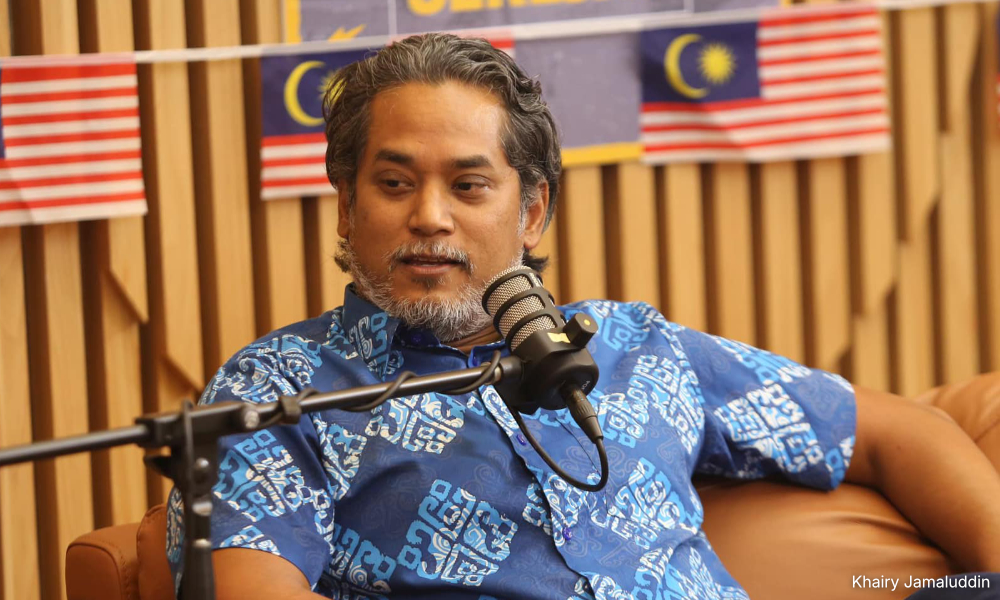
COMMENT | I want to pick up on the recent discussion on our local professors by well-known podcaster Khairy Jamaluddin.

He mentioned on his podcast that our country has cowardly professors who are not willing to speak out to counter the misinformation that is spread around.

In the context of the podcast, Khairy was saying this in criticism of our local history professors who don’t seem to want to voice out and engage against those who are obviously confused or are inaccurate on the kinds of historical information they are spreading.

He criticised professors who are at public universities for having their salaries paid for by taxpayers’ money but do nothing to defend the country’s history.

Khairy, who also hosts another podcast called “Sejarah Kita” (our history), said that he finds it very hard to get professors who are willing to come and talk about history.


Khairy Jamaluddin


I want to echo his sentiment, as this is also something that I have written about in the past.

Some of the issues that I have observed are the fact that there are so many professors in many of our universities, yet we rarely see any research of worth that is revealed to the public.

I’m sure there are, but it would be few and far between.

Why is this so? There is a term known as “kangkung professors” that was coined years ago, which refers to professors who try to manipulate facts to skew information a certain way.

I tend to use this term to refer to ineffective professors who contribute nothing to society despite writing and conducting numerous research papers.

Over 8k professors nationwide

According to the latest data that I can find, in 2023, the total count of professors in Malaysia is 8,574, spread across public and private universities.

Break it down further and it is 2,446 professors and 6,128 associate professors. That’s quite a number. Not bad for a small country with a population of around 30 million people.

So, why then can’t we ever have enough research or even public discourse that is of quality and worthy enough to be considered a contribution to the nation?


They are all producing research and papers for sure. But how many of these are actually, as I mentioned, worth anything?

I wonder why that is so? Is Khairy right in saying that many professors are cowards? If so, what are they afraid of?

Are they afraid that what they say can become controversial or are sensitive? Are they afraid that they will be criticised or even lose their jobs? If so, then why did they go into academics in the first place?

Looking beyond academics

Academics are supposed to be the intellectuals who lead the thinking of a nation and society. They are supposed to lead public discourse, share ideas, and bring progress and development.

They are supposed to be brave to create, innovate, and inspire. They are even supposed to defend justice and fairness for the people.

Sure, they need to be brave, but losing their rice bowl is also a big concern. There is a history of academics who have lost their jobs, all allegedly for statements they have made that are not too popular.

In 2011, law professor Aziz Bari was suspended by the International Islamic University Malaysia, and he eventually left the place.


Aziz Bari


In 2014, Redzuan Othman had to leave his position as the director of University Malaya’s Centre for Democracy and Elections, allegedly because of unfavourable research results.

UM law lecturer Azmi Sharom was charged with sedition for comments he made about the then-Selangor menteri besar crisis.

If professors are afraid that they can lose their jobs just by doing their jobs, then what is the point of having professors?

Tenureship

So, what should be done? Maybe having tenureship, such as in countries like Canada, Germany, the United States, Denmark, and the United Kingdom, could be the answer.

What this means is that when an academic is given a tenureship by a university, they can never be suspended or sacked from their job.

It is meant to protect their freedom to be an academic, thinker and researcher. It means that they can do what they’re supposed to do for the betterment of society without fear.


Of course, not all academics are granted tenureship. The process to obtain tenureship is difficult. One must be considered an excellent academic or professor and would be highly scrutinised, with peer reviews, superiors’ evaluations and whatnot in order to achieve it. This is to ensure that only the worthy will get it.

I am a big proponent of academic freedom (and freedom of speech and expression, of course), and having a tenureship system for our academics would ensure that.

It would also show that the position of an academic is something that is highly respected and one that has great responsibility too. So how about it?


ZAN AZLEE is a writer, documentary filmmaker, journalist and academic. Visit fatbidin.com to view his work.


***


One professor talks cock on areas even outside her expertise yet is cherished, wakakaka


PKR student wing claims loss of confidence in Anwar, sec-gen issues denial


PKR student wing claims loss of confidence in Anwar, sec-gen issues denial


B Nantha Kumar
Published: May 10, 2026 8:54 PM
Updated: May 11, 2026 10:10 AM


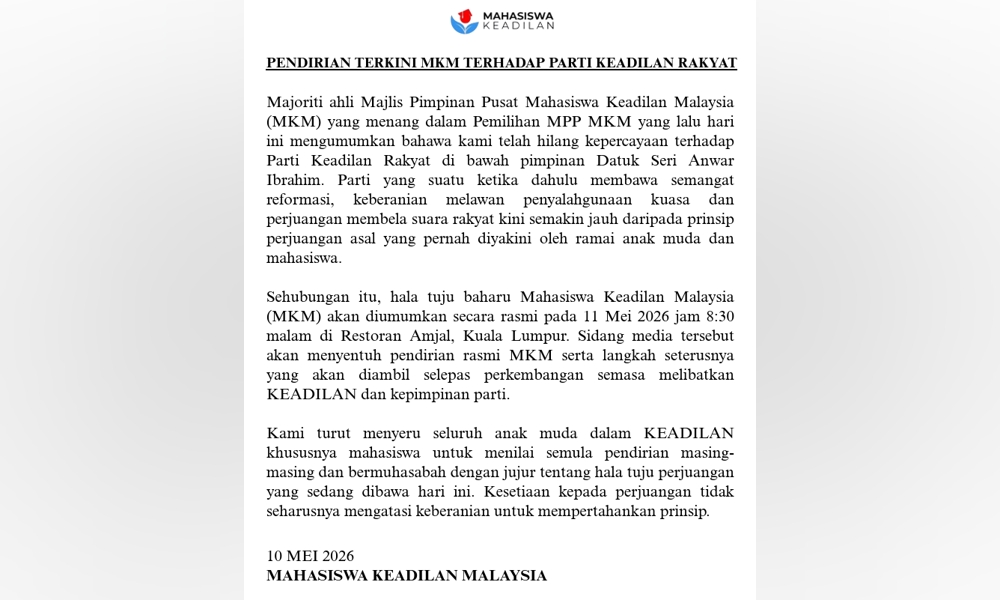
Barely an hour after PKR’s student wing, Mahasiswa Keadilan Malaysia (MKM), issued a statement on “losing confidence” in the party under the leadership of Anwar Ibrahim, the wing’s secretary-general, Aqeef Salih, issued a denial.

Earlier, the wing issued a statement to Malaysiakini, stating that after an assessment of the party’s direction, MKM believes PKR has drifted further from its original reformist spirit.

“A party that once championed the spirit of reform, the courage to fight abuse of power, and the struggle to defend the people’s voice is now increasingly distant from its founding principles.

“It was once trusted by many youths and university students, but now we have lost confidence,” read the statement, which was also posted on MKM’s official Instagram account.

Meanwhile, Aqeef, whose statement was posted on his Facebook page, said the earlier media statement did not represent the wing’s official stance.

“The statement was never discussed, agreed upon, or decided through MKM’s official channels. It is merely the action of a few individuals within the central leadership who have their own agenda and are taking advantage of the MKM platform to create confusion and negative perceptions of the organisation.

“More embarrassingly, the statement did not include the name or position of the individuals responsible for issuing it. This clearly shows that it was made in an unprofessional, irresponsible manner and with ill intent.

“Any party truly confident in its own position should come forward openly, rather than hiding behind the name of a student organisation,” he added.


The earlier statement expressing a loss of confidence in the PKR president


Aqeef said MKM has always upheld organisational discipline, ethical conduct in its struggle, and mature democratic processes, stressing that personal views cannot be imposed as the wing’s official position without a proper mandate and collective agreement.

“MKM will never allow its student movement platform to be exploited for the political interests of certain individuals. As the student wing of PKR, MKM will always respect the institution of the president and fully support the leadership of Anwar.

“In this regard, the secretariat will seriously review this matter, including taking appropriate action against any party that has misused the name of MKM without authorisation. MKM will continue to remain focused on representing the voice of students with full responsibility, principle, and integrity,” he added.

‘Loyalty shouldn’t override principles’

The first statement, which expressed a loss of confidence in Anwar, also called on all youth members within PKR, especially students, to reassess their position.

“We urge all parties to honestly reflect on the direction of the struggle being pursued today. Loyalty to a cause should not override the courage to defend principles,” read the statement.

Meanwhile, an MKM spokesperson also told Malaysiakini that a press conference will be held tomorrow to officially announce its new direction.

“The press conference will touch in detail on MKM’s official stance as well as its next steps following the current developments involving PKR and its leadership,” the spokesperson said.

PKR had established MKM in 2012 to represent the voices of students in public and private universities. Since its formation, MKM has championed issues related to student welfare, academic freedom, and social justice.

MKM was previously known for its outspoken stance against government policies seen as suppressing freedom of speech on campuses. Several demonstrations and awareness campaigns were also organised nationwide in support of the reform agenda.


Flying discs, glowing orange orbs and Sauron‑like sightings emerge from Pentagon’s alien archives


Flying discs, glowing orange orbs and Sauron‑like sightings emerge from Pentagon’s alien archives


A handout composite sketch depicts eyewitness reports in September 2023 of ellipsoid metallic object as part of a series of documents of unidentified aerial phenomenon (UAP) released by the US Defense Department on May 8, 2026. — Reuters pic/US Department of Defense Handout

Saturday, 09 May 2026 10:14 AM MYT


WASHINGTON, May 9 — The Pentagon on Friday released a first batch of secret files documenting reported sightings of unidentified flying objects — some dating back to the 1940s — fanning speculation over whether alien life exists.


Reports of flying saucers and discs, and a sighting of a “Lord of the Rings” glowing orange orb, are among incidents in the files, which are from the FBI, State Department and Nasa in addition to the Pentagon.


Interest in UFOs has been renewed in recent years as the US government investigated numerous reports of seemingly supernatural aircraft, amid worries that adversaries could be testing highly advanced technologies.

“These files, hidden behind classifications, have long fuelled justified speculation — and it’s time the American people see it for themselves,” Defense Secretary Pete Hegseth said in a statement.

President Donald Trump hailed the release, posting: “Whereas previous Administrations have failed to be transparent on this subject, with these new Documents and Videos, the people can decide for themselves, ‘WHAT THE HELL IS GOING ON?’”


More than 160 files were released on the website of the Defense Department, which officially refers to UFOs as “Unidentified Anomalous Phenomena,” or UAPs.

One file — from December 1947 — contains a series of reports on “flying discs.”


“Continued and recent reports from qualified observers concerning this phenomenon still makes this matter one of concern to Headquarters, Air Material Command,” a document in the file said.

An Air Force intelligence report — marked “top secret” — from November of the following year features information on reported sightings of “unidentified aircraft” and “flying saucers”.

“For some time we have been concerned by the recurring reports on flying saucers,” a document in that file said.


This handout image released by the US Department of Defense on May 8, 2026, shows what the Department of Defense and FBI say is an infrared still image derived from a US military system showing unidentified object(s) over the western United States in September, 2025. — AFP pic/US Department of Defense Handout


‘Most compelling’

Another file summarises statements from seven federal government employees who separately reported “several unidentified anomalous phenomena” in the United States in 2023.

“The reporters’ credibility, and the potentially anomalous nature of the events themselves — combine to make this report among the most compelling within AARO’s current holdings,” a description of the file said, referring to the Pentagon’s All-domain Anomaly Resolution Office.

In one incident, three teams of federal law enforcement special agents independently described “seeing orange ‘orbs’ in the sky emit/launch smaller red ‘orbs’”.

In another, two federal special agents witnessed “a glowing orange orb... perched close to a rock pinnacle”. That account included an artist rendering of a red-orange circle with a streak of yellow in its lower third.

The object was described as looking “similar to the Eye (of) Sauron from Lord of the Rings, except without the pupil.”

Trump directed US federal agencies in February to begin identifying and releasing government files related to UFOs and aliens, saying the move was “based on the tremendous interest shown.”

The Republican president also claimed the same day he issued the release order that one of his Democratic predecessors, Barack Obama, had revealed “classified” information in podcast remarks about extraterrestrial life.

“They’re real, but I haven’t seen them and they’re not being kept in... Area 51,” Obama told host Brian Tyler Cohen, referring to the top-secret US military facility in Nevada at the heart of many UFO conspiracy theories.

Trump told reporters at the time that Obama “gave classified information, he is not supposed to be doing that,” while saying of his own beliefs: “I don’t know if they are real or not.”

No evidence has been produced of intelligent life beyond Earth.

In March 2024, the Pentagon released a report saying it had no proof that UAP were alien technology, with many suspicious sightings turning out to be merely weather balloons, spy planes, satellites and other normal activity. — AFP

US employment boom? Maybe, maybe not — A look under the jobs report’s hood


US employment boom? Maybe, maybe not — A look under the jobs report’s hood


The employment data points to challenges in the key labour market as companies took a cautious approach in hiring and investment while grappling with Trump’s sweeping—and rapidly changing—tariffs this year. — Reuters pic

Sunday, 10 May 2026 7:00 AM MYT


  • Household survey shows employment and labour force shrinking despite payroll job gains
  • Labour force participation rate drops to lowest since mid-1970s, excluding pandemic period
  • Hiring concentrated in services, manufacturing jobs decline despite policy focus


WASHINGTON, May 10 — US job growth topped ‌expectations for a second straight month in April — and by a hefty margin — while the unemployment rate held steady, showing the labour market is resilient in the face of the US-Israeli war on Iran and the inflation pressures it has created.


But looking beyond that headline figure, the job market is far from booming. While employers report record overall employment levels, households report employment is ‌shrinking. Moreover, the US workforce is declining at a rapid rate, the participation rate is the lowest in nearly five years and the breadth of hiring across industries continues to be narrower than average.

Here’s a look at some of the other dynamics at play in 
the latest jobs report.


Employment — a record or not?

The Labour Department’s monthly employment report is actually two different surveys: one of establishments — employers like businesses and governments — that report how many people were on their payrolls, and one of US households that report whether household members were working at the time the survey was taken. So far this year they tell very different stories.


By the establishment survey measure, which provides the benchmark for the number of new jobs created each month, total employment is at a record high of 158.7 million people holding payroll jobs and has grown by 304,000 so far this year. But by the household survey measure, which provides the benchmark for the national unemployment rate, overall employment has declined by 1.37 million in 2026.


The US labour force — the total of those people with a job or unemployed and looking for one — is smaller today than when President Donald Trump ‌returned to the White House for his second term. — Reuters pic


A shrinking workforce


The US labour force — the total of those people with a job or unemployed and looking for one — is smaller today than when President Donald Trump ‌returned to the White House for his second term. There were about 700,000 fewer people in the workforce in April than in January 2025, and it has ⁠declined in four of the past five months.

Pace of labour force decline is historic

In ⁠fact, the workforce has been shrinking at a historic rate since late 2025. About 1.55 million people have left ⁠the labour force since it touched a record high ⁠last November, a departure wave exceeded over ⁠a comparable time horizon only by the short-lived exodus of workers during the Covid-19 pandemic shutdowns in 2020. With households reporting a sharp drop in employment, the drop in the labour force level of about the same magnitude is the only reason the unemployment rate has not risen.

Participation rate is plummeting

While the jobless rate has held steady, the participation rate — ⁠the share of the total estimated US population who are active in the job market either working or seeking work and another key barometer of labour market health — has been dropping swiftly. It has declined for five straight months and is the lowest — outside of the pandemic era — since the mid-1970s.


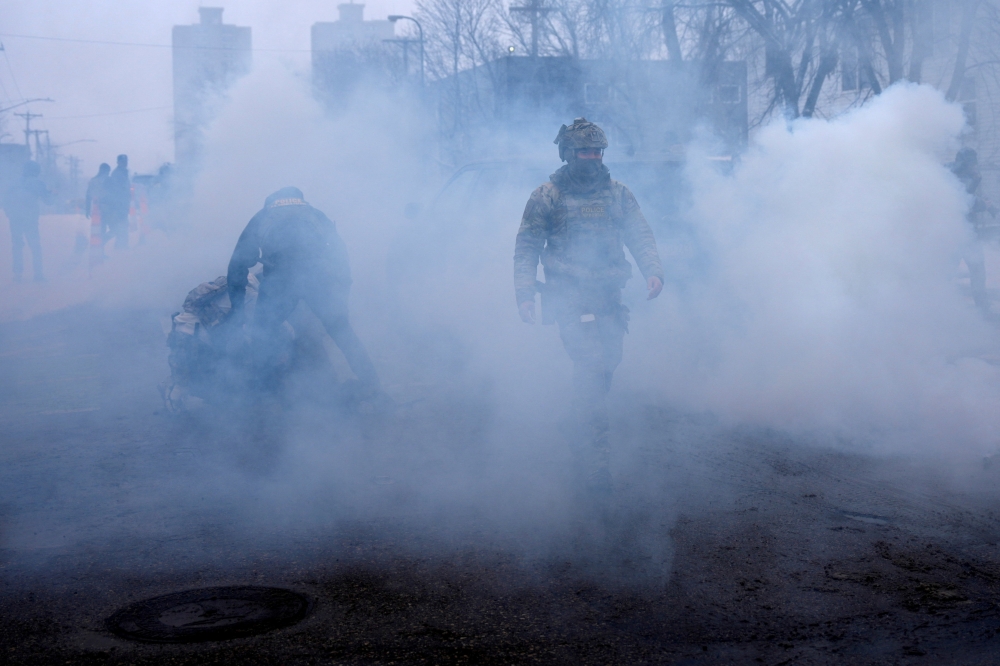
A federal agent walks as others hold a person down while being surrounded by tear gas used to deter protesters, as immigration enforcement continues after a US Immigration and Customs Enforcement (ICE) agent fatally shot Renee Nicole Good on January 7 during an immigration raid, in Minneapolis, Minnesota January 21, 2026. — Reuters pic


Immigration policy’s imprint

Trump returned to office promising a crackdown on immigration and his fulfillment of that pledge has left its mark on the labour market. Immigrant workers had accounted for most if not all growth in the workforce and employment under Trump’s predecessor, Joe Biden. Trump’s policies helped flip that script during the early months of his term last year. Through mid-2025, all job ⁠gains and workforce growth were attributable to rising employment and workforce participation by native-born workers, while those levels fell for immigrants. Since the fourth quarter of last year, though, those trends have largely reversed, and overall employment and participation among native-born workers is about where it was when Trump ⁠returned to the White House last January. They are down for immigrants but not by as much as they were at mid-year.

Hiring breadth is restrained

On the establishment side of ⁠the report, it bears ⁠watching not just how many jobs overall were created in any month, but how broad the hiring was across industries. Hiring in fact has been heavily concentrated in a handful of services sectors, healthcare in particular. The Labour Department’s diffusion index tracks hiring breadth, and that shows a slightly greater number of industries with expanding employment than contracting employment in the last few months, but the ‌12-month average remains tilted to narrowing employment. What’s more, the manufacturing sector, which Trump has placed enormous emphasis on reviving through policies like tariffs on imported goods, continues to see poor hiring breadth. In April, the report showed 2,000 manufacturing jobs were lost that month, snapping a three-month run of factory employment gains, and there are 77,000 fewer factory jobs now than when Trump came back to power. — Reuters

How China's evolving consumer habits may protect the Amazon rainforest


How China's evolving consumer habits may protect the Amazon rainforest


An aerial view shows cattle walking on a tract of the Amazon rainforest that has been cleared by loggers and farmers near the Virola-Jatoba Sustainable Development Project (PDS) in Anapu, Para state, Brazil, September 5, 2019. — Reuters pic

Sunday, 10 May 2026 7:00 AM MYT


  • Chinese meat importers pledge to buy deforestation-free Brazilian beef, challenging industry assumptions
  • Brazilian beef industry lobby expresses concern over new sustainability requirements and potential trade barriers
  • Imaflora developing certification for traceable, sustainable beef; adoption by meatpackers remains uncertain


SAO PAULO, May 10 — When Xing Yanling posted on WeChat about her visit to the Brazilian Amazon in April, she described to her ‌friends in China the unforgettable sensation of being “enveloped by tens of thousands of shades of green.”


Xing is no ordinary tourist. She leads the Tianjin Meat Industry Association, representing importers responsible for around 40 per cent of China’s beef purchases from Brazil.


Under her leadership, Tianjin’s members have committed to buying 50,000 metric tonnes of deforestation-free certified Brazilian beef by the end of the year, in what may be an early sign that China, one of the most powerful forces in global commodity trade, is willing to pay more for greener supply chains. The figure amounts to 4.5 per cent of what Brazilian beef exporters are ‌expected to sell to China this year.

The pledge challenges a long-held assumption among Brazilian farmers: that China, the world’s largest importer of beef and soy, cares only about price. It comes as China’s government is sending signals that it wants to act on the environmental impact of trade while protecting its domestic industry. In 2019, it changed its forest law to ban the trade of illegal timber. In 2023, it signed a joint commitment with Brazil to end illegal deforestation driven by trade. Starting last year, China’s state-owned trader COFCO has committed to eliminating deforestation from its supply chain.


Beef tied to deforestation

The beef supply chain is ripe for concrete action because it is not as essential to the Chinese diet as other commodities, such as soy, said Andre Vasconcelos, the head of global engagement for Trase, a platform that tracks the environmental impact of several supply chains.

“At the same time, there is awareness, supported by available information, that beef, especially Brazilian beef, is the commodity most associated with deforestation among all agricultural commodities imported by China,” he said.


The Amazon rainforest, the largest and most biodiverse in the world, loses hundreds of thousands of acres of trees every year, and 90 per cent of that land is turned into pasture for cattle immediately after it is cleared, according to MapBiomas, a Brazilian nonprofit that monitors land use.

Some Chinese consumers are aware of that and are growing more discerning as they become wealthier, Xing said.

“It’s not just ‘cheap is good,’” she said. “This means deforestation-free, green, safe and traceable beef will have a stronger market in the future.” Choosing food products according to environmental credentials rather than price is impractical for most Chinese consumers, facing higher grocery prices like much of the world.

But the traceability the project offers consumers also appeases food safety concerns.

The beef will be marketed with a Beef on Track label designed by ‌Brazilian nonprofit Imaflora, which includes four levels of compliance based on how far down the supply chain the beef is traced and whether ranchers can prove their farms were legally cleared.

Tianjin importers are willing to pay 10 per cent more for beef from meatpackers that prove ⁠the farms that supply them are free of any links to both legal and illegal deforestation, as well as slave labor.

If the ⁠shift gathers momentum, the impact could be significant. China buys over 10 per cent of Brazil’s beef, according to government data and beef export association ABIEC, whose members include JBS (Z98.F) and MBRF (MBRF3.SA). But any impact ⁠could be undermined by Brazil’s fragile traceability system, which is based on ⁠cattle transportation documents that prosecutors say can be easily defrauded ⁠by bad actors who hide wrongdoing in their supply chain, a practice commonly known as “cattle laundering.” Improvements to that system could take years.


Xing Yanling, President of the Chinese Tianjin Meat Association poses for a photo at a park in Sao Paulo April 15, 2026. — Reuters pic


Opportunity or obstacle?

When Xing and her delegation arrived at the Carioca farm in Castanhal, in the north of the Amazon rainforest, rancher Altair Burlamaqui was not expecting more than a fruitful conversation.

He showed them his cattle and part of the vast rainforest reserve on his land. By the end of lunch, the delegation was so excited that they asked him if he had a dream of having his beef sold in China ⁠as a product that helps protect the Amazon rainforest. The thought was both thrilling and overwhelming.

“What I gathered from the conversation with them is that they want a product with more added value for a section of their population who is willing to pay for it,” he said. “But that section of their population may be bigger than the entire Brazilian population.”

In the wider industry, Tianjin’s sustainability project has received a more muted reception.

ABIEC, the beef export group, is displeased with Xing’s effort, two people who spoke to its leadership recently told Reuters.

Their concern, one of the people said, is that a demand for sustainable beef may add an obstacle to an already constrained market. This year, China imposed quotas for beef imports to protect its domestic industry, and Brazil is expected to hit its limit of 1.1 million tonnes by the end of next month, when Tianjin plans to import its first container of beef certified as sustainable.

In a statement, ABIEC said it “supports initiatives focused on certification but considers that any new labels should align with already ⁠established systems, avoiding overlaps and requirements that lack public infrastructure for implementation, which could create potential barriers to production.”

It did not answer questions sent by Reuters.

The quota may slow Tianjin’s plans because any beef imports after it is reached pay a 55 per cent Chinese tax.

Beijing introduced its quotas in a year when global beef production is set to decline as ranchers rebuild herds in the United States and Brazil, inflating prices in many countries, including ⁠China.

Value added

Chinese consumers are used to buying traceable products. During their visit, Xing’s team showed Brazilian officials and businesspeople how they add QR codes to eggs so consumers can trace them to their originating farm.

Traceability makes it easier for regulators to track the origin of disease ⁠outbreaks, and for companies to drop ⁠suppliers involved in environmental crimes.

People are willing to pay twice as much for those eggs, Xing said.

The Beef on Track certification will be ready for meatpackers, supermarkets and importers to adopt by the end of the year. Its lowest-level standard is comparable to one used by Brazil’s federal prosecutors’ office to monitor whether farms directly supplying the beef industry comply with environmental and labor laws.

That programme approved suppliers that produce 2.7 million tonnes of beef a year, only a fifth of what Brazil produces, but almost twice China’s imports last year. The beef Tianjin imports this year will be part of this output.

No ‌Brazilian meatpackers have announced plans to adopt the certification, though.

Imaflora argues the certification it designed will create opportunity rather than become an obstacle to producers, as they say has happened with timber and coffee.

“The industry is still trying to understand how this certification can recognise and value Brazilian products, in a scenario of geopolitical tension,” said Marina Guyot, an Imaflora policy manager.

But she added, the certification is supposed to recognise what companies are already doing to fulfil their own sustainability and traceability pledges.

“It’s a certification that creates the possibility of valuing this effort,” she said. — Reuters

A divided kingdom: Three UK nations tilt toward pro‑independence leadership


A divided kingdom: Three UK nations tilt toward pro‑independence leadership


A Welsh flag flutters ahead of the upcoming Senedd (Welsh Parliament) devolved general election, in Cardiff, south Wales April 17, 2026. — Reuters pic

Sunday, 10 May 2026 7:00 AM MYT


  • Three UK nations set to be led by pro-independence parties
  • Parties could join forces to pressure UK government
  • Northern Ireland leader hails ‘seismic change’


LONDON, May 10 — Three of the United Kingdom’s four nations are set for the first time to be governed by ‌pro-independence parties after elections yesterday which nationalists said marked the death knell of the centuries-old union.


A breakup of England, Scotland, Wales and Northern Ireland is by no means imminent, and polling showed voters were motivated by factors other than independence, but the outcome is likely to make Britain harder to govern.


Michelle O’Neill, the Northern Ireland First Minister from Sinn Féin, which wants to end British rule of the province and unite it with Ireland, described the parliamentary votes ‌in Scotland and Wales — held alongside English local elections — as a “moment of seismic change”.

“I don’t think there can be any clearer sign that Westminster’s time is coming to an end for the people here and the people in Scotland and Wales,” she told Reuters.


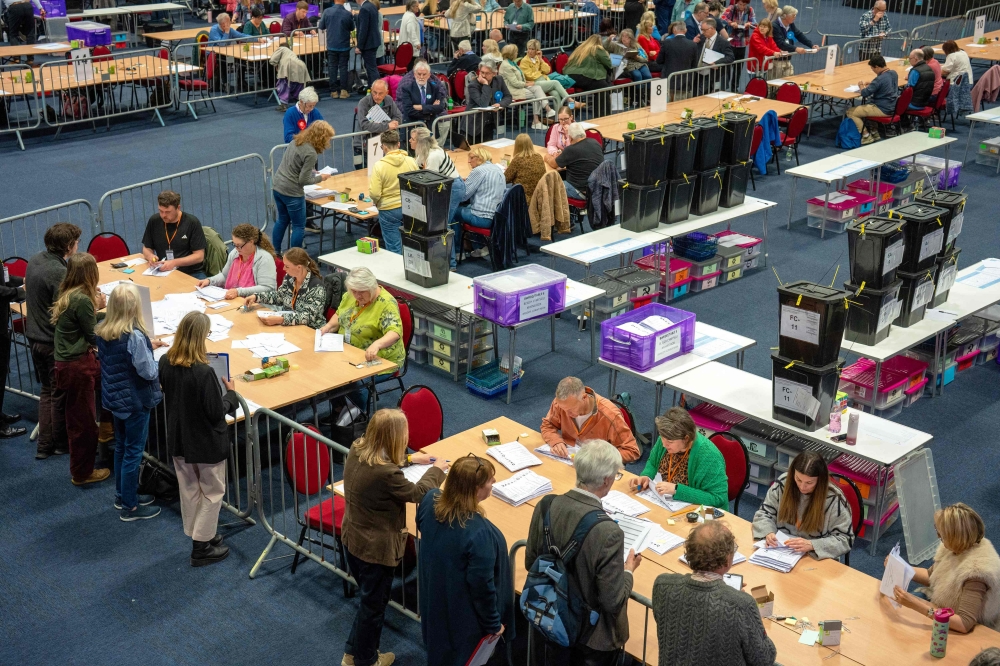
Staff count votes on ballot papers the morning after local elections at a vote-counting centre in Llandudno, north Wales May 8, 2026. — Reuters pic


‘Sleepwalking into the end of the United Kingdom’

The United Kingdom’s four nations have proud separate identities and regularly fought wars before coming together as one political entity over the centuries, with ties often straining since then.


In recent decades Irish nationalists and pro-British “loyalists” waged a 30-year war over Northern Ireland’s place in the union that ended in 1998. Parties representing both sides now govern together under a power-sharing peace deal, but Sinn Fein nationalists won the most seats in 2022 and chose the first minister for the first time in 2024.

Pro-independence nationalists have run Scotland since 2007, although Scots voted to reject independence in a referendum in 2014. They managed to keep power in yesterday’s election despite scandals that had weakened their leadership in recent years.

And in Wales, nationalist party Plaid Cymru was on course to be the largest party in the Welsh Senedd assembly for the first time, with voters deserting Prime Minister Keir Starmer’s Labour Party and main opposition Conservatives who between them have governed the UK from London’s Westminster for a century.

The populist Reform UK party of Brexit veteran campaigner Nigel Farage — who rose to prominence on a platform of English nationalism — also performed strongly across England, Scotland and Wales, ‌with voters attracted to its rejection of what it calls “establishment politics”.

With the electorate angry over a stagnant economy, a prolonged cost-of-living crisis and a widespread perception that Britain’s best days are behind it, anti-status ⁠quo voices are cutting through.

“There is a real risk that we end up sleepwalking into the end of ⁠the United Kingdom,” said George Foulkes, a former minister for Scotland under Labour’s former Prime Minister Tony Blair. “Once these things get momentum, they are hard ⁠to stop.”

He said the Westminster government should offer a ⁠new constitutional settlement — with a new chamber of ⁠parliament made up of the four nations, or risk one leaving in the next decade.


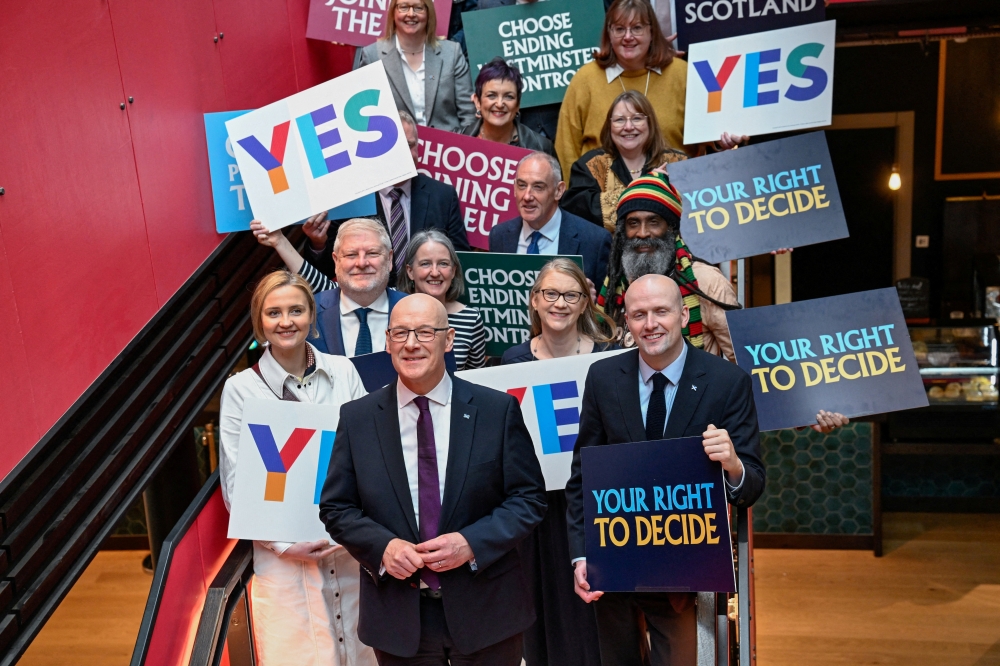
Scottish First Minister and SNP leader John Swinney poses with candidates after giving a speech at the launch of the party's campaign ahead of the 2026 Scottish Parliament election due to be held on May 7, in Glasgow, Scotland March 26, 2026. — Reuters pic


Nationalists advance but lack swift path to Independence

For now, the nationalist parties lack a short-term roadmap to leaving.

Scottish leader John Swinney was expected to fall short of winning a majority of the 65 seats in the Scottish parliament that, he said, would have provided a mandate for a second referendum.

British prime ministers have refused requests from the Scottish government for a ⁠new independence referendum in recent years, insisting that the one in 2014 when voters rejected it by 55 per cent to 45 per cent stands for a generation.

In Wales, where Labour has been the biggest party for a century, Plaid was expected to form a minority government in the 96-seat Senedd to take control for the first time since the parliament was set up in 1999 to give locals more say over their own affairs.

Officials in the pro-independence party said they would not push for a referendum in the first term as it would distract from tackling the nation’s many problems. Delyth Jewell, deputy leader of Plaid, told Reuters that independence would be considered if the party won a second term.

In Northern Ireland, the terms of the 1998 Good Friday peace agreement oblige the British government to call a referendum if it appears likely ⁠that a majority would back a united Ireland. But polls show any vote would currently be defeated.


Reform UK leader Nigel Farage reacts during a visit to St Helens, north west England on May 8, 2026, as votes continue to be counted following local elections.


Farage’s rise could fuel support for Independence

While polls show support for independence stands at about 50 per cent in Scotland, about 40 per cent in Northern Ireland, and about 25 per cent in Wales, they also indicate voters were backing these left-wing parties partly for other reasons.

Independence was ⁠only the sixth most important issue for Scots at these elections, according to a YouGov survey, behind the economy, health, immigration, education and housing. In Wales, independence was the 14th most important issue.

But SNP and Plaid politicians ⁠think the prospect of ⁠Farage, long associated with English nationalism, winning a general election due by 2029 could focus minds further on independence.

Plaid’s Jewell said Farage and his anti-immigration Reform “unifies so many people in being against his nasty vision for the future of the UK”.

A more immediate risk for the British government is the prospect of the pro-independence parties forming a ‘Celtic alliance’ to force Westminster to grant further powers on spending, taxation and welfare to the devolved authorities.

Swinney recently sent a message of fraternal ‌greeting to Sinn Fein’s latest conference, while Rhun ap Iorwerth, Plaid’s leader, vowed that the British government would be compelled “to sit up and listen” to the parties determined to “change the history of our nation and indeed of these islands”.

Yet, any ‘Celtic alliance’ might not form the easiest of bedfellows.

“You may find that potentially they could be in conflict,” Andrew Blick, professor of politics at King’s College London, said. “We’re going to get the chance to see how it works.” — Reuters


Putrajaya names three Malaysian firms to spearhead Made-In-Malaysia chip project


Putrajaya names three Malaysian firms to spearhead Made-In-Malaysia chip project


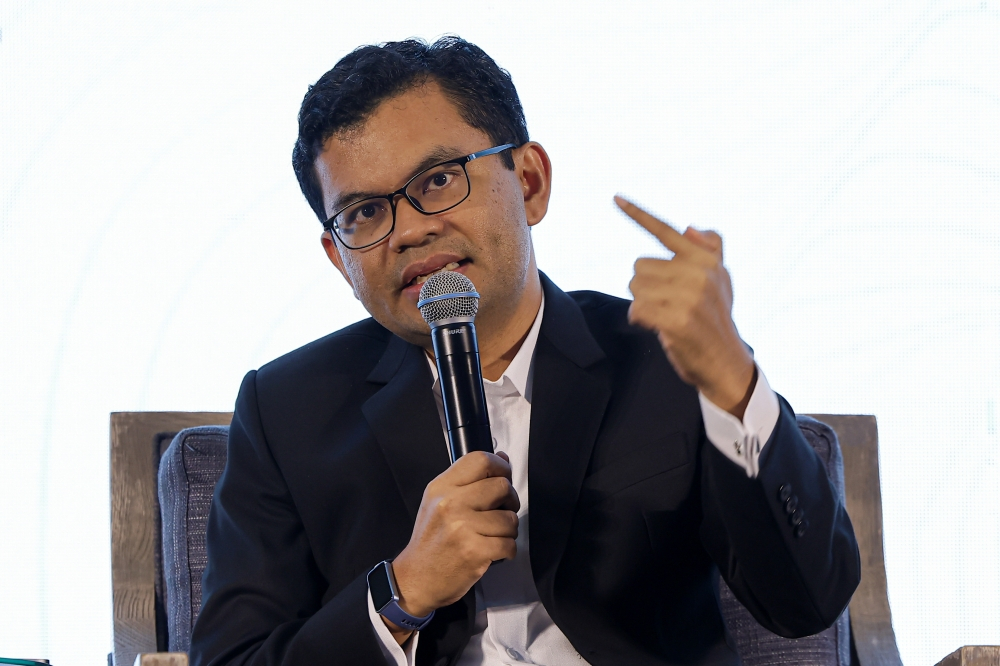
Economy Minister Akmal Nasrullah Mohd Nasir said the offer opens access to Arm’s computing platforms and intellectual property (IP) portfolio to accelerate the development of local semiconductor products designed in Malaysia. — Bernama pic

Monday, 11 May 2026 10:45 AM MYT


PUTRAJAYA, May 11 — Prime Minister Datuk Seri Anwar Ibrahim's administration today handed offers to three local firms picked to spearhead the ambitious made-in-Malaysia chip design project, hailing it as a significant step in strengthening the nation’s capabilities in integrated circuit design.

Four tokens, including Arm CSS (Compute Subsystems) and Arm Flexible Access (AFA), were granted to Great Asic Technology Sdn. Bhd., SkyeChip Bhd., and Oppstar Technology Sdn. Bhd.


“Malaysia has long been known for chip assembly, testing, and packaging activities,” Minister of Economy Akmal Nasrullah Mohd Nasir said at the token handing-over ceremony here.

“This strength is important, but the future of the industry cannot stop there. We must move further from back-end to front-end—from merely producing to designing, developing IP, and creating our own technology,” he added.

The programmee is part of the strategic partnership between the Malaysian government and Arm Holdings, a UK semiconductor giant with an extensive portfolio of chip design Intellectual Property (IP) that helped build an ecosystem enabling over 350 billion chip-based devices to date.

Akmal said the offer opens access to Arm’s computing platforms and intellectual property (IP) portfolio to accelerate the development of local semiconductor products designed in Malaysia.

MORE TO COME

Nurul Izzah to contest in Wan Azizah's Bandar Tun Razak seat in next polls?


Nurul Izzah to contest in Wan Azizah's Bandar Tun Razak seat in next polls?


B Nantha Kumar
Published: May 8, 2026 9:00 AM

Updated: 11:00 AM


There is speculation that PKR deputy president Nurul Izzah Anwar may contest a parliamentary seat in the Federal Territories, with sources claiming she could move to her mother, Dr Wan Azizah Wan Ismail’s Bandar Tun Razak constituency.

At least three PKR sources – from the Bandar Tun Razak branch, the Federal Territories state leadership council, and the party headquarters – told Malaysiakini that the daughter of Prime Minister Anwar Ibrahim could return to the capital in the 16th general election.

According to them, the move is seen as a two-pronged strategy: safeguarding the political career of the party deputy president from the risk of being left stranded in Permatang Pauh again, as happened in the previous polls, and protecting the political legacy of Anwar’s family.

One source claimed that Wan Azizah, now 73, is highly likely not to defend the seat, paving the way for her daughter.

“Kak Wan (Wan Azizah) has clearly indicated this will be her last term. She wants to rest and see (Nurul) Izzah return to Parliament through a more stable route.

“This decision is not just about family, but about party survival strategy. We cannot allow (Nurul) Izzah to be ‘stuck’ again in the conservative wave of the north.

“Bandar Tun Razak is the best to ensure the continuity of the reform struggle in the capital,” added the source from the party headquarters.

Logical choice

A Federal Territories PKR source stressed that the party’s history in Bandar Tun Razak makes it the most logical choice.

“Ever since the late (former PKR leader) Khalid Ibrahim’s time, this seat has symbolised PKR’s strength in the federal territories.

“Our winning record here has been consistent. With the influence of the branch chief, Azman Abidin, who is a close ally of the party president, (Nurul) Izzah’s path is expected to face minimal resistance,” he said.


Azman Abidin


When contacted, Azman welcomed the prospect.

“Insya-Allah. Of course. Bandar Tun Razak welcomes (Nurul) Izzah if she is interested in contesting here,” he said.

However, Azman declined to confirm or deny whether the PKR deputy president would contest the seat. Malaysiakini has also repeatedly contacted Nurul Izzah.

‘Giant killer’

Nurul Izzah, 46, first became an MP in 2008 after defeating then Wanita Umno chief Shahrizat Jalil in the Lembah Pantai parliamentary constituency and defended the seat in the 2013 general election.

In the 2018 general election, she moved to Penang to successfully defend her father’s stronghold of Permatang Pauh. However, she was defeated by PAS candidate Fawwaz Jan in the 2022 polls.

Bandar Tun Razak, with more than 120,000 voters, was won by Kamaruddin Jaafar in the 14th general election in 2018.

In 2022, Wan Azizah retained the seat for PKR with a majority of 9,817 votes in a three-cornered contest. The seat has been in PKR’s hands since 2008.


Dr Wan Azizah Wan Ismail


Speaking on condition of anonymity, a source from the Bandar Tun Razak PKR branch said that grassroots members consider Nurul Izzah to be her mother’s natural replacement.

“She is not a stranger and has often come down to assist Kak Wan’s (Wan Azizah) programmes here. (Nurul) Izzah is the future that will ensure Bandar Tun Razak remains our stronghold,” he added.

According to the party headquarters source, discussions on Nurul Izzah’s move to Bandar Tun Razak are not happening in isolation.

“It is part of PKR’s larger strategy for GE16, outlined in an internal party document titled ‘Strategic Analysis for GE16: Summary by Tier’, as reported by Malaysiakini,” he added.

The analysis, presented on May 2 to nearly 900 party leaders, shows PKR is in a cautious mode, struggling with erosion of dominance in key seats.
The review of 66 targeted parliamentary seats classifies constituencies into four tiers: Tier 1 (Strong/Safe) with seven seats, Tier 2A (Almost Strong) with 13 seats, Tier 2B (Marginal/Competitive) with 17 seats, and Tier 3 (Difficult/Recovery) with 29 seats.

Bandar Tun Razak is placed in Tier 2A, meaning it is an “almost strong” seat.

Can a movie superstar save Malaysia?


Andrew Sia
Published: May 9, 2026 12:00 PM

Updated: 2:00 PM


COMMENT | Can you imagine a non-Muslim prime minister in Malaysia? Yet Tamil movie superstar Joseph Vijay is a Christian whose party TVK won the election in a state where 87 percent of people are Hindu. He is poised to be the next Tamil Nadu chief minister.

What most impressed me is that he campaigned on “secular” social justice for all, unlike the anti-Muslim fear-mongering of Indian PM Narendra Modi’s “ketuanan Hindu” (Hindu supremacy) ideology.

“Ask everyone in your home… to elect good, trustworthy people who have not indulged in corruption. Don't get the idea of division based on caste and religion,” said Vijay last year.

In this sense, he was like our own “Bollywood” star Anwar Ibrahim, who repeatedly declared that the children of Malays, Chinese, Indians, Ibans and Kadazans “semua anak saya” (are all my children).

Yet many non-Malays are angry that the prime minister has failed to clamp down on vicious hate speech against them, despite their solid support for Pakatan Harapan. Instead of real punishments, racial provocateurs have only been slapped with short detentions, which feel like “wayang” (theatre).


People want real reform

Vijay’s TVK won a stunning 108 seats in its electoral debut, relegating rivals DMK and AIADMK into second and third place with 59 and 47 seats respectively.

One main factor is that people wanted change and reform, as the other two parties had taken turns holding power in Tamil Nadu for the past 50 years. Voters were fed up with stale politics and threw their support behind TVK as a “third force” to break the old duopoly.

There were allegations of corruption against the current ruling DMK party, and frustration that their promises to create jobs and protect women’s safety were unfulfilled.


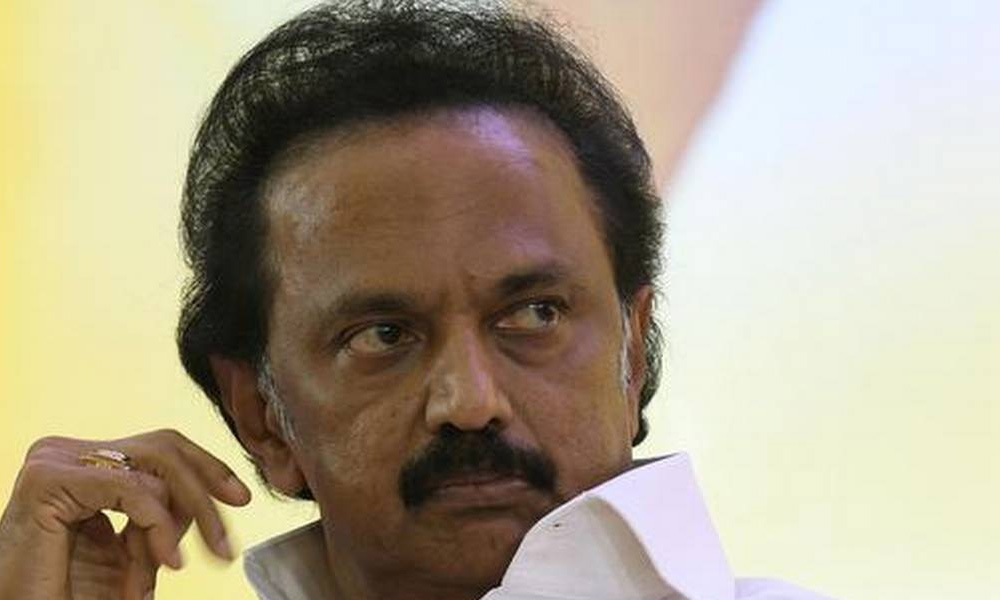
Tamil Nadu Chief Minister MK Stalin


Charges of dynastic politics made things worse as Chief Minister MK Stalin elevated his son as his deputy. The obvious parallel is with Anwar Ibrahim manoeuvring his daughter to become PKR deputy president, leading to jibes that the acronym stands for “Parti Keluarga Rakyat” (People’s Family Party).

Christians are only six percent of Tamil Nadu’s population, with Muslims or “mamaks” making up another six percent. Vijay was careful to portray a non-sectarian image by visiting prominent temples and mosques, along with churches.

Of course, his 30-year stardom made him a household name. He also raised social justice issues in his movies. For example, in Mersal (2017), Vijay played a character who asked: “Why can’t India provide universal healthcare when we pay 28 percent GST, while Singapore can with only seven percent GST?”


Campaign strategies

His fame was carefully translated into solid ground support with 85,000 fan clubs with some two million active members. They became grassroots organisers who ran campaigns and charity events.

Vijay’s TVK ran a savvy social media campaign as if they were promoting the next movie blockbuster, with trailers, teasers etc. They used holograms, AI-generated content and held online virtual rallies.

His loyal followers then made videos go viral on WhatsApp groups and social media. In marketing language, this was “peer-driven communication” rather than direct political messaging.

Yet in September 2025, his campaign suffered a huge blow when a stampede at an overcrowded rally killed 41 people. But Vijay took personal responsibility, apologised and offered compensation. This was a rare move in a culture where politicians often dodge accountability.

Malaysia, of course, has higher standards, as the Putra Heights gas pipe explosion was officially blamed as an “Act of God”, sorry, I mean an “Act of Soil” subsistence. No politicians or developers were found guilty, even though there was construction work nearby.


The Putra Heights gas pipeline blast


Malaysian superstar?

So, which Malaysian has the star power to lead real change? For 25 years after 1998, it looked like Anwar had the oratorical skills and stage charisma with his dramatic battlecries of “reformasi!” and “lawan tetap lawan!” (we will keep fighting!).

But after gaining power in 2022, his shine has been tarnished, especially after his weird defence of former MACC chief Azam Baki, despite scandals like the “corporate mafia” allegation by Bloomberg. Yet Anwar had once claimed to emulate the Tamil movie hero Sivaji the Boss in fighting entrenched corruption.

In contrast to the vigorous, visionary campaign of Vijay, aged 51, we have three old men, all born in 1947 and close to 80, leading Harapan, Bersatu and PAS.

What about somebody younger? Rafizi Ramli is intelligent, hardworking and sincere. If his progressive group leaves PKR to form a new party, I believe it will breathe new “harapan” (hope) into our refor-basi (stale reforms).

But he has an image problem of being “too clever” and even arrogant. Even Lee Kuan Yew was seen as being haughty, but Rafizi’s podcasts can get overly intellectual. Is he reaching the crucial target group who live with simplistic mantras like “Melayu terancam” (Malays are threatened)?

In contrast, Vijay won in Tamil Nadu with a campaign of emotional appeal over policy discussions, with simple, repeated ideas that could be viralised easily.

The other youthful star in our politics is Syed Saddiq Syed Abdul Rahman, but his criminal charges for transferring RM120,000 from Bersatu Youth’s bank account into his own personal accounts have cast a shadow over him.


Muar MP Syed Saddiq Syed Abdul Rahman


The Madani government is appealing his acquittal and the former leader of Muda has announced he will not contest the party election.


Obstacles to dreams


I sincerely hope that Vijay will live up to his promises. Or will he fizzle out like “Bollywood” Anwar? For one, the new Tamil leader will face obstacles from the state civil service, which has been “shaped, staffed and culturally captured” by the two parties that have held power over the past five decades.

In other words, the deep state of vested interests may be too entrenched and resist reform, just as in Malaysia.

Vijay’s TVK has promised 2,500 rupees (RM100) monthly for female household heads. I support this as mothers usually depend on their husbands’ funds to sustain their families, while husbands may fritter it away on nonsense “fun”.

Other promises include universal health insurance, pensions for the elderly, financial aid to prevent school dropouts and hiring 500,000 youths to deliver government services to people’s doorsteps.

In a country where dowry payments are a huge problem for marriage, TVK has also promised 8 grams of gold along with a silk saree for poor brides.

Some analysts have said all this welfare assistance will cost too much, but the flipside is that money for the poor will be spent on domestic consumption and thus boost the economy. Whereas “financial aid” to rich, crooked politicians leads to money being hidden overseas.


Joseph Vijay


If the corruption “subsidy” can be slashed, perhaps Tamil Nadu, which is India’s second richest state, may be able to afford at least some of the campaign promises.

While traditional politicians “dream of bribes”, Vijay has promised to fulfil the people’s “dreams of a bribe-free” government. I don’t know if he can deliver on that, but I sure wish we had a superstar in Malaysia to inspire such visions.


ANDREW SIA is a veteran journalist who likes teh tarik khau kurang manis. You are welcome to give him ideas to brew at tehtarik@gmail.com