
The misquote epidemic
Sunday, 02 Aug 2026
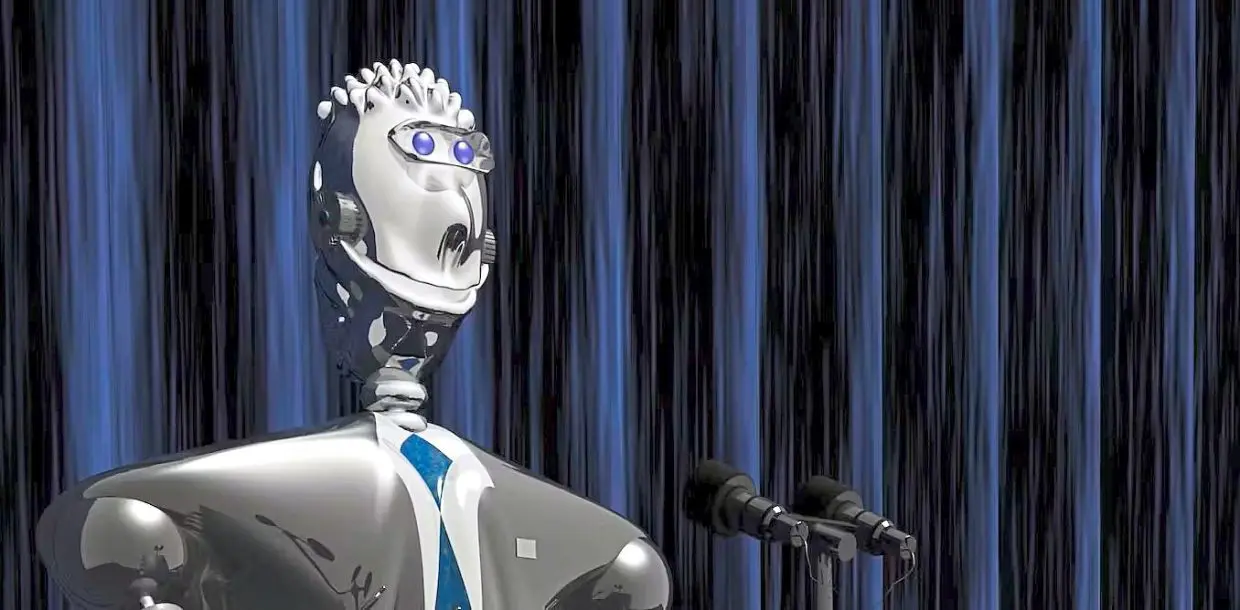
It’s not me, it’s AI: Politicians now have another entity to blame for their misguided statements: artificial intelligence. — Others
IT is something politicians have been doing for a long time, not just in Malaysia but around the world.

IT is something politicians have been doing for a long time, not just in Malaysia but around the world.
But thanks to social media, especially videos, they are no longer getting away with it. It is now easier to catch politicians who shoot their mouths off.
Many have a tendency to get carried away, especially when speaking to a huge audience. They just stop thinking straight.
In Malaysia, some politicians also seem to suffer from a mysterious condition that strikes only after a controversial statement has gone viral. Medical science has yet to classify it, but the symptoms are remarkably consistent.
First, they say something outrageous and bask in the cheering.
Then comes stage two, when social media explodes, followed by viral criticism.
Stage three: Declare, with a straight face, “I was misquoted”.
Blame the media, blame the critics for language inefficiency, and if it still doesn’t work, blame it on Islamophobia, if you are from a certain political party.
Many have a tendency to get carried away, especially when speaking to a huge audience. They just stop thinking straight.
In Malaysia, some politicians also seem to suffer from a mysterious condition that strikes only after a controversial statement has gone viral. Medical science has yet to classify it, but the symptoms are remarkably consistent.
First, they say something outrageous and bask in the cheering.
Then comes stage two, when social media explodes, followed by viral criticism.
Stage three: Declare, with a straight face, “I was misquoted”.
Blame the media, blame the critics for language inefficiency, and if it still doesn’t work, blame it on Islamophobia, if you are from a certain political party.
We have seen it with one politician. When he couldn’t stick to his “I was misquoted” defence, he proceeded to the next diagnosis: “I was quoted out of context”. However, as the video was crystal clear, he upgraded to: “It was a translation error.”
If the statement had been delivered in flawless English, Bahasa Malaysia, Mandarin, or Tamil, there is still one final line of defence: “My words have been manipulated.”
Because there is now another entity to blame: artificial intelligence (AI). One can always claim AI was used to manipulate the voice to create fake news.
It is a fascinating phenomenon. Malaysian politicians possess an almost supernatural ability to become “victims” of journalism the moment public opinion turns against them.
It’s a wonder how we journalists have managed to fill our news portals and newspapers when every controversial quote apparently exists only in an alternate universe.
Perhaps we have misunderstood the purpose of press conferences. We thought politicians were speaking to the media. Apparently, they were merely conducting experimental theatre.
Translation, it seems, has become the political equivalent of bad weather. Whenever things go wrong, blame the translator.
Then there is the familiar “out of context” defence. Context has become a magical place where every offensive remark somehow goes to camouflage itself.
Of course, journalists are not infallible. Genuine mistakes happen and indeed there are reporters who are poor in understanding other languages except the medium in which they work.
Quotes can occasionally be inaccurate, translations can genuinely miss nuances, and corrections are part of responsible journalism. But the interesting part is how rarely politicians discover these errors before the backlash begins.
Once upon a time, politicians could dispute a printed quote.
Today, there are livestreams, multiple camera angles, podcasts, TikTok clips, CCTV footage, and three different people recording on their phones from the front row.
Yet somehow, even high-definition video has quotes “taken out of context”.
The real casualty is public trust. When every uncomfortable remark is dismissed as a media conspiracy or translation error, genuine reporting becomes harder to defend, and genuine corrections become harder to believe.
Still, politicians get away with it most of the time. You have to be thick-skinned to be a politician.
Politicians ask voters to trust their promises, their manifestos, and their vision. That trust must also extend to owning their words when the microphones are on.
After all, leadership is not measured by never making mistakes. It is measured by having the courage to say, “Yes, I said it – and I was wrong”.
In my 40 years as a journalist, I have lost count of the number of times when politicians denied what they said.
But the most memorable one for me was a denial by a minister who has since retired. He called up my editor angrily to refute my story, saying he did not utter what I had written.
My editor, though, listened to the tape recording – that’s what we used in the 1980s – and then sent me over to the minister’s office where I replayed the tape to him.
After a short silence, he came out with this straight-faced reply: “You are still wrong. I may have said it but I didn’t mean it and you should have asked me to clarify.’’
What a gem.
But there’s a another new defence now: When all fails, start a new controversy.
Like one politician just did. He announced that his team had completed the legal and historical documentation to challenge Penang’s lease payment rates. The thing is, no specific physical “legal address’’ or court-filing location has been formally launched or executed yet.
If the statement had been delivered in flawless English, Bahasa Malaysia, Mandarin, or Tamil, there is still one final line of defence: “My words have been manipulated.”
Because there is now another entity to blame: artificial intelligence (AI). One can always claim AI was used to manipulate the voice to create fake news.
It is a fascinating phenomenon. Malaysian politicians possess an almost supernatural ability to become “victims” of journalism the moment public opinion turns against them.
It’s a wonder how we journalists have managed to fill our news portals and newspapers when every controversial quote apparently exists only in an alternate universe.
Perhaps we have misunderstood the purpose of press conferences. We thought politicians were speaking to the media. Apparently, they were merely conducting experimental theatre.
Translation, it seems, has become the political equivalent of bad weather. Whenever things go wrong, blame the translator.
Then there is the familiar “out of context” defence. Context has become a magical place where every offensive remark somehow goes to camouflage itself.
Of course, journalists are not infallible. Genuine mistakes happen and indeed there are reporters who are poor in understanding other languages except the medium in which they work.
Quotes can occasionally be inaccurate, translations can genuinely miss nuances, and corrections are part of responsible journalism. But the interesting part is how rarely politicians discover these errors before the backlash begins.
Once upon a time, politicians could dispute a printed quote.
Today, there are livestreams, multiple camera angles, podcasts, TikTok clips, CCTV footage, and three different people recording on their phones from the front row.
Yet somehow, even high-definition video has quotes “taken out of context”.
The real casualty is public trust. When every uncomfortable remark is dismissed as a media conspiracy or translation error, genuine reporting becomes harder to defend, and genuine corrections become harder to believe.
Still, politicians get away with it most of the time. You have to be thick-skinned to be a politician.
Politicians ask voters to trust their promises, their manifestos, and their vision. That trust must also extend to owning their words when the microphones are on.
After all, leadership is not measured by never making mistakes. It is measured by having the courage to say, “Yes, I said it – and I was wrong”.
In my 40 years as a journalist, I have lost count of the number of times when politicians denied what they said.
But the most memorable one for me was a denial by a minister who has since retired. He called up my editor angrily to refute my story, saying he did not utter what I had written.
My editor, though, listened to the tape recording – that’s what we used in the 1980s – and then sent me over to the minister’s office where I replayed the tape to him.
After a short silence, he came out with this straight-faced reply: “You are still wrong. I may have said it but I didn’t mean it and you should have asked me to clarify.’’
What a gem.
But there’s a another new defence now: When all fails, start a new controversy.
Like one politician just did. He announced that his team had completed the legal and historical documentation to challenge Penang’s lease payment rates. The thing is, no specific physical “legal address’’ or court-filing location has been formally launched or executed yet.
National Journalism Laureate Datuk Seri Wong Chun Wai is the chairman of Bernama. The views expressed here are solely the writer’s own.


No comments:
Post a Comment