Iranian Strike Destroys the Emirates’ Most Valuable Military Aircraft at Largest Airbase
Middle East , Aircraft and Anti-Aircraft
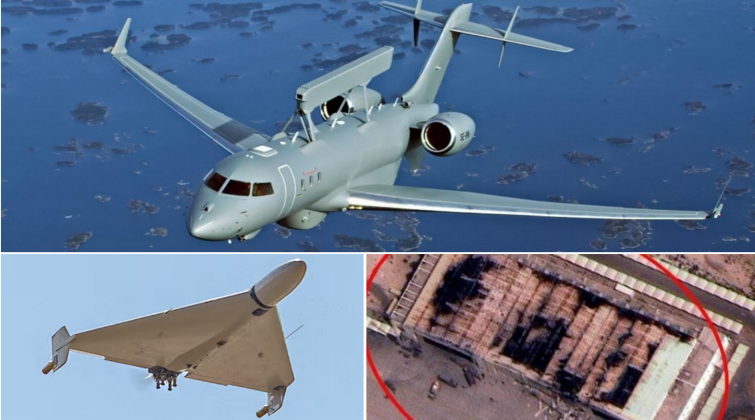
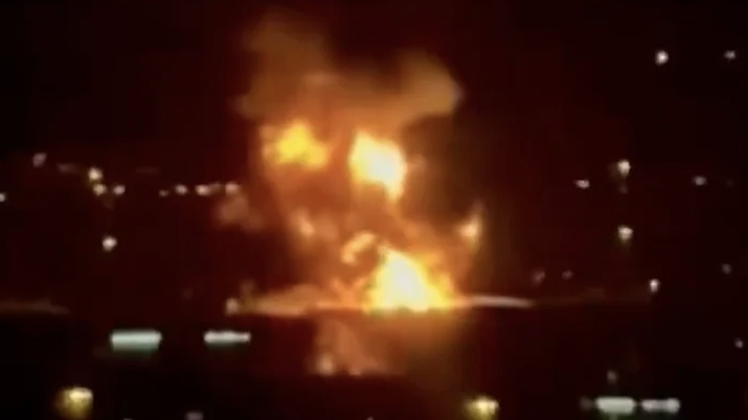
Multiple sources have reported that strikes launched by the Iranian Islamic Revolutionary Guard Corps have destroyed a Untied Arab Emirates Air Force Saab GlobalEye airborne early warning and control (AEW&C) system, which is one of the most high value military aircraft operated the the Middle East. The aircraft was targeted at Al Dhafra Air Base in Abu Dhabi as part of a large scale drone attack on the facility. The base hosts air assets from the UAE Air Force, the U.S. Air Force, and the French Air Force, with the full extent of the damage remaining unclear due to the unknown contents of hangers that were seen destroyed in satellite imagery. It is highly possible that more than one GlobalEye was damaged in the attack. Alongside the GlobalEye, hangars targeted are thought to accommodate U.S. Navy MQ-4C Triton unmanned long range maritime surveillance aircraft, which cost over $240 million each, and U.S. Air Force MQ-9 Reaper reconnaissance and combat drones.
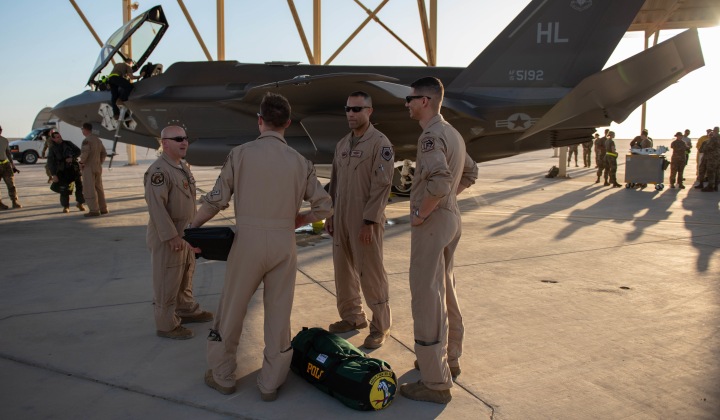
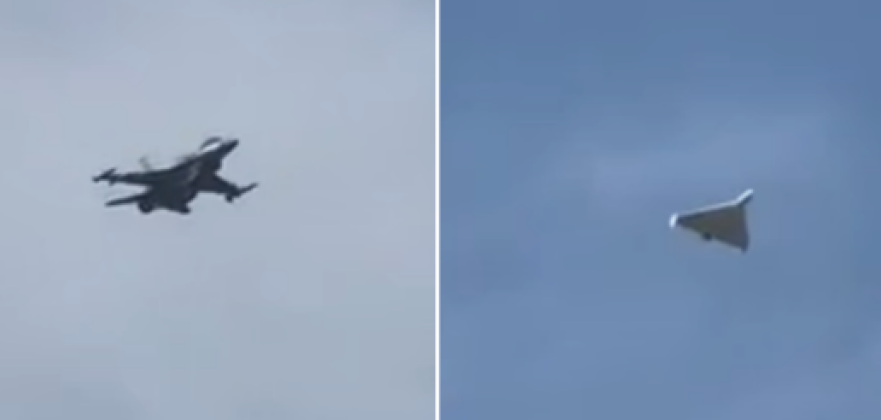
Although UAE Airspace is protected by a dense multi-layered air defence network including U.S.-supplied THAAD and Patriot anti-ballistic missile systems, South Korean Cheongung-II air defence systems, and supporting air defence artillery, the effectiveness of this network has been highly limited. Iranian forces’ ability to strike Al Dhafra, which is one of the most heavily defended facilities in the country, has provided one of multiple indications that air defence capabilities are rapidly diminishing. The release of images showing damage at Al Dhafra closely coincides with the release of footage showing mass destruction of major infrastructure, including the country’s largest airport, Dubai International Airport, and largest port at Fujairah. Although the UAE Air Force and the French Air Force have deployed fighters from Al Dhafra to intercept drone attacks, their suitability for such operations has been limited, with the French Air Force’s operations over two weeks having led the country’s defence ministry to raise serious questions regarding the severe depletion of its costly air-to-air missile stockpiles.
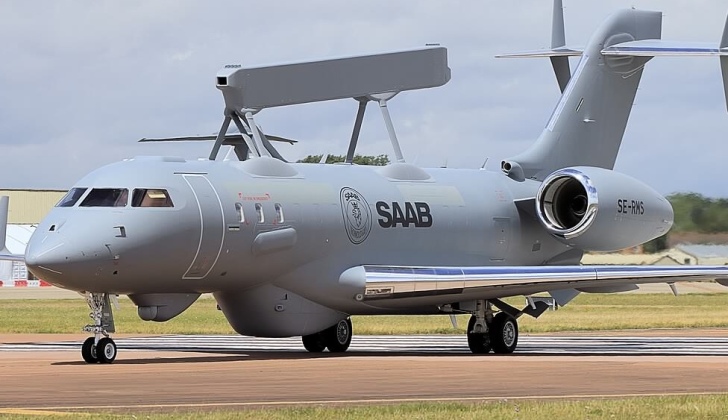
The GlobalEye was developed to provide advanced situational awareness to the operator’s networks, and integrates two oversized radars and advanced data links, as well as signals and electronic intelligence sensors enable the aircraft to detect and analyse radar emissions and communications signals. The aircraft’s capabilities are nevertheless significantly more constrained than those of larger more advanced AEW&C systems such as the U.S. E-7 Wedgetail and the Chinese KJ-500. The UAE Air Force is currently the type’s only operator, with France and Sweden having also placed orders for two and three respectively. The relatively small radars carried by UAE Air Force F-16, Mirage 2000, and future Rafale fighters makes support from AEW&Cs particularly important, contrasting to the Royal Saudi Air Force which operates much larger F-15 fighters that can function much more independently.
Five GlobalEye systems were delivered from 2020-2024 under a $2.5 billion contract, making them significantly more costly than other aircraft confirmed to have been damaged or destroyed in Iranian attacks, such as the U.S. Air Force KC-135 tankers targeted at Prince Sultan Air Force Base in Saudi Arabia in a closely coinciding attack. The destruction of the GlobalEye is expected to further limit the U.S. and its strategic partners’ situational awareness in the region, after the Revolutionary Guard Corps destroyed the sole AN/FPS-132 radar based outside the U.S., which was located in Qatar, and two AN/TPY-2 radars from THAAD systems in Jordan and the United Arab Emirates, as well as multiple lower value radar systems. The U.S. has been forced to redeploy anti-missile systems and their radars from across the world, most notably from strategic forward locations in South Korea, to compensate for these losses.
While missile defences in Israel can depend on a further AN/TPY-2 system in Turkey to track incoming missiles, states located closer to Iran have remained far more vulnerable, with the UAE, Bahrain and Qatar having been targeted particularly intensively due to their leading roles in supporting the U.S.-led campaign against Iran. Footage showing local Patriot air defence systems repeatedly failing to intercept even relatively basic Iranian ballistic missile strikes on multiple occasions have followed a long history of the system’s failures during combat, with its underperformance thought to have further exacerbated frontline U.S.-aligned Gulf states’ vulnerability. The U.S. has itself suffered from extreme shortages of surface-to-air missile interceptors, which has reportedly been a primary factor leading it to push for a ceasefire.


No comments:
Post a Comment