
2,000 kg of Pork Smuggled into Malaysia Just Before Chinese New Year
25 Jan 2026 • 1:00 PM MYT

AM World
A writer capturing headlines & hidden places, turning moments into words
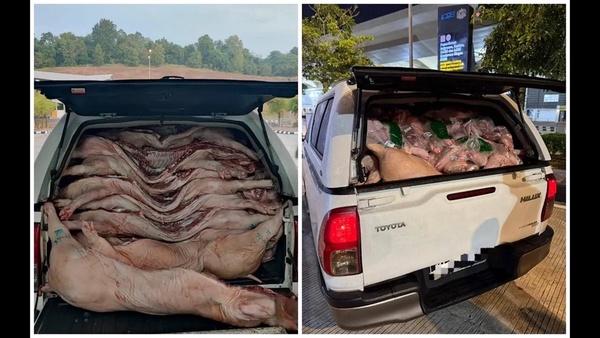
Have you ever wondered why a truckload of pork trying to enter Malaysia from Thailand made national headlines? Why would someone risk tens of thousands of ringgit to smuggle forbidden meat across a busy checkpoint? This is not a small roadside bust. Malaysian border forces recently stopped 2,000 kg of pork carcasses coming in without proper import papers, right at one of the nation’s busiest checkpoints on the Malaysia–Thailand border. (BERNAMA)
This is a story about enforcement, economics, disease risk, and the hidden world of cross‑border trade that most Malaysians never see. It is more than just pork on a truck. It shows how Malaysia protects its economy, public health, and borders amidst rising smuggling pressure.
A border bust with big numbers
Malaysia’s Border Control and Protection Agency (AKPS) stopped a cargo vehicle at the Bukit Kayu Hitam Immigration, Customs, Quarantine and Security (ICQS) Complex that was carrying 2,000 kg of pig carcasses. The meat had no valid import documents and was destined for the Malaysian market. (Sinar Daily)
AKPS commander SAC Mohd Nasarudin M. Nasir said the driver was pulled over at about 6.30 am. A closer inspection revealed the heavy cargo. The pork was estimated to be worth about RM66,000. (Sinar Daily)
Importantly, the import of pork from Thailand is completely banned due to African Swine Fever (ASF), a highly contagious pig disease that can devastate livestock industries. (Sinar Daily)
ASF does not affect humans, but it wipes out pig herds. Many countries, including China, Vietnam and Malaysia, have strict controls to avoid outbreaks. Recent pork bans from Thailand aim to prevent ASF from entering Malaysian farms. This makes illicit pork a high‑risk product.
Why pork smuggling happens
To understand why smugglers risk arrest, we need to look at market forces.
In Malaysia, pork is relatively expensive. A recent report discussed how prices for live pigs had soared, with some wholesalers arguing Malaysian pork is among the most expensive in the world. (Reddit)
High prices create profit incentives for smugglers. They buy cheaper pork across the border and try to bring it in illegally to sell at a margin. But high rewards come with high risks. The ASF ban means heavy fines and possible jail.
Smuggling is not limited to pork. Malaysian Customs reported 7,215 smuggling cases in 2024, with total seizures valued at RM1.64 billion. These included drugs, cigarettes, alcohol, and other goods. (Malay Mail)
The broader border enforcement landscape
Bukit Kayu Hitam is one of Malaysia’s busiest land checkpoints. It sits on the main road from Thailand into Kedah, handling thousands of travellers and tonnes of goods daily. The checkpoint also acts as an entry point for many products moving between the two countries.
Border enforcement has intensified in recent years. Malaysian authorities coordinate Customs, Immigration, and AKPS operations to stop illegal goods, people trafficking, and public health risks. In the same operation that seized the pork, AKPS also denied entry to nine foreign nationals due to immigration violations. (Sinar Daily)
These efforts mirror wider national action. The Royal Malaysian Customs Department has shifted its strategy to target high‑impact smuggling cases to protect revenue and security. (Malay Mail)
African Swine Fever threat
African Swine Fever has hit Asia hard. Countries like China and Vietnam lost millions of pigs in recent years due to ASF outbreaks. ASF spreads easily through pork products, contaminated equipment, and even clothing or vehicles. That makes stringent border controls essential.
Malaysia’s ban on pork imports from high‑risk areas like Thailand is a precaution to keep local livestock free of ASF. Stopping unregulated pork at the border helps protect Malaysian farms and rural economies.
If ASF were to spread to Malaysia, it could decimate local pig farms, threaten food supplies, and push up prices even further. That inching cost rise is already visible to consumers.
The economics of illegal meat
Smugglers are often driven by dollar signs. When legal trade barriers exist, underground markets emerge. A shipment of pork worth RM66,000 on paper might bring far more in cash sales once distributed illegally.
Market pressures are clear. With pork more expensive in Malaysia than in neighbouring countries, the incentive to bypass the rules remains strong. This is especially true for well‑organised smuggling groups that can move large volumes undetected.
Smuggling networks often diversify. Malaysian authorities regularly intercept large shipments of cigarettes, fuel, and even diesel being moved illegally. These goods can result in massive tax losses for the government, sometimes hundreds of millions of ringgit. (The Star)
The human toll and societal impact
Smuggling is not a victimless crime. It affects legal businesses that follow the rules. Legitimate farmers, butchers, and distributors pay taxes and comply with health and safety standards. When illegal meat floods local markets, it puts these businesses at a disadvantage.
Public trust erodes when markets are skewed by illicit trade. Worse, products without proper inspection pose health risks. Smuggled pork could bypass food safety checks, increasing the chance of contamination or disease spread.
Authorities also face pressure. Border guards and inspectors must work long hours. They face sophisticated smuggling tactics, such as hidden compartments, falsified paperwork, and bribery attempts.
What needs to change
Stopping smuggling is not just about catching offenders at the checkpoint. It requires a mix of policy, technology, and public cooperation.
One idea is better legal trade mechanisms so demand for certain goods like pork can be met through verified sources that comply with health standards. This could reduce the profitability of illegal channels.
Investing in better surveillance tools, such as advanced scanning technology and AI‑driven cargo inspection, would help detect hidden contraband faster. Modernised facilities also reduce delays and corruption opportunities.
Public awareness campaigns can discourage demand for illegal goods. When consumers understand the health and economic consequences, they are less likely to seek bargain deals that fuel smuggling syndicates.
Finally, collaboration with neighbouring countries is vital. Sharing intelligence, harmonising controls, and co‑operating on enforcement can close loopholes smugglers exploit.
What do you think? I’d love to hear your opinion in the comments section.
The Bukit Kayu Hitam pork bust is more than a quirky headline. It highlights deep tensions at Malaysia’s borders between enforcement, economics, health, and human behaviour.
Malaysia’s rising smuggling figures show that without proactive solutions, smugglers will keep finding ways to move illegal goods. Strong enforcement alone is not enough. Policy reform, technology upgrades, and regional cooperation must work hand in hand.


Matlamat Malaysia Bebas Babi - my PAS contact
ReplyDelete