
Sunday, April 05, 2026

Azam: Arrival of US$30m 1MDB-linked art haul in Malaysia kept secret for security reasons


Azam: Arrival of US$30m 1MDB-linked art haul in Malaysia kept secret for security reasons


Pablo Picassio’s ‘L’Ecuyère et les clowns (1961)’ is seen here in a photo from its listing on the Christie’s auction website. — Christie’s screenshot

Sunday, 05 Apr 2026 10:14 AM MYT


KUALA LUMPUR, April 5 — The arrival time of four of 12 paintings linked to the misappropriation of 1Malaysia Development Berhad (1MDB) funds — valued at over US$30 million (RM120 million) — is being withheld for security reasons.

Malaysian Anti-Corruption Commission (MACC) chief commissioner Tan Sri Azam Baki said the decision was to safeguard the artworks, given their high value and their role as part of an ongoing investigation.

“For now, detailed information including the arrival time cannot be disclosed to avoid any security risks,” he told Mingguan Malaysia.

The four works — L’Ecuyère et les clowns (1961) by Pablo Picasso, Montmartre (1934) by Maurice Utrillo, Etude pour femme couchée (1948) by Balthus and Composition (1953) by Joan Miró — are among assets identified by the United States Department of Justice (DOJ) as linked to the 1MDB scandal.


Azam said the paintings were owned by former 1MDB lead counsel Jasmine Loo and had been held at Sotheby’s, with their return secured following cooperation between the MACC, the Federal Bureau of Investigation (FBI) and the DOJ in Washington and New York in December last year.


Media reports had earlier indicated the artworks were expected to arrive in Malaysia imminently, with initial plans for them to be received at the MACC headquarters in Putrajaya.

However, Azam said the paintings have yet to be shipped as they are still undergoing documentation and logistical processes.


“The paintings are still undergoing certain procedures, including documentation and related management, before shipment can be carried out,” he said.

He added that the government will bear the insurance and transportation costs for all the artworks being repatriated.

The four paintings form part of a broader haul of 12 works worth about US$30 million that are being returned to Malaysia.

Another seven paintings remain under the custody of Christie’s, with authorities looking to use the Mutual Legal Assistance (MLA) mechanism to secure their return.

Upon arrival, the artworks are expected to be handed over to the National Art Gallery, which will oversee their preservation.

Authorities have also indicated the pieces may be exhibited to the public as a symbol of enforcement success before any potential auction to recover funds for the government.

US satellite firm Planet Labs announces blackout on war on Iran images after a request from the US government


US satellite firm Planet Labs announces blackout on war on Iran images

Company says move amid US-Israel war on Iran comes after a request from the US government


The Iran war picture blackout | Digital Dilemma
By AFP and Reuters

Published On 5 Apr 2026


Satellite imaging company Planet Labs has said it will indefinitely withhold visuals of Iran and the ⁠region of conflict in the Middle East to comply with a request from United States President Donald Trump’s administration.

The US company announced the decision in an email to customers on Saturday, with news agencies quoting it as saying the government had asked satellite imagery providers ⁠to impose an “indefinite withhold of imagery”.

The restriction expands upon a 14-day delay on imagery of the Middle East that Planet Labs implemented last month, which extended an initial 96-hour delay, a move the firm said was meant to prevent adversaries from using the imagery to attack the US and its allies.

Planet Labs said it will withhold imagery dating back to March 9 and ‌that it expects the policy to remain in effect until the end of the war, which began on February 28 when the US and Israel launched aerial attacks against Iran. The conflict has since spread across the region, with Iran firing missile and drone barrages at Israel and US assets, as well as civilian infrastructure across the Gulf.


War spirals as information control tightens | The Listening Post


Israeli strikes target Iran’s Mahshahr petrochemical zone


US and Israeli Strikes Hit University and Hospital in Tehran

09:15

Death by hanging: Israel law sparks global alarm

15:25

Is Israel applying the Gaza playbook to Iran and Lebanon?


Planet Labs, which was founded in 2010 by former NASA scientists, said in its email to customers that it would switch to a “managed distribution of images” deemed not ⁠to pose a risk to safety.

Under a new system, Planet Labs will release imagery on a case-by-case basis for urgent, mission-critical requirements or in the public interest.

“These ⁠are extraordinary circumstances, and we are doing all we can to balance ⁠the needs of all our stakeholders,” the California-based company was quoted as saying.

Military uses of satellite technology include target identification, weapons guidance, missile tracking and communications. Some space specialists say Iran could be accessing commercial imagery, including pictures obtained via US adversaries. Satellite images also help journalists and academics ⁠studying hard-to-reach places.


US media divide deepens over Iran war narrative


***


Clown takut liao, covering up its own damages


Israelis call for end to Iran war, chant ‘Don’t bomb’


Israelis call for end to Iran war, chant ‘Don’t bomb’

Protesters also voiced scepticism about the government's justification for the war with Iran


Hundreds of Israelis rallied in Tel Aviv, carrying anti-war banners and chanting slogans against prime minister Benjamin Netanyahu. (AFP pic)


TEL AVIV: Carrying anti-war banners and chanting slogans against prime minister Benjamin Netanyahu, hundreds of Israelis rallied in Tel Aviv on Saturday to protest the war with Iran.

Demonstrators gathered in a central square, holding signs that read: “Don’t bomb – talk! End the endless war!” despite restrictions on mass gatherings imposed during the conflict with Iran.

“Police are trying to silence our voice,” Alon-Lee Green, the co-director of Israeli-Palestinian grassroots group Standing Together, told AFP.


“We are here to demand an end to the war in Iran, the war in Lebanon, and the war in Gaza, which is still going on, as well as an end to the pogroms in the West Bank.

“In Israel, there’s always a war. So, if we’re not allowed to demonstrate, we will never be allowed to speak,” he added.


Green and several other protesters were soon detained by police, an AFP correspondent reported.

Protesters also voiced scepticism about the government’s justification for the war with Iran.

“I’m very suspicious of the reasons. I think the main reason is that Bibi wants to stop his trial,” said Cecile, 62, who gave only her first name, referring to Netanyahu with his nickname.

Netanyahu is on trial in a long-running corruption case and has sought a presidential pardon, with US president Donald Trump repeatedly pressuring Israeli president Isaac Herzog to grant one.


In a video statement released on Saturday evening, Netanyahu vowed to press ahead with the military campaign against Iran.

“I promised you that we would continue to strike the terror regime in Tehran, and that is exactly what we are doing,” Netanyahu said.

“Today, we attacked their petrochemicals hub,” he added, after announcing strikes on Iran’s steel-producing facilities the day before.

“These two things are their cash machine for funding the war of terror against us and against the entire world. We will continue to strike them,” he said.


Protester Cecile said the reasons for the war kept shifting.

“The reasons for the war keep moving and changing all the time. We don’t know what will be considered a success or a failure, and we don’t know how long it’s gonna take,” she said.

Since midnight, several waves of Iranian missiles have been launched towards Israel, including targets in Tel Aviv and other areas of central Israel.

At least five people were injured after the missile fire, according to Israeli medics.

Later on, Saturday evening, demonstrators began leaving the square following an alert warning of an incoming missile.

Minutes later, the military reported it had detected an incoming missile from Yemen.

Since Feb 28, the US and Israel have conducted joint strikes on Iran, prompting the Islamic Republic to retaliate with daily missile barrages targeting Israel and several neighbouring countries across the region.


Trump says Iran has 48 hours to make deal as search for US pilot continues


Trump says Iran has 48 hours to make deal as search for US pilot continues

Trump does not reference downed jet in post but points to a US-set deadline for Iran to make deal and open the Strait of Hormuz


US President Donald Trump speaks during a televised address on the conflict in the Middle East in Washington, DC [AFP]


By Joseph Stepansky
Published On 4 Apr 2026


United States President Donald Trump has issued another threat to Iran, writing that it has two days to “make a deal or open up the Hormuz Strait”.

Saturday’s brief, three-sentence post on Truth Social did not reference the ongoing search for a US pilot who is believed to have ejected over Iran after an F-15 fighter jet crashed in the country. Iran has taken responsibility for the downing, the first of its kind since the US and Israeli launched attacks on Iran on February 28.

A separate incident on Friday saw Iran claim it shot down an A-10 Warthog near the Strait of Hormuz, raising questions about Trump’s earlier assertion that the US has established dominance over Iran’s airspace.

Rather than remark on the recent crashes, Trump’s post focused on a 10-day deadline he announced on March 26.

He had called on Iran to open the Strait of Hormuz to international traffic, or else face the “destruction” of its energy plants. That 10-day period is set to expire on Monday.

“Remember when I gave Iran ten days to MAKE A DEAL or OPEN UP THE HORMUZ STRAIT,” Trump wrote. “Time is running out – 48 hours before all Hell will reign down on them. Glory be to GOD!”


Downed US pilot trained to survive, evade, resist and escape


Iran’s coastline: architecture of control


Vehicle engulfed in flames after Israeli drone strike in central Gaza


Iran’s central military command responded to the post hours later, with General Ali Abdollahi Aliabadi deriding the threat as a “helpless, nervous, unbalanced and stupid action”.

In a statement from the Khatam al-Anbiya Central Headquarters, Aliabadi referenced Trump’s rhetoric, saying the “simple meaning of this message is that the gates of hell will open for you”.


Stalled negotiations

While Trump did not provide further details about Saturday’s threat, in a series of posts this week, he pledged to attack Iran’s power plants, oil facilities and “possibly all desalinization plants”.

During a national address on Wednesday, he also threatened to bomb Iran “back to the Stone Ages”, and on Friday, he cheered a strike on a bridge that connects Tehran to the Caspian Sea.

Just this week, more than 100 international law experts published an open letter, warning that targeting civilian infrastructure is a violation of the Geneva Convention and could constitute war crimes.

The Trump administration has also offered shifting objectives and plans for ending the war.

Administration officials have repeatedly said that the US prefers a diplomatic solution. Trump, meanwhile, has touted “victories” even as he has hinted at more weeks of attacks.

At the same time, Iran and the US have sent contradictory messages on the progress of peace talks.

On Saturday, Iranian Foreign Minister Abbas Araghchi said Tehran remained open to diplomacy, after Iran rejected an “unreasonable” 15-point plan put forward by the Trump administration.

“What we care about are the terms of a conclusive and lasting END to the illegal war that is imposed on us,” Araghchi said in a post on X.

The US, however, has argued that Iran’s demand that it maintain “sovereignty” over the Strait of Hormuz is a non-starter.

Pakistan has indicated it will continue to try to support ceasefire negotiations despite the ongoing “obstacles”.


US negotiations with Iran: Tehran does not accept 15-point plan by Washington


No mention of downed pilot

While Trump has not publicly addressed the ongoing search for the US pilot, NBC News reported on Friday that he did not believe the incident would affect any negotiations with Iran.

“No, not at all. No, it’s war,” he reportedly told the network in a phone call.

Nevertheless, experts have warned that the possible Iranian capture of the pilot could create a crisis for Washington, giving Tehran a major leverage point that could snarl any diplomatic resolution.

The incident could also undermine US claims it has a dominant position in negotiations.

Marina Miron, a researcher at King’s College London, said the shooting down of the F-15 undercuts statements from Trump and Pentagon chief Pete Hegseth that the US has established complete control over Iranian airspace.

“Now we have a visible example that Iran still has the capability to target and successfully shoot down US aircraft, making this, of course, very important for Iran to demonstrate the capability to resist,” Miron told Al Jazeera.


“Most likely, the kinds of air defences that Iran is using, such as man-portable air defences, will be much more difficult to locate.”

Any US efforts to rescue the pilot would risk US casualties, Miron added, heightening the risk of further military escalation.

“It’s a race for time, because right now we have this critical window of up to 72 hours where both sides are trying to get hold of the pilot for both military and political purposes,” she said.

The Penang boy who built a RM6.7 trillion empire


FMT:

The Penang boy who built a RM6.7 trillion empire

Yesterday
K. Kathirgugan

He doesn’t hog headlines like Elon Musk or Jensen Huang. But Hock Tan, the Malaysian-born CEO of Broadcom, has quietly built one of the most valuable tech empires on the planet


There is a particular breed of corporate titans that the world loves to celebrate. The loud ones. The ones who tweet at midnight, pick fights with regulators and name their children after algebra. Elon Musk. Mark Zuckerberg. Jensen Huang.

Tan Hock Eng is not one of those people.


And yet, the boy from Penang who left Malaysia on a scholarship more than five decades ago now runs a company worth over RM6.7 trillion. That is more than three times Malaysia’s entire gross domestic product (GDP).

He is, by almost any measure, the most powerful Malaysian-born executive in the history of the technology industry.


And most Malaysians have never heard of him.

Tan, or Hock Tan as he is better known, was born in Penang in 1951. His upbringing was modest, a far cry from the gilded childhoods of many Silicon Valley chieftains.


Details about his early years are scarce, but what is known is that he was bright enough to earn a scholarship to the Massachusetts Institute of Technology (MIT) in 1971, where he completed both a bachelor’s and master’s degree in mechanical engineering by 1975.

He didn’t stop there. After a stint as a research engineer at Union Carbide, he enrolled at Harvard Business School and emerged with a Master of Business Administration (MBA) in 1979. It was a trajectory that would have made any Malaysian parent weep with pride.


What followed was a winding career that few could have predicted would lead to the summit of the semiconductor world. Hock Tan held finance roles at General Motors and PepsiCo, served as a director at Malaysia’s Hume Industries, co-founded a Singapore-based venture capital firm called Pacven Investment, and even spent time at Commodore International, the company behind the legendary Commodore 64 home computer.


Then, in 1999, he took over as chief executive of Integrated Circuit Systems, a small Pennsylvania chipmaker. This is where the Hock Tan playbook began to take shape.

His approach was deceptively simple: find companies with valuable, mission-critical technology, acquire them, strip out the fat, and run what remains with ruthless efficiency.

A former employee once described his management style bluntly: “He runs Broadcom like an investment portfolio. They are all independent fiefdoms.” Think less Steve Jobs, more Warren Buffett, but with semiconductors instead of insurance companies.


In 2005, Hock Tan was appointed chief executive of Avago Technologies, a company spun out of an RM11 billion private equity buyout of Agilent Technologies’ semiconductor division. Over the next decade, he turned Avago from a mid-tier chipmaker into an acquisition machine.

The crown jewel came in 2015, when Avago acquired Broadcom Corporation for RM155 billion, one of the largest semiconductor deals in history at the time. In a move that raised more than a few eyebrows, the combined entity took the Broadcom name, effectively erasing the acquirer’s identity in favour of the acquired’s brand recognition.

It was a calculated, unsentimental decision. Classic Hock Tan.

He didn’t stop there. In 2018, he snapped up CA Technologies to push Broadcom into enterprise software. In 2019, he acquired Symantec’s corporate security business for RM45 billion. And in November 2023, he closed the deal that cemented his legacy: the RM256 billion acquisition of VMware, a cloud computing giant that underpins the digital infrastructure of thousands of enterprises worldwide.

Each acquisition followed the same pattern. Buy. Cut. Optimise. Repeat. It wasn’t glamorous, and it certainly wasn’t popular with everyone. Customers grumbled about price hikes. Employees braced for layoffs. But the results spoke for themselves. Under Hock Tan, Broadcom’s profit margins expanded by more than 20 percentage points, and its stock price has been on a trajectory that would make most chief executives blush.

Then came the artificial intelligence (AI) boom, and Broadcom’s fortunes went from impressive to staggering. In the first quarter of fiscal 2026, Broadcom’s AI semiconductor revenue hit RM35 billion, up 106% year over year. Custom AI chip revenue surged by 140%.

The company now counts Anthropic, the maker of the Claude chatbot, among its biggest customers, with orders worth more than RM84 billion.

Hock Tan himself now has line of sight, as he put it, to achieving over RM420 billion in AI chip revenue by 2027. His compensation reflects this: an RM862 million pay package for fiscal 2025, making him one of the highest-paid executives in the United States.

For Malaysia, his story is both inspiring and sobering. Inspiring because it proves that world-class talent can and does emerge from our shores. A boy from Penang, armed with nothing but brains and a scholarship, went on to build a company that rivals the market capitalisation of entire nations.

Sobering because he had to leave to do it.

Hock Tan became a naturalised American citizen in 1990. He sits on the board of Meta Platforms. He donates tens of millions to MIT and Harvard. His children were raised in the United States.

Malaysia can claim him as one of its own, and it should, but it must also reckon with the fact that the ecosystem he needed to flourish simply did not exist here.

That is not a criticism. It is a challenge. One that should fuel our ambitions rather than deflate them.

The next Hock Tan might be sitting in a classroom in Penang or Johor Bahru or Kuching right now. The question is whether Malaysia will give that kid a reason to stay.

Israeli attacks on southern Lebanon kill two girls, damage hospital


Israeli attacks on southern Lebanon kill two girls, damage hospital

Dozens of people wounded as Israel intensifies attacks in Lebanon, including in and around Tyre.

Israeli attacks on southern Lebanon have killed at least two children and wounded 40 people, according to Lebanese health officials.

In a statement, the Ministry of Public Health said an Israeli strike on Habbush killed two girls and wounded 22 people on Saturday.

Recommended Stories

list of 3 itemsend of list

In a separate statement, it said an attack on al-Hawsh near the coastal city of Tyre wounded 18, including a child, three women and three paramedics. The ministry had previously said the strike on al-Hawsh damaged a nearby major hospital.

The director of the Lebanese Italian Hospital told the state-run National News Agency (NNA) on Saturday that the facility would “remain open to provide the necessary medical care” despite the damage.

Overnight strikes destroyed two buildings near the hospital, according to the AFP news agency. They also shattered windows in the hospital and caused suspended ceilings to collapse, the facility’s management said.

Tens of thousands of people have left Tyre since Israel renewed attacks on Lebanon and launched a ground invasion on March 2 after Hezbollah responded to the February 28 killing of Iran’s Supreme Leader Ayatollah Ali Khamenei in a US-Israeli attack. Some 20,000 people remain in the city, including 15,000 displaced from surrounding villages, despite Israel’s forced evacuation threats covering most of Tyre and a swath of the south.

Hours after the attack, the Israeli army struck three buildings in and around the city, according to the NNA.

One of the attacks hit an 11-storey building northeast of Tyre, completely destroying it and reducing it to a pile of rubble that covered a nearby gas station, AFP reported. A second raid on a five-storey building near the city levelled half of it, leaving the other half standing.  The third strike was on the Burj al-Shamali Palestinian refugee camp, southeast of the city.


Another Israeli air attack destroyed a mosque in the town of Baraashit in the Bint Jbeil district, the NNA reported, along with other bombings across the south.

The NNA also reported that Israeli forces abducted a man in the Lebanese town of Shebaa near the Israeli border in the southeast.

Ground invasion

Meanwhile, Israel continued to press forward with a ground invasion.

Israeli forces blew up houses in several southern front-line villages and towns, including Aita al-Shaab and Ramyah, and bombed bridges linking Samar with Mashghara, claiming they were being used by Hezbollah.

The bombing of bridges and other civilian infrastructure across southern Lebanon has been widely condemned. Rights groups have warned that Israel appears to be trying to isolate the region.

Al Jazeera Arabic also reported that Israeli forces carried out an air attack on the town of al-Qatrani in the Jezzine district of southern Lebanon and Israeli air attacks hit the towns of Yohmar and Sahmar in the eastern Bekaa Valley.

Later on Saturday, Israel’s military said that a soldier was killed during combat in southern Lebanon.

Despite the continued offensive, Heiko Wimmen, a project director for Lebanon, Iraq and Syria at the International Crisis Group, told Al Jazeera that Israel is unlikely to achieve its stated goal of disarming Hezbollah.

“We know that [disarming] Hezbollah is not on the cards, and so we’re seeing an open-ended occupation evolving before our eyes,” he said.

Hezbollah maintains depth in Lebanon’s Bekaa Valley and southern Lebanon, Wimmen said, but added that even if Israel manages to push the group out of these areas, it would not necessarily mean that it would have eliminated Hezbollah entirely.

Lebanon’s Health Ministry said at least 1,368 people have been killed in the country and 4,138 wounded in these attacks, which have also displaced more than one million people.

***

Shailoks doing what they have been doing best, destroying schools and hospitals, killing children and medical staff.


Indonesia receives bodies of peacekeepers killed in southern Lebanon


Indonesia receives bodies of peacekeepers killed in southern Lebanon


Foreign Minister Sugiono told reporters that Indonesia wants a thorough UN investigation into the deaths of the peacekeepers.

Indonesia has received the bodies of three United Nations peacekeepers who were killed in southern Lebanon during Israel’s invasion of the country, amid the ongoing United States-Israel war on Iran.

The coffins of the killed soldiers arrived in Indonesia on Saturday. They were carried on the shoulders of uniformed officers for a ceremony attended by President Prabowo Subianto.

Recommended Stories

list of 3 itemsend of list

After the ceremony, Foreign Minister Sugiono told reporters that Indonesia wants a thorough UN investigation into the deaths of the peacekeepers who were part of the United Nations Interim Force in Lebanon (UNIFIL).

“This is a peacekeeping mission. Incidents such as this should not happen,” the minister told reporters at the airport.

“There must be a security guarantee for peacekeeping soldiers,” he added.

Last week, peacekeeper Farizal Rhomadhon, 28, was killed after a projectile exploded. A UN security source told the AFP news agency anonymously on Tuesday that fire from an Israeli tank was responsible for the attack.

A day later, two more Indonesian peacekeepers, Zulmi Aditya Iskandar, 33, and Muhammad Nur Ichwan, 26, were killed after an explosion struck a UNIFIL logistics convoy in southern Lebanon.

Iskandar’s father said he was shocked that peacekeepers were losing their lives in the conflict.

“We were really sad and regretful, because this is a UN troop, a peacekeeping troop, not deployed for war,” Iskandarudin, 60, told reporters at his house in West Java province.

The three men are expected to be laid to rest on Sunday, and the government has promised financial support for the families.

Saturday, April 04, 2026

DAP needs reforms too – Stephen Ng


DAP should do some serious re-thinking about their decision whether to remain or stay out of Prime Minister Datuk Seri Anwar Ibrahim's cabinet, says this writer. – Scoop file pic, April 4, 2026


DAP needs reforms too – Stephen Ng


Party urged to stay in Anwar’s cabinet, with past electoral setbacks cited as a warning against breaking ranks


Updated 9 seconds ago
4 April, 2026
10:13 AM MYT


I am writing with tongue-in-cheek to prompt the DAP leadership to do some serious re-thinking about their decision whether to remain or stay out of Prime Minister Datuk Seri Anwar Ibrahim’s cabinet.

Giving the prime minister to deliver reforms within six months was a convenient way to pass on the blame to the prime minister after the defeat of the DAP in Sabah.

DAP Secretary-General Anthony Loke would likely have already been part of the DAP during the period when the party, led by its two stalwarts Lim Kit Siang and Karpal Singh, suffered a major setback in the 10th general election in 1999.

That election marked one of the most humiliating defeats in DAP’s history, as both leaders— long regarded as politically invincible – were unseated in the constituencies they contested: Karpal as Chairman and Kit Siang as DAP Secretary-General.

DAP has a history of withdrawing from the coalition Barisan Alternatif that it joined. In the context of marriage, DAP has to learn that a marriage vow includes “For better or for worse, for richer or for poorer, in sickness and in health, to love and to cherish, until death do us part.”

When the marriage gets tough, it is the tough that gets going. Surely, Loke should know that the DAP is not so easily broken or “merajuk” when it comes to an important decision whether its leaders should stay on in cabinet.

DAP was the cause of the collapse of Barisan Alternatif when it withdrew on September 21, 2001, over a disagreement with PAS, causing the collapse of the Barisan Alternatif. This, of course, disappointed a lot of voters who saw Barisan Alternatif, albeit small, as a credible opposition front to contest against Barisan Nasional (BN).

DAP cannot stand as a lone ranger in a multiracial country where the then-ruling party was strongest, but it was pride and perhaps shortsightedness that led them to think they were able to make it alone by themselves.

In the following Election on March 21, 2004, we saw a landslide victory for BN, with DAP only winning 12 parliamentary seats. This simply showed that, unless the three major parties within the then opposition coalition were united, they stood no chance of winning the election in a big way, unlike in 2008 and 2018.

If just judging DAP’s performance by the two leaders’ performance, with Kit Siang winning back Ipoh Timur and Karpal returning to Parliament as MP of Bukit Gelugor after losing in 1999, DAP pundits would have thought that their strategy worked when they were willing to stand alone.

But one cannot dismiss the fact that it was in that year that BN, under the leadership of Tun Abdullah Ahmad Badawi won 198 out of 219 parliamentary seats, because most people were already very fed up with the former prime minister, Tun Dr Mahathir Mohamad. They thought they could rally behind a new and better prime minister.

This was BN’s largest majority since 1978, surpassing the outcome of any other general elections in the past, with the opposition’s seat count, even collectively as individual parties, was reduced to just 20 seats, no thanks to the DAP.

The 11th general election in 2004 is often cited as a key lesson in Malaysian opposition politics and coalition-building, and if this still does not wake up the leadership in DAP today, I wonder what will. The truth has to be better said than seen another major defeat by Pakatan Harapan as a whole.

What this shows is that the rakyat were fed up with the opposition parties not being able to put their act together. Compared to the days when they were together as Barisan Alternative, the coalition had 42 seats compared to 2004, when they were all operating as silos, all three parties only had 20 seats, half of that in 1999. It clearly shows that unity is what the rakyat are looking for.

DAP should also realise that it won the 1999 general election riding on the hype created by Anwar’s own Reformasi movement. Without the support from Anwar’s reformasi movement and the Malay votes, DAP is unlikely today to win many of the rural seats.


Datuk Seri Anwar Ibrahim’s Reformasi movement provided a turning point in the country’s political scenario in 1999. – Bernama file pic, April 4, 2026


I wish that DAP leaders learn from these lessons and be more mature now, unlike those days when they conveniently left Barisan Alternatif in the name of a non-compromise stance only to join back the newly-formed opposition front Pakatan Rakyat led by then PKR leader, Anwar, on April 1, 2008.

Within just a few months, PR gave BN a big blow, a feat which, without the united front, DAP alone would not have been able to make a dent in Malaysian politics.

In the current government, if not for Anwar, East Malaysian political parties also cannot work with the DAP. This is something that should come across very clearly by now to Loke and the top brass leaders within the party; otherwise, why did Loke do the most noble thing that even I never expected: to apologise to Sarawakians, followed by Lim Guan Eng’s public apology the next day.

The DAP must realise two important factors: whether in 1999 or in 2008, they were riding on Anwar’s reformasi movement to stay in government. A lot of people rallied behind Pakatan Rakyat because people wanted a change of government.

Many people gravitated towards Anwar, including the Chinese and Indian communities, which even caused the then prime minister, Datuk Seri Najib Abdul Razak, to utter these words headlined by Utusan Melayu: “Apa Cina lagi mau?” It was an arrogant and blatant blow to the Chinese community, coming from the prime minister himself.

This is why even Amanah parliamentarian Mohd Sany Hamzan, till today, is saying this in parliament, for which we are all grateful to the Hulu Langat MP for speaking up on behalf of the Chinese community, and the general election will not be on until 2027, proving this was coming out from his sincerity and own frustration with the other MPs in the Opposition.

We saw a sterling performance after the three major parties formed Pakatan Rakyat, which won five states in 2008, and many of Umno’s main leaders, such as the late Tun Samy Vellu and Tan Sri Rafidah Aziz, were trounced out of parliament for the first time!

I was in Mozambique in those crucial hours, monitoring the news together with a group of fellow Malaysians from all races at a Mamak restaurant in Maputo. Because of the time difference, we were able to read the news only at night as it went online late in the evening when the votes were counted. Malaysian time is about 5 hours ahead of Maputo time. I recall saying, “Gosh, even Rafidah lost her Kuala Kangsar seat!” Then someone announced, “Samy Vellu also lost badly!”

The victory could not have been won if all three opposition parties had gone their separate ways. For the first time, we saw that Mahathir’s “split- and-rule” failed to defeat Anwar’s leadership.

Today, Penang and Selangor are still under Harapan because of this unity within Pakatan Rakyat, not because of individual parties working separately to take on the general election.

In his early years, Kit Siang, as the general secretary, lacked the wisdom that working together as a team was the only way to make a credible presence. Loke should not repeat the same mistake to defect from Anwar’s cabinet when the going gets tough.

By pulling out from Anwar’s cabinet, it will be a big blow to the government of the day, and the repercussions will surely return to haunt the DAP, for causing a big blow to the government and not representing their voters in the Unity Government. The Unity Government will continue on, as Anwar only has to replace the outgoing DAP leaders.

On the other hand, I think Loke and the others should work together hand-in-hand with Anwar to deliver all the reforms promised in the manifesto. After all, the manifesto was crafted by representatives of all three parties.

It is a marriage where both husband and wife must work in unison, not to ‘merajuk’ and throw a tantrum, blaming the husband for her loss of seats. Grow up, Mr Secretary-General. I respect you a lot, but a wrong move by you will cost us many years of sacrifice to see this day where the country’s economy is slowly coming back together again, and Malaysians can now stand tall in the eyes of the world.

At this juncture, some of the DAP leaders are doing a good job. For example, Hannah Yeoh’s key reforms in Kuala Lumpur have earned commendation from even the Malay voters.

Building on the groundwork done by her predecessor, Datuk Seri Dr Zaliha Mustafa, who turned Kuala Lumpur into a more happening city, reviving the soul of a once soulless city, if Yeoh has to pull out from the Cabinet, this will definitely disappoint a lot of city folks who voted for the DAP in the past. Perhaps, a new minister may cancel the 50 per cent discount given to all the hawkers operating in the city.

Even Housing and Local Government Minister, Nga Kor Ming, who may not be well-liked by most people because of his mannerisms, has done some good things for which I am also grateful — he transformed many recreational parks, once abandoned by the local government, into parks that we can now feel proud of.

The recreational park in my housing estate, for example, was transformed from a “paddy field” after 30 years (I used to call it by this name because of the pool of water in the field after a heavy downpour).

When he was Human Resources Minister, Steven Sim promoted TVET to a lot of young people, urging them to continue their education until the university level through the TVET pathway.

Although I am not fully informed of how the pathway works, I was one of those ordinary Malaysians who used to say: “Not every young person is academically-inclined; some are more skills-based and putting them through the university education just to fill the quota is a big mistake, as they would be better off going through the TVET pathway where they can excel, but the government should follow the examples of both Germany and Australia, where the technical and vocational institutions have been upgraded to become universities.

Even Singapore has done this as early as the 1980s. Nanyang Technological Institute, for example, is today known as Nanyang Technological University (NTU), Singapore.”

For many who asked what reforms we see, since Anwar became prime minister, this is, to me, a very significant reform.


DAP Secretary-General Anthony Loke. – Bernama file pic, April 4, 2026


I have to share my honest opinion about Loke. He may appear to be the most impressive minister DAP has, at least to me in the early months, but to me, he needs to do more to earn my respect.

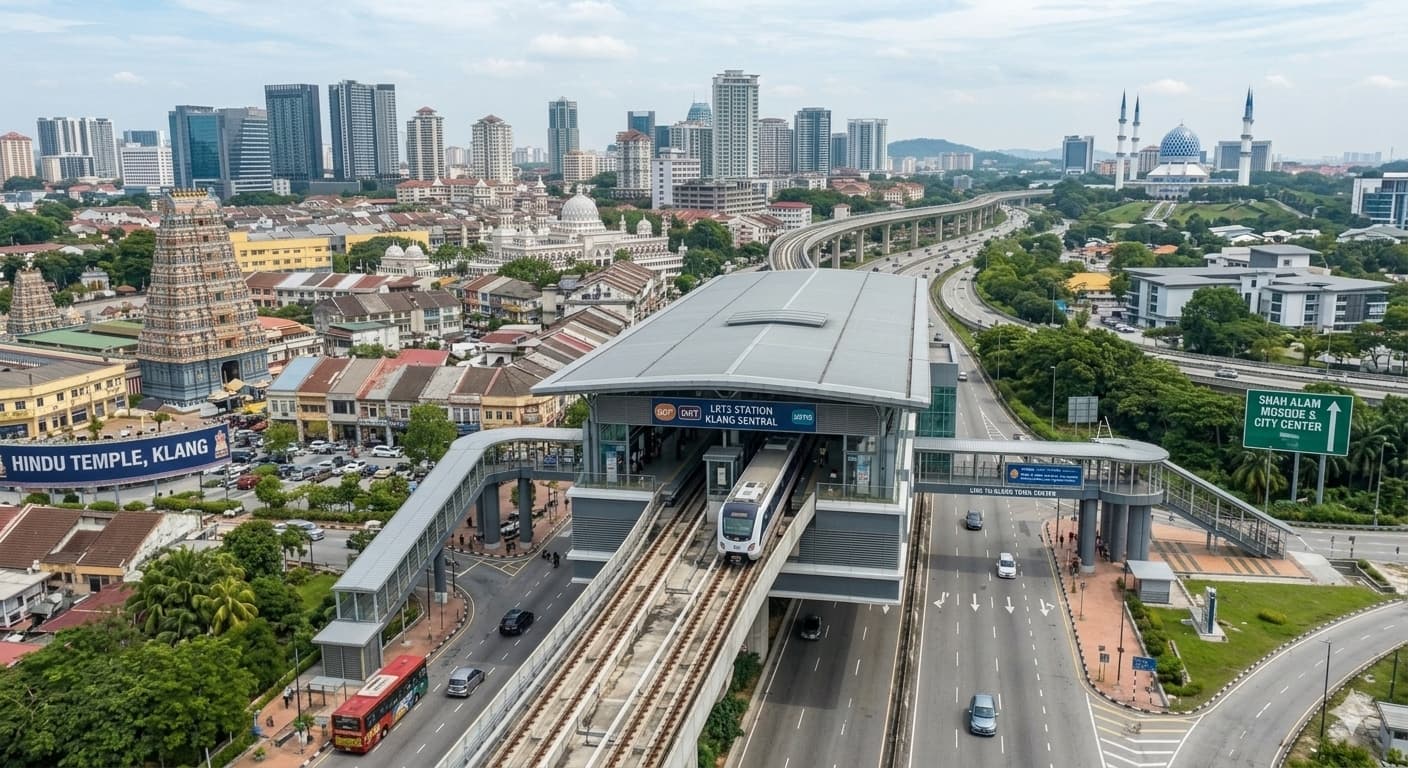
For example, till today, the names of the three MRT stations are still retained despite the confusion they create- MRT Sri Damansara Barat, MRT Sri Damansara Sentral and MRT Sri Damansara Timur. Most people would assume that MRT Sri Damansara Sentral is the station next to Kepong Sentral station (KTM), instead, you have to remember that Sri Damansara Timur is the station you should stop at if you want to change over to Kepong KTM Sentral station.

This is the same with Kwasa Sentral, where you would assume that it is the station to change to the Putrajaya MRT line; instead, you would need to change trains at Kwasa Damansara. One can blame Datuk Seri Wee Ka Siong for the mistakes, but when Loke is now the minister, he should take heed and make the necessary changes instead of allowing the mistakes to continue.

At this juncture, I also want to bring up the case of a husband-and-wife team who founded the Green Pastures Drug Rehabilitation Centre in Puchong.

After their retirement, the couple moved back to Seremban, where the cost of living is low, and the wife has a kind brother who allowed them to stay in the house inherited after their mother passed on.

When I met the couple after many years, I asked about their well-being. It was then that I learnt the couple does not have EPF to survive on. They are mainly depending on their savings.

Thinking that informing Loke, he would at least send one of his service centre staff to assist the couple in applying for social welfare just like what Anwar’s wife Datuk Seri Dr Wan Azizah Wan Ismail did, after i informed her of another social worker who spent some 30 years serving with Malaysian Care to look after former prostitutes and women addicts who agreed to turn on a new leaf; in her retirement, she is now a widow and with very little savings.

On learning this, Kak Wan immediately sent her special officer Kuek Zhe Han, who assisted the retired widow to apply and is now receiving her monthly subsistence.

Meanwhile, the DAP voter now living in Seremban went to the DAP office recently (April 1, 2026) and was told by a young lady that the service centre does not assist people to apply for social welfare.

Knowing well that the Social Welfare Department is notorious for rejecting applications without giving any reasons, people like the social worker living in Kak Wan’s constituency definitely needed someone from the MP’s office to follow up closely with the social welfare department.

My disappointment is that this retired social worker from Seremban went to Loke’s service centre, and Loke should be aware that the young Chinese lady just brushed her off. She just left without any assistance with the application being made, while Kak Wan’s aide, Kuek Zhe Han, helped to follow through the entire process.

She may not want to put up a complaint, but at least Loke should make an effort to assist in whatever way he can to ensure that this lady and her husband get some subsistence from the Social Welfare Department.

Although the current minister, Datuk Seri Nancy Shukri, should have carried out reforms to the Social Welfare Department (I have known the department’s way of handling even genuine applications since some 25 years ago, when I was actively helping wheelchair-bound people.

Nancy’s main task is to ensure that genuine cases are given the subsistence government without even Kak Wan or her special officer’s intervention, if possible, so that the case in Taman Len Seng could get her monthly subsistence.) This is the contrast that I can see between a Madani MP in Bandar Tun Razak and Loke himself in Seremban.

I hope that with just one more year to go before the next general election, Loke and his fellow leaders from DAP will work harder to resolve issues on the ground told to them. I had once wanted to introduce him to a former primary school classmate of mine, who wished to alert him in advance to potential shortcomings in the LRT lines.

However, even after being informed, no action was taken to inspect the depots or warehouses. That’s one of the reasons why the LRT line suffers from service disruption. The warehouses for the entire LRT network are just a couple of shop lots to store all the engine parts.

One can only wonder where all the maintenance money went, if the parts are not available whenever there is a breakdown. In fact, train engineers like my own brother-in-law working with a train manufacturer in Germany in the past, told me that regular maintenance was crucial to ensure that the trains would not suffer from frequent breakdowns.

When he was sent to service the aerotrains at the Kuala Lumpur International Airport, I asked him for an honest answer as a brother-in-law, and he told me that he was truly shocked to see all the engine parts worn off, showing there was a failure to carry out the regular maintenance.

I wonder if, after Loke took over the Ministry of Transport has he implemented the necessary reforms, including inventory control to make sure all the parts are available in the event of a breakdown? Are the trains put on regular maintenance to ensure that they are always in their tip-top condition?

I do not know the details enough, but I was willing to introduce him to someone who could assist him on a voluntary basis, yet there was no interest in finding out what has been happening over the years from someone within the same industry.

Sorry, Loke, you may think you are a minister, but if you do not do your job, when problems crop up, people need to know what you have failed to do – and all the whispers that fell on deaf ears.

Blaming others is easy, but if you have failed to implement the reforms to the public transport system, you have equally to be blamed for any failure by the Madani government. It is not too late to change your ways and withdraw your intentions to pull out DAP leaders from the cabinet.

It is, in fact, an honour for DAP leaders to be given the ministerial posts. Not even Lim Guan Eng was given such honour; therefore, to withdraw from the cabinet is really an irresponsible act that would surely cause DAP to suffer from greater repercussions compared to the losses DAP made during the recent Sabah state election.

DAP must learn from its own past misjudgements, particularly when leaders such as Kit Siang believed that the party could perform better by withdrawing from coalition politics. As the saying goes, “United we stand, divided we fall.”

Remember, the rakyat is watching DAP’s next move. Another mistake, DAP will suffer another disaster, probably far worse than the 2004 elections. It will become a party where people say they never learn from their past mistakes. – April 4, 2026


Stephen Ng has always been a supporter of the DAP. Although politically inactive, he is an ordinary Malaysian and a keen observer of Malaysian politics since 2008. He believes in saying what needs to be said in order to see changes for the better.


More than 1,500 US sailors and family members have fled military bases in Bahrain and elsewhere in the region


From the FB page of:

BREAKING NEWS
More than 1,500 US sailors and family members have fled military bases in Bahrain and elsewhere in the region, NPR reported yesterday.
They “were evacuated back to the United States from their base in Bahrain after the base was attacked by Iranian missiles and drones,” the US news service said.
.
IRANIANS MAKE SEVEN SUCCESSFUL HITS
NPR published a map showing air strikes in Bahrain, which is the home base of the US Navy's 5th Fleet.
“On the opening day of the war, the base, known as Naval Support Activity Bahrain, was struck multiple times,” NPR said. “Posts on social media showed a ballistic missile and Iranian drones slamming into the base.”
There have “been evacuations at other U.S. military bases in the region,” NPR said, adding that details were not provided by the military authorities.
Satellite images from Planet Lab showed that seven buildings were struck between 28 Feb and 6 March.
The US side appears to be underplaying the difficulties it is facing. Meanwhile, some Gulf authorities have ordered that all missiles strikes be described as "minor damage from successful interceptions".