Tuesday, January 27, 2026

Are We Turning Bribery into a Racial Issue?


OPINION | Are We Turning Bribery into a Racial Issue?


27 Jan 2026 • 5:00 PM MYT


Fa Abdul

FA ABDUL is a former columnist of Malaysiakini & Free Malaysia Today (FMT)


Photo credit: The Vocket


Stirring up controversy, a Terengganu state executive councillor claimed that “Type C often gives bribes whilst Type M often receives bribes” - a reference to the ethnic Chinese and Malay communities, respectively. The remark was made in response to a Sarawakian MP who had defended the Dayak community by saying that while his people eat pork, they do not engage in corruption.


A fascinating framing, really. Corruption, it seems, is now a racial relay race. One group runs with the envelope, another waits patiently at the finish line with an open palm.


But let us take this claim seriously. Very seriously. After all, satire works best when logic is allowed to run freely - straight into a wall.


If bribery exists, someone must give and someone must receive. This is often compared to the chicken-and-egg problem. Which came first? The giver or the taker? Except unlike chickens and eggs, bribery does not occur naturally. Money does not wander into pockets on its own. Envelopes do not leap into drawers. A bribe only becomes a bribe the moment it is accepted.


So if we follow the statement to its logical conclusion, then the most important character in this story is the receiver. If the receiver refused and lodged a report on the giver, no such incident would occur at all. End of story. Roll credits. No corruption culture, no scandals, no statements to explain later.


Which leads us - inevitably - to an even spicier hypothesis. If acceptance enables corruption, and repeated acceptance normalises it, then perhaps those who receive frequently begin to like receiving. And those who like receiving may eventually ask when nothing is offered. That, after all, is how habits form. How “culture” is born.


Now add demographics to the mix. If Type M makes up roughly 70% of the population, can we safely conclude that corruption survives not only because Type M receives, but because Type M also asks freely? Technically speaking, without Type M, corruption would not exist at all.


There. Does that sound offensive? It should. Because this is what happens when we racialise behaviour instead of examining actions. The logic may appear neat, even “technically correct,” but it collapses the moment we remember that people - not races - give bribes, receive bribes, and ask for bribes.


And that is the real problem. Not who gives. Not who receives. But how easily we trade accountability for labels.


So perhaps the lesson here is simple: corruption is not a racial trait. It is a choice.


And if a theory sounds clever but leaves entire communities offended, maybe the problem isn’t the people - maybe it’s the theory.


Let’s learn. Let’s move on. And maybe, just maybe, let’s stop blaming chickens for eggs they didn’t lay.



CM rebuts Sanusi's Penang bid, cites failed Sulu claim on Sabah


CM rebuts Sanusi's Penang bid, cites failed Sulu claim on Sabah


Shakira Buang
Published: Jan 27, 2026 3:19 PM
Updated: 7:55 PM


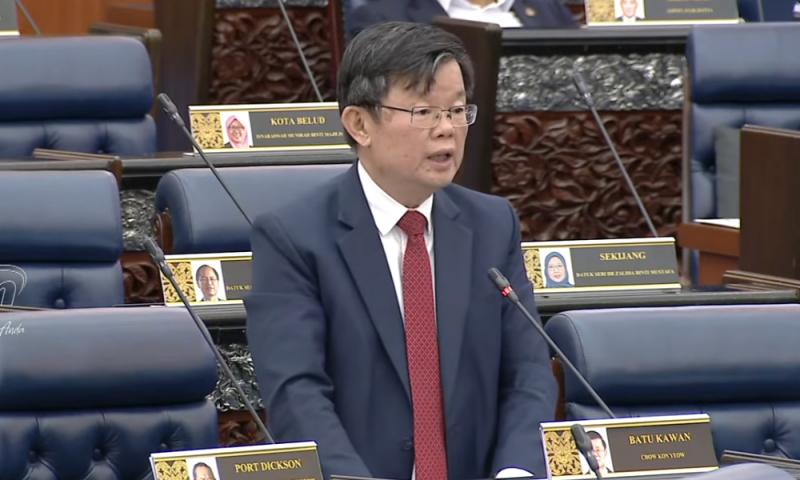
PARLIAMENT | Penang Chief Minister Chow Kon Yeow invoked the Sulu sultanate’s historical claim to Sabah to underscore a fundamental principle that historical assertions cannot override constitutional sovereignty.

In this context, he dismissed Kedah Menteri Besar Sanusi Nor’s claims over Penang as baseless, directly contradicting both the Federal Constitution and the core tenets of Malaysian federalism.

Chow (above) emphasised that the Malaysian government’s consistent legal stance on Sabah has firmly established that sovereignty is governed by the Federal Constitution - not by pre-independence arrangements or historical narratives.

He told the Dewan Rakyat that Penang has been recognised as a sovereign state since the independence of the Federation of Malaya in 1957, and the Malaysia Agreement 1963 further reinforced this status.

“Penang is subject to the Federal Constitution and not to any pre-independence historical claims.

“I want to stress that from the very beginning, Kedah’s claims are entirely unjustified and baseless from a legal perspective and are completely contrary to the principles of the Malaysian Federation that we have long upheld,” he added.

Penang a sovereign state

From a legal standpoint, Chow stressed that Penang is a sovereign state within the Federation of Malaysia.


“After the independence of the Federation of Malaya in 1957, Penang was recognised as a sovereign state on par with other states, including Kedah.

“This status was further reinforced when MA63 was signed, and since then, Penang has been subject to the Federal Constitution and not to any pre-independence historical claims,” he added while debating the Yang di-Pertuan Agong’s speech.

Chow pointed out that the boundaries between Penang and Kedah were also legally established under the Kedah and Penang (Alteration of Boundary) Act 1985, which was passed in Parliament under Article 2 of the Federal Constitution.

“In a federal system, state boundaries cannot be changed arbitrarily, especially through political statements without a valid legislative process, and this claim clearly contradicts the spirit of federalism,” he said.

Chow also warned that if such claims were allowed, it could open the door to other claims that might undermine Malaysia’s stability and harmony.

“It should be remembered that the Malaysian federation was built on the principle of equality among states and respect for each state’s sovereignty.

“If such claims are permitted, we would actually be opening the door to other claims that could threaten the country’s stability in the future,” he said.


Stop the rhetoric

Chow also urged all parties to stop political rhetoric that could confuse the public and damage inter-state relations.


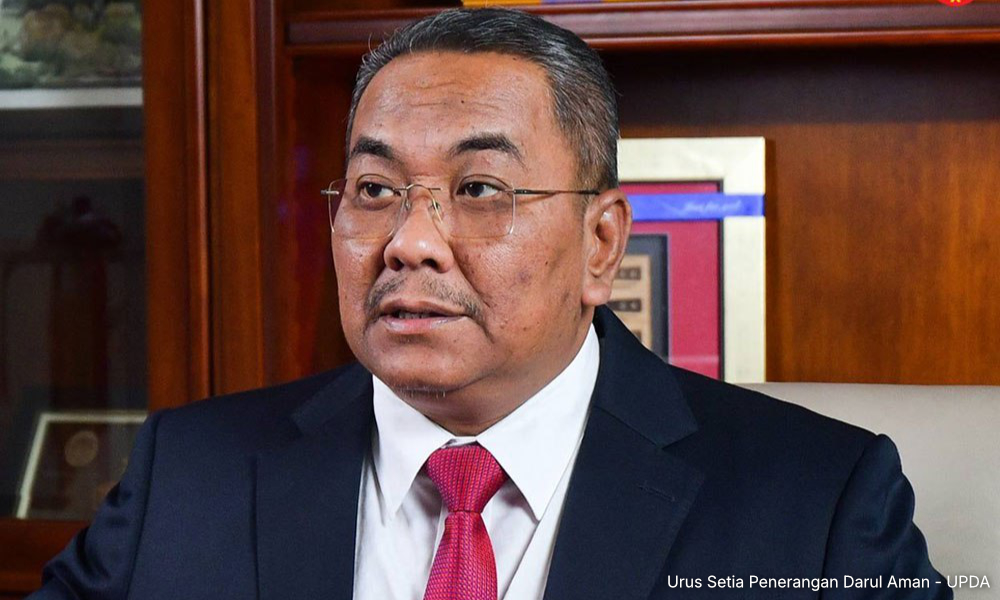
Kedah MB Sanusi Nor


“It is time to end debates that bring no benefit to the people and the nation,” he added.

In 2021, the Kedah government demanded RM100 million in lease royalties from the federal government for Penang, as the lease had never been reassessed since 1786.

In January this year, Sanusi reportedly said that the state government was confident that the legal process regarding Kedah’s claim over Penang could begin this year after the analysis of related documents was completed.


Just import pork, no need for pig farms, says Bersatu MP


FMT:

Just import pork, no need for pig farms, says Bersatu MP


Mohamad Fadli


Kalam Salan also urges fellow Muslims not to insult those who consume pork or other animals that are forbidden in Islam


Sabak Bernam MP Kalam Salan said regardless of where it is located in Malaysia, pig farming is likely to face opposition. (Envato Elements pic)


KUALA LUMPUR: An opposition MP has proposed that the government put an end to pig farming in Malaysia and only import pork for the needs of the local non-Muslim community.

Kalam Salan (PN-Sabak Bernam) said pig farming in Malaysia is likely to face opposition from local residents, regardless of where it is located.

Citing Singapore as an example, the Bersatu MP said the city-state chose the “safer” approach by importing pork rather than rearing pigs domestically.

“If it’s located in Kuala Langat or Bukit Pelanduk, there will be objections. If it’s moved to Benut, there will still be objections. If it’s located in a Chinese New Village, there will surely be objections as well.

“So there’s no need to rear pigs, just import pork. In Singapore, more people consume pork but they don’t rear pigs, and that is safer,” he said while debating the king’s speech in the Dewan Rakyat.

Last week, the Selangor government cancelled its plan to centralise the state’s pig farming industry in Bukit Tagar, Hulu Selangor, after being rebuked by the Selangor sultan and advised by Prime Minister Anwar Ibrahim.

Menteri besar Amirudin Shari said backlash against the proposal was rather premature as the Bukit Tagar plan had not been formally submitted yet.

He said that, moving forward, the state government would not announce any potential alternative location until a decision was made.

Separately, Kalam said the main bone of contention was not the pigs themselves but poorly-managed farms that caused pollution.

He also addressed public criticism of pork in general, maintaining that, as a Muslim, he respected Malaysia’s cultural and religious diversity.

“I have an orchard. Even when 15 to 20 wild boars come in, they don’t stink up the place,” he said, adding that how the farm is maintained is important.

“As a Malaysian, I, too, may feel like eating pork, monitor lizards or snakes, but my religion forbids it, so I don’t eat them. But my religion has never taught me to insult others who consume these animals.”


***


I agree fully with him unless of course Sarawak with its vast and quite uninhabited hinterland is willing to assume responsibility for this industry - the advantage is Malaysia can continue to control quality of pork sold.


Required campus history classes: Skip propaganda, facilitate exchanges


Required campus history classes: Skip propaganda, facilitate exchanges


Thursday, 22 Jan 2026 8:44 AM MYT
By Praba Ganesan


JANUARY 22 — A peculiar advantage from my fairly disadvantageous career trajectory is that I still deal with interns.

They do not enjoy dealing with a relic. The low perceived value of the organisation and its mission mean the interns are not the cream but rather the broader average.


Two things are generally revealed about them, as they struggle to deal with non-repetitive tasks. That they are generally allergic to math and science, and that they hate history classes. In and out, every batch teaches me.

Their lessons ached within me, reading the prime minister’s announcement that undergraduates must endure recalibrated mandatory Malaysian history classes.


Apparently, too many young Malaysians emerge from 11 schooling years shallow or ignorant about our Constitution and the story of Malaysia.


They want to drill in the lessons in university when they are pursuing a degree in engineering, food technology or graphic design. This is the solution, to them.


Outrageously indifferent

Please forgive me if I do not shout Eureka in the street reading about this ingenious solution to manipulating the young to be subservient to the state’s strict interpretation of the past.

There are reasons why history lessons in schools fail to tantalise the students. And accentuating technological shifts are going to turn the latest effort by the government to screw in our students’ heads right into a farcical exercise.

Firstly, history is critical to the development of a person.

Who we were, tells us about who we are, and guides us to who we should aspire to be.


Then why my cynicism?


The author argues that forcing undergraduates to relearn state-approved Malaysian history will not fix decades of disengagement — and that only open, critical, debate-driven teaching can build genuine understanding in a generation raised on freer information, not indoctrination. — Picture by Miera Zulyana


It stems from why generations of Malaysians detest history lessons. Our history lessons stifle free thought which is to a child of this century, weird ass.

They live in a time where nothing is straightforward yet they have to swallow the official and two-dimensional state version. Marks are for memorisation, not for opinions.

In impolite language, the state wishes to indoctrinate the next generation.

Perhaps, it is wholly appropriate to update our education ethos in how to engage students in the history classroom.

For starters, I asked AI (ChatGPT) about its opinion about history education, with this question, “How accurate is the history taught in Malaysian schools?”

The machine falls into deep introspection and answers in 14 seconds. The following bits, telling:

“Reasonably accurate on the basic timeline and headline events, but it is not designed to be a neutral academic survey. It is explicitly a nation-building subject — and that purpose shapes what is included, what is emphasised, and how sensitive episodes are narrated.”

The shorter summary would be, sneaky indoctrination.

There is less space for uncertainties and obviously no contradictions.

Even without AI, students live lives and in life they quickly observe uncertainties in all relationships and responsibilities, with contradictions a norm.

Yet, these young adults must believe on face value that the past was completely clear cut without question marks?

And if they were passive and disinterested by the time they take their SPM, somehow when they are older, experienced and rebellious in their late teens or early twenties they would obediently adopt the official version?

There is an opportunity here though I am 150 per cent sure the government will spurn it.

It’ll be happier to have 10 per cent more input stuffed into our young people’s heads through additional telling sessions in university rather than engage openly with young adults and enjoy rigorous debate about the past with an awareness they may reject the official version.

If in three years of Large-Language Model AI, revolution in education is rife, how much more independent learning builds in the years to come in the age of machines?


Mat Kilau and Chin Peng killed those in British uniforms

Imagine that is on a slide during the undergrad required history class.

Will upset some. Parallelisms are atomic in historical discussions.

But our history is complicated and the upside of antagonising discussion points is to draw people into sharing their perspectives.

Are discussions resolved? Of course not, that’s not the purpose. It is finding out whether civil discussions can be had in the present about the past which informs us how sturdy Malaysia is after almost 70 years.

Also, if they are incendiary, these classes will be exciting at least.

Far better than what will transpire with the new plans. More staid classes which students assume are an unnecessary detour in their journey to a degree.

History, whether we hate it or not, never goes away. Contentious history lurks in the shadows, forcing second guesses among proponents and detractors.


The PM’s insistence

The rejig of history for university students underscores the prime minister’s fears that the students do not get it.

And if they do not get it, and it is bad when they do not get it, using the same method from primary and secondary schooling in the tertiary level will only trigger more resistance.

The indoctrination method is from the old century, applicable only in North Korea and Iran, synonymous with controlled states.

Malaysia, whether our politicians acknowledge it or not, is stepping in the direction of freer information.

The appreciation of our history cannot be forced anymore, and certainly not beaten into our young.

The best option left is to invite them to the discussion as empowered participants, which is also incidentally the way knowledge is championed in the international universities Malaysia wants to follow.

It is a scarier and less guaranteed path, and probably frightens a vast number of lecturers unaccustomed to open and frank exchanges.

But it is a path of purpose, not a public relations stunt.


Japan PM says US alliance would collapse if Tokyo ignored Taiwan crisis


Japan PM says US alliance would collapse if Tokyo ignored Taiwan crisis


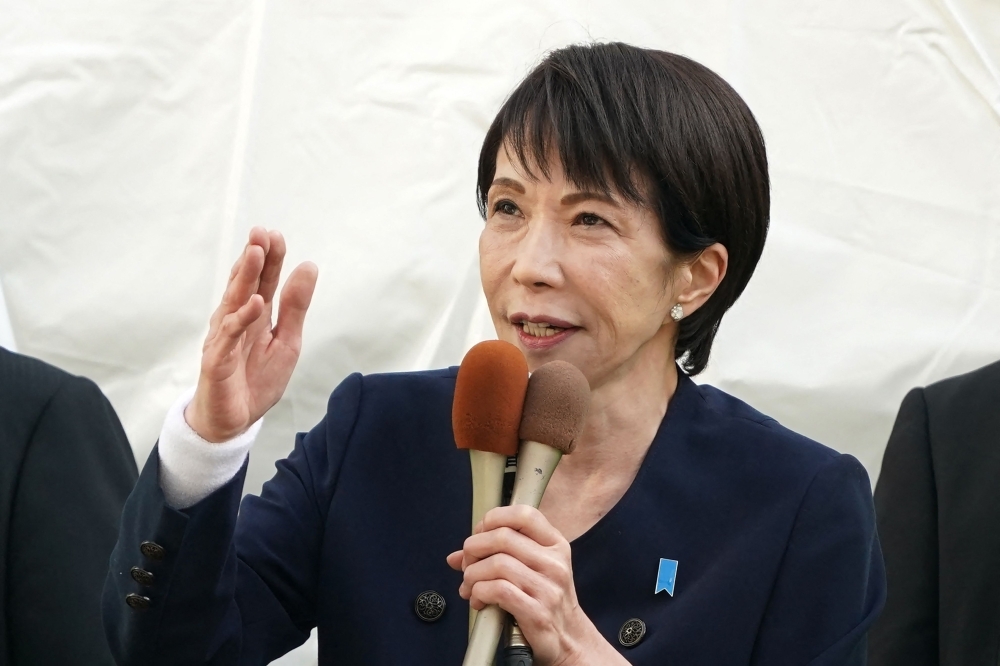
Detailing the Japanese response to a hypothetical Taiwan crisis, Takaichi appeared to dial back on her remarks in November that suggested Tokyo could intervene militarily during a potential attack on the island. — AFP pic

Tuesday, 27 Jan 2026 4:34 PM MYT


TOKYO, Jan 27 — Japanese Prime Minister Sanae Takaichi said the alliance between Tokyo and Washington would collapse if Japan failed to act in the event of an attack on the US military during a conflict in Taiwan.

Detailing the Japanese response to a hypothetical Taiwan crisis, Takaichi appeared to dial back on her remarks in November that suggested Tokyo could intervene militarily during a potential attack on the island.

That comment provoked the ire of Beijing, which regards the democratic island as its own territory.

Ahead of a snap election in February, Takaichi was asked during a news programme yesterday about her remarks in November that suggested Tokyo could intervene militarily during a potential attack on Taiwan.


Asked during a news programme on Monday about those remarks, Takaichi pointed out that in the event of conflict, Japan and the United States might jointly conduct an evacuation operation to rescue Japanese and American nationals.


“If the US military, acting jointly with Japan, comes under attack and Japan does nothing and runs home, the Japan-US alliance will collapse,” she said on the TV Asahi programme ahead of a snap election in February.

“If something serious happens there, we would have to go to rescue the Japanese and American citizens in Taiwan. In that situation, there may be cases where Japan and the US take joint action,” the prime minister said.


She added: “We will respond strictly within the bounds of the law, making a comprehensive judgment based on the circumstances.”

In the wake of Takaichi’s comments in November, China has discouraged its nationals from travelling to Japan, citing deteriorating public security and criminal acts against Chinese nationals in the country.

Beijing is reportedly also choking off exports to Japan of rare-earth products crucial for making everything from electric cars to missiles. — AFP

‘Don’t fall for scams’: analyst warns Harimau Malaya players after CAS temporary reprieve


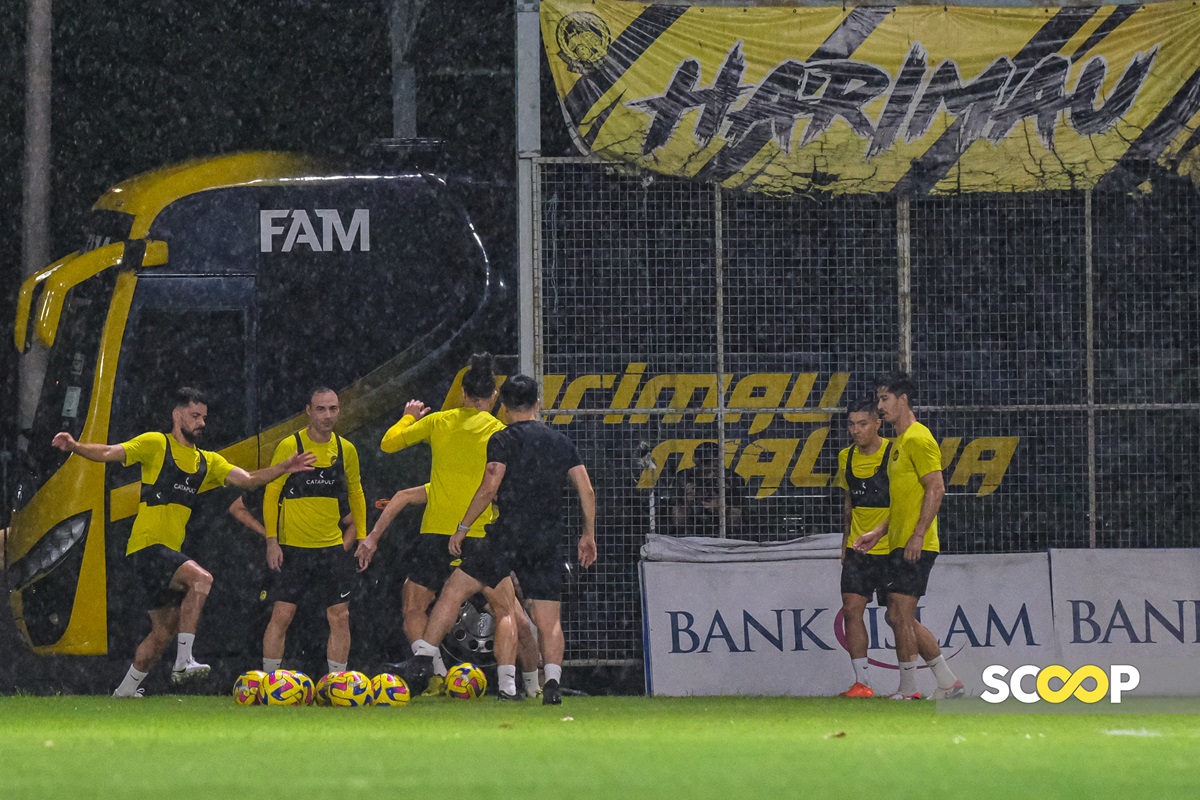
The Court of Arbitration for Sport (CAS) today allowed seven suspended Malaysian footballers to return to competitive play pending a final verdict. - Scoop file pic, January 27, 2026


‘Don’t fall for scams’: analyst warns Harimau Malaya players after CAS temporary reprieve


Malaysian footballers have been cautioned to stay disciplined and avoid being misled by “scams” and false promises after the Court of Arbitration for Sport (CAS) temporarily lifted FIFA suspensions on seven players pending a final ruling


Sandru Narayanan
Updated 17 seconds ago
27 January, 2026
7:31 PM MYT


KUALA LUMPUR – Players must remain loyal, disciplined and focused on their true country of birth, and beware of scams in the sporting world, warns sports analyst Sadek Mustaffa after the Court of Arbitration for Sport (CAS) today allowed seven suspended Malaysian footballers to return to competitive play pending a final verdict.

Speaking to Scoop, Sadek, a senior sports science lecturer at Universiti Teknologi MARA (UiTM), said the temporary clearance should not be seen as a victory.

“This is merely a temporary release pending the actual hearing and final verdict. There is no reason to celebrate prematurely. The case remains under FIFA’s investigation and is far from concluded,” he said when contacted.

Sadek described the case as a warning to all players.

“Do not be swayed or ensnared by scams in the sporting world, or by individuals driven by cheap fame and hollow ambition. Remain loyal, disciplined and focused on your employer and your true country of birth,” he said.

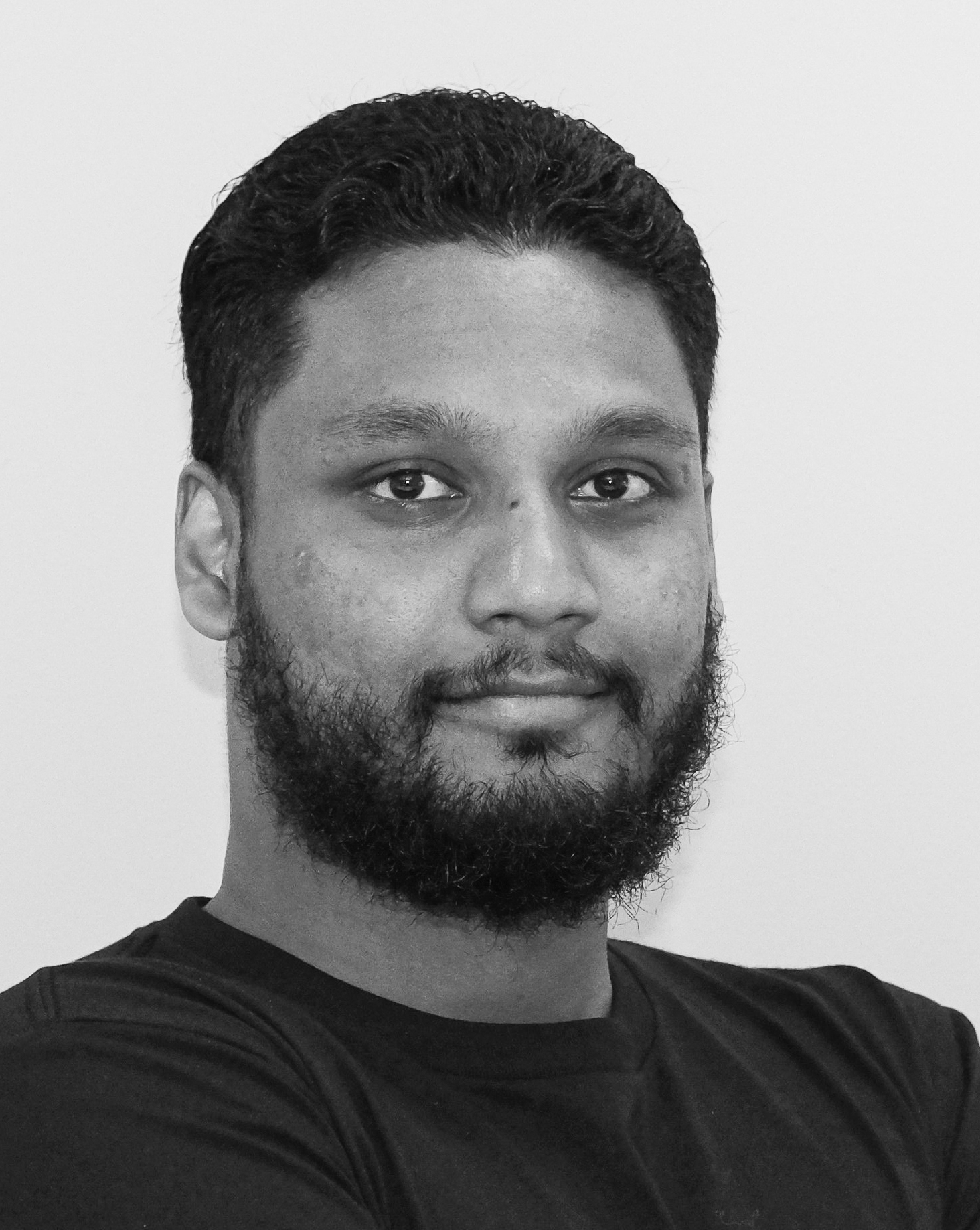
Sports analyst Sadek Mustaffa. – Social media pic, January 27, 2026

He also criticised how the Football Association of Malaysia (FAM) handled the alleged document falsification involving the so-called heritage player issue.

“This is a deeply troubling case that risks becoming a dark chapter in world football history. FAM will stand as a lasting example of how document falsification involving players should never be handled. It is a disgrace that brings shame not only to the organisation but across generations,” Sadek said.

Meanwhile, Datuk Pekan Ramli, a senior lecturer at UiTM’s Faculty of Sports Science and Recreation, said the CAS decision followed sound legal principles.

“In both civil and criminal cases, any punishment only takes effect once all legal processes have been fully exhausted. Until the appeal process is concluded, the sentence does not come into force, and the individual remains free to continue with daily life as usual,” he said.

Pekan said the temporary reprieve does not lessen the seriousness of the offence against FAM.

“This suspension does not indicate, nor does it have the potential to influence, the document falsification charges imposed on FAM. Players should focus on their club commitments while the appeal is ongoing to avoid disrupting team preparations, morale and supporter confidence,” he said.

He added that FIFA had acted appropriately in temporarily suspending the players.

“Not all cases proceed to CAS, and FIFA often has to act swiftly to prevent matters from dragging on. The decision by CAS to allow the players to return temporarily is in line with legal reasoning and due process,” Pekan said.

Earlier, FAM said Facundo Garcés and six other players — Rodrigo Holgado, Gabriel Palmero, Imanol Machuca, João Figueiredo, Jon Irazabal and Héctor Hevel, who were implicated in the alleged falsification of identification documents, had been allowed to resume playing.

According to FAM, CAS granted the players’ application for a stay of execution.

The seven players were found guilty of violating Article 22 of the FIFA Disciplinary Code.

Each player was fined 2,000 Swiss francs (about RM10,000) and banned from all football-related activities worldwide for 12 months, while FAM was fined 350,000 Swiss francs (about RM1.8 million).

FIFA also annulled the results of three international matches in which ineligible players were fielded, recording the fixtures as 3–0 defeats for Malaysia.

The affected matches were the 1–1 draw against Cape Verde on May 29, the 2–1 win over Singapore on September 4, and the 1–0 victory against Palestine on September 8.

The decisions ended Malaysia’s unbeaten run in 2025 and contributed to a drop in the national team’s FIFA world ranking. — January 27, 2026


***


Malaysians cringe in shame at the existence of these so-called "heritage" players


Blatter urges FIFA World Cup boycott over Trump administration policies


al Jazeera:


Blatter urges FIFA World Cup boycott over Trump administration policies

Ex-FIFA boss Sepp Blatter joins politicians, football experts calling on fans not to travel to US for 2026 World Cup.

President Donald Trump holds the FIFA World Cup

Former FIFA chief Sepp Blatter has backed a proposed fan boycott of World Cup 2026 matches in the United States because of the conduct of President Donald Trump and his administration at home and abroad.

Blatter is the latest international football figure to call into question the suitability of the US as a host country, calling for a boycott in a post on X on Monday.

The US is cohosting the World Cup with Canada and Mexico from June 11 to July 19.

Blatter supported the comments of Mark Pieth, a Swiss lawyer specialising in white-collar crime and anticorruption expert, who called on football fans to stay away from the US.

“If we consider everything we’ve discussed, there’s only one piece of advice for fans: Stay away from the USA!” Pieth, who also chaired the Independent Governance Committee’s oversight of FIFA reform a decade ago, said in an interview last week with the Swiss newspaper Der Bund.

“You’ll see it better on TV anyway,” Pieth said, adding, “And upon arrival, fans should expect that if they don’t please the officials, they’ll be put straight on the next flight home. If they’re lucky.”

In his X post, Blatter, quoting Pieth, added, “I think Mark Pieth is right to question this World Cup.”

The 89-year-old was president of the football governing body from 1998 to 2015, when he resigned following a corruption investigation.

The international football community’s concerns about the US stem from Trump’s expansionist posture on Greenland, travel bans and aggressive tactics in dealing with migrants and immigration enforcement protesters in US cities, particularly Minneapolis.

Two weeks ago, travel plans for fans from two of the top football countries in Africa were thrown into disarray when the Trump administration announced a ban that would effectively bar people from Senegal and the Ivory Coast from following their teams unless they already have visas. Trump cited “screening and vetting deficiencies” as the main reason for the suspensions.

Fans from Iran and Haiti, two other countries that have qualified for the World Cup, will be barred from entering the US as well; they were included in the first iteration of the travel ban announced by the Trump administration.

Sepp Blatter reacts.
Former FIFA boss Sepp Blatter has backed boycott calls, urging fans to avoid the US during the 2026 World Cup [File: Stefan Wermuth/Reuters]

‘Qatar was too political, and now we’re apolitical?’

Before Blatter’s comments, football officials and political leaders from across the world had expressed similar sentiments about the US as the World Cup cohost.

Oke Gottlich, one of the vice presidents of the German football federation, told the Hamburger Morgenpost newspaper in an interview on Friday that the time had come to “seriously consider” boycotting the World Cup.

“What were the justifications for the boycotts of the Olympic Games in the 1980s?” Gottlich said. “By my reckoning, the potential threat is greater now than it was then. We need to have this discussion.”

Gottlich, who has called for the defence of values, is likely to meet resistance to calls for a boycott from German federation chief Bernd Neuendorf and FIFA President Gianni Infantino.

“Qatar was too political for everyone, and now we’re completely apolitical? That’s something that really, really, really bothers me,” Gottlich said of the German federation’s opposition to the 2022 World Cup host.

Germany flopped at that tournament, and the coach who took over afterwards said he wanted no more political distractions.

“As organisations and society, we’re forgetting how to set taboos and boundaries, and how to defend values,” Gottlich said. “Taboos are an essential part of our stance. Is a taboo crossed when someone threatens? Is a taboo crossed when someone attacks, when people die? I would like to know from Donald Trump when he has reached his taboo, and I would like to know from Bernd Neuendorf and Gianni Infantino.”

Hamburg-based football club St Pauli is near the city’s red-light district and known for mixing sport with politics, particularly its left-wing stance. The club’s famous pirate skull-and-crossbones symbol was first carried by squatters who lived nearby and later popularised by fans who identified as punks.

Gottlich dismissed the suggestion that a boycott would hurt St Pauli’s national team players, Australia’s Jackson Irvine and Connor Metcalfe, and Japan’s Joel Chima Fujita.

“The life of a professional player is not worth more than the lives of countless people in various regions who are being directly or indirectly attacked or threatened by the World Cup host,” he said.


Australia cancels visa of Israeli influencer accused of ‘spreading hatred’


al Jazeera:


Australia cancels visa of Israeli influencer accused of ‘spreading hatred’

Social media influencer Sammy Yahood is known to spread Islamophobic content online.

epa12603561 Australian Federal Home Affairs Minister Tony Burke attends a press conference at Parliament House in Canberra, Australian Capital Territory, Australia, 19 December 2025. The Australian government has annaunced the launch of a national gun buyback scheme to purchase surplus and illegal firearms following the Bondi Beach terrorist attack. The initiative is part of a broader update to national security protocols aimed at tightening firearm controls across the country. EPA/DOMINIC GIANNINI AUSTRALIA AND NEW ZEALAND OUT

Australia has cancelled the visa of an Israeli social media influencer who has campaigned against Islam, saying it will not accept visitors to the country who come to spread hatred.

Australian Minister for Home Affairs Tony Burke said in a statement on Tuesday that “spreading hatred is not a good reason to come” to Australia, hours after influencer Sammy Yahood announced that his visa was cancelled three hours before his flight departed from Israel.

People who want to visit Australia should apply for the correct visa and come for the right reasons, Burke said in a statement to the AFP news agency.

Just hours before his visa was cancelled, Yahood had written on X, “Islam ACCORDING TO ISLAM does not tolerate non-believers, apostates, women’s rights, children’s rights, or gay rights.”

He also referred to Islam as a “disgusting ideology” and an “aggressor”.

Australia tightened its hate crime laws earlier this month in response to a mass shooting at a Jewish celebration at Sydney’s Bondi Beach, which left 15 people dead.

In a recent post, Yahood, a native of the UK and a recent citizen of Israel, had also advocated for the deportation of United States Representative Ilhan Omar, a Somali-American, who is Muslim.

In another, he ridiculed the United Nations agency for Palestinian refugees, UNRWA, which is responsible for coordinating relief for Palestinians and Palestinian refugees in the occupied West Bank, Gaza, Jordan, Syria and Lebanon.

Israel began bulldozing UNRWA’s headquarters in occupied East Jerusalem last week, a move strongly condemned by the world body and Palestinian leaders, who said the flattening of the site marked a “barbaric new era” of unchecked defiance of international law by Israeli authorities.

Despite the cancellation of his visa to Australia, Yahood said he flew from Israel to Abu Dhabi, but was blocked from getting his connecting flight to Melbourne.

“I have been unlawfully banned from Australia, and I will be taking action,” he wrote on X.

“This is a story about tyranny, censorship and control,” he added in another post.

Yahood’s visa was reportedly cancelled under the same legislation that has been used in the past to reject people’s visas on the grounds of disseminating hatred.

Sky News Australia reported that Minister Burke previously revoked the visitor visa of Israeli-American activist and tech entrepreneur Hillel Fuld over his “Islamophobic rhetoric”, as well as the visa of Simcha Rothman, a lawmaker with Israel’s far-right Mafdal-Religious Zionism party and a member of Netanyahu’s governing coalition, amid concerns that his planned speaking tour in the country would “spread division”.

The conservative Australian Jewish Association, which had invited Yahood to speak at events in Sydney and Melbourne, said it “strongly condemned” the visa decision by Prime Minister Anthony Albanese’s government.


Upside-Down Jalur Gemilang, Malaysian Plastics Factory Shutdown


Upside-Down Jalur Gemilang, Malaysian Plastics Factory Shutdown


26 Jan 2026 • 2:00 PM MYT


AM World
A writer capturing headlines & hidden places, turning moments into words


FB

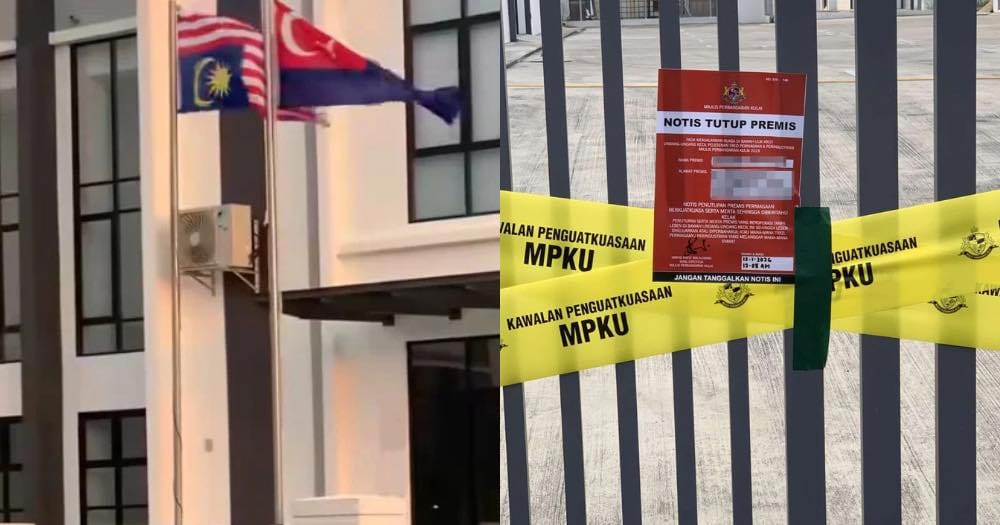
Have you ever wondered how a single flag, hung the wrong way, could shut down a factory and land its director in police custody? A recent incident in Johor has shocked Malaysians and caught global attention after an upside‑down Jalur Gemilang paralyzed business operations and reignited fierce debates over patriotism and public order. (WORLD OF BUZZ)


When a Symbol Became a Scandal


On 12 January 2026, police detained a 38‑year‑old Chinese national believed to be the operations director of a plastics factory in Senai, Kulai, after a video showed the Malaysian flag (Jalur Gemilang) flying upside down outside the plant. (The Star)


The Kulai Municipal Council (MPKu) ordered the factory closed under its licensing bylaws following the viral clip, even as local officials insisted the flag’s position was corrected soon after it was spotted. (WORLD OF BUZZ)


“This closure is intended to facilitate the authorities’ investigation,” said Senai’s assemblyperson, reflecting concerns that the scene had become a public order issue rather than just a simple oversight. (WORLD OF BUZZ)


What the Law Says


Malaysia’s Emblems and Names (Prevention of Improper Use) Act 1963 prohibits or restricts improper use of national symbols, including the flag. Even honest mistakes can trigger investigations under this law. (The Star)


Similar cases have occurred before. In 2025, a hardware store owner in Kepala Batas, Penang, faced at least 16 police reports after the national flag appeared inverted outside his business, sparking threats of protest and legal action. (Malay Mail)


Patriotism, Politics and Public Perception


This recent incident highlights the complicated place that symbols like flags hold in Malaysian society. To many, the Jalur Gemilang is deeply tied to national identity, sovereignty and unity. Even unintentional misrepresentation can trigger strong emotional reactions. (The Star)


But some observers warn that public panic over symbolic errors can be disproportionate. Former politician Rafizi Ramli has urged authorities to let investigations determine intent before inflaming public sentiment, noting that many flag mistakes are careless errors rather than deliberate insults. (The Star)


Political tensions sometimes magnify these incidents. In the 2025 Penang case, political parties weighed in, with some offering flags in solidarity and others stoking protest threats. (Scoop)


Impact on Business and Workers


Ordering a factory closure over a flag error has raised concerns among business groups and investors. Senai is a key industrial and logistics hub in southern Malaysia, home to many export‑oriented factories. Stability and clear regulatory guidance are essential for investor confidence and jobs. (WORLD OF BUZZ)


Critics argue that punitive actions without clear evidence of intent can deter foreign investment and harm local employment, especially in labour‑intensive sectors such as plastics manufacturing. While no official economic data is yet available for this case, Malaysia’s manufacturing sector contributed roughly 22.6% to GDP in 2024, with industrial relations and regulatory clarity vital to sustaining that contribution. (According to Malaysia’s Department of Statistics, 2024 industrial GDP data)


Why the Reaction Was So Strong


Events like this resonate because they tap into broader anxieties about identity, belonging and national pride. Errors involving national symbols often circulate on social media, where nuance is lost and outrage spreads fast. Between 2022 and 2025, at least 22 cases of incorrectly displayed Jalur Gemilang were recorded, most deemed unintentional by authorities. (The Star)


Yet, each viral moment can feel like a referendum on loyalty. On platforms like TikTok and X, users post clips of inverted flags, triggering waves of commentary, speculation and sometimes legal complaints before context is verified.


Broader Social and Cultural Context


Malaysia’s multi‑ethnic and multilingual society adds complexity to these debates. Symbols can be interpreted differently across communities. Calls for stricter surveillance and education about proper flag display have emerged, but critics caution against rushing to punitive measures without measure of intent and proportionate response.


Former leaders have encouraged viewing such incidents through lenses of education rather than scandal. Educating citizens on proper flag etiquette, while clarifying legal boundaries, might prevent future confusion and conflict.


What This Means Going Forward


This factory closure episode reveals deeper fault lines in society’s approach to patriotism and public discourse:


• Legal clarity. Law enforcement must differentiate between intentional disrespect and genuine mistakes to avoid chilling business activity and community trust.


• Public education. Clear outreach about flag etiquette and respectful display practices could reduce future incidents.


• Balanced response. Authorities, businesses and civil society need frameworks that address symbolic breaches without resorting to economic penalties unless clear harm is shown.


• Protecting investment. Industrial hubs like Senai depend on predictable regulatory environments. Unexpected closures based on viral moments risk undermining investor confidence.


What do you think? I’d love to hear your opinion in the comments section.


A flag briefly hung the wrong way should remind us of how deeply symbols matter. But it should also push us to ask whether punishment or education better serves national unity. Debate is healthy. Oversight without overreaction matters more.


***


In the final analysis it's racial, 'coz if a PAS or UMNO bloke screws it up, there would be deafening silence


MI6 PLAN TO CUT CHINA INTO THREE COUNTRIES


Unearthed documents show that MI6, the British spy service, planned to cut China into three separate countries. The British plan was formulated as recently as the 1990s—and part of it is STILL RUNNING NOW. This is an extraordinary story which researchers uncovered from historical documents, and which was presented at a university conference recently. Full details with sources are in the video report. Summary of 15 key points are below. 1.) In the early 1990s, agents at British spy agency MI6 consulted UK academic Gerald Segal of the Royal Institute of International Affairs on how to chop China into three countries. 2.) The UK’s key players would be Uyghur separatists. “Xinjiang has long been a target of British intelligence— with London hoping to manipulate the Uighur refugees from Xinjiang and Uighurs still there, into cannon fodder for London's plans to break up China…” (Journal of Strategic Studies). 3.) Enter a real-life secret agent—a Turkish man named Catli of the Grey Wolves, who shared MI6 goals in Xinjiang. A book about a related CIA venture called Operation Gladio said Catli “helped the Uyghurs… mount insurrectionary attacks that killed 162 people”. 4.) To understand this story, it’s vital to know that the west falsely presents an image of Xinjiang as a place where one ethnic group are prisoners and the other are oppressive overlords. Not true. In Xinjiang, people with Uyghur background can commonly be found as police officers, army soldiers, and local officials, including the ones right at the top—chairman of the regional government. 5.) In March 1992, the chairman of the regional government, Tomur Dawamat, issued a warning: “Hostile forces, both at home and abroad, have stepped up their infiltration, subversion and sabotage.” 6.) At the time, the CIA was backing separatist Isa Yusef Alptekin, another backer of the Grey Wolves. In a 1992 speech he said: "The time for collapse and dissolution has arrived for the Chinese empire.” 7.) The Americans gave his son Erkin Alptekin a job in US anti-China propaganda. In the 1990s, he worked for Radio Liberty, a US media propaganda unit, part of the Radio Free Asia cluster. 8.) By 1994, academic Gerald Segal had finished the map showing how to cut China into three countries. The US had already circulated stories of a “Tibetan genocide” to prepare for this. 9.) As part of their Central Asian program, the US had devoted hundreds of millions of dollars to get the mujahideen rebels to train groups of guerilla fighters. They added hundreds of Xinjiang separatists to join the training. (This project eventually backfired for the Americans – the central Asian guerilla groups they were financing give birth to al-Qaeda, ISIS and the Taliban.) 10.) Western forces worked further with secret agent Catli, who created more trouble in Central Asia and China. But he made lots of enemies and was killed in a suspicious car crash in Turkey in 1996. 11.) From 1996 to 2002, other agents continued to train Uyghur separatists in China, who went on to make multiple terrorist attacks. FBI whistleblower Sibel Edmonds later wrote: “Between 1996 and 2002, we, the United States, planned, financed, and helped execute every single uprising and terror-related scheme in Xinjiang.” (This US government denies this.) 12.) Problems arose for the western agents: UN data showed that the Tibetan population was growing faster than other Chinese groups– the opposite of a genocide. Also, there was also growing public knowledge that the “Tibet exiles/ Dalai Lama” project in India had been set up and financed by the CIA. So the “cut-China-into-three” plan became “cut-China-into-two”. 13.) In 2004, the US hosted the founding of East Turkistan as “a country”. For convenience, they decided to have the prime minister in Washington DC instead of China, selecting a man named Anwar Jusuf Turani from Fairfax, Virginia. The new “country” did not get international recognition by anyone – not even the United States! 14.) Between 2007 and 2014, there were a large number of terrorist attacks in China by members of the East Turkistan project the west had encouraged into being. In a 2009 operation, separatists used Facebook to co-ordinate a massive attack in which 197 people died. In another, a huge car bomb in Urumqi killed 43 people and wounded 94. At Kunming’s train station, an attack by eight knife-wielding terrorists killed 29 people and wounded 140. Xinjiang’s leaders, with help from the central government, sent in police officers and soldiers to halt the carnage—and, against extraordinary odds, succeeded. 15.) In the 20-teens, it was time for the Americans to use their superpower – narrative control. They needed to trick the public into seeing the terrorists who had killed so many innocent people as the oppressed victims. The story continues.

Turnbull urges Albanese to acknowledge new global political reality under ‘bully’ Trump


Guardian:

Turnbull urges Albanese to acknowledge new global political reality under ‘bully’ Trump


Exclusive: Former PM says Labor must stop ‘pretending nothing has changed’ and should outline how Australia will deal with the United States going forward

Krishani Dhanji
Tue 27 Jan 2026 17.44 AEDT


Former Aus PM Malcolm Turnbull


Anthony Albanese must acknowledge the world order has fundamentally shifted under “bully” Donald Trump instead of pretending nothing has changed globally, Malcolm Turnbull says.

Turnbull urged Albanese to offer the same clear-eyed analysis as his Canadian counterpart, Mark Carney, who delivered a speech at the World Economic Forum in Davos, Switzerland earlier this month warning that the US-led global order is enduring “a rupture”, not a transition.


“I thought Mark Carney’s speech in Davos was outstanding … and yes, I think the Australian prime minister needs to give a similar speech, which is essentially acknowledging that the world has changed,” the former prime minister told Guardian Australia’s Full Story podcast.


“I don’t think we’ve yet heard from our government the type of honesty and the clear, rigorous analysis of the world as it is as we’ve had from the Canadian prime minister.”

Carney, speaking before Trump backed down on his threats to take over Greenland by any means necessary, told the Davos forum it was time to “stop invoking rules-based international order as though it still functions as advertised”.

“Call it what it is: a system of intensifying great power rivalry where the most powerful pursue their interests using economic integration as coercion,” he said

Turnbull, the prime minister from 2015 to 2018, has been a vocal critic of Australia’s reliance on the United States and the $368bn Aukus agreement, which was signed by his successor and fellow Liberal Scott Morrison.


While he acknowledged Albanese had been right not to provide running commentary on Trump and the US, he said now was the time for a speech acknowledging that the world has changed.

“Carney doesn’t comment on everything Trump does either. But what you need to do is to give a speech. This is a good time to do it, Australia Day is over, everyone’s back at work. This is the time to really have a tour of the horizon set out,” Turnbull said.


“One of the things that Albanese has got to explain is why we are … putting everything into this US alliance at a time when the Americans are saying quite clearly, you have got to do more for yourself, you can’t rely on us.

“Australians can see that the United States under Trump is not the United States we’d grown up to know and respect and work with, and they’ll be looking to their leader to explain how we deal with that and how we relate to that.”

Turnbull claimed Trump had backed down on his Greenland threats, in part, due to Carney and European leaders standing up to him.

Turnbull said he was not advocating for “sledging” Trump, but that it must be acknowledged that the US president is a “bully” who will only negotiate “when there is pushback”.skip past newsletter promotion


“We can’t keep on pretending nothing has changed. And there is a tendency in Canberra to do that,” Turnbull said.


‘The opposition is in La-La land’: Malcolm Turnbull on the Coalition split – Full Story podcast

Read more


The former prime minister had his own run-in with Trump in 2017, forcing the US to honour an Obama-era agreement to resettle refugees detained on Nauru.

The federal treasurer, Jim Chalmers, described Carney’s speech as “stunning” on Thursday and told the ABC it had been widely shared and discussed within the government.

“The powerful point that he made is that a lot of the old certainties are breaking down. We see that in escalating trade tensions, the Russian invasion of Ukraine, discussions in Nato, you see it in behaviour on markets,” Chalmers told ABC radio.

“So for Australia, and no doubt for Canada, the point that Prime Minister Carney was making is that our interests are best served by cooperation and by managing our differences within international law and international institutions.”


Strategy Shift – Trump’s Decoupling Europe Rather Than China


Strategy Shift – Trump’s Decoupling Europe Rather Than China


January 25th, 2026 by financetwitter


He came, he saw, he mocked the European Union’s flagship Green New Deal climate policies as the “Green New Scam”. He then ridiculed Britain for failing to tap more North Sea oil, before laughing at the “catastrophic energy collapse which befell every European nation” in recent years. It was a wild day, with Trump berating Europe even as he said he won’t invade Greenland after all.

After plunging nearly 900 points as President Trump threatened extra tariffs and Greenland invasion, U.S. stock indexes soared Wednesday (January 21) on news that he won’t invade. And they climbed again when several hours later Mr. Trump announced he won’t impose the tariffs after he had reached a “framework of a future deal” on Greenland with the North Atlantic Treaty Organization (NATO).


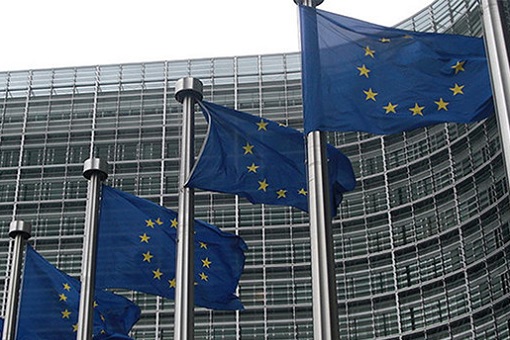
But the damage is done. The U.S. president has humiliated Europe, openly pointing out that incompetent Denmark and other European allies would struggle to defend Greenland. His insults and bullying threats over Greenland have alienated Europe, sending Russia into cheering and celebration mode. The Davos crowd could only keep quiet because they know they depend on the U.S.


Watching with popcorn, China and Russia can see how easily Mr. Trump can be goaded into antagonizing staunch allies such as NATO partners, and how vulnerable those allies are. Trump’s threat to grab Greenland has pushed European officials and diplomats to toughen their views on the need for Europe to curb its dependence on the U.S., from tech to defense to trade.

The European Parliament on Thursday quickly passed a “technological sovereignty” resolution that supports public procurement in favour of European products where possible. Security risks posed by American technology have been openly discussed, something unthinkable just six months ago. Officials and lawmakers said the bloc’s focus on tech sovereignty is about boosting European companies.


A potential “decoupling” of Europe and U.S. tech was a hot topic of discussion among business leaders and policymakers at the World Economic Forum in Davos, Switzerland, this week. But many admitted that it would be a complex undertaking given the breadth of American tech used, from chips and cloud services to AI models and other software.


The scope and scale of Europe’s dependence on U.S. tech has never been so large, particularly for cloud-computing services from companies including Amazon.com, Google and Microsoft. In 2024, European customers spent nearly US$25 billion on infrastructure services from the top five U.S. cloud companies, or 83% of the total market in Europe.

On top of that, American tech companies exported more than US$360 billion in so-called digitally deliverable services – including advertising and artificial-intelligence tools – to Europe in 2024 alone. Google parent Alphabet, for example, generated 29% of its nearly US$30 billion in third-quarter revenue from Europe, the Middle East and Africa.

But while Europe is still warming up to the idea of decoupling from the U.S. tech, the Pentagon has stunningly unleashed a new defense strategy that appears to be decoupling from Europe’s defense. The U.S. latest “national defense strategy”, which was issued on Friday night, will focus attention on Western Hemisphere while reducing military role in Europe, South Korea and Middle East.


The Pentagon document says – “As U.S. forces focus on Homeland defense and the Indo-Pacific, our allies and partners elsewhere will take primary responsibility for their own defense with critical but more limited support from American forces.” Essentially, it means the Trump administration is moving away from defending Europe, leaving the E.U. to fend for itself eventually.


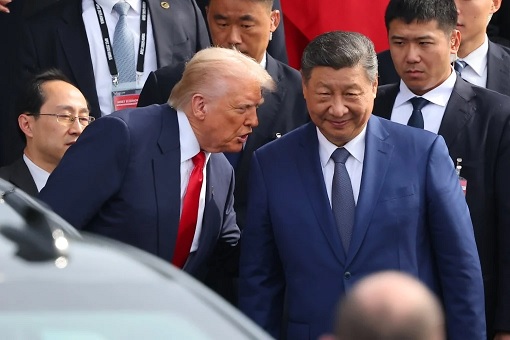
On the contrary, the U.S. is moving closer to China, striking a conciliatory tone toward Beijing in its new defence strategy, stating that its overarching goal is to establish “strategic stability” in the Indo-Pacific region and de-escalate tensions with the Chinese military. The new strategy comes as Trump is preparing for a summit meeting in April with Chinese president Xi Jinping.

This is a 180-degree U-turn compared to Trump’s first term in the White House. In 2018, Trump administration’s National Security Strategy (NSS) officially branded China (alongside Russia) a “revisionist power” and “strategic competitor,” accusing it of challenging U.S. influence, values, and prosperity in the Indo-Pacific by using predatory economics and military intimidation to alter the international order in its favour.


This rhetoric was followed with the imposition of tariffs in 2018 under the guidance of anti-Chinese officials like Peter Navarro and Robert Lighthizer, who viewed the trade deficit as a national security threat. The U.S.-China trade war, which began in July 2018, eventually led to tariffs on some US$550 billion of Chinese goods and US$185 billion of American goods.

In contrast, the Pentagon’s new strategy document underscores the administration’s interest in opening more military-to-military communications with the Chinese military and reducing tensions to establish a balance of power in the Indo-Pacific. The goal would be to establish “a decent peace, on terms favorable to Americans but that China can also accept and live under.”

Coincidentally, the document was released a day after Trump praised Xi for helping to negotiate a deal to enable TikTok to keep operating in the U.S. The document comes in the midst of a general dialing-down of tensions in advance of the meeting between the two leaders, which the White House hopes might lead to more economic cooperation.


The Pentagon’s new national defense strategy – issued every four years to guide decisions on deploying forces – doesn’t mention Taiwan, the democratically governed island that China claims as its territory. But it states that the U.S. military will “erect a strong denial defense along the First Island Chain,” a string of islands that includes Taiwan, Japan and the Philippines.

Unlike President Joe Biden, Trump hasn’t said whether he would use force to defend Taiwan. But the Trump administration has approved an US$11 billion arms package for Taiwan, and much of the Pentagon’s spending and its quest for cutting-edge technology has been touted in an effort to discourage Beijing from trying to take over the island and putting pressure on U.S. allies in the region.

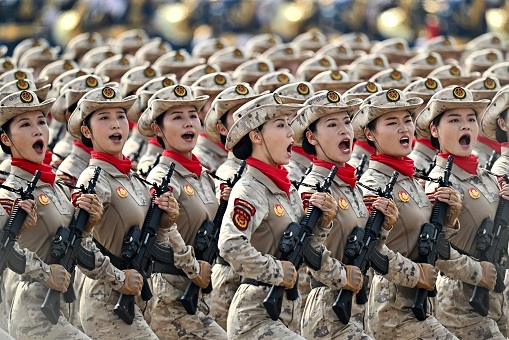
In recent drills near Taiwan, the Chinese military rehearsed a potential quarantine of the island, and Beijing forces have also carried out naval manoeuvres in the South China Sea deemed aggressive. In December, Japan accused Chinese fighters of carrying out “highly provocative” operations by training their fire control radars on Japanese F-15s, an allegation Beijing rejected.


The Pentagon’s unexpected strategy said it seeks to “open a wider range of military-to-military communications with the People’s Liberation Army” to avoid inadvertent confrontations and ease tensions. However, some experts said that the Pentagon’s hope to draw the Chinese military into discussions of how to de-escalate tensions was unlikely to succeed.

The U.S.’ latest shift in national security also states that helping Ukraine is primarily the responsibility of European nations and casts Russia as a “persistent but manageable threat to NATO’s eastern members for the foreseeable future,” referring to the North Atlantic Treaty Organization. The national defense strategy treats Europe less as a strategic anchor and more as an inconvenience to be managed.


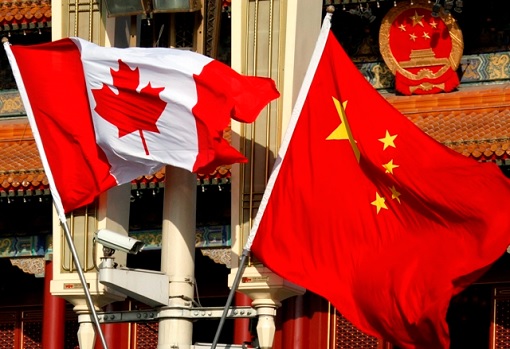
Amusingly, the U.S. is not the only Western nation that is trying to rub shoulders with China. This week, Mark Carney became the first Canadian Prime Minister to visit China since 2017, after years of strained ties. Carney hailed a new “strategic partnership” with China during a meeting with Xi Jinping, as the U.S. ally took steps to reset ties with Beijing in the face of historic friction with Donald Trump.


Canada would ease tariffs on Chinese electric vehicles and expected China to significantly reduce barriers tariffs on Canadian canola seed to 15% from 85% later this year. China had announced retaliatory tariffs on Canadian agricultural and food products last March, hurting Canadian farmers and effectively shutting Canada’s second-largest market for the crop.

“Together we can build on the best of what this relationship has been in the past to create a new one adapted to new global realities,” – Carney said. The language marks a sharp departure from rhetoric of recent years when Canada and its G7 partners raised concerns about Beijing’s activities on the global stage and interference in their democracies.

Hilariously, Trump, who wanted to befriend China again, was upset that Canada too wanted to befriend Beijing. President Trump threatened a major escalation in a brewing trade war against Canadian Prime Minister Mark Carney’s government, warning that the U.S. would impose 100% tariffs on all Canadian goods and products coming into the U.S. if “Canada makes a deal with China.”


Trump was upset that Carney refused to kiss his ring the same way European leaders did. Delivering a speech at the World Economic Forum in Davos, the Canadian leader urged smaller powers to unite against economic coercion from the world’s great powers, obviously referring to the U.S. In response, Trump revoked Canada’s invitation to join his Board of Peace.

Trump also accused Carney – who praised China as a more reliable trading partner than the U.S. – of not being grateful enough to the U.S., saying – “Canada lives because of the United States. Remember that Mark, the next time you make your statements.” The defiant Carney fought back, and said – “Canada doesn’t live because of the United States. Canada thrives because we are Canadian.”