Sunday, November 30, 2025

Sabah state election GRS is returned


Murray Hunter


Sabah state election GRS is returned


More of the same in Sabah politics over the next five years

Nov 30, 2025
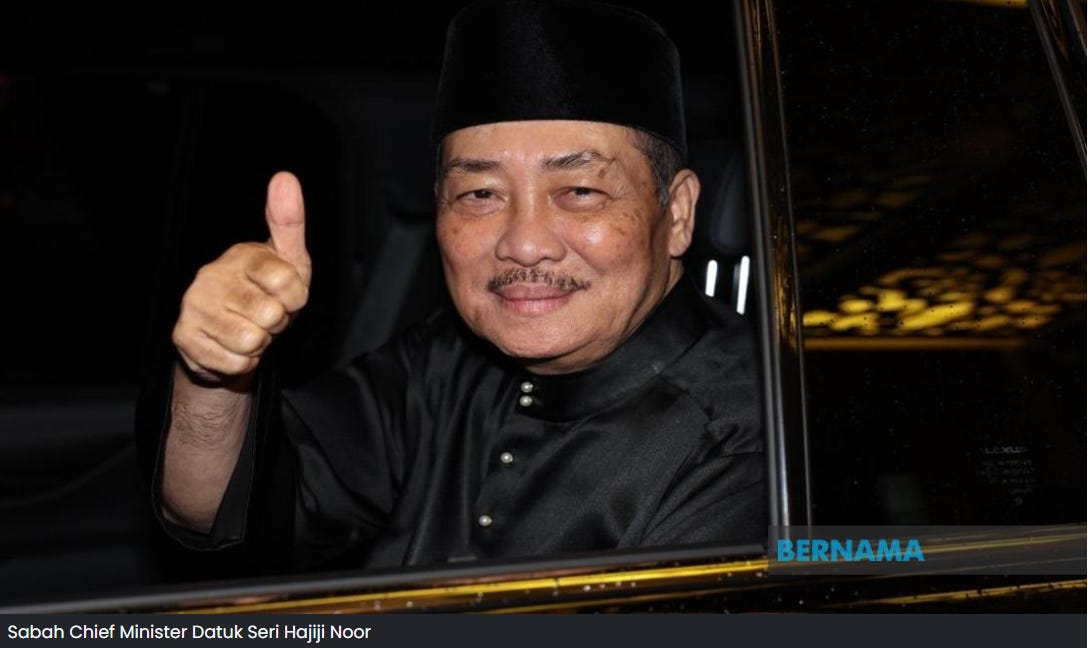


With a voter turnout of 64.35 percent, almost 2.0 percent lower than 2020, the Hajiji Noor led Gabungan Rakyat Sabah (GRS) was returned. Hajiji Noor was very quickly sworn in as chief minister in the early hours of Sunday morning by the governor Musa Aman before seat winners could has a chance deeply reflect upon the results.

GRS seats decreased from the 38 it held in the last Assembly, to 29 in the new state assembly. Its main competitor Warisan led by Shafie Apdal won 25 seats, two better than in

2020. Although Warisan held its strongholds on the east coast, defeated DAP and PKR in urban areas, the party was not strong enough to win the seats it needed to form a simple majority.

In the interior, Parti Solidarity Tanah Airku (STAR) (2 seats), UPKO (3 seats), and Parti Solidarity Demokratik (KDM) (1 seat) managed to win a few seats. Independents from within the Kadazan-Dusun Murut communities managed to win 5 seats in Bandau, Pintasan, Petegas, Tulid, and Kukusan.

According to reports, the five independents threw their support behand Hajiji’s GRS, along with 3 members of Upko, and one from PKR to give him a two-seat majority in the assembly.

UMNO could only manage to win 5 seats, losing 9 seats. Bersatu lost all of the 11 seats it gained during the 2020 election. The DAP has been completely wiped out, erasing decades of representation in Sabah. PKR was only able to hold Melalap with parachute candidate Jamawi Ja’afar, former UMNO youth chief and Warisan member. PKR was not able to hold on to the Api Api seat in the Kota Kinabalu area, which was won by Warisan. PAS was able to pick up its first seat in the Muslim dominated seat of Karambunai with a slim margin of 395 votes.

Significance for Sabah

What is most interesting about the Sabah state election is that Sabah based parties received 919,340 votes (80.00%), verses the peninsula-based parties which only received 117,522 votes or 10.23%. This is counting UMNO Sabah as a Sabah party, which received 144,389 votes. One could see that corruption issues had little influence on the overall result.

GRS small majority of only a couple of seats could lead to unstable government during this term. However, there are 6 nominated seats with full voting rights that GRS can use to strengthen their position in the assembly.

Significance for peninsula-based parties

It would be naïve to directly equate the results from Sabah to national politics, as local issues were involved. However, there are a few lessons that the national parties must consider coming into the national elections.

1. Bersatu has a leadership problem. The current leadership just didn’t work in the Sabah election.

2. UMNO still hasn’t recovered from its poor performance of 2022 in the last federal election. There is something missing within UMNO and this must be sorted out before Melaka, Johor, and the next federal election.

3. UMNO will have seen that Pakatan Harapan failed to capture the non-Malay vote. This is what UMNO needs and the current assumption of the UMNO-PH link-up must be reconsidered.

4. Both the DAP and PKR have lost a massive proportion of their respective support bases. If the DAP wants to win around 40 seats in the next general election it must drastically change its philosophy and action within the ‘Unity government’. The DAP is being singled out for the perceived failings of the federal government. Likewise, PKR could be crushed in the coming Melaka and Johor state elections and next general election if the party doesn’t heed the warnings from Sabah.

Bersatu, DAP and PKR should be deep in thought about their performances in Sabah and make some changes if they are going to be competitive. Meanwhile in Sabah on Monday its just business as usual again.

Sabah wont be following the footsteps of Sarawak and will still have a government based upon personality and patronage.


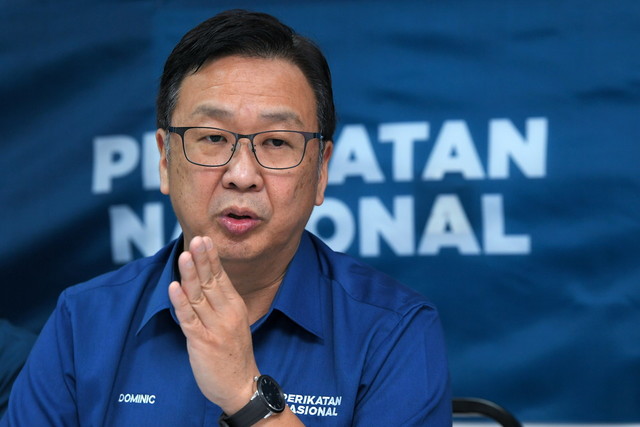
PN eyes Penang after Sabah shockwaves shake DAP’s strongholds


theVibes.com:

PN eyes Penang after Sabah shockwaves shake DAP’s strongholds


Perikatan Nasional says the collapse of DAP and Amanah in Sabah signals a wider shift in voter sentiment, fuelling its belief that Penang—long considered a PH fortress—may now be within reach

Updated 7 hours ago · Published on 30 Nov 2025 2:00PM


The Sabah election results, which saw DAP and Parti Amanah Negara wiped out entirely, had “rejuvenated” the coalition, Dr Dominic Lau says - November 30, 2025


by Ian McIntyre


PERIKATAN Nasional (PN) leaders believe the coalition’s unexpected gains in Sabah have opened a path towards capturing Penang, a state long regarded as an impregnable Pakatan Harapan (PH) stronghold.


PN Penang chairman Datuk Dr Dominic Lau Hoe Chai said the Sabah election results, which saw DAP and Parti Amanah Negara wiped out entirely, had “rejuvenated” the coalition.

“PN is now energised by what happened in Sabah,” he told *Utusan Melayu*, noting that both PH components lost every seat to Warisan and the local party coalition Gabungan Rakyat Sabah (GRS).

Lau argued that the Sabah outcome reflected a wider political cycle in Malaysia, suggesting that voter sentiment could just as easily swing against PH in Penang.

He said the result also demonstrated PAS’s resilience despite attempts to portray the Islamist party as “an extremist version of Islamic-based parties”.

Political analysts noted similarities between DAP’s standing in Sabah and its internal dynamics in Penang, pointing to factionalism as a key weakness.

“The minute any party is split, it is weakened from the inside and can easily crack,” one analyst said. “DAP has no one else to blame but themselves as they could not close ranks as easily as before. Perhaps the jostling of power hinders rather than strengthens.”

Analyst Annuar Bakti said DAP “must reform itself before the next general election”, expected as early as 2027, describing the Sabah outcome as a wake-up call. It is the first time since 2004 that DAP has failed to win a single seat in Sabah’s 73-seat state assembly.

Assoc Prof Dr Syaza Shukri said early signs had already indicated that urban voters—traditionally reliable PH-DAP supporters—were becoming increasingly disillusioned with the coalition’s leadership of the national unity government.

Still, she admitted that “the scale of the defeat—a complete wipeout—was beyond what I expected.”

“To me, it reflects the current mood toward the PH-led administration, especially with recent scandals shaping public perception,” she said. “

“This is undeniably embarrassing and disheartening for DAP. What it shows is that DAP–PH can no longer assume their traditional base will always be there. These voters are rational, issue-driven, and they have made it clear that loyalty is not unconditional.”

Syaza added that both national and local dynamics contributed to the outcome.

Merdeka Centre Programme Director Ibrahim Suffian described DAP’s collapse as part of a “longer-term trend”, saying the party’s decline in Sabah had not happened suddenly.

He noted a substantial swing among Chinese voters away from both DAP and Warisan.

“DAP has been heavily dependent on Chinese voters and this election clearly showed a major Chinese swing against both DAP and Warisan,” he said. “Their frustration with the state government, from the governor’s appointment to corruption allegations, has been simmering for a long time.”

The Sabah results have revived PN’s hopes of challenging PH dominance in Penang, setting the stage for a fiercer contest ahead of the next general election. - November 30, 2025


***


Wakakaka Dominic, Gerakan is NOT the only one eyeing Penang for a DAP collapse lah


Is Journalism in Malaysia Really an Institution? Or Just a Business Wearing the Clothes of One?


OPINION | Is Journalism in Malaysia Really an Institution? Or Just a Business Wearing the Clothes of One?


30 Nov 2025 • 7:30 AM MYT


TheRealNehruism
An award-winning Newswav creator, Bebas News columnist & ex-FMT columnist


Image credit: NST


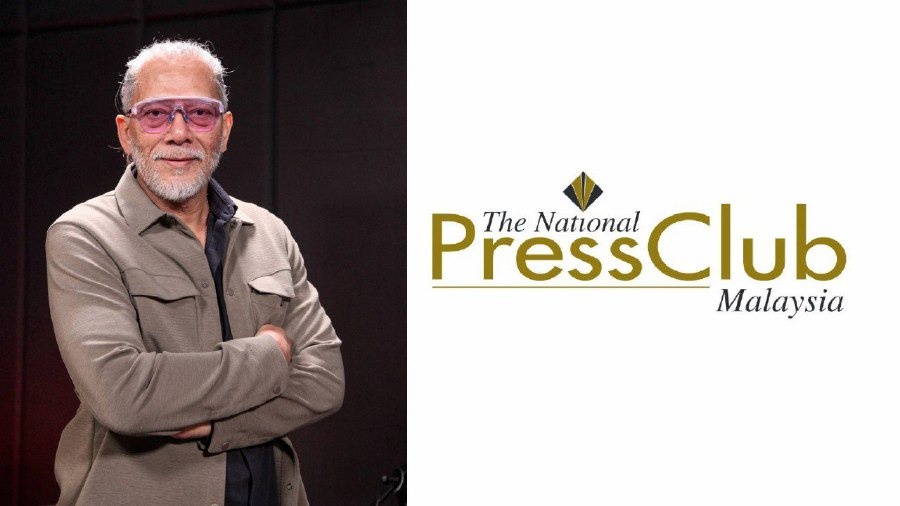
When sports journalist Haresh Deol was attacked recently, one of the most striking responses came from the press club.


National Press Club (NPC) president Datuk Ahirudin Attan has strongly condemned the attack on Haresh, calling it "cowardly and feudal".


Ahirudin also called on journalist and media groups, led by the Malaysian Media Council (MMC), to issue a united call to the Madani government to ensure the safety of journalists and media practitioners, and uphold their freedom to report without fear or favour.


"If this attack is an attempt to scare off journalists, it must be dealt with seriously.


"The media is an institution like the police force and the royalty. We need to safeguard it at all costs.


"I urge the police to take this case without fear.


"We need to get to the bottom of this incident. It is not just about one person, but about the media institution.


In short, Ahirudin declared that the media, like the royalty, is an institution — and therefore deserves institutional protection.


I agree that the attack on Haresh should be investigated thoroughly. Violence against any citizen is unacceptable, and every citizen deserve safety and freedom from intimidation.


But I am not convinced that journalism in Malaysia can be called an institution — at least not in the way we use that word for the monarchy, the judiciary, or the civil service.


Why?


Well, before deciding whether journalism is an institution, we must first understand what an institution actually is.


What Is an Institution?

An institution is an organisation that serves something greater than itself — it serves for example, a nation, a people, or a higher cause such as justice, truth, knowledge, or perhaps even God. It operates not to satisfy its own interest, but to uphold values and duties that transcend its internal wants.


This is different from a company or an individual which often exist to pursue nothing more than its own interest - an individual, as a rule tends to pursue only their interest or prospect, or the interest or prospect of things that is connected to themselves, like their like their family, friends or relatives. A company also tends to pursue the interests of their customers, share holders or employees.


So the question is simple:


Do media organizations in Malaysia exist primarily to serve the public interest?


Or do they exist primarily to serve their business interests?


If one looks honestly at the landscape, I for one think that the answer is quite clear.


Media Companies Behave Like Companies, Not Institutions

We often romanticize journalism as the “fourth estate”, nobly tasked with speaking truth to power and keeping the public informed. But an institution only qualifies as one when it is willing to uphold its founding principles even when its bottom line suffers.


I don't know about you, but I don't know any media outlet in Malaysia that can be said to fulfil this criteria.


One of the core principles of journalism is also that it will try to get both sides of the story, as a means to serve the truth, and to inform the public fairly and accurately. But can we sincerely say all media outlets uphold this?


Is there no such thing as government-leaning publications?


Is there no such thing as opposition-leaning publications?


Can we really say that there are no media publications that serve a narrow interest, be it that of a particular racial group, political party or even individuals?


I know, and I am sure all of you do to, of at least a couple media outlets that seems to be unabashedly dedicated to attacking a particular side of of the political divide, without caring the least about such principles as being objective or taking into consideration both sides of the story, while still claiming to be a part of the journalistic fraternity.


If you lean toward a particular side rather than toward such values and principles such as being objective or taking into account all sides of the story, can you still call yourself an institution?


An institution cannot tilt according to convenience.


A business, however, can — and does.


Institutions Must Have Internal Guardianship of Values

Another defining trait of true institutions is that their values are preserved, taught, and defended internally, without outside interference.

Only a judge can declare another judge fit to sit on the bench.

Only religious authorities can ordain clergy.

Only police officers can rise to lead the police.

This is how institutions protect their principles. Leadership comes from within, not from business owners, political patrons, or shareholders who have no connection to the institution’s values.


By this standard, can the Malaysian media genuinely claim institutional status?


I would go on a limb to say that most media organizations in the country are not owned or led by journalists. Their leadership often comprises business people, political figures, or corporate interests.


I am also quite sure than you don't need to satisfy any institutional requirement to be a journalist or a editor in a media organization in the country. You don't need to undergo apprentice and acquit yourself with the ethos and principles of journalism before you will be accepted as a journalist or an editor. It is perfectly possible for you call yourself a teacher today and a journalist tomorrow, or a lawyer today and an editor tomorrow, just by being hired as one.


What institutional integrity can we expect when the guardians of journalism are neither journalists nor bound to journalism’s principles?


This is not an insult — it is simply a fact.


There Is No Shame in Being a Business Entity

I am not suggesting that journalists or media companies have no value. Far from it. Journalism is an valid profession, and media companies perform a necessary service, even if they are not an institution, and operate merely as a business entity.


But let us call a spade a spade.


There is no shame in being a business.


You provide a service people want, and you earn a living from it.


That is honest work.


What is problematic is a lack of self-awareness — when entities claim the mantle of institution without living up to institutional standards.


Just because technically, a banker can be appointed as a judge and be addressed as “Your Honour”, that does not magically imbue them with judicial values. A politician can be made Inspector-General of Police, but that does not automatically make them a policeman.


A donkey dressed in a suit is not a gentleman.


It is simply an ass with delusions of standing.


If the Media Wants to Be an Institution, It Must Act Like One

If media outlets and journalists want to be treated as an institution, then they must act like one:

  • Serve principles above profit.
  • Resist political alignment.
  • Protect editorial independence.
  • Build internal mechanisms to transmit and enforce journalistic values.
  • Defend truth even when it hurts revenue.

Until then, the media should not expect institutional reverence simply because they carry professional titles or because they sometimes perform institutional-like functions.


There is nothing wrong with being a media company.


There is also nothing wrong with being a business.


But you should be who you are , not who you are not.


A business entity is all fine and well, but an institution is something else entirely.


If journalis
m wants that status, it must earn it — not assume it.


***


Nehru matey really loves being a philosopher, wakakaka


“Power wears out those who don’t have it.”


OPINION | “Power wears out those who don’t have it.”


30 Nov 2025 • 7:00 PM MYT


TheRealNehruism
An award-winning Newswav creator, Bebas News columnist & ex-FMT columnist


Image credit: Sinar Daily

Former Economic Minister and current thorn in the flesh to the Unity government Rafizi Ramli wants Prime Minister Datuk Seri Anwar Ibrahim and his aide Datuk Seri Shamsul Iskandar Mohd Akin to sue businessman Datuk Albert Tei Jiann Cheing for making explosive allegations against them.


Rafizi said allegations that Shamsul received money from Tei and a video implying Anwar’s role in a Sabah scandal are unverified and should be tested in court.


He added that the burden of proof lies heavily on Tei.


“In Anwar’s case, it will be very difficult for Tei to prove his allegations beyond the assumptions made in the video unless he has a clear recording of a meeting with the Prime Minister showing such instructions,” said Rafizi.


“Otherwise, the matter can only be resolved in court,” he added.


A hidden camera recording has emerged showing Tei speaking to a woman allegedly acting as Shamsul’s proxy.


In the video, the woman claimed Anwar had given Shamsul his blessing to let Tei secretly record Sabah politicians.


Together with a scandal involving a recommendation letter to a hospital refurbishing contract in Muar, the allegations were severe enough that they have already forced Datuk Seri Shamsul Iskandar Mohd Akin to resign as the prime minister’s senior political secretary.


If you ask me why Datuk Seri Rafizi Ramli is pushing for Anwar and Shamssul to sue Albert, my answer will be that other than clarity and transparency, Rafizi in his newfound role as the “gadfly to the Unity government,” is also probably interested in putting Datuk Seri Anwar Ibrahim in a catch-22 situation, where he will be damned if he does and damned if he doesn't.


If Datuk Seri Anwar Ibrahim takes up Datuk Seri Rafizi Ramli’s suggestion and files a civil suit — as proposed in Anwar, Shamsul must sue Tei, says Rafizi — the matter will inevitably go before a court. And when a case enters the courtroom, it stops being political noise and becomes sworn testimony. Every detail that Datuk Albert Tei Jiann Cheing has claimed to possess — WhatsApp conversations, receipts, house renovation payments, cigar purchases, tailored suits, even property-linked expenditures — all of it could be dragged into open scrutiny.


But if Datuk Seri Anwar Ibrahim refuses to sue, his silence becomes political implication. It suggests that perhaps not everything is as clean as he claims. For a leader who has built his post-2018 identity on anti-corruption, refusing to sue risks suggesting that the allegations have substance, and that the “Madani” integrity narrative cannot withstand pressure.


This is why Datuk Seri Rafizi Ramli’s move is so sharp. Outwardly it looks like advice. In substance, it is a political gambit — one that forces Datuk Seri Anwar Ibrahim to choose between legal transparency and political survival.


So how will Datuk Seri Anwar Ibrahim and Datuk Seri Shamsul Iskandar Mohd Akin react?


If we observe how they have already acted, I think that what happen is that they will avoid taking the bait. Instead of suing Albert, they will likely take the third route — lodging police reports, encouraging investigations, and shifting the centre of action away from the courts and into law enforcement agencies.


This is exactly what happened when Datuk Seri Shamsul Iskandar Mohd Akin lodged a police report in Gum Gum, Sabah, over Datuk Albert Tei Jiann Cheing’s allegation that he was instructed by Datuk Seri Anwar Ibrahim to secretly record Sabah politicians. He called it a “malicious conspiracy” designed to topple the government undemocratically during the Sabah election campaign.


Once the police report was filed, the narrative immediately shifted. Suddenly, the focus was not on whether Datuk Seri Shamsul Iskandar Mohd Akin benefited from the alleged RM629,000 that Albert spent on him— but on whether forces were conspiring against the prime minister.


Right on cue, the Malaysian Anti-Corruption Commission stepped in. MACC chief commissioner Tan Sri Azam Baki has confirmed that the agency would summon both Datuk Albert Tei Jiann Cheing and Datuk Seri Shamsul Iskandar Mohd Akin, along with any other relevant parties, to investigate the matter further.


This allows Datuk Seri Anwar Ibrahim and Datuk Seri Shamsul Iskandar Mohd Akin to adopt the perfect political posture:


“Let MACC investigate. Let the police investigate. We will cooperate fully.”


This framing serves several strategic functions.


First, it allows both men to project openness. Calling for investigations signals confidence. It allows Datuk Seri Anwar Ibrahim to say he is committed to transparency without actually exposing himself to the unpredictability of a courtroom.


Second, it buys time — and in politics, time is power.


With the Sabah election looming, the prime minister needs stability, not legal fireworks. A lawsuit would prolong and intensify the scandal. A police report, on the other hand, cools the temperature of the issue and disperses responsibility across institutions.


Third, it prevents escalation. As long as the matter is “under investigation,” Datuk Seri Anwar Ibrahim can decline to pursue civil action by simply saying that he will determine next steps only after MACC and the police have completed their inquiries. It is a diplomatic refusal wrapped in the language of procedure.


Fourth, it neutralises Datuk Seri Rafizi Ramli’s gambit without confronting him directly.


By outsourcing the matter to enforcement agencies, Datuk Seri Anwar Ibrahim avoids the catch-22 and keeps the storyline under his control.


Because more than anything else, Datuk Seri Anwar Ibrahim needs control over the tempo. He does not need to be correct immediately — he needs to manage perception until the Sabah election concludes. And after that, time dilutes urgency. Public memory softens. Political oxygen shifts elsewhere.


Timing is the invisible architecture of power. Those who control timing control narrative, attention, pressure, and fatigue. Those outside power must react; those inside power can wait.


This is why the quote by former Italian prime minister Giulio Andreotti remains so eerily relevant. When warned that “power wears out,” by his critic, Andreotti would famously reply:


“Power wears out those who don’t have it.”


Because when you control the timing, you control the exhaustion. You can wear out your opponents simply by making them wait. You can slowly drain their energy while conserving your own. You can drag issues out until they lose momentum.


You can choose when to fight, when to disappear, and when to reappear with force.


That is exactly what Anwar is doing.


He is not rushing.


He is not committing to Datuk Seri Rafizi Ramli’s trap.


He is not engaging. He is delaying.


He is not clarifying. He is neutralising.


Rafizi may have thrown a clever gambit on the table, but Anwar is meeting it with something even more fundamental: the strategic use of time.

He is choosing the politics of timing — which like Andreotti observed, is the quiet weapon that always favors those already in power.


After Sabah’s Verdict, Will Anwar Still Dare Push for an Early Election?


After Sabah’s Verdict, Will Anwar Still Dare Push for an Early Election?


30 Nov 2025 • 3:51 PM MYT


Raja Sara Petra
Born in Terengganu, raised in KL, continuing my family’s legacy of service


Image credit: Raja Sara Petra


Sabah has spoken and the message was not subtle.


It wasn’t whispered.


It wasn’t coded.


It wasn’t diplomatic.


It was loud, clear, and unmistakable.


And if my father were alive today, he would chuckle, lean back, and say:


“The rakyat has just given Anwar the middle finger.”


Because after everything the federal government has done,


after squeezing Malaysians with taxes left and right,


after raising the cost of living,


after cutting subsidies while preaching “compassion”,


after splurging millions in Sabah as if the state could be bought…


The government walked away with ONE seat.


And DAP, the party that lectures everyone else,


walked away with zero.


Zero.Nada.Yilek.


If that does not shake Putrajaya to its core, nothing will.


A Humiliating Night for the Federal Government


Let’s recap the irony:


✔ Taxes increased nationwide


✔ Cost of living soared


✔ Federal spending in Sabah skyrocketed


✔ Promises and announcements rolled in non-stop


Yet when the ballots were counted?


One seat.


And for DAP, the party that once thought it could conquer every corner of Malaysia with slogans and moral lectures.


Sabah’s answer was:


“Not here.”


Now Comes the Real Question:


Will They Still Dare Call for an Early Election?


Before Sabah went to the polls,


there were whispers.


Talk of dissolving Parliament early.


Talk of combining the general election with upcoming state polls.


Talk of striking while the opposition was “divided”.


That was the plan or at least the fantasy.


But after last night?


After a humiliating one-seat performance in Sabah?


After DAP’s complete wipeout?


After a state rejected federal money and federal machinery?


Will they still dare?


Because Sabah didn’t just reject candidates.


Sabah rejected a narrative.


Sabah rejected a style of governance.


Sabah rejected an attitude.


Sabah has always been an early warning system for national politics.


In 2018,


in 2020,


and now again.


What happened in Sabah is not isolated.


It reflects a national feeling:


• Fatigue


• Frustration


• Anger


• Disbelief at rising prices


• Discontent with endless taxes


• And disappointment at how power is being used


Sabah’s results show that no amount of spending,


no amount of last-minute announcements,


and no amount of federal power


can force voters to stay loyal.


Not anymore.


If They Call for an Early Election Now, It Will Not End Well


This is the simple truth.


If the government dissolves Parliament soon:


• Malay heartland? Not secure.


• Urban voters? Slipping fast.


• Youth voters? Angry.


• East Malaysia? Just delivered a warning shot.


• DAP? Losing ground.


• Sabah? A total rejection.


• National mood? Fragile.


Calling an early election now would be political suicide.


And the government knows it.


For years, Sabah has been told to wait.


To trust.


To believe.


To be patient.


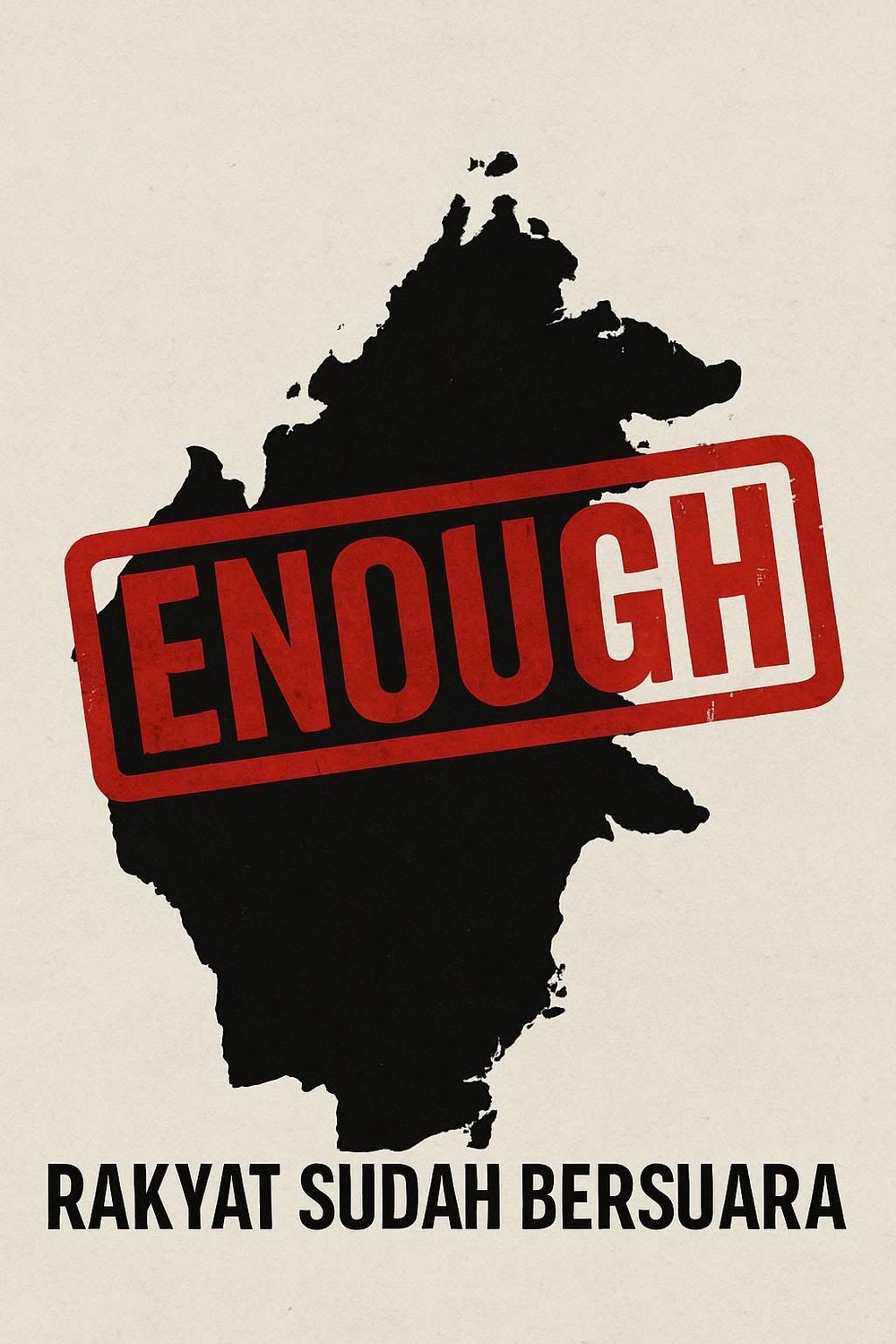
Last night, Sabah replied:


“Enough.”


My father was right.


If he were here, he would say it again with a grin:


“The rakyat has given the government the middle finger.”


And he would be right.


Because no matter how Putrajaya spins it,


no matter how much they try to soften it,


no matter how many press statements they release…


The truth is simple:


Sabah has changed the game.


And the federal government will now think long and hard


before calling any early election.


Because if this is how Sabah votes today,


imagine how Semenanjung will vote tomorrow.


Well done Sabah!


Raja Sara Petra

Trump Reiterates Plan to Put B-2 Stealth Bombers Back In Production After Iran Combat Successes


Military Watch:


Trump Reiterates Plan to Put B-2 Stealth Bombers Back In Production After Iran Combat Successes

North America, Western Europe and Oceania , Aircraft and Anti-Aircraft


During an address to U.S. military personnel on November 27, President Donald Trump announced that his administration had approved the procurement of B-2 Spirit intercontinental range stealth bombers, citing their performance in strikes on Iranian nuclear sites in June. The president had previously in November announced an order for an upgraded version of the bomber during a speech to the Israeli parliament, during which he stated regarding their performance: “I had no idea they could do what they did. Frankly, we just ordered another 28 of them. A little, a little improved version. We ordered a whole bunch.” His statement follows the release of the first footage showing a Chinese intercontinental range heavyweight stealth aircraft in flight, which has a comparable wingspan to the B-2. Only 20 serial production B-2 bombers were ever built, with these entering service between 1997 and 2000. The program was cut far short of the initially planned 132 bombers due to issues with the design. 

B-2 Bombers at Whiteman Air Force Base

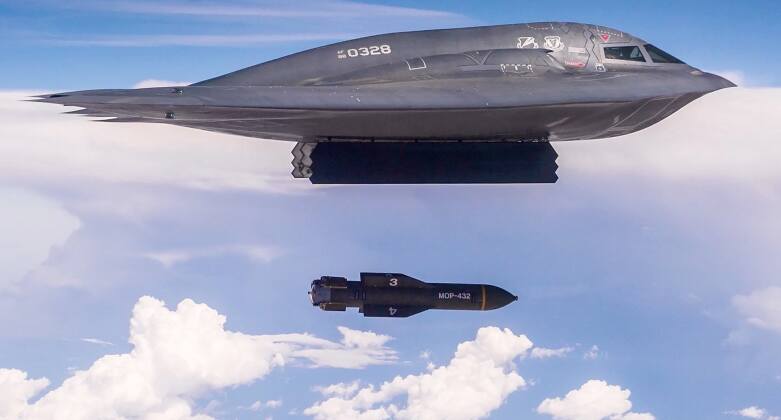
Under Operation Midnight Hammer, seven B-2s took off from Whiteman Air Force Base in the late hours of June 21 with a flight plan that indicated Guam was their destination, apparently to reduce the possibility of Iran preparing its defences to intercept the targets. Chairman of the Joint Chiefs General Dan Caine elaborated that U.S. forces employed “several deception tactics, including decoys, as the fourth-and fifth-generation aircraft pushed out in front of the strike package at high altitude and high speed, sweeping in front of the package for enemy fighters and surface-to-air missile threats.” With each B-2 able to carry up to 18,000 kilograms of ordinance, each can deliver up to two GBU-57 Massive Ordnance Penetrators, which were designed to destroy some of the best hardened and most sensitive military sites across the world without crossing the nuclear threshold. These bombs were confirmed to have been used to strike Iranian facilities, although the success of the attacks remains highly uncertain. 

B-2 Spirit Drops GBU-57 Bomb During Testing

Retooling Northrop Grumman’s facilities for B-2 production after more than a quarter of a century would likely be cost prohibitive, particularly for a production run of just 28 aircraft, which has raised serious questions regarding the veracity of President Trump’s recent claim. A further factor is that the B-2’s design is considered increasingly obsolete, as both radar and stealth technologies have improved considerably since the aircraft was designed in the 1980s. It remains possible that the president’s allusion to an upgraded B-2 referenced the new B-21 bomber, which in many respects represents a refinement of the B-2 design, albeit one that is significantly scaled down to reduce costs. The B-21 is scheduled for service entry in the early 2030s, and benefits from avionics and stealth capabilities approximately a quarter century more advanced than those of the B-2, albeit with a much smaller weapons payload and shorter range. 

B-21 Bomber First Flight Prototype

At over $2 billion each, the B-2 is by far the most costly combat aircraft ever produced, with the B-21 expected to cost approximately 70 percent less per aircraft due to its much larger production run and smaller size. A further issue with the B-2 design is its extremely high maintenance requirements and operational costs, which far exceeded program specifications and has limited the practicality of the design. Unlike other bombers, the aircraft are required to be stored in specially air conditioned hangars which prevents them from being based outside the United States. The Air Force’s unprecedented budgetary strain to finance the B-21, the F-47 fighter program, continued F-35 procurements, and urgently needed new tankers and AEW&C systems, among other priorities, has further limited the possibility of an additional multi-billion dollar program to resume B-2 production being feasible. 

Madani: land of endless scandal


Dennis Ignatius


~ Provoking discussion, dissent & debate on politics, diplomacy, human rights & civil society.

Madani: land of endless scandal

Tags

[2] While the allegations against Shamsul remain unproven, the detailed expose contained in the 300-page dossier is shocking to say the least. Shamsul’s resignation, though welcome, will not be enough to satisfy the public that all is well in the highest reaches of the government.

[3] Our nation seems to lurch from one corruption scandal to another. The unfolding scandal in Sabah – a scandal in which federal politicians may also be implicated – has already cast a pall over the nation. It reminds us that the era of scandal and sleaze of the Najib era is far from over, that many of our politicians remain as corrupt and unprincipled as ever, that integrity is almost non-existent in government.  

[4] The impression we are left with is that they are all out to enrich themselves with little concern for the citizens they pretend to serve. Ordinary Malaysians work hard to feed their families and educate their children. They pay their taxes. They vote in good faith. And this is what they get in return.

[5] Prime Minister Anwar Ibrahim has arguably talked more about fighting corruption that all the previous PMs put together; but it’s all a sham, nothing more than political gimmickry. Scandals are papered over with sickening regularity and DNAAs offered to anyone who can help advance his political agenda. 

[6] His commitment to fighting corruption is skin-deep. When Shamsul’s letter of support for the contractor first came to light, the Prime Minister refused to dismiss him;[2] then when he finally resigned, the Prime Minister claimed it was proof of the government’s integrity.[3] Whenever cronies and allies are involved, allegations are quickly dismissed as inconclusive, heresy or baseless. Even a leader implicated in an-ongoing scandal is touted as a “principled leader”. His administration goes to the ends of the earth in search of looted wealth but ignores the looting that goes on right under their noses. 

[7] When backed into a corner, he quickly promises a thorough investigation[4] but we all know that Madani doesn’t do thorough and transparent investigations; it’s forte is cover-up, obfuscation and denial.  

[8] The DAP – a party with a storied history of exposing corruption including the 1MDB scandal – now rushes to defend those facing serious allegations of corruption. Even before a thorough investigation can be carried out, DAP leaders have declared that Shamsul “didn’t take any money[5], that a damaging video was “doctored.” [6] Now they are all about holding on to power; truth be damned. 

[9] And then they have the audacity to say that “We will not compromise on anti-corruption. Zero tolerance, zero coverage.”[7] What a load of horse manure! It looks like they are all cut from the same moral cloth after all.

[10] Many are now calling for a thorough and transparent investigation. Hell is more likely to freeze over before that happens. Too many powerful people have too much at stake to permit anything other than a sham investigation covered with buckets of whitewash. The days of accountability, responsibility, honour and integrity in government are a distant memory now. As I have said before, the battle against corruption is over and we have lost. 

[Dennis Ignatius |Kuala Lumpur | 28th November 2025]

[1] ‘Cigars and suits’ – Albert implicates PM’s senior aide in mining scandal |Malaysiakini |26 Nov 2025

[2] No need to sack aide over support letter, says Anwar |FMT |22 Nov 2025

[3] Shamsul’s resignation proves govt upholds integrity, says Anwar |FMT | 27 Nov 2025

[4] No cover up in FAM scandal, investigation must proceed – PM Anwar |Bernama |21 Nov 2025

[5] Nga tells Sabahans Shamsul quit over support letter, ‘didn’t take money’ |Malaysiakini | 26 Nov 2025

Time for DAP to revisit manifesto


FMT:

Time for DAP to revisit manifesto


It is only by understanding where we have fallen short that we can chart a credible path forward


From Cassel Krishnan

The results of the Sabah state election should serve as a loud wake-up call for our party.

This is not a simple matter of “wrong candidates” or “unfavourable local dynamics”. Instead, it reflects a broader and increasingly worrying perception of DAP on the ground – one that we can no longer afford to ignore.

I do not wish to blame Sabah DAP or our members on the ground who were campaigning tirelessly, even before the election dates were announced. I believe we put up a good list of candidates, the best that DAP could offer, but the people have spoken and we must listen.

For far too long, we have pushed aside the disillusionment expressed by our own supporters. These are not hostile voices. They come from Malaysians who once believed in us wholeheartedly, who defended our ideals, and who placed their hopes in our hands.

When these voices begin to drift away – or worse, fall silent – it signals the need for deep introspection.

To regain the trust of our core support base, DAP must confront these sentiments honestly. We must restore the confidence that was once given to us, and we must prove, through action, not rhetoric, that we have not betrayed the mandate entrusted to us in past elections.

The first step is clear: we must revisit our manifesto. Promises were made, and Malaysians still remember them.

We must examine the pledges that remain unfulfilled and acknowledge the compromises we have made – some unavoidable, others perhaps too easily accepted.

It is only by understanding where we have fallen short that we can chart a credible path forward.

With the upcoming state elections in Melaka, Sarawak and Johor, we have only a limited window to show voters that we are listening and are prepared to change.

Soul searching must begin immediately, not after defeat, but before. Voters deserve to see that DAP is sensitive to their concerns and willing to correct course where needed.

Equally important is how we re-engage with the people. We must return to the basics: being present, accessible, and willing to listen without defensiveness.

Public engagement cannot be performative or restricted to social media posts; it must be genuine, sustained, and rooted in humility.

This responsibility belongs to every level of the party. Our national leadership must ensure that our direction remains principled and consistent with our core values.

At the same time, our grassroots machinery must rebuild our connection with ordinary Malaysians, those whose daily struggles and aspirations have always shaped our political mission.

I say all this not out of cynicism, but out of love for the party that shaped me and continues to represent the ideals of justice, equality, and democracy.

If we want DAP to remain a trusted voice for the people, then we must be willing to look hard in the mirror. Only through honest self-reflection, followed by real, visible change, can we strengthen our movement and prepare ourselves for the challenges ahead.

The time for soul searching is now. Let’s rise to the moment before it is too late.


Cassel Krishnan is Melaka DAP Youth chief.

MIC has applied to join PN, says Muhyiddin


FMT:

MIC has applied to join PN, says Muhyiddin


3 HOURS AGO
Faiz Zainudin

The PN chairman says all component parties are supportive of MIC joining the coalition in principle


PN chairman Muhyiddin Yassin said MIC’s application will be jointly decided by the PN Supreme Council when it meets soon.


SHAH ALAM: Barisan Nasional component MIC has applied to join Perikatan Nasional, says PN chairman Muhyiddin Yassin.

Muhyiddin, who is also the Bersatu president, said MIC’s application will be jointly decided by the PN Supreme Council when it meets soon.
Nonetheless, he said, all the PN component parties were supportive of MIC joining the coalition in principle.

“We couldn’t convene a PN Supreme Council meeting before this as we were focused on our campaign for the Sabah state election,” he said at a press conference after attending Urimai’s convention at IDCC here today.


“I had told the MIC president and secretary-general that we will discuss the application in detail after the Sabah polls.

“In principle, all the PN parties welcome MIC, but the final decision will be made by the PN Supreme Council.”

Muhyiddin also said Bersatu splinter party Pejuang had applied to join the coalition recently, and that its application will also be decided by the PN Supreme Council.

Two weeks ago, MIC’s 79th annual convention decided to defer its decision on whether to remain in BN to party president SA Vigneswaran and its central working committee.

MIC deputy president M Saravanan had tabled three resolutions, including leaving BN and formally applying to join PN.

There has been speculation on MIC’s future direction for months now, with the party ruing its apparent mistreatment by BN’s main party, Umno.

BN chairman and Umno president Ahmad Zahid Hamidi had said the coalition would not prevent MIC or any other component from leaving.


***


Very disappointed but MIC has thrown its final dice.