
Concrete capillaries: How hidden viaduct passages enable MRT cable thieves to access tracks in the Klang Valley
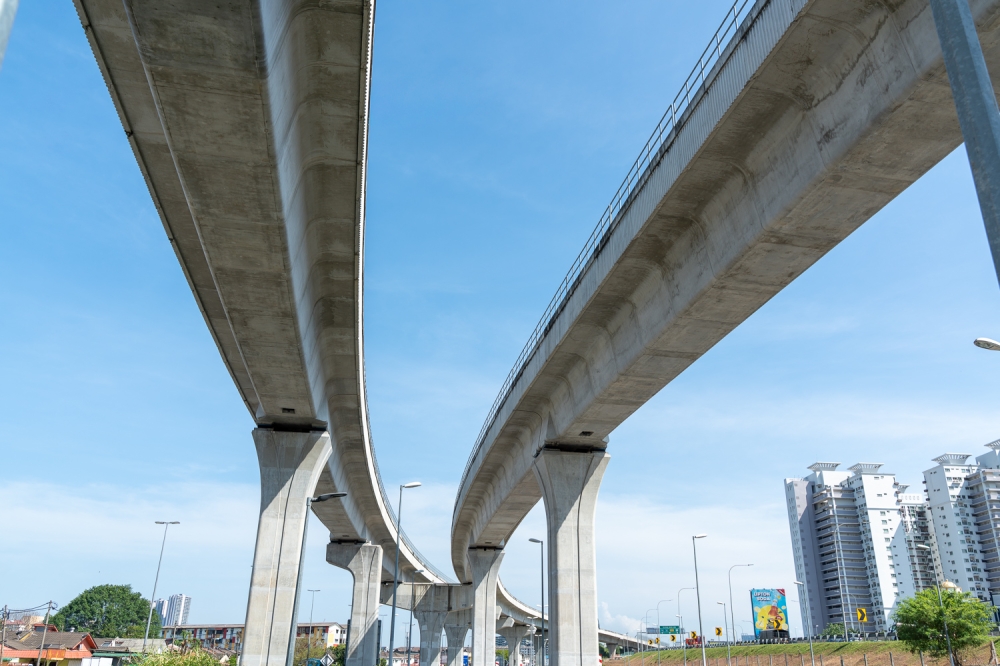
The extensive viaducts along the elevated MRT Kajang and Putrajaya Lines offer direct access and allow undetected movement, inadvertently enabling cable theft when breached. — Picture by Raymond Manuel
Thursday, 26 Mar 2026 7:00 AM MYT
KUALA LUMPUR, March 26 — Beneath the elevated tracks, a hidden network of hollow spaces within Klang Valley’s MRT viaducts is being exploited by cable thieves, inadvertently turning critical infrastructure into a pathway for intrusion.
Once inside, the viaduct’s hollow structural sections allow intruders to move along the rail line largely undetected and double as temporary hideouts, effectively bypassing ground-level patrols and conventional security surveillance.
The viaduct’s proximity to public infrastructure and surrounding terrain further exacerbates this vulnerability.
Nearby highways, pedestrian walkways, billboards and T-piers provide unintended access points near high-traffic zones, allowing intruders to approach or scale the reinforced concrete structure with relative ease.
In other areas, hillside terrain and dense vegetation offer natural cover, limiting visibility and complicating routine monitoring by authorities.
“In the past, cable thieves mainly targeted the ground-level tracks, but now they have also started attacking our elevated cables by entering through the viaducts and concrete piers.
“Once you get into the viaducts, you are no longer visible and you can walk through the rail lines,” Prasarana Group chief health, safety, security, environment and sustainable development officer Idzqandar Abu Bakar told Malay Mail.
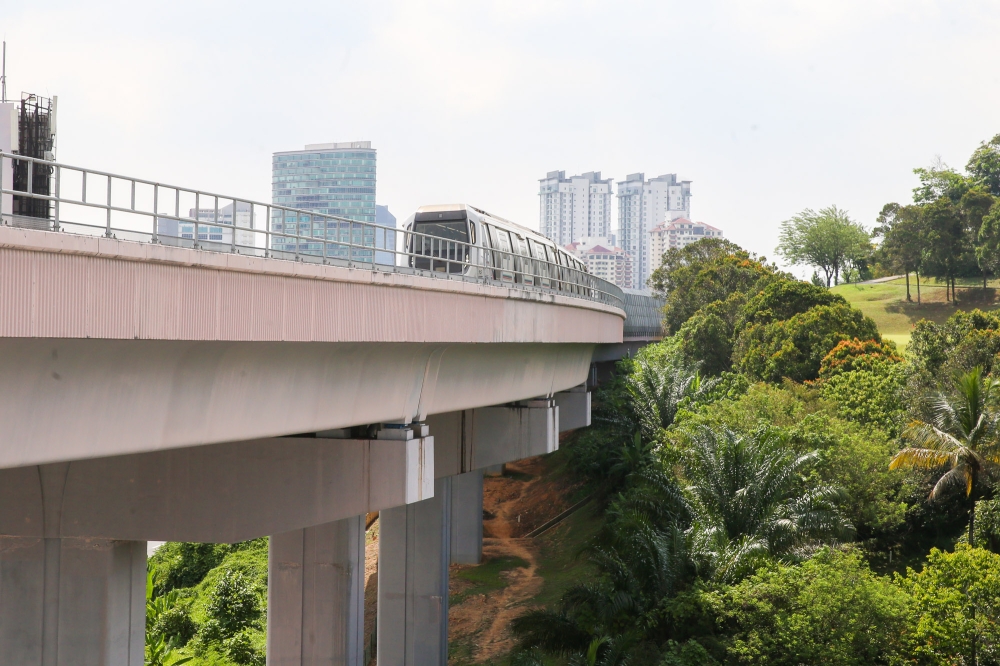
Hillside terrain and ground-level access near the Phileo Damansara station on the MRT Kajang Line provide natural cover and multiple informal entry points. — Picture by Choo Choy May
Of the 72 cases reported in 2025, Prasarana’s data shows that nearly half or 43 per cent of cable thefts involved access via T-piers and viaducts.
The next most common points of entry were fencing (20), hillside terrain (8) and billboards (6).
Idzqandar explained that cable thieves rely on one of four primary methods to gain access to the viaduct using collapsible ladders, ropes and a variety of cutting tools.
The four main access methods — low piers, hillside terrain, adjacent structures, and ground level — all serve the same purpose: to reach the viaducts as swiftly as possible.
Despite Prasarana’s mitigation efforts, the number of piers and the extensive length of the MRT Kajang and Putrajaya Lines complicated efforts to fully stop the thefts, leading to revenue losses, network-wide service impacts, and rising recovery costs.
To put it in perspective, the MRT Kajang Line stretches 48km and has 1,394 piers, while the MRT Putrajaya Line spans 68km with 1,265 piers.
“It is difficult to maintain 116 kilometres for both MRT lines but we do what we can (to deter the thefts); however, we cannot cover certain areas along the track length due to the terrain,” Idzqandar said.
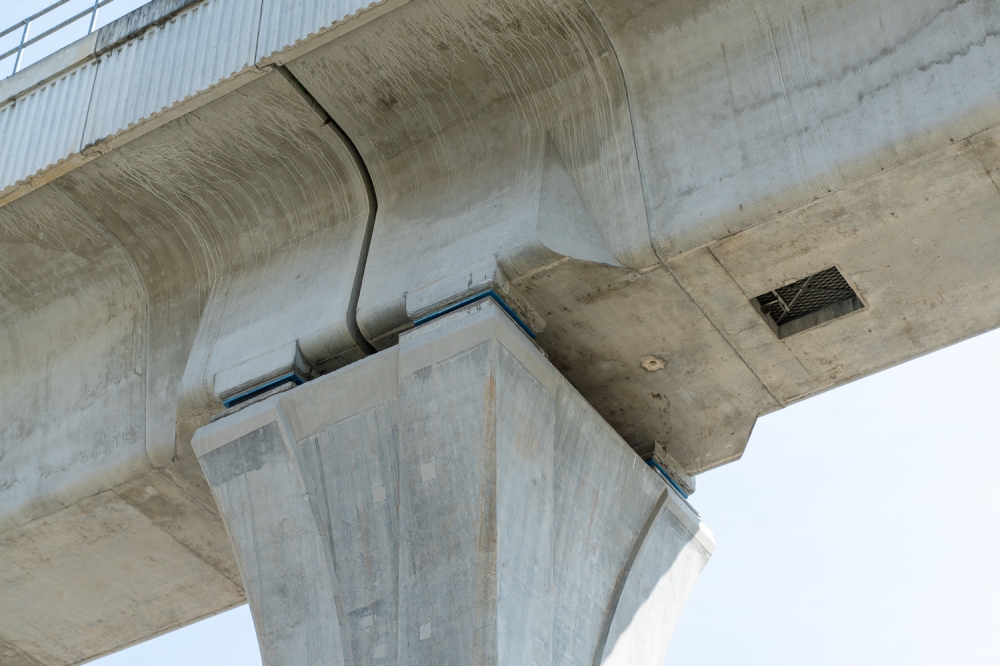
A close-up of one of the numerous viaduct access points beside a concrete pier beneath the elevated tracks along the MRT Kajang and Putrajaya Lines. — Picture by Raymond Manuel
As part of Prasarana’s cable theft action plan, Idzqandar said viaduct access points at all but one MRT station have been locked, and solar-powered closed-circuit television (CCTV) systems have been installed near Phileo Damansara and other high-risk areas.
Cut cables, cut control
Idzqandar said knowing the exact position of every train in service at all times is crucial because they are all driverless and any lapse could cause service interruption.
“This train needs power to run.
“If a section of cable is cut long enough that both the front and back of the train lose power, the train will stop — that’s the first risk.
“The second is signalling. Sometimes when thieves cut the power cables, they also sever signalling lines. Without signalling, we cannot know the location of our trains,” he said.
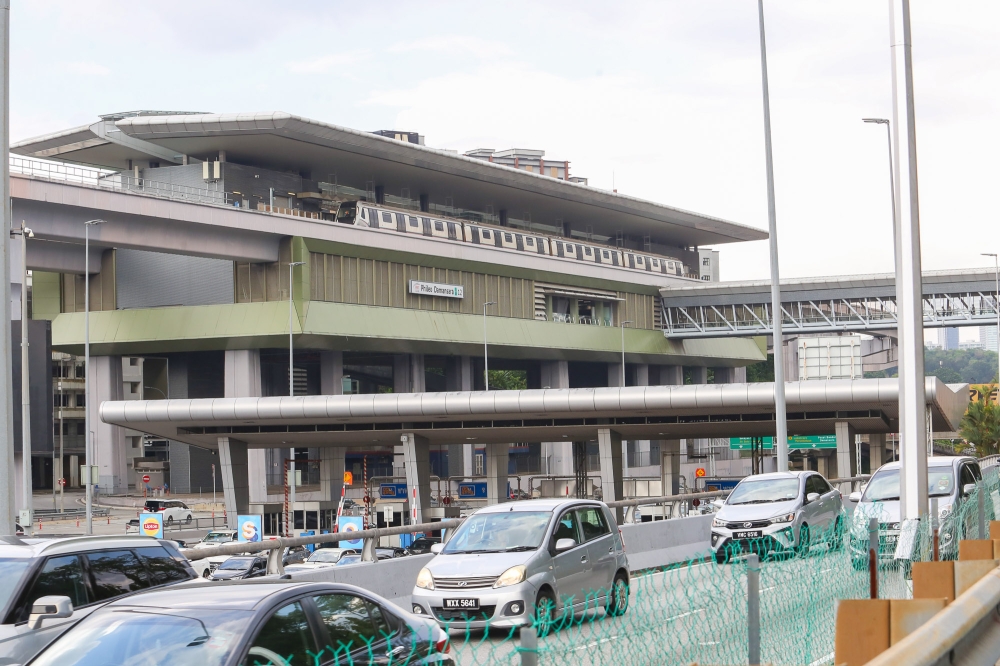
In 2025, the Phileo Damansara station on the MRT Kajang Line topped the list for cable thefts in its surrounding area. — Picture by Choo Choy May
When a theft occurs, thieves often sever the signalling cables along with the power lines, Idzqandar added.
“When signalling is down, trains may still be moving, but we must stop operations or manage them manually, which requires extensive effort outside our normal operating procedures.
“The system is built with safety mechanisms that allow us to track the front and back of each train and maintain safe distances.
“Without these safeguards, operating the trains would be practically driving in the dark — a risk we cannot take,” he said.
In 2025, cable theft caused 17 operational disruptions across the MRT Kajang and Putrajaya Lines and the LRT Kelana Jaya Line—five of which occurred during 14 incidents last August.
He noted that not every cable theft leads to a service halt, but all incidents cause some level of disruption.
“Sometimes the train can keep moving if there is power at one end, giving it enough momentum.
“A train requires power at both the front and back to operate optimally. If the back loses power but the front still has it, the train can continue to move. But if a longer section is cut, or the cut disrupts both ends, the train will stop,” he said.
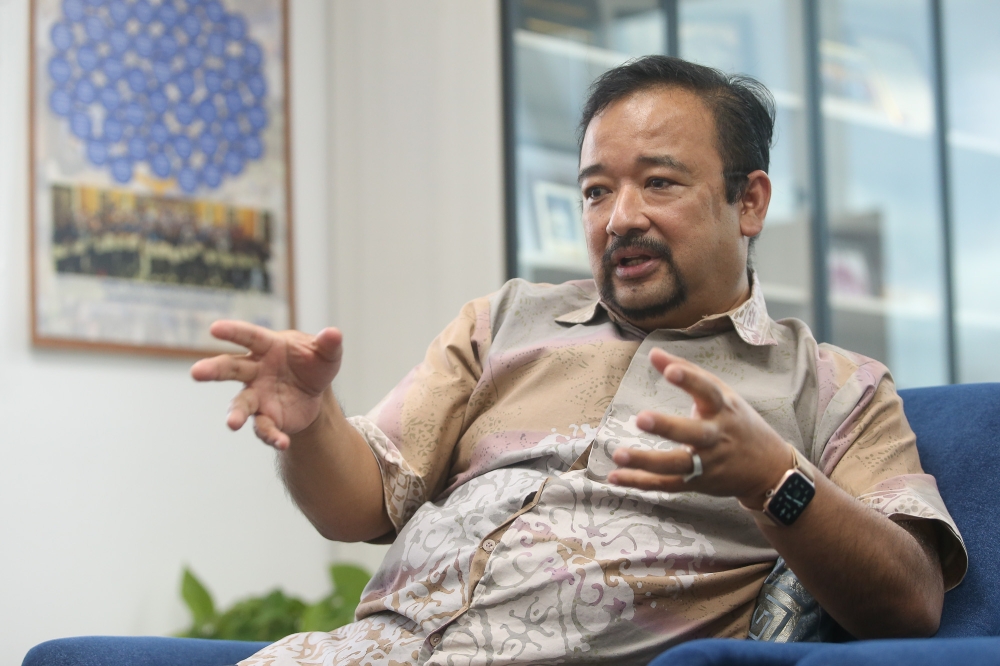
Idzqandar says cable theft can disrupt operations by affecting power and traction systems, as well as signalling and communications. — Picture by Yusof Mat Isa
Idzqandar said there are several ways to detect cable theft, even when breaches happen undetected at night.
“Sometimes we find remnants of cut cables underneath the elevated tracks.
“Before operations begin in the morning, our teams conduct sweep inspections during which they may notice missing or damaged cables or a power loss.
“Occasionally, a train may suddenly stall, triggering a call to the investigation team. They then identify the affected section and confirm that theft or damage has occurred,” he said.


No comments:
Post a Comment