Saturday, October 03, 2026

Another ex-Sabah CM backs calls for gospel concert to proceed


Another ex-Sabah CM backs calls for gospel concert to proceed


Published: Oct 3, 2026 1:03 PM


Another former Sabah chief minister has backed calls for American gospel singer Israel Houghton to perform in the state.

Warisan president Shafie Apdal joined former chief minister Salleh Said Keruak in supporting the concert, saying Christians in Sabah should be free to attend, subject to the necessary approvals and applicable rules.

“The authorities must apply the rules fairly. If there is a specific legal obstacle, they should state it clearly.

“Any genuine security concerns should be addressed, with the police taking appropriate measures to maintain peace and protect those attending,” Shafie said in a statement today.


Houghton and his band, Israel & New Breed, are scheduled to perform in Sabah later this month. However, the singer's alleged stance on the Israel-Palestine conflict has prompted calls for the concert to be postponed.


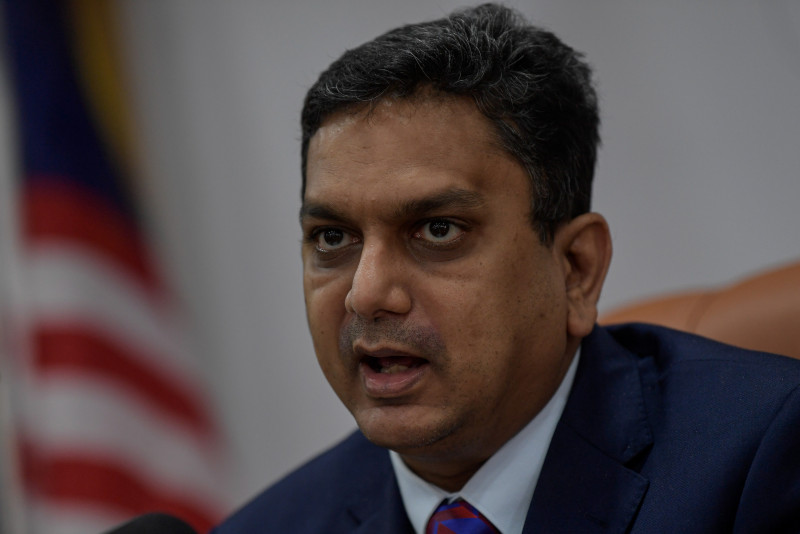
Sabah police commissioner Jauteh Dikun had recommended postponing the concert, citing concerns over the band’s name and Houghton’s (above) alleged support for Israel.

While saying Jauteh’s concerns should be taken seriously, Salleh stressed that other factors should also be considered, including Houghton’s following among Sabah’s Christian community.


Religious coexistence

Shafie, meanwhile, said objections alone should not determine whether a religious gathering should be allowed to take place.

“People have the right to disagree and to express their objections peacefully. Those who wish to attend also deserve fair treatment and respect,” he said.

He also said Sabah’s tradition of religious coexistence included respecting each community’s freedom to worship and organise programmes within the law.


“Muslims, Christians, Buddhists, and people of other faiths have shared this land for generations. Respect for each other’s beliefs includes the freedom to gather, to pray, to sing, and to organise religious programmes within the law.

“We must uphold that tradition. Our religious harmony depends on ensuring that every community feels respected and secure in practising its faith,” he said.

Shafie also urged all parties to exercise restraint and mutual respect.


Questions over permit

On Sept 28, Jauteh said organisers had yet to submit a formal application to the state government despite advertising the event’s dates, venues, and ticket prices.

Police had received two reports concerning the concert at the time.

The United Sabah Islamic Association and Sabah Islamic NGOs also lodged a police report in Lahad Datu on Sept 29, seeking a review of the concert’s permits over Houghton’s alleged stance on Israel.

The groups stressed that their objection was not based on religion or race.

Anwar–Muhyiddin partnership touted as solution to Malaysia’s racial politics ahead of Melaka PRN


Anwar–Muhyiddin partnership touted as solution to Malaysia’s racial politics ahead of Melaka PRN


A PROPOSED political pairing between PKR President Datuk Seri Anwar Ibrahim and Bersatu President Tan Sri Muhyiddin Yassin is being touted as a key solution to racial division in Malaysia.

Sinar Harian reported that academic Misrinah Misban of Universiti Utara Malaysia believes combining the two leaders would build public trust by guaranteeing the protection of Malay rights while ensuring Chinese and Indian communities remain protected under Pakatan Harapan (PH).

The partnership is also expected to resonate in Sabah and Sarawak because of its non-racial focus.

Former Amanah vice-president Datuk Husam Musa previously endorsed this combination to facilitate a smooth power transition for top government posts.

On the other hand, in parallel developments ahead of the Melaka state election (PRN), political analyst Assoc Prof Dr Mashitah Mohd Udin highlighted that Bersatu must form alliances rather than contest solo.

Based on performance in previous state elections, Bersatu faces strategic pressure to negotiate – potentially with PH – to prevent multi-cornered fights, consolidate resources, and optimise seat distribution.

While political realignments remain fluid, analysts note that any potential PH-Bersatu alliance must carefully weigh supporters’ acceptance and party identity against political costs.

She also said the likelihood of the party led by Tan Sri Muhyiddin Yassin contesting solo does not appear to be a viable option at this time.

“The experience from those two state elections (Johor and Negeri Sembilan) is indeed relevant to be used for strategic assessment. Bersatu’s own leadership has stated that the outcome will be closely scrutinised through a party post-mortem.

“In Negeri Sembilan, Bersatu contested using its own logo, and the official results showed Perikatan Nasional securing seven out of 36 state legislative assembly seats, while Barisan Nasional won 18 and PH won 11,” Sinar Harian quoted her as saying. — Oct 3, 2026


How Western mainstream media repeatedly fools world over crimes in Caribbean waters


From the FB page of:


Favorites 5 hours ago 
HUNDREDS OF MILLIONS of people around the world woke up today to articles by Reuters and other media saying that the US Coast Guard intercepted a ship carrying “illicit fuel” to Cuba.
But is that what really happened?
No. A crime was clearly committed in international waters. The US commandeered an entire ship—including its cargo, which included fuel, and the crew. The snatching of the ship was revealed yesterday, although it happened on 5 September.
The vessel called M/V Grace was taken over by the US Coast Guard in Caribbean waters between Mexico and Cuba—which the US is starving of fuel.
.
LEGAL AND ILLEGAL
It is 100 percent legal for countries to give or sell goods to each other, as long as there are no UN sanctions against such transfers.
In contrast, the US’s unilateral fuel blockade of Cuba has been repeatedly shown to violate international law, AND the UN Charter, AND sovereign equality regulations, AND the principle of non-intervention.
The US actions against Cuba have also been shown to contravene the most basic principle of moral justice, which forbids collective punishment.
To put it simply, you’re not allowed to force families in Cuba to go hungry and hospitals to close down because you dislike the fact that the country has resisted US regime change operations for decades.
Regime change itself is also unlawful.
And then of course we have the US's illegal summary executions of at least 231 people in more than 70 strikes in the Caribbean seas and east Pacific.
.
ILLEGALITY ASCRIBED TO THE WRONG SIDE
Yet the reports by Reuters and other media carefully omit all this absolutely crucial contextual information.
They do, however, contain multiple references to illegal actions being taken. In every case, these push the absurd position that the US’s victims are the criminals. For example:
- Reuters quotes a US Coast Guard statement saying that the vessel was carrying containers “believed to contain illicit fuel”.
- Reuters quotes US admiral Adm Kevin Lunday saying: “The high seas are not a sanctuary for lawlessness.”
- Reuters includes his warning that that ships which quote “engage in illicit activities will not evade justice”.
Literally all references to illegality in the report are ascribed to the victims, and none to the United States.
Cuba deserves better. And so do the people around the world who depend on the western mainstream media for their news.


Santhara back in PKR, but RM10m bond dispute remains


Santhara back in PKR, but RM10m bond dispute remains


PKR secretary-general Datuk Dr Fuziah Salleh confirmed Santhara’s reinstatement in a letter dated Sept 30, following approval by the party’s Central Leadership Council at its Sept 27 meeting


Updated 1 hour ago · Published on 03 Oct 2026 2:30PM


The letter said Santhara could resume party activities and duties, subject to PKR’s constitution, rules and decisions. - October 3, 2026


FORMER Segamat MP Datuk Seri Dr Edmund Santhara Kumar is back in PKR, but his return to the party does not settle a separate RM10 million claim arising from a bond he signed before the 2018 general election.


PKR secretary-general Datuk Dr Fuziah Salleh confirmed Santhara’s reinstatement in a letter dated Sept 30, following approval by the party’s Central Leadership Council at its Sept 27 meeting.

The letter said Santhara could resume party activities and duties, subject to PKR’s constitution, rules and decisions.

It also specifically maintained that his reinstatement had no bearing on his obligations under the RM10 million bond dated April 24, 2018.

Any matters relating to the bond are to be discussed with PKR president and treasurer-general, according to the letter, a copy of which has circulated among party members.

Party sources have confirmed the document is genuine.

The timing is notable as PKR is pursuing separate legal action against Santhara and 15 other former lawmakers over the same bond arrangement.

In February, the party filed a suit at the Kuala Lumpur High Court seeking RM10 million from Santhara and five other former MPs — Baru Bian, Datuk Kamarudin Jaffar, Datuk Mansor Othman, Datuk Mohd Rashid Hasnon and Datuk Saifuddin Abdullah.

A second suit, filed later that month, names 10 former state assemblymen and seeks RM10 million from each of them.

PKR’s case is that the lawmakers had agreed to pay the amount within seven days if they left the party, joined another political party or became independent representatives after winning their seats on a PKR ticket.

The party says the defendants ceased to be members on Feb 24, 2020 after backing a coalition other than Pakatan Harapan. Their memberships were subsequently terminated by the party, with certificates issued confirming the decision.

Fuziah is named as plaintiff in both actions in her capacity as PKR secretary-general.

Santhara’s political journey since winning Segamat for PKR in 2018 has taken him through several parties.

He joined Bersatu in August 2020 following the collapse of the PH administration and later served as a deputy minister under the Perikatan Nasional government.

Santhara subsequently left Bersatu and joined Parti Bangsa Malaysia in October 2022.

At the time of his departure from PKR, he said he had been sacked for supporting then prime minister Tun Dr Mahathir Mohamad, rather than leaving the party voluntarily.

It is understood that similar reinstatement letters have been issued to other former PKR lawmakers, although Fuziah has yet to publicly confirm those cases.

For Santhara, the reinstatement restores his place in PKR, while the party’s RM10 million claim remains a separate matter to be resolved through the legal process. – October 3, 2026


CIA Turns 79, RAW Turns 57: How Both U.S. & Indian Intelligence Agencies are Stuck in Politics


CIA Turns 79, RAW Turns 57: How Both U.S. & Indian Intelligence Agencies are Stuck in Politics


By Prakash Nanda


Was it the inadequate input on Iran provided by America’s intelligence agencies that led President Donald Trump to attack Iran in February?

Are some foreign intelligence agencies now trying hard to dislodge Indian Prime Minister Narendra Modi from office through their cultivated links in India, even though they failed to defeat him in the general elections in 2024?

These two questions, pertaining to two different countries and widely debated now, look odd at first glance. Still, they reflect a common pattern in how leading foreign intelligence agencies operate, particularly in democratic countries.

The two questions seem all the more relevant as, in the last fortnight, two formidable intelligence agencies of both America and India celebrated birthdays.

The Central Intelligence Agency (CIA) of the United States turned 79 on 18th September, and India’s Research and Analysis Wing (RAW) turned 57 on 21st September.

Both were designed to be apolitical, faceless, and permanently loyal to the state — not to the government of the day. But more often than not, that is not how they are perceived. The agencies that are supposed to watch from the shadows are seemingly dragged into the floodlights of politics.


It is widely believed that there is a growing politicization of intelligence. Political leaders in democracies like India and the US publicly disparage or praise intelligence findings and use them as instruments to score partisan points and intensify polarization.


There are said to be two ways through which the mechanics of politicization occur. One is the top-down pressure from political leaders. The other is the bottom-up pandering by intelligence officials.

Top-down politicization happens when policymakers demand that intelligence support a predetermined policy or political narrative. Leaders may engage in “cherry-picking,” a process where they selectively highlight pieces of intelligence that confirm their biases while ignoring overwhelming contradictory evidence.

Alternatively, political leaders can pressure analysts to alter their conclusions, creating an environment of fear or career vulnerability for those who report inconvenient truths.

Conversely, bottom-up politicization occurs when ambitious intelligence leaders tailor their briefings to please their political masters. In an effort to secure funding, promotions, or bureaucratic influence, agency chiefs may shade their analysis to match the known preferences of the government of the day. They, thus, deliver a distorted reality.


Experts say the US has a long history of such politicization.


The most frequently cited modern example is the 2003 invasion of Iraq. In the lead-up to the war, political pressure within the US and UK governments led to the inflation and misrepresentation of intelligence regarding Iraq’s alleged weapons of mass destruction (WMD) programs.

Analysts who expressed doubts were sidelined, and the public was presented with ambiguous data as absolute certainty. The resulting conflict caused immense loss of life, regional instability, and a profound degradation of political credibility.

Going further back, other prominent examples show intelligence filtered, exaggerated, or manipulated to serve a predetermined political or military objective.


In August 1964, the US National Security Agency (NSA) and military officials presented intelligence to President Lyndon B. Johnson suggesting a second, unprovoked attack by North Vietnamese torpedo boats on US destroyers. Later declassified documents revealed that the intelligence was highly ambiguous and that the second attack almost certainly never occurred.


However, the administration used flawed intelligence to quickly secure the Gulf of Tonkin Resolution from Congress, which legally authorized the massive escalation of the Vietnam War.

Similarly, in 1970, following the democratic election of Marxist President Salvador Allende in Chile, the US administration under Richard Nixon pressured the CIA to generate assessments that exaggerated the immediate threat Allende posed to regional stability. Intelligence operations were directed to actively foment economic chaos and support a military coup, aligning agency actions with a hardline geopolitical narrative rather than objective risk assessment.

In recent years, however, politicization has shifted toward domestic political warfare. Agencies are increasingly dragged into the partisan arena, either weaponized by incumbent administrations against domestic rivals or targeted by opposition parties as components of a “partisan deep state.”

One is increasingly witnessing intelligence assessments regarding foreign election interference, public health crises, or domestic extremism viewed through a purely partisan lens. In other words, intelligence is becoming a weapon in domestic partisan warfare.


Presidential history books

In Trump’s first administration, he was outraged by the conclusion of an Intelligence Community Assessment produced in the last days of the Obama administration that Russia had secretly worked to promote Trump’s election, and he conflated this issue with the question of whether his campaign colluded with Moscow.

No wonder that in his second administration the official website of the Office of the Director of National Intelligence (ODNI) echoed Trump’s own mantra and referred to “the Russia collusion hoax.”

In fact, Trump is now alleging that China meddled in his 2020 election, which he lost to Joe Biden, and is questioning voting security ahead of the midterm Congressional elections next month.

So vexed Trump has been with the intelligence officials whom he perceived to be close to the Democrats that he has sacked many of them. And this action of Trump has been considered to be unprecedented.

According to Bruce MacKay, a former Assistant General Counsel at the Defense Intelligence Agency and educator at the National Intelligence University, “We have long had issues with politicization and intelligence, (but) We’re in an era we’ve never been in before, where heads of intelligence organizations get fired because the primary customer doesn’t like what they’ve been told. That is unprecedented, and it is horrifically dangerous.”


Minister profiles database

In other words, political transitions affect intelligence in the US, especially when a new President believes intelligence officials work for the opposition party. Accordingly, intelligence collection priorities ultimately flow from the President’s national intelligence objectives.

The dangerous implication is simple, experts say. If half the country believes the CIA is working for the Democrats, and the other half believes it is working for the Republicans, then next time the CIA warns of a real threat — a 9/11 or a pandemic — half the country will not believe it.

India seems to be experiencing this phenomenon too, with RAW becoming a political issue.

In the last decade, RAW has been named in press conferences by both ruling and opposition parties.

Naming RAW in official political and legal domains marks a notable shift for India’s external intelligence agency, which historically operated under strict official anonymity.


Narendra Modi biography

Following allegations surrounding the foiled assassination plot of Gurpatwant Singh Pannun in the United States and the killing of Hardeep Singh Nijjar in Canada, the agency has been explicitly named across distinct public spheres.


Opposition leaders have utilized parliamentary sessions and subsequent media briefings to raise questions regarding national security, foreign policy, and accountability. Unlike in the past, when Indian political opposition generally maintained neutrality on intelligence apparatus activities, its leaders now are pushing the government to clarify how these public international disclosures impact India’s global diplomatic standing.

Similarly, in every election cycle now, we have “sources in intelligence agencies say” stories — about Pakistan’s role, about Khalistani funding, about Chinese interference — leaked 48 hours before polling. These leaks, whether planted by the government or by dissenting officials, weaponize RAW. Intelligence becomes not a secret assessment for the Prime Minister, but a headline for news outlets for days and weeks.

Though it is usually fashionable to blame only the government of the day for politicizing agencies, that is half the truth. In healthy democracies, opposition parties and human rights activists provide oversight. But in highly polarized democracies, they harm national interests by involving intelligence agencies.

We have seen in both the US and India how such selective outrage works.

When the CIA or RAW acts against a terrorist or a gangster abroad, human rights NGOs in Europe and America instantly file lawsuits, reveal operational methods, and demand transparency under the garb of international law. But when the same agency fails to prevent an attack, the same NGOs accuse it of incompetence and demand accountability.

Opposition parties play a parallel game. In the US, Democrats decried CIA politicization under Bush’s WMD episode but celebrated the 51 former officers’ letter when it helped Biden. Republicans decried that letter but celebrated when former CIA officers attacked Obama’s drone rules.

In India, the ruling parties called RAW’s covert successes (Bangladesh in 1971, Sikkim in 1975, the nuclear secrecy of 1998, Balakot targeting data in 2019) “proof of strong leadership,” while the opposition called them “proof of misuse of agencies.” Both sides leak when it suits them, and both demand absolute secrecy when it does not.


This selective leaking has created a market. Journalists know they can get a “RAW source” or “CIA source” to bad-mouth the other side. Foreign adversaries exploit this market beautifully. They plant a story through an activist group; the story then is picked up by an opposition leader, whose press conference on it is subsequently cited by the global media as “Indian opposition accuses RAW ” or “ the CIA is the villain”.


Here, the intelligence agency is defamed not by enemy action, but by domestic politics. By ridiculing intelligence as a political hit job, the opposition party prevents a unified national response to foreign threats, leaving the democratic process vulnerable to external manipulation.

In the modern information ecosystem, opposition parties do not merely reject intelligence; in many cases, they actively replace it. When official agencies present data on complex issues, opposition parties often rely on unverified open-source data, partisan think-tank reports, or conspiracy theories to construct a parallel reality. They present these alternative narratives to the public as the “true” intelligence that the government is supposedly hiding.


When genuine intelligence is successfully ridiculed as fake, the ultimate casualty is shared reality. A democracy cannot protect itself from external or internal threats if its political leaders cannot agree on basic, verified facts provided by its own security apparatus.

John Sipher, a 28-year CIA veteran and a nonresident senior fellow at the Atlantic Council, makes a strong case that politicizing intelligence severely undermines national security and erodes public trust in crucial government bodies.

Sipher’s perspective focuses on preserving an apolitical intelligence community and the dangers of using intelligence for political leverage.

He warns that a politicized intelligence framework creates a dangerous environment where:

  • Allies and partner countries hesitate to share critical information for fear that sensitive material will be leaked for political gain.
  • Intelligence officers face retaliation or termination for delivering unvarnished facts that conflict with official political goals.
  • The public loses faith in the integrity of domestic intelligence institutions, which leaves the nation more vulnerable to foreign disinformation.

In sum, intelligence agencies are the eyes and ears of the state. When they are politicized, the state effectively blinds itself to reality, navigating complex global landscapes based on ideological whims rather than hard facts.

Transparency and accountability are fine, but there needs to be a political consensus that safeguarding national security requires a recognition that objective and uncomfortable truths are far more valuable than comforting political narratives in public.

As CIA historian Michael Warner says, “without secrets, it is not intelligence”.


Author and veteran journalist Prakash Nanda is Chairman of the Editorial Board of the EurAsian Times and has been commenting on politics, foreign policy, and strategic affairs for nearly three decades. He is a former National Fellow of the Indian Council for Historical Research and a recipient of the Seoul Peace Prize Scholarship.

KINIGUIDE | Legal vs medical insanity: What the school stabbing verdict really means


KINIGUIDE | Legal vs medical insanity: What the school stabbing verdict really means

Published: Oct 3, 2026 7:00 AM


KINIGUIDE | Last year, 16-year-old Yap Shing Xuen was stabbed to death in a school toilet in Bandar Utama, Selangor, by a 15-year-old schoolmate.


Recently, the Shah Alam High Court acquitted the assailant, LCH, of his murder charge on the grounds of insanity due to untreated and undiagnosed "very early-onset schizophrenia".

The judgment has sparked public debate, including over the difference between legal and medical insanity.

This KiniGuide explores that question.


What is legal insanity?

Under Section 84 of the Penal Code, legal insanity requires the accused to show they were incapable of understanding the nature of their act or that it was wrong or contrary to law.

Former Selangor Bar chairperson Kokila Vaani Vadiveloo (below) explained: "The question is not merely, 'Was he mentally ill?' The question is, 'Did that mental condition affect his ability to understand what he was actually doing, or to understand that what he was doing was wrong, at the time of the incident?'"


Speaking to Malaysiakini, she stressed that a psychiatric diagnosis alone is insufficient to meet this legal threshold.


In Malaysia, the defence of unsoundness of mind is proved on the balance of probabilities, not beyond reasonable doubt. Courts also consider the accused's conduct before and after the incident, she added.

How does it differ from medical insanity?

Clinical psychologist Shaleen Chrisanne noted that a person with severe mental illness can still be legally sane.


She said medical and legal concepts of sanity arise from different disciplines answering different questions.

"Mental illness sits on a continuum from mild to severe, while legal insanity is binary, where a defendant either meets the threshold of insanity or doesn't," she said.

Shaleen (below) added that the term "insanity" has largely been dropped in medical and psychiatric practice for over a century because it is difficult to determine precisely.

"There is a perception that being acquitted for legal insanity is unfair. However, if someone can't tell right from wrong because of their delusions or mental illness, it is their human right to be tried fairly based on their capacity and condition.


"In this case, receiving psychiatric care rather than incarceration is an example of equitable justice.

"Nevertheless, being sent to psychiatric care is not always better than prison. The psychiatric care for people deemed legally insane in Malaysia is, unfortunately, not a comfortable experience due to the lack of infrastructure and resources," she added.


READ MORE: Legally insane: 3 takeaways from court judgment on school stabbing


How was LCH’s sanity determined?

To evaluate LCH, court-appointed forensic psychiatrist Dr Ian Lloyd Anthony monitored him for three months, conducted more than 34 interviews, and reviewed forensic evidence including school and clinical records as well as his journal.

Ian testified that very early-onset schizophrenia severely impairs thinking, especially in a still-maturing brain.


The prosecution argued LCH could organise, weigh risks, adjust plans, and understand his actions were wrong, pointing to his year-long tracking of Yap, months spent procuring knives and replica clothing modelled on the Columbine shooters, and hiding knives under his uniform for two weeks.

Judge Adlin Abdul Majid rejected these arguments, accepting Anthony's assessment that planning ability does not prove knowledge that the plan was wrong.

She ordered his indefinite institutionalisation at Hospital Bahagia Ulu Kinta, at the pleasure of the Selangor sultan. The prosecution is appealing the verdict.

Was he acquitted or not?

Kokila said using the term "acquittal" can be misleading.

"An acquittal on the grounds of unsoundness of mind is not necessarily the same as an ordinary acquittal where the accused is simply found not to have committed the offence and walks out of court."

She said public perception that LCH had "gotten away" with the crime is a vast oversimplification of what truly occurred in court.

The court found that LCH committed the act but could not be held criminally responsible because he was of unsound mind at the time, she noted.


In common law jurisdictions like Malaysia, criminal liability generally depends on proving not only the physical act but also the capacity to form the necessary criminal intent.

"What this particular judgment does highlight is the importance of recognising serious psychiatric symptoms early," Kokila said.

"According to the High Court's grounds, the teenager had experienced symptoms for several years and had not received psychiatric treatment during that period. The court considered that prolonged untreated illness was significant to his condition by the time of the incident.

"So perhaps the broader public conversation should be less about 'mental illness equals violence' and more about early identification, access to treatment, safeguarding, and intervention where there are serious warning signs," she added.

Israel could’ve ended Gaza war, freed captives sooner: Israel ex-negotiator


Israel could’ve ended Gaza war, freed captives sooner: Israel ex-negotiator

Retired General Nitzan Alon says more captives could have been returned alive and a deal was possible ‘maybe a year earlier’.

Save

FILE PHOTO: Israeli Prime Minister Benjamin Netanyahu and Sara Netanyahu attend a toast-raising event hosted by his Likud party, in Tel Aviv, Israel, September 17, 2026. REUTERS/Amir Cohen/File Photo
Anger has grown in Israel over the failure of Prime Minister Benjamin Netanyahu's government to prevent the October 2023 Hamas attack [File: Amir Cohen/Reuters]

A former Israeli general who was the army’s point person for hostage negotiations at the beginning of the Gaza war says that a deal to return all Israeli captives could have been achieved “much earlier” than October 2025 but it was prolonged unnecessarily.

“I think that we could [have gotten to] this point much earlier, maybe a year earlier or so, without any major implication on the other strategic goals of the war,” Major General Nitzan Alon said on Friday. “We missed it, actually. The war was too long.”

Recommended Stories

list of 3 itemsend of list

He was speaking during a Washington Institute for Near East Policy webcast marking three years since the October 7, 2023 Hamas attack on Israel preceding the genocidal war that has killed over 74,000 Palestinians.

Alon referred to Israeli Prime Minister Benjamin Netanyahu’s claim that Israel must achieve “total victory” before signing a deal as “false”.

He called the October 2025 “ceasefire” a “strategic achievement” that has since curbed Hamas’s military power. But he said it could have been secured much sooner with “maybe some hostages that got killed or murdered during their captivity [coming] back home alive.”

Hamas and Israel carried out a prisoner exchange deal in October 2025 under a ceasefire agreement that saw the release of nearly 2,000 Palestinians imprisoned in Israeli jails and 20 Israeli captives held in the Gaza Strip.

“We could have – and we should have – shortened the war, brought all the hostages back, maybe a year earlier, and moved forward and maybe, you know, saved thousands of lives on both sides,” Alon told the panel discussion organised by the United States think-tank.

Alon had made similar comments in July, when he also criticised Israeli Finance Minister Bezalel Smotrich, saying Smotrich had opposed some of the agreements put forward at various stages and therefore could not take credit for the return of all the captives.

‘Not just a missed opportunity, it’s tragic’

Speaking to Al Jazeera on Friday, former Israeli diplomat Alan Pinkas said Netanyahu had stalled the end of the war.

“A deal was possible very soon after the Hamas attack in October 2023,” he said.

“It took almost two years before the hostages were returned, so it’s not just a missed opportunity, it’s tragic.”

Earlier this week, Qatari Prime Minister Sheikh Mohammed bin Abdulrahman bin Jassim Al Thani said Israeli officials “rejected to entertain the idea” of a Hamas proposal to release all captives in exchange for a limited ceasefire soon after the attacks.

Al-Thani said Doha reached out to Israeli officials “on day one … Our message was very clear. They [Hamas leaders] are asking for a window of ceasefire to get the civilians out,” Sheikh Mohammed said in an interview with Piers Morgan. “And basically, they [the Israelis] were not interested to engage in the idea.”

Alon’s latest comments come less than a month before Israel’s October 27 legislative election, with polls showing the political battle remains at knife-edge.

Pinkas said Alon’s comments were unlikely to influence the outcome of the vote as polls already “reflect public anger” over the Netanyahu government’s failure to prevent the Hamas attacks.

A report by Israeli newspaper Haaretz claiming that United Arab Emirates President Sheikh Mohamed bin Zayed Al Nahyan had warned Netanyahu about a possible attack also sparked outrage across Israel last month.

Netanyahu said he would sue the outlet over its report, which he described as “fabricated” and “false”.

***

Satanyahu wanted endless wars to prevent the courts from putting him into prison


Ranau records weak 3.5-magnitude earthquake, tremors felt in surrounding areas


Ranau records weak 3.5-magnitude earthquake, tremors felt in surrounding areas


For illustration purposes only. A weak 3.5-magnitude earthquake struck about 14 kilometres south of Ranau, Sabah, with tremors reportedly felt in the district and surrounding areas. — Unsplash pic


Summary

  • A weak earthquake with a magnitude of 3.5 on the Richter scale occurred in the Panginatan area of Ranau, Sabah, at 10:57 am today, as reported by the Malaysian Meteorological Department (MetMalaysia).
  • The quake's epicenter, located 14 kilometers south of Ranau at a depth of 13 kilometers, caused tremors felt by local residents.
  • MetMalaysia is closely monitoring the situation and has urged those who experienced the tremors to complete a questionnaire to aid in data collection.
  • Ranau, located 106 kilometers east of Kota Kinabalu, is known for housing Mount Kinabalu.


First Published: Saturday, 03 Oct 2026 1:02 PM MYT


KOTA KINABALU, Oct 3 — A weak earthquake measuring 3.5 on the Richter scale occurred in the Panginatan area of ​​Ranau at 10.57am today.

The Malaysian Meteorological Department (MetMalaysia) said the earthquake’s epicentre was detected at coordinates 5.9° North and 116.7° East, at a depth of 13 kilometres.


According to MetMalaysia, the epicentre was located approximately 14 kilometres south of Ranau.


“Tremors from the incident were reportedly felt by residents in the Ranau district and surrounding areas,” the department said.


MetMalaysia confirmed it would continue to closely monitor the situation following the earthquake.

Meanwhile, MetMalaysia has requested the public specifically those who felt the tremors to complete a questionnaire via the official link https://forms.gle/cYMVjU7DYeKBV3ZbA to assist in the collection of field data.

Ranau is a district in the interior of Sabah, located 106 kilometres east of Kota Kinabalu, and is home to Mount Kinabalu. — Bernama

Israeli air attack on Gaza City apartment kills at least five


Israeli air attack on Gaza City apartment kills at least five

No warning given before Israeli deadly strike hit Rimal area, one of Gaza City’s most densely populated neighborhoods.

Save

Al Jazeera
Palestinians search through the rubble of an apartment building in Gaza City's Remal neighbourhood after a deadly Israeli air attack on October 3, 2026, in a screengrab from Al Jazeera footage [Al Jazeera]

An Israeli air attack on a residential apartment in western Gaza City has killed at least five people and severely wounded at least six others, according to medical staff at al-Shifa Hospital.

The strike hit the al-Asala building in the Remal neighbourhood early on Saturday without prior warning, according to Al Jazeera’s Hani al-Shaer, reporting from Khan Younis.

Recommended Stories

list of 3 itemsend of list

Remal is one of Gaza City’s most crowded residential areas, home to thousands of displaced people sheltering in makeshift camps across the neighbourhood.

Al-Shaer said the attack came in the middle of the night, when residents were asleep.

“We heard fighter jets getting louder, then three strikes followed, hitting the apartment and killing those inside,” he said.

The strike penetrated the targeted apartment and tore through the floors below, causing further destruction throughout the multi-storey building.

Fires burned for at least an hour before Palestinian Civil Defence crews managed to put them out.

Al-Shaer described the scene as “horrific”, with people buried under the rubble as they slept.

Civil defence crews were still searching the site for missing people and bodies, he said, as Israeli drones continued flying over the area and fighter jets were heard flying low across the Strip.

Al-Shifa Hospital said the dead included four women, among them an elderly Christian woman and her daughter.