Wednesday, November 29, 2023

'At what cost?' Ukraine strains to bolster its army as war fatigue weighs


Reuters:

'At what cost?' Ukraine strains to bolster its army as war fatigue weighs


KYIV, Nov 28 (Reuters) - When Antonina Danylevych's husband enlisted in the Ukrainian army in March 2022, he had to line up at the draft office alongside crowds of patriotic countrymen.

There are no crowds now, she says.

Danylevych, a 43-year-old HR manager, gave her blessing when Oleksandr joined up with tens of thousands of other Ukrainian citizens to defy the Russian invasion.

Now she's finding it hard to cope, with no end in sight. Her husband has only had about 25 days' home leave since he enlisted and their two children are growing up without a father.

"We want Ukraine to win, but not through the efforts of the same people," she said in an interview at her home in Kyiv. "I can see they need to be replaced and that they also need to rest, but for some reason other people don't understand."

Women on the home front have also had to become stronger, she added: "But at what cost did we become stronger?"

Her husband - a university lecturer with no prior combat experience who's now a platoon commander - watched his son get married this year on his phone by video call from the ruined city of Bakhmut. His 14-year-old daughter misses her dad.

Almost two years into the grinding war, this family and others around the country are coming to terms with the prospect of a much longer and costlier conflict than they had hoped for, and one that some now acknowledge they're not guaranteed to win.

This autumn, Danylevych was one of 25,000 people to sign a petition to President Volodymyr Zelenskiy saying that military service cannot remain open-ended and calling for troops to be given a clear timeline for when they will be discharged.

The campaign, which has included two protests by 50 to 100 people in Kyiv's main square in recent weeks, illustrates a growing level of exhaustion among Ukrainian troops and the mounting toll that is taking on families back home.

Ukraine's vaunted summer counteroffensive has so far failed to deliver a decisive breakthrough, both sides are dug in along largely static front lines and questions are being asked over whether foreign military aid will be as forthcoming as it was.

The country has relied on tens of billions of dollars in arms from the United States and other allies to sustain its war effort, but stockpiles of artillery shells are emptying and governments are cooler on sustaining previous levels of support.

Such protests would have been unthinkable a year ago when national morale soared as Ukraine beat Russian forces back from Kyiv and retook swathes of the northeast and south. Martial law, declared at the war's start, prohibits public demonstrations.

Danylevych's campaign points to difficult choices war planners face as they try to maintain the flow of recruits to defeat a much larger army amid steady losses, while retaining a big enough workforce to sustain the shattered economy.

Only Ukrainian men aged between 27 and 60 can be mobilised by draft officers. Men aged between 18 and 26 can't be drafted, though they can enlist voluntarily.

Ukraine, which has said it has about 1 million people under arms, has barred military-age men from going abroad. Its constantly running mobilisation programme, which was declared at the start of the war, is a state secret. So are battlefield losses, which U.S. estimates put in the tens of thousands.

The Ukrainian defence ministry referred questions for this article to the military, which declined to comment, citing wartime secrecy.


DROWNED TRYING TO FLEE

This month, Ukraine's military chief said one of his priorities was to build up the army's reserves as he laid out a plan to prevent the war settling into a stalemate of attritional warfare that he warned would suit Russia. The plan focuses on boosting Ukraine's aerial, electronic warfare, drone, anti-artillery and mine-clearance capabilities.

He added that Ukraine, like Russia, had limited capacity to train troops and alluded to gaps in legislation that he said allowed citizens to shirk mobilisation.

"We are trying to fix these problems. We are introducing a unified register of draftees, and we must expand the category of citizens who can be called up for training or mobilisation," he wrote in rare comments published as an article by The Economist.

The recruitment process largely takes place out of the public eye. Draft officers stop men in the street, at the metro or at checkpoints and hand out call-up papers to them, instructing to report to recruitment centres.

Over the last year, social media videos occasionally surface showing draft officers dragging away or threatening men they want to mobilise causing public outcry.


Many Ukrainians have also been angered by a string of corruption cases at draft offices that have allowed people to avoid the call-up, prompting Zelenskiy to sack all the heads of the regional recruitment offices this summer.

Seldom does a week go by without a law enforcement agency announcing criminal cases against people including draft officials accused of taking between $500 and $10,000 to provide fake documents for people to shirk mobilisation or travel abroad.
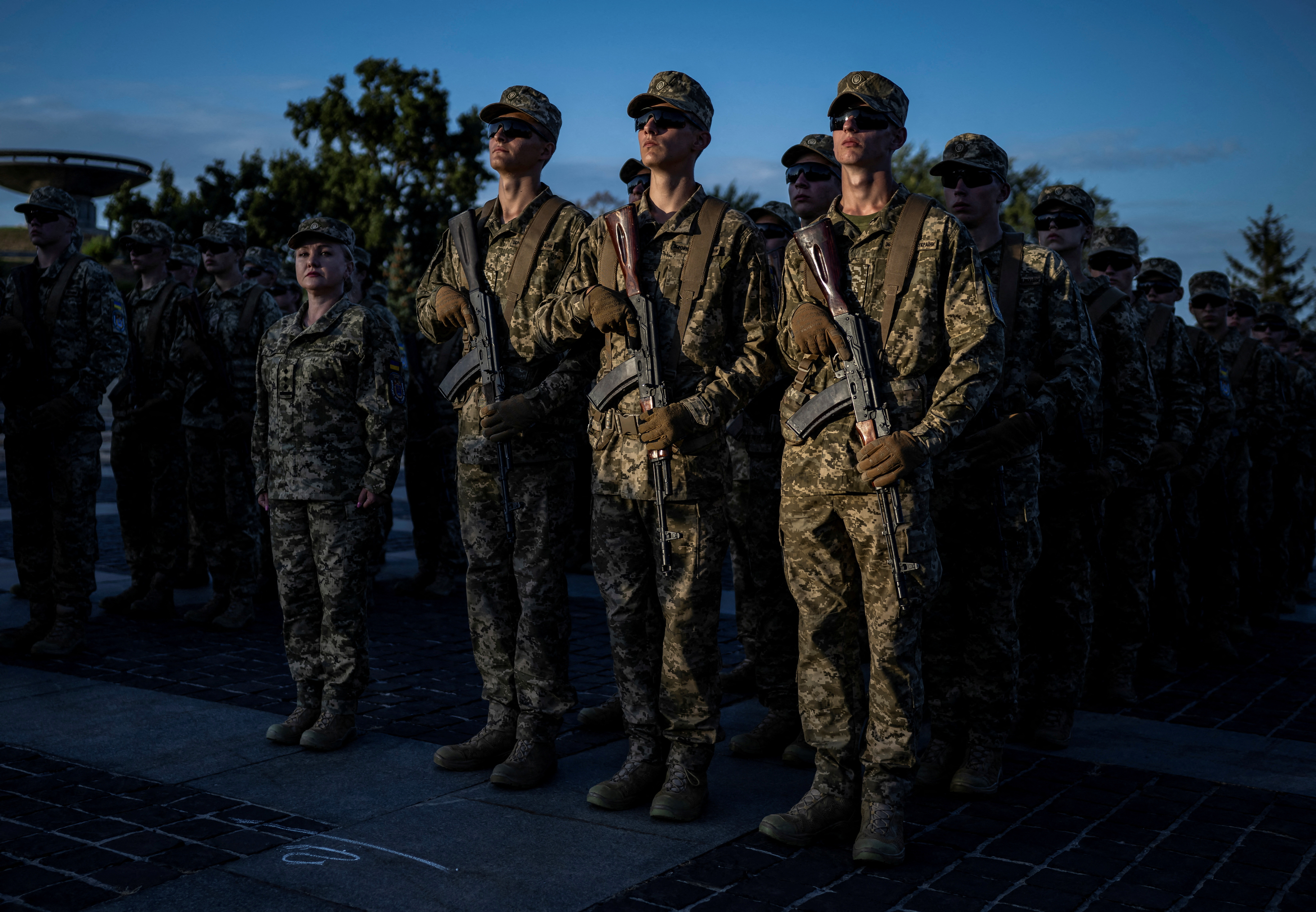


Cadets of Military Institute of Taras Shevchenko National University take part in a swearing-in ceremony at the National Museum of the History of Ukraine in the Second World War, amid Russia's attack on Ukraine, in Kyiv, Ukraine September 8, 2023. REUTERS/Viacheslav Ratynskyi/File Photo Acquire Licensing Rights


At the River Tisa, which acts as the border from southwestern Ukraine to Romania, guard patrols used to focus on catching tobacco smugglers but now collar fleeing draft dodgers.

About 6,000 people have been detained trying to leave across that stretch, the border guards told Reuters. One of them, Dyma Cherevychenko, said at least 19 people had drowned trying to flee the country during the conflict.

"They died for nothing, died in the river when they could have contributed to the war effort," the 29-year-old added.


UNIVERSITY ESCAPE HATCH?


The Ukrainian parliament has meanwhile been debating legislation that would stop people over the age of 30 using higher education as a legal way around mobilisation.

The number of men aged over 25 who booked places at universities in the first year of the invasion shot up by 55,000 compared with the year before, Education Minister Oksen Lisovyi wrote on Facebook in September.

Some voices in the West have suggested that Kyiv step up the scale of its recruitment by drawing on younger men.

Ben Wallace, Britain's defence minister until the end of August, said the average age of Ukrainian soldiers at the front was over 40 and suggested it was time to "reassess the scale of Ukraine's mobilisation".

"I understand President Zelenskiy's desire to preserve the young for the future, but the fact is that Russia is mobilising the whole country by stealth," he wrote in the Telegraph newspaper.

David Arakhamia, a senior lawmaker and Zelenskiy ally, said on Thursday that parliament planned to draw up legislation to improve the mobilisation and demobilisation procedure by the year's end.

The bill, he said on TV, would cover what to do with people who have been fighting for two years without rotation, how to demobilise soldiers who have returned after being prisoners of war, and also address "issues related to the conscription age".


TANKS AND TRANQUILISERS


A temporary lull in major Russian missile and drone strikes on the capital over the summer made the war seem more distant, although that calm was shattered over the weekend as Russia launched its biggest drone assault on Kyiv of the war so far.

Some sociologists say a gloomier mood has set in nationwide.

They point to surveys showing declining trust in the government, which had surged in the first months of the war when Ukrainian forces repelled Russian advances. Zelenskiy's ratings remain very high, although they too are down from last year.

Trust in the government and parliament has tumbled from 74% in 2022 to 39%, and 58% to 21%, respectively, according to Anton Hrushetskyi, executive director at the Kyiv International Institute of Sociology, a research organisation.

"We'd hoped to be in a better position this autumn than we are right now," he told Reuters.

Hrushetskyi said other contributing factors were various corruption scandals and a belief that Western military supplies for Ukraine could and should have been more robust.

Danylevych is now preparing their home for what many Ukrainians fear will be another winter of Russian airstrikes that will target the power grid and energy system, causing sweeping blackouts and other outages.

"I feel depressed because I understand all the challenges of winter and if there is heavy shelling and there is neither electricity nor heating, I will have to face all these problems on my own."

Her husband Oleksandr and his unit, Ukraine's fourth tank brigade, couldn't be reached for comment.

This summer Danylevych stumbled across a group on the Telegram messaging site that now has 2,900 like-minded people including wives, mothers and family members who banded together to campaign for the right of war veterans to be demobilised.

"A lot of the women are on sedatives and tranquilisers," she said, describing a "very depressed" mood of resignation among them.

The group staged a first demonstration of around 100 people on Kyiv's Independence Square on Oct. 27, after which they wrote a letter addressed to Zelenskiy to make their case. No police action was taken against them.

Dozens of them returned to the square for a further protest in the rain on Nov. 12. One held up a sign saying: "My husband and father have given others the time to get ready. It's time to replace the first people!"



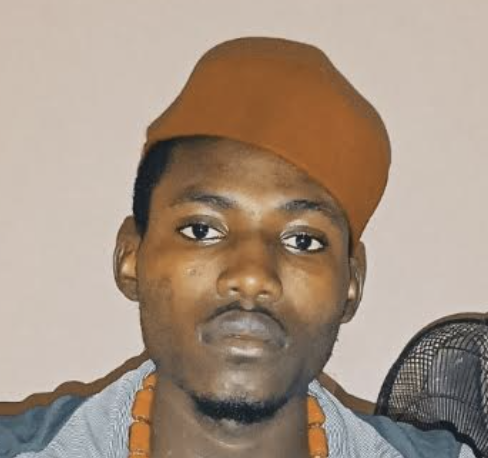
Faizal's Bombshell Admission: "I Trusted Traitors and It Cost Me Everything"


Faizal's Bombshell Admission: "I Trusted Traitors and It Cost Me Everything"


Chukwu Joshua


Faizal Azumu's Mea Culpa: Grappling with Betrayals and Political Allegations - Image by the star


Ahmad Faizal Azumu, the Deputy President of Bersatu, openly admitted to critical mistakes in the candidate selection process during Malaysia's 15th general election. This admission came after the party faced betrayals by elected representatives, including Iskandar Dzulkarnain Abdul Khalid, previously Faizal's political secretary and the MP for Kuala Kangsar.


Assuming responsibility for his involvement in nominating candidates to represent the Perikatan Nasional (PN) coalition in Perak state, Faizal expressed profound regret over the consequential betrayals. He revealed that he had convinced Bersatu President Muhyiddin Yassin of Iskandar's capability to secure victory, trusting him to contribute positively to the party's cause.


"While my intent was to fortify the party's position, I never anticipated the subsequent betrayals. I wholeheartedly accept responsibility for the oversight in candidate selection," Faizal candidly confessed during the Bersatu general assembly.


Iskandar's decision to defect on October 12 marked a significant event, being the first Bersatu MP to lend support to Anwar Ibrahim's government. This defection was later followed by similar actions from Suhaili Abdul Rahman (Labuan), Azizi Abu Naim (Gua Musang), and Zahari Kechik (Jeli), further undermining the party's standing.


Dismissing allegations connecting him to the purported "London Move," Faizal vehemently denied any involvement while addressing the assembly. "During the period under scrutiny, I was situated in Manchester, not London. Any insinuations linking me to such activities lack merit and are baseless," he firmly stated, seeking to dispel any misconceptions regarding his association with the speculated events.


The rumours surrounding the "London Move" initially surfaced during the Umno annual general meeting held in January. These rumours hinted at a clandestine gathering among Malaysian politicians to strategize the overthrow of the unity government. Faizal's categorical denial aimed to distance himself from any assumptions linking him to the speculated activities during that period.


Faizal's candid admission of fault in candidate selection, alongside his steadfast denial of involvement in controversial political manoeuvres, shed light on the complexities and challenges within the political landscape, where decisions and associations often have unforeseen consequences on party integrity and stability.


Pandemonium in Dewan Rakyat as “macai”, “celaka” lead to shouting match


Pandemonium in Dewan Rakyat as “macai”, “celaka” lead to shouting match


A SHOUTING match had erupted in Parliament earlier today (Nov 29) as MPs from both sides of the aisle hurled flung the words “macai” and “celaka” at each other.


Jelutong MP RSN Rayer became irated when Besut MP Datuk Che Mohamad Zulkifly Jusoh stood up to interrupt his debate and mentioned Perikatan Nasional (PN) chairman Tan Sri Muhyiddin Yassin’s name.

When debating the Human Rights Commission (Amendment) Bill 2023, Rayer alleged that there had been violations when Muhyiddin was in government.


“With this law, human rights violations that occurred during Pagoh’s (Muhyiddin) administration will not be repeated in the future.

“Pagoh is here but he won’t dare to get up to answer,” Rayer said in an attempt to bait the Pagoh MP, who is also the Bersatu president.

The DAP lawmaker’s statement immediately drew the ire of Che Mohamad, Pasir Mas MP Ahmad Fadhli Shaari and Alor Setar MP Afnan Hamimi Taib Azamudden who stood up to intervene.

Rayer then proceeded to demand the macai to sit down, which triggered Che Mohamad to raise his voice to highlight his dissatisfaction over Rayer’s behaviour and asked him not to “be a celaka”.

“Jelutong (Rayer) is rude. What’s wrong? Rude. Don’t be ‘celaka’,” said Che Mohamad.

Rayer then requested Deputy Speaker Alice Lau to instruct Che Mohamad to withdraw his remark, which he refused, claiming that he did not accuse Rayer of being a “celaka” but was merely reminding the MP not to be one.

“I said don’t be. I didn’t say he (Jelutong) was ‘celaka’. I didn’t even say it,” Che Mohamad shot back.

Lau, however, rejected Che Mohamad’s explanation and demanded that the latter withdraw his remark because its use was considered a violation of Dewan Rakyat rules.

“That word needs to be withdrawn. If not withdrawn, does this mean that all un-parliamentary words can be used with the word ‘don’t’ attach before them? Withdraw,” Lau stressed.

Still unsatisfied, Che Mohamad then asked Lau to also instruct Rayer to withdraw the word “macai”.

Eventually, Che Mohamad agreed to retract his statement. – Nov 29, 2023

PKR has become like Umno, says Khairy


PKR has become like Umno, says Khairy


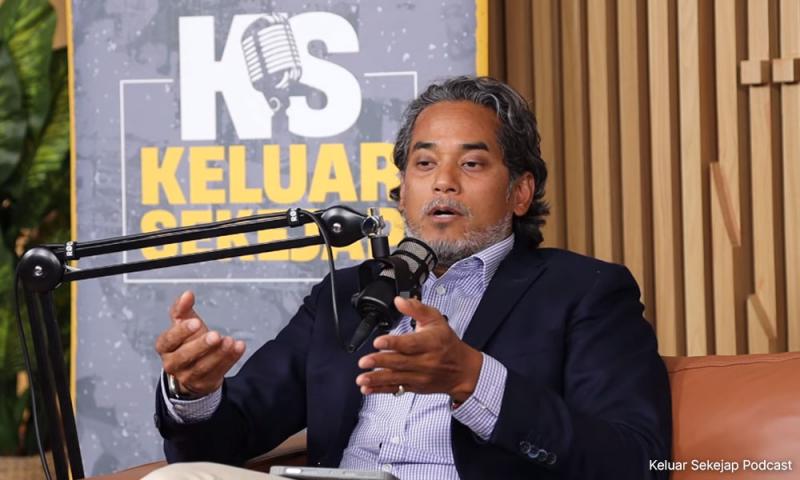
PKR has become like Umno that it used to hate, said former minister Khairy Jamaluddin.

According to the former Umno leader, PKR, and Pakatan Harapan in general, are also committing the "same mistakes" that Umno-BN did when the latter was in power.

"The rakyat has high hopes for Harapan, but nothing is being done to handle the expectations. Even hardcore Harapan supporters are not impressed (with the government).

"Sure, there are several good things like the National Energy Transition Roadmap (NETR), the New Industrial Master Plan 2030 (NIMP), and the Madani economy, but hardly anything is being done to help the rakyat handle the current challenges," he said in the latest episode of the 'Keluar Sekejap' podcast.

Khairy (above) cited the poor performance of the ringgit and the rising cost of living as examples of the external challenges faced by the rakyat.

"The worst part is Harapan is making the same mistake that BN did, by asking the rakyat why they are complaining as the inflation is still low, and the GDP is up for three consecutive quarters, and so on.

"They think the abstract numbers are felt by the people on the ground, when in fact, these two are different things."

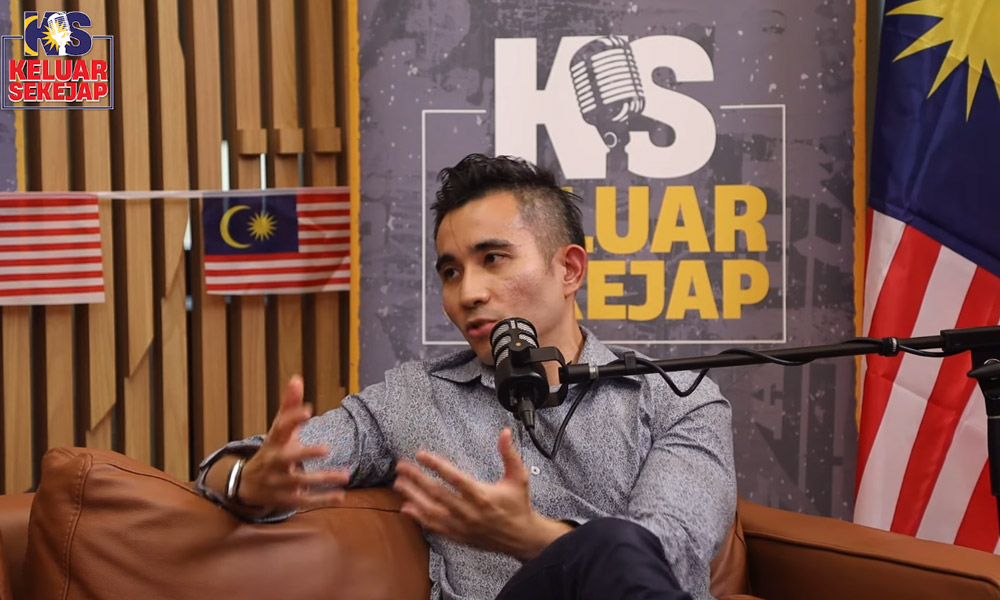
Khairy and his co-host Shahril Hamdan were talking about the first year anniversary of Prime Minister Anwar Ibrahim's administration, which both of them dubbed as "great on show, but short on performance".


'Thin skin syndrome'

Khairy also slammed the coalition government for failing to keep up to its promises and using poor justifications for its shortcomings.

"They (Harapan) have yet to deliver on the separation of powers between the prime minister and finance minister, and the Sedition Act is still being used for political purposes when it was previously promised it would only be used for statements against the royalty.

"(To justify the shortcomings), they (Harapan) give excuses like they have to work with Umno-BN, but good governance should go beyond parties or coalitions. They (Harapan) can't even admit their weaknesses. What they used to attack (former premier) Najib (Abdul Razak) with, now it is suddenly all right for Anwar to do," said Khairy.

According to him, the government and its supporters also suffer from a "thin skin" syndrome, which means it is easily offended by criticism.


Shahril Hamdan


Shahril concurred, saying that the government and its leaders do not deal with criticism well.

"It is disappointing. I thought Harapan was open-minded, but when they are in power, they are touchy, and any criticism is rejected as being motivated by agenda.

"This is akin to the era before the 14th general election, where anyone criticising Najib was seen as the enemy.

"I would like to advise Harapan, don't make the same mistake (that BN did)," said Shahril.

Khairy said that he conducted a poll on his Instagram to gauge his followers' feedback on the Madani government's performance, and out of the 18,000 votes garnered, the majority (69 percent) went for the C and D options.

"It (government performance) is not disastrous, but it can be better," he said, further suggesting Anwar to implement a Madani KPI (key performance indicator) to grade the performance of the cabinet ministers, akin to the one implemented by Pemandu during Najib's time.


Mat Sabu 'relaxed' on prospect of being challenged


Mat Sabu 'relaxed' on prospect of being challenged


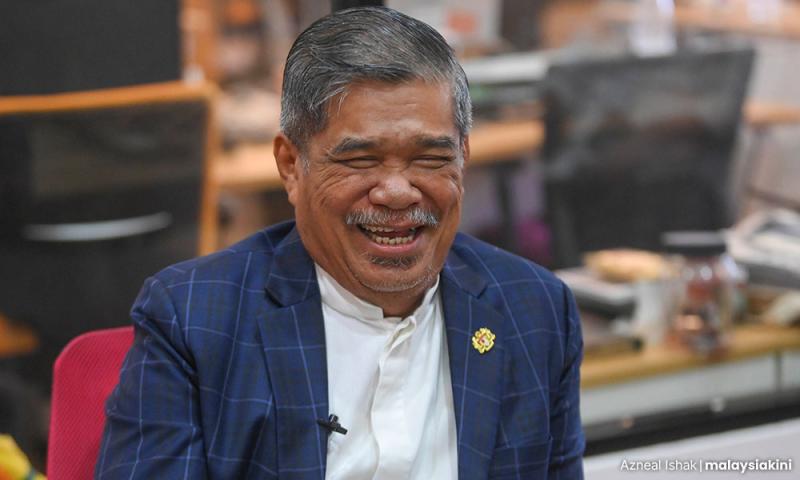
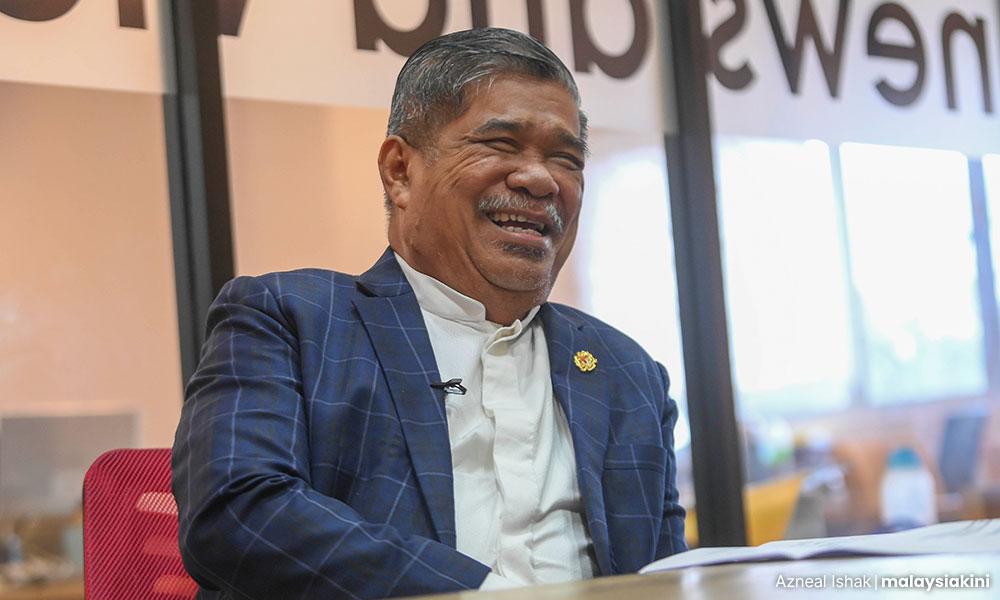
INTERVIEW | Two-term Amanah president Mohamad Sabu has welcomed potential challengers in the upcoming party polls.

In an interview with Malaysiakini, Mohamad said the choice of the next president was up to the wisdom of the 27-member leadership committee which will be elected in December.

Under party rules, Mohamad is eligible for a third consecutive term. He co-founded the party in 2015 and has been its leader since.

It is believed that efforts are underway to oust Mohamad and install a new leader capable of attracting fresh members.

The 69-year-old enjoyed a meteoric rise when he was in PAS but reached his ceiling in the early 2010s as the party's deputy president.

He and his allies were ousted from the Islamist party leadership in the 2015 party election, prompting them to form Amanah.


High stakes

Unlike most political parties, Amanah's national leadership is not chosen directly by the members. Instead, they elect a 27-member leadership committee, which in turn decides on leadership positions.

Mohamad said that anyone could offer themselves as party president because Amanah practises democracy.

“Regardless of whether I feel pressured, if there are challengers, they will go ahead. So it's better that I stay relaxed and leave it to the delegates,” he added.

Mohamad was also coy when asked if he would actively campaign to be retained as the Amanah president.


The Amanah leadership race is a high-stakes one as those with higher positions have a better chance of landing a post on Prime Minister Anwar Ibrahim's cabinet.

In December last year, Anwar chose two Amanah leaders - including Mohamad - as cabinet members and another two as deputy ministers.


Membership woes

Mohamad said he accepted criticism from the grassroots regarding his leadership and the party's perceived lack of traction.


Conceding that it was difficult to attract new followers, Mohamad said a large party membership was not a determinant of a political party's relevance.

“Umno claims to have three million members yet sometimes, they do not vote for their own parties.

“Although membership is important, it is not a measure of a party's influence,” he added.

Apart from the two cabinet members and two deputy minister positions, Amanah has three Dewan Negara members and a disproportionately large number of political appointees heading government-linked companies and government agencies.


Kelantan records 533 underage marriages in past four years


Kelantan records 533 underage marriages in past four years


Pix for illustration purpose only. — Picture from Twitter/Bernama


KOTA BHARU - A total of 533 underaged married couples were recorded in Kelantan in the past four years, state Kelantan Islamic Development, Dakwah, Information and Regional Relations committee chairman Mohd Asri Mat Daud said today.

He added that the state government retained the age of marriage without amendment at 18 for boys and 16 for girls.


"So far, only 13 applications have been rejected due to certain factors and the approach of underage marriage is reasonable under the provision of Section 8 of the Kelantan Islamic Family Enactment 2002,” he said in reply to an additional question by Zubir Abu Bakar (PAS-Mengkebang) at the state assembly at Kota Darulnaim Complex here today.

He said that the benefits of underage marriage should be assessed comprehensively from aspects of the couple's willingness and readiness to start a family and the question of ability is closely related to the strength of support and initial preparation by parents, maturity in decision making and their ability in parenting.


"The meeting of Syarie judges decided to consider a minimum standard operating procedure (SOP) by the Kelantan Syariah Judiciary Department, considering Kelantan’s location bordering Thailand that makes solemnisation there very easy, something we wish to avoid occurring without the consent of their guardians.

"Till today, all underage marriage application approvals require the consent of the Syariah Court beforehand,” he said, as the matter is enshrined in Section 8 of the Kelantan State Islamic Family Law Enactment 2002 that states that no marriage can be solemnised under the Enactment if the boy is under 18 years of age or the girl is under 16 years old, with the exception that the Syarie judge gives their written consent under certain conditions.


He said that before the solemnisation can proceed, the application needs to be made at the Syariah Court, where the Syarie judge has the authority to approve or reject the application, adding that the judge would make the decision during trial in closed chambers involving the testimony from the underaged applicant, their parents, witnesses and local imam or the Assistant Registrar of Marriage, Divorce or Ruju. - BERNAMA

"No Results, No Loyalty!" Non-Malays Warn Anwar: Bersatu Youth Chief's Stark Message


"No Results, No Loyalty!" Non-Malays Warn Anwar: Bersatu Youth Chief's Stark Message


felixwrite
Reputable writer, zero tolerance for plagiarism


Image credit: Malay Mail


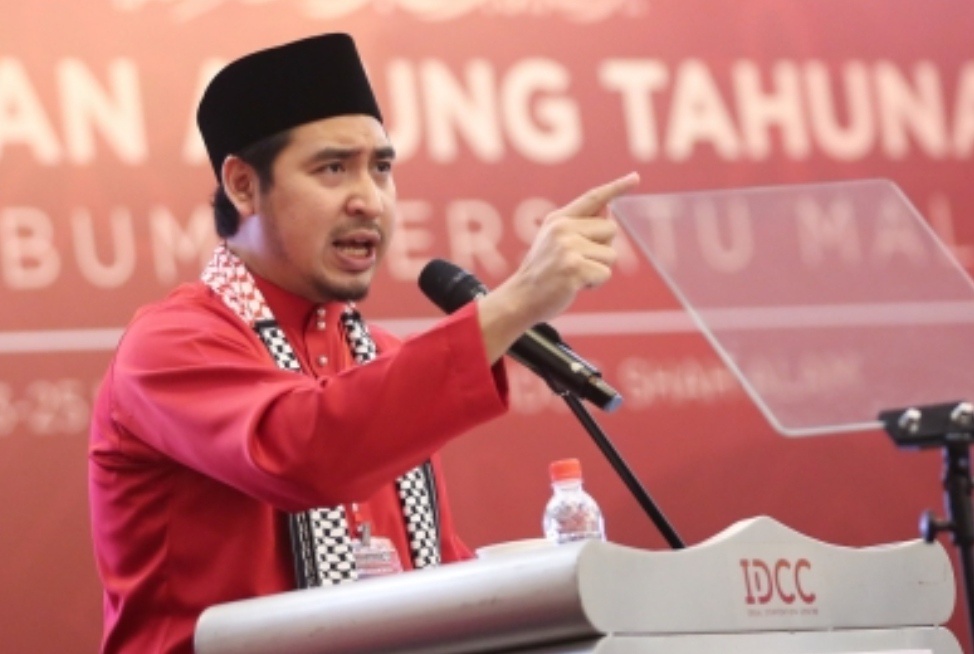
Bersatu Youth chief Wan Ahmad Fayhsal Wan Ahmad Kamal expressed his concern regarding the support of non-Malay voters for Prime Minister Anwar Ibrahim if the government fails to address their bread-and-butter issues. Speaking at a press conference during Bersatu's general assembly, Wan Fayhsal highlighted the pragmatic nature of non-Malay voters, emphasizing their focus on livelihoods and the economy.


According to Wan Fayhsal, if the government fails to deliver on these issues, it is not improbable that traditional supporters of Pakatan Harapan, particularly Chinese voters, may consider lending their support to Perikatan Nasional. He emphasized the importance of tangible results rather than mere rhetoric in winning over voters. The concerns raised by Wan Fayhsal are supported by recent survey results from research house Merdeka Center.


The approval rating of Prime Minister Anwar has dropped from 68% in December to 50%, while dissatisfaction with the state of the economy has risen from 19% to 43%. These numbers indicate a growing dissatisfaction among voters, reinforcing the need for the government to address economic concerns and improve livelihoods. In regards to the Court of Appeal's ruling on the use of Mandarin or Tamil in vernacular schools, Wan Fayhsal stated that Bersatu respects the decision. However, he expressed the party's desire to see more "national elements" infused into the syllabus of these schools.


He criticized the use of imported syllabi from Taiwan or China, suggesting that a greater emphasis on national unity and nation-building within the curriculum would be more appropriate. The recent unanimous decision by the Court of Appeal dismissed an appeal by four Malay-Muslim interest groups seeking to declare the use of Mandarin or Tamil in vernacular schools as unconstitutional.


The court recognized the long-standing existence of vernacular schools within the legislative framework of the education system, even predating Malaysia's independence and the formation of the 1957 constitution. In conclusion, Wan Fayhsal's concerns about non-Malay voter support and the survey results indicating a decline in approval ratings and growing economic dissatisfaction highlight the importance of the government addressing bread-and-butter issues.


Additionally, his remarks regarding vernacular schools express Bersatu's desire for a nationalistic approach to education while respecting the court's ruling on their constitutional validity. The government's ability to deliver on the concerns of all voters, regardless of ethnicity, will be crucial in maintaining their support and ensuring the nation's progress.


Najib pleads Altantuya's killer to reveal the politician behind Altantuya's murder


Najib pleads Altantuya's killer to reveal the politician behind Altantuya's murder


Asyiqin Razak
Asia’s Innovative Writer Award 20/21.


Najib denied being involved in the killing of Altantuya Sharibu. Source of image: Free Malaysia Today


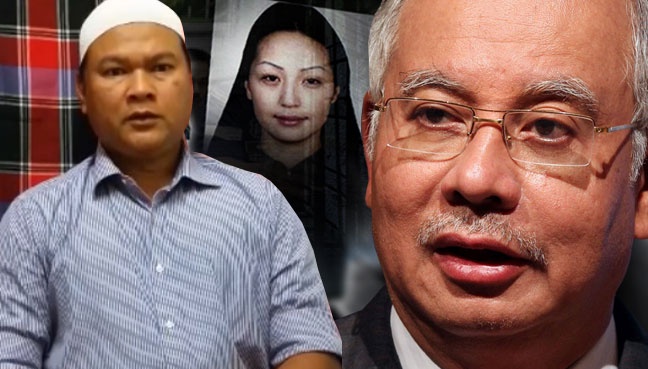
Former prime minister Datuk Seri Najib Abdul Razak suggested that former corporal Sirul Azhar Umar "reveal everything" he knows about the alleged mastermind behind Altantuya Shaariibuu's murder.


This comes after former police commando Sirul, in an interview with Al-Jazeera that aired on Friday, declined to identify the "top politician" he said gave the order to assassinate Altantuya.


During his Australian incarceration by the Immigration Department, Sirul also claimed in the interview that he had been paid an undisclosed amount by anonymous sources to remain silent about the Altantuya case. Najib vehemently refutes any claims that he is trying to intimidate or quiet Sirul.


According to The Star, Najib's attorneys, Shafee & Co., stated that Najib “urges Sirul to be brave and to disclose any information he may have regarding the purported mastermind, in the interest of uncovering the truth, transparency, and justice.”


Najib's attorney, meanwhile, claimed that their client had been cleared by the courts on several occasions over the years of any involvement in Altantuya's death.


The Federal Court, for example, declared in 2020 that Azilah Hadri, the former chief inspector, had "lacked substance both in procedure and merit" in her attempt to link Najib to the case.


Both that he knew Altantuya or had ever met her, as well as any role in her death, have been flatly denied by Najib.


"However, recent remarks made during the interview suggest an ambiguous claim that our client interferes or has influence over Sirul, ostensibly to safeguard our client - an account very dissimilar from that of (former chief inspector) Azilah Hadri, further reinforcing the contradictory positions adopted by both parties," his attorneys said.


They further emphasized the fact that, while facing the death penalty, Sirul was given the opportunity to defend himself in court on this matter, but he never brought up these allegations during that time.


The statement added that, in contrast to several media reports portraying Sirul and Azilah as Najib's personal bodyguards, the two were, in reality, a part of a bodyguard pool that was shared or rotated among the Cabinet's top leadership at the time.


Najib has asked that the government work with Australian authorities to make it easier for Sirul to be extradited back to Malaysia in order to guarantee a thorough investigation into his recent allegations.


Altantuya Sharibu was shot in the head in October 2006. A military-grade explosives were used to blow up Altantuya's remains. It was believed that Altantuya was pregnant at the time.


A mile out of a millimeter: A take on Hannah Yeoh's one-year tenure as Youth and Sports Minister


A mile out of a millimeter: A take on Hannah Yeoh's one-year tenure as Youth and Sports Minister


Youth and Sports Minister Hannah Yeoh. Bernama FILE PIX


SHAH ALAM - In a portfolio historically and overwhelmingly dominated by men since Malaya had its first election in 1955, the appointment of Hannah Yeoh as Youth and Sports Minister was rather refreshing.

Initially, at least.

The second woman to hold the position after Datuk Seri Azalina Othman Said (from 2004 – 2008), Yeoh began her debut in the ministry on a humble note; admitting that she was essentially a fish out of water.

Why? She had no sporting experience.

But like many before her, Yeoh knew how to play to the gallery.

Riding on the ‘reformasi’ rhetoric -- the sound bite synonymous with Prime Minister Datuk Seri Anwar Ibrahim -- Yeoh uttered all the right words; charming many with her mission of robust reforms in the Malaysian sports landscape.

Next week will be Yeoh’s 12th month on the job and from the looks of it, her stellar opening number has been en route to a rather lacklustre closing act.

One that even some sports scientists could not help but notice.

“She has been repeating what previous ministers (Youth and Sports’) have been doing,” was how Dr Mohd Nidzam Jawi of Universiti Sains Malaysia described Yeoh’s tenure so far, adding that the latter hardly introduced anything new.

In driving home point, Nidzam cited the reintroduction of the Rakan Muda and Tunas Cermelang programmes which were first introduced in the 90s by the then-Barisan Nasional-led government.

“Then, there’s the rebranding of the ‘Road to Podium’ (RTP) high performance programme to ‘Road to Gold (RTG)’, which doesn’t change a lot in actually achieving gold medals in the Olympics,” needled Nidzam.

His contemporary in the field of sports sciences was also on the same page but unlike him, Dr Faithal Hassan from Universiti Malaya did not mince words, pointing out that Yeoh appeared to have “lost the plot.”

“When the 2023 Cambodia SEA Games were nearing, she failed to lead various agencies namely the National Sports Council, the National Sports Institute and the Olympic Council of Malaysia to cooperate with national sports associations in the preparation of our athletes.

“In fact, some did not even receive appropriate support from those agencies, which left athletes in limbo,” Faithal argued.

Similar to Nidzam, Faithal also neddled on the rebranding of RTP to RTG in March 2023, which he claimed, showed the cluelessness of the ministry in dealing with high-performance sports.

Such was so, said Faithal, because after seven months since RTG’s rebranding, the programme had only been including athletes who had yet to qualify for the 2024 Paris Olympics, while athletes who had already qualified were being left out from RTG.

“It was like a road to another failure or shall we call it, the Road To Olympic Qualifying Programme,” he quipped.

However, the two scientists insisted that the biggest farce throughout Yeoh’s ministerial tenure in 2023 was Malaysia’s playbook and the consequent celebration of the country’s worst performance in all of its participating history in the Asian Games.

To recap, in this year’s 19th Asian Games held in Hangzhou, China, Malaysia bagged six gold, eight silver and 18 bronze medals, which was the worst since the country’s dismal tally of six gold, eight silver and 16 bronze at the 2002’s 14th Asian Games in Seoul, South Korea.

Apart from touting it as a success and censuring those criticising the flop, what made the ministry’s approach in the Asian Games controversial was the decision to not set a gold medal target in order to not put pressure on our athletes.

“Taxpayers’ money is heavily spent on this huge championship, not setting a gold medal target is a loss to the people. How much is the expenditure spent on our preparations for the Asian Games to sponsor our athletes?” Nidzam asked.

Nidzam also rubbished the notion that the ministry did not have enough time to properly prepare given that the government was only established in November 2022 and that the unveiling of the new Cabinet Ministers was done in December 2022.

“It does not matter because the appointment of the minister and government transition are not an issue. The officials in the ministry should have already set the plans in motion [for the Asian Games] a long time ago,” he said.

His contention holds water because the Olympic Council of Asia -- the governing body of sports in Asia -- had already announced the date of the 19th Asian Games way back in 2019.

Unlike Nidzam who scrutinised ministry’s ill-preparedness for the Asian Games, Faithal chose to prod the Yeoh-led ministry's decision to implement the no-gold-medals target which the latter claimed to have been recommended by Japan’s Nippon Sport Science Univeristy (NSSU).

Scrapping the gold-medal target for the Asian Games, against the backdrop of Malaysia’s dismal performance in the Cambodia SEA Games, argued Faithal, appeared to be done in order to avoid stressing ministry officials rather than the athletes’ mental well-being.

“It was very irresponsible for sports officials and the minister to find an escapism after an awful achievement in Hangzhou. Making sports as a big screen for political mileage for politicians has been proven to serve a negative impact to Malaysian sports. Whether we like it or not

“In fact, it was like rubbing salt onto the wounds in the Malaysian sports landscape because there are a few universities in the country that have sports science studies, are ranked better than NSSU and the ministry chose to simply ignore them,” said Faithal.

With the 2024 Paris Olympics looming ever closer, the two experts were of the opinion that a proper synergy between the Youth and Sports Ministry and academic institutions has never been more crucial.

Nidzam highlighted that despite Malaysia having many sports scientists, their services had not been fully utilised.

“And even if any of our expertise are sought after by the Malaysian Sports Council, they would often want to tap into it for free.

“Frankly, there is a need to call upon all local sports scientists from all universities to sit together and make use of their collective knowledge for the sake of the athletes’ achievement,” said Nidzam.

Chiming in on the need for a robust collaboration, Faithal believed that it was high time for the Institute for Youth Research Malaysia (IYRES) -- an institute directly under the ministry -- to expand its circle of fraternity.

Right now, Faithal explained, IYRES has been rather selective in its collaboration partners, working with only a small number of researchers.

“It should collaborate with as many universities in Malaysia and bridge closer ties with universities than working with individuals.

“There are 14 states in Malaysia, each is unique with its own identity, culture, lifestyle and talents. There are yet hidden gems to be discovered in rural areas.

“Who knows if we can uncover more world champions in the future,” Faithal reasoned.

As it is, a glimpse of such collaboration has come to fruition.

In early October, Universiti Malaya’s Faculty of Sports and Exercise Science signed a memorandum of understanding with the National Sports Institute; in which the former will act as the latter’s satellite centre for athletes and sports officials to seek related input and advice.

With seven more months left before the world ushers in the Paris Olympics in July 2024, it won’t be entirely surprising if Malaysia falters yet again if the ministry continues to take a leaf from its playbook in the Cambodia SEA Games and the Hangzhou Asian Games.

But the million ringgit question is, will Yeoh still be spearheading the Youth and Sports Ministry by then?

And if she is, will there be another round of statistical infographics on the ratio of athletes-to-medals cherry-picked to paint a rosy picture and justify a cause for a jubilant celebration of a subpar feat?

Because everyone knows that making a mile out of a millimetre seems to be quite the norm in Malaysia these days.


Guan Eng pours cold water on Penang’s petroleum tax plan


FMT:

Guan Eng pours cold water on Penang’s petroleum tax plan


The former finance minister says constitutionally, Penang cannot demand taxes for petroleum.


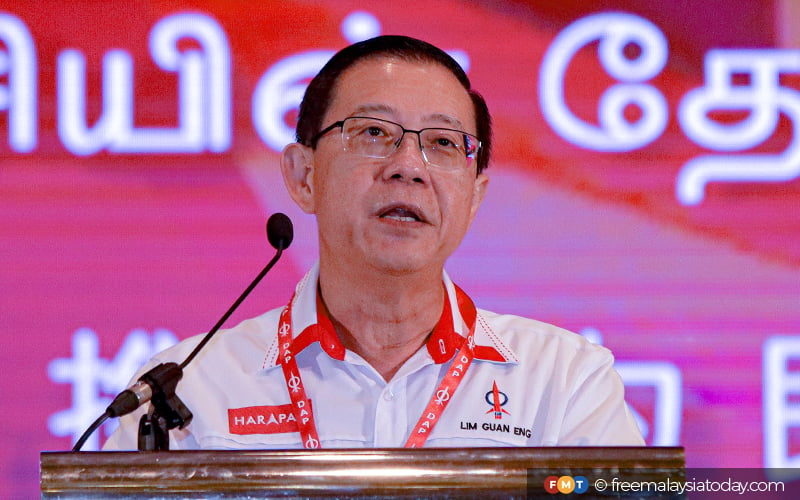
Former finance minister Lim Guan Eng says Penang cannot come up with a new law to collect taxes from petroleum.


GEORGE TOWN: Lim Guan Eng (PH-Air Putih) today said it would be impractical for Penang to levy a sales tax on petroleum products in the event that oil is discovered offshore in the state.

The former finance minister said this was because Penang had no power to do so under the Federal Constitution.

“Sabah and Sarawak have special powers under the Malaysia Agreement 1963, under the Federal Constitution. Penang cannot come up with a new law (to collect taxes),” he told the Penang assembly in debating the 2024 state budget.

“Even the state legal adviser nodded in agreement when I said Penang has no constitutional rights to demand taxes from petroleum,” he said.

Previously, chief minister Chow Kon Yeow said Penang might consider taking Sarawak’s path to introduce a sales tax on petroleum products in the event that oil is found in its waters.

Chow said he had asked the state legal adviser to come up with a sales tax law similar to Sarawak’s and aim for a similar RM4 billion sales tax revenue.

Petronas recently said it was mapping the hydrocarbon potential of the Langkasuka Basin, which spans the waters of Perlis, Kedah and Penang.

In June, it was reported that Petronas and its subsidiaries had paid the Sarawak government RM1.2 billion in sales tax on petroleum products for the first quarter of 2023.

Sarawak churches back in Christmas event after Abang Jo steps in


FMT:

Sarawak churches back in Christmas event after Abang Jo steps in


The Sarawak premier orders that ‘O Holy Night’ be included at the event, while the Association of Churches in Sarawak rubbishes TVS’s claim of a ‘miscommunication’.


Association of Churches in Sarawak chairman Danald Jute says TVS’s claim of a miscommunication over the song choice for an upcoming Christmas event is ‘deceptive’. (Facebook pic)


PETALING JAYA: The Association of Churches in Sarawak (ACS) will participate after all in a Christmas event backed by the Sarawak premier’s department following intervention by Abang Johari Openg over the selection of songs to be featured in the programme.

According to The Borneo Post, ACS chairman Danald Jute said both the Sarawak premier and his deputy, Douglas Uggah Embas, had stepped in.

Specifically, he said Abang Johari “directed (O Holy Night) to be included” in the list of carols to be sung at the event.

“Both (Abang Johari and Uggah) are keen for the programme to proceed and to include ‘O Holy Night’. We deeply appreciate and honour their support,” he was quoted as saying.

Danald also rubbished the claim by state-owned broadcaster TVS that there had been a miscommunication over the matter, saying ACS “will not allow the public to be misled or deceived by misinformation”.

He added that TVS’s statement in response to the issue was merely “an effort to do damage control”, and that the claim of a miscommunication was “deceptive”.

“The ACS, as one of the parties involved in the programme, categorically denies that there ever was any ‘miscommunication’ on our part.

“It is quite laughable that TVS should now claim they have ‘no intention of excluding the said song from the programme’.”

Last week, ACS said TVS had refused to allow “O Holy Night” to be sung at the event in place of “Jingle Bell Rock”.

The association said “Jingle Bell Rock” had nothing to do with Christmas, which celebrates the birth of Jesus Christ, and that it would not take part in the event.

It also claimed TVS said it could not accede to the request as “O Holy Night” contained religious elements, and that this was in line with the protocol of the Film Censorship Board and the Malaysian Communications and Multimedia Commission (MCMC).

Communications and digital minister Fahmi Fadzil later said MCMC had nothing to do with the decision-making for the event.

TVS also said there had been a miscommunication over the matter and that it had no intention of excluding the carol and was working to include the song at the event.

Erdogan tells UN chief Israel must be tried in international courts for Gaza crimes


Erdogan tells UN chief Israel must be tried in international courts for Gaza crimes


A demonstrator holds a sign as people gather in solidarity with the Palestinians, in Istanbul, during a temporary truce between Hamas and Israel. — Reuters pic

Wednesday, 29 Nov 2023 11:10 AM MYT


ANKARA, Nov 29 — Turkish President Tayyip Erdogan yesterday told United Nations Secretary General Antonio Guterres that Israel must be held accountable in international courts for what he called war crimes it committed in Gaza, the Turkish presidency said.

Israel has mounted an offensive by air and ground against Hamas militants in Gaza in which more than 15,000 people have been killed, according to Gaza health authorities.


The offensive was launched after Hamas went on a rampage in southern Israel on October 7, killing some 1,200 people and taking 240 hostage.

In a phone call ahead of a UN Security Council meeting on Gaza planned for Wednesday, Erdogan and Guterres discussed the “expectations of the international community regarding Israel’s unlawful attacks”, access of humanitarian aid into the enclave, and efforts for a lasting peace, the Turkish presidency said.


“During the call, President Erdogan said Israel continues to shamelessly trample on international law, the laws of war, and international humanitarian law by looking in the eyes of the international community, and it must be held accountable for the crimes it committed in front of international law,” it said in a statement.


Turkiye’s foreign ministry said Foreign Minister Hakan Fidan would attend the UN Security Council meeting in New York.

In a statement, it added that Fidan would hold also meet his counterparts as part of a so-called contact group of some Muslim countries, formed by the Arab League and Organisation of Islamic Cooperation (OIC) this month to discuss Gaza with Western powers and others.

Turkiye has harshly criticised Israel’s attacks on Gaza and called for an immediate ceasefire to allow for discussions over a two-state solution to the wider Israel-Palestinian conflict.

Erdogan has called the Israeli attacks on Gaza a genocide and accused Israel of being a “terror state”. Israel rejects such charges and say it is acting in self-defence against a foe bent on its destruction.

Turkiye also hosts some members of Hamas, which it does not consider a terrorist group, unlike the United States, European Union, and some Gulf countries. It has accused the West, apart from Spain and Belgium, of complicity due to their support of Israel. — Reuters

Kampung Cina residents upset over Kuala Terengganu council's plan to close iconic market


The Star:

Kampung Cina residents upset over Kuala Terengganu council's plan to close iconic market


The Kg Tiong market has been a popular community hub and meeting point for the past 40 years.


PETALING JAYA: In its recent annual assembly, PAS said it wants to convince non-Muslims that the Islamist party can take care of their interests, but a decision on an iconic market and food court in Terengganu challenges that narrative.

Residents of Kampung Cina, a historic enclave in Kuala Terengganu, the capital of PAS-ruled Terengganu, were upset that traders and hawkers of the Kampung Tiong market and food court were being evicted.

The Kuala Terengganu City Council (MBKT), which owned the site of the market-food court, had decided to take back the land to develop a residential and commercial centre, said Dr Monna Ong, who was an advisor to the market's hawkers.

Traders told The Star that they had been given orders to vacate the venue in October and had until the end of this month to comply.

"The market-food court has been a popular community hub and meeting point for the past 40 years. Everyone comes here to hang out especially during the weekends," said Ng, a resident, to The Star.

"Its the only one of its kind for the Chinese community in Kuala Terengganu. It serves food and goods catering to us and and it is being torn down," said the 56-year-old, his voice rising when describing how he felt about local council's decision.

"They're not building a new site for us here either and all the traders and cooks are being moved away to different places."

Former Kuala Terengganu MP Datuk Raja Kamarul Bahrin Shah Raja Ahmad, who was also assisting the merchants, said the decision showed that PAS and its leaders did not care for the feelings of non-Muslims in the states the Islamist party rules.

"This is the only Chinese market in town and it is near a historic well that is 200 years old which is sacred to the community," said Kamarul Barhin, who was MP from 2013 to 2018.

"PAS says it wants to win over non-Muslims but it is not walking the talk. They feel like they can do whatever they want to the minorities in their states," Raja Kamarul said when contacted.

According to Ng and other merchants, the Kampung Tiong market-food court had been around for close to 40 years and had about 100 businesses.

Half of these are food stalls while the rest sold goods.


Ong urge the government to show mercy and demonstrate greater consideration to the 50 families who relied on their livelihood as hawkers at the Kg Tiong market.

The morning market stalls would feature a variety of daily groceries such as vegetables, noodles and fruits as well as clothes, wallets, belts, stationery and prayer items.

The majority of the food hawkers offered Chinese staples such as fried noodles, chicken rice, biscuits and buns but there were also a few stalls run by Muslims that sold satay, kuih and nasi kerabu.

"When they were told to move, even the Muslim stall owners wanted to follow their Chinese neighbours because they had already built a loyal customer base among the Chinese patrons," said another merchant named Tan.

"But everyone was eventually separated and given stalls at different food courts across the city such as the main bus terminal and Batu Burok beach," said Tan.

(Merchants interviewed by The Star refused to give their full names for fear of reprisals since they depend on the local authorities for their licences).

"The heavy monsoon rains have started and its really hard for us to find a place to temporarily store our stock and equipment," said Tan.

Ong, who is also Terengganu MCA chairperson, said extensive discussion have been made with policy makers in MBKT to secure an alternative site for the market.

"We have explored various options, including seeking private land and even writing a letter to the Mentri Besar to request for an extension so that the hawkers can find a strategic location in China Town".

On Monday (Nov 27), traders had received news that they would be relocated to a new site, near the KT waterfront, which was also owned by MBKT, said Ong.

"However, this new location is outside China town and the villagers are concerned about the uncertainty of the crowds and sales at this unfamiliar place," she said.

"As the advisor, I am appealing to the state government to pay attention to the 50 families who rely on their livelihood as hawkers, especially during this monsoon season.

"I urge the government to show mercy and demonstrate greater consideration. I hope that the state can set aside political interests and prioritize the well-being of the people".


More bad press for Islam?


FMT:

More bad press for Islam?


Only in Malaysia do we have ‘holier-than-thou’ Muslims who scour the landscape and people for things that offend their sensitivities.


The Mon Chinese Beef Roti Restaurant recently made headlines after a TikTok video showed one of its staff donning a songkok while wearing a cross on a necklace, leading to social media questioning the restaurant’s halal status.

Fearing repercussions that might affect its business, the restaurant promptly fired the worker and issued an apology to its customers.

The restaurant manager claimed it was an oversight by the management, leading to the termination of the “offending” employee. She expressed profound apologies to those offended or made uncomfortable by the incident and pledged to be more vigilant in the future.


‘Holier-than-thou’ attitude

Only in Malaysia do we have “holier-than-thou” Muslims who scour the landscape to find things that offend their sensitivities, without caring for others.

The employee was probably an innocent person trying to earn an honest living but became a sacrificial lamb for the owner of the business.

A voice of reason, Penang mufti Wan Salim Wan Noor, said Muslims should be mindful of the image of their religion, adding that non-Muslims often associate the behaviour of Muslims with the teachings of Islam.

“Most non-Muslims do not read books to understand Islam. They usually observe the behaviour and actions of Muslims,” he said.

In January 2019, a set of lights at the Grace Residence building in Penang, which when lit resembled the shape of a cross, created a huge controversy.

The lights were never intended to form the image of a cross or display any religious meaning.

It was much ado about nothing, but some Muslims with nothing better to do turned it into a national issue.


The Palestinian cause and LGBTQ

Muslim teachers and students wearing Palestine freedom fighter garb have not helped the image of Islam, either.

This situation has been worsened by boycotts of businesses like McDonald’s and Starbucks due to rumours that these businesses are owned by Jews.

The Muslim bigots forget that the majority of the 21,000 McDonald’s Malaysia employees are Muslims and any boycott would hurt them the most.

Muslim sensitivities also crossed over to the band Coldplay, with some urging the prime minister to ban the concert as the band’s members sympathised with LGBTQ and Israel.

Anwar rejected the suggestion, saying that the British outfit is among dozens of rock bands that support the Palestinian cause.

After giving the Islamic development department or Jakim its biggest ever budget, the prime minister has finally found some voice of reason to thwart rising Muslim conservatism.

Perhaps it was a lesson learned when overzealous ministry officials raided Swatch shops as one of the watches carried the rainbow design allegedly associated with LGBTQ.

The authorities have been sued by Swatch over the incident.


Muslim bigots hurting their own kind

A Malay business lobby group slammed McDonald’s Malaysia for using its ethnic Malay staff and franchise owners as “human shields” to deflect criticism from anti-Israeli boycott campaigns.

The Malay Economic Action Council (MTEM) accused the local operator of the global fast-food chain of hypocrisy in its stance of “supporting its workers”, alleging that very little of its profits are passed down to its workers.

“It must be said that whatever McDonald’s restaurants are facing is not comparable to the atrocities currently being inflicted in Gaza,” said MTEM CEO Nizam Mahshar.

I am left to wonder whether these Malay lobby groups care about the economy or simply want to score political points.


Malaysia producing more extremist youth

Deputy higher education minister Yusof Apdal said the involvement of youths in radicalism in the country is quite worrying as 80% of arrests by police in the latest available data involved those under 40.

“The data presented shows the seriousness of the extremist threats in this country, especially among the youth,” he said at a recent seminar on the prevention of radicalism and extremism.

Yusof said the ministry would continue with programmes to prevent radicalism and extremism in collaboration with researchers at higher education institutions and enforcement agencies.


Systemic failures

A 2021 paper by Siti Suriani Othman and others titled “Radicalism and extremism among university students in Malaysia” found that educational institutions are considered the “third force” in countering violent extremism and terrorism.

Alongside government agencies and the intelligence community, higher learning institutions have multiple roles such as detector, educator, presenter and producer of ideas in countering violent extremism.

This is not the case with the Malaysian education system.

We have seen the Malay Dignity Congress, where senior academics of universities were comfortably co-mingling with Malaysian politicians like Dr Mahathir Mohamad and Abdul Hadi Awang, who hold extreme views on Islam and the “Ketuanan Melayu” (Malay supremacy) concept.

Recently, we saw how the Palestine-Israel conflict had been brought into school compounds with teachers and pupils brandishing toy guns, promoting violence and hatred at such a vulnerable age.

The situation was made worse when the education minister defended the teachers and students involved in the drama and told parents and critics to butt out.

She forgot that parents and community leaders are also responsible for their children’s education.

With the biggest budget in Malaysia, the education ministry needs to be reminded that concerned taxpayers have every right to call out a failing education system to save Malaysia from religious extremism.

National Flood Forecasting Programme an utter Kerbau


FMT:

Flood forecasting programme a washout, say Taman Sri Muda folk


Taman Sri Muda residents criticise the National Flood Forecasting Programme, citing its poor 5.6% accuracy despite an RM145 million investment.


In December 2021, Taman Sri Muda in Shah Alam experienced severe flooding which killed over a dozen people and inflicted millions of ringgit in damage.


PETALING JAYA: Flood victims in Taman Sri Muda, Shah Alam, have expressed dissatisfaction with Phase 1 of the National Flood Forecasting and Warning Programme (PRAB) covering river basins in Kelantan, Terengganu, and Pahang, calling it a waste of funds.

Taman Sri Muda, a township in the capital of Selangor, experienced severe flooding in December 2021 which left over a dozen dead and millions of ringgit in damage.

While Putrajaya had allocated RM145 million for the first phase of PRAB, the recent auditor-general’s report revealed that the programme’s forecasting accuracy was at just 5.6%, with a limited capability to issue warnings two days in advance.

Aimi Latiff, a former Taman Sri Muda resident, said the investment in a programme with an accuracy rate of only 5.6% was a waste of money.

“Of course it’s not worth it (because) so much money is wasted.

“You should just spend the money on real mitigation issues,” Aimi said to FMT, adding that the community was now taking the initiative to curb flash floods without relying heavily on government intervention.

Siti Aisyah, another flood victim from Taman Sri Muda, said that despite the annual announcements of funds for flood management, there had been no apparent progress or effective use of the money.

“The funds have just been wasted. If efforts had genuinely been made, the public would definitely have noticed them.

“We feel hopeless (about the programme) and have been left confused,” said Siti.

Nithia Prasad, a flood victim from Penang’s Kampung Rawa, said Malaysia should adopt flood management strategies similar to those of Singapore, such as constructing flood protection barriers to better prepare for heavy rainstorms and flash floods.


‘Need to do better’

Faizal Parish Abdullah, director of environmental protection organisation Global Environment Centre, said he was disappointed at PRAB’s 5.6% accuracy rate.

“Certainly, a better system is needed,” he told FMT, adding that the problem lay in the changing climate which caused an increase in rapid and extreme weather events.

“When you have extreme events, several of which we have experienced in the past two years, predicting them becomes much more difficult, especially their severity and sometimes their precise locations.

“This is one of the major challenges that JPS and their consultants currently face,” Faizal said, referring to the irrigation and drainage department which coordinates and supervises the programme.

He also advised the authorities responsible for developing the system to clearly explain the challenges they face and work to maintain public confidence.

“We need to do better than 5.6% accuracy,” he said.

PRAB is slated for execution in three phases, the first of which began in 2015 and is expected to continue until 2024, concentrating on the river basins of Sungai Kelantan, Sungai Terengganu and Sungai Pahang.

The development of Phase 2 commenced in 2018, encompassing 38 river basins throughout the nation. It is scheduled for completion by 2025.

JPS is planning to broaden the scope of PRAB to include additional river basins in Sabah and Sarawak in its third phase.


The merit in Nahvin’s plea for meritocracy


FMT:

The merit in Nahvin’s plea for meritocracy


Many believe the time has come for Malaysia to gradually move to meritocracy.


University graduate M Nahvin did something that most students would not dare attempt by using his Royal Education Award acceptance speech to raise an issue which would have made the top officials present at the ceremony squirm in their seats.

Addressing attendees after he was named the top student at Universiti Teknikal Malaysia Melaka, the 23-year-old made an impassioned plea for meritocracy in the Malaysian education system.

Speaking to FMT later, he acknowledged that a change of such magnitude cannot be made overnight. Instead, he said the education system must undergo a gradual transformation towards meritocracy.

Nahvin has seen first-hand the hardships that the current system causes.

He cited the plight of his late friend who failed to gain admission to the matriculation programme despite doing as well as he did in his SPM examination. Many others with much lower grades gained entry, said Nahvin.

As a result, Nahvin said his friend became depressed, withdrew himself and started questioning his capabilities. Sadly, he passed away at a young age.

Nahvin did not reveal the cause of death but vowed not to let his friend’s passing be in vain.


‘Too sensitive’


What many might not know is that in the lead-up to the event, Nahvin was told to drop the issue from his speech because it was deemed “too sensitive”.

However, aware that this was his best platform, Nahvin decided to press ahead with the topic, earning the plaudits of many who attended the ceremony.

“Many of my lecturers and fellow students from all races and religions congratulated me on my speech. It is something that I did not expect,” he told me, adding that he was encouraged by the response.

Following his speech, an education NGO and several Malay academics were quoted in the media as expressing their support for his call, agreeing that the time has come for the Bumiputera preference policy in education to be gradually tweaked.

It was heartening to note that a top Malay leader from PKR, the party that leads the unity government, raised the matter at the party’s congress on Sunday. Party vice-president Awang Husaini Sahari said meritocracy is crucial to safeguard the interests of minority groups in the country.


Affirmation and deprivation

No doubt, there are similar policies in many other countries which aim to give those who, for historical or other reasons, were deprived of opportunities by being unfairly discriminated against.

It is there in India to restore the “backward classes” among its citizens. In 1994, South Africa introduced affirmative action for the blacks and Indians. Indonesia has it for the native Papuans, Taiwan gives special opportunities to its Aboriginals, while New Zealand reserves places in education and jobs for those of Māori and Polynesian descent.

However, most of these examples involve minority communities that are disadvantaged. Many countries, on the other hand, have laws that specifically make using race, religion and creed an offence when offering jobs or places in higher education.

Even though it is called positive discrimination or affirmative action, it is one and the same – it discriminates.

Any society can accept some level of discrimination in education and employment provided that it is aimed at uplifting standards across the board and achieving a diverse student population and workforce broadly representative of its racial make-up.

But Malaysia has already gone through more than 50 years of this policy since the New Economic Policy was introduced in 1970.

What was supposed to be a needs-based policy ended up being abused, with rich Malaysians snapping up government scholarships, jobs and promotions.

In the process, many poorer top-scoring students, both Malay and non-Malay, were deprived of the opportunities tailored for them.

Presently, the civil service and security forces are not representative of the racial make-up of the Malaysian population.

In July last year, a minister told Parliament that about 90% of the 1.2 million civil servants are Bumiputeras. That is an alarmingly disproportionate number.


Hardships and political reality

The Indian community has suffered immensely from discriminatory practices in education and employment as many families are not financially able to afford their children’s tertiary education. Many also are deprived of a better life due to a lack of access to government jobs.

Nahvin is well aware of the hardships faced by his community.

“Well, someone has to bring up injustices,” he said to me.

Shifting this policy overnight would obviously have serious implications for any ruling party in Malaysia as it would be vehemently opposed by a large section of the Bumiputera community who would not want to risk losing the special privileges they have enjoyed for the last five decades.

That is the political reality all Malaysians must accept.

But does that also mean that the outstanding performers in our local examinations should be deprived of due recognition and equal opportunities?

The government bears a responsibility to take corrective measures to ensure there is no unfair discrimination and that no Malaysian is left behind.

Let not Nahvin’s voice be just another one in the wilderness. The government must acknowledge it for what it is: a cry from non-Bumiputera Malaysians for some measure of equality, justice, fairness and dignity.


US warns Israel over southern Gaza displacements


US warns Israel over southern Gaza displacements


US President Joe Biden has warned Israel that its expected offensive in southern Gaza must avoid the kind of mass displacement of civilians seen during the military’s pummelling of the Palestinian territory’s north, US officials said. — AFP pic

Wednesday, 29 Nov 2023 7:45 AM MYT


WASHINGTON, Nov 29 — US President Joe Biden has warned Israel that its expected offensive in southern Gaza must avoid the kind of mass displacement of civilians seen during the military’s pummelling of the Palestinian territory’s north, US officials said.

Israel has said it will continue its war on Hamas after an ongoing temporary truce expires, but senior US administration officials told reporters the coming offensive must be “maximally deconflicted” and avoid hitting UN shelters, hospitals, power and water sites.


kt comment: “maximally deconflicted”??? WTF??? is that???


“You cannot have the sort of scale of displacement that took place in the north, replicated in the south,” one US official told journalists late Monday, speaking on condition that the briefing be reported only Tuesday.

“It’s very important that the conduct of the Israeli campaign when it moves to the south must be done in a way that is, to a maximum extent, not designed to produce significant further displacement of persons.”


The official added: “From the president down we have reinforced this in a very clear way for the government of Israel.”


Israel had been “receptive” to the warnings, the official said.

An estimated 1.7 million people in Gaza have been displaced by the offensive Israel launched in response to the October 7 attacks on Israel by Hamas, according to the United Nations.

Israel says 1,200 people were killed and around 250 kidnapped in the attacks.

Israel’s retaliatory ground and air operation in the Gaza Strip has killed almost 15,000 people, mostly civilians, according to the territory’s Hamas government.

Three US military aid flights bringing aid for Gaza start arriving in Egypt on Tuesday and Washington has said it is trying to push as much aid in as possible during the truce.

Biden has strongly backed US ally Israel but his administration has increasingly warned that too many Palestinians are being killed.

US officials have however said they expect Israel to continue on its mission to destroy Hamas after the truce, currently in its fifth day, expires.

The Israeli campaign “has to be conducted in a way that is maximally deconflicted” to avoid “humanitarian sites, to hospitals, other facilities including the many UN supported shelters” in southern Gaza, the US official said.

The warning came as US and Israeli intelligence chiefs arrived in Doha to discuss the “next phase” of a deal between Hamas and Israel in Gaza.

US Secretary of State Antony Blinken will meanwhile pay his third wartime visit to the Middle East this week. — Reuters


India jubilant as all 41 trapped workers rescued from Himalayan tunnel


India jubilant as all 41 trapped workers rescued from Himalayan tunnel


Rescuers yesterday pulled out all 41 workers trapped for 17 days inside a collapsed tunnel in the Himalayas after drilling through the debris of rock, concrete and earth to reach them, triggering jubilation across India. — Reuters pic/Uttarkashi District Information Officer handout

Wednesday, 29 Nov 2023 7:20 AM MYT


SILKYARA, Nov 29 — Rescuers yesterday pulled out all 41 workers trapped for 17 days inside a collapsed tunnel in the Himalayas after drilling through the debris of rock, concrete and earth to reach them, triggering jubilation across India.

The evacuation of the men — low-wage workers from some of India’s poorest states — began more than six hours after rescuers broke through the debris in the tunnel in Uttarakhand state, which caved in on November 12.

They were pulled out on wheeled stretchers through a 90cm wide steel pipe, with the entire process being completed in about an hour.

“Their condition is first-class and absolutely fine... just like yours or mine. There is no tension about their health,” said Wakil Hassan, a rescue team leader.

The first to be evacuated, a short man wearing a dark grey winter jacket and a yellow hard-hat, was garlanded with marigold flowers and welcomed in traditional Indian style inside the tunnel by state chief minister Pushkar Singh Dhami and federal deputy highways minister V.K. Singh.

Some walked out smiling and were hugged by Dhami, while others made gestures of thanks with clasped hands or sought blessings by touching his feet. All were garlanded and also presented with a white fabric stole by Dhami and Singh.

“I want to say to the friends who were trapped in the tunnel that your courage and patience is inspiring everyone,” Prime Minister Narendra Modi posted on social media platform X.

“It is a matter of great satisfaction that after a long wait these friends of ours will now meet their loved ones. The patience and courage that all these families have shown in this challenging time cannot be appreciated enough.”

Modi later spoke to the rescued men by phone and enquired about their condition, TV channels reported.

Federal road transport and highways minister Nitin Gadkari thanked rescue workers and said a safety audit of the tunnel would now be done.


National jubilation

Ambulances that had lined up with lights flashing at the mouth of the tunnel transported the workers to a hospital about 30km away. They are expected to travel to their home states after doctors clear them.

“We are happy and feel relieved. I have told everyone in the family that he has come out,” said Rajni Tudu, whose husband Surendra was among the trapped men.

Local residents gathered outside the tunnel set off firecrackers, distributed sweets and shouted slogans hailing Mother India.

The cave-in and the ordeal of the men did not grab much attention in its first week as it happened on the day of the Hindu festival of Diwali and in the run-up to the cricket World Cup semi-finals and finals, which India was expected to win.

It however made national headlines since and there was jubilation around the country on Tuesday, with politicians, retired cricket players, business leaders, diplomats and spiritual leaders hailing the effort.

“The safety of our labourer brothers who are building India is of paramount importance. I salute all the brave men who made this difficult campaign successful,” opposition leader Rahul Gandhi posted on X.

Billionaire Anand Mahindra, chairman of conglomerate Mahindra Group, said “after all the sophisticated drilling equipment, it’s the humble ‘rat-hole miners’ who make the vital breakthrough!”

“It’s a heartwarming reminder that at the end of the day, heroism is most often a case of individual effort & sacrifice,” he posted on X.

The 41 men have been getting food, water, light, oxygen and medicines through a pipe, but efforts to dig a tunnel to rescue them with high-powered drilling machines were frustrated by a series of snags.


Rescue clinched by ‘rat miners’

Government agencies managing the crisis had on Monday turned to “rat miners” to drill through the rocks and gravel by hand from inside the evacuation pipe pushed through the debris after machinery failed.

The miners are experts at a primitive, hazardous and controversial method used mostly to get at coal deposits through narrow passages and get their name because they resemble burrowing rats.

The miners, brought from central India, worked through Monday night and finally broke through the estimated 60-metre of rocks, earth and metal on Tuesday afternoon.

“There was probably no government department that was not involved, there was practically an all-of-government approach... unlike any in the past,” said Syed Ata Hasnain, a member of the National Disaster Management Authority which oversaw the rescue.

The tunnel is part of the US$1.5 billion (RM7 billion) Char Dham highway, one of Modi’s most ambitious projects, aimed at connecting four Hindu pilgrimage sites through an 890km network of roads.

Authorities have not said what caused the cave-in but the region is prone to landslides, earthquakes and floods.

The tunnel did not have an emergency exit and was built through a geological fault, a member of a panel of experts investigating the disaster has told Reuters.

The Char Dham project has faced criticism from environmental experts and some work was halted after hundreds of houses were damaged by subsidence along the route.

The government has said it employed environmentally sound techniques to make geologically unstable stretches safer. It also ordered the National Highways Authority of India (NHAI) to audit 29 tunnels being built across India. — Reuters