Saturday, July 31, 2021

PAS, you are most ignorant, rude and derhaka


You are ignorant and rude, Anwar slams those shrugging off EO revocation


Opposition leader Anwar Ibrahim says the Malay Rulers are not just a rubber stamp.

PETALING JAYA: Opposition leader Anwar Ibrahim has branded as ignorant and rude the parties that defended the government over the revocation of the emergency ordinances (EOs) without royal consent.

In a video live-streamed on his Facebook page tonight, Anwar said some parties tried to trivialise the matter by saying it was just “a technical issue” played up by the opposition in Parliament.

The PKR president told them to read the Istana Negara statement issued yesterday carefully, pointing out that the Yang di-Pertuan Agong had clearly said that the government had sidelined the Constitution and his role as the head of the nation.

“This was the palace’s statement. What were the replies of some political leaders? That this was just a technical issue. Isn’t this rude?” he said, in what seemed to be a jibe against Islamist party PAS.

“The Malay Rulers aren’t just a rubber stamp with no room to speak or give their views.

“When they (the government) are reprimanded, it’s a technical issue. This is ignorance and they do not respect the (royal) institution,” he said.

At the end of the livestream, Anwar reiterated his call for Prime Minister Muhyiddin Yassin and his entire Cabinet to take responsibility and resign over the fiasco.

Following the palace’s statement yesterday, PAS deputy president Tuan Ibrahim Tuan Man said the Islamist party would continue backing Muhyiddin and supporting every decision made by the Cabinet.

PAS central working committee member Nik Amar Nik Abdullah also reportedly said that the controversy surrounding the revocation of the emergency ordinances (EO) is “not a big issue” and was just a technical matter that could be corrected.

Bersatu Youth also stood by the government’s decision to revoke the emergency ordinances, but said it always upheld the constitutional monarchy, the supremacy of the Constitution and the rule of law.

Friday, July 30, 2021

UMNO Ministerial Cluster stabbed their own party members - probably because their bodies & souls belong to PRIBUMI Bersatu, the way Tok wants

theVibes.com:

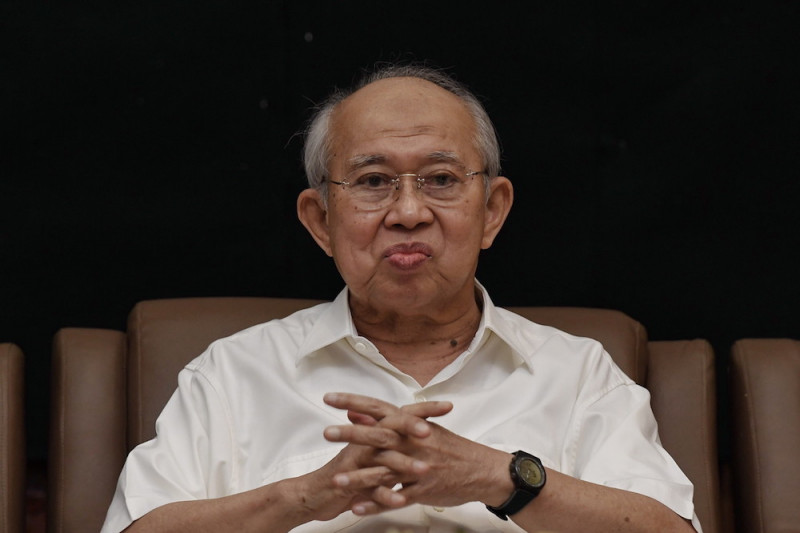
Umno ministers kept ordinance revocation secret from backbenchers, claims Ku Li

Party members in cabinet should have discreetly informed us, says Gua Musang MP, as the group’s fault lines widen


Umno MPs were taken by surprise when law minister Datuk Seri Takiyuddin Hassan announced the revocation of the emergency ordinances, says party veteran Tan Sri Tengku Razaleigh Hamzah. – Bernama pic, July 30, 2021

KUALA LUMPUR – Umno ministers supposedly kept the government’s decision to retroactively revoke all emergency ordinances even from their own party backbenchers, before it was revealed in Parliament last Monday.

Party veteran Tan Sri Tengku Razaleigh Hamzah said many Umno MPs were taken by surprise when law minister Datuk Seri Takiyuddin Hassan announced the revocation, which also irked those in the opposition bench.

This explains a “small, emergency meeting” among Umno backbenchers in the Dewan Rakyat after the House erupted into chaos, supposedly to discuss the stand that should be taken by the lawmakers.

Tengku Razaleigh, who is Gua Musang MP, also described the government’s decision as lacking intelligence, especially after the Yang di-Pertuan Agong himself decreed for the emergency proclamation and its ordinances to be tabled and debated in Parliament.

“Umno representatives in the cabinet should have informed us in secret of the decision taken by the government, so we will at least know what is happening.

“But we didn’t know anything, and we were shocked,” he said during a virtual press conference today.

Tengku Razaleigh’s statement, if true, highlights further underlying problems within Umno, which is already facing an internal crisis pitting different factions — one in support of president Datuk Seri Ahmad Zahid Hamidi and the other composed of MPs in cabinet positions.

Takiyuddin had on Monday, following pressure from the opposition, revealed in Parliament that all emergency ordinances had been revoked by the government since July 21.

The announcement took the majority of the Dewan Rakyat by surprise, many questioning if the cabinet decision had been presented to and consented by the king, which is required under the law.

The Gua Musang MP also slammed the government for not acceding to the Agong’s demand, adding that the content of a statement issued by the Prime Minister’s Office yesterday, insisting that the ordinances need not be tabled in the Dewan Rakyat, is disrespectful to the king.

In view of this, he said the government should extend the current five-day Dewan Rakyat special sitting beyond Monday, to allow MPs room to air their views.

“With no clarity from the government side and the statement issued by the Istana Negara yesterday, I therefore recommend that the prime minister and his cabinet resign.

“Return the power to the Agong to decide the country’s future. By doing this, perhaps we can recover the economy and look for new strategies to end the Covid-19 pandemic.” – The Vibes, July 30, 2021


Breathes there the Hong Kong man

BBC:

Hong Kong crowd booing China's anthem sparks police probe


IMAGE SOURCEGETTY IMAGESimage caption
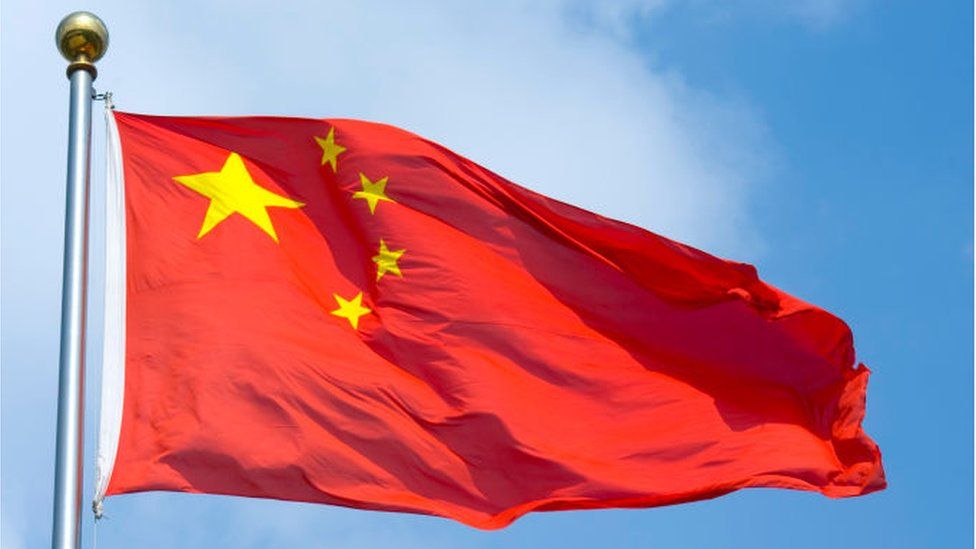
File image of the Chinese flag

Hong Kong police are investigating an incident where a crowd watching the Olympics booed China's anthem.

Hundreds gathered at a shopping mall on Monday to watch a broadcast and cheer on Hong Kong fencer Edgar Cheung, who won gold in the men's individual foil.

When the Chinese national anthem was played, some in the crowd began jeering while others shouted "We are Hong Kong", video filmed at the scene shows.

It is illegal to insult the anthem under a recently passed law.

Anyone found guilty of flouting the national anthem law could be jailed up to three years and fined HK$50,000 (£4,600, $6,400).

Reports also said that the British colonial flag was flown and some had chanted protest slogans, which could possibly violate the national security law which forbids anything that incites "secession" and could result in life in jail.


Police sources told local media that they are collecting and examining footage from the mall's security cameras.


The incident took place in the same week as the conviction of the first person charged under the national security law.

Both laws were passed last year and have been met with huge controversy, with critics saying they clamp down on free speech.

But Hong Kong authorities and the Chinese government deny this and say the laws are necessary to preserve peace and patriotism.

Hong Kong saw widespread protests in 2019 when tens of thousands took to the streets demanding democratic reforms. Some of those demonstrations turned violent as protesters and police clashed.


Some Hongkies still are devoted to their "Queen"

Since then China has cracked down hard, introducing several strict laws aimed at curbing violence and what it deems as "separatism".


Hong Kong, a former British colony, was handed back to China in 1997.

Since then it has been ruled under the "one country, two systems" principle that preserves freedoms in the city that the mainland does not have.

Critics say those freedoms are now under threat with China's recent moves and the UK has accused China of flouting the terms of its handover agreement, but China denies this.

***

‘Breathes there the man’

Breathes there the man, with soul so dead,
Who never to himself hath said,
This is my own, my native land!
Whose heart hath ne’er within him burn’d,
As home his footsteps he hath turn’d,
From wandering on a foreign strand!
If such there breathe, go, mark him well;
For him no Minstrel raptures swell;
High though his titles, proud his name,
Boundless his wealth as wish can claim;
Despite those titles, power, and pelf,
The wretch, concentred all in self,
Living, shall forfeit fair renown,
And, doubly dying, shall go down
To the vile dust, from whence he sprung,
Unwept, unhonour’d, and unsung.

- Walter Scott


Wang Ching-wei


What a democracy we have!


A drama-filled day: what a democracy we have!

by Zan Azlee

COMMENT | Thursday (July 29) was a drama-filled day. It started out as a normal day. I woke up, went for my run and shot some hoops in my mini garden basketball court since I can’t have my weekly game with my buddies anymore (one reminder of our never-ending lockdown).

Then, I checked on the kids who were having online school (another reminder of our never-ending lockdown), and played with the youngest kid who still hasn’t started school (but hopefully will be able to go to physical school once he starts next year).

In the afternoon, my wife and I decided to head out for lunch (within a 10km radius). We ordered some food to be taken away, drove nearby to some bushes by a lake and ate in the car, pretending like we were on a date since we couldn’t dine in at any restaurant (yet another reminder of our never-ending lockdown).

The drama started when we got home after having our lockdown lunch in the car. As soon as I checked the news, I saw that the faeces had hit the fan. The Yang di-Pertuan Agong had released a statement saying that the Perikatan Nasional government had tried to bypass his office on the issue of revoking the emergency ordinances.


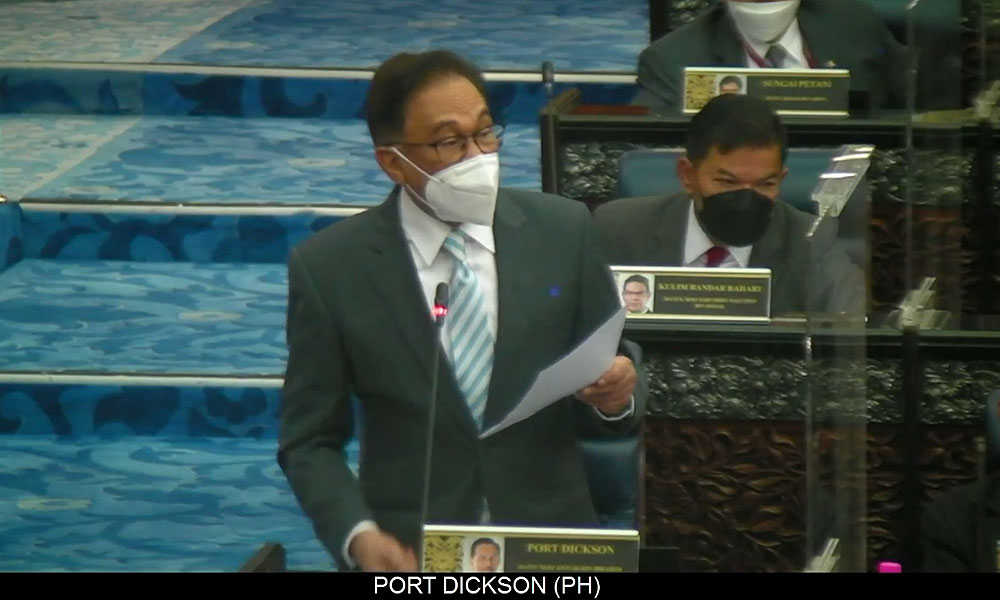
Opposition leader Anwar Ibrahim

The Agong also pointed out that de facto Law Minister Takiyuddin Hassan had ignored his order to table the issue in Parliament for a debate and approval. The king claimed that the minister had misled Parliament on July 26 when he said that the emergency ordinances had already been revoked on July 21.

Drama!


Opposition leader Anwar Ibrahim read out the statement from Istana Negara in Parliament and instantly, the Dewan Rakyat burst into chaos. It was reported that there were shouts of ‘derhaka!’ and, of course, the calling for Prime Minister Muhyiddin Yassin, Dewan Rakyat speaker Azhar Azizan Harun and Takiyuddin to resign.

A series of adjournments followed, including one where all the MPs were made to take Covid-19 tests. Desperate to find out what was really going on, my wife and I scoured social media for news. Several MPs like Dr Maszlee Malik and Fahmi Fadzil decided to stream live from inside Parliament, so we got a bit of a glimpse.

And at 5.15pm, the session started again. My wife and I got some snacks, made teh tarik and plonked ourselves in front of the TV which was logged on to RTM’s live stream from inside the Dewan Rakyat. We heard the bell ringing, MPs entering and then deputy speaker Rashid Hasnon taking his seat.

We were ready to be down for some cinematic drama! But then, Rashid just announced that since there were two Parliament staff found to be Covid-19 positive, proceedings will be adjourned till Monday. The MPs started shouting and then the audio was cut and everything was silent. A few seconds after that, the video was cut too.

My wife hadn’t even gone through half the packet of her Twisties and I probably only managed to get two sips of my teh tarik. It was such an anti-climax to all the build-up that was happening from the afternoon. My wife and I were obviously disappointed.

It was like queuing up for hours and spending so much money buying tickets to the premiere of The Avengers and then having a lockdown declared and that cinemas are all to be closed indefinitely. Yes! We were really disappointed!

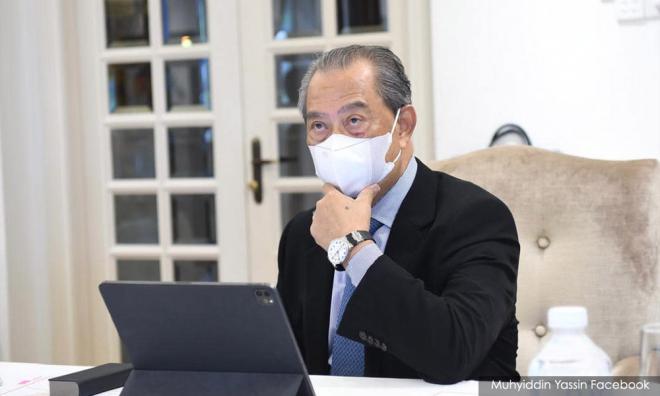
Later that evening, the Prime Minister’s Office released a four-page statement, a response to what had happened. Muhyiddin stands by the actions of Takiyuddin and claimed that it was all done according to the law and did not violate the Federal Constitution.


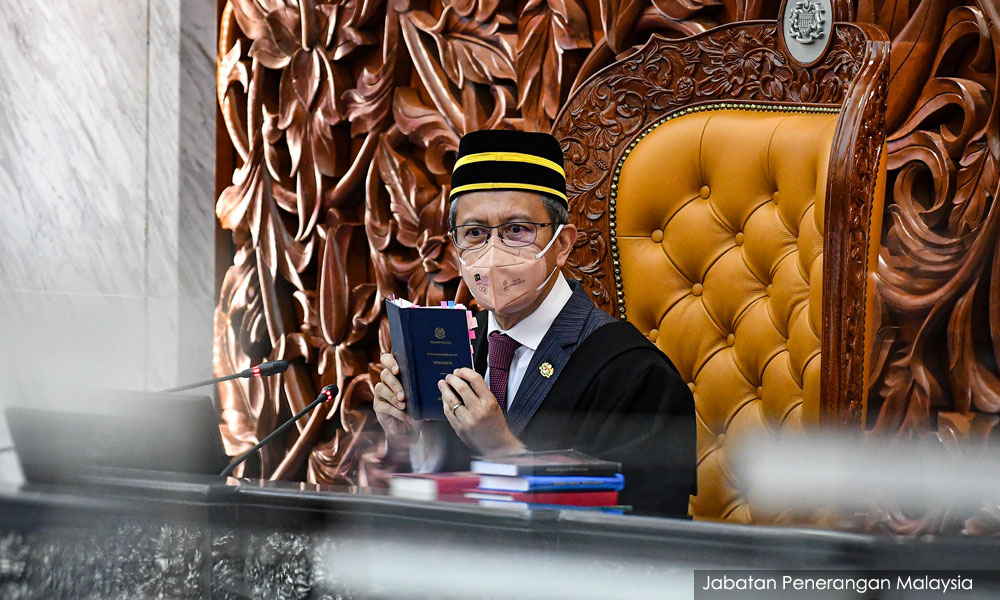
Dewan Rakyat speaker Azhar Azizan Harun

So, now we see a situation where we have the prime minister at odds with the Agong. Both seem to be claiming different things. We see opposition MPs calling for the prime minister and the cabinet to step down. In fact, Anwar had also submitted a motion of no-confidence in Parliament.

How can this issue be solved? Should it be brought to Parliament where the MPs can debate and make a decision via voting? Or can it be brought to the judiciary and let the courts decide to see what is legit and what is illegitimate? I’m not very sure because in my 43 years of being a Malaysian so far, there has never been a situation like this before.

A number of experts from the legal profession, government practitioners, politicians and political scientists have weighed in on the issue in the media. From what I gather, all the questions that I asked in the above paragraph could be on the table.

But one thing is for sure, my wife and I, and the many ordinary Malaysians have no say in anything and all we can do is watch how everything unfolds as we eat our Twisties and drink teh tarik (if we are so lucky to be able to afford it anymore). What a democracy we have, right?


ZAN AZLEE is a writer, documentary film-maker, journalist and academic. He had waited so long for a change in the system and he is not willing to settle for a half-past-six change. And then the Sheraton Move happened. Visit fatbidin.com to view his work.

Kedah hospitals in need of containers as Covid-19 deaths soar


Kedah hospitals in need of containers as Covid-19 deaths soar


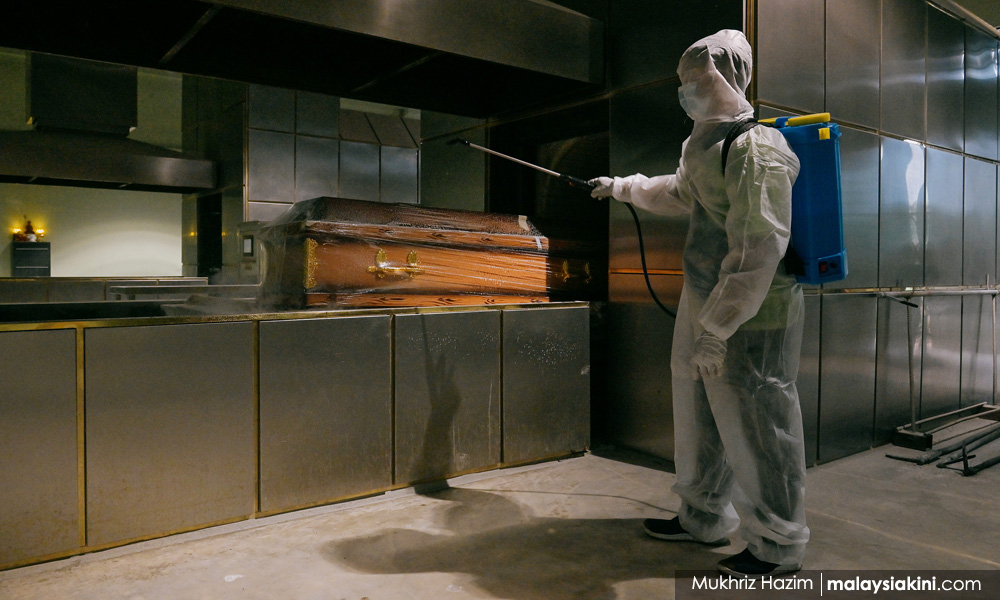
The morgues at Hospital Sultan Abdul Halim in Sungai Petani and Hospital Sultanah Bahiyah in Alor Setar are always full, says the state’s health director.

PETALING JAYA: Two hospitals in Kedah need containers to keep the remains of Covid-19 patients who died of the virus, as cases in the northern state increase.

According to Berita Harian, state health director Dr Othman Warijo said the two hospitals, namely Hospital Sultanah Bahiyah (HSB) in Alor Setar and Hospital Sultan Abdul Halim (HSAH) in Sungai Petani, need these containers as the hospitals’ morgues are always full.

Kedah reported 1,281 Covid-19 cases and 12 deaths today, compared to 1,212 cases and 17 deaths on Thursday (July 29).

Othman also said the bed capacity in all Kedah hospitals have reached 95%.

“Not all of them (patients) treated in ICU require breathing assistance, and the breathing ventilators are currently sufficient.

“We give priority to category 4 and 5 patients to get treatment at hospitals while those in categories 1 to 3 are sent to PKRCs (integrated quarantine and treatment centres),” he added.


Will Muhyiddin survive?


Will Muhyiddin survive?

by Wong Chin Huat

COMMENT | Yesterday afternoon, two speculations were rife. First, Prime Minister Muhyiddin Yassin would resign under pressure from his allies. Second, de facto Law Minister Takiyuddin Hassan and Attorney-General (AG) Idrus Harun, who were named in the royal rebuke, or even the embattled speaker Azhar Azizan Harun, may resign to take the blame.

The speculations were reasonably grounded because the royal rebuke which hit the floor of Parliament yesterday was unprecedentedly direct and stern. With the backing of 114 MPs (excluding Gua Musang MP Tengku Razaleigh Hamzah) in the best scenario, but more likely less than 110, the government is most fragile.

Surprisingly, in a detailed reply to the royal rebuke, the government underlined the constitutional principle that the constitutional monarch should act according to the advice of the prime minister on most matters including the emergency.

Deputy Prime Minister Ismail Sabri Yaakob rallied behind him claiming that Perikatan Nasional (PN) still commanded a simple majority with more than 110 votes amongst the Parliament’s current 220 members.

Muhyiddin has responded like former premier Dr Mahathir Mohamad except he does not have the same stature and strength which the latter had in 1982 and 1993. But will Muhyiddin survive?

To better answer this question, we should assess the likelihood of these three scenarios: Muhyiddin surviving till the 15th general election (GE15); Muhyiddin being replaced by a member of his cabinet; and Muhyiddin being replaced by an opposition leader.

Brewing two-in-one constitutional crises

Many have characterised the latest development as a brewing constitutional crisis. If true, then this is a two-in-one crisis.

Presented by the government’s statement, one element concerns the king declining to act according to the cabinet’s advice. Since last October, the king and the rulers are effectively the veto holders on the matter of the emergency, unknown in established constitutional monarchies.

Nothing has changed in the rulers’ formal powers. Only their informal powers have expanded as the government’s legitimacy shrinks and the political class fragments. Started in 2008, the trend reached a height during the Sheraton Move.

Supported by the earlier royal rebuke, the other element is concerning the law minister and the cabinet misleading the Parliament with the false claim that the government had revoked the emergency ordinances (EOs) on July 21. Confirmed by the government’s statement itself, the cabinet’s decision did not translate into reality because the palace had denied it the necessary royal consent.
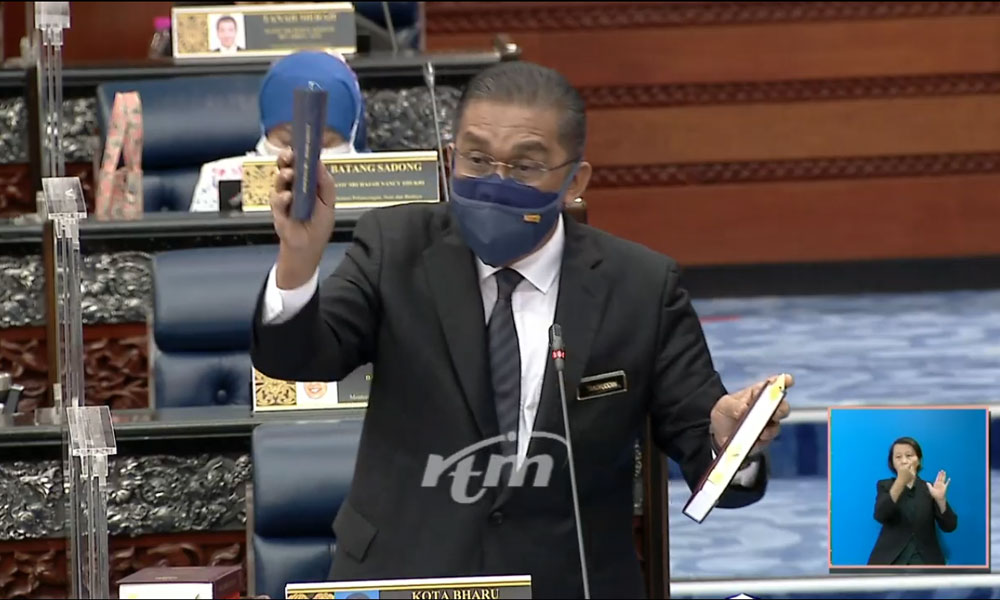

De facto Law Minister Takiyuddin Hassan

The government got itself into this two-in-one constitutional crisis because it wanted, at all cost, to avoid any vote in the five-day parliamentary sitting for fear that any such vote may be construed as a vote of no-confidence against the PM.

While annulment of the EOs can be purely legal especially if it is moved by the minister, the government might have feared that the speaker would have no ground to block a motion to annul the emergency proclamation, also allowed under Article 150(3) of the Federal Constitution.

Annulling the emergency proclamation even when it would end in a week would be highly political and a slap to the government’s face. If the government was defeated in resisting the annulment of the emergency proclamation, which Umno rebel MPs would only be too keen to support, the government would be pressured to table a motion of confidence, which would be similarly defeated.

This explains why the government opted for revocation. We do not know what transpired in the online audience given to the minister and the AG on July 24, but the government might have a better chance of obtaining the royal consent if it had decided earlier or won the public’s support with a pre-announcement.

Inevitable September vote on royal address

Opposition leader Anwar Ibrahim has filed a motion to call for Muhyiddin’s resignation but without enough government MPs breaking rank, Muhyiddin will likely survive at least until mid-September when Parliament votes on the royal address in the next sitting.

The budget and royal address are two important occasions that a government can be ousted even if no motion of no-confidence can be tabled. In other words, no gate-keeping speaker can save the government if it has lost the majority.

Prepared by the government, the royal address represents not the palace’s opinion but the government’s position and governing programmes for the rest of the parliamentary session.

Before yesterday, the government could easily use the pro-royal feeling amongst the Malay masses to smear any attempt to reject the royal address as treasonous and anti-Malay. The stand-off now helps to clear the path for the opposition and Umno.

In fact, the constitutional crisis can deepen if the king disagrees with the royal address prepared by the government or if the royal address delivered turns out to not exactly the same as the text.

Muhyiddin’s replacement more likely from within

Contrary to the wishes of opposition supporters, if Muhyiddin steps down, his successor is likely to come from his cabinet than from the opposition bench.

While Umno is highly factionalised and interpersonal conflicts run deep, all factions would support an Umno PM – Ismail Sabri is the most likely candidate – even if all cabinet positions stay the same.
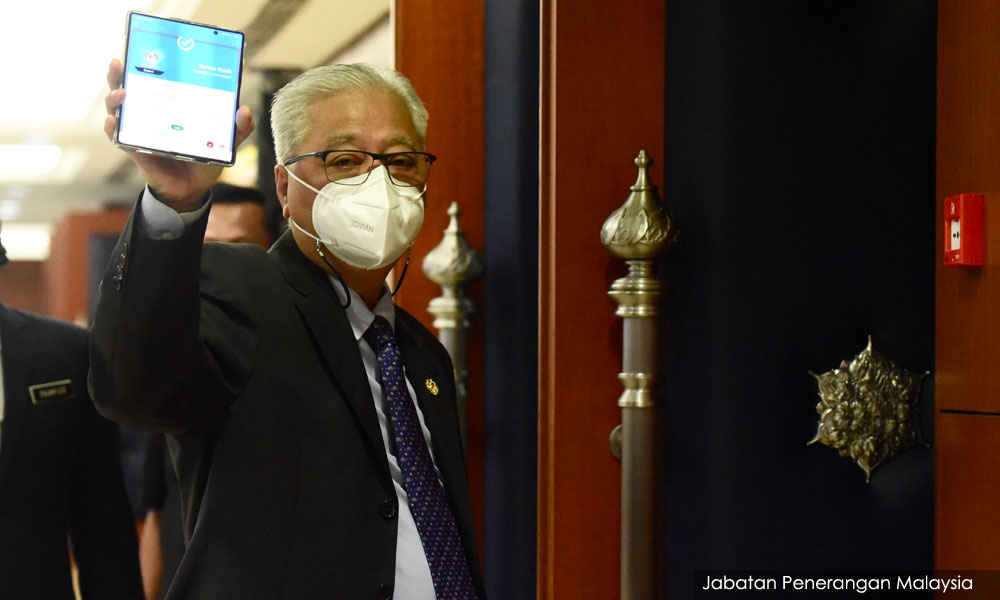

Deputy Prime Minister Ismail Sabri Yaakob

Umno is ultimately a patronage machine and not an ideology or policy machine. The party has no fundamental policy differences with Bersatu. This means Muhyiddin stepping down can temporarily reunite the cabinet cluster and the court cluster to provide the new PM with 115 seats.

While the opposition has a lot of criticisms on most government policies, a medley of criticisms does not constitute an alternative governing programme.

By focusing on (failed) realignment of parliamentarians than competition on policies, and by his adamant resistance to present a lineup of shadow ministers, Anwar has allowed PN and Umno to paint him as “power crazy” and weakened Pakatan Harapan’s ability to rally the public.

Hence, if Muhyiddin is forced to step down, Anwar’s role is likely a catalyst instead of a successor, just like how he helped to enthrone Najib Abdul Razak with his failed attempt to unseat Abdullah Ahmad Badawi.

Muhyiddin’s fate in his own hands

Muhyiddin’s greatest strength is that his enemies – both in government and the opposition – cannot join forces to force his exit.

Hence, Muhyiddin's fate will largely be decided by himself, who would have two options from now till September.

The first option is to continue his defiance against the palace, the opposition and the public. It is tempting because it gives him a sense of security. He fears that sacrificing the law minister or the AG will only embolden his enemy.

Going on this line, he might use the Covid-19 cases as an excuse to cancel the parliamentary sitting on Monday and avoid any embarrassment. He might test his will against the king’s on the revocation of EOs to see who blinks first.

This week, he could have the police harshly cracking down on the “keluar dan lawan” (come out and fight) young activists and any other dissents.

However, combative politics may only pave way for his ouster in September. Beyond causing public anger to grow, it affects the government’s performance as ministers would be busy watching their back and plotting for their survival or promotion, instead of running their ministries.

The second option is to seek reconciliation with the palace, the opposition and the public, much like what Najib tried by announcing some political reforms on Sept 15, 2011, after his disastrous crackdown of the Bersih 2 rally.

To seek peace with the palace and the opposition, the EOs must be annulled in the Dewan Rakyat, and the minister must own up for his misleading statement.

Muhyiddin must also stop police from harassment and arrest of young activists like Sarah Irdina Mohammad Ariff and other dissents. Learn to live with the #Lawan protests. He must make sure the Home Ministry does not incite more public anger against him, paving the way for his replacement from within the cabinet.

He can instruct all ministers to reach out to opposition MPs and government backbenchers for policy input, modelling on Science, Technology and Innovation Minister Khairy Jamaluddin’s cross-partisan engagement of Bangi MP Ong Kian Ming to help in vaccination in Selangor, which has been praised.

Ultimately, to survive the royal speech in September, he must strike a deal with the opposition, at least the sober ones amongst them.

If the royal address shows a roadmap of multipartisan governance, responding to the opposition’s demands from parliamentary reform, equal constituency funding to decentralisation, the opposition will lose the justification to vote it down when they cannot offer an alternative majority government.

Can Muhyiddin survive? Only he can decide, beginning with his action this weekend and on Monday.


WONG CHIN HUAT is an Essex-trained political scientist working on political institutions and group conflicts. Mindful of humans' self-interest motivation while pursuing a better world, he is a principled opportunist.

Cabinet cannot treat King as ‘mere rubber stamp’, say senior lawyers


Cabinet cannot treat King as ‘mere rubber stamp’, say senior lawyers


Two senior lawyers say the Yang di-Pertuan Agong has constitutional duties to perform.

PETALING JAYA: The Yang di-Pertuan Agong cannot be treated as a mere rubber stamp by the Cabinet on constitutional matters, especially on the revocation of the six emergency ordinances (EOs), two senior lawyers said.

They said although the King had to act on the advice of the prime minister or the Cabinet, he had constitutional duties to perform.

Bastian Pius Vendargon said the King had every right to offer caution and demand to see Cabinet documents and all information available to the government to satisfy himself to grant consent upon advice.

“Anyone who practises parliamentary democracy and understands the spirit of the Federal Constitution will know that the King is not a mere rubber stamp,” he said.


Bastian Pius Vendargon.

Vendargon was responding to a Prime Minister’s Office (PMO) statement yesterday evening that the revocation of the EOs was done in accordance with the law.

The PMO cited Article 40(1A) of the constitution to say that the King must act on the advice of the prime minister or the Cabinet.

Vendargon said it followed that it would be a misinterpretation on the workings of the constitution to state that the executive could act even before royal consent has been granted.

“There are steps to be taken for the proper revocation of the EOs,” he said, adding that the King must give his consent and “it must not be assumed”.

He said events since Monday seemed to suggest that the Cabinet had decided to revoke the EOs and the King was obliged to accept the advice of the prime minister.

The Cabinet, he added, should not totally disable the checks and balances in the constitution and that included the role of the King, Parliament and the judiciary.


Firoz Hussein Ahmad Jamaluddin.

Lawyer Firoz Hussein Ahmad Jamaluddin, who concurred with Vendargon’s views, maintained his stand that the King is not required to act on the advice of the Cabinet during s state of emergency.

“The monarch has a constitutional duty to perform and his consent cannot be presumed in an emergency,” he said.

Firoz Hussen said since it was the King who promulgated the emergency proclamation and the EOs, only he could revoke them.

“The Cabinet cannot substitute him or else it is a failure to abide by the constitution on revocation,” he said.

He said the 30-day rule in relation to parliamentary bills coming into force without royal assent did not apply to emergency proclamation and the EOs.

On Monday, law minister Takiyuddin Hassan told the Dewan Rakyat that the six EOs had been revoked as of July 21 and that the government had decided to cancel them under Article 153 of the constitution.

The opposition claimed this “secret revocation” was to prevent the need to debate and vote on them as that would prove Prime Minister Muhyiddin Yassin did not have majority support in the Dewan Rakyat.

Yesterday, the Palace issued a statement saying Putrajaya did not get the King’s consent to revoke the emergency ordinances and that Takiyuddin’s statement in Parliament was “inaccurate and had misled the members of the Dewan Rakyat”.

Comptroller of the Royal Household Ahmad Fadil Shamsuddin said in the statement that Articles 150(2B) and 150(3) of the Federal Constitution clearly gave the authority for the enactment and revocation of ordinances to the King.

He said the King had earlier told Takiyuddin and Attorney-General Idrus Harun during a virtual audience that the revocation of ordinances should be tabled and debated in Parliament.


Asian Values, Asian Politeness, Our Culture & Pride (Part II)

World of Buzz:

Thai Taekwondo Athlete Kneels At Father’s Feet & Offers Him Her Olympic Gold Medal


The Olympic Games is at its midpoint mark and there have been many medals snapped up by the amazingly gifted athletes.

On 24 July, Panipak Wongpattanakit, 23 from Thailand went up against Spain’s Adriana Cerezo Iglesias for the women’s taekwondo in the 49kg category. In the last few seconds, Panipak was one point behind with a score of 9-10. Her last two shots gave her two points and she won with 11-10, reported Bangkok Post.

Panipak was given a hero’s welcome when she arrived at the Phuket airport. Her father, Sirichai was there waiting for her.

When Panipak saw her father, she immediately took her gold medal, clasped it in her hands and knelt down by his feet. While still in a kneeling position, she presented her medal to her father who accepted it with both hands. He then put the medal on his neck and held both fists up which led spectators to cheer.

When Panipak stood up, her father returned the medal to its rightful owner.


Kt notes:

Damn it, excuse me while I clear my eyes of the ... er ... grit that have just gotten into them.

Sweetie did a stunning double, to wit, a ketou
(磕头) plus a wai for her (no doubt very proud and very honoured) father.

Recall what I penned eight days ago in Asian Values, Asian Politeness, Our Culture & Pride? that:


FULL bowing would normally be for one's elders, superiors, Emperor, and religious and cultural objects of worship, for others the standing bow is quite far from what many Westerns believe to be a gesture of abject submission or groveling. For example, the Japanese Emperor bows to his people and the public, and so does the South Korean President. Bowing bespeaks refined courtesy and good breeding - not something a Westerner would understand.

Sweetie Panipak Wongpattanakit has shown the World the hallmarks of a well brought up Thai girl. It's an example we should all aspire to emulate and practise with respect for our parents, elders and rulers.

p/s I have also posted this in my KTemoc Kongsamkok blog.


MMA: Police questioning of doctors at ungodly hours unacceptable, unreasonable


MMA: Police questioning of doctors at ungodly hours unacceptable, unreasonable


THE Malaysian Medical Association (MMA) today called the timing picked by the authorities to question several doctors based at the Malaysia Agro Exposition Park Serdang (MAEPS) treatment centre over an alleged intrusion of journalists at the centre on Monday, July 26 unacceptable and unreasonable.

The six journalists had allegedly entered the MAEPS quarantine centre without permission on Monday to cover the strike by junior doctors.


Prof Datuk Dr M Subramaniam Muniandy

It was previously reported that the doctors concerned were asked by the police to give their statements between 11.45pm and 3.50am.

Selangor police chief Arjunaidi Mohamed has defended the choice of timing, explaining that the questioning was carried out at such odd hours for the doctors’ own convenience.

Contrary to Arjunaidi’s claims, however, the doctors who were questioned had since alleged that they were not given any choice in that matter.

“First and foremost, if there was indeed an intrusion, shouldn’t the department in charge of security at the centre be questioned instead of the doctors? Or are the doctors also in charge of security at the centre?” asked MMA president Prof Datuk Dr M Subramaniam Muniandy in a statement.

Subramaniam said that if indeed the doctors’ statements were needed, he believes that the doctors would be willing to cooperate and give their statements but at a time more convenient for them.

“These doctors are frontliners at a COVID-19 quarantine centre. The authorities should be more understanding of the work of these doctors who are treating COVID-19 patients.

The centre is overflowing with patients at this time and this can be stressful for all healthcare workers there,” said Subramaniam. – July 30, 2021.


When/If Mahia leaves, who's next as PM?

Malaysia Now:

The opposition’s elephant in the room

Calls abound for Muhyiddin Yassin to step down as prime minister, but who would succeed him if he did?


Calls for Prime Minister Muhyiddin Yassin to resign have grown louder following his administration’s run-in with the palace over the revocation of emergency ordinances.

Leading the chorus are the usual suspects like opposition head Anwar Ibrahim and Umno president Ahmad Zahid Hamidi. It is one thing to demand the PM’s ouster. But it is time his critics addressed the elephant in the room: who’s next?

This is a dicey topic on which even Muhyiddin’s harshest critics are loath to take a strong stance, given the surrounding political sensitivities. At the moment, they take the position of “let’s get rid of Muhyiddin first and worry about his successor later”.

If Muhyiddin for whatever reason is the main source of the problems plaguing the country, would his removal and his successor be able to turn things around, especially with the Covid-19 pandemic situation becoming worse by the day?

First, let’s look at the leading contenders vying to be the country’s ninth PM. Top of the list is Pakatan Harapan (PH) head Anwar. Twenty-three years after failing to succeed Dr Mahathir Mohamad as Malaysia’s fifth PM in 1998, Anwar is still gunning for the post but to no avail. The reality is that Anwar can only muster enough support if he has the backing of Umno MPs, including the court cluster lawmakers like Najib Razak and Zahid.

As it stands, DAP, the largest bloc in PH with 42 MPs has announced that it will not budge from its stance on not working with Umno, which the Chinese-dominated party has labelled as corrupt and racist over the decades.

The Umno Supreme Council too, had earlier this month passed a resolution rejecting any cooperation with DAP and Anwar. Without the backing of Umno and DAP, the PM’s post will continue to elude Anwar, at least until the next polls.

But even if Anwar, through some stroke of luck, were to be sworn in, would he be able to hold the government together or would he need to seek a mandate via snap polls, which the country can ill afford with the pandemic still raging?

With their stubborn stance against working with DAP, Umno leaders aspiring to succeed Muhyiddin will not be able to muster enough numerical support in the federal legislature, either.

But even if the party’s frontrunners like DPM Ismail Sabri Yaakob or Senior Minister Hishammuddin Hussein manage to cobble together a bloc and turn against Muhyiddin, there is no guarantee that they will receive full backing from Umno. The party is far too fragmented with its 38 MPs divided into two or three main factions.

The only other potential PM candidate left is Mahathir who leads Pejuang. But with only four MPs, the party is practically an island unto itself. Besides, there’s too much bad blood between Mahathir and Anwar and many in PH have still not forgiven Mahathir for resigning as PM, resulting in the coalition’s collapse back in February 2020.

If the opposition is serious about wanting to reclaim Putrajaya, they need to be honest in addressing the issue of who they want as the next PM. Otherwise, they are like different battalions going to war without a general. It doesn’t instil confidence. And even if victory is achieved, there’s no guarantee that the citizens whom they claim the war is for, will be better off than before.

Khabar Angin panas tentang Moo-Moo

Heard on Malaysia famous grapevine Mahia will resign soon.


I saw on a non-credited videoclip Mahia hugging almost everyone in his residence which was packed (and to eff with social distancing) - and especially him giving Ass-binte a long warm hug.

We'll have to see whether that has been kerbau?


Traitors

The dark unpalatable side of each and every country has been its most notorious and hated traitor.

Some examples would be:

a. India - Mir Jafar


b. China - Wang Jingwei


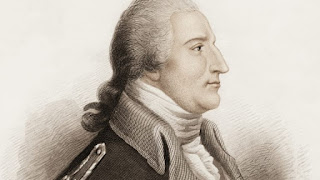
c. USA - Benedict Arnold


d. Norway - Vidkun Quisling


e. France - Philippe Pétain


Uniquely, a hero of France yet its most notorious traitor. Pétain was a national hero for his victory at the Battle of Verdun in WWI but was discredited as Chief of State of the French government at Vichy in WWII. He died under sentence in a prison fortress.

f. England - Roger Mortimor


g. Britain - George Blake


But what about Malaysia's?

Well, you have to choose from the following:

(i) Hang Jebat (as perceived by royalists and conservative Malays)


(ii) Hang Tuah (as perceived by republicans and younger Malays)


(iii) Mamak Kerala


(iv) Mafulat MaKa-Laut Moo-Moo


Klang Valley mortuaries packed due to unclaimed bodies


Klang Valley mortuaries packed due to unclaimed bodies, long queue - sources

Unclaimed bodies and slow disposal process have exacerbated the congestion at many hospital mortuaries in the Klang Valley, according to sources with knowledge of the matter.

As the daily number of Covid-19 death cases continue to soar high, Malaysiakini learnt that some health officials are hoping for a policy change to help them speed up the burial or cremation of remains.

A high-ranking health official claimed that many mortuaries are keeping bodies that have been there for several years, either because nobody came to claim them or because they are tied to legal cases, among others.

"We are also facing problems when it comes to bodies that belong to foreign nationals, as there are embassies which stick to old procedures when it comes to claiming the remains.

"As a result, undertakers have to wait for a certain period of time, on average one week, before they could obtain release letters from certain embassies.

"Further compounding the issue is the fact that there are now fewer international flights, which caused bodies that can already be claimed to continue being kept at mortuary waiting for their turn to be taken back to their home country," said the officer, who spoke to Malaysiakini on condition of anonymity.

To give a glimpse of how serious the situation is, the source cited Sungai Buloh Hospital, which is the main Covid-19 treatment facility in the Klang Valley.

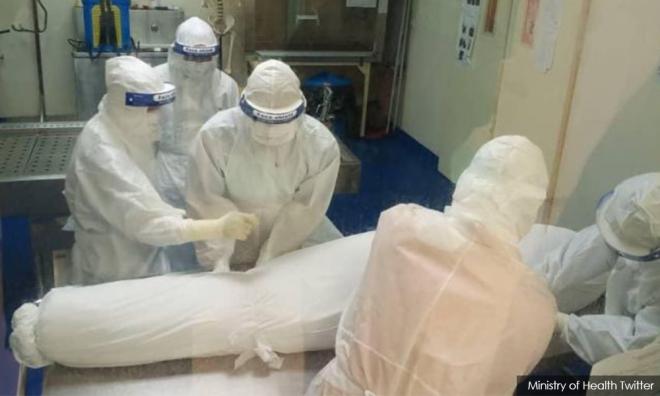
The hospital's Forensics Department today has a capacity to hold around 75 bodies in its main building and three temporary freezer containers that it recently acquired to keep up with the high number of pandemic fatalities.

With the capacity almost always full, the source said that 19 of the bodies were foreigners, including several which were unclaimed since 2015.


According to the source and several undertakers whom Malaysiakini spoke to, hospitals and those involved in managing dead bodies are facing problems with some crematoriums and burial sites.

This includes facilities which outrightly decline to handle remains associated with Covid-19, while others that are willing to accept are congested, resulting in long queues.

Rafie Zainal, who is with NGO Skuad Pengurusan Jenazah Malaysia (SPJM), said there are Muslim burial sites that still decline to accept remains of those who did not come from their area, while some had imposed limit to how many they would accept in a day.

"There are so many bodies now that authorities and NGOs are struggling to handle. For SPJM alone, we handle around 15 bodies daily, of which 90 percent of them are Covid-19 victims.

"But delay still happens. Despite the Sultan of Selangor recently ordering all Muslim cemeteries in the state to accept bodies regardless of whether they are their kariah members or not, some still reject, citing that residents there have concern over limitation of burial plots," he said.

Many Muslim dead bodies at hospitals in the Klang Valley now would have to wait for one or two days before they can be buried, Rafie added.

Malaysiakini learnt that such a problem is worse when it comes to bodies of non-Muslims, where sources claimed that there are only a handful of crematoriums in the Klang Valley that accept Covid-19 remains.

A check with a funeral services agent in Selangor revealed that most of the crematoriums that accept Covid-19 bodies belong to government agencies, such as the Petaling Jaya City Council and Kuala Lumpur City Hall.

"There are private companies which have their own crematoriums that also accept Covid-19 bodies, but these are usually fully booked.

"The queue is long, especially now during the pandemic. I also have one body now waiting to be cremated, the queue is one week," said the agent.


Sources within the public healthcare system said that what they hope is to see some changes made to the policy in the disposal of remains.

The government should set a deadline for a body to be claimed during the pandemic, said an official.

"One of the suggestions was to allow hospitals to declare all bodies as unclaimed after three days, and thus they can be arranged for funeral with the respective hospital director's order. Majority of forensic pathologists have agreed with this.

"To tackle the issue of non-Muslim bodies that are piling up, the government should make all crematoriums accept Covid-19 bodies.

"If these problems can be solved, we don’t even need extra body containers which can save lots of money. Body containers (are) just for us to temporarily keep the bodies and buy some time while awaiting for the above problems to be settled," said the source.

Meanwhile, the Ministry of Health (MOH) in response to Malaysiakini's request for comments stated that measures have been taken to address the issue of congestion at hospital mortuaries.


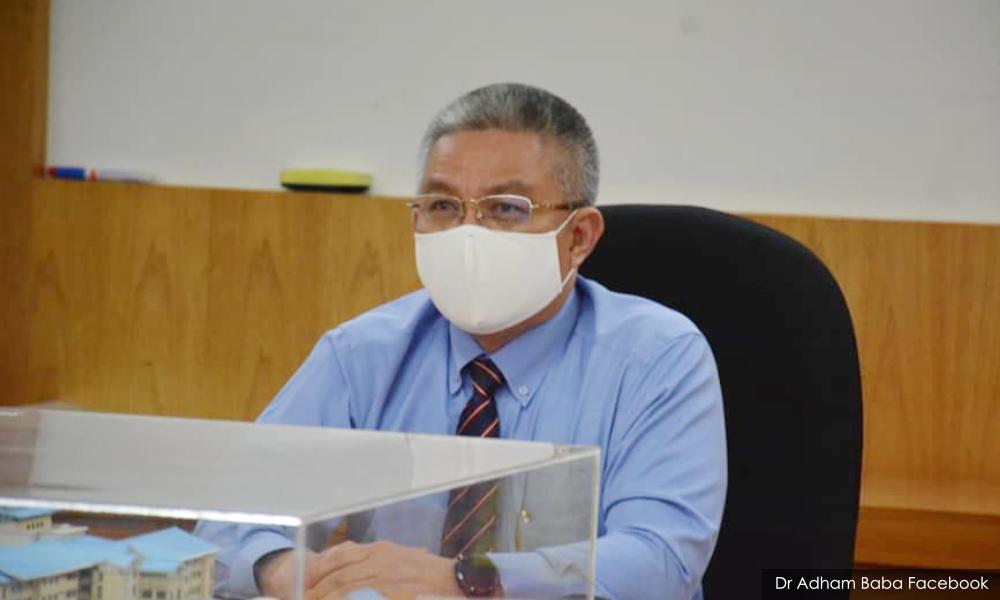
Health Minister Dr Adham Baba

Its minister Dr Adham Baba said they are procuring more freezer containers, besides setting up a one-stop centre for managing dead bodies in Kuala Lumpur.

"MOH has anticipated that there would be a rise in Covid-19 deaths. And thus, early preparations have been made, including procuring and renting freezers for several hospitals.

"At this juncture, we have rented seven containers for hospitals in Selangor, while three others were contributed by MIC. On top of that, MOH is also arranging the procurement of eight more, which are to be distributed in stages to six hospitals in Selangor," he said.

On the one-stop centre, Adham told Malaysiakini that the facility located in Kampung Baru, Kuala Lumpur, has the capacity to keep a maximum of 225 bodies at a time.

"Through collaboration with various agencies, religious bodies and the state disaster management committee, we would also be able to identify cemeteries that are available for mass burial.

"The large capacity would also allow authorities to keep a huge number of bodies while the cremation schedule is arranged," he said.

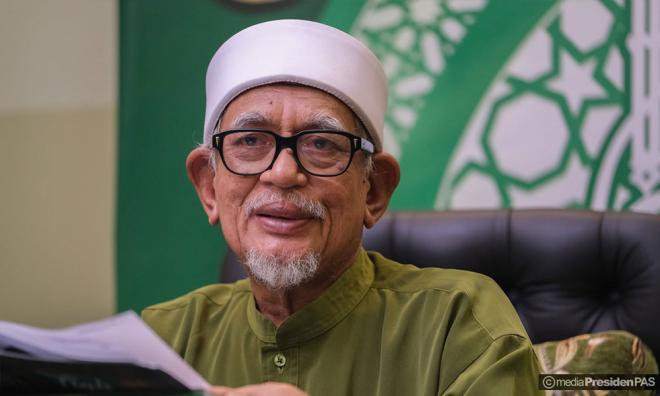
Has Hadi also insulted HM the Agong as a detractor of Islam?


Hadi: Enemies fear PN's 'dominance' will solve country's problems

PAS president Abdul Hadi Awang has claimed that those who conspire against the Perikatan Nasional (PN) government fear its ability to solve the country’s problems.

Hadi claimed that that the country is witnessing the resurgence of Islam, in spite of detractors who continue to block all efforts for Malaysia to return to Islam.

“The dominance of the PN government which shows positive change will be challenged, as the dominance of Muslims and non-extremist circles is feared to solve many problems that will rebuild the strength of the ummah (the Muslim community).

“So, there is definitely a movement to overthrow the PN government by all means,” he said in a statement on Facebook.

This came after yesterday's royal rebuke regarding de facto Law Minister Takiyuddin Hassan for “misleading” Parliament in announcing the revocation of emergency ordinances despite not having the Yang di-Pertuan Agong's assent.

This caused members of the opposition and various other groups to call for the resignation of Prime Minister Muhyiddin Yassin, with several of the PM’s own allies advising him to step down.

The Prime Minister’s Office (PMO) later refuted the palace’s statement, issuing its own statement clarifying that the actions taken by the government were in line with the Federal Constitution.

Hadi claimed that extreme approaches to solving the country’s problems - which were rejected by the government - will not save the country and its people, adding that it was the weakness of the previous Pakatan Harapan administration.

Citing the political crisis in Tunisia and other countries which have suffered from coups as examples, he claimed countries that continue to practise the secular separation of powers as the British in colonial Malaya did, have failed to develop as strong nations.

“The concept is the same, that is, to be allowed to exist as a secular Islamic state with a division of power practised by the British in Malaya and other colonial states of Muslims that became their colony.

“At that time, the kings, who were the heads of the religion, and Muslims were not fully in power. They only had power in limited religious affairs without the power to govern the country fully.

“Muslims who experienced similar problems during the colonial era and their countries that maintained the concept, continue to not rise to become a developed and strong nation," Hadi said.

The prime minister’s special ambassador to the Middle East added that it is a new form of colonisation with a new approach being implemented, with the aim to curb the resistance of Muslims against foreign colonisers, who have now been replaced with local colonisers.

Lebai Yahudi pandai lepak

Canberra Times:

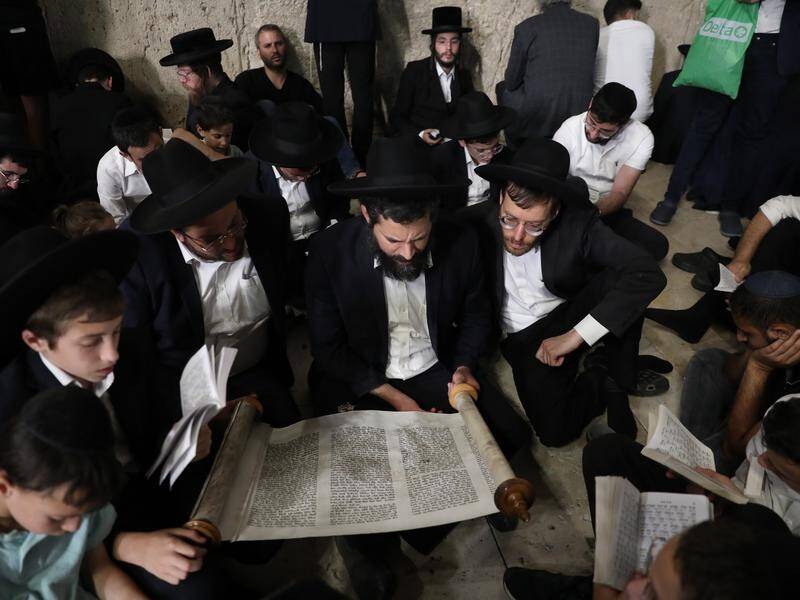
Israeli Ultra-Orthodox men urged to work


Israel's government is looking to push more Ultra-Orthodox Jewish men into work.

Israel's government is looking to take advantage of a rare political opportunity to push more Ultra-Orthodox Jewish men into work to boost the economy, a measure that could pit powerful religious leaders against politicians.

By 2065, Israel's "haredi" community is expected to make up 32 per cent of Israel's population, up from 12 per cent now, according to official estimates.

Only about 50 per cent of Ultra-Orthodox men work. The other half study religious texts in seminaries, and the Bank of Israel and economic leaders have warned of long-term strains on the budget if they are not integrated into the workforce.

"Raising the employment and labour productivity rates of the ultra-Orthodox population, especially men, are issues of strategic importance to per capita GDP, labour productivity, and reducing income disparities between the ultra-Orthodox and the rest of society," The Bank of Israel told Reuters.

But for much of the last 12 years, two ultra-Orthodox parties provided support to former Prime Minister Benjamin Netanyahu's ruling coalition, effectively preventing any change.

Now no Ultra-Orthodox parties are in government, and Finance Minister Avigdor Lieberman is a determined secularist. Haredi men, says Lieberman, should "earn a decent living that is not based on allowances and handouts".

He has already fired his first shot; a plan that would require both parents being employed to receive state subsidies for child daycare.

Haredi politicians have roundly attacked the proposals. Moshe Gafni, head of the United Torah Judaism party, called Lieberman "evil".

Many Ultra-Orthodox families are large, and are often supported by women, of which 78 per cent hold jobs.

The Haredi community and some analysts have urged the government to not enact policies that may ultimately backfire and force women out of the workforce at the expense of men.

Eitan Regev, deputy chief executive of the Haredi Institute for Public Affairs, sees poor pay as an obstacle to rapid integration - many Ultra-Orthodox men cannot command high salaries as they never studied English, maths and science.

"If job opportunities are created and the proper training is given so that the entry wages are high enough to compensate for what they will lose -- like Torah study -- then they will enter the labour market," Regev said.

State support for the Haredim and exemptions from military service have long been an irritant to many Israelis.

But the new government's wafer-thin majority may prevent Lieberman implementing reform - Prime Minister Naftali Bennett may need Haredi parties to join his coalition if others abandon it.
One crucial sector is high-tech industries. Around 10 per cent of university students studying technology are Ultra-Orthodox, and 10,000 Haredim work in the sector, 7000 of them women.
Moshe Friedman, whose organisation Kamatech works to integrate his fellow Haredim into the tech sector and help them start businesses, said they could fill the vacancies that high-tech firms are advertising.

"I see a lot of young Haredim who want to join the workforce and technology industry. They are coming to us by the thousands," Friedman said, adding that the government "needs to just help them with better education and better training."

Australian Associated Press


Govt turned back on King, distance yourselves from them, Umno MPs told


Govt turned back on King, distance yourselves from them, Umno MPs told


Umno deputy president Mohamad Hasan says the response by the Prime Minister’s Office to a Palace statement had been ‘arrogant’.

PETALING JAYA: Umno’s MPs have been urged to distance themselves from the government after the Prime Minister’s Office’s (PMO) “arrogant” response to the Palace, the party’s deputy president, Mohamad Hasan, said.

kt queries: Could that be a fundamental right of a "I am Malay First" politician?

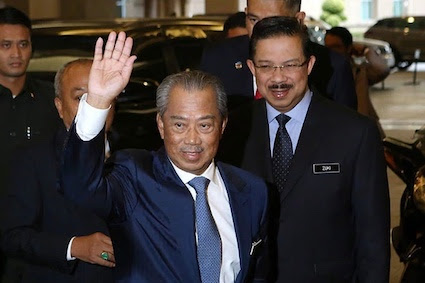
“All Umno MPs must stay away from being dragged into a crisis between the government and the Palace,” Mohamad, who is also known as Tok Mat, said in a statement.

This comes a day after Istana Negara and the government shared conflicting statements over the revocation of the emergency ordinances.

The Palace expressed disappointment that the government acted without the Yang di-Pertuan Agong’s consent, while the PMO insisted that it had made the revocation in line with the law and Federal Constitution.

“(Umno MPs) cannot be in a position that could be construed as refuting the Palace’s rebuke, because it is an institution that Umno has pledged to obey and defend.

“Therefore, I call upon all Umno MPs to use their wisdom and to do the right thing and be in line with the party’s stand,” Mohamad said.

Yesterday, party president Ahmad Zahid Hamidi had also called on all Umno MPs to withdraw their support for the prime minister.


Mahia & his Mafulat-ish Machiavellian Mangling of Parliament & Parliamentary Laws


Agong vs PM: Who is right?

by Kim Quek

COMMENT | A confrontation of sorts has occurred between the Agong and the prime minister over the issue of the annulment of the emergency ordinances.

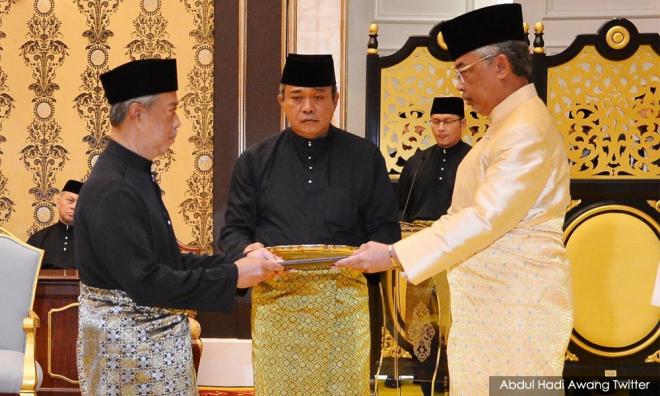
On July 29 at noon, the Agong issued a statement rebuking de facto Law Minister Takiyuddin Hassan and attorney-general Idrus Harun for failing to honour their promise to allow Parliament to debate on the annulment of the emergency ordinances.


The Agong also expressed his deep disappointment that Takiyuddin had misled Parliament by claiming that the emergency ordinances were revoked on July 21 when the Agong had not even assented to it.

Retorting the Agong, Prime Minister Muhyiddin Yassin issued a statement in the same evening, pointing out that the cabinet did advise the Agong on July 23 to annul the emergency ordinances and that under Article 40(1) of the Federal Constitution, the Agong was bound to act in accordance with such advice.

With that, Muhyiddin asserted that Takiyuddin did no wrong when he informed Parliament that the emergency ordinances were revoked on July 21 and that there was no need for Parliament to debate the matter.

So, between the Agong and the prime minister, who is right and who is wrong?

Let me unzip this conundrum.

Fundamental principle

Before we go into the details, we must first recognise a fundamental principle of the Federal Constitution. And that is: Parliament is the supreme and ultimate authority to make laws.

It is in recognition of this principle that Article 150(2B) and Article 150(3) of the Constitution are written the way they are. I quote these clauses of Article 150 (Proclamation of Emergency) as follows:

Article 150(2B): “If at any time while a Proclamation of Emergency is in operation, except when both Houses are sitting concurrently, the Yang di-Pertuan Agong is satisfied that certain circumstances exist which render it necessary for him to take immediate action, he may promulgate such ordinances as circumstances appear to him to require.”

Article 150(3): “A Proclamation of Emergency and any ordinance promulgated under Clause (2B) shall be laid before both Houses of Parliament and, if not sooner revoked, shall cease to have effect if resolutions are passed by both Houses annulling such Proclamation or ordinance but without prejudices to anything previously done by virtue thereof…”

We observe from Article 150(2B) that the Agong can only make laws during an emergency when Parliament is not sitting and not otherwise. In other words, the Agong, who acts on the advice of the prime minister or cabinet, only comes in as a surrogate legislator to relieve an emergency in such instances, and not as a permanent replacement of Parliament.

This is in recognition of the fact that Parliament, and not the Agong or the cabinet, is the rightful authority to make laws, and any law made to cater for an emergency situation during the absence of a sitting Parliament must be submitted to it for its endorsement or amendment or rejection in the first instant when it sits.

This is the reason why Article 150(3) is included – to allow Parliament to fulfil its such constitutional responsibility. For which, the prime minister’s first duty when Parliament meets is to present the emergency ordinances for its scrutiny and decision thereon.

Bizarre attempt

With this principle in mind, the cabinet’s stealthy attempt to revoke these emergency ordinances only a few days before Parliament re-convened came as a shock to everyone.

Needless to say, such bizarre attempt to pre-empt Parliament from exercising its authority goes against the spirit of the Constitution and is a betrayal of Parliament. It must be condemned by all Malaysians.

Luckily, the Agong had the wisdom to see through such treacherous act against the Constitution and Parliament and advised the cabinet to desist and instead to submit the laws to Parliament to make its decision as demanded by the Constitution.

It is important to note that the proposed revocation was never signed by the Agong, neither has it been gazetted or enforced. As such, it remains an intent, not law.

Besides, under the Constitution, such revocation of emergency ordinances promulgated under Article 150(2B) can only be performed by Parliament, or the Agong when the former is not sitting.

It was hence a despicable lie when Takiyuddin announced in Parliament on July 27 that all the emergency ordinances were revoked on July 21. Worse, when the prime minister and the cabinet abetted such lie with the statement to rebut the Agong.

One cannot help but wonder: Why should the Perikatan Nasional (PN) government try to deny Parliament its right to decide on these emergency ordinances?

The answer lies in an illegitimate government paranoid of exposing its lack of majority parliamentary support through a vote count in Parliament.

Revoking these laws before Parliament meets would have deprived the opposition the chance to expose the dishonourable self-serving intent behind the proclamation of emergency, leading to the emphatic rejection of such emergency and the subsequent ordinances by the House.

As it is through such dubious emergency rule, during which Parliament is suspended, that PN hopes to perpetuate its unconstitutional rule despite not having majority parliamentary support.

For having committed such gargantuan wrong against the nation, the prime minister and the cabinet must resign forthwith.