Tuesday, March 30, 2021

Mahathir, the man who loves to break his word

Malaysiakini:


A quick two-day history lesson on Mahathir

by Francis Paul Siah

I had actually made a conscious decision to either refrain from writing or talk less about Dr Mahathir Mohamad in this column since last year.

For one, much has been said and written about our former two-time prime minister and two, I also feel that there is no point in continuing to lambast the grand old man.

We keep on repeating our grievances and negative vibes against Mahathir; so much so that at times, the nonagenarian has my sympathy, too, for the unkind and harsh words used by many in their critiques against him.

Over the past six months, I had written only one article with Mahathir as the key subject. This one is my second in half a year and should not be taken as yet another Mahathir-thrashing piece but as a little history lesson for what it’s worth.

Over the past week, I was hospitalised with an old medical condition that returned to haunt me.

A dear friend kept me company and the subject of his long-drawn conversation over my two days of recuperation was Mahathir. Some issues on Mahathir brought up happened to coincide with what was to occur or had just been announced over the same period this past week.

This is what I find interesting and hence, worth putting to paper.

My friend was telling me that at one stage of Mahathir’s first premiership, he did not seem to have learnt anything from the Special Branch judging from the way the PM dealt with the Communist Party of Malaya and its leader, (the late) Chin Peng.

And last Thursday, the Special Branch Counter-Terrorism unit (E8) disclosed that a Malaysian man was arrested in January 2020 who later admitted to planning a lone wolf attack on several top government leaders as a show of support for the Islamic State, an extremist group.

Bukit Aman Special Branch assistant director Azman Omar said the man had admitted he wanted to attack Mahathir, DAP’s Lim Guan Eng, Amanah lawmaker Mujahid Yusof Rawa and then attorney-general Tommy Thomas.

This is the first coincidence – the Special Branch and Mahathir.
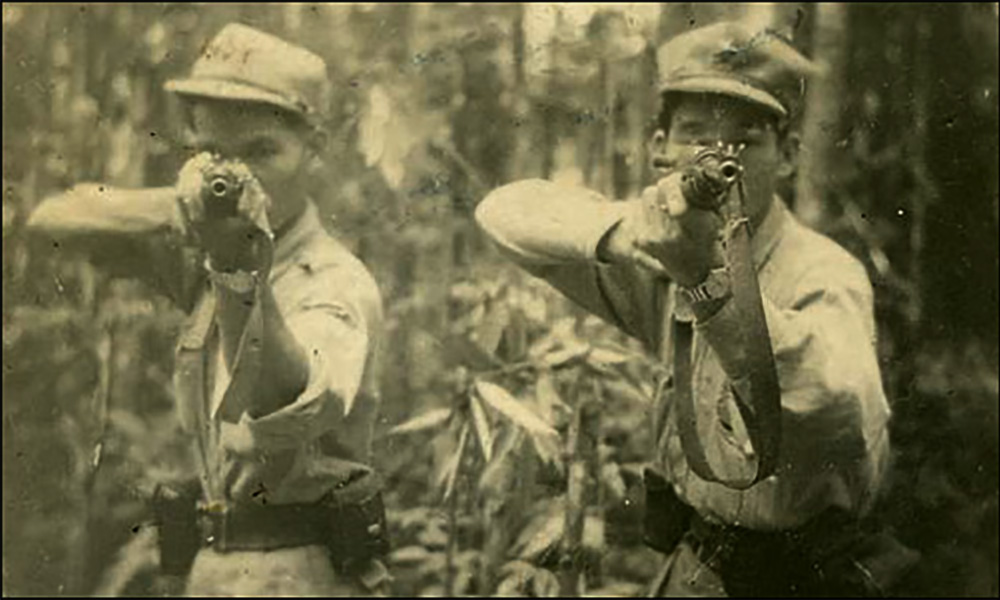

Communist soldiers in action during the Malayan insurgency

My friend, quite a history buff, also related to me that the earliest members of the elite Special Branch were ethnic Chinese, principally because one needs a thief to catch a thief.

If one goes by the six volumes of the works of Dr Lee Chee Koh, one of the top leaders of the early Special Branch, his books chronicled how Malayan Chinese were recruited by the British and Malay superiors into the Special Branch to undertake various operations in areas where the Communists lurked.

The Communists were successfully defeated based on "winning the hearts and minds" of the people. Not by punitive actions or by ostracising the enemy.

Too brash

Why tell this story now? The communist insurgency was officially over in 1989 when Malaysia agreed to allow the Communists to lay down their arms and return to society.

That was the gentleman's agreement between two opposing ideological foes who agreed to let bygones be bygones. We will cherish this great achievement of the Special Branch in defeating the communist threat in Malaysia without causing too much bloodshed.


Sadly, there was a time the Special Branch was also “misused” or “misguided” by Mahathir – the arrest and detention of Anwar Ibrahim come to mind.


“Tragic, as it is, while Malaysians can grow up, an old man who was made their prime minister twice still has this infantile fixation to rule as if he is our father of modernity; when he has lost all his legacy, both at home and abroad,” my friend, clearly not a Mahathir fan, retorted.

Another story that also played up coincidentally was about Mahathir’s early days in Umno – the period when he was deputy to then prime minister Hussein Onn.
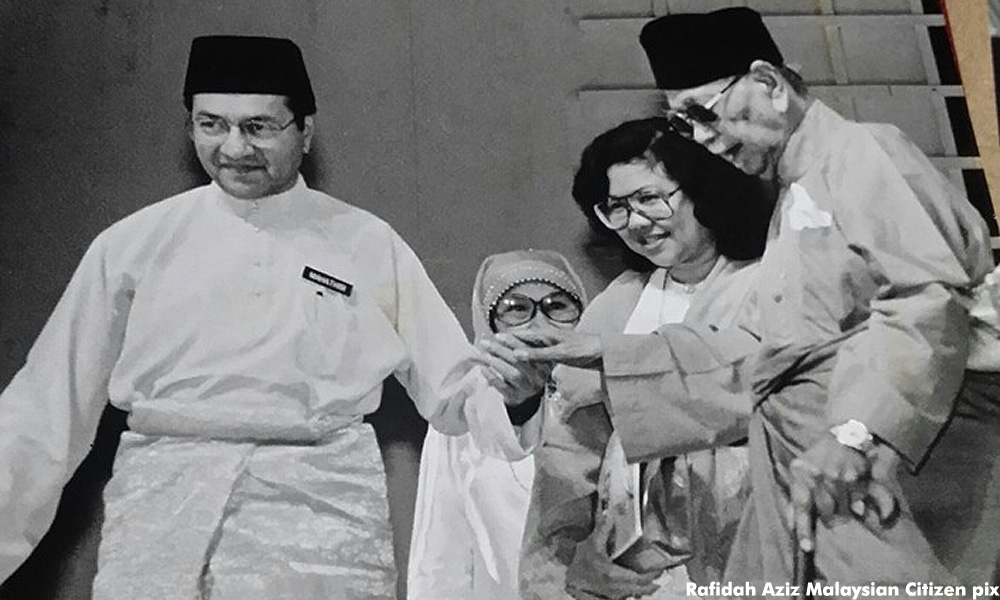

Mahathir with former cabinet minister Rafidah Aziz and first prime minister Tunku Abdul Rahman in the eighties

My friend related that when Hussein became PM in 1976, he was in agreement with Bapa Malaysia Tunku Abdul Rahman that Mahathir was too brash and impatient as he (Mahathir) had already reached the age of 53 in 1979.

Then came what many believed to be one of Mahathir’s early treacheries in Umno. An ordinary party member, Sulaiman Palestine, was planted to challenge Hussein for the Umno presidency in 1979.

Sulaiman, believed to be put forward by cliques close to Mahathir to embarrass Hussein, surprisingly obtained 600 votes.

The coincidence? Umno is holding its latest general assembly this weekend with scheming and treacheries believed to be in full gear particularly against the leadership of its president, Ahmad Zahid Hamidi.

Also this week, Mahathir’s first deputy prime minister in 1981, Musa Hitam, declared loudly in a TV interview that “[...] in politics, I don’t trust Mahathir”.

Now, this is Mahathir. Like it or not, our grand old man will remain relevant to Malaysian politics for as long as he’s still around. You might not think so. But to Mahathir, as long as he thinks he is still relevant (even if it’s only his own ego telling him that), it’s good enough for him.

If you do not like him, it’s your problem, not Mahathir’s. I have already accepted the fact that Mahathir will be around for quite a while yet.

Let him be, folks.


FRANCIS PAUL SIAH is the author of Hijack in Malaysia: The Fall of Pakatan Harapan. Obtain autographed copies from sirsiah@gmail.com.

Johor govt can collapse anytime if our reps pull support, Bersatu leader warns

Malaysiakini:


Johor govt can collapse anytime if our reps pull support, Bersatu leader warns

Johor Bersatu has fired a warning that the Umno-led state government could collapse at any time if their party's state lawmakers withdrew their support for Menteri Besar Hasni Mohammad.


"If any two (of Bersatu's) state government lawmakers feel disappointed with such a statement and his (Hasni's) stand, the state government may fall anytime," said Johor Bersatu deputy chief Md Nasir Hashim (above).

He was responding to Hasni's statement that Prime Minister Muhyiddin Yassin is "weak in his own backyard" during the recently concluded 2021 Umno annual general assembly.

Hasni said that support for the prime minister in his Pagoh constituency was only 19.8 percent. He said, in comparison, BN has 24.4 percent support in Pagoh while support for Muafakat Nasional (Umno and PAS) is 37.1 percent there.

The Pagoh federal constituency covers the Muar and Tangkak districts in Johor and was won by Muhyiddin under the Pakatan Harapan banner in the 2018 general election.

In a statement today, Md Nasir said that Hasni's remarks showed that he belittled Bersatu's status and contributions to the state government.

"Until now, Bersatu is still a party that is assisting the state government and enabling it to function well.

"I want to remind him, as the menteri besar, he should be more prudent by showing respect to Bersatu," Md Nasir said.

Perikatan Nasional (PN) currently holds 29 state seats in Johor, compared with Pakatan Harapan's 27 seats.

Hasni, Umno's Benut state assemblyperson, was named menteri besar in February 2020 after Bersatu quit the Harapan coalition.

He replaced Bersatu's Dr Sahruddin Jamal who took office in April 2019.


Umno likely to gain from divorce from Bersatu, analysts say

Malaysiakini:


Umno likely to gain from divorce from Bersatu, analysts say

ANALYSIS | During the Umno general assembly over the past weekend, there were two main schools of thought. One was that the party could no longer play second fiddle to Bersatu and must withdraw from the Perikatan Nasional (PN) government.

The other was that divorcing Bersatu would only spell doom for Umno in the 15th general election (GE15).

One proponent of the second scenario was Umno supreme council member Zahidi Zainul Abidin who said the party must go into the elections with Bersatu and PAS. He believed Umno will come out on top and be in a dominant position when the next government is formed.

Conversely, he said if Umno were to go solo in the election, the party might be left on the opposition bench with no allies.

However, several analysts told Malaysiakini that this description by Zahidi misses the point - if Umno went it alone, there would be room for the party to form a coalition with new or old partners after the election.

Ilham Centre executive director Hisomuddin Bakar said Umno on its own appeared confident that it could retain all 55 seats it won in GE14, including those "stolen" by MPs who defected to Bersatu.

Additionally, he said Umno could be eyeing at least 16 other Malay-majority seats for an overall target of at least 70 MPs in Parliament. The seats were said to be from those currently held by PAS, Bersatu, or Pakatan Harapan components PKR and Amanah.

“If PAS chose to be with Bersatu, Umno could retake several seats where they fell in three-cornered fights with PAS, for example in Terengganu, Kedah, and Kelantan.

“And there are the 13 seats won by Bersatu. Umno is very confident it could reclaim its traditional seats, including Langkawi. Aside from Jerlun and Pagoh, the remaining seats they appear to be very confident,” he said.

As for Malay-majority seats held by Harapan parties, Hisomuddin identified Kuala Selangor and Kulim Bandar Baru as being possible targets for Umno, with a record of “swing results” between BN and Harapan candidates across several general elections.


Harapan defeated Umno candidates in the two seats in GE14, while Umno, in GE13, defeated then Pakatan Rakyat candidates who won in GE12.

“The target of 70 seats is significant for Umno to propel them as the single largest party in Parliament.

“After that, they will open the doors for discussion with other winning parties, to form a government on Umno’s terms,” said Hisomuddin.

Unlike past general elections, he said there could be more uncertainties surrounding the outcome of GE15, with no formal coalition set prior to the polling day.

“This situation will give rise to uncertainties because its outcome lies more in which party has the strength to win their seats, and also involve post-election discussions,” he said, adding that negotiations could even involve rival parties.

Leaving negotiations for after the election

University Malaya political analyst, associate professor Awang Azman Awang Pawi, said that Umno, in its quest to attain dominance, has discarded the need for pre-election seat negotiations, particularly with Bersatu.

“This is a strategy. Rather than fight for seats before contesting, it is now open for all (to contest), and it could be determined later whether to retain the PN bloc or form new political coalitions,” he told Malaysiakini.

“Between 70 and 75 seats would be the maximum number possible to be won by Umno to emerge as the single most dominant party,” he said.

Awang Azman said Umno’s solo quest in Malay-majority seats could also benefit voters who are free to support their preferred candidates, unlike a coalition situation where voters in an area dominated by supporters of one party would have to vote for an allied party that was allocated the seat.

At the Umno assembly, which concluded yesterday, the party leadership received a clear mandate to decide when to withdraw support from PN. This followed a "clean break" decision which was reached by the Umno Supreme Council to sever ties with Bersatu.

Umno deputy president Mohamad Hasan had in January reportedly said that his party, while taking into account then discussions with BN components, Bersatu, and PAS, aimed to contest in at least 96 out of 222 Parliament seats.


This figure was lower than the 121 seats it contested in GE14, of which Umno won 55, amid an unprecedented assault from Harapan in its strongholds with former premier Dr Mahathir Mohamad as Bersatu’s president.

In GE14, Umno faced multi-cornered fights with Bersatu and PAS candidates in 47 Parliament seats, including in Ketereh and Titiwangsa. Former BN secretary-general Annuar Musa defeated Senior Minister Radzi Jidin in Ketereh, while Bersatu’s Women, Families, and Community Development Minister Rina Harun took down Umno’s Johari Abdul Ghani in Titiwangsa.

Bersatu, as a then Harapan component, fielded 52 Parliament candidates, but only won 13. Its current count of 31 MPs includes post-GE14 Umno defectors and a group of former PKR MPs, whose defections triggered Harapan's downfall in what is known as the Sheraton Move last year.

Umno fundamentally better organised

Universiti Teknologi Malaysia political analyst Prof Azmi Hassan, however, said Umno’s strength as an organisation gives it the advantage to reclaim the seats it lost through defections.

“If we see the Umno’s seats which were ‘taken’ by Bersatu, Umno’s chances to win is very good, while Bersatu will face a difficult challenge to retain the seats.

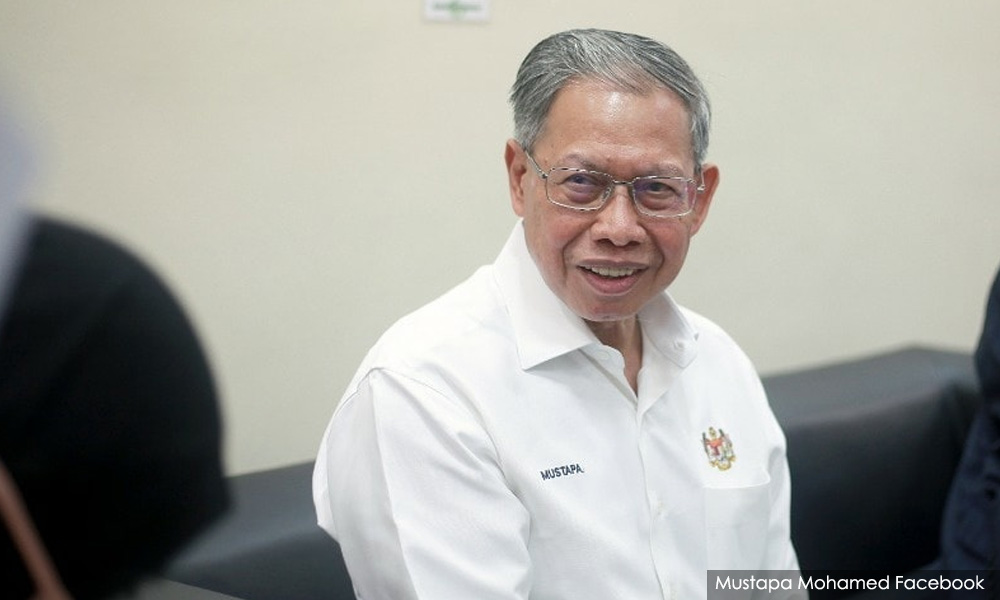
“Even for people like Tok Pa,” said Azmi, in reference to de facto Economic Affairs Minister Mustapa Mohamed, a five-term Jeli MP.

Mustapa first won the Jeli seat for BN when the constituency was created in 1995, subsequently losing it to PAS in 1999, and has held the seat since 2004. He had a brief stint as an Independent MP following BN’s GE14 loss, before formally joining Bersatu.


Minister in the Prime Minister's Department (Economic Affairs) Mustapa Mohamed

“We see Tok Pa’s victory, his charisma is synonymous with Jeli, but he must still be strengthened by Umno as an organisation.

“It would be difficult for him to win the seat on a Bersatu or PN ticket because to me the organisation of Umno and Bersatu grassroots is vastly different,” he said.

Discussion among parties in Parliament to form a federal government after the election results is a norm across many democracies, including in countries with different electoral systems.

In Malaysia, however, the electoral battle has often been waged between two main coalitions. Any subsequent change of government at the federal or state levels has so far been triggered by controversial defections.


MIC podah-kan UMNO

FMT:

Respect us or contest GE15 on your own, MIC VP tells Umno


C Sivarraajh wants Umno leaders to discuss with MIC on which party should contest the Sungai Siput parlimentary seat in GE15.

PETALING JAYA: MIC vice-president C Sivarraajh has demanded Umno show it some respect after a Puteri Umno leader suggested that MIC should let Umno contest the Sungai Siput parliamentary seat.

Responding to Sungai Siput Puteri Umno chief Norazura Abdul Karim’s comments today that MIC should let Umno field a candidate in the seat after MIC lost the past three contests, Sivarraajh said Umno should contest the next general election on its own unless it tones down its “arrogance”.

A traditional MIC stronghold, the Singai Siput seat was held by former MIC president VT Sambanthan from 1959 to 1974 and S Samy Vellu from 1974 to 2008.

“I would like to remind Umno’s top leadership to stop using tactics like these. If you are not happy with MIC, you can talk frankly with us,” Sivarraajh said in a statement.

“There is no need to send a representative to talk about matters involving the affairs of the Barisan Nasional Supreme Council, let alone the Sungai Siput parliamentary seat, which is traditionally the MIC president’s seat.

“I would also like to remind Umno’s top leadership not to be too arrogant. Stop asking to contest all the seats as if you can win them all. Umno’s top leadership needs to learn to respect its component partners.

“Respect your component partners first if you want your component partners to respect you. If Umno feels that Umno is too strong and does not need the support of its component partners, it is better for Umno to contest GE15 with Umno’s logo only.

“There is no need to contest as Barisan Nasional.”

The former Cameron Highlands MP reminded Umno that the party should appreciate MIC’s sacrifices and challenged Umno president (Ahmad Zahid Hamidi) to deny his claim that Umno did not recommend any MIC leaders for the posts of deputy ministers and senators when the Perikatan Nasional (PN) government was formed.

He also said that MIC and MCA have been loyal to Umno since BN’s inception, going on to question why Umno leaders found it hard to understand the concept of respect between component partners.

“Learn to respect the principle of respect between component partners contained in the Barisan Nasional Constitution. Don’t think that MIC or MCA are just ‘followers’.

“Our loyalty has its limits.”


Najib: Umno never agreed to let ‘smallest’ party dominate in name of Muslim unity

MM Online:

Najib: Umno never agreed to let ‘smallest’ party dominate in name of Muslim unity


Former Umno president Datuk Seri Najib Razak at the 2021 Umno annual general assembly in Kuala Lumpur March 27, 2021. ― Picture by Hari Anggara

KUALA LUMPUR, March 30 — Datuk Seri Najib Razak said today that Umno never agreed to let its smaller counterpart Bersatu hold power even as it decided to back Perikatan Nasional and supported the idea of Malay-Muslim unity.

kt note: Najib to Muhyiddin: You're NOT Atuk, & UMNO is not DAP (Wakakaka)

Umno president Datuk Seri Ahmad Zahid Hamidi revealed at the party’s 75th general assembly over the weekend that the party support for Bersatu president Tan Sri Muhyiddin Yassin to be prime minister hinged on several conditions, including that he dissolves Parliament and call for elections by the first quarter of this year.

The revelation has since prompted Bersatu leaders to accuse Umno of being “power-crazy” at the expense of Malay unity.

“BN (Barisan Nasional) never promised to contest side by side with PPBM (Bersatu) in the 15th general election. BN never signed anything to join PN. BN never backstabbed any parties in BN. This has nothing to do with any clusters, negotiations with PKR or claims of ‘power-crazy’ thrown as propaganda daily by the other side,” Najib wrote on his Facebook page.

“All these were pledges, conditions and stance we have adopted since the very beginning. And we never agreed that the prerequisite for ummah unification would be the bigger power be led by the smallest party,” the former Umno president added.

Umno formally cut ties with the splinter group and PN in a decision Ahmad Zahid claimed was unanimously reached at the party’s congress. The Umno president said Muhyiddin had backpedalled on the agreement to hold elections by the first quarter this year, forcing Umno to act.

The decision has rocked ties with PAS that is now a member of a formalised electoral pact with Umno, the Muafakat Nasional.

Najib said Umno has always respected the pact but conceded that relations with PAS are now “tested”. The latter party has refused to leave PN.

kt note: Najib (thinking to himself): That budu bitch is very 'heow' one (gatal sangat lah, VELL-y FIRE-y slut) (Wakakaka)

“We announced that we would support PN (only) until GE15, we fulfilled it,” he said.

“We signed to collaborate with PAS, we are still fulfilling it even when this collaboration is being tested,” he added.

The former prime minister, on trial for dozens of corruption charges relating to the multi billion ringgit 1MDB scandal, is among those vocal in calling for an end to the cooperation with Bersatu.


Don’t be hypocritical on unity, Umno’s Puad tells PPBM

FMT:

Don’t be hypocritical on unity, Umno’s Puad tells PPBM


Umno Supreme Council member Mohd Puad Zarkashi (left) has reminded PPBM information chief Wan Saiful Wan Jan that it was his party that worked with DAP and PKR in the last elections.

PETALING JAYA: An Umno Supreme Council member has hit out at a PPBM leader for saying a split in Malay votes would only benefit DAP and PKR.

In a Facebook post, Mohd Puad Zarkashi pointed out that it was PPBM that worked with DAP and PKR in the last general election (GE14) to topple Umno.

“At the time, did they not think who would benefit or lose out?

“What did PPBM do when Tabung Haji, Felda and Khazanah assets were sold? Until today, the Perikatan Nasional-led government does not dare to set up a royal commission of inquiry into Tabung Haji. Why?”

He said PPBM’s courting of MPs to switch sides was also bad for unity.

After GE14, some 16 Umno MPs quit the party to join PPBM. Umno has repeatedly said it wants to take back the 16 seats in the next general election.

Puad was responding to PPBM information chief Wan Saiful Wan Jan’s statement that it was important to protect Malay political unity and that if the community was divided, it was DAP and PKR that would benefit.

Over the weekend, the Umno general assembly resolved against cooperation with PPBM in GE15.

Puad said PPBM should feel embarrassed talking about Malay unity when two of its former leaders set up splinter parties, in the form of Pejuang and MUDA, in a short span of time.


Analysts: Time for Perikatan sympathisers within Umno to choose which side their loyalty lies

MM Online:

Analysts: Time for Perikatan sympathisers within Umno to choose which side their loyalty lies


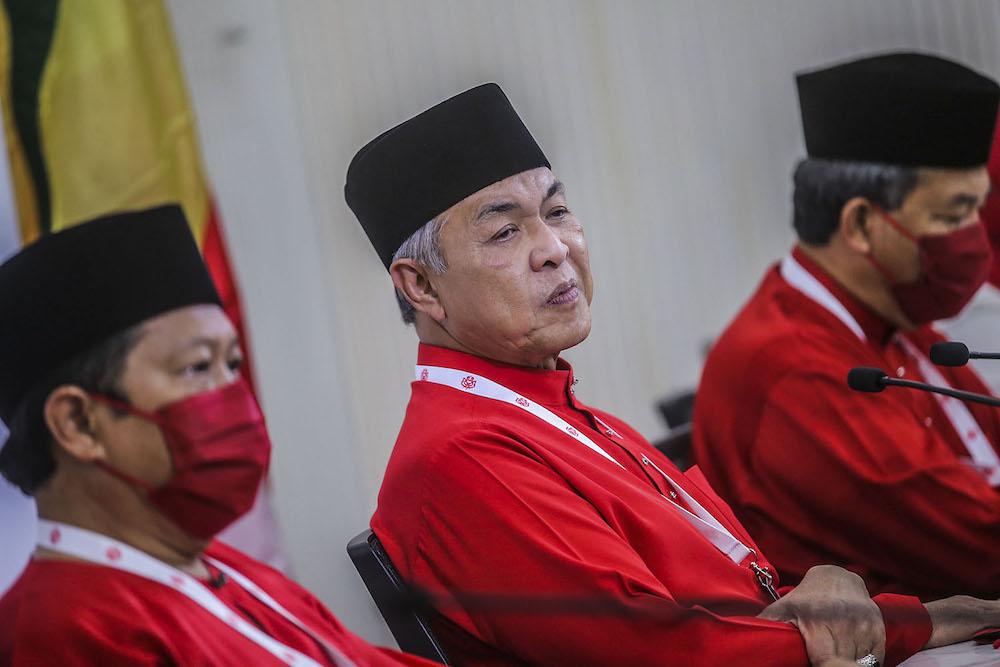
Umno president Datuk Seri Ahmad Zahid Hamidi (centre) arrives for the 2020 Umno general assembly in Kuala Lumpur March 28, 2021. — Picture by Shafwan Zaidon

KUALA LUMPUR, March 30 — Umno leaders who have been supporting Perikatan Nasional (PN) and its leading party Bersatu, must now decide their next course of action as the party has unanimously decided not to cooperate with the ruling coalition in the coming 15th general election (GE15), political analysts said.

Senior fellow at the Singapore Institute of International Affairs Oh Ei Sun said the ‘big’ decision announced by Umno during its annual general meeting (AGM) over the weekend is now clear, leaving little room for PN friendly Umno members to manoeuvre.

Oh pointed out that just because party president Datuk Seri Ahmad Zahid Hamidi heeded the call by grassroots members to cut ties with Bersatu and PN, this does not necessarily translate into tacit support for the Bagan Datuk MP.

“I think the overwhelming grassroots sentiment is not in favour of aligning further with Bersatu, although this sentiment doesn’t necessarily translate to automatic support for Zahid. Umno would work with Bersatu only if their respective leadership roles in the ruling coalition are reversed.

“Umno’s mainstream faction would of course fire a few warning shots at those from the disloyal faction, as it did during the AGM by freezing membership. But ultimately, the Cabinet clusters and those favouring Bersatu would now have to make the tough choice as to which side their loyalty truly lies,” he said.

Oh was referring to 15 ministers and deputy ministers from Umno who are serving in PN’s Cabinet numbering a total of 70 members.

Most recently, Federal Territories Minister Tan Sri Annuar Musa has earned the ire of the party for being seen as PN friendly.

During the general assembly, Zahid warned “parasites” within the party to not support PN or Bersatu.


Gua Musang MP Tan Sri Tengku Razaleigh Tengku Mohd Hamzah is pictured at Umno’s general assembly in Kuala Lumpur March 28, 2021. ― Picture by Hari Anggara.

After the AGM, Umno veteran Tengku Razaleigh Hamzah even urged Umno Cabinet members and those appointed to government link entities, to resign.

However, party president Zahid clarified to the press that no directives have been issued for Umno members serving in the PN administration to quit their post immediately and that they would only need to do so once parliament has been dissolved and a general election is called.

During the assembly, Zahid had also assured party members that he still maintains the policy of “No Anwar, No DAP, No Bersatu”, cementing any rumours or even assertions that the Umno is engaging in backroom talks to form a new political union.

Political analyst Kartini Aboo Talib Khalid said the decision that was ultimately made by Zahid was necessary as a means to avoid Umno from confirming with terms set by PN lynchpin Bersatu.


During the general assembly, Umno president Datuk Seri Ahmad Zahid Hamidi (centre) warned 'parasites' within the party to not support PN or Bersatu. ― Picture by Hari Anggara

Kartini also pointed out that Zahid will enter into negotiations with other political parties after the elections to ensure the new government that is formed, clearly has the people’s mandate.

“At the moment party members especially, the supreme council have decided not to ally with PN in the upcoming GE15. Zahid is firm in this matter, hence gives a reflection that he wants dissolution rather than consociation in the power struggle between Umno and Bersatu.

“He may be very optimistic in forming alliances after GE15 with members from the opposition and others that clearly received the people’s mandate. For leadership positions, Zahid is unchallenged thus far despite the corruption case against him,” he said.

Oh said Zahid managed to consolidate his leadership against those who are PN aligned within the party but had also paid the price politically by clearly stating that the party would also not join forces with Pakatan Harapan.

“Zahid did manage to consolidate his leadership standing against the recent onslaught of the PN-friendly faction within Umno. But in a sense, he paid a political price for doing so by vowing to also not align with PH, so as not to be accused of being biased in favour of PH which Umno has vilified for so long.

“Although having survived this round, Zahid would still be painted as a ‘lame duck’ president as he is still saddled with many court cases and therefore could not be a viable prime ministerial candidate even if Umno were to lead a future ruling coalition,” he added.

While Umno has been very clear of their rejection of Bersatu and PN, their relationship with PAS remains in question, with Umno delegation during the assembly repeatedly stating that the Islamist party stands to gain much more if they remain with Umno under Muafakat Nasional (MN).


While Umno has been very clear of their rejection of Bersatu and PN, their relationship with PAS remains in question. — Picture by Shafwan Zaidon

Universiti Teknologi Malaysia (UTM) Geostrategist Prof Dr Azmi Hassan also concur that it was inevitable for Umno to cut ties with Bersatu but pointed out that the move was also intended to force PAS to make a decision

“There isn’t much of a choice since the divisional meeting and the majority of the grassroots want to sever the ties with Bersatu, so the ultimatum given was of no surprise.

“Not only they have no choice but that is the best because they are trying to up the pressure not only on Bersatu but on PAS to abandon Perikatan Nasional and join together with Barisan Nasional or Muafakat Nasional.

“When Zahid made the speech in front of PAS president Datuk Seri Abdul Hadi Awang, that there is still a chance for MN to be realised. I think that is a message to PAS, that they need to make a decision.

“While PAS had is seen to be keener to be with PN, there is still hope by Umno for the Islamist party to commit to Muafakat Nasional, said Azmi.


Zahid knocks Annuar as ‘a pest’, dares him to quit

FMT:

Zahid knocks Annuar as ‘a pest’, dares him to quit


Annuar Musa was described by Umno president Ahmad Zahid Hamidi as ‘a pest’. (Bernama pic)

KUALA LUMPUR: Umno president Ahmad Zahid Hamidi has taken aim at federal territories minister Annuar Musa, describing him as a pest and a backstabber, and challenging him to resign his post.

Zahid did not name Annuar. He merely spoke of “a minister who’s not on stage but who has stabbed Umno in the back” and challenged him to resign from the Cabinet.

“If he’s a man, he should resign as minister,” said Zahid, drawing cheers and applause from the crowd. “This is a pest. If it wasn’t for Umno, he wouldn’t be in such a position.”

However, Zahid later said he was confident that Umno ministers in the Cabinet remained loyal to the party.

Although Annuar was not named, there was little doubt about who Zahid meant. Annuar has come under fire from his party colleagues for being too PPBM-friendly.

Umno Supreme Council member Mohd Puad Zarkashi has previously accused Annuar, who is a former Barisan Nasional secretary-general, of being PPBM’s weapon within Umno.


Ketereh Umno delegate Annuar Musa, who is federal territories minister, arriving at the Umno general assembly today. (Facebook pic)

Puad said Annuar had been openly hitting out at Umno and Zahid to make the party look divided and claimed that Annuar was executing the “enemy’s game plan”.

Zahid also gave a reminder to higher education minister and Wanita Umno chief Noraini Ahmad, who was also on stage, that it was only because she was a member of the party that she could be appointed as minister.

Umno and its Barisan Nasional partners provide “confidence and supply motion” support in the Dewan Rakyat for the Muhyiddin Yassin government, but is not a member of the Perikatan Nasional coalition led by Muhyiddin’s PPBM party.

Zahid has stated that Umno MPs would support the government only until Parliament is dissolved and a general election called.

When asked at a press conference later why he had not fired the minister mentioned in his speech for “backstabbing” the party, Zahid said this was not up to the president but Umno’s disciplinary board.

“The disciplinary board will study the matter and bring it to the Supreme Council,” he said, adding that there was no motion for the minister to be sacked from the party.


GRAB - who are the major shareholders?

FMT:

End the Grab monopoly, say PKR leaders


PKR MPs Wong Chen and Nurul Izzah Anwar say that while first-mover advantage is recognised, the government must move in after a while to spread the business.

PETALING JAYA: The country’s antitrust laws need to be reviewed in light of “monopolistic” practices by companies such as Grab, two PKR MPs said, with one even suggesting that the multibillion-dollar start-up should be broken up.

Speaking at a webinar today, Subang MP Wong Chen and Permatang Pauh MP Nurul Izzah Anwar said that while they appreciated the impact that platforms such as Grab have had in boosting the gig economy, they were concerned about the company’s dominance.

Wong said he was aware that companies such as Grab were able to capitalise on their first-mover advantage to create strong brand recognition and customer loyalty, but felt that the government should consider the dangers of monopoly.

Starting off as a ride-hailing firm in 2012, Grab has since diversified into digital payments and food delivery services and is now Southeast Asia’s most valuable start-up worth more than US$16 billion. It acquired the earlier ride-hailing firm Uber’s Southeast Asian operations in 2018.

“I understand the first-mover advantage. But after a few years, you really have to think ‘If they have dominated 70%, 80% of the market … That is monopolistic.’ That cannot be allowed to happen,” Wong said during a webinar he hosted titled Policy Monday: Labour Market Trends – Gig Economy.

“While we admire first-mover advantage, innovation and all that kind of thing … After some time, the government must come in after maybe five, 10 years and look at the landscape where one giant dominates the entire thing and say ‘No, we have to break it’.”

In 2019, the Malaysia Competition Commission (MyCC) proposed a fine of RM86.77 million for Grab for allegedly abusive transit media practices – with Grab, alongside subsidiaries Grabcar Sdn Bhd and Myteksi Sdn Bhd, going to court to challenge the proposal.

MyCC proposed the fine after Grab allegedly violated the Competition Act 2010 by imposing restrictive clauses on its drivers, with the company stating then that MyCC does not have the jurisdiction to impose such a penalty.

Grabcar, meanwhile, was sued for RM100 million by the Malaysian Association of Taxi, Rental Car, Limousine and Airport Taxi in January for allegedly creating unfair competition and denying its 10,000 members their livelihood.

Grab and its business partner have also run afoul of Indonesia’s antitrust watchdog, which announced more than US$3 million in fines last July after finding them guilty of breaking anti-monopoly laws.

“There are so many studies to showcase. When you’re talking about (antitrust) regulations, it’s not just Malaysians that are concerned,” said Nurul Izzah.

“I’m very supportive of Grab, but we also need to be cognisant of the limitations and monopolistic tendencies … ,” she said, adding that there were around 140 platforms providing gig and freelance opportunities in Malaysia as of last August.


Monday, March 29, 2021

Dei JAIS, Nur Sajat is not hiding lah, just not well, wakakaka (waiting for you-uooo)

FMT:

Bila saya jadi pelarian, menyorok? Sajat nafi lari daripada JAIS


Muhammad Sajjad Kamaruz Zaman atau Nur Sajat menafikan dirinya menyorok atau melarikan diri daripada pihak berkuasa.

SHAH ALAM: Usahawan kosmetik, Muhammad Sajjad Kamaruzzaman yang lebih dikenali sebagai Nur Sajat yang sedang sakit, menafikan dia bersembunyi daripada Jabatan Agama Islam Selangor (JAIS) dan pihak berkuasa.

Menerusi video selama dua minit 21 saat yang dimuat naik ke media sosial itu, Sajat menafikan dirinya menyorok atau melarikan diri daripada pihak berkuasa.

“Masa bila kita jadi pelarian? Buat apa nak jadi pelarian?

“Masa bila saya menyorok? Ada ke awak nampak saya menyorok?” katanya menerusi video itu yang dilaporkan Sinar Harian.

Sajat mendakwa dia mendiamkan diri kerana tidak begitu sihat.

“Saya bukan menyorok, tapi hanya mendiamkan diri dari Instagram,” katanya ketika menjawab soalan netizen tanpa mendedahkan wajahnya dalam video itu.

Pada 23 Feb lalu, Mahkamah Tinggi Syariah Shah Alam mengeluarkan waran tangkap terhadap Sajat kerana gagal hadir dalam sebutan semula kesnya tanpa sebarang sebab.

Pada 6 Jan lalu, Sajat dituduh berpakaian seperti wanita dalam satu majlis bacaan Yasin dan solat hajat sehingga menyebabkan agama Islam dipandang hina di pusat kecantikan miliknya di Seksyen 16, Shah Alam, 7.30 malam, 23 Feb 2018.

Dia didakwa mengikut Seksyen 10(a) Enakmen Jenayah Syariah (Negeri Selangor) 1995 yang memperuntukkan hukuman denda maksimum RM5,000 atau penjara tidak melebihi tiga tahun atau kedua-duanya, jika sabit kesalahan.


WHO report says coronavirus jumped from bats via ‘missing link’

FMT:

WHO report says coronavirus jumped from bats via ‘missing link’


Members of the WHO team are seen wearing protective gear during a field visit to Wuhan last month. (AP pic)

GENEVA: An international expert mission to Wuhan concluded in a report seen today that Covid-19 likely first passed to humans from a bat through an intermediary animal, with investigators all but ruling out a laboratory leak.

The intermediate host hypothesis was deemed “likely to very likely”, while the theory that the virus escaped from a lab was seen as “extremely unlikely”, according to a copy of the long-awaited final report obtained by AFP before its official release.

The report comes as dramatic infection spikes in Europe have forced a tightening of unpopular restrictions across the continent, and amid warnings that the US could suffer a similar surge if curbs are eased too quickly.

In sharp contrast, people in England were set for what newspapers dubbed “Happy Monday”, with stay-at-home orders relaxed as rapid vaccinations appeared to drive down infection rates there.

As countries rush to vaccinate and stem the spread of Covid-19, the mystery at the very heart of the pandemic – how the virus that causes the disease first jumped to humans – remains unsolved.

The report from the international mission to Wuhan has therefore been keenly anticipated ever since the expert team left China more than a month ago.

Cold trail?

Delays in the publication of the findings, drafted in collaboration with the team’s Chinese counterparts, had been blamed on coordination and translation issues, even as a diplomatic tug-of-war raged in the background over the report’s contents.

The repeated delays sparked renewed criticism of the UN health agency’s slow actions in getting the team to Wuhan in the first place.

The experts tasked with probing Covid-19’s origins only arrived there in January, more than a year after the first cases surfaced in the Chinese city in December 2019, sparking fears the trail had gone cold.

In the 15 months since the coronavirus emerged, the pandemic has engulfed the planet, killing nearly 2.8 million people and shredding the global economy.

During a lengthy press conference in Wuhan on Feb 9 at the end of the mission, the experts and their Chinese counterparts made clear that they could not yet draw any firm conclusions.

But they said they had worked to rank a number of hypotheses according to how likely they were.

‘Missing link’

Experts believe that the SARS-CoV-2 virus that causes the Covid-19 disease originally came from bats.

One theory examined was that the virus jumped directly from bats to humans.

The final report determined that this scenario was “possible to likely”.

A more likely scenario, the report found, was that the virus had first jumped from bats to another animal, which in turn infected humans.

“Although the closest related viruses have been found in bats, the evolutionary distance between these bat viruses and SARS-CoV-2 is estimated to be several decades, suggesting a missing link,” the report said.

“The scenario including introduction through an intermediary host was considered to be likely to very likely,” it said, although it did not conclude which animal may have first allowed the virus to jump to humans.

The report meanwhile did not rule out transmission through frozen food – Beijing’s favoured theory – since the virus appears to be able survive at freezing temperatures, saying that “introduction via cold or food chain products is considered possible”.

‘Extremely unlikely’

Finally, the report examined the idea of a lab leak from, for instance, the Wuhan Institute of Virology – a theory promoted by former US president Donald Trump’s administration.

It pointed to the fact that there was no record of any virus resembling SARS-CoV-2 in any laboratory before December 2019, and stressed high safety levels at the labs in Wuhan.

“A laboratory origin of the pandemic was considered to be extremely unlikely,” the report said.

Already during the Wuhan press conference, the experts had said the lab leak theory was considered the least likely.

But back in Geneva, World Health Organization (WHO) boss Tedros Adhanom Ghebreyesus had then insisted following the mission that all hypotheses remained on the table, and the organisation has urged patience as work continues to get to the bottom of the Covid origin’s mystery.

The experts also concluded their report with a call for “a continued scientific and collaborative approach to be taken towards tracing the origins of Covid-19”.

Determining the source of the pandemic is deemed vital to better protecting against future outbreaks.

Privilege for Minister Santhara, none for compassionate cases

Malaysiakini:

After missing dad’s funeral, man wishes he was given the Santhara treatment


After missing dad’s funeral, man wishes he was given the Santhara treatment

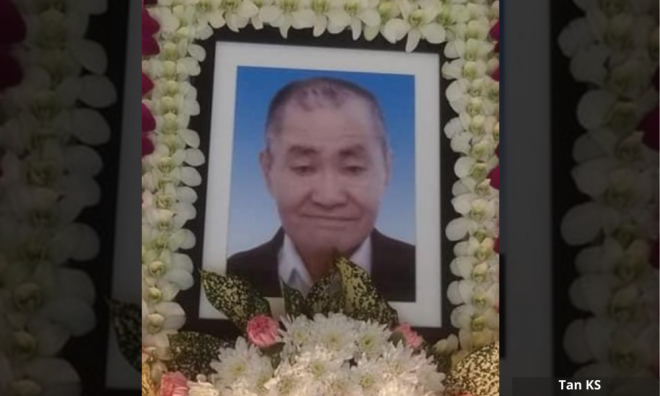
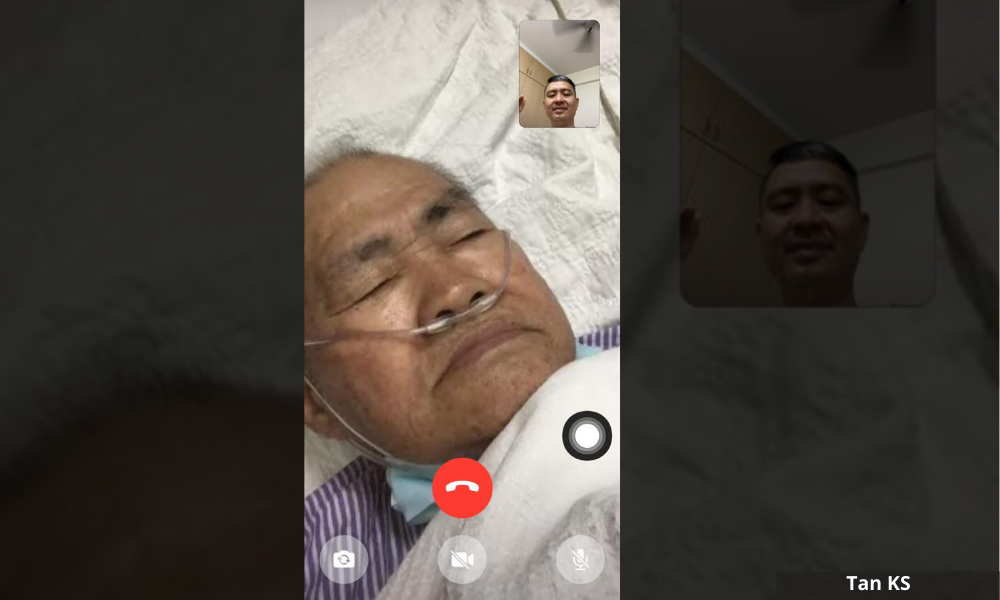
If only he was allowed to undergo home quarantine, Tan KS believes he would have been able to see his father one last time before he was buried.

He will now have to settle for the memory of his last trip home before his father passed.

In late February, the airline pilot travelled from his hometown in Klang, Selangor, to Singapore where he works.

Whilst undergoing a mandatory 14-day hotel quarantine on the island state, Tan’s 74-year-old father died of a heart attack on March 6.

He immediately appealed to Singaporean and Malaysian authorities to be allowed to attend the funeral, to be held in two days’ time at his family home.

While Singapore agreed to release him provided he tested negative for Covid-19, Malaysia declined his request to be quarantined at home rather than in a hotel, away from his family.

In an e-mail seen by Malaysiakini, the Health Ministry told Tan he will first need to get to a designated quarantine facility as per standard operating procedure before applying for “time-off” to attend the funeral.


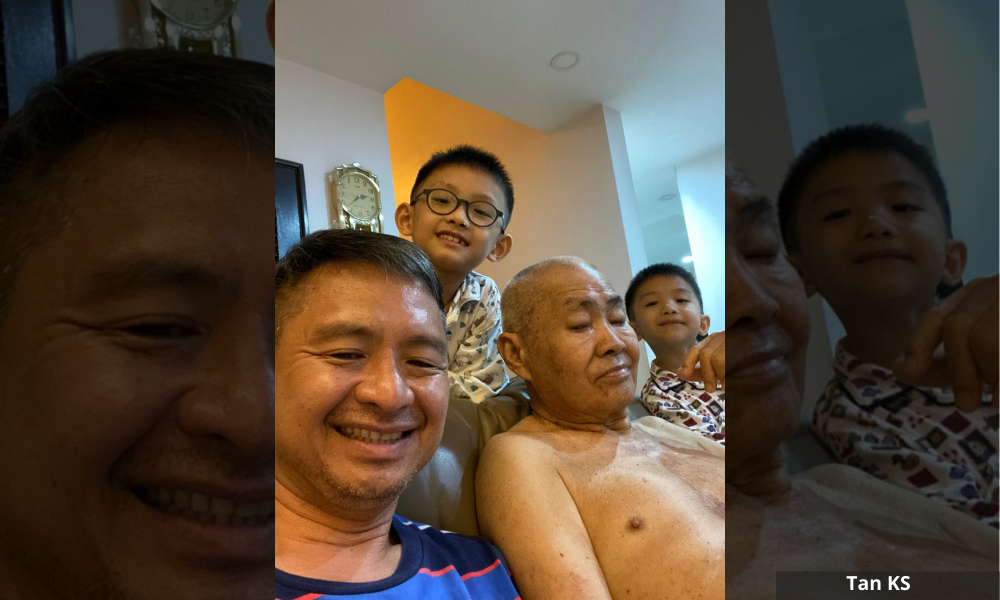
Tan (left) with his dad and family members

The frequency and duration of the time-off, however, was contingent on whether the facility had available transport and personnel.

In the end, Tan chose not to make the trip home as he predicted he would have missed the March 8 morning funeral, anyway.

“By the time they (the quarantine facility team) arrange everything and send a team to take me home, everything would have ended.

“But without the hotel quarantine and if I had been allowed to undergo home quarantine, I would have been able to go directly home from the airport. And reached in time to see my father being sent off from the house,” he rued.

“I feel sad definitely because it was his last journey,” said Tan about not being able to send his father off.

'Why didn’t I qualify?'

Tan shared his experience with Malaysiakini after learning that the ministry had allowed Deputy Federal Territories Minister Edmund Santhara to undergo home quarantine after his controversial New Zealand trip.

He questioned the discrepancy.


A screenshot of Tan checking in on his gravely-ill father

“I think my case was more qualified for home quarantine when compared to the deputy minister.

“As you can see, I was actually in Singapore serving the full 14-day quarantine, with the two negative Covid-19 results. And I had not been in contact with anyone,” he shared.

Yesterday, Health Ministry director-general Dr Noor Hisham Abdullah explained that Santhara was allowed to undergo home quarantine because he had returned from a low-risk country and had a “suitable home”.

Like Santhara, Tan said he had also returned from a country with very few Covid-19 cases.

Like the Segamat MP, he believed his house was spacious enough for home quarantine.


Tan's dad during happier times

“Maybe, the deputy minister has the whole mezzanine to himself but I believe mine isn’t that bad,” he said.

Malaysian S Mani Vannan previously criticised the ministry for practising “double standards” after it declined his home quarantine request despite being fully vaccinated against Covid-19.

He said his purpose for travelling home was to care for his mother, a cancer patient.


What is ‘natural’ sex anyway?

MM Online:

What is ‘natural’ sex anyway?


MARCH 29 — There is ongoing controversy over the Federal Court’s ruling which rendered unconstitutional a provision in the Selangor Shariah law criminalising unnatural sex.

Our country’s antagonism towards and policing of LGBQT activities is one of many symptoms of some institutional need to police how people have sex (without, tragically, doing much about child marriages).


One can only imagine the amount of time, man-power and documentation expended to dictate what people do with each other’s bodies.

But let’s not spend so much time on the motives behind the need to manage and rule over people’s sexual preferences based on a pre-determined view of what’s considered “natural.”


Let’s talk instead about the effectiveness of such policing and, also, ask what is “natural” about sex anyway.

In other words, are people actually motivated away from so-called “deviancy” because of laws? And is there anything “natural” about human sexual practices in the first place?

Spoiler alert: It’s “No” to both.

1. Policing the erotic tends to eroticise the “crime” being policed.


Try to tell people they’re not allowed to love in a certain way and you may as well try to put out a fire by dousing it with RON95.

Prohibit a transgression, especially an erotic transgression and you’ll make the transgressors (or would-be transgressors) yearn even more for “it.”


Intimacy is a tough deal to handle; wielding the strong arm of the law is practically the least effective way to go about it. — Reuters pic

This is why virtually all attempts to stamp out this “problem” tends to back-fire.

For the nature of sexual desire is one of liminality ie it’s about “crossing lines” (in every tantalising sense of the word). Human sexuality involves taking risks (will our friendship be damaged if I declare my affection for her?), taking leaps (whatever her “answer”, things will never be the same), switching categories (after today, I am her “boyfriend”) and so on.


Granted the Shariah Council aims to protect sexual boundaries. In fact, I can’t imagine any traditional religion not attempting at least something similar.

The esteemed members of the Shariah court may succeed in punishing one “inappropriate” liaison but that won’t stop many other couples.


Intimacy is a tough deal to handle; wielding the strong arm of the law is practically the least effective way to go about it.

As a Christian, I’m not about to publicly promote LGBQT sex but neither— crucially — do I feel I have a right to publicly condemn anybody who doesn’t practice heterosexual or “traditional” sex.

It is, quite literally, none of my business how two consenting adults have sex.


We can discuss. We can debate. We can dialogue. And we must.

Hence, my second axiom which I’ll phrase in the form of a question:

2. What counts as “natural” sex anyway?


Isn’t the very process of human romantic courtship sorta unnatural?

Do we see dogs flirting before, quite nervously, asking each other out for an “official” date?

Do we observe cats blushing when another cat they find attractive pays attention to them, only for them to later agonise over “what the other may have meant” by brushing its tail against it?


Of course we don’t, but aren’t ALL the above part and parcel of how people express their sexual desires, and aren’t they all completely “unnatural”?

Or, when we so severely punish what we consider “unnatural” sex, shall we only limit it to physical copulation, as if human sexuality is exclusively about the act of intercourse (and nothing more)?

Doesn’t the sexual act include elements like kissing, licking, biting, sucking, talking dirty and all sorts of strange “positions” (which heterosexual couples also do) which would stretch the use of the word “natural”?

Isn’t the exclusive focus on the act of intercourse itself, in fact, a very NON-HUMAN way of thinking about sex?


Therefore, to draw up criminal legislation based on one group’s understanding of “natural” is, well, anachronistic (to say the least).

One final note: Am I therefore saying that all kinds of sexual relations should be permissible?

Again, it’s none of my business how people want to love each other. But, more importantly, sex and sexuality is something that cannot and should not be an issue for legislation UNLESS we’re talking about protecting the vulnerable (hence, issues like child marriage, rape, etc.)


Let’s quit using the law to make our version of morality — especially in relation to what people do in their bedrooms — the only acceptable one in the land.


Zahid vows party will amend Constitution to empower Shariah law

MM Online:

At Umno AGM, Zahid vows party will amend Constitution to empower Shariah law


Umno president Datuk Seri Ahmad Zahid Hamidi raises the party flag at the World Trade Centre Kuala Lumpur March 28, 2021. — Picture by Hari Anggara

KUALA LUMPUR, March 28 — Umno will push for the amendment of the Federal Constitution should the party form a super majority in Parliament in a bid to “empower” Shariah law, its president Datuk Seri Ahmad Zahid Hamidi vowed today.

The pledge was made at the party’s annual general assembly here this morning, where Ahmad Zahid told delegates that Umno must fulfill its role as the defender of Islam as the oldest Malay political outfit.

In his policy speech, the Umno president criticised the Federal Court ruling that annulled Selangor state law's provision which made unnatural sex a Shariah offence, saying the decision had deep ramification that could “denigrate” Islam and challenge the sovereign power of Malay rulers.

The former deputy prime minister had also remarked on a landmark High Court ruling that upheld the constitutional right of Bumiputera Christians to use the word “Allah” in their religious worship that has sparked backlash among conservative Malays.

“Umno feels the ruling has a serious implication.

“The ruling could potentially annul all criminal Shariah enactments in the states, it could challenge the sovereign power of the Malay Rulers.

“If we have two-thirds majority, we must amend the Federal Constitution so that Shariah Law can be strengthened,” he added.

Islamic laws fall under state purview in the country, with the respective Ruler as its supreme authority.

In a separate case on February 25, a nine-judge panel at the Federal Court declared that a Selangor state law provision that made unnatural sex a Shariah offence contravened the Federal Constitution since only Parliament has powers to enact criminal laws.

*********

kt notes:

Has Zahid made a pre-election rhetoric? It's an explosive promise that now frightens non-Muslims and at the same time, spell doom for him if he reneges on this promise (on coming back to federal power post GE15).

What does the word 'empower Syariah laws' mean? Full blown syariah laws to completely replace civil laws, or some minor enhancements of the 3-5-6 limitations?

In no doubt the Islamic euphoria following Zahid's speech, how will PAS react? Still continuing its slutting with PPBM as the Islamic Party prefers (but tossing love poem at UMNO? wakakaka), or having a  second thought as to its alliance, now that UMNO has 3 x talaq PPBM?

Not that they matter to UMNO 'Ah Hneah' in the general scheme of things, but how will MCA, MIC and Gerakan now plan their future?


Apandi suing Mahathir for unlawful termination of service

FMT:

Documents sought over Apandi’s firing not classified, says counsel


Former attorney-general Apandi Ali (left) is seeking a declaration that his dismissal by Dr Mahathir Mohamad was unlawful.

KUALA LUMPUR: The High Court was told today that former attorney-general Mohamed Apandi Ali, who is suing then prime minister Dr Mahathir Mohamad and the government for unlawful termination, is seeking documents to help prove his claim.

His lawyer, Abdul Shukor Ahmad, said this was because his client’s case was that the Yang di-Pertuan Agong did not need to act on the advice of Mahathir to sack Apandi.

“Even if the King were to act on the prime minister’s advice, it must be done objectively and not coloured by the personal views of Mahathir,” Shukor said in his submission.

The proceedings, before judicial commissioner Latifah Mohd Tahar, were conducted virtually.

Shukor said Mahathir had committed the tort of misfeasance in public office as he had made up his mind to sack Apandi without considering the views of the King.

He said all the documents sought from the government were not classified under the Official Secrets Act.

In his response, senior federal counsel Shamsul Bolhassan submitted that Apandi’s application was too vague and there was a “high possibility” that the unidentified documents sought were classified.

Shamsul said Apandi was clearly on a “fishing expedition seeking to trawl the defendants’ internal documents which he obviously did not appear to have any knowledge of”.


“The court ought not to grant the plaintiff a ‘fishing licence’ by allowing the present application,” he said.

He said the application failed to show the relevance and necessity to secure the documents.

“The application is a waste of time. The defendants humbly view the application for discovery, inspection or production of documents be dismissed with costs,” he said.

In the application filed on Dec 11, Apandi applied, among others, for a court order to allow him to freely inspect and be provided with copies of documents or letters regarding the termination of his service.

He had earlier, on Oct 31, filed his lawsuit seeking a declaration that the termination of his services in 2018 by Mahathir was unlawful.

He is asking for RM2,233,599.36 in special, punitive and general damages to be assessed by the court.

The government has denied Apandi’s contention that Mahathir committed a tort of misfeasance in public office through several actions, including making “biased” statements against Apandi, proposing for Apandi’s replacement before the lawful termination was made by the King and using “third parties” such as Mahathir’s personal lawyer to pressure Apandi to quit.

Apandi also claimed that Mahathir had formed a biased view of him and had decided on his termination irrespective of the King’s power under the Federal Constitution.

Apandi, who is also a former Federal Court judge, was appointed as the attorney-general on July 27, 2015. His contract was to have ended on July 26, 2018.

He said the chief secretary to the government had informed him through a letter before the 14th general election that his tenure would be extended by three years.

However, he said, the chief secretary issued him a letter on June 5, 2018, informing him the King had consented to the termination but the chief secretary did not furnish any document of the ruler’s approval.

Latifah will deliver her ruling on May 25.


Three things we learned from: Umno’s 75th AGM

MM Online:

Three things we learned from: Umno’s 75th AGM


Umno members arrive for the party's 2020 general assembly in Kuala Lumpur March 28, 2021. ― Picture by Hari Anggara.

KUALA LUMPUR, March 29 — Umno held its second annual general assembly since losing its place as Malaysia’s premier political party over the weekend, amid talks of division within its ranks and questions about its future.

Observers predicted that the 75th assembly, meant to be held last year but delayed by the Covid-19 pandemic, would be one of bloodletting between three squabbling factions.

One side favours remaining in Perikatan Nasional and then there are those who do not. The third appears less interested in this for or against schism and is instead pushing for a leadership overhaul, according to some party insiders. This faction, however, is smaller in number.

How did the leadership respond? The tone adopted by Umno president Datuk Seri Ahmad Zahid Hamidi in his policy speech provided some clues.

Here are three main takeouts from the party’s 75th AGM.

1. It’s clear, Umno will not work with Perikatan Nasional, Bersatu or Pakatan Harapan

Ahmad Zahid, despite initially hinting at the unprecedented possibility of collaborating with Pakatan Harapan, made it clear in his policy speech that his party rejects in total the idea of working with any of the three-member Opposition coalition.

There are murmurs that Ahmad Zahid may have made the assertion to placate grassroots growingly unnerved by the rumour, but it is something hard to verify.

But from the signal delegates sent out when debating Ahmad Zahid’s policy speech, it was clear that the majority, if not all, party grassroots believe Umno is still the juggernaut it was before its ouster in the 14th general election, and that it should not be in the position to compromise.

This was evident in the top-down display of enmity towards Parti Pribumi Bersatu Malaysia, the breakaway party led by Prime Minister Tan Sri Muhyiddin Yassin, a former Umno deputy president.

Ahmad Zahid himself spelled it out that the party will not cooperate with the splinter group, whose leaders were derided with some of the harshest words like “apek lempang”, a derogatory term referring to parasite or parasitic behaviour.

This same enmity appeared to have been directed towards party leaders or members that are either supportive or Bersatu or sympathetic to the PN. Most Umno delegates saw Bersatu as “leeches”, pretenders who only sought Umno’s hands to remain in power.

2. Not all of Umno view PAS as friends


PAS president Datuk Seri Abdul Hadi Awang waves at reporters at the 2020 Umno general assembly in Kuala Lumpur March 28, 2021. — Picture by Shafwan Zaidon

If it was vague then it’s much murkier now. Umno, or at least many of its leaders, appeared to have issued an ultimatum to PAS: either you are with us or against us.

This position has left Ahmad Zahid and the pro-PAS faction somewhat more isolated. The Umno president was the key power broker who played a crucial role in the Umno-PAS alignment, which later led to the formalisation of Muafakat Nasional.

Analysts said the super Malay electoral pact could guarantee the two parties up to 75 per cent of the ethnic Malay votes, effectively guaranteeing them victory should national elections be held now.

But all that is now up in the air. If the messages of the debates were anything to go by, Umno leaders implicitly expressed their willingness to relinquish this advantage, likely on the back of confidence that their party, given the Malays were forced to choose, is still very much the best out of the two.

Umno has the largest share of parliamentary seats comparatively, but pundits have discounted any possibility of the party forming a government on its own at the 15th general election, which meant it would still need to forge alliances with others.

Ahmad Zahid told delegates at the 75th AGM here that Umno will contest the upcoming general election solely under the Barisan Nasional (BN) coalition banner, but said it is open to negotiations to form a coalition government once the elections are concluded.

There are views within the party that Umno would increase its share of seats and would be in a more power position to dictate the terms if any negotiations are to take place.

Umno’s Barisan Nasional coalition partners, the MCA and MIC, share just three seats between them.

3. Umno yet to learn from GE14 defeat, believes power is a given


Umno president Datuk Seri Ahmad Zahid Hamidi (centre) speaks to reporters during a press conference at the 2020 Umno general assembly in Kuala Lumpur March 28, 2021. ― Picture by Hari Anggara

The party is in war mode. Umno wants to tell rivals that it would march into the electoral battlegrounds prepared and is confident of winning.

But much of that confidence is rhetoric.

Throughout the two-day assembly, few delegates made an effort to show a watchful public that Umno has repented, or at least is a party attempting to reform and purge itself of the very elements that led to its humiliating loss in the 14th general election.

Instead, leaders used the meeting as yet another rival-bashing binge, indulging in self-elevating sentiments that mostly centred around belittling Bersatu, which could suggest to observers that Umno actually viewed the splinter party as a threat despite all the attempts to paint their sister outfit otherwise.

Policy discussions were virtually absent during the debates.

Bar the warning issued by Umno Youth vice chief Shahril Hamdan, who said the party must present radical solutions to solve urgent issues like stagnant wages or underemployment, others left little impression on the policy front.

Next to the party’s obsession with Bersatu was its penchant for basking in the past, often gloating about its former strength and talking of ruling without actually offering anything concrete to voters who now have come to associate Umno with corruption and excess.

In his policy speech, Ahmad Zahid claimed it was his party that pressured the PN government to roll out some of the key relief Covid-19 measures, among them, the loan moratorium extension and loosening requirements for pension withdrawals.

But there was little follow-through from that. The topic, which would have been conventionally compulsory to debate, eluded much of today’s session because from the very get go itself, party leaders appeared only interested in discussing power.